Home Blog Page 400

Reports of Iran allowing Indian ships through Strait of Hormuz ‘premature’

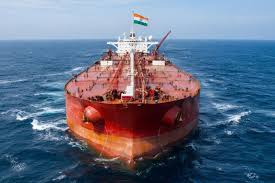
NEW DELHI : The External Affairs Ministry on Thursday (March 12, 2026) said it is rather “premature” to discuss reports about India receiving permission for ships to cross the Strait of Hormuz.“External Affairs Minister and Foreign Minister of Iran have had three conversations in the last few days. The last one discussed issues pertaining to safety of shipping and India’s energy security. Beyond that, it would be premature for me to say anything,” said Randhir Jaiswal, official spokesperson of the Ministry.

As oil tankers and cargo ships were attacked by suicide boats, drones and missiles, External Affairs Minister S. Jaishankar spoke with his Iranian counterpart Seyed Abbas Araghchi on Tuesday (March 10, 2026).

“Iran’s Foreign Minister reminded that the insecure situation and problems arising for shipping in the Persian Gulf are a result of the aggressive and destabilizing actions of the United States, and the international community must hold the U.S. accountable for this situation,” the Iranian Foreign Ministry had said after a call.

Cargo ships continued to be targeted in the strait even as India and Iran remained connected at the ministerial level. A Thai-flagged ship, Mayuree Naree, was hit near the Iraqi port of Basra on Wednesday that led to the death of one Indian sailor. The ship was headed for Kandla port in Gujarat.

Following the incident, the External Affairs Ministry said, “India deplores the fact that commercial shipping is being made a target of military attacks in the ongoing conflict in West Asia. Precious lives, including of Indian citizens, have already been lost in multiple such attacks in the earlier phase of this conflict and the intensity and lethality of the attacks only seems to be increasing.”

India has been expressing concern about the targeting of merchant navy ships that are stuck both inside the Gulf as well as in the Gulf of Oman near the Strait of Hormuz. Government sources have been maintaining that Indian sailors make for a large number of sailors in such ships and Iran’s attacks endanger their lives.

Already, at least four Indian sailors have been killed in attacks since the beginning of the war on February 28. The first ship that was hit was MT Sky Light, followed by hits on MT Vyom (off the coast of Oman) and LCT ALYH. Apart from that, at least 20 other Indian sailors have been injured in multiple attacks on ships, sources have said.

While the injured sailors are receiving treatment in Oman, the families of the dead sailors are facing uncertainty. Family members of Ashish Kumar, the captain of MT Sky Light who was known to have died in the attack, have refused to believe in the government’s findings.

Speaking to The Hindu, they have sought further confirmation in the form of DNA tests from the physical remains in Oman before accepting the news of his death. Sources have said that DNA test results will be shared after Oman completes certain legal procedures that are taking time because of the uncertainty due to the conflict.
DPA Kandla Gears Up to Handle Surge in Incoming Vessels

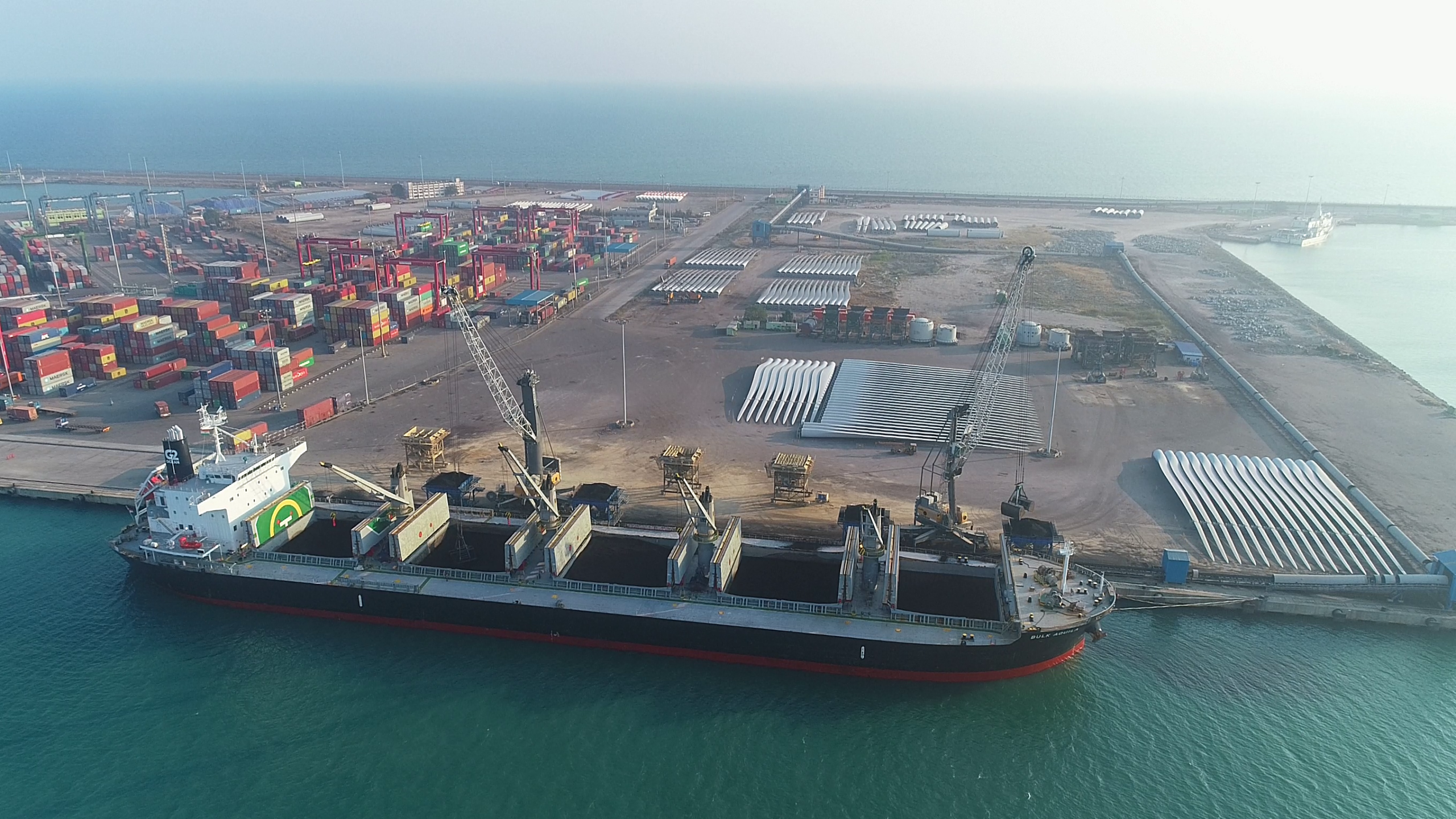
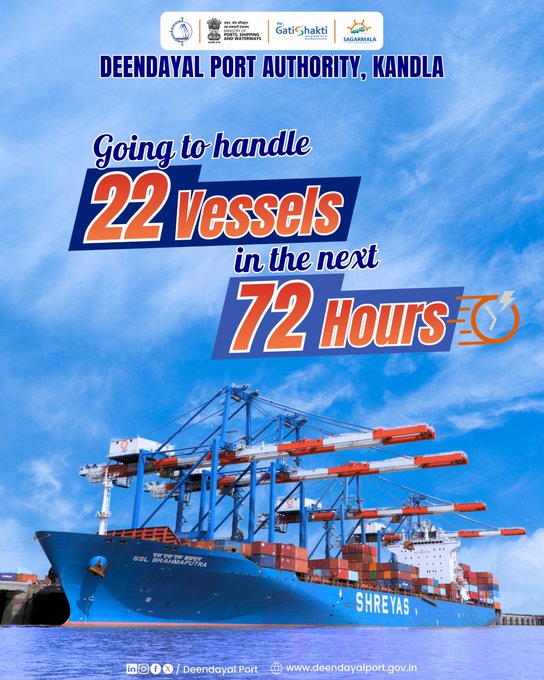
GANDHIDHAM : Deendayal Port Authority (DPA), Kandla, has ramped up operational preparedness to efficiently manage the recent surge in incoming vessels at the port. With global shipping routes witnessing adjustments and reconfigured voyage schedules, the port authority has activated robust systems and coordinated mechanisms to ensure smooth vessel handling and uninterrupted port services.

Officials at the port stated that all operational departments are working in close coordination to accommodate the increased vessel traffic. From marine services and pilotage to berth allocation and cargo handling, systems are functioning efficiently to manage reconfigured vessel calls while maintaining high standards of safety and productivity.

The port’s vessel traffic management systems, berth planning units, and cargo handling teams have been operating round-the-clock to streamline vessel movements and minimize waiting time at anchorage. Additional coordination has also been established with shipping lines, terminal operators, and logistics stakeholders to ensure timely berthing and quick turnaround of ships.

Authorities highlighted that the port remains committed to providing services at the best possible standards despite the sudden surge in vessel arrivals. The efficient handling of vessels reflects the port’s operational strength, modern infrastructure, and the dedication of its workforce in maintaining seamless maritime logistics.

Located on India’s western coast in Kandla, Deendayal Port Authority continues to play a crucial role in facilitating trade and supporting the country’s supply chain. The proactive measures adopted by the port underline its readiness to adapt to evolving global shipping dynamics while ensuring reliable and efficient port operations.

DPA Kandla marks 55th National Safety Week

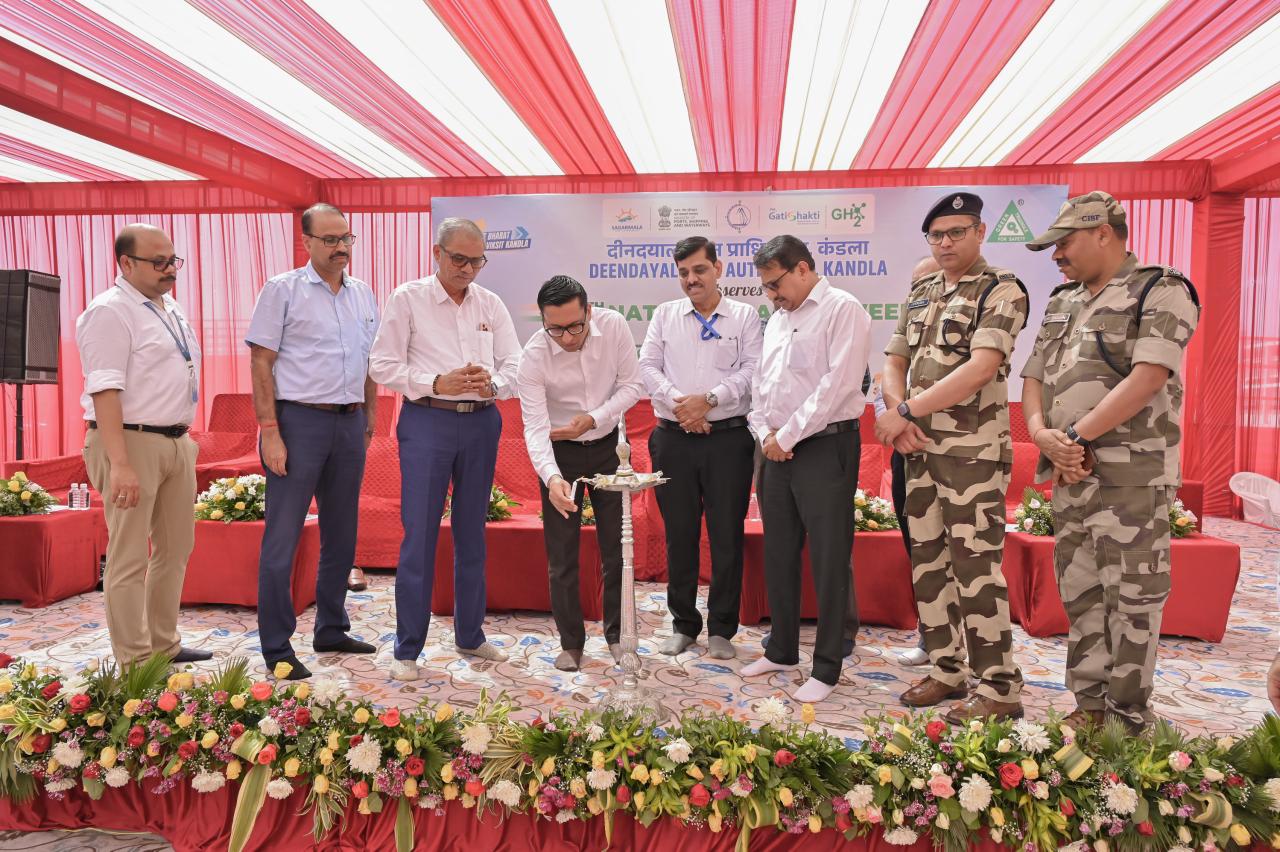
GANDHIDHAM : Deendayal Port Authority, Kandla marked the 55th National Safety Week (12–18 March 2026) with a renewed pledge towards safety and responsibility at Kandla.

The week-long observance was inaugurated by Shri Nilabhra Dasgupta, IRS, Dy. Chairman DPA, with the ceremonial lighting of the lamp in the august presence of Shri J.K. Rathod, CPES, CVO; Shri Manoj B. Kasulla, Asst. Director (Safety), Inspectorate Dock Safety, Kandla; senior officials, port users, employees and Shramiks.

On the occasion, DPA’s SOP Booklet on Safety in “Handling Different Types of Cargo’ was also unveiled, reinforcing the Port’s commitment to a safe and secure maritime ecosystem.

V.O. Chidambaranar Port becomes first Indian major port to implement digital twin

NEW DELHI : The V.O. Chidambaranar Port Authority has achieved a major technological milestone by becoming the first port in India to launch the Digital Twin initiative for port management. The Port has marked a significant step toward smart, efficient, and technology-driven maritime management. The platform was inaugurated on 23.02.2026 by Shri Sarbananda Sonowal, Hon’ble Union Minister of the Ministry of Ports, Shipping and Waterways, marking a significant milestone in the Port’s journey toward intelligent and technology-driven maritime management.

The Digital Twin platform will create a real-time virtual replica of the port’s infrastructure, operational assets, and maritime ecosystem, enabling enhanced operational visibility, predictive analytics, and data-driven decision-making across the port. By integrating advanced technologies such as IoT sensors, GPS tracking, LiDAR mapping, drone imaging, and CCTV networks, the platform will continuously mirror real-time conditions, enabling efficient coordination among all operational departments.

The Digital Twin Platform enables real-time operational monitoring, providing live visualisation of berth occupancy, vessel movements, crane utilisation, and yard capacity across the port. It supports predictive maintenance of cargo handling equipment through AI-based asset monitoring, helping to minimise equipment downtime and improve operational reliability. The system facilitates berth and traffic optimisation by enabling intelligent scheduling of vessels and cargo operations, thereby reducing congestion and waiting time. In addition, the platform shall also provide energy and emissions tracking to support data-driven sustainability management and include scenario simulation capabilities that allow operators to conduct “what-if” modelling to prepare for peak demand situations and operational disruptions.

The platform is designed to support the Port’s transformation into a smart and efficient maritime gateway by reducing vessel turnaround time by up to 25%, improving equipment availability and reliability, enhancing operational safety through predictive alerts, and optimising energy utilisation to lower carbon emissions. The project is being implemented in a phased and planned manner. The full-fledged Digital Twin initiative is expected to strengthen resilience against potential operational disruptions while enabling more efficient, sustainable, and data-driven port operations.

Under Maritime India Vision 2030 and Amrit Kaal Vision 2047, Shri Narendra Modi, Hon’ble Prime Minister of India, has envisioned the importance of digitalisation and technological advancement in the maritime sector to improve efficiency, transparency, and the global competitiveness of Indian ports. As part of MIV Vision 2030, globally benchmarked targets have been defined to enhance EoDB and achieve high operational efficiency through technology. V.O.C Port is all set to achieve this national vision and continue to move forward toward achieving international port standards through the adoption of advanced digital and smart port technologies.

Shri Susanta Kumar Purohit, IRSEE, Chairperson of V.O. Chidambaranar Port Authority, stated that the implementation of the Digital Twin platform marks an important step in the Port’s modernisation journey. By leveraging technologies such as Artificial Intelligence, IoT, and real-time data analytics, the initiative will enhance operational efficiency, improve vessel turnaround time, and strengthen safety and sustainability while aligning the Port with global smart port standards.

CONCOR expands EXIM Container Train Service from Ahmedgarh to Haldia

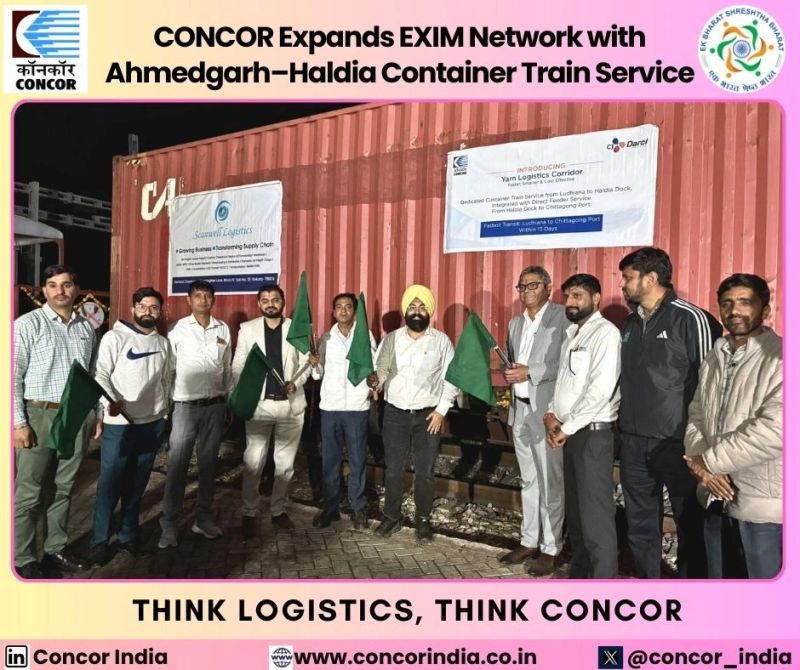
NEW DELHI : An EXIM container train service linking Ahmedgarh with Haldia Dock Complex has been successfully introduced, marking a significant step toward enhancing multimodal connectivity for export cargo destined for Chittagong.

The service has been launched from PLIL Inland Container Depot (GFPA) in association with CJ Darcl Logistics Limited, with the first container train flagged off on February 28, 2026.

The inaugural rake carried 31 forty-foot loaded export containers belonging to leading yarn exporters such as Winsome Textiles Industries Limited, Oasis Textiles, Vardhman Textiles Limited, Garg Acrylics Limited, and Sportking India Limited. The containers, primarily consisting of yarn exports, will be transported by rail to Haldia and subsequently moved through feeder vessels to the port of Chittagong in Bangladesh.

This newly introduced logistics corridor is expected to provide a cost-competitive and time-efficient solution for exporters shipping goods to Bangladesh. By integrating rail transport with coastal feeder services, the route significantly reduces transit time compared to conventional road-based movement, while also offering improved reliability and reduced logistics costs.

Industry stakeholders believe that the service will benefit exporters across Punjab and the northern hinterland by providing a seamless multimodal logistics option to access eastern ports. It is expected that the service will operate regularly with two rakes per month, ensuring a steady flow of export cargo and strengthening trade connectivity between India and Bangladesh.

Speaking on the development, Sanjay Swarup the Chairman of Container Corporation of India, highlighted that such initiatives are aligned with the government’s broader objective of enhancing multimodal logistics infrastructure, improving export competitiveness, and facilitating smoother cross-border trade in the region.

The introduction of the Ahmedgarh–Haldia container train service is expected to further boost India’s textile exports to Bangladesh while reinforcing the role of rail-based logistics in supporting efficient and sustainable supply chains.

DP World Reports Record $24.4 BN Revenue and $6.4BN EBIDTA in 2025

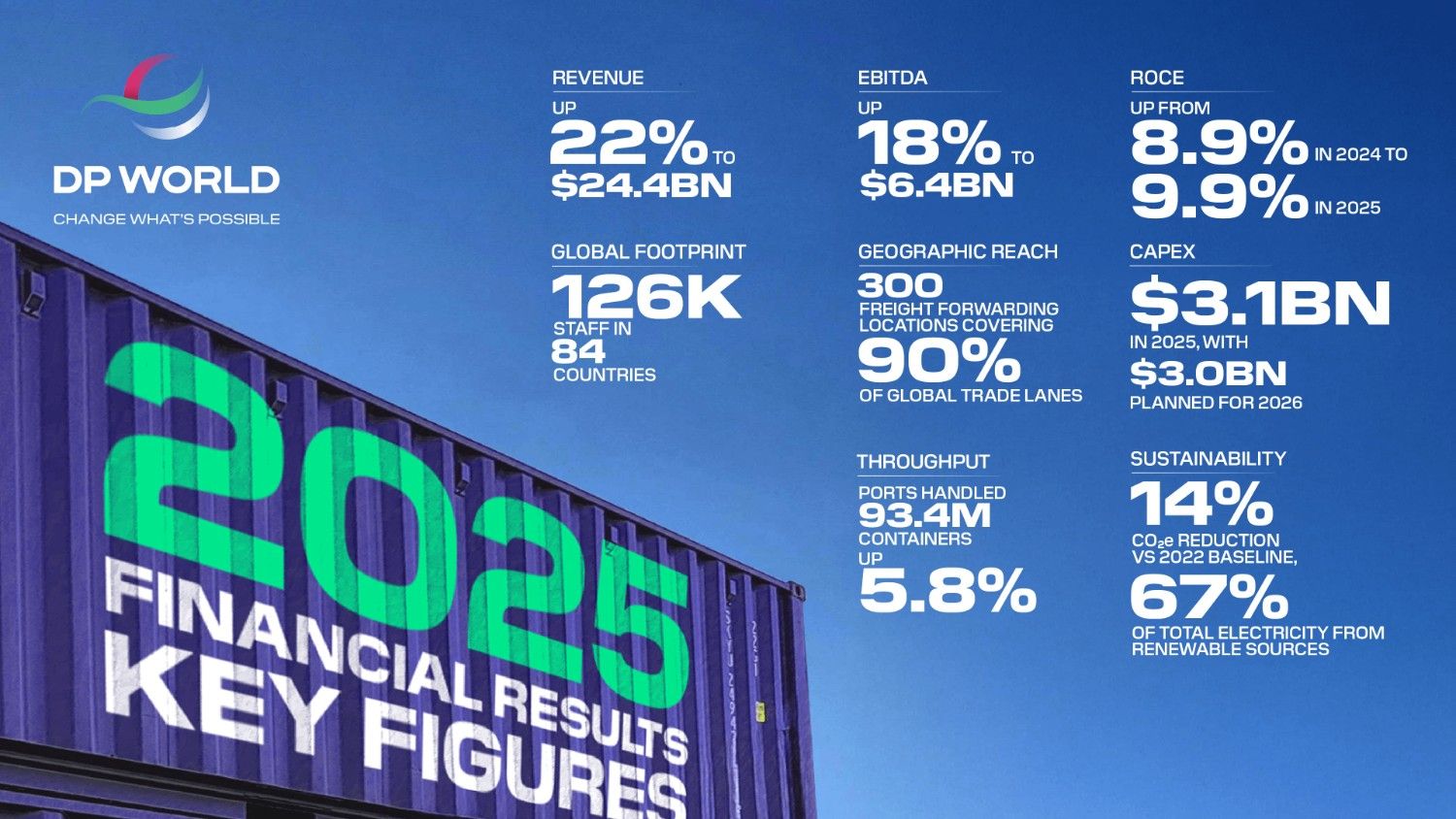
DUBAI: DP World Thursday announced record financial results for 2025, with revenue up 22% to $24.4 billion, and adjusted EBITDA up 18% to $6.4 billion (margin 26.3%), driven by strong performance across Ports & Terminals and Logistics.

Total Group gross throughput increased 5.8% to 93.4 million twenty-foot equivalent units (TEU).

Profits for the year increased 32.2% to $1.96 billion, reflecting operating leverage and disciplined cost management. Operating cash flow rose 14% to $6.3 billion.

His Excellency Essa Kazim Chairman of the Board of Directors DP World DP World Reports Record $24.4 BN Revenue and $6.4BN EBIDTA in 2025

Commenting on the results, H.E. Essa Kazim, Chairman of the Board of Directors, DP World, said:“In an environment defined by heightened uncertainty and changing trade dynamics, our diversified portfolio, disciplined capital allocation and focus on high-yield cargo enabled us to deliver resilient earnings and strong cash flow. These results reflect the strength of our integrated platform and our ability to adapt as supply chains reconfigure.”

Yuvraj Narayan Group Chief Executive Officer DP World DP World Reports Record $24.4 BN Revenue and $6.4BN EBIDTA in 2025

Yuvraj Narayan, Group CEO, DP World, added: “Ports & Terminals performed strongly, supported by healthy volumes, improved yield and disciplined cost management, with like-for-like revenue per TEU increasing by 8.5%. In 2025, we unified our Marine Services business under a single DP World brand, strengthening our position as a fully integrated global logistics provider. Across Logistics and our broader trade platform, we continued to scale capabilities and deepen collaboration through our ‘One DP World’ operating model. We remain focused on disciplined capital allocation, operational excellence and customer-centric execution—supporting customers through near-term uncertainty while investing selectively to deliver sustainable long-term growth.”

Return on Capital Employed (ROCE) increased from 8.9% in 2024 to 9.9%, reflecting stronger earnings despite continued geopolitical and trade uncertainty.

DP World invested $3.1 billion in capital expenditure in 2025 (up from $2.2 billion in 2024) to support capacity expansion and productivity enhancements globally. Port capacity increased to 109 million TEU. For 2026,the Group’s 2026 capex budget is approximately $3 billion, focused on priority projects including Jebel Ali, Drydocks World, Tuna Tekra (India), London Gateway (UK), Ndayane (Senegal) and Jeddah (Saudi Arabia).

DP World reduced Scope 1 and 2 emissions by 14% against a 2022 baseline, while approximately 67% of global electricity is now sourced from renewables.

DP World’s India operations contributed strongly to Group performance in 2025, delivering its strongest Ports and Terminals performance to date, while its three Economic Zones in India – at Chennai, Mumbai and Kochi are progressing rapidly, with occupancy at over 80%. This is along with significant investments, including:

  • Multimodal infrastructure enhancing rail and inland connectivity across India’s hinterlands, strengthening rail-based access to ports and domestic hubs for businesses.
  • The construction of the new 2.19 million TEU Tuna-Tekra mega‑container terminal in Gujarat, which is advancing on schedule.
  • DP World announced plans to invest an additional $5 billion in India to further strengthen its integrated supply chain network, which supports both exports and domestic trade. 
RizwanSoomarCEOMDSubcontinentCentralAsiaLevantandEgypt DP World Reports Record $24.4 BN Revenue and $6.4BN EBIDTA in 2025

Rizwan Soomar, CEO and Managing Director – Subcontinent, Central Asia, Levant and Egypt said: “India remains a key growth market for DP World, and our continued investments reflect our confidence in the country’s long-term trade potential. From expanding our ports and logistics infrastructure to further strengthening multimodal connectivity and developing world-class economic zones, we are committed to enhancing an integrated supply chain network that supports both international and domestic trade. These initiatives will enhance efficiency, unlock new opportunities for businesses, and further contribute to India’s economic growth.”

Global Financial Performance

20252024Change (like-for-like at constant currency)
Revenue24,42220,02313.4%
Adjusted EBITDA6,4305,45016.8%
EBIT4,0663,35722.1%
Profit1,9601,48331.8%
Profit Attributable to Owners1,07275142.7%
ROCE9.9%8.9%–
*Like-for-like at constant currency adjusts for foreign exchange movements and the impact of acquisitions and disposals to aid comparability.

National Council for Cement and Building Materials collaborates with TraceXero Technologies to support development of Carbon Capture Technologies

NEW DELHI : National Council for Cement and Building Materials (NCB), an apex research and development organisation under the Department for Promotion of Industry and Internal Trade (DPIIT), Ministry of Commerce and Industry, has entered into a collaboration with M/s TraceXero Technologies Private Limited, an Indian technology start-up working in the field of industrial decarbonisation and carbon capture solutions and incubated at NCB.

The collaboration aims to support the development, technical validation, and potential commercialisation of advanced Carbon Capture and Utilisation (CCU) technologies for the cement and construction materials sector.

The cement industry is one of the key pillars of infrastructure development and economic growth. The sector contributes approximately 7 per cent of global carbon dioxide emissions and is considered a hard-to-abate sector due to its process-related emissions. Carbon Capture and Utilisation has been identified as one of the critical levers to support the goal of Net Zero in the cement industry.

TraceXero has been developing a technology that captures CO₂ using a proprietary solvent process and converts the captured CO₂ into graphitic carbon and eventually graphene, turning emissions into a potentially valuable material resource rather than a waste stream.

NCB has been working in the areas of research, technology development, and industrial services for the cement and construction materials sector in India. Through its laboratories, pilot facilities, and technical expertise, NCB provides scientific and technical support to industry, academia, and emerging technology developers.

Through collaboration with start-ups and technology innovators, NCB seeks to support start-ups involved in the development and validation of next-generation solutions that can help the industry address sustainability challenges while maintaining productivity and competitiveness.

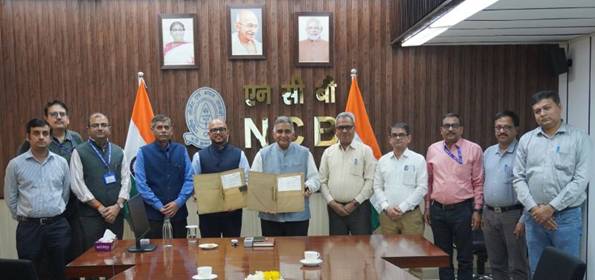
The agreement was signed on 10 March 2026 at NCB Ballabgarh by Joint Director and Secretary, NCB, Dr. S. K. Chaturvedi, and Co-founder, TraceXero Technologies Private Limited, Shri Reetam Chaudhury, in the presence of Director General, NCB, Dr. L. P. Singh, and Heads of Centres and Service Groups of NCB.

Cargo Matters commits ₹100 Crore to establish India’s First Integrated Green Freight Hub in Andhra Pradesh

NEW DELHI: Cargo Matters, a leading technology-driven logistics and sustainable infrastructure firm, Thursday announced the signing of a landmark Memorandum of Understanding (MoU) with the Government of Andhra Pradesh to establish an integrated Electric Vehicle (EV) manufacturing and charging hub. Representing a total investment of ₹100 Crore, the project is designed to accelerate India’s “Green Freight” transformation through the electrification of Heavy Commercial Vehicles (HCVs).

The firm has formally submitted a Detailed Project Report (DPR) to the Andhra Pradesh Industrial Infrastructure Corporation (APIIC) for the allotment of 18 acres of industrial land. The facility is envisioned as a multi-functional ecosystem, featuring a dedicated Manufacturing Block for charger production, a specialized Retrofit Facility for heavy vehicle electrification, and a robust R&D unit for validation and certification.

Key Highlights of the Project:

  • Employment Generation: The facility is projected to create 1,000 direct jobs and approximately 3,000 indirect employment opportunities within the state.
  • Strategic Green Infrastructure: ₹50 Crore of the total investment is earmarked specifically for charging infrastructure to support regional heavy-duty electric corridors.
  • Rapid Implementation: Under the state’s proactive industrial policy, pilot operations are expected to begin within 12-18 months, with full commercial commissioning targeted within 24 months of approval.

“This MoU represents our commitment to practical decarbonization,” said Umesh Padala, Founder & Chairman, Cargo Matters.“While the passenger EV market is maturing, the heavy freight sector remains the final frontier. Our Madanapalle facility will provide fleet owners with a cost-effective pathway to electrification through advanced retrofitting and dedicated heavy-duty charging networks.”

Shri P.N Mahesh, Director, APIIC, added: “As part of our commitment to building a green and future-ready logistics ecosystem, we are pleased that Cargo Matters has chosen Madanapalle for its upcoming hub. The project aligns with the Andhra Pradesh Sustainable Electric Mobility Policy 4.0 (2024–2029) and strengthens our ‘Green Freight’ vision. Strategically located near the borders of Karnataka and Tamil Nadu, with Bengaluru about 100 km away and Chennai around 250 km away, Madanapalle offers excellent connectivity for logistics operations. The initiative will generate nearly 1,000 direct and 3,000 indirect jobs, creating meaningful opportunities for the region’s youth.”

The project aligns with the Andhra Pradesh EV Policy 2024-2029, positioning the state as a global hub for high-value electric vehicle manufacturing and sustainable transportation.

About Cargo Matters: 

Cargo Matters (Parmelee Cargo Matters Logistic Solutions Pvt Ltd) is a technology-driven logistics provider headquartered in New Delhi. The firm operates a fleet of over 400 GPS-equipped trucks across 15,000+ pincodes, serving blue-chip clients including Tata Steel, DHL, and Havells. Integrating data through the National ULIP, the company specializes in FTL and LTL services with a focus on real-time visibility and “Green Freight” innovation.

Chubb to serve as lead US insurer for Gulf shipping amid Iran war

WASHINGTON : Insurance Giant Chubb (CB.BN), opens new tab will be the lead partner on the U.S. International Development Finance Corporation‘s $20 billion Maritime Reinsurance ​Plan aimed at resuming commercial shipping in the Gulf, the ‌agency said on Wednesday. The U.S.-Israeli conflict with Iran has widened sharply in recent days and paralyzed shipping traffic through the Strait of Hormuz, a major global chokepoint in the Gulf.

Iran said ​the world should be prepared for oil to hit $200 a barrel ​as its forces attacked merchant ships on Wednesday in the ⁠blockaded Gulf. Meanwhile, U.S. President Donald Trump has repeatedly tried to reassure ​markets this week that the campaign will end soon.

So far there has ​been no let-up on the ground and no sign ships can safely pass through the Strait of Hormuz, where about a fifth of the world’s oil passes, ​raising the risk of the worst disruption to energy supplies since the ​oil shocks of the 1970s.

Maritime insurance covers ships and cargo against risks such as ‌accidents, ⁠piracy or conflict, with shipowners paying premiums that rise as insurers assess the likelihood of losses.

War-risk coverage is typically excluded from standard policies and must be purchased separately, often at sharply higher premiums for vessels sailing through ​conflict zones.

Without such ​coverage, ships and ⁠cargo worth hundreds of millions of dollars would be exposed to losses from attacks or seizures, leaving owners ​and financiers vulnerable and deterring vessels from sailing through ​such ⁠waters.

The DFC said its reinsurance facility will insure losses up to roughly $20 billion on a rolling basis and insurance will initially focus on hull and ⁠cargo. 

“Together, ​DFC and Chubb have identified several American ​insurance companies to provide reinsurance policies behind Chubb and alongside DFC to expand market capacity,” the ​agency added.

INTERCARGO urges Vigilance and Reaffirms Priority on Seafarer Safety as Security Risks Escalate in Middle East Gulf and Strait of Hormuz

The International Association of Dry Cargo Shipowners (INTERCARGO) has expressed deep concern over the rapidly evolving security situation in the Gulf waters and the Strait of Hormuz, stressing that the safety and wellbeing of seafarers must remain the industry’s overriding priority.

INTERCARGO is deeply saddened by reports of attacks on bulk carriers and merchant shipping overall and the tragic loss of life. The Association’s thoughts are with the families and colleagues of those impacted, while recognising the growing challenges faced by seafarers and shore-based personnel managing operations in an increasingly volatile environment.

Following an emergency cross-industry briefing at the International Maritime Organization (IMO) on 11 March, called by IMO Secretary-General Arsenio Dominguez, Kostas Gkonis, Secretary General of INTERCARGO, said: “The latest attacks on merchant vessels in the Gulf region and the most recent incidents involving bulk carriers demonstrate that commercial shipping near the Strait of Hormuz remains exposed to serious and evolving security risks.Seafarers are doing their jobs to sustain global trade and must never become targets of geopolitical tensions. The safety of seafarers and the integrity of international shipping must remain a shared international priority.Bulk carrier operators and masters are encouraged to exercise prudent judgement and thorough risk assessment before sailing in high-risk areas. We recommend that members follow the advice of their P&I Clubs, legal counsels and insurers.”

INTERCARGO has also noted reports suggesting that three seafarers may remain trapped following an attack on a bulk carrier in the Strait of Hormuz and sincerely hopes that any rescue efforts underway to reach those in danger are successful.

INTERCARGO has been supporting its members and keeping them informed of emerging developments from reputable and reliable sources, including the outcomes and key points of meetings held by naval coordination offices such as EU NAVFOR, NATO, UKMTO, MECIO and JMIC. Feedback from members highlights ongoing concerns regarding operational uncertainty and the safety of crews and vessels operating in the region.

INTERCARGO will continue to provide updates as the situation develops: