Home Blog Page 413

400,000 tons stuck in transit: Iran conflict disrupts India’s basmati exports

NEW DELHI: About 400,000 metric tons of Indian basmati rice are stuck in transit as the Iran conflict disrupts shipping routes across the Middle East and sends freight costs soaring, Reuters reported on Tuesday, citing trade officials. Export deals have reportedly dried up since the weekend strikes, and container freight rates have more than doubled.

India is the world’s largest exporter of premium basmati rice. Buyers in the Middle East – including Saudi Arabia, Iran, and the United Arab Emirates – account for more than half of its shipments.

“Around 200,000 tons of basmati rice are stuck in transit, and an equal amount is stranded at Indian ports as the war has disrupted shipping routes across the Middle East,” Mr. Satish Goel, President of the All India Rice Exporters’ Association (AIREA), told Reuters.

Exporters had already moved stocks to ports but cannot ship to the Middle East because of rising container freight costs, and no alternative market can absorb the volume, the association chief said.

On Monday, Iran’s Islamic Revolutionary Guard Corps shut the Strait of Hormuz for shipping traffic and warned that any vessel attempting to pass through would be set on fire, according to Iranian state media.

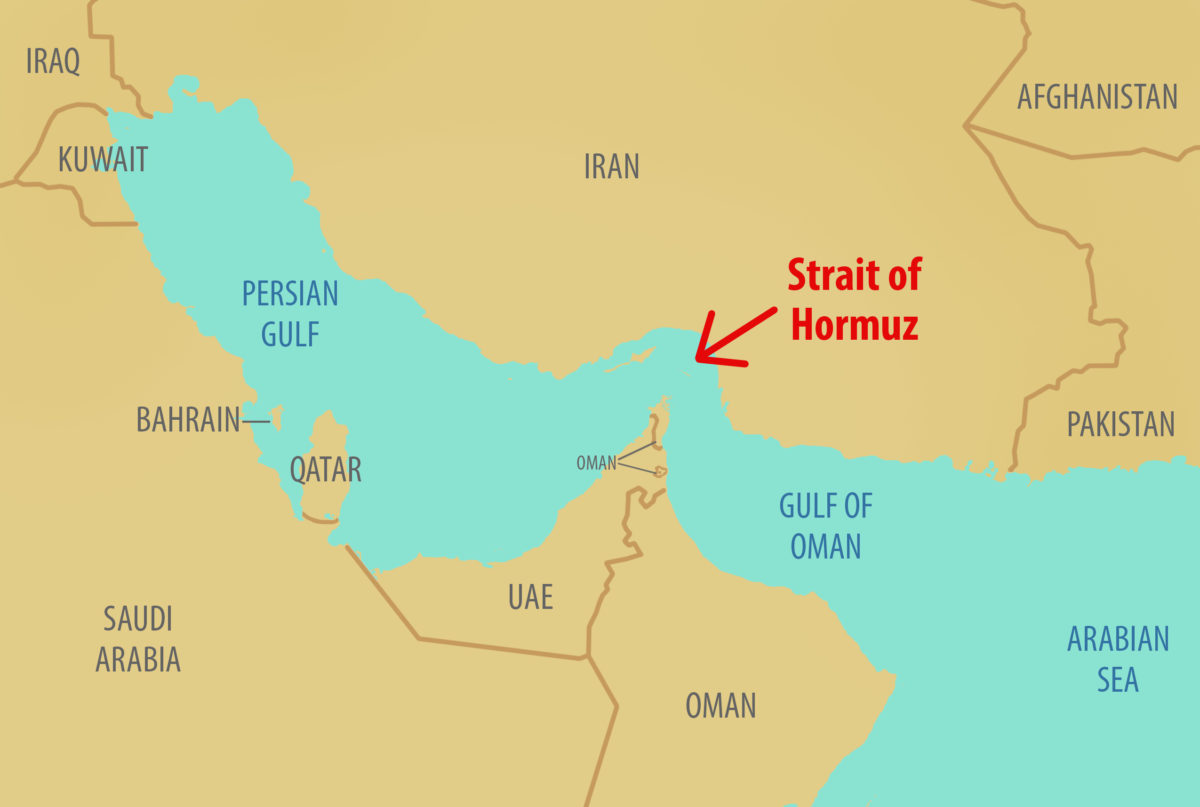
The Strait of Hormuz is one of the world’s most critical shipping corridors, serving as the main maritime gateway between the Persian Gulf and global sea lanes. A significant share of commercial cargo – including energy shipments and container traffic bound for Asia – moves through this narrow passage.

The United Arab Emirates, including Dubai, lies just outside the strait, making it a key transshipment hub for trade with the Middle East. While Saudi Arabia and the UAE operate limited pipeline routes that bypass the waterway for oil, most cargo vessels moving through Hormuz – including container ships – have no practical alternative route if the strait is disrupted, according to the U.S. Energy Information Administration.

Tankers and container ships are avoiding the waterway as insurers cancel coverage for vessels, while global shipping rates have surged.

Exporters are not taking new orders from the Middle East and are prioritising shipments under existing contracts, a New Delhi-based dealer with a global trading house told the news agency. 

India’s rice exports usually exceed the combined total shipped by the world’s next three biggest exporters – Thailand, Vietnam, and Pakistan.

Iran to allow Only Chinese Vessels through Strait Of Hormuz: Sources

TEHRAN: Iran has said it will allow only Chinese vessels to pass through the Strait of Hormuz as an expression of gratitude for Beijing’s stand towards Tehran since the war in the Middle East began, sources have said. This is significant because the Strait, which provides the Persian Gulf ports access to the open sea, is a key chokepoint that Iran has blocked since the conflict in the region began, threatening global supply chains.

Iranian forces have warned that any ship attempting to cross the Strait will be targeted. The Islamic Revolutionary Guard Corps, Tehran’s elite force spearheading the counter-attack after the US and Israel offensive, has said they now have “complete control” of the Strait and any vessels seeking to pass risked damage from missiles or stray drones.

The Strait of Hormuz provides open sea access to countries such as the United Arab Emirates and Qatar. Roughly 20% of global oil supplies move through it before proceeding to Asian markets such as China and India. With Iran blocking this route, a massive disruption in global supply chains is expected.

How China Reacted To Iran War

China has said that airstrikes carried out in Iran by the US and Israel were “unacceptable”. According to a report in state news agency Xinhua, Foreign Minister Wang Yi told his Russian counterpart Sergei Lavrov on Sunday that the “blatant killing of a sovereign leader” — Iran’s Supreme Leader Ayatollah Ali Khamenei — and the incitement of regime change were unacceptable.

Earlier, China appealed for an immediate ceasefire and the safety of shipping lanes. Beijing is the main buyer of Iranian oil and most of its supplies pass through the Strait. A prolonged blockade would lead to a massive crisis in China.

“China urges all parties to immediately cease military operations, avoid further escalation of tensions, maintain the safety of shipping lanes in the Strait of Hormuz, and prevent a greater impact on the global economy,” Chinese foreign ministry spokeswoman Mao Ning has said. “Energy security is of great importance to the global economy… China will take necessary measures to ensure its energy security,” she said.

Trump’s Navy Escort Promise

US President Donald Trump has said that the country’s Navy will escort tankers through the Strait if necessary. “If necessary, the United States Navy will begin escorting tankers through the Strait of Hormuz, as soon as possible. No matter what, the United States will ensure the FREE FLOW of ENERGY to the WORLD,” he has said on his Truth Social platform.

US President Donald Trump has said that the country’s navy would escort oil tankers through the Strait of Hormuz if needed. “If necessary, the United States Navy will begin escorting tankers through the Strait of Hormuz, as soon as possible. No matter what, the United States will ensure the FREE FLOW of ENERGY to the WORLD,” Trump said on his Truth Social platform.

Ensuring free passage through the Strait is also crucial for Trump domestically. A prolonged blockade will push up oil prices, raising inflation in the US. The US is self-sufficient in natural gas, but a hit to the global supply chain will have a ripple effect and hike prices. And this at a time when many in the US are worried about job security and struggling due to the impact of Trump’s tariff wars.

Attack on oil tanker ‘Skylight’ highlights risks to Indian seafarers in Persian Gulf route

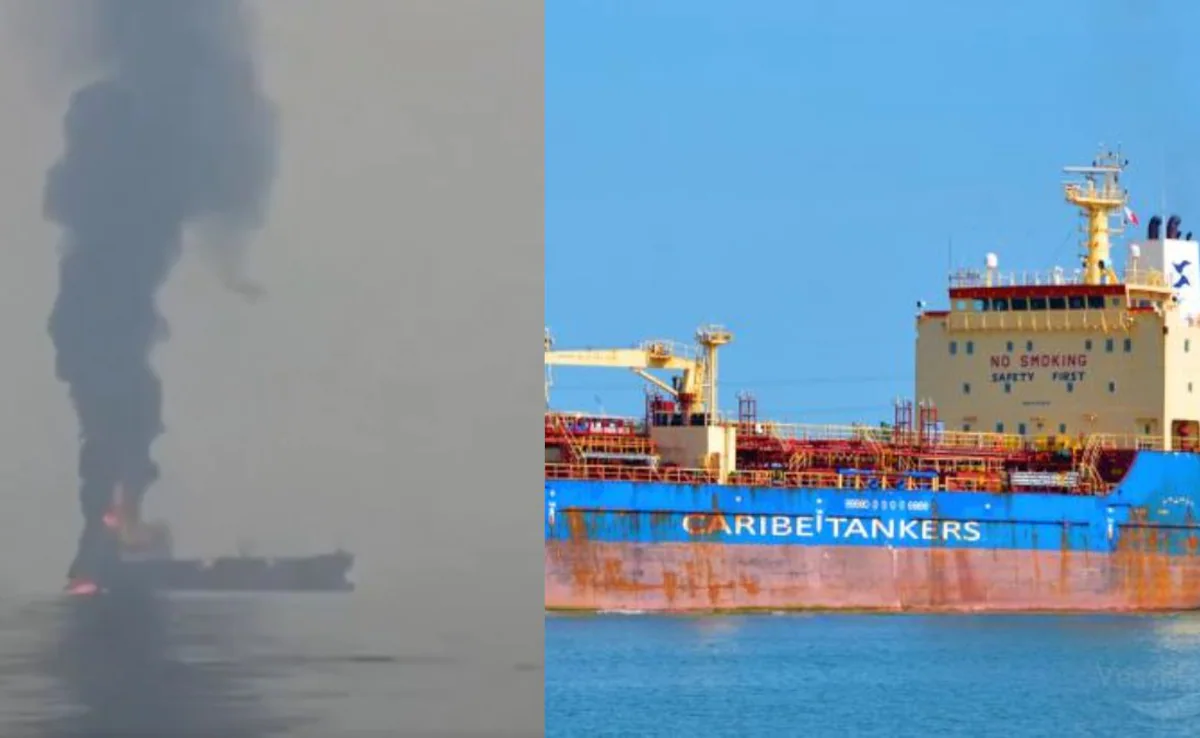
OMAN: Iran has attacked an oil tanker ‘Skylight’ passing through the Strait of Hormuz near the coast of Oman, as it retaliates with all its might to avenge the US and Israel’s assassination of Supreme Leader Ayatollah Ali Khamenei.

The attack on Skylight, a tanker with 15 Indian and 5 Iranian seafarers on board, has brought to the fore the risks to Indian seafarers serving on ships in the Persian Gulf route as well as those flagged as shadow fleet by the U.S.

Three ships have been reportedly attacked so far since the latest round of hostilities began. Ship traffic through the Strait of Hormuz has ground to a halt on March 1, 2026, while some 60 to 70 ships had transited in the previous day.

The Palau-flagged oil tanker was struck off Oman’s Musandam Peninsula in an attack that followed drone strikes on the country’s Duqm port. At least four were injured in the attack, said Oman’s Maritime Security Centre (MSC).

The Strait of Hormuz is a strategic route for global oil shipping, described as the world’s most sensitive maritime chokepoint. It braced for an alarm yesterday as a radio warning purportedly by Iran’s Navy claimed that no ship was allowed to pass the narrow corridor.

The oil tanker, Skylight, was sailing with a 20-person crew, including 15 Indians and five Iranian citizens, according to the Oman MSC. The crew was evacuated after the attack that occurred five nautical miles from Khasab Port in Musandam.

“The Maritime Security Centre announces that the oil tanker (SKYLIGHT), flying the flag of the Republic of (Palau), was targeted 5 nautical miles north of Khasab Port in the Musandam Governorate, and all crew members of the tanker, consisting of 20 individuals–including 15 holding Indian nationality and 5 of Iranian nationality–have been evacuated,” the MSC said in a post that did not mention what hit the tanker.

The attack marks the first time a target has been hit in or near Oman as the Gulf finds itself entangled in a new war following Iran’s retaliation to joint US-Israeli strikes.

Four crew members suffered varying injuries and have been taken for treatment, the centre added, citing preliminary information.

“The Centre confirms that the rescue operations were carried out in coordination among various military, security, and civilian agencies, reflecting the national readiness to handle maritime incidents,” it added.

Earlier in the day, a worker was injured after two drone strikes were reported at the Duqm port in Oman.

The Strait of Hormuz is a strategic maritime chokepoint that handles roughly a fifth of global oil consumption flows. It is a narrow maritime corridor that connects the Persian Gulf to the Gulf of Oman and the Arabian Sea and ultimately the Indian Ocean. Iran lies to its north. To its south are Oman and the UAE.

Iran shares control of the Strait of Hormuz with the Musandam Peninsula of Oman.

Oil and gas tankers had increasingly been avoiding the corridor after a radio broadcast purportedly declared that “no ship is allowed to pass the Strait of Hormuz,” sparking a fresh concern among shipping companies, insurers, governments, and oil markets.

Iran had warned of closing the Strait of Hormuz last month too if the US or any other country launched a strike.

The country has now vowed a decisive response to yesterday’s strikes by the US and Israeli forces that eliminated the Supreme Leader. “The most ferocious offensive operation in the history of the Islamic Republic of Iran’s armed forces will begin any moment now,” Iran’s Revolutionary Guards have warned.

Saudi’s Aramco explores Oil Exports from Red Sea to avoid Strait of Hormuz

DHAHRAN: Saudi Aramco is exploring the option of delivering more cargoes to Yanbu, a port on the Red Sea that’s situated outside the Persian Gulf, where dozens of ships are hunkered down as the Strait of Hormuz remains effectively closed.

Aramco typically exports the bulk of its crude from ports within the Gulf, but conflict in the Middle East has led to a logjam of vessels. The world’s biggest oil exporter has a 5 million barrel-a-day pipeline that runs across the country which can transport oil from fields in the east to the Red Sea in the west.

Aramco did not immediately respond to a request for comment.

Aramco has asked some customers in Asia if they’re able to lift cargoes from Yanbu, according to people with knowledge of the matter, who asked not to be identified because the discussions aren’t public. Shippers are also being sounded out to assess if they would change loadings to Yanbu from the Persian Gulf, one of the people said.

The main grade of crude which Aramco has asked to be loaded from Yanbu in the Red Sea is the company’s flagship Arab Light grade, the people said.

The Red Sea is far from risk-free. Yemen’s Iran-backed Houthi militant group has threatened to resume attacks on vessels sailing through the waterway. Even though there haven’t been any known incidents since then, the concerns are significant enough for some of the biggest shipping lines to reverse earlier plans to return to the route.

Saudi Arabia produces about 10 million barrels a day of crude, with observed exports rising to about 7.2 million a day last month. The country’s 746-mile East-West Pipeline’s current capacity won’t be enough to cover all of its overseas sales.

Still, it gives the kingdom an alternative. Aramco has already suffered from the expanding war in the Middle East after the company was forced to shut its biggest refinery at Ras Tanura in the Persian Gulf following a drone strike. The slowdown of maritime traffic has also raised the fear of storage tanks in the region filling up, which might eventually result in production being curtailed.

GEODIS Recognized as a Leader by Gartner® in the First-Ever 2025 Magic Quadrant for Fourth-Party Logistics (4PL)

FRANCE: GEODIS business has been recognized as a Leader in the first-ever 2025 edition of the Gartner Magic Quadrant for Fourth-Party Logistics (4PL). It underscores the strength of its supply chain orchestration capabilities and its ability to support companies in transforming their end-to-end logistics operations.

In this first edition, Gartner evaluates the world’s leading fourth-party logistics providers based on their Ability to Execute and Completeness of Vision. This Magic Quadrant distinguishes four categories of providers — Leaders, Visionaries, Challengers and Niche Players — and serves as a key reference for supply chain leaders when assessing 4PL partners to outsource and manage their logistics and supply chain operations.

GEODIS model is neutral product strategy seamlessly combining the management of outsourced logistics activities with those operated within its own network, as well as a digital orchestration offering delivering value in areas such as network optimization, risk management and continuous improvement.

“This recognition by Gartner confirms the relevance of our Supply Chain Management strategy and our ambition to be a leading orchestration partner for our customers. Our 4PL model is built on neutrality, efficiency and digital innovation to enable more resilient and global supply chains,” said Henri Le Gouis, Executive Vice President, Global Freight Forwarding at GEODIS. 

GEODIS’ 4PL activities are driven by its Supply Chain Management (SCM) business, with approximately 1,020 employees worldwide, serving a wide range of industries including industrial manufacturing, high tech, aerospace and defense, automotive, retail, FMCG and healthcare.

Gartner Disclaimer

Gartner, Magic Quadrant for Fourth-Party Logistics, Matthew Beckett, David Gonzalez, 1 December 2025.

Gartner and Magic Quadrant are registered trademarks and service marks of Gartner, Inc. and/or its affiliates in the U.S. and internationally and are used herein with permission. All rights reserved. Gartner does not endorse any vendor, product or service depicted in its research publications and does not advise technology users to select only those vendors with the highest ratings or other designation.

Gartner research publications consist of the opinions of Gartner’s research organization and should not be construed as statements of fact. Gartner disclaims all warranties, express or implied, with respect to this research, including any warranties of merchantability or fitness for a particular purpose.

INTERTANKO and OCIMF have issued the following joint statement

LONDON: INTERTANKO (the International Association of Independent Tanker Owners) and Oil Companies International Marine Forum (OCIMF) have issued the following joint statement: 

“As we monitor the evolving situation across the Middle East and its waterways, our focus remains on the safety of seafarers and all those affected. Seafarers continue to operate in a complex and uncertain environment, and their safety and wellbeing must remain a priority.

“We encourage members and the wider industry to rely only on verified information from authoritative and trusted sources. Operational decisions should be based on thorough, company-led due diligence and comprehensive risk assessments covering all stages of a voyage, including port calls and ship-to-ship (STS) operations.

“In addition to established security measures and Best Management Practices (BMP), the human element should be considered in decision-making. Workload, fatigue, communication, and other operational pressures, including planned crew changes, can affect safe outcomes and should be appropriately managed.

“We will continue to work with industry partners and governments and monitor developments in support of safe and responsible marine operations.”

NGOs warn EU Port and Industrial Maritime strategies fall short for ocean protection

BRUSSELS: The European Commission published two ocean-focused EU strategies: The European Ports Strategy and the EU Industrial Maritime Strategy. Both strategies are presented under the 2025 Ocean Pact which aims to align European Union’s policies and regulations to protect and restore ocean health. However, leading environmental NGOs Seas At Risk, One Planet Port, Zero and International Fund for Animal Welfare (IFAW) warn that both strategies fall short of the ambition needed to safeguard EU’s seas.  

Ports are central to Europe’s economy, often located in fragile marine areas such as estuaries where expansion and activities can damage locally important wildlife habitats and blue carbon ecosystems. To genuinely protect and restore marine environments, the strategies must go further by embedding nature into port planning and development, avoiding expansion in sensitive natural areas and prioritising nature-based solutions such as ecological breakwaters, living seawalls and smarter sediment management. The reference to the proposed regulation on speeding up environmental impact assessments, part of the Environmental Omnibus package, is alarming.

At a time of fragile global trade dynamics, NGOs welcome the focus on digital ports optimisation and strengthening the “made in the EU” production, however this must not come at the expense of the environment. Embedding stronger circular economy principles and localised production in European ports would support more jobs, shorten maritime supply chains, and reduce material and carbon footprints.

The strategies also overlook a major concrete opportunity: scaling up wind propulsion on vessels. While electrification and e-fuels are highlighted as pathways to decarbonisation, wind propulsion is largely addressed in terms of developing methodologies to account for wind-assisted energy savings and addressing regulatory gaps at EU and International Maritime Organization (IMO). Yet wind propulsion already offers a proven zero-emission solution that could significantly reduce shipping’s contribution to greenhouse gas emissions while strengthening Europe’s industrial leadership. Scaling up wind technologies would help the EU hit their FuelEU target of an 80% emission reduction by 2050. Bringing more wind to Europe would bring innovation and research. If combined with mandatory reduced ship speed, wind propulsion can contribute also to reducing underwater noise pollution and the risk of collisions with marine mammals. Tapping into this potential is essential to ensure that the infrastructure and policy developed will serve the long-term purpose of decarbonising maritime transport and minimising the shipping sector’s impact on marine life. If the Commission is serious in enabling this transition, it needs to support ports and the maritime sector by enabling manufacturing facilities, retrofitting equipment, as well as providing essential training to upskill workers.

Meanwhile, as the EU is currently revising both the Maritime Spatial Planning Directive and the Marine Strategy Framework Directive under the umbrella of the Ocean Act, it is highly concerning that these were not considered as key opportunities to achieve the objectives of both Strategies: ensuring the resilience of EU Maritime Sectors and EU Ports. This highlights a potential gap that risks weakening the alignment between economic development and ecosystem health, without which a resilient economy will remain a pipe dream.

Sian Prior, Shipping Director, Seas At Risk, said “Europe needs ports that are resilient, environmentally responsible, and truly made for Europe’s competitive future. From circular port economies to effective ecological planning, strong collaboration between port authorities and regional governments will be key. Both the EU Ports Strategy and the Industrial Maritime Strategy miss an opportunity to set up a clear vision for how Europe can build a sustainable and future proof maritime sector that operates within planetary boundaries.” 

The two strategies come at a time when Europe urgently needs resilient and sustainable ports and a maritime sector. Whilst the strategies take modest steps in the right direction, NGOs urge Europe to strengthen nature protection and marine ecosystems, accelerate zero-emission solutions and fully integrate ports into its ocean governance framework. It must assure that upcoming flagship actions, including the 2026 European Climate Adaptation Plan (ECAP) and the 2027 EU environmental guidance for ports, work for environmental protection, and not the contrary. In addition to this, the ringfenced European Trading System (ETS) must prioritise investments in true zero-emission solutions, such as wind propulsion, as well as infrastructure that supports a rapid transition away from fossil fuels. 

Dr Lucy Gilliam, Co-Executive Director, One Planet Port, said “We see enormous potential for European ports to become global leaders in climate innovation and ecosystem stewardship. By integrating marine spatial planning, nature-based design, circular production systems with zero emission & wind-assisted shipping into a coherent strategy, Europe can build ports that are resilient, competitive and aligned with planetary boundaries. This requires coordinated action between EU institutions, port authorities and regional governments – and the courage to prioritise long-term environmental security alongside economic strength.”

Ilaria Di Silvestre, Director of Policy and Advocacy, Europe at IFAW, said “The move toward digital port optimisation is a welcome and necessary step forward. When ships can plan their arrivals more accurately, they can slow down at sea—reducing collisions with whales and dolphins, cutting underwater noise, and lowering emissions. To truly maximise these benefits, it’s essential that efficiency gains go hand in hand with binding environmental targets.”

Fragmented compliance systems increase sanctions risk across global shipping, Marcura report warns

DUBAI/LONDON: Maritime companies face rising sanctions and compliance complexity as regulators increasingly expect risks to be detected before violations occur, according to a new report published by Marcura.

The report “The Fragmentation Problem in Maritime Compliance” points to divergence between US, EU and other sanctions regimes. Secondary sanctions have expanded, and a growing shadow fleet continues to obscure ownership, insurance and trading histories. Together, these factors increase exposure for global operators at a time when compliance processes remain fragmented across organisations.

Survey findings from Marcura show that 82% of maritime executives say compliance demands are growing. 86% express concern about undetected compliance risk. Onboarding and KYC now cost $1,500–$3,500 per counterparty, driven largely by duplicated manual checks across multiple systems; a burden that compounds quickly in markets where counterparties change frequently.

Despite increased investment in sanctions screening and automation, the problem is not lack of effort. It is structural. Organisations routinely run multiple screening platforms that return different results on the same counterparty. The compliance function becomes the manual integration layer, piecing together a risk picture from conflicting outputs. The same verification work is repeated across organisations, while intelligence gathered by one remains inaccessible to others facing identical decisions.

The problem extends beyond sanctions. Payment fraud targeting maritime runs three to five times higher than traditional banking when adjusted for transaction volume. ESG and supply chain obligations are expanding the scope of supplier vetting. Anti-bribery controls remain inconsistent across a sector where, according to the Maritime Anti-Corruption Network, over 65,000 corruption-related reports have been documented across more than 1,000 ports in 150 countries. Each risk vector demands its own processes, with little infrastructure connecting them.

Commenting on the challenges identified in the report, Andrei Grigoras, SVP, Compliance Solutions at Marcura, said: “The compliance function carries a question that never fully goes away: did we miss something? Fragmentation makes that question harder to answer. When the same counterparty produces different results across different systems, the noise drowns out the signals that actually matter.”

The report sets out a direction of travel toward compliance functioning as shared infrastructure, where verification is performed once, recognised across workflows, and reinforced by collective intelligence. Rather than every organisation bearing the full cost of counterparty verification in isolation, a networked model would allow screening outcomes to travel with the counterparty across participating organisations

The full report is available here.

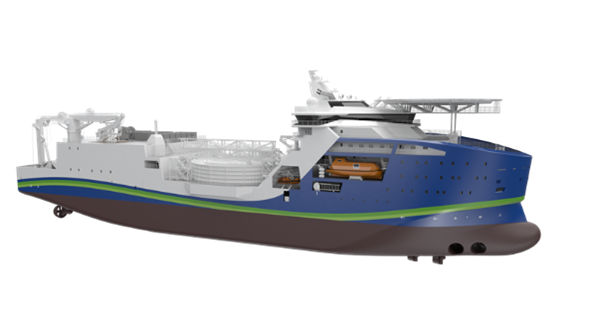
ClassNK issues General Design Approval (GDA) for Subsea Cable-Laying Vessel developed by NYK Line

TOKYO: ClassNK has issued a General Design Approval (GDA) for Subsea Cable-Laying Vessel developed by Nippon Yusen Kabushiki Kaisha (NYK Line). This approval verifies the vessel’s compliance with relevant rules at the detailed design level*1.

The expansion of wind power generation utilizing offshore areas and surrounding islands with favorable wind conditions and relatively limited site constraints is expected as part of efforts to increase the share of renewable energy. However, regions suitable for wind power generation are often located far from major electricity demand centers, making the development and reinforcement of power transmission infrastructure a key challenge in delivering generated electricity to demand areas.

In response to this challenge, long-distance subsea DC transmission using cable jointing and burial vessels is regarded as an effective solution for achieving efficient power transmission.

ClassNK carried out a design review of the vessel based on part O of its `Rules and Guidance for the Survey and Construction of Steel Ships,’ as well as other relevant rules, and issued a GDA after confirming compliance with the prescribed requirements.

ClassNK will continue to contribute to the widespread adoption of offshore wind power generation by supporting new technology development and social implementation, including through safety assessments.

*1 At an early stage of design, or prior to the determination of a specific vessel for implementation, the design is reviewed based on existing regulations such as international conventions and ship classification rules, and a certificate is issued as proof of compliance with the relevant requirements.

This process helps prevent regulatory revisions or rework in later development stages and contributes to reducing the time required for examination upon class registration. It can also serve as a technical basis for externally demonstrating the soundness of the design.

PM to address Post Budget Webinar on “Sustaining and Strengthening Economic Growth” today

NEW DELHI: Prime Minister Shri Narendra Modi will address the Post Budget Webinar on the theme “Sustaining and Strengthening Economic Growth” on 3rd March 2026 at 11:15 AM via video conferencing. 

Under this theme, four different webinars sessions are being held covering various sectors including

(i) Manufacturing, Industrial Upgradation & Strategic Sectors, 

(ii) MSMEs, Finances & Market Access,

(iii) City Economic Regions and

(iv) Infrastructure, Logistics & Freight.

The Post‑Budget Webinar will highlight the forward‑looking reform push to expand industrial scale, deepen technological leadership, and strengthen the foundations of critical sectors. The deliberations will focus on translating these priorities into effective action, guided by insights from industry participants whose on‑ground experience will support more effective implementation.