Home Blog Page 422

GEODIS to work with the NAOS Group in decarbonizing its supply chain

LEVALLOIS-PERRET : GEODIS, a world leader in transport and logistics, has announced an innovative multimodal rail-road link for NAOS Group, specialist in skincare products. The partnership demonstrates a shared commitment to a more responsible, high-performing and secure supply chain.

Since January 2026, GEODIS has been operating a multimodal logistics flow for NAOS, combining rail and road options. Goods are collected in Neuville-en-Ferrain (north of France), then transported by truck to the multimodal platform in Dourges (France). From there, they travel by train to Avignon (France), before final delivery by truck to the NAOS logistics warehouse located in Port Saint Louis, in the south of France.

Representing nearly 300 full truckloads per year, the shipments, previously handled exclusively by road, now benefit from the decarbonizing effects of a multimodal solution. As such, this innovative logistics model enhances positive environmental performance while maintaining a high level of service quality, reliability and security.

A decarbonized, secure, and high-performing solution

The shift to rail on the Dourges–Avignon route significantly reduces the transport’s carbon footprint. A full truck carrying 15 tons of cargo generates around one ton of CO₂ compared to just a few dozen kilograms in a combined rail-road scheme. This new multimodal solution enables NAOS to reduce its CO₂ emissions by around 400 tons per year—the equivalent of more than that generated by a car circumnavigating the earth 46 times*— if road transport was exclusively used.

To ensure continuity and reliability of service, GEODIS utilizes secured containers for the full duration of the move; assigning dedicated drivers for both pickup and delivery operations. This approach ensures a high level of confidentiality and operational control, suited to the demands of the cosmetics sector.

A strategic partnership for a sustainable supply chain

Since 2022, GEODIS has been supporting NAOS in transforming and decarbonizing its total supply chain for distribution to market through a comprehensive and integrated offering, including:

centralized maritime transport for all group brands (Bioderma, Institut Esthederm, Etat Pur),
international warehouse management,
deployment of innovative, low-carbon land transport solutions,
expertise in customs issues.

“The collaboration with NAOS is part of a long-term commitment and marks a major step forward in our strategic partnership initiated in 2022, which is built on trust, innovation, and operational excellence. GEODIS’ ambition is to support the transformation of NAOS’ logistics master plan, both in Europe and around the globe. Together, we are developing innovative and responsible solutions, especially for new distribution projects, to build a supply chain that is ever more efficient and environmentally friendly,” said Marc Vollet, Managing Director of European Road Network at GEODIS Group.

“The partnership between NAOS and GEODIS is built on strong trust and close cooperation between our teams. Together, we are establishing a sustainable collaboration based on listening, reliability, and continuous innovation to optimize logistics performance and support the growth and strategic ambitions of NAOS,” said Stéphanie de La Fournière, Global Transport Manager at NAOS Group.

GEODIS – www.geodis.com

GEODIS is a leading global logistics provider acknowledged for its expertise across all aspects of the supply chain. As a growth partner to its clients, GEODIS specializes in four lines of business: Global Freight Forwarding, Global Contract Logistics, Distribution & Express Transport, and European Road Network. The Group operates a global network spanning nearly 170 countries and 50,000 employees. In 2024, GEODIS generated €11.3 billion in revenue. GEODIS is a company owned by SNCF group.
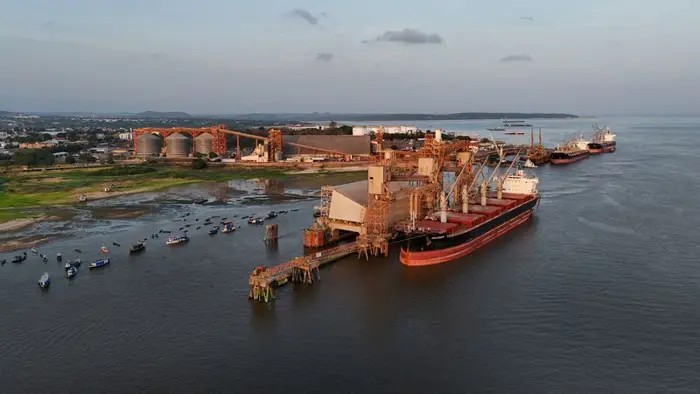
Indigenous protesters occupy Cargill’s Santarem Port Terminal in Brazil

RIO DE JANEIRO : Indigenous protesters have occupied Cargill’s Santarem river port terminal in Brazil’s Para state and “completely” interrupted operations at the site, the U.S. grain trader said in a statement on Saturday.
The protesters forced Cargill employees to evacuate the private terminal on Friday evening, the firm said, adding that it is in contact with local authorities for an eviction to be carried out “in an orderly and safe manner.”

Cargill shipped more than 5.5 million metric tons of soybeans and corn through Santarem last year, according to port sector data. The exported volume, originating mainly from Brazil’s Center West region, represented more than 70% of the total grain volume handled at Santarem. Cargill said there is “strong evidence of vandalism and damage to assets” at the terminal.
The occupation marks an escalation between the protesters and the firm over proposed plans to dredge local rivers, like Tapajos, where grains like soy and corn are moved before reaching export markets. Cargill has said it has no control over plans to dredge the rivers.

The protesters had been blocking trucks from accessing the terminal since January 22, with only a limited impact on Cargill’s operations, as most of the grains arrive by barge before being hauled onto ships for export.

In a letter following the occupation, the protesters demanded that Brazil’s government reconsider a decree they said would open up Amazon rivers to dredging.

“Rivers are not export channels: they are a source of life, sustenance, memory, and identity for thousands of families,” said the letter, adding that dredging would impact water quality and the fishing they rely on to survive.

Brazil’s government did not immediately reply to a request for comment. It said previously that dredging is a routine matter to ensure river traffic during low water level periods.

Source : Reuters

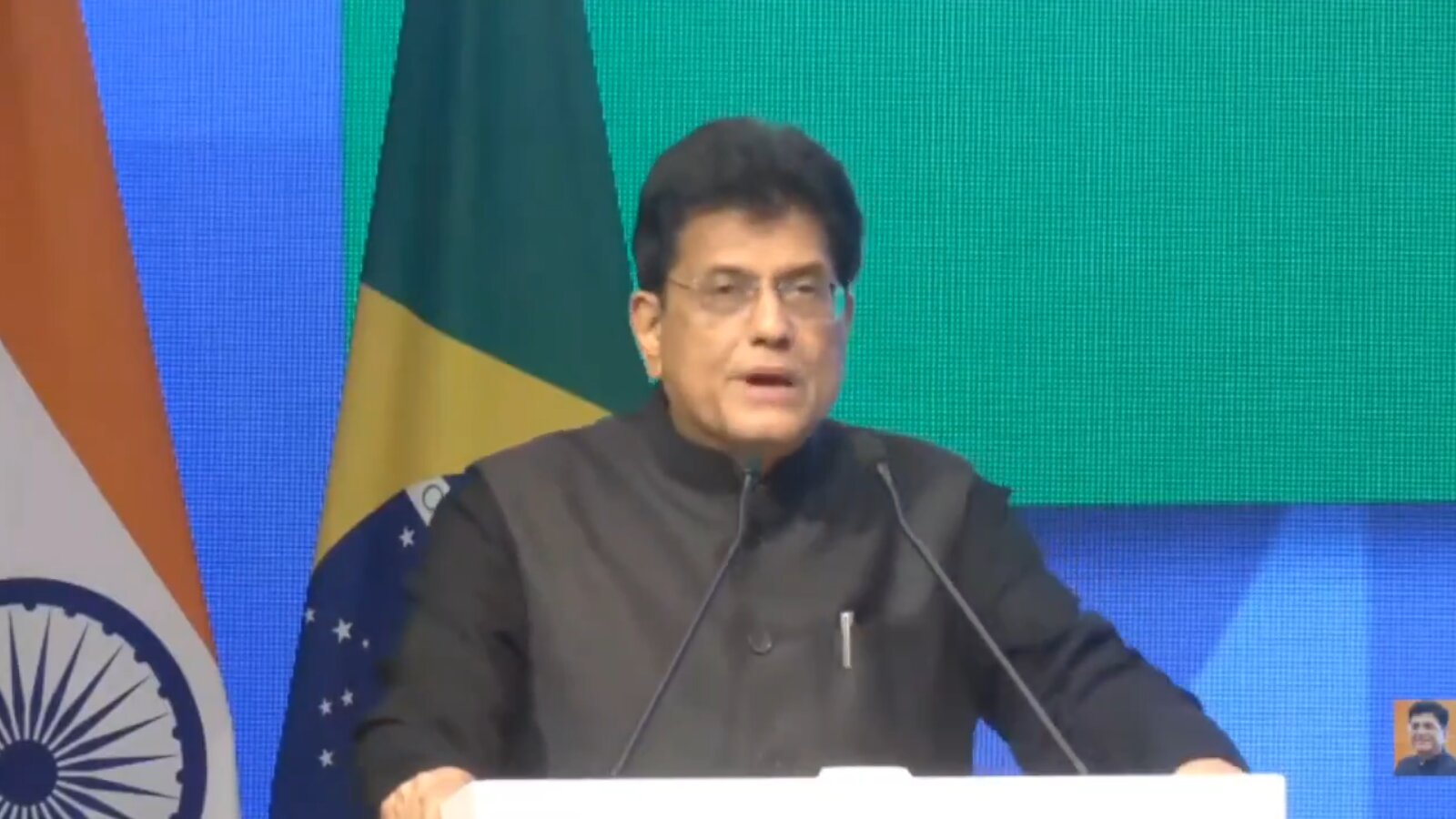
Piyush Goyal calls for ambitious India-Brazil trade surge beyond USD 15 Billion, deeper ties in defence, renewables, pharma and emerging tech

NEW DELHI : Union Minister of Commerce and Industry Shri Piyush Goyal addressed the Plenary Session of the India–Brazil Business Forum in New Delhi, highlighting the expanding cooperation between India and Brazil across sectors. Referring to the growth in bilateral trade by 25 per cent in the past year to reach USD 15 billion, he described the current level as suboptimal and called for greater ambition in further strengthening economic engagement between the two countries.

Referring to higher benchmarks set by President Luiz Inácio Lula da Silva and Prime Minister Shri Narendra Modi, he expressed confidence that both nations can grow faster, grow bigger and grow together for shared prosperity. Highlighting the India–Brazil partnership, the Minister described the two countries as natural partners, bound by democracy, diversity and shared aspirations for development. He observed that the relationship has evolved into a strong and multifaceted strategic partnership driven by people-to-people ties and expanding cooperation across sectors. Brazil is India’s largest trading partner in the Latin America and Caribbean region, with bilateral engagement deepening in defence, energy, agriculture and agrochemicals.

Shri Goyal also emphasised the broader dimensions of the partnership, including South-South cooperation and collaboration under BRICS, IBSA, the G20 and the World Trade Organization (WTO). He expressed confidence in the bright future of bilateral ties.

Referring to India’s trade strategy, the Minister highlighted India’s emergence as a trusted and reliable destination for global business and investment, attracting nearly USD 80 billion in foreign direct investment in financial year 2025, the highest ever in a single year. He stated that India has recently concluded a series of high-quality Free Trade Agreements and is actively negotiating several more. With these agreements, India now enjoys preferential access to nearly two-thirds of global trade. He informed that terms of reference have been finalised with Israel and the Gulf Cooperation Council (GCC), discussions have been launched with Canada, and negotiations are expected to commence in the near future.

He underlined the importance of the MERCOSUR region and stated that India is working to expand the India–MERCOSUR Preferential Trade Agreement to enhance market access, promote investments, foster technology partnerships and strengthen engagement in sports, education and culture.

Shri Goyal noted that the engagement comes at a time when both economies are experiencing renewed momentum. He stated that India is currently the world’s fastest-growing major economy, with real GDP growth in the second quarter exceeding 8 per cent. He added that India is on track to surpass Germany within the next two years to become the world’s third-largest economy. This growth, he said, reflects structural transformation since 2014, driven by reforms in taxation, logistics, manufacturing, digital infrastructure, compliance reduction and ease of doing business. He further noted that India actively promotes outward investment and that Free Trade Agreements will play a critical role in enabling Indian industry to expand both domestically and internationally.

Describing Brazil’s strengths, Shri Goyal referred to its rich natural resources, including niobium, lithium and iron ore, which are vital for the global energy transition and emerging technologies. He also highlighted Brazil’s strengths in agriculture, aerospace, automotive and digital technologies, identifying these as areas of significant collaboration. He stated that India and Brazil together have the potential to reshape global value chains through resources, innovation and a forward-looking vision, and invited Brazilian companies to partner with India in co-creating jobs, adding value and leveraging technology.

The Minister reaffirmed the shared commitment of both countries to safeguarding national interests and promoting equitable access within global intellectual property frameworks, particularly in protecting indigenous technologies. He recalled that during the State Visit of Prime Minister Narendra Modi to Brazil in July 2025, both Prime Minister Modi and President Luiz Inácio Lula da Silva agreed to deepen the India–Brazil strategic partnership.

Concluding his address, Shri Goyal expressed confidence that the present engagement would provide an opportunity to chart a forward-looking agenda and further strengthen bilateral strategic cooperation. He called for nurturing a stronger India–Brazil partnership through collaboration and innovation, with a shared vision of mutual prosperity in the years ahead.

Karan Adani honoured as ‘Business Leader of the year’ at the 2026 AIMA Awards

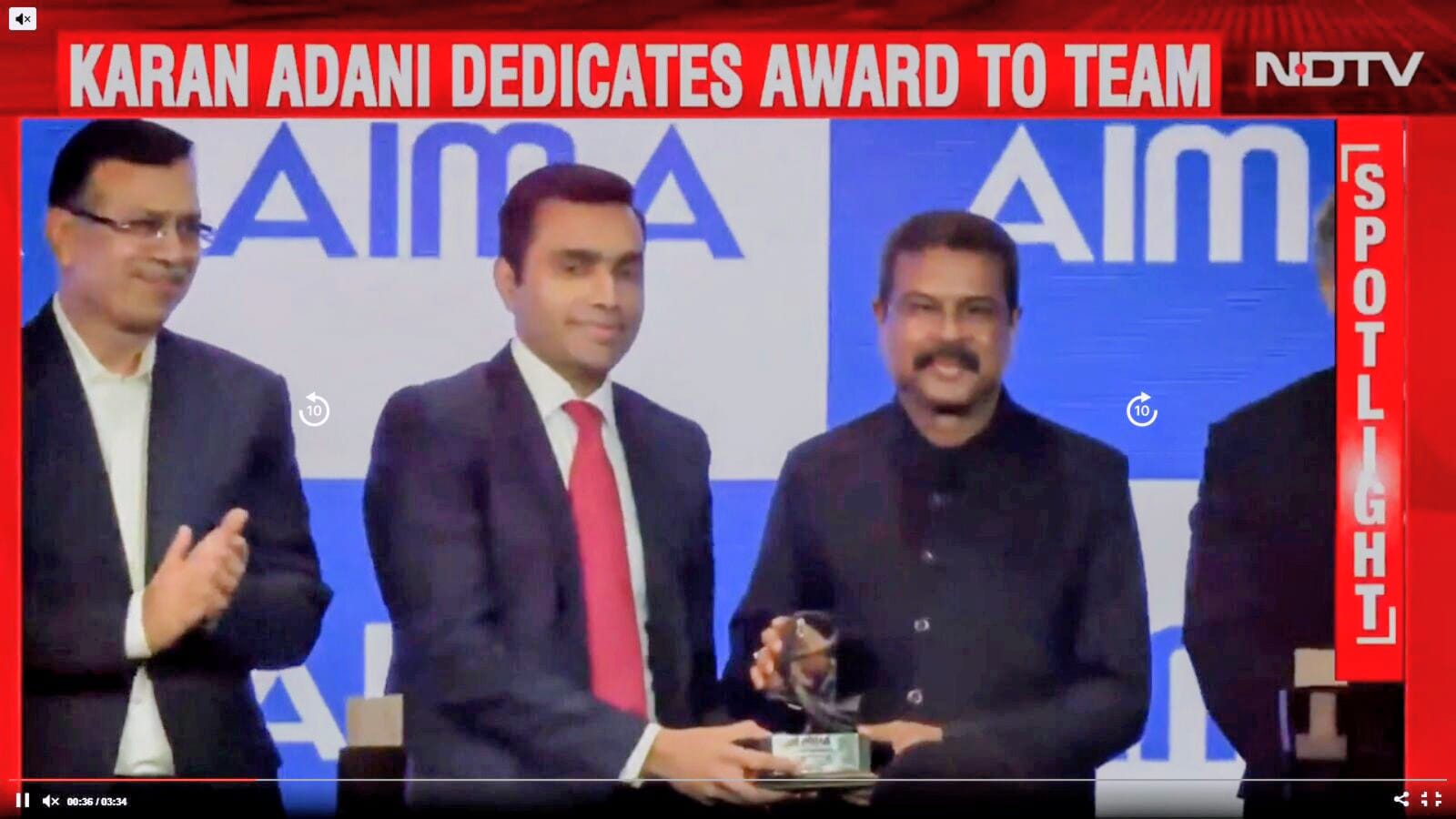
NEW DELHI : Karan Adani, Managing Director of Adani Ports & SEZ Ltd and Adani Cement Ltd, has been honoured with the Business Leader of the Year award at the 2026 Managing India Awards organised by the All India Management Association (AIMA).

The prestigious recognition was conferred during AIMA’s Platinum Jubilee celebrations, marking the organisation’s 70th Foundation Day and the 20th National Management Day, held today at the Taj Palace Hotel in New Delhi.

The businessman dedicated his award to the employees of the Adani Group.”Truly humbled for this award, I dedicate this award to the employees of the Adani group they are working day and night, this is truly their award,” he said.

“I want to thank my father, I keep learning from him, I’m fortunate to see my father and see him operating every day and I also thank my mother from whom I have learned compassion and honesty. I also thank my 3 brothers we work together and we will take our father’s legacy forward. Thank my wife has who has given me her constant support and she keeps pushing me and also my daughter helping me in becoming better human everyday,” he added.

The event brought together industry leaders, policymakers, and visionaries to discuss strategies for sustaining India’s economic momentum amid global challenges. The citation for Karan Adani’s award was read by Sanjay Kirloskar, Chairman and Managing Director of Kirloskar Brothers Ltd.

The AIMA Managing India Awards, instituted in 2010, celebrate excellence across business, media, arts, and social sectors.

DPA Kandla & Assam Petrochemicals Ltd. to launch India’s first 150 TPD e-Methanol Plant at Deendayal Port

GANDHIDHAM : In a significant stride towards advancing India’s green maritime transition, Deendayal Port Authority (DPA), Kandla, is set to initiate site development works for the country’s first 150 Tonnes Per Day (TPD) e-Methanol Plant at a major port, in collaboration with Assam Petrochemicals Ltd. (APL).

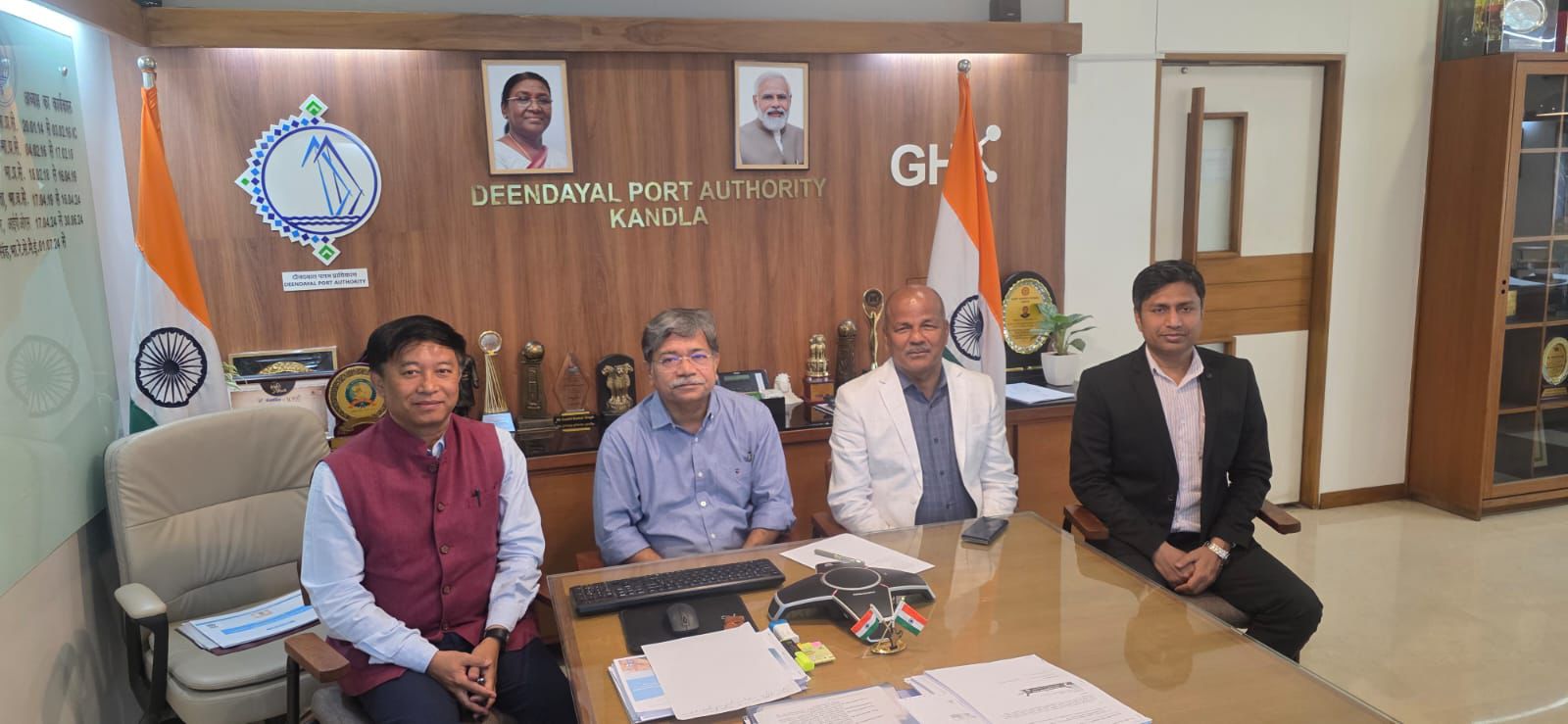
WhatsApp Image 2026 02 22 at 5.16.45 PM DPA Kandla & Assam Petrochemicals Ltd. to launch India’s first 150 TPD e-Methanol Plant at Deendayal Port

The project site was visited today by senior officials from DPA Kandla and APL, led by Shri Sushil Kumar Singh, IRSME, Chairman, DPA Kandla, and Shri Bikul Deka, Chairman, APL. The visit marks the formal commencement of groundwork and reinforces the shared commitment of both organizations towards clean fuel production, maritime decarbonisation, and India’s Net-Zero ambitions.

A Landmark Green Fuel Initiative

The APL–DPA partnership represents a historic milestone in India’s maritime sector, positioning Kandla as a pioneer in sustainable port-led industrial development. The 150 TPD e-Methanol facility will be developed within the port ecosystem, leveraging renewable energy and green hydrogen pathways for the production of environmentally friendly methanol.

e-Methanol, produced using green hydrogen and captured carbon dioxide, is widely regarded as a next-generation marine fuel capable of significantly reducing greenhouse gas emissions compared to conventional fossil fuels. The project aligns with global efforts led by international maritime bodies to promote alternative fuels for shipping and is expected to support cleaner coastal and international shipping operations.

Strategic Significance

Establishes India’s first e-Methanol production facility at a Major Port

Strengthens DPA’s vision of becoming a Green and Smart Port

Supports India’s National Green Hydrogen Mission

Enhances energy security through domestic alternative fuel production

Promotes circular carbon utilization and low-carbon maritime logistics

The plant will not only cater to the growing demand for green marine fuels but also serve as a model for integrating clean energy production within port infrastructure. By embedding renewable fuel production at the port level, the initiative is expected to reduce transportation costs, lower carbon intensity in port operations, and create a scalable blueprint for other Indian ports.

Leadership Perspective

Speaking on the occasion, senior officials reiterated that the project underscores DPA’s proactive role in driving innovation, sustainability, and energy transition in the maritime domain. The collaboration reflects a shared vision to transform India’s ports into hubs of green growth while supporting the nation’s broader climate commitments.

With site work set to commence shortly, the APL–DPA initiative marks a decisive step towards building a resilient, low-carbon maritime ecosystem — propelling India closer to a sustainable and future-ready shipping industry.

Viksit Gujarat: Maritime, Logistics & Export Summit 2026 set to take centre stage; receives overwhelming response from Trade & Logistics Fraternity

AHMEDABAD : The much-anticipated “Viksit Gujarat: Maritime, Logistics & Export Summit 2026”, scheduled to be held on 27th February 2026 at Hyatt, Vastrapur, Ahmedabad, is all set to emerge as one of Gujarat’s most significant industry-policy gatherings of the year.

Organised by India Shipping News, jointly with the Knowledge Chamber of Commerce & Industry (KCCI), the Summit has already generated strong momentum across the maritime, logistics, export, infrastructure, and policy ecosystem — receiving an overwhelming registration response from stakeholders across Gujarat.

The Summit will witness the presence of senior policymakers, port authorities, infrastructure leaders, industry captains, and academia.

Among the distinguished dignitaries and speakers expected to grace the platform which includes Senior Authority from Ports, Indian Railways, DFCCIL, CONCOR, FIEO, DGFT, IIM-Ahmedabad, India Exim Bank, ECGC, leading manufacturing houses, and logistics operators.

The strong participation of high-ranking Government officials and industry leaders underscores the importance and relevance of the Summit at a time when Gujarat continues to consolidate its position as India’s maritime and export powerhouse.

The event has witnessed an exceptional response from:

  • Exporters & Importers
  • Port & Shipping Stakeholders
  • ICD & CFS Operators
  • Freight Forwarders & Customs Brokers
  • Industrial Associations
  • Infrastructure Developers
  • Financial Institutions
  • Students & Academia

Registrations have poured in from Ahmedabad, Gandhidham, Kandla, Mundra, Rajkot, Vadodara, Surat, Morbi, Bhavnagar and other industrial hubs of the State — reflecting the growing anticipation within the trade fraternity.

Industry leaders have described the Summit as a “timely and much-needed platform” to align policy vision with ground realities and to accelerate Gujarat’s contribution towards the national mission of Viksit Bharat 2047.

APSEZ, NMDC and Vale Brazil sign MoU on Iron Ore

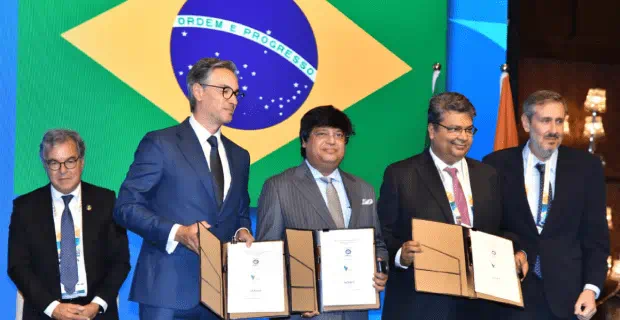
AHMEDABAD: Adani Ports and Special Economic Zone Ltd (APSEZ), the world’s fastest-growing integrated transport utility, through its subsidiary Adani Gangavaram Port Limited (AGPL), has signed a strategic Memorandum of Understanding (MoU) with NMDC Limited (A Government of India Enterprise) and Vale S.A. (Brazil) at the India-Brazil Business Forum Summit held in New Delhi.

According to a release by Adani Ports and Logistics, the MoU was signed during the official visit of H.E. Luiz Inacio Lula da Silva, President of Federative Republic of Brazil to India, and in presence of Shri Piyush Goyal, Minister of Commerce and Industry of India, underscoring the deepening India-Brazil strategic partnership.

The agreement establishes a strategic framework for the development of an iron ore blending facility and a dedicated Special Economic Zone (SEZ) at Gangavaram Port. Under this collaboration, the parties will jointly develop, operationalize, and manage an integrated SEZ-based ecosystem for the blending, value addition, and commercialisation of iron ore. This initiative is designed to strengthen the iron ore export value chain on India’s East Coast while enhancing efficiency, scale, and global competitiveness in mineral processing and trade. With this development, the capacity of Gangavaram Port will increase up to 75 MMT, and it will become a hub for iron ore exports for India and the region.

“This collaboration reflects a shared commitment to building resilient, future-ready infrastructure that strengthens India’s position in global supply chains,” said Ashwani Gupta, Whole-time Director & CEO, APSEZ. “By integrating high-quality mineral logistics with advanced port capabilities, we are supporting industry requirements while contributing to the country’s broader economic growth. Our partnership with NMDC and Vale will help establish a modern, efficient, and sustainable ecosystem for the iron ore sector on the East Coast. Gangavaram Port is poised to become the first port in India capable of handling Valemax vessels — the world’s largest Very Large Ore Carriers (VLOCs).”

The collaboration will involve development of an integrated iron ore blending and value-addition ecosystem within a dedicated SEZ at Gangavaram Port.

It will also include establishment of fully mechanised berthing and cargo-handling facilities capable of accommodating Valemax vessels with a carrying capacity of up to 400,000 MMT.

End-to-end yard management, blending operations, and vessel discharge and loading to enhance supply chain efficiency will also be included.

This also aims to strengthen Gangavaram’s position as a consolidated export hub for iron ore and port-led industrial growth.
Together, this partnership positions Gangavaram Port as a strategic gateway for global iron ore trade and reinforces India’s emergence as a competitive, future-ready maritime hub.

FIEO welcomes seven new interventions under Export Promotion Mission; says measures will boost MSME competitiveness and global market access

NEW DELHI : The Federation of Indian Export Organisations (FIEO) has welcomed the launch of seven new interventions under the Export Promotion Mission (EPM) by the Hon’ble Union Minister of Commerce & Industry, Mr Piyush Goyal, terming the initiative a major structural step towards enhancing MSME competitiveness and expanding India’s global market presence.

Mr S C Ralhan, President, FIEO, said the Mission addresses the fundamental constraints that limit MSME export growth — high cost of credit, limited access to diversified trade finance, compliance burdens, logistics inefficiencies, and information gaps. The newly launched interventions under ‘Niryat Protsahan’ and ‘Niryat Disha’ aim to move beyond traditional incentives and focus on systemic competitiveness enhancement.

Support for alternative trade instruments such as export factoring with 2.75% interest subvention, structured credit facilities for e-commerce exporters and expanded guarantee mechanisms will significantly ease working capital pressures. Lower cost of finance and improved liquidity cycles will enable MSMEs to price competitively, accept larger orders and strengthen their credibility with overseas buyers. Shared-risk credit mechanisms are also expected to encourage first-time exporters and promote product and market diversification.

On the compliance front, TRACE (Trade Regulations, Accreditation & Compliance Enablement) will partially reimburse testing and certification costs, helping MSMEs meet increasingly stringent global standards and access high-value regulated markets. FLOW (Facilitating Logistics, Overseas Warehousing & Fulfilment), including support for overseas warehousing initiatives such as Bharat Mart in Dubai, will allow exporters to position inventory closer to destination markets, reduce delivery timelines and compete more effectively in e-commerce and fast-moving segments. LIFT (Logistics Interventions for Freight & Transport) will help mitigate freight disadvantages for exporters located in remote regions, ensuring more balanced regional export growth.

INSIGHT (Integrated Support for Trade Intelligence & Facilitation) will strengthen district- and cluster-level export ecosystems through better market intelligence and demand mapping, enabling MSMEs to diversify markets and reduce concentration risks.

Mr Ralhan noted that three key interventions — Market Access Support, Interest Subvention for Pre- and Post-Shipment Credit, and Collateral Support for Export Credit — are already operational, taking the total number of active interventions under the Mission to ten. He expressed confidence that these measures will reduce transaction costs, improve access to finance, strengthen compliance readiness and deepen integration of Indian MSMEs into global value chains.
“The Export Promotion Mission represents a decisive shift towards building long-term export capability. It empowers MSMEs not only to participate in global trade but to compete, scale and sustain their presence in international markets,” Mr Ralhan said.

FIEO reaffirmed its commitment to working closely with the Government, EXIM Bank, financial institutions and Indian Missions abroad to ensure effective implementation and wider outreach, particularly at the district level, to support India’s journey towards becoming a globally competitive export powerhouse.

India and US to reschedule chief negotiators meet on interim trade deal

NEW DELHI : India and the US have decided to reschedule the proposed meeting of their chief negotiators in Washington to finalise the text of the interim trade pact, sources said on Sunday.

The Indian team was scheduled to start the three-day meeting on February 23. “With regards to the visit of the Indian team of negotiators to the US for the India-US Trade Deal, the two sides are of the view that the proposed visit of the Indian Chief Negotiator and the team be scheduled after each side has had the time to evaluate the latest developments and their implications. The meeting will be rescheduled at a mutually convenient date,” a source said.

The Indian delegation, led by Commerce Ministry Joint Secretary and Chief Negotiator Darpan Jain, was scheduled to begin a three-day meeting in Washington from February 23 to finalise the text of the interim agreement. Commerce Minister Shri Piyush Goyal had earlier indicated that the pact could be signed around mid-March.

Commerce ministry sources said the visit has been deferred to allow both sides to assess the implications of recent developments. “With regards to the visit of the Indian team of negotiators to the US for the India-US trade deal, the two sides are of the view that the proposed visit of the Indian chief negotiator and the team be scheduled after each side has had the time to evaluate the latest developments and their implications. The meeting will be rescheduled at a mutually convenient date,” sources said.

The decision comes after the US Supreme Court ruled that President Donald Trump had exceeded his authority in imposing sweeping global tariffs under the International Emergency Economic Powers Act of 1977. Following the verdict, Trump initially announced a 10 per cent tariff on all countries, including India, for 150 days from February 24, and later revised it to 15 per cent.
Earlier this month, India and the US had announced a framework for an interim trade agreement under which US tariffs on Indian exports were reduced to 18 per cent. In August last year, the US had imposed 50 per cent tariffs on India, half of which was linked to purchases of Russian oil.

On Friday, MEA spokesperson Randhir Jaiswal had said that a delegation led by the chief negotiator was expected to visit the US to work towards finalising the interim agreement. However, MEA secretary (East) P. Kumaran later said both sides would adopt a “wait-and-watch” approach to study the implications of the court ruling and any subsequent US action. Officials said the commerce ministry is examining which tariffs remain in force and the possible impact on bilateral trade before the talks are rescheduled.

10% US tariffs on India to give major export boost to domestic labour-intensive sectors

NEW DELHI : The reduction of the US reciprocal tariff on India from 25 per cent to 10 per cent will significantly improve competitiveness of domestic labour-intensive sectors in the US such as pharma, electronics, engineering, textiles, and gems and jewellery.

In a major setback to US President Donald Trump‘s pivotal economic agenda for his second term, the US Supreme Court, in a 6-3 verdict written by Chief Justice John Roberts, ruled that the tariffs imposed by the president on nations around the world were illegal and that he had exceeded his authority when he imposed the sweeping levies.

Later, through a proclamation, the US announced a temporary import surcharge of 10 per cent ad valorem on articles imported into the US for 150 days from February 24. These sectors at present were facing a reciprocal tariff of 25 per cent in the US market.

The US is a major export destination for these sectors and reduction of tariff will help boost exports, Federation of Indian Export Organisations (FIEO) Director General Ajay Sahai said.

A leather exporter said the development will make their goods more competitive.

However, Sahai said Section 232 tariffs on steel, aluminum, and certain auto products remain a constraint.

“India should leverage this improved position to expand market share while pursuing trade negotiations for greater stability and sectoral relief,” he added.

If India should re-evaluate its trade deal with the US, he said the pact is comprehensive going much beyond only the tariff concessions on goods.

“A trade agreement would help tariff concessions or exclusions, provide long-term predictability and prevent re-imposition through alternate US legal routes… However, both sides may recalibrate negotiations in light of the changed tariff environment,” Sahai said.

The tariff ruling, he said, creates an opportunity to pursue a more balanced and rules-based framework rather than one driven by unilateral tariff actions.

During 2021-25, the US was India’s largest trading partner in goods. The US accounts for about 18 per cent of India’s total exports, 6.22 per cent in imports and 10.73 per cent in bilateral trade.

In 2024-25, India-US bilateral trade touched USD 186 billion (USD 86.5 billion exports and USD 45.3 billion imports).