Home Blog Page 424

Number of towers in GIFT City to be double in next 1.5 years : Harsh Sanghvi

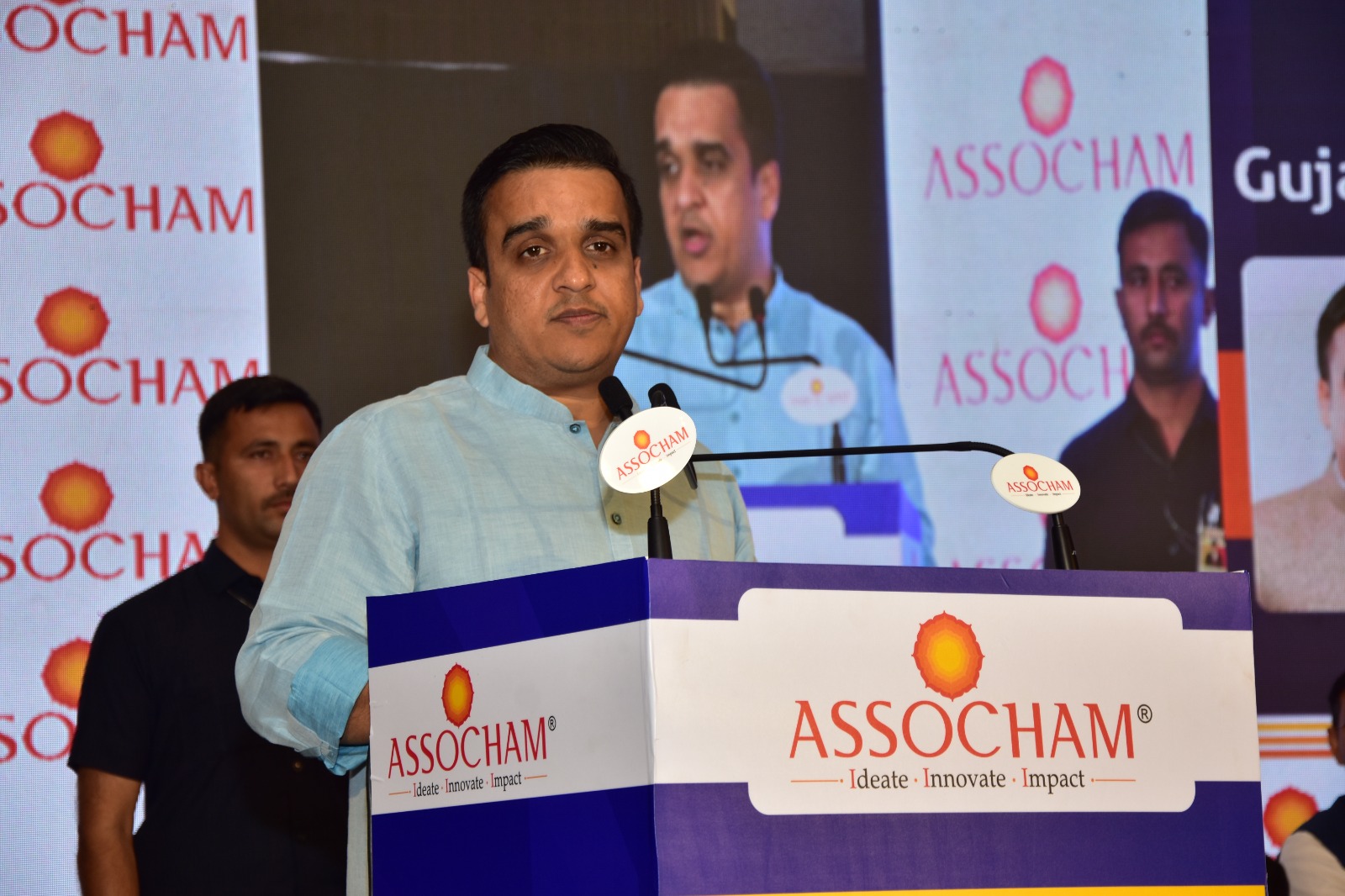
AHMEDABAD : “India is going to become world’s automobile hub, as Asia’s biggest car manufacturing plant would be commissioned in Ahmedabad by 2029”, said Shri Harsh Sanghvi, Hon’ble Deputy Chief Minister, Government of Gujarat. Betting big on Gujarat growth story, that is spanning across the sectors, from salt to aviation, he unravelled the plan for Gujarat as a growth power house of India.

Addressing the session of Gujarat: Powering Global Growth, as a chief guest, organised by ASSOCHAM here, Shri Sanghvi said, “Gujarat accounts for 18% of share of india’s manufacturing and this would go up to 25% by 2025. As a result every third export dollar comes from Gujarat.”

Shri sanghvi thanked ASSOCHAM for fostering industrial growth of Gujarat. He emphasised that for taking the growth to new height, Government and Industry leaders need to work as companions, setting aside the traditional way of requests. Referring to the recently announced Gujarat budget he said, “Allocation for industries budeget has increased by 22%.” He also appealed the industry leaders to invest in R&D centres in Gujarat. He claimed that Gujarat will have the biggest R&D centres in India in near furure.

Shri Harsh sanghvi was very confident for the growth and opportunities in GIFT City and Dholera SIR. “Number of towers in GIFT City would be double in next 1.5 years. Demand for space is on rise in this two destinations. Industry should take this golden opportunity or they will miss the bus”, he added. He also invited the industries to take maximum benefit of the trade deals done with USA, UK and New zealand, as the deals would open 35-40 trillion markets for india.

Shri Manoj kumar Das, IAS, Chief Secretary of Gujarat also garaced the event with stalwarts for industry. He said that “Government of Gujarat if firmly committed to industry led growth through sustained policy reforms, ease of doing business, fast track clearances and strategic investment in infrastructure. And State government is ready to address any issue of industry.”
Addressing the programme Shri Nirmal Minda, President of ASSOCHAM praised the policy ecosystem of Gujarat. He emphasised on increasing membership of ASSOCHAM, so the chamber become more inclusive. He said that “ASSOCHAM is working on five pillars for the moving the growth on higher level, this include- Make in india, Ease of doing Business, MSME, Digitisation and sustainability. And the Government of Gujarat is helpful for achieving this.”

Delivering Opening remarks Shri Chintan Thaker, Chairman, ASSOCHAM, Gujarat Council, considered Gujarat as Investment Hub. He said that from Textile, Diamond and petrochemicals to green hydrogen, Gujarat is the best place to grab opportunity.

ASSOCHAM Gujarat also released its Vision Document, with the centre idea of forward looking growth and potential to transform.
Port of Hamburg expands trade relations with India

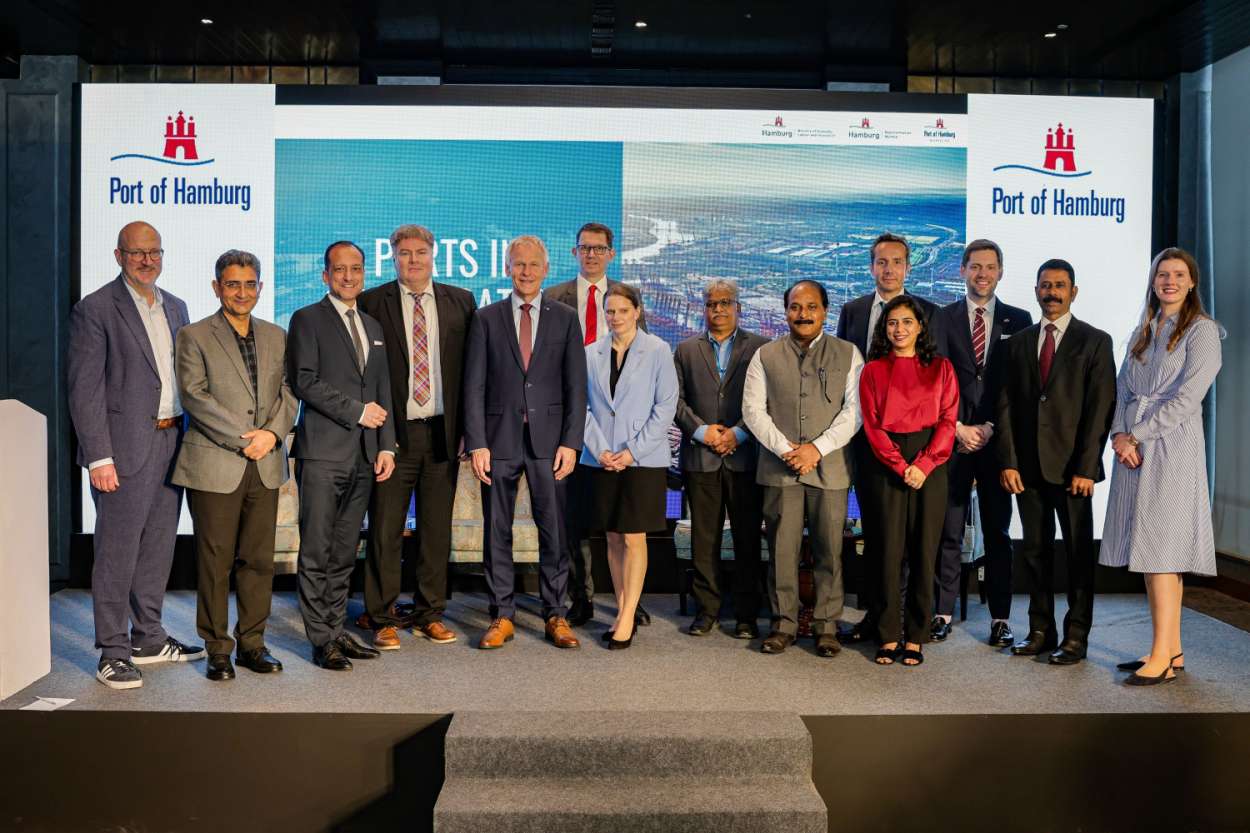
MUMBAI : Port of Hamburg has emphasized trade relations and the rising significance of India as a trading partner with its recent delegation trip to India.

During the delegation trip of the Senate of the Free and Hanseatic City of Hamburg to India, representatives of the port industry focused on intensifying cooperation and exchanging ideas with partners in Chennai and Mumbai. Furthermore, relations in New Delhi were deepened through discussions with representatives of the Ministry of Ports, Shipping and Waterways and Invest India, it is stated.

Sustainability and Climate-Neutral Port Development

The discussion with representatives of the Mumbai Port Authority, the Jawaharlal Nehru Port Authority, the Indian Ports Association, and the Regional Representation of the IAPH focused on the exchange of climate-neutral port strategies. The Hamburg side contributed specific experiences, for example, from the construction of shore power systems.

Record volume in handling with India

India is one of the most important trading partners of the Port of Hamburg. From 2020 to 2024, container handling in direct traffic with India saw a growth of 21 percent. This trend continued in 2025, resulting in India ranking sixth among the most important partner countries of the Port of Hamburg in maritime container handling. Hendrik Meyn, board member of Port of Hamburg Marketing:

“The Port of Hamburg achieved a new record volume of 290,000 TEU in 2025 in direct traffic with India. This corresponds to an impressive growth of nearly 50 percent compared to the previous year and underscores the dynamism in trade with the subcontinent. The delegation trip to India is another building block that aims to provide additional impulses for the flow of goods, investments, and logistical cooperation.”

The Hamburg port is connected to India by twelve liner services, including six container liner services, three RoRo services, and three breakbulk services. The Elbe metropolis is connected to the Indian ports of Nhava Sheva, Mundra, Mumbai, Chennai, Ennore, and Hazira.

Source : Transport News

Ministry of Textiles holds first Post-Budget National Industry Consultation

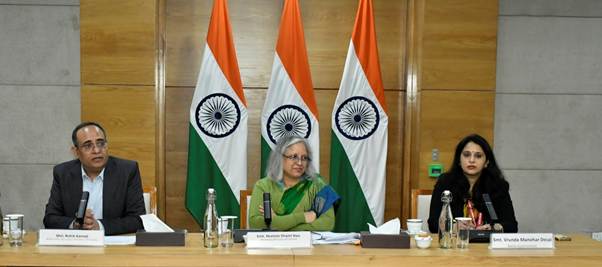
NEW DELHI : The Ministry of Textiles convened the first post-budget National Industry Consultation at Vanijya Bhawan, New Delhi, on 19th February, 2026, Thursday, bringing together senior government officials, industry leaders, financial institutions, development partners and representatives from across the textile value chain to deliberate on implementation priorities following the Union Budget 2026 announcements.

The consultation focused on operationalising two key initiatives announced in the Budget – the Textile Expansion and Employment (TEEM) Scheme and the Tex Eco Initiative – aimed at strengthening competitiveness, modernisation, sustainability and employment generation across the textile and apparel sector.

Shri. Rohit Kansal, Additional Secretary (Textiles), delivered the welcome and context-setting address, emphasising that the Union Budget has been distinctly textile-centric, with a strong focus on employment generation and manufacturing growth. He noted that the announcement of an integrated programme for the textile sector provides a comprehensive framework to align investments, policy support and institutional efforts across the value chain. He further underlined that the Budget signals a clear intent to scale manufacturing, strengthen domestic capabilities and position textiles as a key driver of inclusive growth and job creation.

Delivering the special address, Smt. NeelamShami Rao, Secretary (Textiles), highlighted that after a year marked by resilience amid global headwinds, the outlook for the Indian textile industry is increasingly favourable. She noted that key Free Trade Agreements (FTAs) now in place are opening significant new market opportunities for Indian exporters, enhancing tariff competitiveness and strengthening India’s position in global value chains. She emphasised that the convergence of these trade agreements with a distinctly textile-centric Union Budget creates a timely and strategic advantage for the sector. With expanded market access, policy clarity and focused government support, she stated that the industry is well-positioned to scale up production, attract investments and deepen its footprint in global markets.

A detailed presentation on the Textile Expansion and Employment Mission outlined a roadmap for modernising weaving, processing and garmenting segments, mobilising investments, strengthening MSME participation and generating large-scale employment. This was followed by a brief on the Tex Eco Initiative, which aims to mainstream sustainability, circularity, resource efficiency and green manufacturing practices across the textile value chain.

The interactive session saw proactive and constructive engagement from stakeholders, who appreciated the forward-looking design of TEEM and Tex Eco and endorsed the integrated framework for addressing structural gaps and leveraging global opportunities. Industry offered practical recommendations, including time-bound approvals, improved MSME financing, cluster infrastructure, targeted skilling, digital monitoring, and sustainability-linked incentives, while urging convergence with state policies and export measures. Several participants appreciated the efforts of the government in rolling out a comprehensive and integrated textiles package

In his summing-up remarks, Shri. Rohit Kansal reaffirmed the Ministry’s commitment to a collaborative approach to translate policy intent into tangible, measurable results on the ground.He appreciated the industry for its proactive participation and candid feedback, stating that such structured consultations would continue to shape effective and responsive policymaking. He further urged industry stakeholders to share detailed written inputs and specific suggestions with the Ministry’s team to facilitate timely finalisation and ensure effective implementation.

The session concluded with a vote of thanks by Smt. Vrunda Manohar Desai, Textile Commissioner who acknowledged the valuable contributions of stakeholders and reaffirmed the Ministry’s commitment to time-bound and outcome-oriented implementation.

The post-budget National Industry Consultation marks an important step in strengthening structured government, industry dialogue and advancing a coordinated roadmap to enhance India’s position as a credible, competitive and sustainable global textile hub. The discussions reflected a shared resolve between Government and industry to position India as a credible and trusted global textiles partner anchored in scale, sustainability and reliability.

FIEO and Exim Bank organise Export Conclave in UP to boost state’s export growth

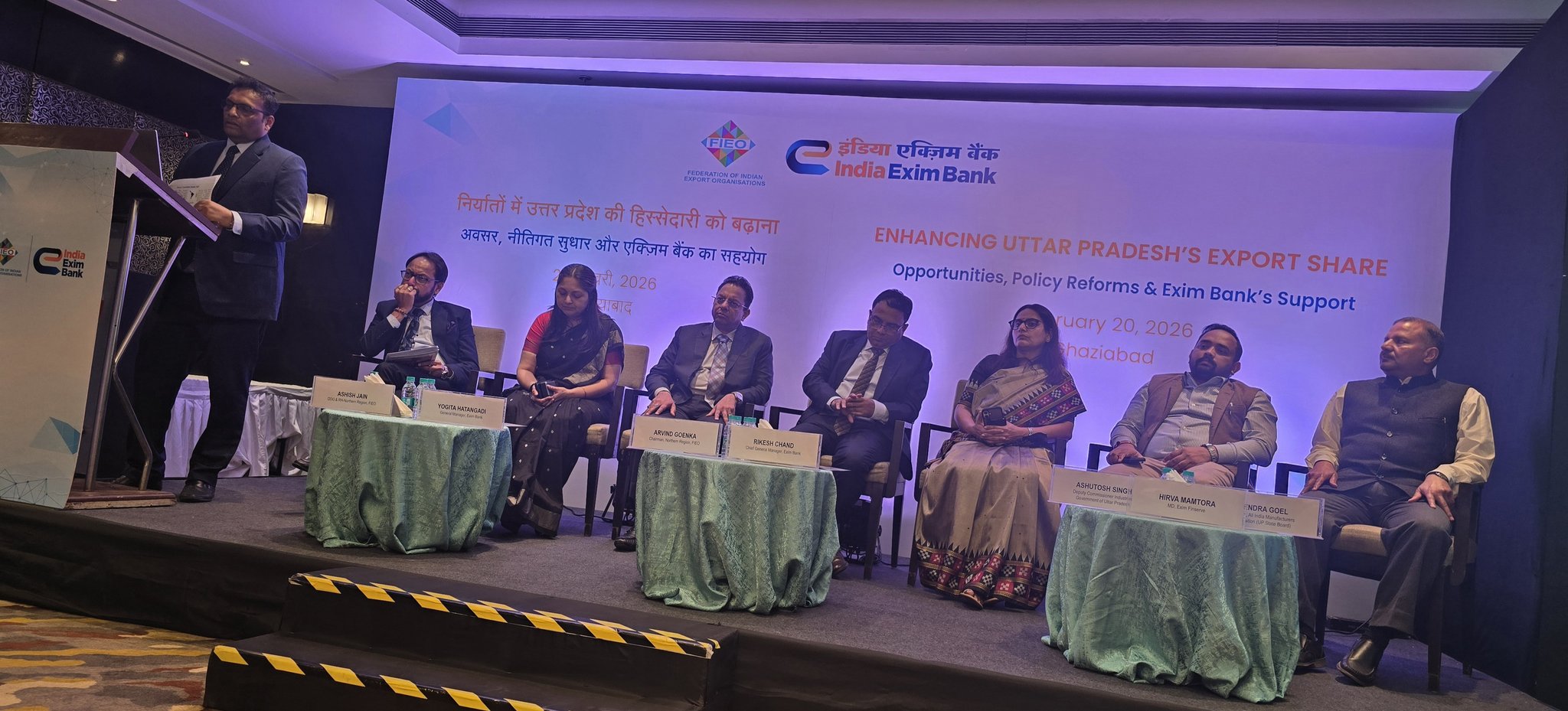
LUCKNOW : The Federation of Indian Export Organisations (FIEO), in collaboration with the Export-Import Bank of India, successfully organised an Export Conclave cum Open House Meet on 20th February 2026, focusing on the theme “Enhancing Uttar Pradesh’s Export Share: Opportunities, Policy Reforms and Exim Bank Support.”

The conclave aimed at strengthening Uttar Pradesh’s export ecosystem by bringing together policymakers, financial institutions, exporters, and industry leaders for constructive dialogue and actionable solutions.

The session was graced by Mr. Arvind Goenka, Regional Chairman (Northern Region), FIEO, who set the tone for the deliberations by underscoring Uttar Pradesh’s immense export potential across sectors such as textiles, handicrafts, agri-products, leather goods, and MSMEs. He emphasized the need for stronger policy support, improved access to finance, infrastructure enhancement, and coordinated stakeholder engagement to enhance the state’s global competitiveness.

Representing Export-Import Bank of India were:

Mr. Rikesh Chand, Chief General Manager

Ms. Yogita Hatangadi, General Manager

Ms. Hirva Mamtora, Managing Director, Exim Finserve

Mr. Prasad Dabholkar, Assistant General Manager

Mr. Ashish Kumar Soni, Regional Head

Also present was Mr. Ashish Jain, DDG & Regional Head – Northern Region, FIEO, who actively engaged with exporters during the interactive session.

The conclave featured insightful addresses by Mr. Ashutosh Singh, Deputy Commissioner of Industries, Government of Uttar Pradesh, who highlighted the state government’s proactive policy measures and incentives aimed at boosting exports.

Mr. Upendra Goel, Chairman, UP State Board, All India Manufacturers Organisation, also shared industry perspectives, stressing the importance of manufacturing competitiveness, ease of doing business, and export diversification.

The Open House segment enabled exporters to raise practical challenges relating to export finance, market access, compliance, logistics, and working capital constraints. Officials from Exim Bank provided clarity on various financial instruments, export credit facilities, overseas investment support, and risk mitigation mechanisms available to exporters.

The event provided a dynamic platform for meaningful dialogue and reinforced the shared commitment of FIEO, Exim Bank, and the Government of Uttar Pradesh to accelerate the state’s export growth through policy reforms, financial facilitation, and strategic collaboration.

The conclave concluded with a strong consensus on fostering sustained partnerships to enhance Uttar Pradesh’s contribution to India’s overall export performance.

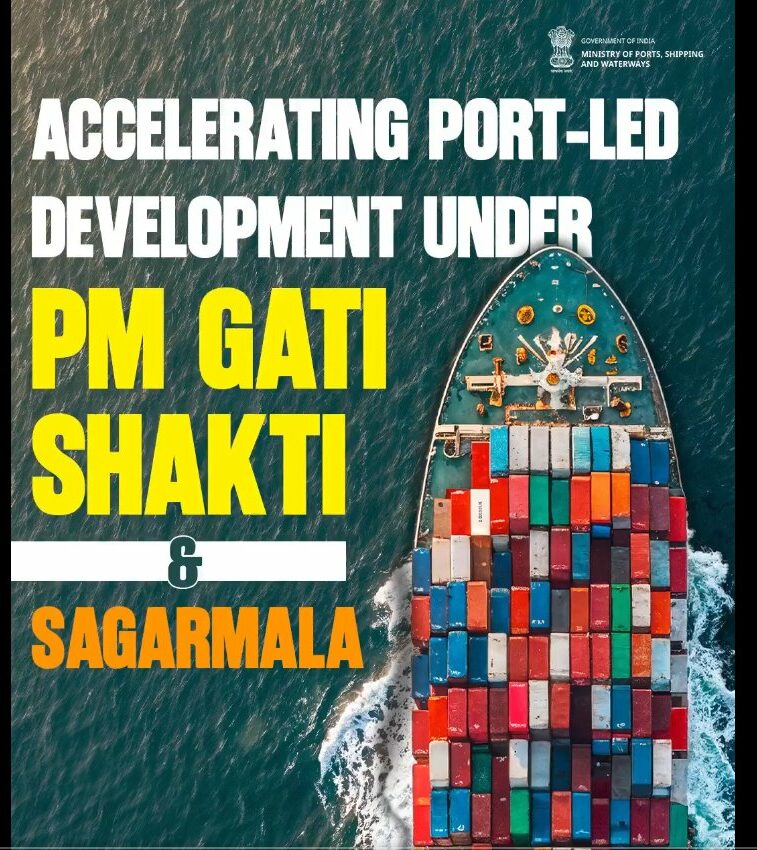
Government highlights transformative gains in Port-Led Development under PM Gati Shakti and Sagarmala

NEW DELHI : The Government of India detailed the significant strides made under PM Gati Shakti and the Sagarmala Programme, underscoring their transformative impact on India’s maritime and logistics ecosystem, in a written reply tabled in Parliament.

The reply outlined a series of policy reforms, infrastructure investments, and technology-driven initiatives that have accelerated port-led development, strengthened inland waterways, and advanced India’s commitment to green and sustainable shipping.

Major Capacity Expansion at Ports

As a result of sustained reforms and targeted investments, the cargo handling capacity of India’s major ports has increased substantially — from 555 million tonnes per annum (MTPA) to 1,681 MTPA. This nearly threefold expansion reflects modernization of berths, mechanization of cargo handling, development of deep-draft terminals, and enhanced private sector participation.

Operational efficiencies have also improved significantly. Container vessel turnaround time has reduced sharply due to digitization of port processes, direct port delivery systems, improved last-mile connectivity, and streamlined customs procedures. These measures have helped Indian ports move closer to global benchmarks in productivity and service standards.

Inland Waterways Witness Unprecedented Growth

The Government further highlighted the remarkable rise in inland waterways cargo movement — increasing from 18.07 million metric tonnes (MMT) to 145.84 MMT. This surge has been driven by the development of multimodal terminals, river information systems, fairway development, and increased private participation in cargo movement along national waterways.

The strengthening of inland waterways is reducing pressure on road and rail networks, lowering logistics costs, and significantly cutting carbon emissions — aligning with India’s broader climate commitments.

Driving Multimodal and Green Logistics

Under PM Gati Shakti, the focus has been on integrated planning through a digital platform that brings together multiple ministries and infrastructure projects to eliminate bottlenecks and ensure seamless multimodal connectivity. Port connectivity through rail corridors, highways, and dedicated freight corridors has been enhanced to improve cargo evacuation and reduce dwell time.

Meanwhile, the Sagarmala Programme continues to promote port-led industrialization, coastal economic zones, and coastal community development. Investments in green port initiatives, shore power supply, cleaner fuels, and energy-efficient equipment are further advancing India’s maritime sustainability agenda.

Advancing Green Shipping

Haritsagar, Green Port outlines, Green Tug Transition Programme and many more.

Tangible Outcomes, Capacity and Efficiency gains

Boosting Competitiveness and Trade

These reforms have collectively contributed to improved efficiency, lower logistics costs, enhanced global competitiveness, and increased ease of doing business. By strengthening maritime infrastructure and inland water transport, the Government aims to position India as a leading maritime hub and a key player in global supply chains.

The Parliamentary reply reaffirms the Government’s commitment to building resilient, sustainable, and future-ready maritime infrastructure that supports economic growth, trade expansion, and environmental responsibility.

₹3,800 Crore push for Expressways, Garvi Gujarat High-Speed Corridor in Budget 2026

GANDHINAGAR : The Gujarat Budget for 2026–27 has announced a series of major initiatives aimed at developing and strengthening road and expressway infrastructure across the state, with a total allocation of ₹29,709 crore made to the Road and Building Department.

Expressways and High-Speed Corridors
The state is set to accelerate major projects with an additional provision of ₹3,000 crore for the Namo Shakti Expressway and Somnath–Dwarka Expressway. These projects are designed to connect vital locations while serving as a unique blend of culture and tourism, stated Finance Minister Kanu Desai.

Furthermore, the government has declared approximately 1,155 km of road stretches across various regions as the “Garvi Gujarat High-Speed Corridor,” for which a provision of ₹800 crore has been made to support modern infrastructure and regional development. The government also plans to upgrade heavily trafficked roads into high-speed corridors.

Rural and Tribal Connectivity
Ensuring “the last person in the remotest rural areas” is connected remains a primary goal. Under the Mukhyamantri Gram Sadak Yojana, ₹5,600 crore has been provisioned for connecting villages and hamlets, maintaining existing roads, and replacing causeways with high bridges. Additional rural infrastructure support includes:

  • ₹400 crore for the Pradhan Mantri Gram Sadak Yojana
  • A dedicated ₹950 crore for roads and bridges in tribal areas

Strategic and Urban Infrastructure
The budget prioritizes high-growth zones and tourism. At Dholera SIR, ₹610 crore is allocated for Phase-1 logistics and trunk infrastructure, which includes the development of modern roads. An additional ₹182 crore is provisioned specifically for road development under infrastructure augmentation at Dholera.

Other key urban and strategic announcements include:

  • ₹100 crore to develop the SG Highway as a green urban highway
  • Plans to construct and improve road connectivity from Keshod Airport to religious and tourist sites
  • ₹10 crore earmarked for the cleanliness of roads connecting industrial estates

Safety, Maintenance, and Technology
To modernize the state’s highway management, ₹40 crore will be used to install an Intelligent Traffic System on major state highways for improved safety and security. The state has also allocated ₹500 crore for building overbridges at DFCC and railway crossings to ensure a railway-crossing-free environment.

Maintenance and widening efforts are supported by:

  • ₹150 crore for short-term road maintenance contracts
  • ₹125 crore for shifting obstructing overhead transmission lines and electricity infrastructure during road widening
  • ₹32 crore for white topping of roads.

Strengthening collaboration in Railway signalling & capacity building MoU signed between CHHRR&D and IRSE at DFCCIL Corporate Office

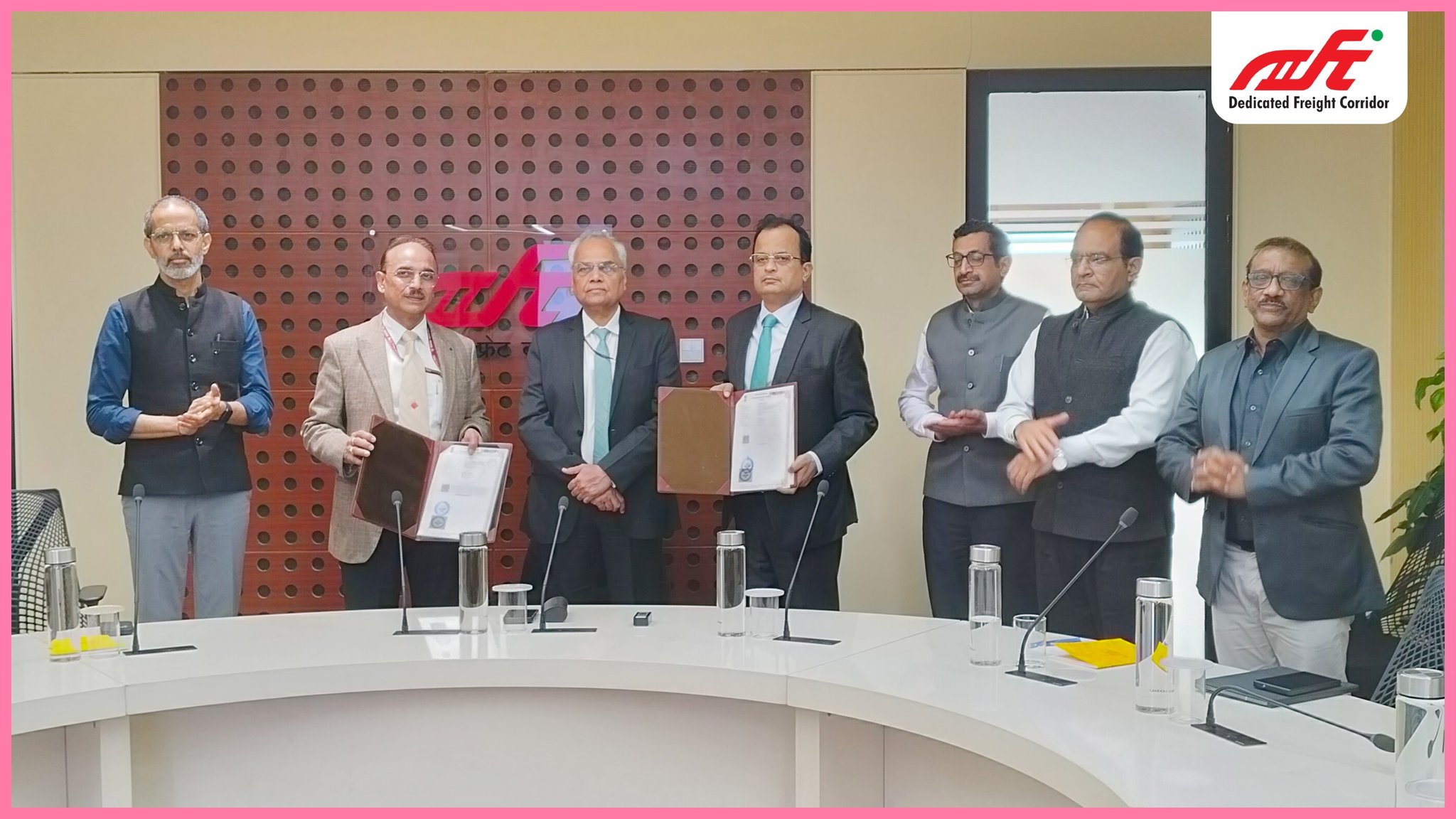
NEW DELHI : In a significant step towards advancing railway signalling expertise and institutional capacity building, an MoU was signed between CHHRR&D and the Institution of Railway Signal Engineers (IRSE) at the DFCCIL Corporate Office.

The Memorandum of Understanding was formally signed by Col. Mayank Upadhya on behalf of CHHRR&D and Sh. Anshul Gupta, Secretary, IRSE (Indian Section), in the august presence of Sh. Praveen Kumar, Managing Director, DFCCIL.

The collaboration aims to foster knowledge exchange, specialized training, and professional development in the field of railway signalling and telecommunications. Through this partnership, both organizations will work together to design and implement structured training programmes, certification initiatives, workshops, and technical seminars aligned with global best practices and emerging technologies in railway systems.

The MoU underscores a shared commitment to enhancing technical competencies, promoting innovation, and strengthening human resource capabilities in railway infrastructure development. It is expected to contribute significantly to the modernization and operational efficiency of freight corridor projects and the broader Indian railway ecosystem.

The signing ceremony was attended by Ms. Ruchi Wadhwa, Assessing Agency Manager, IRSE, along with senior DFCCIL officers including Sh. Anurag Sharma, Director/Infrastructure; Sh. Pawan Kumar Rai, Director/Planning & Projects; Sh. Parmod Kumar, Chief Vigilance Officer; Sh. Manish Kumar Awasthy, Executive Director/Infrastructure; Sh. Sandesh Srivastava, Executive Director/Projects; Sh. Sanjeev Gupta, Executive Director/Finance; and other General Managers and senior officials.

This strategic partnership marks a milestone in strengthening institutional collaboration and building a future-ready, skilled workforce to support India’s rapidly expanding rail infrastructure network.

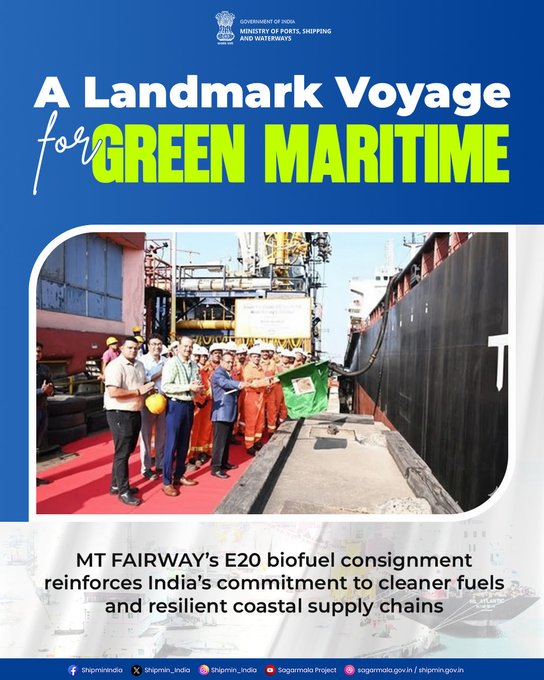
MT FAIRWAY departs Haldia with E20 Biofuel for Port Blair, marking milestone in Green Coastal Shipping

KOLKATA : In a landmark step toward sustainable maritime logistics and cleaner coastal fuel supply chains, MT FAIRWAY has sailed from Haldia Dock Complex (HOJ-1) carrying a significant parcel of E20 EBMS biofuel bound for Port Blair.

The voyage represents a crucial “final mile” delivery of 20% Ethanol Blended Motor Spirit (E20) to the Andaman & Nicobar Islands, reinforcing India’s expanding biofuel distribution network and strengthening coastal energy security.

Advancing Clean Energy to Island Territories

Supplying blended biofuel to island regions presents unique logistical challenges, making this movement particularly significant. The shipment ensures reliable and sustainable fuel availability to remote territories while reducing dependency on conventional fossil fuel supply chains. By leveraging coastal shipping routes, the initiative enhances efficiency, lowers transportation costs, and minimizes carbon emissions compared to long-haul road transport alternatives.

The deployment of E20 fuel aligns with India’s national ethanol blending targets aimed at reducing crude oil imports, cutting greenhouse gas emissions, and promoting domestic agricultural value chains. Ethanol blending also supports farmers and rural industries by creating additional demand for bio-based feedstock.

Strengthening Coastal Supply Chains

The movement of E20 via coastal shipping demonstrates the growing integration of green fuels into mainstream maritime logistics. Haldia Dock Complex, a key gateway for eastern India’s petroleum and bulk cargo trade, continues to play a pivotal role in facilitating energy cargo movements, including cleaner fuel variants.

This initiative reflects a broader shift toward:

Greener coastal shipping operations

Reduced carbon intensity in fuel logistics

Improved multimodal supply chain integration

Enhanced connectivity to island and remote regions

Driving Atmanirbhar Bharat and Sustainable Shipping

The voyage of MT FAIRWAY underscores India’s commitment to advancing sustainable maritime practices while promoting the vision of Atmanirbhar Bharat. By strengthening domestic biofuel production, distribution, and consumption networks, the initiative contributes to energy self-reliance and resilient supply chains.

The successful dispatch of E20 to Port Blair signals the growing momentum of biofuel movements across the country and sets a precedent for future green fuel deliveries to coastal and island destinations. It marks another step forward in India’s journey toward cleaner shipping, stronger coastal connectivity, and a sustainable energy future.

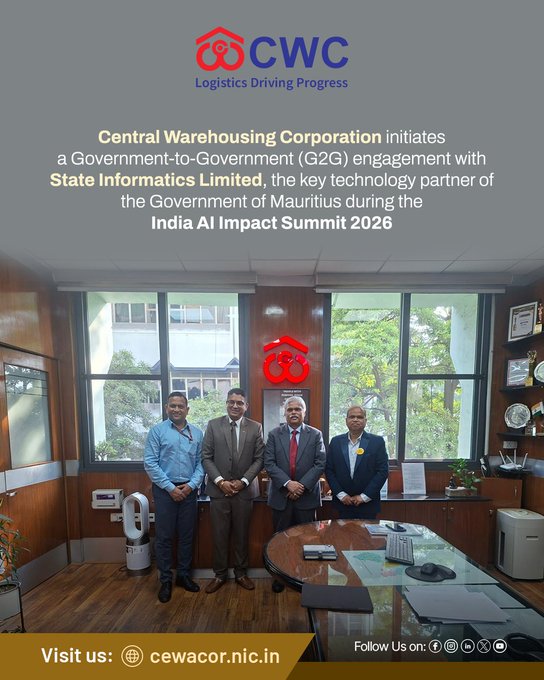
CWC initiates India–Mauritius GovTech Collaboration

MUMBAI : The Central Warehousing Corporation (CWC) has taken a significant step towards expanding India’s global digital footprint by initiating a Government-to-Government (G2G) engagement with State Informatics Limited (SIL), the principal technology partner of the Government of Mauritius, during the India AI Impact Summit 2026.

This landmark engagement underscores India’s growing leadership in GovTech innovation and AI-driven digital transformation, while further strengthening the longstanding strategic partnership between India and Mauritius.

The discussions between CWC and SIL focused on leveraging advanced Artificial Intelligence, data analytics, and digital governance frameworks to modernize warehousing, supply chain management, and public service delivery systems. The proposed collaboration aims to enable technology-enabled governance, enhance transparency, optimize logistics efficiency, and improve citizen-centric service delivery in Mauritius.

CWC, a premier warehousing organization under the Ministry of Consumer Affairs, Food & Public Distribution, Government of India, has been actively integrating digital technologies into its operations — including warehouse automation, real-time inventory management systems, smart logistics platforms, and data-driven decision-making tools. Sharing these best practices and digital capabilities with Mauritius marks a new chapter in India’s commitment to South-South cooperation.

State Informatics Limited, as the core ICT arm of the Mauritian Government, plays a critical role in driving digital transformation initiatives across ministries and public institutions. The engagement opens avenues for joint development of AI-powered solutions in areas such as :

Smart warehousing and inventory optimization

Digital trade facilitation systems

Blockchain-enabled documentation and secure data exchange

Predictive analytics for supply chain resilience

Capacity building and knowledge exchange in GovTech ecosystems

The partnership aligns with India’s broader vision of “Digital Public Infrastructure for Global Good” and reinforces the deep-rooted diplomatic, economic, and cultural ties between India and Mauritius. By fostering collaboration in emerging technologies, both nations aim to build resilient, transparent, and future-ready governance systems.

This initiative not only strengthens bilateral cooperation but also positions India as a trusted technology partner in advancing digital transformation and smart governance solutions across the Global South.

The engagement marks the beginning of a promising journey toward shared innovation, sustainable development, and enhanced public service delivery through AI-powered GovTech collaboration.

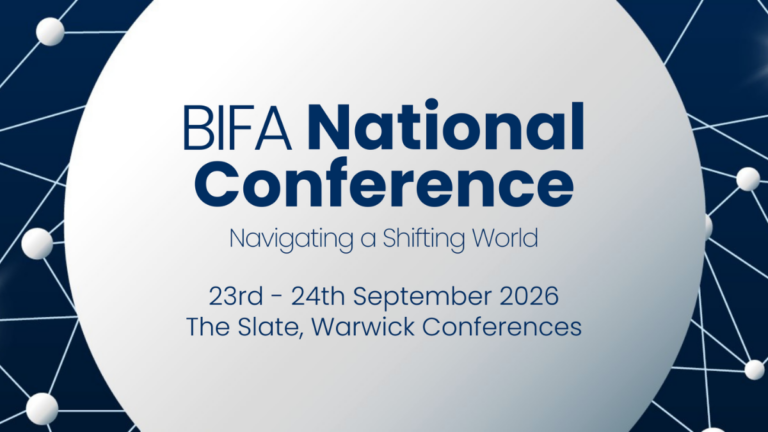
BIFA National Conference 2026: Navigating a shifting world

LONDON: Under the theme ‘Navigating a shifting world’, BIFA will bring together an unmatched line-up of expert speakers at the BIFA National Conference 2026, helping to ensure the trade association’s corporate members are informed, prepared and ready to face the evolving landscape of international logistics.

Returning to The Slate at Warwick Conferences on 23–24 September 2026, this year’s event builds on the momentum of the successful reintroduction of the National Conference in 2025. Plans are already well under way for what promises to be an essential date in the freight forwarding calendar.

With significant shifts in the world order, ongoing geopolitical tensions, uncertainty surrounding tariffs, and mounting economic pressures on consumers and manufacturers alike, the outlook for global trade has rarely been more unpredictable. Against this backdrop, BIFA’s 2026 conference will provide clarity, insight and practical guidance for navigating the months and years ahead.

The agenda and speaker line-up are currently being finalised and are expected to feature contributors from across all sectors of international logistics, alongside major infrastructure stakeholders and political decision-makers. Together, they will offer informed perspectives on the challenges and opportunities shaping global supply chains.

As ever, the programme will offer ample opportunity for face-to-face discussion and networking — still the most effective way to build relationships, exchange ideas and develop practical solutions in a complex trading environment.

This year’s guest speaker after dinner will be none other than former Premier League manager Harry Redknapp, bringing decades of top-flight football experience — and no doubt a few stories from the touchline.

Known for his quick wit as much as his tactical nous, Harry is sure to entertain. Those who have heard him speak before may recall his famous story about accidentally sending a text message to the wrong contact — a tale involving a transfer rumour, a confused journalist, and a very surprised window cleaner.

If that’s a preview of what’s to come, delegates can expect an evening of laughter, straight-talking insight, and perhaps a reminder that clear communication is just as vital in football management as it is in freight forwarding.

Spaces for the BIFA National Conference 2026 are limited. Delegates are encouraged to book early to secure their place and benefit from the available early bird discount. Full details of ticket options can be found on the conference website: https://conference.bifa.org

BIFA director general, Steve Parker says: “This conference will provide valuable opportunities for professional development and is a vital event for those looking to stay ahead of the curve in an ever-evolving industry.

“I urge people to join us at the event for an opportunity to connect with key industry figures, gain practical insights, and ensure your business remains at the forefront of the logistics and freight sectors.”

“With industry insight by day and networking with entertainment by night, the BIFA National Conference 2026 promises to be both informative and memorable.”