Home Blog Page 426

GMU hosts expert session on–“Maritime Zones of India Act, 1976 – Recent Developments,”

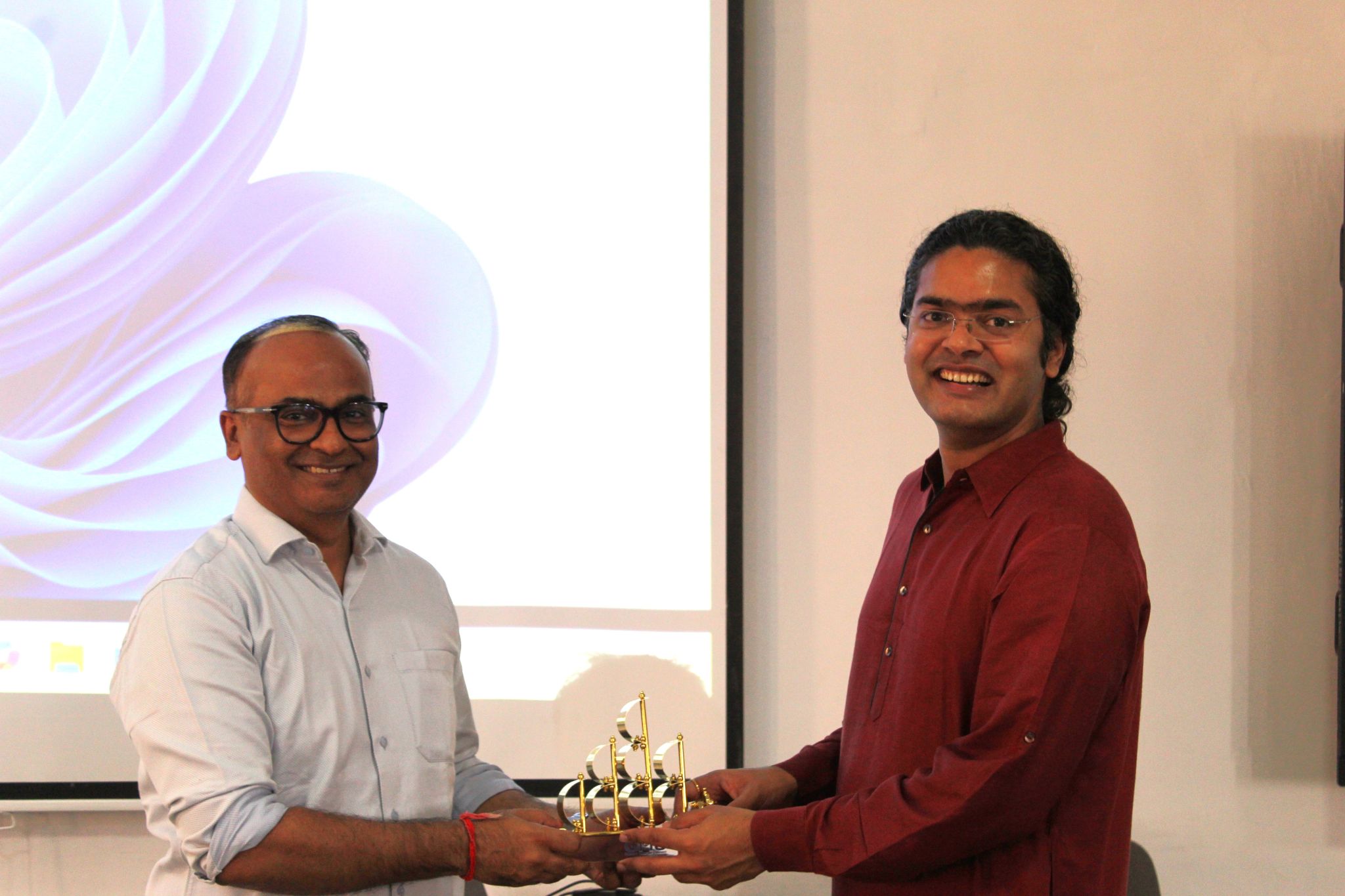
GANDHINAGAR : Gujarat Maritime University (GMU) organised an insightful Expert Session on “Maritime Zones of India Act, 1976 – Recent Developments,” featuring Mr. Apurv Kumar Mishra, Consultant at the Economic Advisory Council to the Prime Minister (EAC-PM), Government of India. The session offered students and faculty an in-depth understanding of India’s maritime legal architecture and its evolving policy landscape.

The programme commenced with a formal welcome address, followed by a reflective note emphasising the importance of applying academic knowledge to real-world governance challenges. Students were encouraged to look beyond statutory provisions and examine how maritime laws operate within administrative, strategic, and economic frameworks.

Drawing upon his professional experience at the EAC-PM, Mr. Mishra elaborated on the significance of the Maritime Zones of India Act, 1976, which defines India’s territorial waters, contiguous zone, exclusive economic zone (EEZ), and continental shelf. He highlighted recent developments, including regulatory updates, policy alignment with international maritime conventions, and the growing importance of maritime security, resource management, and blue economy initiatives.

The session also covered:

India’s jurisdictional rights and sovereign powers in different maritime zones

Governance mechanisms involved in maritime administration

Inter-ministerial coordination in maritime policy formulation

Strategic implications of maritime law in trade, energy security, and coastal development

Emerging challenges in ocean governance and sustainable utilisation of marine resources

Mr. Mishra underscored how maritime legislation plays a crucial role in safeguarding national interests, regulating offshore resources, and strengthening India’s position as a leading maritime nation. He also shared insights into evidence-based policymaking and the role of advisory institutions in shaping high-level national decisions.

An interactive Q&A session followed, where students engaged in discussions on maritime boundary disputes, deep-sea resource exploration, and the future trajectory of India’s blue economy. The deliberations enabled participants to connect theoretical concepts with contemporary policy issues.

The event successfully provided a meaningful platform for academic-industry-policy interaction, reinforcing GMU’s commitment to fostering practical learning and preparing students for leadership roles in maritime governance and law.

The session concluded with a vote of thanks, acknowledging the speaker’s valuable contribution and reaffirming the University’s dedication to promoting dialogue on critical maritime and legal developments.
Indian Maritime University received Patent for AI-Based Electric Scooter Battery Charging Device

MUMBAI: The Indian Maritime University (IMU), Mumbai Port Campus, has received a patent for Industrial Design Registration for the innovative product titled “AI-Based Electric Scooter Battery Charging Device.” The design has been officially registered under Class 13-02 in accordance with the Designs Act, 2000 and the Designs Rules, 2001. This achievement highlights IMU’s growing contribution to technological innovation, intellectual property creation, and sustainable engineering solutions aligned with national development priorities.

Patent Indian Maritime University received Patent for AI-Based Electric Scooter Battery Charging Device

The registered design relates to the novel external form, shape, and configuration of an intelligent battery charging device developed specifically for electric scooters. The device integrates Artificial Intelligence (AI)-based features aimed at enhancing charging efficiency, safety, and battery performance optimization. The design was developed by Dr. Abhimanyu K. Chandgude, Dr. S. Thangalakshmi, and Dr. A. Arun Premnath, Associate Professors at IMU Mumbai Port Campus. Their collaborative expertise has resulted in a solution that blends industrial design excellence with advanced AI-driven functionality.

On this great milestone Innovation by IMU’s Mumbai Port Campus, the patent for AI based Electric Scooter Battery Charging Device can help in the rapid growth of India’s Electric Mobility sector. The grant of Industrial Design registration marks another milestone in IMU’s commitment to research excellence, innovation, and industry-relevant technological advancement.”

The innovation addresses optimized charging cycles, battery health monitoring, intelligent load management, enhanced safety mechanisms, and improved energy efficiency. The innovation supports India’s clean energy transition by promoting electric mobility, reducing carbon emissions, and strengthening sustainable transportation infrastructure.

About Indian Maritime University (IMU)

The Indian Maritime University (IMU) is a Central University under the Ministry of Ports, Shipping and Waterways, Government of India, committed to advancing maritime education, research, and capacity building across the country and beyond.

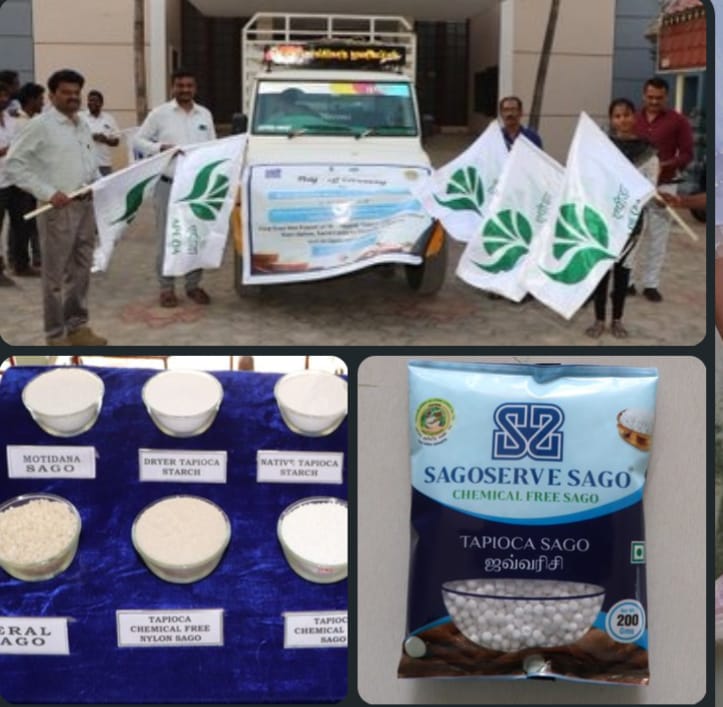
APEDA facilitated flag-off of first GI-Tagged Salem Sago consignment from Tamil Nadu to Canada

NEW DELHI : The Agricultural and Processed Food Products Export Development Authority (APEDA), under the Ministry of Commerce and Industries, facilitated the export of 0.5 MT of GI-tagged Salem Sago from Salem, Tamil Nadu to Canada. This marked the first export consignment shipped directly by the GI Authorised User, SAGOSERVE, since the product received its Geographical Indication (GI) tag in March 2023.

Tamil Nadu is the largest producer of Tapioca Sago, also commonly known as Sabudhana. Salem has long been recognised as the hub of the country’s sago and starch industry. Sago is derived from tapioca roots and serves as a staple food across several parts of India.

The GI registration for Salem Sago was obtained in March 2023 by SAGOSERVE under the Government of Tamil Nadu. The Society has 334 registered member-manufacturers and plays a significant role in the marketing of sago and starch produced by its members and also provides essential service facilities such as warehousing, quality improvement measures and initiatives to enhance tapioca cultivation and sago processing standards.

The sago industry in Salem sustains a large number of farmers, including tribal communities engaged in tapioca cultivation. By linking GI-certified production with direct export opportunities, the initiative improved price realisation and strengthened income prospects for farming households dependent on tapioca cultivation.

Traditionally, Salem Sago has been supplied to traders in Maharashtra, Gujarat, Rajasthan, and West Bengal and exported to countries such as the USA, UK, Canada, Vietnam and Singapore. However, this shipment marked the first direct export from the GI Authorised User Society itself.

An export-focused programme was also held at the premises of The Salem Starch and Sago Manufacturers’ Service Industrial Cooperative Society Limited (SAGOSERVE) in Salem, Tamil Nadu on 18 February 2026, to explore exports to other key markets.

The initiative aligned with APEDA’s strategy of promoting GI-tagged products, enabling direct market linkages between producer societies and international buyers and expanding value-added agri exports from India, and more such flag-offs are planned in the near term.

Global delegates experience India’s GI-Tagged Coffee Showcase at AI Impact Summit

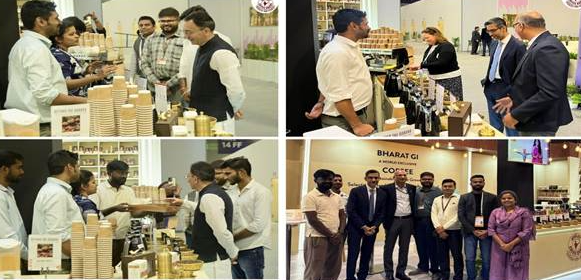
NEW DELHI : Google and Alphabet CEO, Mr. Sundar Pichai visited the Bharat GI Coffee Lounge, organized by the Department for Promotion of Industry and Internal Trade (DPIIT), during the India AI Impact Summit 2026. Savoring Malabar Arabica, Mr. Pichai interacted with baristas and experienced the rich flavors of India’s premium GI-tagged coffees.

Delegates from Finland, France, Japan, Nigeria, Botswana, Lithuania, Kazakhstan, Poland and Germany, among many others, also visited the Coffee Experience Centre, expressing keen interest in India’s GI coffee heritage. The Finnish delegate especially appreciated the mellow, smooth flavour profile of Monsooned Malabar Arabica, praising its unique character and distinct processing tradition that sets it apart on the global stage.

Union Minister of Commerce and Industry Shri Piyush Goyal captured the moment on X, “When @SundarPichai drops by for a sip, you know it’s truly worth it! The world is raising a cup to Bharat GI Coffee at #IndiaAIImpactSummit2026. Bharat GI Coffee Lounge, Bharat Mandapam (Hall 14, First Floor)17–20 February.” Link for the tweet -https://x.com/PiyushGoyal/status/2024386674072179011

Union Minister of State, Ministry of Commerce & Industry, Government of India Shri. Jitin Prasada, at the Bharat GI Coffee Experience Centre, Hall 14 FF on Day 2 of the India AI Impact Summite visited and celebrated the richness of India’s GI‑registered coffees, highlighting how geographical indications preserve authenticity, empower local communities, and bring global recognition to India’s diverse coffee origins.

At the AI Impact Summit 2026, the Bharat GI Coffees is garnering global attention through a special showcase celebrating India’s distinctive Geographical Indication products. The biggest AI event currently taking place in New Delhi from February 16-20 captured global attention as part of a new national initiative called ‘Bharat GI’.

The Department for Promotion of Industry and Internal Trade (DPIIT) has unveiled Bharat GI as a unified national intellectual property brand. The vision is to showcase India’s unique GI products to the globe anchored by the tagline, “A World Exclusive.” DPIIT along with Coffee Board is offering visitors with an immersive experience of the country’s rich, diverse flavors and heritage of Indian coffee at this historic event.

The coffee experience center stationed at Hall No. 14 First Floor, attracted many curious minds to explore and experience various Indian GI registered coffees. Many International delegates have come to savor the Sustainably Shade Grown, Selectively Hand Picked & Naturally Sun-dried Bharat GI Coffees.

DPIIT and National Productivity Council organize ‘Chintan Shivir on Boilers’ to foster innovation and align industry roadmap with Vision 2047

HYDERABAD : The Department for Promotion of Industry and Internal Trade (DPIIT), Ministry of Commerce and Industry, Government of India, in association with the National Productivity Council (NPC), organized a ‘Chintan Shivir on Boilers’ at Hyderabad.

The Chintan Shivir was organised with the objective of fostering innovation, reviewing policy implementation and aligning strategies with long-term national goals such as “Vision 2047” through collaborative and forward-looking discussions. The deliberations focused on preparing a roadmap for the boiler industry by engaging key stakeholders across the ecosystem.

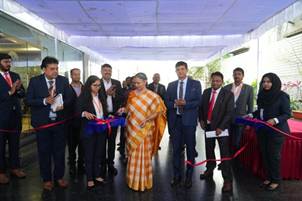
The event was attended by Director General, National Productivity Council, Smt. Neeraja Shekhar, Joint Secretary, Department for Promotion of Industry and Internal Trade, Shri Jai Prakash Shivahare, and Technical Adviser (Boilers) and Secretary, Central Boilers Board, Department for Promotion of Industry and Internal Trade, Shri Sandeep Sadanand Kumbhar. Representatives of State Governments, boiler manufacturers, boiler users, Third Party Inspecting Authorities (TPIAs) and other stakeholders also participated in the deliberations.

Participants were informed that the Government of India had examined the Boilers Act, 1923, a pre-Constitution legislation, to assess its suitability and relevance in the present context. Considering that the Act deals with the safety of life and property, it was decided to retain the legislation while reviewing and updating its provisions. Accordingly, the Act was reviewed and re-enacted as the Boilers Act, 2025, which has been operational with effect from 1 May 2025. The Chintan Shivir served as a platform to seek feedback on the re-enacted Act and to invite suggestions for further strengthening the regulatory framework governing the boiler industry.

The technical sessions during the Shivir covered the provisions of the Boilers Act, 2025 and the rules and regulations framed thereunder, Ease of Doing Business, and the roles and responsibilities of Third-Party Inspecting Authorities and Competent Persons. Industry experts also conducted dedicated sessions on Remnant Life Assessment of ageing boilers, advanced technologies in boiler manufacturing and challenges faced during the erection of supercritical boilers.

The programme concluded with a panel discussion followed by an open house interaction, wherein stakeholders were invited to provide suggestions for rationalising rules and regulations, reducing compliance burden and enhancing ease of doing business while ensuring uncompromised safety standards in the boiler sector.

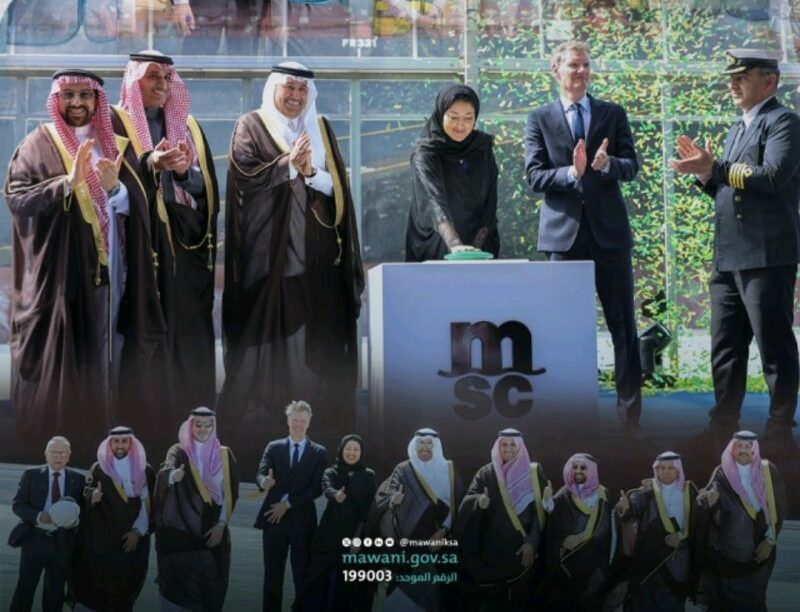
Saudi Ports Authority hosts naming ceremony for MSC Vessel “MSC Saudi Arabia”

RIYADH : The Saudi Ports Authority (Mawani) hosted a prestigious naming ceremony for the vessel “MSC Saudi Arabia”, operated by MSC Mediterranean Shipping Company, marking a significant milestone in the Kingdom’s maritime and logistics journey.

The ceremony underscores the strengthening partnership between Mawani and MSC, one of the world’s leading container shipping lines, and reflects growing confidence in Saudi Arabia’s ports as strategic hubs connecting global trade routes across Asia, Europe, and Africa.

The naming of MSC Saudi Arabia symbolizes the Kingdom’s expanding role in international maritime trade and aligns with the objectives of Saudi Vision 2030 to position the nation as a global logistics powerhouse. The vessel will further enhance connectivity, capacity, and efficiency across Saudi ports, supporting rising trade volumes and supply chain resilience.

Senior officials from Mawani, representatives of MSC, and key stakeholders from the maritime and logistics sectors attended the ceremony, celebrating a shared commitment to operational excellence, sustainability, and innovation in shipping.

With continued investments in port infrastructure, digital transformation, and green initiatives, Saudi Arabia remains focused on building a world-class maritime ecosystem that strengthens its position on the global trade map.

Qodenext successfully enhanced Supply Chain traceability for over 150,000 Assets across India

MUMBAI: Qodenext, one of India’s fastest-growing supply chain traceability and automation service providers, has successfully enhanced supply chain visibility for enterprises nationwide by tracking over 150,000 assets across India. With active operations spanning more than 60 cities, the company is enabling businesses to gain real-time, predictive insights that support smarter decision-making and improved control across complex logistics and distribution networks.

Through its advanced traceability and automation solutions, Qodenext supports enterprises across manufacturing, retail, logistics, pharmaceuticals, automotive, FMCG, and e-commerce sectors. Its technology-led approach helps organisations significantly reduce losses linked to operational inefficiencies, manual errors, and gaps in end-to-end visibility across shipments and assets.

Qodenext works closely with numerous large-scale enterprises to automate and orchestrate their supply chain operations. Its RFID- and automation-driven traceability platform enables businesses to prevent theft, minimise errors, and mitigate risks through intelligent alerts and actionable insights delivered in real time.

By removing the traditional black box in B2B shipments, Qodenext has built a comprehensive, one-stop solution addressing diverse operational needs. The platform integrates capabilities ranging from labeling, QR code scanning, AI-driven inspection, RFID tagging, and automation to end-to-end orchestration and lifecycle support.

Commenting on the company’s growth, Mr. S R Srinivasan, CEO, Qodenext, said, “Tracking over 150,000 assets across multiple industries and cities reflects the trust enterprises place in our technology. Our focus has always been on simplifying supply chain complexity and delivering measurable efficiency gains. As businesses scale and operations become more distributed, real-time visibility becomes critical, and we remain committed to innovating solutions that address this need.”

Qodenext continues to strengthen its position as a trusted partner in supply chain transformation across India. With a clear focus on technology-led innovation and real-time visibility, the company remains committed to enabling businesses to maintain 24×7 control over goods and assets from origin to destination, driving smarter decision-making, greater efficiency, and resilient operations at scale.

About QodeNext India Private Limited

QodeNext is one of India’s fastest-growing supply chain traceability and automation service providers. Established in 2017, the company was formed through the strategic merger of three well-known AIDC and automation organizations: Intellicon, Intercode Solutions, and Essae Technologies. This consolidation brought together decades of experience, deep industry knowledge, and a shared vision to build a stronger, technology-driven organization capable of serving India’s rapidly evolving supply chain sector.

QodeNext delivers smart, reliable, and scalable solutions that help enterprises achieve complete visibility and control across their supply chains. With a strong focus on technology-led transformation, the company supports key sectors including manufacturing, logistics, retail, pharmaceuticals, automotive, FMCG, and e-commerce. Its solutions enable businesses to build integrated, transparent, and efficient operations that are ready for the next phase of digital growth.

Jamaica Moves Forward on Alternative Marine Fuels following National Stakeholder Workshop

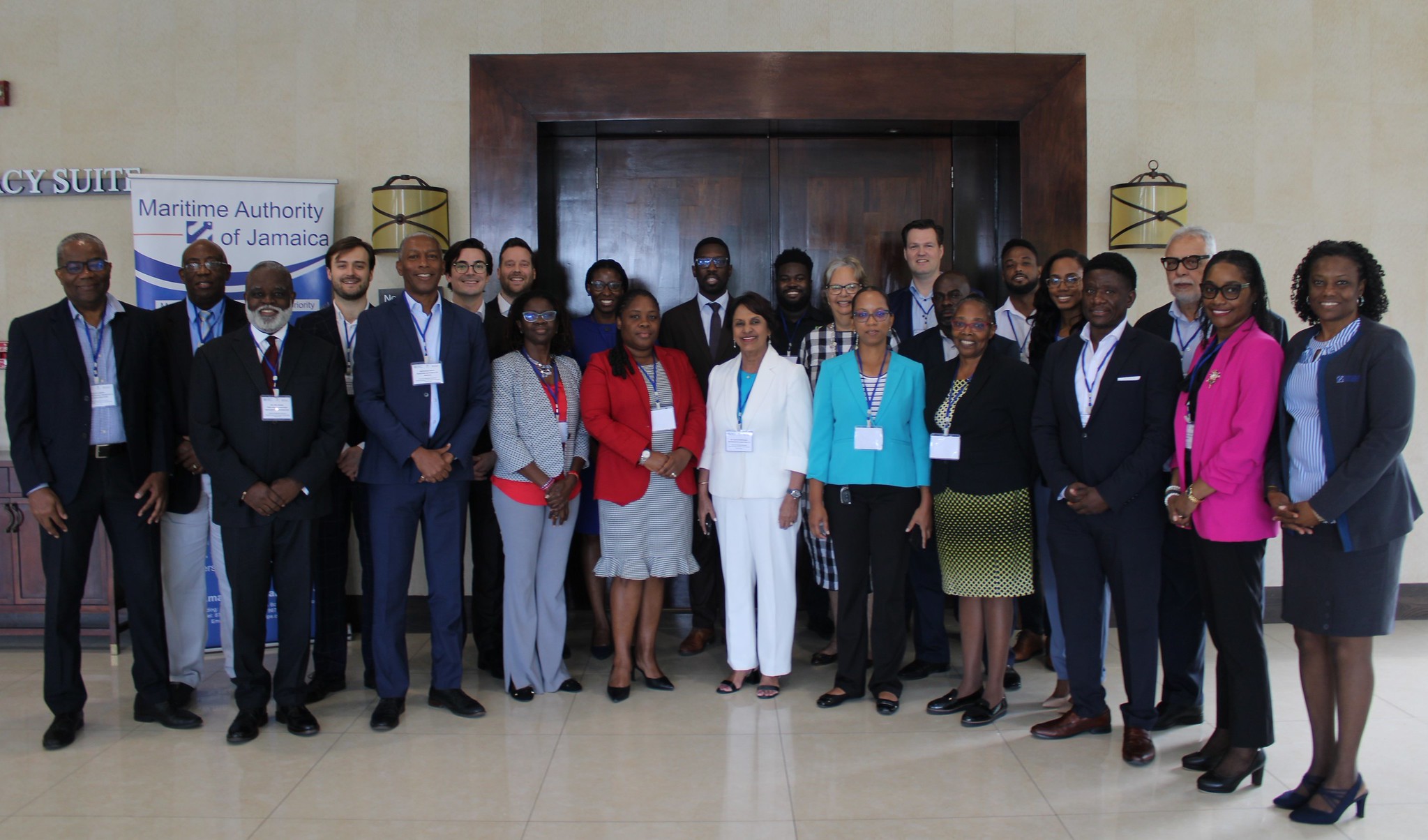
KINGSTON: The Maritime Authority of Jamaica, in collaboration with the International Maritime Organization, recently held a National Stakeholder Workshop exploring Jamaica’s potential role in the supply and demand of alternative marine fuels as global shipping transitions towards low and zero carbon energy.

The workshop formed part of an IMO GreenVoyage2050 supported study and brought together public and private sector stakeholders to examine market demand, supply potential, infrastructure readiness, regulatory considerations and investment priorities.

55090680522 e43fffa995 k Jamaica Moves Forward on Alternative Marine Fuels following National Stakeholder Workshop

Director General of the Maritime Authority of Jamaica, Bertrand Smith, said: “For Jamaica, the current pause in the adoption of the IMO Net Zero Framework presents an opportunity. It gives us the space to assess the economic impact on our shipping industry and the wider economy, and to carry out studies like this Alternative Fuel Study so we are ready to take advantage of the benefits that will come with the decarbonisation of shipping.

“The reality is that the shipping industry is and will continue to decarbonise. LNG has emerged as a transition fuel, but we are also seeing the rapid development of scalable, low carbon, hydrogen derived e fuels and ammonia, which have moved from concept to firm orders.”

Jamaica’s strategic maritime advantages, including its location close to major east west shipping routes and the depth of Kingston Harbour, were a central focus of discussions.

Mr Smith added: “We are leveraging these assets to ensure Jamaica is not left behind in the energy transition and to strengthen our position as a regional shipping and bunkering hub.”

The workshop also reflected the growth already taking place in Jamaica’s bunkering sector, with five operators now active, including Shell LNG, alongside increasing LNG bunkering volumes at Kingston and the outer anchorage and growing ship to ship activity at Portland Bight.

Alongside market developments, work is progressing on the policy and regulatory framework needed to support a competitive and secure bunkering sector.

Mr Smith said: “We are developing a modern legal framework to support a sustainable and secure maritime transport system, including standards for safe and competitive bunkering, and we expect this legislation to be passed this year.”

Plenary sessions and interactive workshops were led by Haskoning, which is supporting the IMO and MAJ in delivering the study. Participants included the Ministry of Energy, Transport and Telecommunications, the Port Authority of Jamaica, Petrojam Limited, West Indies Petroleum, Kingston Freeport Terminal Limited, Caribbean Maritime University, Scott Bunkering Jamaica Limited, Environmental Solutions Limited and other key regulators and industry stakeholders.

The Alternative Marine Fuel Study is assessing Jamaica’s potential to produce and bunker fuels such as biofuels, methanol, ammonia and hydrogen, with the aim of delivering evidence based recommendations and a practical roadmap aligned with the IMO Greenhouse Gas Strategy.

“This work is about ensuring Jamaica is prepared, competitive and well positioned as the shipping industry moves towards clean maritime energy,” Mr Smith added.

Findings from the workshop will feed into the final study and inform a regional roundtable discussion later in Trinidad and Tobago, supporting a coordinated Caribbean approach to alternative marine fuel development.

New analysis warns there is no obvious compromise to the Net Zero Framework

LONDON/COPENHAGEN: A new insight brief by the UCL Shipping and Oceans Research Group for the Getting to Zero coalition, titled “Uncertainty at the IMO: Three scenarios and their consequences for shipping’s transition”, concludes that of those options only the ‘as is’ (Net Zero Framework as agreed in principle in April 2025) has the potential to provide a credible, stable demand signal and revenue stream to support early and mass-market uptake of scalable zero-emission fuels. Weaker alternatives risk delaying scalable zero-emission fuel availability into the 2040s, whilst also reducing just and equitable transition opportunities through weakening or removing the fund.

Prof. Tristan Smith, Professor of Energy and Transport at UCL Shipping and Oceans Research Group said: “The Net Zero Framework was a fragile compromise in April last year. It should not be surprising that analysis finds that adjustments to make it acceptable to some governments, can be expected to lose support from other governments. Pursuing compromise to the Net Zero Framework ‘as is’ therefore risks further deadlock, and further extension to delay at IMO, and increased likelihood of a patchwork of regional regulation.”  

The insight brief considers three potential scenarios, each having materially different impacts on enforcement, investment signals, revenues, low-income countries, and regional policies:

  1. NZF ‘as is’: The framework agreed in principle at MEPC 83 in April 2025 is adopted without modification in November 2026, entering into force in 2028.
  2. Single-tier global fuel standard (GFS): A compromise that removes the two-tier GHG fuel intensity architecture, retaining some but not all economic elements.
  3. NZF without an economic element: A framework stripped of its compliance market, non-compliance costs, Net-Zero Fund, and zero- and near-zero (ZNZ) reward — leaving only an aspirational GHG fuel intensity trajectory with no material consequences for non-compliance.

The insight brief concludes that alternative scenarios to NZF ‘as is’ would:

  • Provide little or no demand signal and revenue to support uptake of the scalable zero-emission fuels needed in the long run.
  • Still raise costs for lower income countries but would severely limit the capacity to support their transitions and mitigate disproportionate impacts.
  • More likely to encourage regulatory fragmentation, heighten investment risk, and decreased alignment with the IMO’s overall emissions reduction strategy.

While the Net-Zero Framework is imperfect, many of these risk factors could be managed through the development of its guidelines for implementation. Even the NZF ‘as is’ is projected to deliver only around 10% absolute GHG reduction by 2030 against 2008 levels — below the Revised Strategy’s 20-30% checkpoint in 2030. Weaker scenarios would fall even shorter. The NZF ‘as is’ had the support of 88% of MARPOL signatories at the point of agreement. The report finds little evidence that reopening the framework text would produce broader consensus, and significant risk it would reignite political deadlock.

The insight brief therefore finds that progressing to adopt the Net-Zero Framework ‘as is’ at MEPC.ES2 in November 2026 has the lowest transition risk, both, for countries and for many companies. Deferment of long-term investment decisions from a protracted delay in search of a majority that is unlikely to exist increase the risk of a disorderly, expensive and inequitable transition.

Geopolitics Tops Executive Training Agenda in Shipping

COPENHAGEN: Geopolitics has become the leading focus of executive maritime education, reflecting a decisive shift in how senior leaders assess risk, capital and long-term strategy.

55099124718 7062fe0d60 b Geopolitics Tops Executive Training Agenda in Shipping

Copenhagen Business School’s Ms Rosberg, Programme Director of the Blue MBA and Blue Board Leadership, reports that geopolitical insight is now the most requested subject across her executive portfolio. Demand has risen sharply over the past 18 months as global instability reshapes commercial predictability.

“Leaders are asking different questions,” said Ms Rosberg. “They want clarity on sanctions exposure, trade fragmentation, regional power shifts and the implications for capital, insurance and operations. Political decisions now influence balance sheets, asset valuation and strategic direction.”

Ongoing conflicts, protectionist policies, energy security pressures and strategic rivalry between major economies are altering established trade patterns. These forces are influencing fleet deployment, chartering strategies, financing structures and insurance conditions.

The two-day Geopolitics workshop on 18-19 February 2026, which is offered by the Blue MBA Association as a part of a series of long-life-learning courses for the maritime industry, became a strong draw within the Blue Programme. Participants include shipowners, insurers, regulators and maritime service providers seeking disciplined frameworks for analysing uncertainty rather than responding reactively to events.

“Risk no longer sits neatly within technical or regulatory categories,” said Ms Rosberg. “It is shaped by political alignment, national policy and shifting alliances. Leadership must reflect that reality. Boards are now expected to demonstrate foresight, judgement and accountability in environments where volatility is structural.”

The surge in demand reflects a wider evolution in maritime leadership development, moving beyond operational management towards strategic governance. Executive education is increasingly focused on equipping decision-makers to identify systemic exposure, assess secondary consequences and safeguard long-term value.

“Shipping operates at the centre of global commerce,” she said. “Failure to understand geopolitical dynamics is no longer a knowledge gap. It is a strategic risk.”

In today’s environment, geopolitical competence is not an optional enhancement to maritime leadership. It is a prerequisite.