Home Blog Page 488

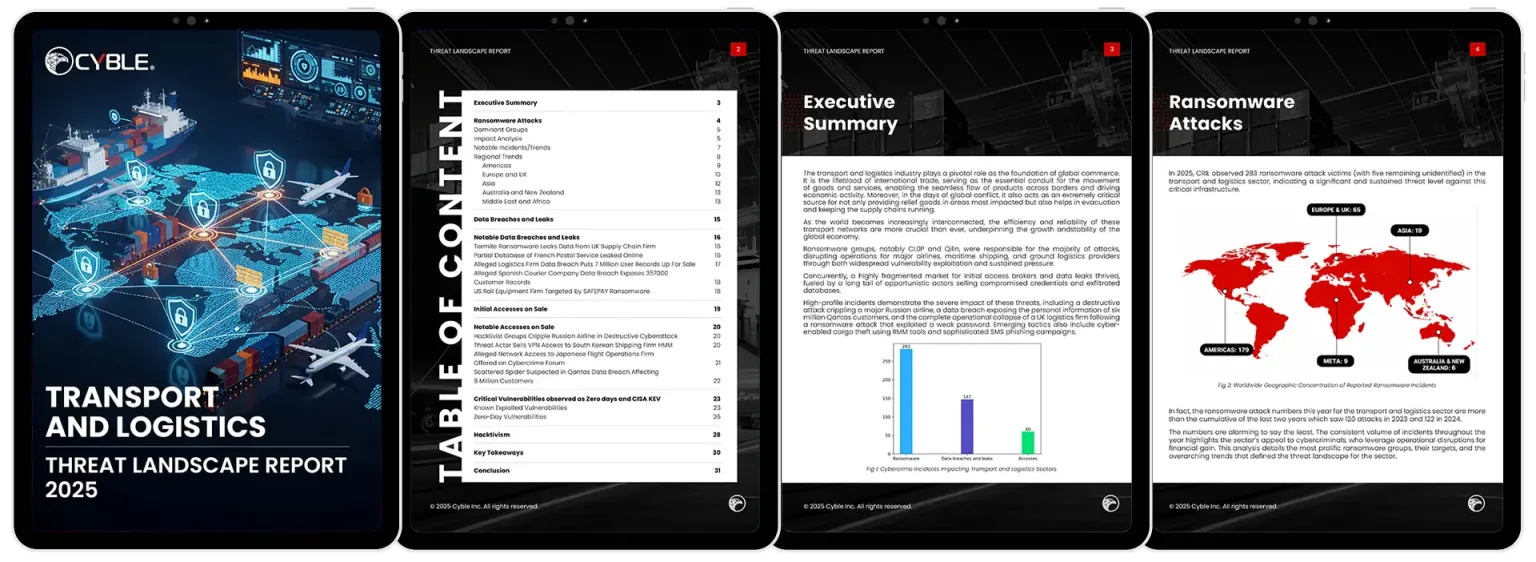
Cyble’s Transport & Logistics Threat Landscape Report 2025: Ransomware Attacks more than Double, Disrupting Global Supply Chains

CALIFORNIA: Cyble Inc. released its Transport & Logistics Threat Landscape Report 2025, revealing a sharp escalation in cyber threats targeting one of the most critical pillars of global commerce. The report documents a record 283 ransomware attacks against transport and logistics organizations—more than the combined total of attacks observed in 2023 and 2024—alongside major data breaches, destructive hacktivist campaigns, and a thriving underground market for compromised network access.

The comprehensive analysis highlights how cybercriminals increasingly exploit the sector’s low tolerance for downtime, operational technology dependencies, and globally interconnected supply chains to maximize disruption and financial gain.

“The transport and logistics sector has become a prime target for cybercriminals because operational disruption translates directly into economic and societal impact,” said Daksh Nakra, Senior Manager of Research and Intelligence at Cyble. “In 2025, we observed ransomware campaigns capable of crippling airlines, shipping firms, and ground logistics providers within hours, often by exploiting a single vulnerability across dozens of organizations.”

Ransomware Campaigns Reach Unprecedented Scale

Cyble researchers observed 283 ransomware victims across the transport and logistics sector in 2025, with attacks maintaining consistent volume throughout the year. A small group of highly active ransomware operations accounted for the majority of incidents .

Dominant Ransomware Groups:

  1. CL0P – 68 attacks (24% of total), executing large-scale, campaign-driven exploitation
  2. Qilin – 43 attacks (15%), maintaining sustained pressure throughout the year
  3. Akira – 29 attacks (10%)
  4. Play – 20 attacks (7%)

Together, these four groups were responsible for 57% of all ransomware activity targeting the sector, demonstrating the outsized impact of a limited number of sophisticated Ransomware-as-a-Service operations.

Land Transport Most Impacted, Public Infrastructure at Risk

Ransomware activity disproportionately impacted land-based operations, accounting for nearly three out of every four attacks, with logistics and freight services emerging as the most targeted sub-sector. Airlines, maritime shipping firms, trucking companies, rail operators, and even public transit authorities were affected, underscoring the systemic risk to both commercial and public infrastructure.

Major Data Breaches Expose Millions of Records

The report documents a fragmented but highly active data breach ecosystem, where both persistent threat actors and opportunistic sellers leaked or sold sensitive data throughout the year.

Notable incidents include:

  1. A breach affecting approximately 6 million Qantas customers, exposing personal information such as names, email addresses, and frequent flyer numbers
  2. An alleged logistics platform breach involving over 7 million user records offered for sale on underground forums
  3. Multiple courier and postal service data leaks across Europe and Asia, exposing customer PII and operational data

Government agencies, airlines, and supply chain firms were repeatedly targeted due to the high value of the data they process.

Underground Access Markets and Cyber-Enabled Cargo Theft

Cyble’s analysis identified a highly fragmented underground market for compromised network access, where dozens of actors sold VPN, firewall, and internal system access to transport and logistics organizations. These accesses often served as the initial foothold for ransomware deployment, espionage, or financially motivated attacks .

Emerging tactics also included cyber-enabled cargo theft, where attackers leveraged remote monitoring and management tools and weaknesses in GPS and operational technology systems to facilitate physical theft and operational sabotage.

Zero-Day Vulnerabilities Fuel Large-Scale Attacks

The report highlights extensive exploitation of critical zero-day and known exploited vulnerabilities, particularly in perimeter devices and enterprise software. A significant majority of vulnerabilities carried CVSS scores of 9.0 or higher, enabling unauthenticated remote code execution and rapid lateral movement within networks.

Vendors most frequently affected included Microsoft, Cisco, Fortinet, Apple, Ivanti, and Citrix, reflecting threat actors’ focus on widely deployed enterprise technologies.

Geopolitical Hacktivism Disrupts Aviation and Logistics

Hacktivist activity reached unprecedented levels in 2025, with over 40,000 data leak and dump posts impacting more than 44,000 unique domains globally. The transport and logistics sector was repeatedly targeted in campaigns driven by geopolitical conflicts, including a destructive cyberattack against a major Russian airline that resulted in flight cancellations and large-scale infrastructure damage.

Key Takeaways

  1. Ransomware attacks against transport and logistics organizations more than doubled, driven by campaign-style exploitation of shared vulnerabilities
  2. Cyber incidents increasingly blurred the line between digital and physical risk, enabling operational disruption and cargo theft
  3. A diverse mix of ransomware groups, access brokers, and hacktivists targeted the sector
  4. Zero-day vulnerabilities in perimeter and enterprise technologies served as primary attack vectors

For a detailed breakdown of ransomware trends, regional attack patterns, data breaches, and emerging threats, download the Transport & Logistics Threat Landscape Report 2025 here: https://cyble.com/resources/research-reports/transport-logistics-threat-landscape-report-2025/

About Cyble

Cyble is a global AI-powered threat intelligence company providing organizations with real-time visibility into cyber threats through advanced research, dark web monitoring, attack surface management, and comprehensive security solutions. Cyble’s unified intelligence platform enables security teams to detect, respond to, and prevent cyberattacks before they cause significant damage.

Baltic index at lowest in over five months on lower capesize, supramax rates

LONDON: The Baltic Exchange’s Dry Bulk Sea Freight index, which tracks rates for vessels transporting dry bulk commodities, edged down on Monday and touched its lowest level in more than five months, as lower rates in capesize and supramax segments overshadowed gains in the panamax segment.

The main index, which tracks rates for capesize, panamax, and supramax vessels, lost 31 points to 1,851, its lowest since July 2025.

The capesize index fell by 59 points, or 1.9%, to 3,049.

Average daily earnings for capesize vessels, which typically transport 150,000-ton cargoes such as iron ore and coal, decreased by $538 to $24,149.

However, China’s iron ore futures rose on Monday, the first trading session of the New Year, supported by strong demand and ongoing supply constraints.

Among smaller vessels, the supramax index lost 33 points to 1,043 points.

Meanwhile, the panamax index rose by 11 points, or 0.9%, to 1,293 points.

Average daily earnings for panamax vessels, which usually carry 60,000 to 70,000 tons of coal or grain, increased by $104 to $11,640.
Source: Reuters

Adani Ports handles 41.9 MMT cargo in December; container volumes rise 18% YoY

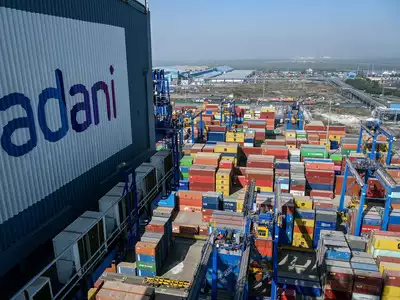
AHMEDABAD : Adani Ports and Special Economic Zone Ltd (APSEZ) reported a steady operational performance in December 2025, with total cargo handled rising 9% year-on-year to 41.9 million metric tonnes (MMT).

The growth was primarily driven by containers, which recorded an 18% year-on-year increase during the month.

For the year-to-date period ending December 2025, APSEZ handled a cumulative 367.3 MMT of cargo, marking an 11% rise over the corresponding period last year, again led by robust container volumes that grew 21% year-on-year.

On the logistics front, rail volumes in December stood at 59,037 TEUs, remaining flat compared with a year earlier, while GPWIS volumes declined 7% year-on-year to 1.8 MMT. For the April–December period, logistics rail volumes increased 11% year-on-year to 528,872 TEUs, while GPWIS volumes were flat at 16.1 MMT.

Haldia Dock Complex sets consecutive container handling records, ends 2025 on a high note

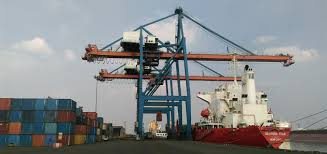
KOLKATA : In November 2025, (Haldia Dock Complex) HDC handled 21,691 TEUs, surpassing its previous monthly record. The momentum carried forward into December, when the port processed 22,657 TEUs, marking another new high. Achieving record throughput in consecutive months is rare in the sector and reflects more than just numbers—it signifies sustained operational resilience, seamless coordination among port stakeholders, and a robust growth trajectory.

Port officials highlighted that these figures represent the culmination of strategic planning, investment in infrastructure, and adoption of best practices in cargo handling. “Breaking a record is commendable; breaking it again immediately is a statement,” said a senior HDC official. “This performance demonstrates that at HDC, record achievements are no longer isolated events—they are becoming the new operational baseline.”

The consecutive record months also signal strong confidence from shipping lines and import-export partners, reinforcing HDC’s reputation as a reliable hub in the eastern maritime corridor. Analysts note that continued growth at HDC could have positive implications for regional trade and logistics efficiency, further boosting India’s position in global maritime trade.

As Haldia Dock Complex enters 2026, the challenge will be to maintain this upward momentum while expanding capacity, improving turnaround times, and leveraging technology to sustain operational excellence.

IPA invites experienced professionals for empanelment with Centre of Excellence

NEW DELHI : The Indian Ports Association (IPA) has invited applications from experienced professionals across the country for empanelment as experts and individual consultants with its Centre of Excellence (CoE). The initiative aims to create a national pool of domain specialists to support Major Ports and the Ministry of Ports, Shipping and Waterways (MoPSW) on high-level technical, advisory, and strategic assignments.

According to an Expression of Interest (EoI) issued by IPA on January 1, 2026, professionals below the age of 70 years with a minimum graduate qualification in relevant disciplines and documented expertise in their respective domains are eligible to apply.

The empanelment is intended to facilitate need-based, short-term engagement of experts, rather than permanent appointments. Assignments will typically be of limited duration, with engagements capped at a maximum of six months in a financial year.

IPA has identified 15 broad domains, each comprising five sub-categories, covering a wide spectrum of port and maritime functions. These include:

Project planning, design, and construction supervision

Environment management and green ports

Finance, costing, and public-private partnerships (PPP)

Information technology and digital systems

Navigational audits and marine safety

Estate management and town planning

Legal and contractual services

Disaster management and resilience planning

Business development and marketing

Human resources, training, and capacity building

In addition, specialist categories include non-destructive testing, independent engineers, transaction advisers, and cruise development, encompassing market assessment, terminal design, operational planning, and business model development.

Applicants may opt for multiple domains and sub-categories through a single online application submitted via the CoE portal. The last date for submission of applications is February 16, 2026.

Empanelment will be at the discretion of IPA and its Executive Committee, based on an assessment of the applicant’s experience, qualifications, and expertise. IPA has clarified that inclusion in the panel does not confer any right to assignment or assured remuneration.

For assignments that do materialise, the concerned Major Port, IPA, or MoPSW will engage the empanelled expert on mutually agreed terms. Remuneration will be paid as consolidated daily or monthly fees, as per predefined slabs. For external private experts, daily fees range from ₹8,000 for professionals with 7–10 years of experience to ₹15,000 for those with over 25 years of experience. Monthly remuneration for full-time engagements is capped between ₹1.5 lakh and ₹3.25 lakh, depending on experience.

The initiative is expected to strengthen institutional capacity across India’s port sector by enabling timely access to specialised expertise aligned with national maritime development priorities.

India’s Ports & Logistics sector poised for revival in FY27: Jefferies

NEW DELHI : After a subdued performance in 2025, India’s ports and logistics sector appears to be on the cusp of a recovery, supported by a favourable base, fresh capacity additions and the gradual rollout of critical infrastructure linkages. According to global brokerage firm Jefferies, these factors could set the stage for a rebound in volumes beginning FY27.

In its 2026 outlook, Jefferies noted that ports and logistics stocks significantly underperformed the Nifty 50 over the past year. The underperformance was driven by slower-than-expected cargo volumes, tariff-related uncertainty, and weak coal demand, all of which weighed on investor sentiment. With many of these headwinds now easing, the brokerage expects volume growth to regain momentum from the first quarter of FY27.

Volumes Expected to Recover

Container traffic, which contributes around 22% of total industry throughput, grew by only 6% year-on-year during the first eight months of FY26—well below the historical average growth rate of 10–11%. Coal volumes also remained muted, rising just 2%, largely due to subdued power demand. Jefferies believes these trends are likely to reverse as domestic demand normalises and global trade conditions stabilise. The possibility of an India–US trade agreement could further strengthen the outlook for export-import cargo.

Infrastructure Connectivity as a Key Catalyst

A major positive trigger highlighted by Jefferies is the expected connectivity of the Dedicated Freight Corridor (DFC) to Jawaharlal Nehru Port Authority (JNPA) by the end of Q1 FY27. This development is anticipated to significantly enhance rail evacuation efficiency, lower logistics costs, and provide a sustained boost to container traffic.

Overall, Jefferies maintains that improving fundamentals, easing uncertainties and long-awaited infrastructure upgrades could help India’s ports and logistics sector chart a stronger growth trajectory in the coming years.

Defence Min commissions ICG Ship Samudra Pratap, India’s first indigenously designed Pollution Control Vessel built by GSL

SAMUDRA PRATAP Defence Min commissions ICG Ship Samudra Pratap, India’s first indigenously designed Pollution Control Vessel built by GSL

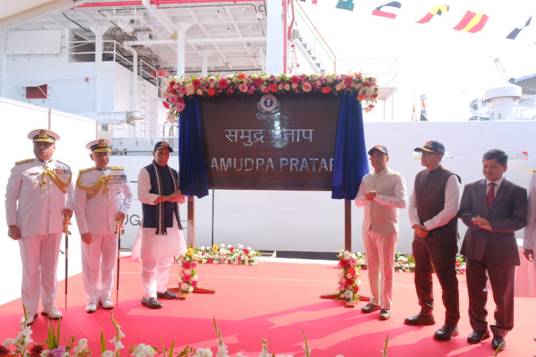
NEW DELHI : Marking a major step forward in India’s pursuit of Aatmanirbharta in shipbuilding and maritime capability development, Raksha Mantri Shri Rajnath Singh commissioned Indian Coast Guard Ship (ICGS) ‘Samudra Pratap’, the first of two Pollution Control Vessels built by Goa Shipyard Limited (GSL), in Goa on January 05, 2026. With over 60% indigenous content, ICGS Samudra Pratap is India’s first indigenously designed pollution control vessel and the largest ship in the ICG fleet to date. The addition of ICGS Samudra Pratap will significantly enhance the ICG’s operational capability in pollution control, fire-fighting, maritime safety, and environmental protection. It will also strengthen its ability to conduct extended surveillance and response missions across India’s vast maritime zone.

Raksha Mantri described the vessel as an embodiment of India’s mature defence industrial ecosystem, which possesses the capability to handle complex manufacturing challenges effectively, adding that consistent efforts are being made to enhance the indigenous content in ships to 90%.

“ICGS Samudra Pratap has been specially designed for pollution control, but its role is not limited to this alone. As multiple capabilities have been integrated into a single platform, the ship will prove to be effective in coastal patrol, and strengthen maritime safety. It is a product of the modern approach adopted by the GSL to enhance flexibility and readiness to deal with present day maritime challenges,” said Shri Rajnath Singh.

Raksha Mantri commended the ICG for playing a multidimensional role – from marine pollution to coastal cleanliness, from search and rescue to maritime law enforcement. He added that, with the way the Coast Guard is fulfilling its duties, a clear message has been sent to the country’s adversaries that if they dare to cast an evil eye on India’s maritime borders or attempt any misadventure, they will be met with a bold and befitting response.

The ship is equipped with advanced pollution detection systems, dedicated pollution response boats, and modern firefighting capabilities. It also features a helicopter hangar and aviation support facilities, which can significantly increase its reach and effectiveness. Shri Rajnath Singh expressed confidence that due to these capabilities, the vessel will be able to operate stably even in rough sea conditions, providing a huge advantage in real-life operations.

Raksha Mantri termed marine environment protection as not just a strategic necessity, but a moral responsibility, amidst the challenges of climate change and global warming. He appreciated ICG for carrying out oil spill response, firefighting, and salvage operations, placing India in the category of select countries that possess advanced environmental response capabilities. “Through its quick detection, precise station-keeping, and efficient recovery systems, ICGS Samudra Pratap will further strengthen capabilities. It will ensure that pollution incidents are controlled in a timely manner, preventing damage to coral reefs, mangroves, fisheries, and marine biodiversity. This is directly linked to the sustainability of coastal communities and the blue economy,” he said.

Emphasising that a clean sea guarantees safe trade, safe lives, and a safe environment, Shri Rajnath Singh stated that platforms such as ICGS Samudra Pratap provide confidence that India not only understands its maritime responsibilities, but is fully prepared to fulfill them. He asserted that the commissioning of Samudra Pratap is linked to India’s Grand Maritime Vision. “We believe that marine resources are not the property of any one country, but a shared heritage of humanity. And when the heritage is shared, the responsibility of its protection is also shared. This is why India stands firmly on the world stage today with the principles of Peace, Stability, and Environmental Responsibility,” he said.

On the current period of Global Maritime Uncertainty, Raksha Mantri said that India has repeatedly proven that it secures not only its own interests, but also the peace and stability of the entire Indo-Pacific region. This approach makes India a Responsible Maritime Power, he added.

Shri Rajnath Singh reiterated Prime Minister Shri Narendra Modi-led Government’s commitment to continuously bolster the maritime sector, amidst the emerging technology-driven and multi-dimensional threats. “ICG cannot function solely as a reactionary force; it must emerge as a proactive force, and the Government will make every possible effort to support this endeavour. Whether it is the acquisition of new vessels, leasing of land to establish new units or matters related to manpower, we are striving to modernise the ICG in all aspects.

In a first, the ship will have two women officers. Acknowledging the ICG for rapidly moving towards an inclusive and gender-neutral work environment in line with the Government’s vision, Raksha Mantri dubbed it as a matter of pride that, today, women officers are being appointed as pilots, observers, air traffic controllers, logistics officers, and law officers, while being trained for hovercraft operations and being actively deployed in frontline ops. “Today, women are not only playing a support role, they are serving the nation as frontline warriors. The two women officers appointed to ICGS Samudra Pratap are the role models for future generations. The ICG will continue to be a source of opportunities and development for all,” he said.

Praising the self-reliance efforts of ICG, Shri Rajnath Singh said that the Government’s slogan of Aatmanirbharta has now become the way of working. “In sync with the Make-in-India and Aatmanirbhar Bharat initiatives, ICG has played a significant role in promoting indigenous assets. Today, the manufacturing, servicing, and repairing of our Coast Guard ships and aircraft are being done in India itself. It is a great achievement in itself,” he said.

To tackle present day challenges, Raksha Mantri underlined the importance for the ICG to move from a platform-centric force to the one that is intelligence-driven and integration-centric. He also pressed on the need to develop specialised career streams within the ICG in areas such as maritime law enforcement, environmental protection, and maritime cyber security.

Shri Rajnath Singh pointed out that, in recent years, the ICG established itself as a regional standard-setter, and it is, now, the time to take this role towards global leadership. “In the coming times, we will have to shape norms in the field of maritime governance, strengthen capacity-building initiatives, and promote cooperative frameworks. The ICG will have to elevate its operational doctrines, institutional practices, and technological innovations to such benchmarks that their best practices will be followed worldwide,” he said, exuding confidence that ICG will make significant contribution towards strengthening the defence sector.

Goa Chief Minister Dr Pramod Sawant, Defence Secretary Shri Rajesh Kumar Singh, Director General, ICG DG Paramesh Sivamani, Chairman & Managing Director, GSL Shri Brajesh Kumar Upadhyay, and officials of central & state governments were present on the occasion.

About ICGS Samudra Pratap

Samudra Pratap, meaning Majesty of the Seas, reflects the ICG’s resolve to ensure safe, secure, and clean seas while safeguarding the nation’s maritime interests. The ship has a displacement of 4,170 tons, length of 114.5 meters & speeds exceeding 22 knots. It is powered by two 7,500 kW diesel engines driving indigenously developed Controllable Pitch Propellers and gearboxes, offering superior manoeuvrability, flexibility and endurance of 6,000 nautical miles.

The vessel is equipped with state-of-the-art systems including side-sweeping arms, floating booms, high-capacity skimmers, portable barges, and a pollution control laboratory. The ship is also fitted with an External Fire-Fighting System (Fi-Fi Class 1) and integrates advanced systems such as Dynamic Positioning, Integrated Bridge System, Integrated Platform Management System, and Automated Power Management System to enhance automation and mission efficiency. Its armament includes a 30 mm CRN-91 gun and two 12.7 mm Stabilised Remote-Controlled Guns, supported by modern fire-control systems.

The ship will be based at Kochi under the operational control of the Commander, Coast Guard Region (West), through Coast Guard District Headquarters No. 4 (Kerala & Mahe).

Ashwini Vaishnaw hails milestone as Apple ships USD 50 billion worth of iPhones from India in 2025

NEW DELHI: Apple Inc. exported iPhones worth USD 50 billion from India in 2025, marking a significant milestone for the country’s manufacturing sector. Union Minister for Railways, Information & Broadcasting, Electronics & Information Technology, Shri Ashwini Vaishnaw, shared the development on X, attributing the growth to the ‘Make in India’ initiative and the transition toward a producer economy.

“In a major milestone for PM @narendramodi Ji’s ‘Make in India’ and our quest to become a producer economy, Apple ships $50 billion worth mobile phones in 2025,” Vaishnaw said.

To give context, during its five-year PLI period from FY21 to FY25, Samsung shipped devices worth approximately USD 17 billion.

Highlighting the broader growth in the sector, Vaishnaw stated, “Electronics production has increased 6 times in the last 11 years. And electronics exports have grown 8 times under PM Modi Ji’s focused leadership. This progress has propelled electronics products among the top 3 exported items.”

The Minister noted that 46 component manufacturing projects, alongside manufacturers of laptops, servers, and hearables, established electronics as a major driver of the manufacturing economy. He also stated that four semiconductor plants will start commercial production this year.

The electronics manufacturing sector now supports 25 lakh jobs, with several factories employing more than 5,000 people at a single site. According to the Minister, some plants currently employ as many as 40,000 employees in a single location.

The Minister emphasised that the current progress represents an initial stage in the country’s industrial strategy. He stated that the nation aims to become a major player in the entire electronics stack.

“This is just the beginning. Bharat will become a major player in entire electronics stack – design, manufacturing, operating system, applications, materials, and equipment,” Vaishnaw said.

Source: ANI

India’s first indigenous high-speed train set to enter manufacturing phase soon

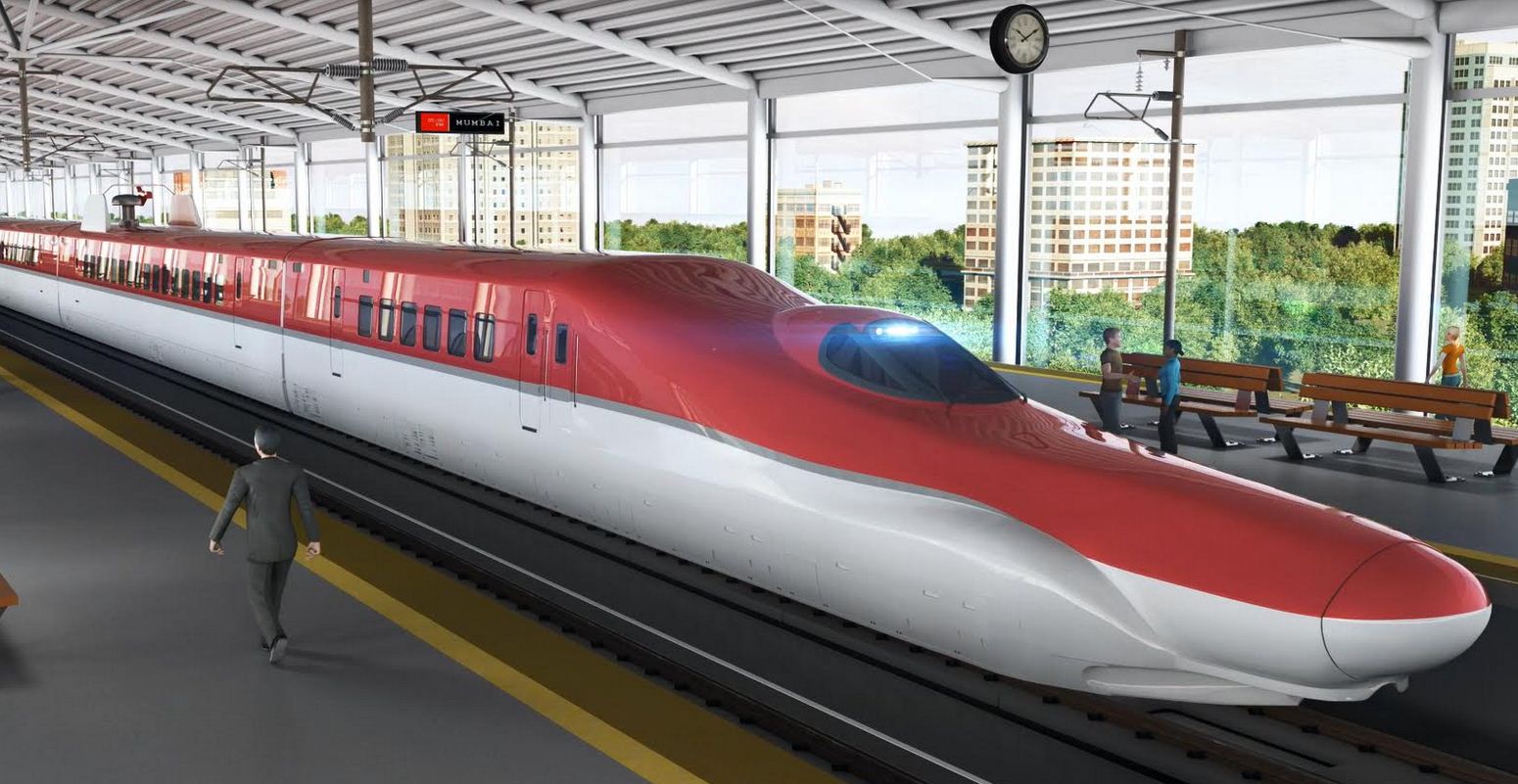
NRE DELHI : Manufacturing activities for India’s first indigenous high-speed train are expected to begin soon, with the design phase nearing completion, sources familiar with the development told Moneycontrol. The project is being executed by BEML-Medha, which received the contract from Integral Coach Factory (ICF) in 2024 to build two chair-car high-speed trainsets. Designed for an operational speed of 250 kmph and a maximum speed of 280 kmph, the trains will be deployed on Mumbai-Ahmedabad High-Speed Rail (HSR) corridor by 2027.

ICF general manager U Subba Rao told Moneycontrol, “The final design is nearing completion, and manufacturing will begin once it is frozen. We expect manufacturing to start between April and June. Component designs including carbody, bogies, suspension system, and doors are being developed in parallel and are in the final stages.”

Each trainset will consist of eight coaches, including seven chair cars and one executive class coach, with pantry and toilet facilities broadly aligned with those seen in chair-car Vande Bharat trains.

Design phase nearing completion

Sources said the design phase of the project is nearing completion, with Poland-based EC Engineering- design consultant for the project-having submitted detailed design for review and approval. EC Engineering had earlier worked with BEML and Medha on the design of the Vande Bharat sleeper train. Officials involved in the project said global vendors with a proven track record of supplying European high-speed rail systems have been engaged to ensure compliance with international performance and safety benchmarks. “We are also enabling localisation and the gradual development of domestic manufacturing capabilities” an official said.

Moneycontrol has also accessed interior renders of the proposed high-speed train, which will be deployed on Mumbai-Ahmedabad HSR corridor. Parallel work on systems and bogies

Manufacturing activities are expected to commence with the fabrication of carbody shells at BEML’s Bengaluru plant, while Medha will begin production of bogies at its Hyderabad facility. In parallel, Medha is also developing the Train Control and Management System (TCMS) software and working on the integration of Siemens’ signalling system with the train systems.

Prototype rollout targeted for December 2026

The first prototype of the indigenous high-speed train is expected to roll out by December 2026. “Following this, the train will undergo a comprehensive testing and certification programme lasting about seven to eight months, covering static and dynamic trials, safety validations, and high-speed test runs, including trials mandated by the Research Designs and Standards Organisation (RDSO),” a source said.

Follow-on order for 16 trainsets likely

Industry sources said the BEML-Medha consortium is likely to receive a follow-on order for 16 additional high-speed trainsets.

Phased start to commercial operations

Commercial services using the first two indigenous trainsets likely to begin on Surat–Bilimora section of the corridor, subject to the successful completion of trials and statutory approvals.

Railways Minister Shri Ashwini Vaishnaw has recently said that the Mumbai-Ahmedabad high-speed rail project will be commissioned in phases starting in 2027. He said the Surat-Bilimora section will be opened on August 15, 2027, followed by successive sections-Vapi-Surat, Vapi-Ahmedabad, Thane-Ahmedabad, and Mumbai-Ahmedabad.

Project background

The 508-km Mumbai-Ahmedabad High-Speed Rail corridor will connect Maharashtra and Gujarat through 12 stations. While Japanese Shinkansen E5 trains, capable of speeds of up to 350 kmph, were originally planned for the corridor, high procurement costs led the Union government to pursue an indigenous high-speed train programme.

Source : Moneycontrol

Venezuela crisis unlikely to have major impact on gold, silver and oil prices: Experts

NEW DELHI : The ongoing crisis involving Venezuela is unlikely to have a significant impact on global prices of gold, silver and crude oil, as the country has already been under sanctions for several years and plays a limited role in formal global supply chains, experts said while reacting to the recent US-Venezuela developments.

Ajay Bagga, banking and market expert, told ANI that Venezuela’s economic relevance to the global system has reduced sharply over the past decade due to prolonged sanctions. He said, “Infact, Venezuela’s GDP has fallen from USD 350 bn in 2012 to USD 80 bn in 2025 as a result of sanctions. In a USD 116 trillion world economy, this is not a material number at all. On Oil, despite its huge reserves, the oil infrastructure has deteriorated, and only Chevron is operating some oil fields apart from the state-owned oil producer. As such, even a total loss of the 950k barrels per day of Venezuelan production is not material in a 103 million b.d. global supply chain”. Even if Venezuela were to completely lose its current production of about 950,000 barrels per day, Bagga said the impact would be negligible in a global oil market that produces around 103 million barrels per day.

Commenting on precious metals, Bagga said the recent movement in gold and silver prices is more linked to safe-haven buying rather than Venezuela-specific factors. He added that similar safe-haven demand is also visible in the US dollar, which has strengthened.

He said, “Regarding gold and silver, the reaction is more a safe haven buying as is happening for the US dollar, which is up today. As such, Venezuela itself is not a large-scale determinant of the rise of gold and silver today, the fundamental issues of last year are at play”.

Energy policy expert Narendra Taneja also told ANI that Venezuela is not likely to cause any immediate disruption to global oil prices. He noted that most refineries around the world are not designed to process Venezuelan crude, which is heavy oil.

He said, “I don’t really see any immediate impact on the price of oil. Because Venezuela may have the larger reserves of oil, but they are a very small player in terms of supplying oil to the global system. They produce hardly 9 lakh barrels of oil per day. Bulk of that is exported and goes to China. America is now moving in, American companies moving in. Chances are that probably Venezuela will start producing 3 million barrels of oil every day within next one year, which means that oil will start flowing into the global supply system, which is not a bad news”.

Overall, experts believe the Venezuela crisis is unlikely to create major shocks for oil or precious metals markets in the near term. In a major military operation over the weekend of January 3-4, 2026, the United States captured Venezuelan President Nicolas Maduro and his wife, Cilia Flores, after a large-scale strike in Caracas. This action followed after months of escalating tension between US and Venezuela.
President Donald Trump said on Saturday that no nation in the world could achieve what America has achieved.
Trump, who addressed a press conference from Palm Beach, Florida, said the United States will run the country “until such time as we can do a safe, proper, and judicious transition”.

Source : ANI