NEW DELHI: India’s ancient seafaring traditions are set to be tested on the high seas as INSV Kaundinya, a stitched-sail vessel inspired by 5th-century shipbuilding techniques, prepares for a landmark voyage to Muscat, Oman, on December 29, said Shri Sanjeev Sanyal, historian and member to Economic Advisory Council to the Prime Minister (EAC-PM).
The project aims to challenge long-held assumptions about India’s historical relationship with the seas.
In an interview with ANI, speaking about the upcoming voyage to Muscat, Sanyal said this will be the ship’s most ambitious test so far.
“While INSV Kaundinya has already encountered rough weather during training runs, longer open-sea sailing will determine how effectively ancient Indian shipbuilding techniques could withstand Indian Ocean conditions,” he said.
“That’s the whole point. We are trying to see if such ships were actually capable of long-distance voyages, as history suggests,” he added.
Notably, INSV Kaundinya, will undertake her maiden overseas voyage on December 29, 2025. The vessel will be flagged off from Porbandar, Gujarat, for Muscat, Oman, symbolically retracing the historic maritime routes that connected India to the wider Indian Ocean world for millennia.
“Beyond the technical experiment, the project carries a broader historical objective. Indian history has often been portrayed as passive, overlooking centuries of maritime activity, trade, and exploration. Indians were not sitting around waiting for conquerors to give them civilisation. We had adventurers, mercenaries, traders, and sailors. Long before the Phoenicians, Indians were sailing across the Indian Ocean,” he added.
Archaeological evidence supports this claim, he said. “Harappan seals have been found in Mesopotamia, and ancient records refer to traders known as Meluhans travelling to West Asia over 4,000 years ago. Ports such as Lothal and Dholavira testify to advanced maritime infrastructure. Later periods saw Indian sailors reaching Indonesia, Southeast Asia, and even East Asia,” he added.
Speaking on how different the vessel is from sailing a modern vessel, Sanyal said, “It’s completely different. Not just from engine-driven ships, but even from modern sailing boats. The logic of how the ship behaves is very different. You can’t do many things that sailors are used to doing on modern sport sailing boats.”
“There are 15 Navy sailors, and one random economist. Many of them are national-level sailors, but they all come from modern sailing backgrounds. So we’ve had to relearn everything together,” he told.
Highlighting the historical aspect, Sanyal said the vessel, named after Kaundinya, regarded as the earliest Indian mariner known by name, the ship draws inspiration from the legendary voyage of the sailor.
“He sailed to Southeast Asia, married locally, and helped establish what is believed to be the first Hindu kingdom in the Mekong Delta, what is today Cambodia and Vietnam. Naming the ship after him is symbolic of India’s early maritime outreach,” he said.
As the vessel sets sail towards Oman, it carries with it not only a crew and canvas sails, but also a renewed effort to reclaim a forgotten chapter of India’s oceanic past, he added.
NEW DELHI : India, the world’s largest producer and exporter of agarbattis, has notified a new quality standard for incense sticks, aimed at improving consumer safety, indoor air quality and environmental compliance, while strengthening an industry estimated at Rs 8,000 crore annually.
The standard, IS 19412:2025, has been issued by the Bureau of Indian Standards (BIS) and is the first dedicated Indian standard for agarbattis, the consumer affairs ministry said on Thursday.
Certain insecticidal chemicals prohibited
Under the new norm, BIS has prohibited the use of several insecticidal chemicals and synthetic fragrance intermediates in agarbatti manufacturing, citing concerns around human health, indoor air quality and ecological safety.
The banned substances include alethrin, permethrin, cypermethrin, deltamethrin and fipronil, as well as fragrance-related compounds such as benzyl cyanide, ethyl acrylate and diphenylamine. Many of these chemicals are already restricted or banned in several international markets, the ministry said.
Products can carry BIS mark
Agarbattis that comply with IS 19412:2025 will be eligible to carry the BIS Standard Mark, allowing consumers to identify products that meet the prescribed safety and quality benchmarks.
The ministry said the standard was developed amid heightened scrutiny of consumer safety, regulatory compliance and sustainability, as well as tightening global restrictions on certain fragrance compounds.
Classification and quality parameters defined The standard classifies agarbattis into machine-made, hand-made and traditional masala categories, and lays down specifications for raw materials, burning quality, fragrance performance and chemical parameters.
According to the government, this is expected to ensure more consistent product quality while reducing exposure to potentially harmful substances.
Industry impact and export relevance “It is expected to enhance consumer confidence, promote ethical and sustainable manufacturing practices, support traditional artisans, and improve access to global markets,” the consumer affairs ministry said.
India accounts for agarbatti exports worth Rs 1,200 crore annually to 150+ countries, which include Malaysia, the US, Brazil, Nigeria and Mexico. Domestically, the agarbatti industry is estimated to be worth Rs 8,000 crore a year.
JAGADDAL : The earnings of over 5000 workers are at stake after a jute mill in West Bengal’s Jagaddal was shut down indefinitely, citing “abnormal increase in the price of raw jute and a shortage in its supply, apparently due to the ongoing unrest in neighbouring Bangladesh.
According to Binay Kumar Mandal, the joint secretary of the factory’s workers’ union, the entry gates of the Jagatdal Jute and Industries Limited, located on Barrackpore Ghoshpara Road, bore a ‘Suspension of Work’ notice as the workers arrived on Monday morning. The notice stated that due to the abnormal increase in the price of raw jute and a shortage in its supply, the jute mill has been closed indefinitely.
The notice also added that temporary workers would not receive any salary or wages for the duration the factory remains closed. This caused fury among the workers who had no clue what to do next to make both ends meet.
Approximately five thousand workers are employed at the mill across three shifts. However, according to workers, production had been reduced during the past week with the mill operating in only two shifts. Work continued there until Sunday.
But on Monday morning, the workers were stunned to find the ‘Suspension of Work’ notice hanging at the jute mill gate. Protests were also held against the factory authorities within the jute mill premises. The workers’ only demand is that the factory authorities must reinstate their jobs. Otherwise, they will resort to a larger movement. Adequate police were also deployed at the factory premises to prevent any untoward incidents.
The management claims that they have not been receiving a proper supply of raw jute for quite some time. Moreover, the unrestrained rise in jute prices is also behind the closure of the mill. “If there was a shortage of raw jute, the factory authorities could have discussed it with the workers and informed them. But instead of doing that, why did they put up a notice on the first working day of the week?” Mandal asked.
Meanwhile, according to some informed sources, the diplomatic differences with Bangladesh are behind this shortage of raw jute. “Both India and Bangladesh are mutually dependent on each other in the jute trade. Amidst the unrest in Bangladesh, Dhaka has recently restricted the export of raw jute. As a result, there are fears of a deep crisis in India’s jute industry,” the sources said.
The jute mill owners in the state had written to the centre on Friday to impose a ban on the export of jute seeds to neighbouring Bangladesh. In a letter sent to Union Textile Minister Giriraj Singh, the Indian Jute Mills Association stated that the decision by Bangladesh to restrict jute exports has created a shortage of raw materials across the country.
Consequently, the Association expressed apprehension that the price of raw jute in the domestic market may increase sharply. In light of these circumstances, the JJI Jute Mill in Jagaddal has been shut down indefinitely due to a shortage of raw jute.
NEW DELHI : The Ministry of Textiles is said to have prevailed over other ministries to secure more than one-fifth of the total expenditure of about ₹6,000 crore proposed for the Cotton Productivity Mission, which is yet to receive Cabinet approval after being announced nearly 11 months ago.
“Though name is productivity mission, Indian Council of Agricultural Research (ICAR) will not get even 10 per cent of the total funding and will have all the responsibility to achieve target, starting from preparing the cabinet note of the Mission,” said a former leading scientist of ICAR’s cotton research centre in Nagpur.
He suggested a Basmati-type intervention to popularise varieties, for which the textile ministry should serve as a bridge between ICAR and user industries, rather than seeking funds. Above all, the farmers need to be assured through action, not words, that the imported cotton brought into the country is above the rates they receive in the domestic market, he said, pointing out the current duty-free import allowed until December 31.
NEW DELHI : The Tamil Nadu Spinning Mills Association (TASMA) has urged Finance Minister Smt. Nirmala Sitharaman to extend duty-free imports of cotton beyond December 31, 2025, as the country could face a cotton shortage in view of lower production.
TASMA President A P Appukutty, in a letter to the Finance Minister, said extending duty-free imports may ease the availability of cotton and help mills to competitively price their products in the global market.
Welcoming the government’s move to extend duty-free imports from September 30, 2025, to December 31, 2025, he said it helped mills to import cotton at a price lower by 11 per cent and offer their products at a competitive price in the global market.
NEW DELHI: As the world approaches the end of 2025, the year is likely to be remembered as a “tariff-ied” one from a global trade and economic perspective, while 2026 may emerge as a crucial year of transition, according to a report by HSBC Asset Management.
The report stated that 2025 marked a decisive shift toward higher tariffs and disrupted global supply chains, with countries adjusting to a new trade environment shaped by geopolitical developments.
It noted that 2026 may be the first full year in which nations begin navigating the realities of a tariff-heavy global system. At present, the average effective tariff rate worldwide stands at 14 per cent.
According to the report, global growth and world trade are likely to undergo tectonic shifts in this newly tariffed environment.
It said 2026 could be the year when the implications of higher tariffs become visible across investment, economic growth, inflation, interest rates, and currencies.
The report added that the growing number of bilateral trade agreements between nations, along with each country’s individual relationship with the United States, is expected to complicate the global trade and commerce landscape further.
Turning to the domestic economy, the report pointed out that the second half of 2025 took on a darker tone following a negative tariff surprise for India. While the initial impact appeared to be a short-term blip, the report noted that the sustained adverse effects over the course of the year began to weigh on several macroeconomic indicators.
These included weakness in the Indian rupee, pressures on trade and balance-of-payments data, and additional challenges for the Reserve Bank of India’s liquidity management.
The report highlighted that, from July 1, the Indian rupee weakened by approximately 4.2 per cent, making it one of the weakest performers among emerging-market peers.
Despite these concerns, the report said domestic macroeconomic fundamentals remain strong and suggest a “golden period” for the Indian economy.
However, the report cautioned that market attention remains firmly fixed on the external front. It said uncertainty persists over the timing and outcome of a “good” trade deal with the US, with the wait becoming longer and more uncertain.
As a result, external developments are likely to play a decisive role in shaping India’s economic trajectory as the world transitions into 2026.
ByDr. Gagan Gera, Professor, Indraprastha College for Women, University of Delhi
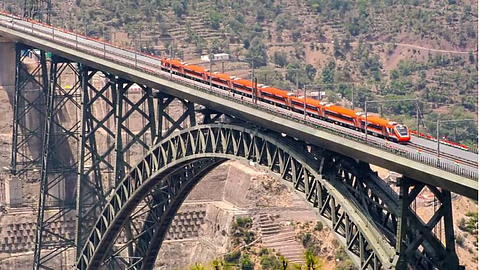
Infrastructure in difficult terrain is defined by precision, and long-term impact. The Udhampur–Srinagar–Baramulla Rail Link (USBRL) exemplifies this ethos by expanding the frontiers of engineering and connectivity. Beyond enhancing regional access, USBRL stands as a reference point for delivering large-scale rail infrastructure in some of the world’s most challenging geographies.
For decades, Kashmir’s isolation was not simply a function of distance, but of uncertainty. Road connectivity through the Himalayas remained vulnerable to weather, terrain instability, and seasonal disruption, constraining mobility, trade, and economic integration. USBRL addresses this constraint at its root. By establishing a 272-kilometre all-weather rail corridor, the project has reduced physical distance, stabilised access, and embedded Kashmir within India’s national transport framework.
Executed in three phases, Udhampur–Katra, Katra–Banihal, and Banihal–Baramulla, the project demonstrates how incremental infrastructure delivery can generate immediate and lasting impact. The Udhampur–Katra section, operational since 2014, transformed access to Katra, the base for the Shri Mata Vaishno Devi Shrine, making year-round rail travel a reality and easing pressure on fragile road networks. This was not merely about convenience; it signalled a shift toward predictable, scalable mobility in the region.
The strategic significance of USBRL becomes most evident in the Katra–Banihal stretch. The Pir Panjal Tunnel, driven through unstable Himalayan geology, exemplifies how engineering innovation can overcome natural constraints without compromising safety. By cutting travel time from nearly six hours by road to around three hours by rail, the tunnel has delivered reliability in a region where unpredictability was once the norm. Such reliability is essential not only for passengers but for freight movement, supply chains, and economic planning.
Yet USBRL’s real success lies beyond engineering feats. Its stations have emerged as economic anchors. Reasi, Katra, Banihal, Qazigund, Sangaldan, and Budgam now function as nodes that link local economies to national markets. Agricultural producers, small traders, and tourism operators benefit from faster, more dependable access, reducing losses and improving price realisation. In South and Central Kashmir, rail connectivity has reshaped how goods move, how tourism scales, and how rural areas participate in broader economic systems.
Katra illustrates this transformation clearly. Designed as a modern, high-capacity station with multiple platforms, accessibility features, and solar energy integration, it has absorbed growing pilgrim volumes while generating employment and local enterprise. Similarly, Qazigund, the traditional gateway to the Kashmir Valley has enabled farmers to transport apples and other produce more efficiently, strengthening agricultural incomes and market linkages. Even remote stations such as Sangaldan demonstrate how infrastructure, when thoughtfully placed, can pull peripheral regions into the economic mainstream.
The completion of the Banihal–Baramulla section has fully integrated Kashmir into India’s rail network, but this achievement rests on sustained technical rigour. Rail India Technical and Economic Service (RITES), as a key consulting partner, contributed through technical audits of critical bridges including the Chenab and Anji Khad bridges—and the implementation of structural health monitoring systems. In a seismically sensitive and climatically volatile region, such measures are not optional; they are central to long-term resilience and public safety.
What USBRL ultimately offers is a model of infrastructure as an instrument of stability and inclusion. It demonstrates that connectivity projects in extreme terrain must be designed not only to overcome geography, but to deliver certainty of access, movement, and economic participation.
From the Chenab Bridge, rising above one of the deepest gorges in the world, to the Pir Panjal Tunnel threading through fragile mountain rock, USBRL reflects a shift in ambition. It shows that with sustained technical expertise, institutional coordination, and long-term vision, infrastructure can redraw the limits imposed by terrain. For mountain regions across the world grappling with similar constraints, USBRL is not just a completed project, it is a precedent.
Author:
Dr. Gagan Gera, Professor, Indraprastha College for Women, University of Delhi
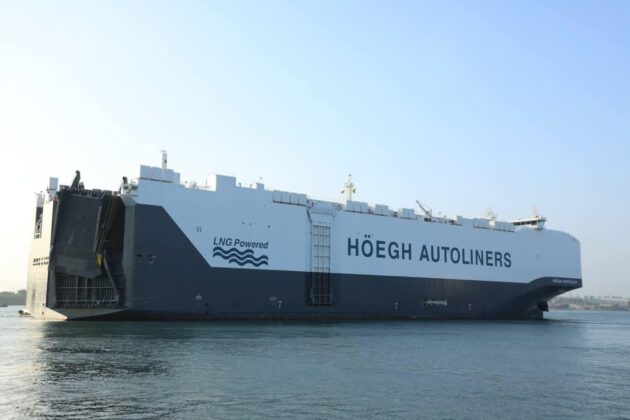
SINGAPORE : The Port of Mombasa has marked a historic milestone by receiving the first Liquefied Natural Gas (LNG)–powered vessel to dock at an East African port. The move signalled a huge leap toward cleaner, greener maritime transport in the region.
The Norwegian-flagged Roll-On/Roll-Off (Ro-Ro) vehicle carrier, Höegh Australis, arrived from Singapore on Boxing Day. It measures 200 metres in length and 37.84 metres in width, boasts a capacity of 9,304 vehicles across 16 decks and is scheduled to discharge 824 motor vehicles and accessories destined for Kenya and its neighbouring landlocked countries.
Unique features of the LNG-powered ship in Mombasa
What makes the Höegh Australis particularly noteworthy is its fuel technology. The one-year-old vessel runs on 98 per cent LNG, using only two per cent conventional bunker fuel during engine start-up and specific operations.
This approach drastically reduces emissions compared to traditional marine fuel, including sulphur oxides, nitrogen oxides, particulate matter, and carbon dioxide.
Many LNG vessels are now being built ammonia-ready, allowing future conversion to zero-carbon fuels, positioning LNG as a transitional fuel as the maritime industry moves toward full decarbonisation.
Kenya Ports Authority (KPA) Chief Pilot Captain Suleiman Bakari personally guided the ship from the outer anchorage to berth number one while representing KPA Managing Director Captain William Ruto.
He hailed the arrival as a historic event, describing Höegh Australis as the largest vessel ever to dock at a Kenyan port and a key step in implementing KPA’s Green Port Policy, which aligns with Kenya’s national clean energy objectives.
KPA commits to quality, green shipping
He emphasised KPA’s commitment to providing quality service to shipping and logistics firms, noting that the port is increasingly capable of handling next-generation, eco-friendly vessels.
Shipping stakeholders have welcomed the vessel’s arrival as a milestone for the maritime industry in East Africa.
Socopao Kenya Limited Regional Manager Satish Nair urged wider adoption of LNG and other green energy solutions, highlighting the low-emission benefits of such vessels.
The vessel’s captain, Edgar Paul, expressed his gratitude to KPA pilots for their seamless guidance, noting that this was his first command of an LNG-powered ship and his inaugural call at the Port of Mombasa.
Globally, LNG-powered vessels are gaining popularity as maritime industries respond to stricter International Maritime Organisation environmental regulations.
LNG technology hugely reduces harmful emissions and is considered a practical bridge toward zero-carbon shipping, even as ammonia-fuelled ships gradually enter service.
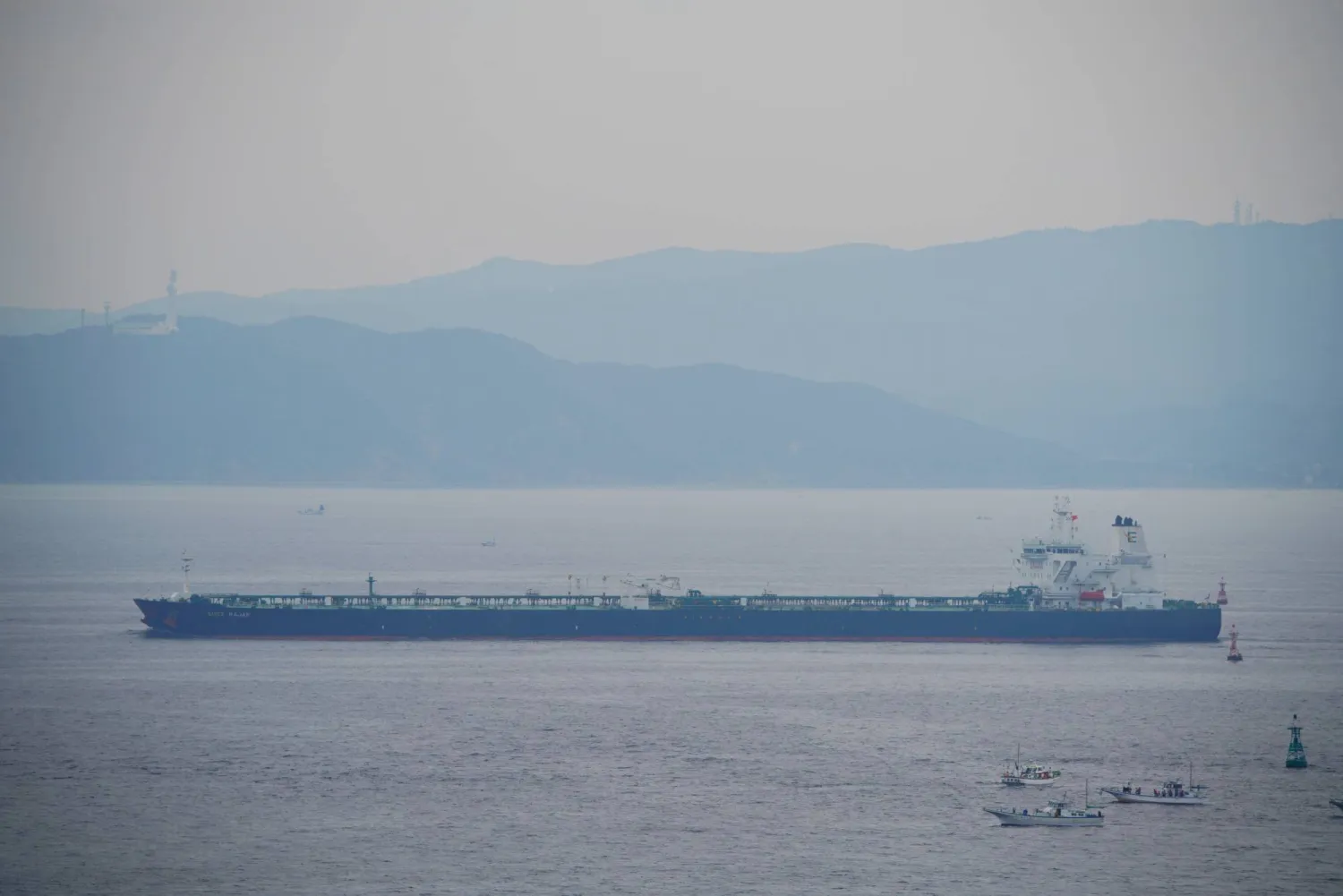
LONDON: Iran has seized a foreign oil tanker near the Iranian island of Qeshm in the Gulf, saying it was carrying 4 million litres of smuggled fuel, state media reported on Friday.
Authorities did not name the vessel or disclose its nationality. They said 16 foreign crew members had been detained on criminal charges. State TV said the tanker was seized on Wednesday.
Iranian news websites published video footage and photographs of what they said was the seized tanker.
Iran said last week it had seized another foreign tanker carrying 6 million litres of what it described as smuggled diesel in the Gulf of Oman without identifying the vessel or its nationality.
Iran, which has some of the world’s lowest fuel prices due to heavy subsidies and a sharp fall in the value of its national currency, has been seeking to curb widespread fuel smuggling by land to neighbouring countries and by sea to Gulf states.
OSLO: Earlier this year, eeSea – now powered by Xeneta – examined the recurring congestion that led to several services diverting from London Gateway, including Maersk’s Neo Samba and ONE’s Indian Ocean Express.
The port has faced several challenges on top of the existing post-Red Sea crisis strain affecting major Northern European ports. These additional disruptions have also highlighted the competitive positioning of sister ports Southampton and Felixstowe, although neither are exempt from reliability issues of their own.
Today we look back at the lingering effects of those challenges, including capacity lost and reliability regained.
The Setup
One contributor that may have exacerbated issues at London Gateway is construction on DP World’s $1.3 billion berth expansion project, under way since May 2025. This massive investment will ensure an additional 450,000 TEU of yearly handling capacity when it’s completed in 2030. Until then, factors like reduced working areas will necessitate some negative impacts on reliability and capacity, as mega construction projects can be expected to do.
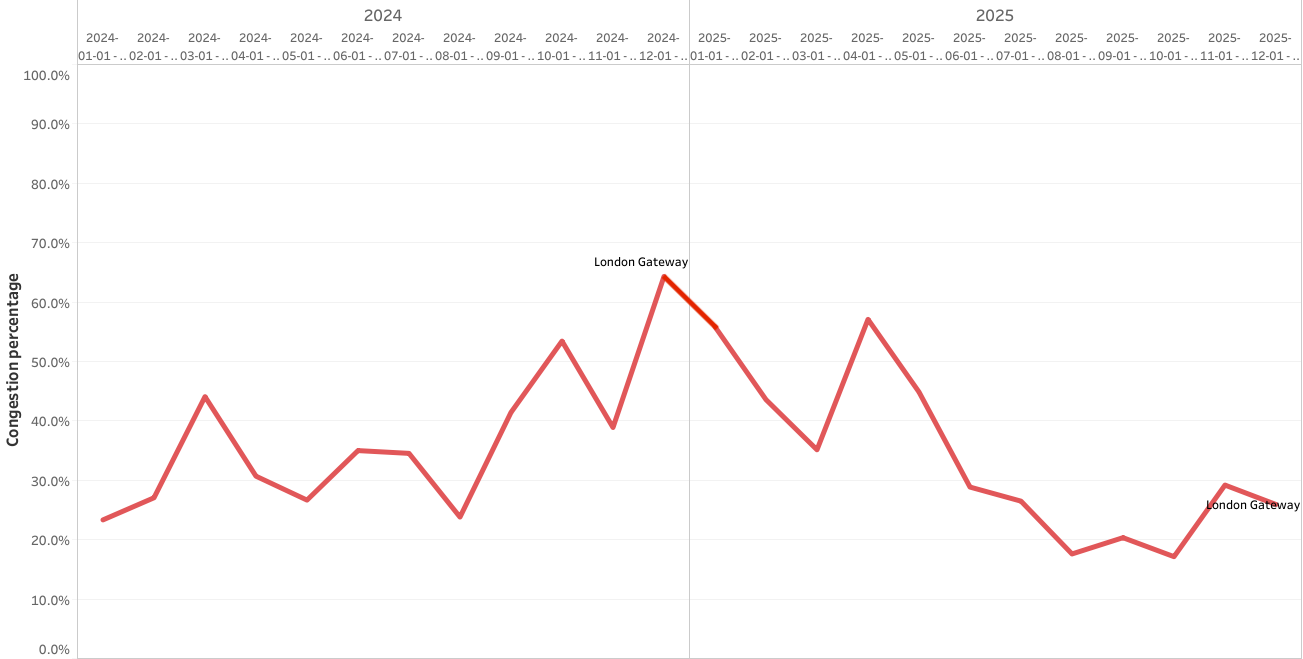
With Asia-Europe services making longer voyages past the Cape of Good Hope and their larger vessels requiring increased handling times, it’s no surprise that London Gateway’s average congestion was already soaring between 40-60% from Q3 2024 through February 2025. When monthly congestion peaked at 57% in April and construction on the berth expansion began, it added further strain on vessel wait times. Then in June and July, a series of IT and power outages, along with a rail incident, led to a massive container backlog.
Average monthly congestion at London Gateway – 2025
The Relief
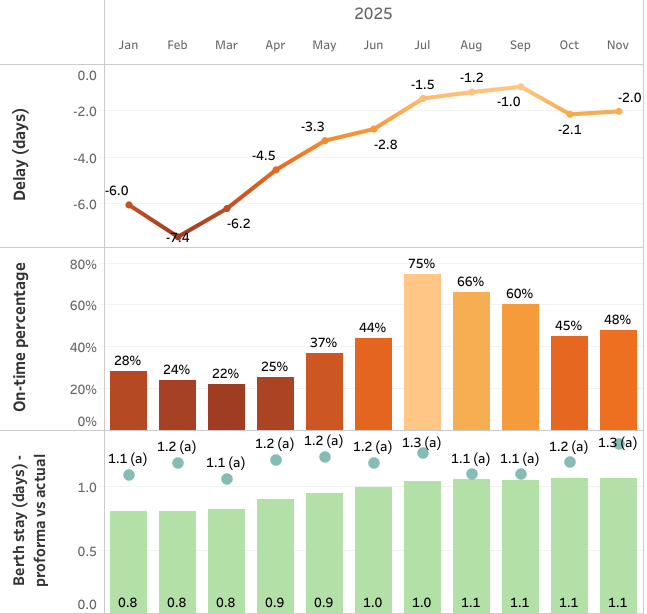
It may seem counterintuitive, but this led to an immediate respite in poor reliability. On-time percentage jumped from 44% in June to 75% in July, and delays decreased from an average –2.8 to –1.5 days delayed. This improved reliability was sustained throughout Q3 before dropping back down to 45% of on-time arrivals in October, and has remained below 50% since.
How can a struggling port experience a dramatic resurgence in reliability? The reason reveals the complexity of relationships between reliability, capacity, and congestion – and why nothing should be taken at face value. So many services were quick to scale back and omit calls to London Gateway that it provided immediate relief to these back-to-back disruptions, but at a huge cost.
Schedule reliability evolution at London Gateway – 2025
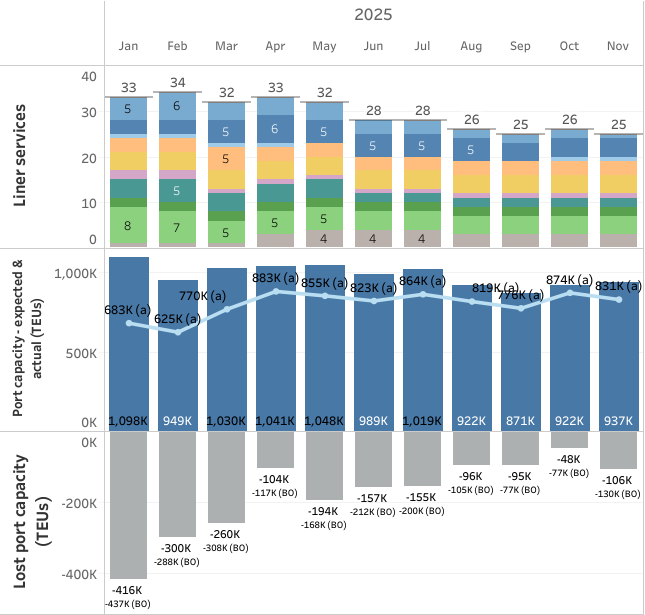
*Note: Displayed values in this static image are limited to actual capacity represented by bars, while the line represents expected capacity.
The Cost
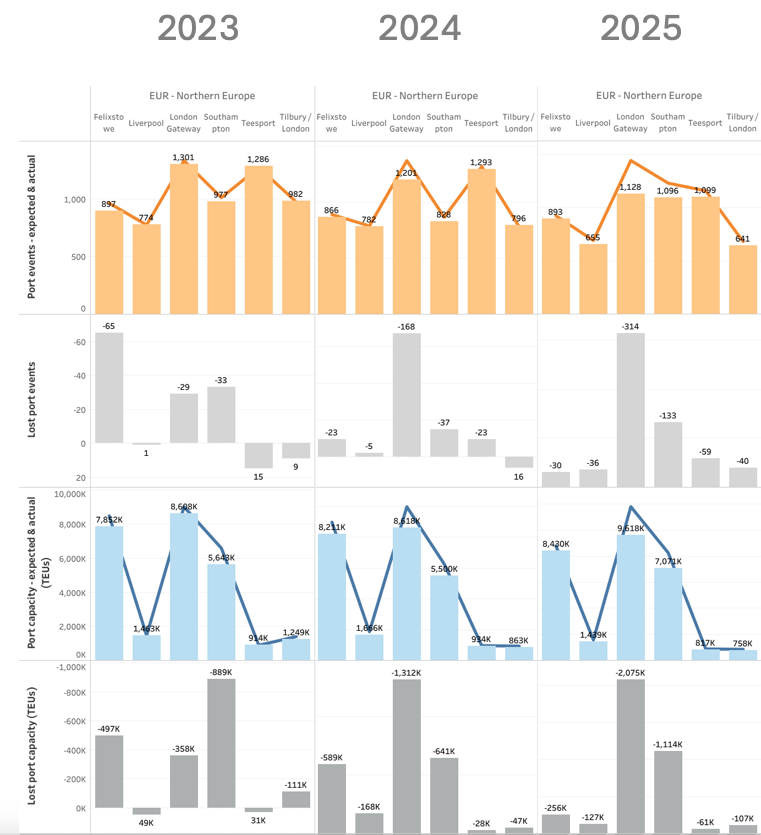
London Gateway has suffered 2 million TEU of absolute lost capacity year-to-date. That’s a sizeable 58% increase against 2024, and a stunning 480% increase in lost capacity against 2023. Comparing that to the year-over-year expected capacity growth of +11% in 2024, and +18% in 2025, we can illustrate just how rapidly these losses outpaced the rate of growth. If we go ahead and discount ‘gains’ like month-over-month rolling vessel delays and inducements (aka unplanned calls), the port racked up 2.16 million TEU’s of capacity due to omissions alone in 2025.
Trade capacity index (TCI) at London Gateway – 2025
Service Impacts
While many London Gateway services rerouted to Southampton or Felixstowe in short bursts during the height of delays, others have extended what initially began as temporary rotation adjustments well into 2026. From May through December, structural service changes have contributed to a decline from 32 to 25 strings, or 28% of the port’s services. The reason we avoid including Q1 in this calculation is that the combination of old and new alliance services operating simultaneously during the turnover period would unfairly skew this decline in an even more negative light.
Some services like MSC’s Middle East IPAK string cleverly maintain both Felixstowe and London Gateway calls in order to diversify options and mitigate risks. But strategies can range even for the same carrier; MSC’s West Africa NWC MOR WAF service has omitted calls to London Gateway a total of 25 times in the past year and continues to do so on a regular basis. These measures are being taken despite the port still holding a key position in the string’s rotation as the first port of discharge.
CMA – SAFRAN | ML – Neo Samba has seen several advisories from both CMA CGM and Maersk diverting the proforma rotation to Southampton, the most recent advisory being issued December 01.
HL – CES | ML – TA5 replaced London Gateway with Felixstowe as the first port of discharge with version 17, beginning in May.
MSC – Albatros is a standalone RTW service where London Gateway was paired with an existing Felixstowe call in August. It has since been enhanced with a second Felixstowe call in service version 4. There have already been 7 omissions to London Gateway in the past 3 months, and just 3 to Felixstowe in early summer.
The Competition
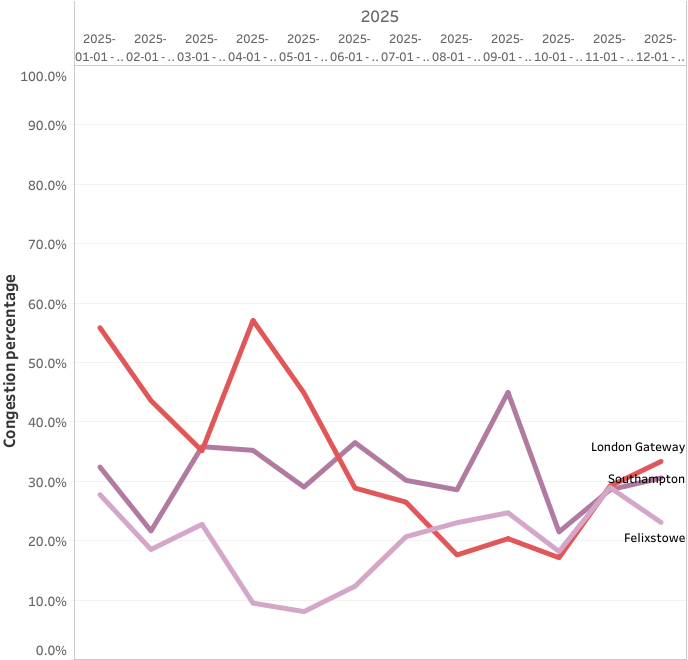
We have often observed the phenomenon of congestion and delays hitting neighboring ports that function as diversion agents in shared coastal areas. Southampton was no exception this year, but Felixstowe fared better. From March through September, Southampton sustained average monthly congestion levels above 28% and peaked at 45%; a far cry from yearly average of 22% congestion in 2024. Felixstowe, which has the advantage of size and greater handling capacity, has generally avoided elevated levels in 2025. We saw exceptionally low average congestion remain under 12% throughout Q2 but did witness a recent peak to 29% in November.
Average monthly congestion at major UK ports – 2025
Collateral congestion aside, Southampton could very well attribute some diverted traffic to their throughput growth this year. Felixstowe’s actual capacity has seen a modest 3% YoY growth, compared to a 5% increase in 2024. Southampton however, has seen a very notable 29% growth in actual capacity so far, compared to a -3% YoY decline in 2024. The reason we default to actual instead of expected capacity here, is that it enables us to include capacity delivered via inducement calls. If we look at how these three measure up in terms of planned port calls; London Gateway lost 22% of expected port calls, Southampton lost 11%, and Felixstowe lost just 3% of expected arrivals.
Total expected + lost capacity at major UK ports – 2023, 2024, 2025
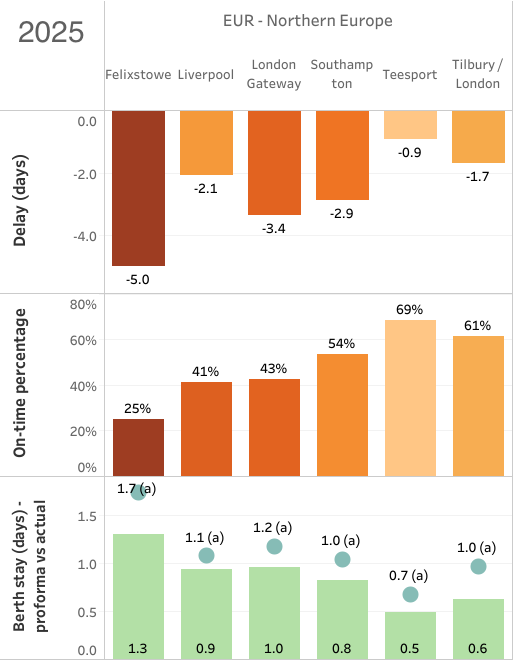
As we’ve seen, relationships between key metrics are rarely a 1:1 tradeoff. Felixstowe may have the lowest number of lost port events and least congestion, but average YTD values show delays are still at –5 days delayed and just 25% of vessels arrive on time. London Gateway approaches –3.4 days of average delay and 43% of on-time arrivals, while Southampton averages –2.9 days of delay and achieves 54% on-time arrivals. These yearly averages track against last year’s results, with Felixstowe (-4.4 days delay, 25% OTP) still characterized by the poorest reliability, London Gateway (-3.8 days delay, 33% OTP) revealing some muted improvement thanks to reduced traffic, and Southampton (-3.1 days delay, 54%) demonstrating resilience.
Average reliability at major UK ports – Year-to-date, 2025
The Takeaway
Even when short-term operational challenges are reduced and reliability is stabilized, business as usual does not always resume in short order. Confidence lost can reap long-term effects, and reliability can be easily redisrupted when traffic picks up or other stressors appear.
We must make it standard practice to illustrate the nuanced relationships of reliability metrics if we want to get ahead of impacts to our supply chains. This understanding is crucial to finding the right balance of risk and opportunity, and framing the tradeoff between cost and reliability.
If we approach our findings in a holistic way, pairing positive advantages and negative risk factors, this is how UK ports shape up at a high-level from the perspective of a shipper or freight forwarder:
London Gateway has the highest handling capacity and the most diverse global port connectivity with 104 unique port connections, including the most African trade connections with 18 ports. The dedicated Gemini Cooperation partnership on the Asia – Europe trade ensures maximum reliability on the most volatile trade. Cancellation rates remain high, and congestion stressors display quick impact. Coupled with the ongoing expansion project, moderate but prolonged risks are balanced against strategic value.
Felixstowe is less subject to high cancellation rates and volatile congestion but hosts the most extreme delays. The fact that it hosts the highest concentration of Asia – Europe services, with all of them belonging to delay-stricken Ocean and Premier alliances, suggests reliability issues may be more service-centric than due to portside operations. With a total of 81 unique port connections, including 17 in Asia and 19 in North America, strategic E/W trade advantages are firmly juxtaposed against high delays.
Southampton has the highest concentration of Europe – North America services, with 28 out of a total of 83 global connections. It also benefits from Gemini partnership on this trade – a double win for reliability. Due to its smaller size, it can display more volatile congestion patterns and may be subject to the highest vessel wait times when issues do arise. This port is the longest distance of the three from transshipment hub Tilbury and its smaller number of dedicated feeder strings should be considered. Moderate cancellation rates and reliability pose big advantages for long-term planning.