Home Blog Page 528

Gujarat launches smart blue Harbours to boost fisheries, food security, and coastal economy

GANDHINAGAR : Fishing Harbours on Monday serve not merely as physical infrastructure but as strategic gateways to economic and community prosperity. Gujarat’s leadership in building ecologically resilient, economically robust, and socially inclusive Blue Harbours will enhance national food security and strengthen India’s competitiveness in global seafood markets, the release said.

According to the Gujarat Chief Minister Office (CMO), the Government of India has taken a significant step toward strengthening coastal infrastructure and advancing the nation’s Blue Economy with the launch of a strategic partnership between the Department of Fisheries (DoF), Ministry of Fisheries, Animal Husbandry and Dairying (MoFAHD), and the Food and Agriculture Organization (FAO) of the United Nations. A newly signed Technical Cooperation Programme (TCP) will enable MoFAHD to pilot world-class Blue Harbours at Jakhau in Gujarat, Vanakbara in Diu, and Karaikal in Puducherry, establishing a national model for smart, sustainable, and inclusive fisheries development.

Under the Pradhan Mantri Matsya Sampada Yojana (PMMSY), the Government has initiated the development of Smart and Integrated Fishing Infrastructure with a total investment of INR 452.32 crores.
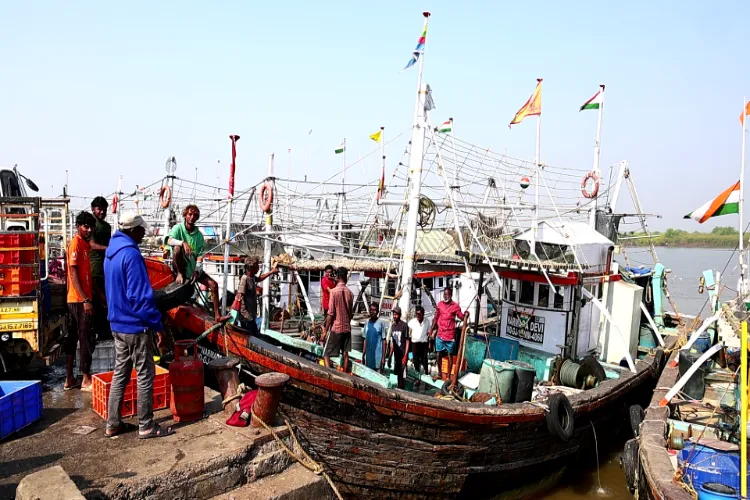
Jakhau Harbour, located in Kutch district on Gujarat’s western coastline, is one of the state’s most significant fisheries hubs managed by the Commissioner of Fisheries (COF). This Harbour holds strategic importance for both maritime livelihoods and coastal security. Serving thousands of fishermen from Kutch and neighbouring regions, Jakhau functions as a key centre for fish landing, vessel anchoring, and post-harvest activities, supported by essential facilities such as jetties, repair areas, and storage systems.
The release stated that the Harbour has recently been included under the government’s “Blue Revolution” development initiative, aimed at strengthening modern fisheries infrastructure and enhancing operational capacity. Jakhau continues to play a vital role in Gujarat’s coastal economy and blue growth vision.
The upcoming Vibrant Gujarat Regional Conference (VGRC) will be held in Rajkot in the second week of January 2026, reaffirming the state’s commitment to sustainable coastal development and maritime advancement. The second edition of VGRC will place special emphasis on the Kutch and Saurashtra regions, known for their rich fisheries and for their strategically important fishing harbours and coastal infrastructure that serve as vital gateways for marine fisheries activities, value-chain logistics, and sustainable blue-economy practices.

The conference will bring together policymakers, industry leaders, domain experts, and key stakeholders to deliberate on emerging technologies, global best practices, and investment opportunities in the maritime and fisheries sectors. It will also highlight Gujarat’s pivotal role in driving India’s Blue Economy through innovation, sustainability, and inclusive growth.

Source : ANI
Isa Logistics unveils Bold New Brand Identity to Power its Next Chapter of Growth

MUMBAI: Isa Logistics, a rapidly growing force in the business of moving goods, today announced a significant milestone: the launch of a dynamic new brand identity and logo. This rebranding reflects the company’s massive strategic change, moving from a company that offered just one kind of service to a complete partner providing a full range of solutions. The new logo represents Isa Logistics’ expansion into comprehensive offerings, including running large storage facilities, managing global shipping, operating local storage and transport, and organizing the entire delivery process from start to finish. This new look confirms its place as a provider of total solutions.

The new logo’s design is clean, modern, and deliberately created to capture the core values of Isa Logistics: forward thinking, quick action, and continuous improvement. This powerful new look is designed to be easily recognized everywhere—online, on vehicles, and in all company locations—making it simple and effective across the entire business globally. By launching this modern and confident identity, Isa Logistics aims to strengthen its market appeal, boost its visibility, and reinforce its reputation as a trusted, forward-looking partner in a highly competitive industry.

This visual change is a clear sign of the company’s dedication to fresh ideas, being environmentally conscious, achieving high performance, and always putting the customer first as it moves into a period of rapid expansion.

Santosh Shetty CEO Isa Logistics Isa Logistics unveils Bold New Brand Identity to Power its Next Chapter of Growth
Mr. Santosh Shetty, CEO of Isa Logistics

Announcing the unveiling of the rebranded logo, Santosh Shetty, CEO of Isa Logistics, proclaimed, “Our new identity reflects who we are today and the future we are building. Over the years, Isa Logistics has grown into a multi-vertical logistics partner, and this evolution needed a visual expression that matches our ambition. The refreshed logo represents our focus on technology, expansion, and delivering value across the entire supply chain. It is a symbol of transformation, resilience, and our commitment to shaping a smarter and more connected logistics ecosystem.”

The company believes this new identity not only positions it for faster growth but also reinforces its central mission of providing outstanding, complete service to its customers. With this powerful new logo, Isa Logistics is confidently signaling its commitment to building a stronger, smarter, and more efficient way to handle the flow of goods—today and in the future.

About Isa Logistics

Isa Logistics Pvt. Ltd. is a dynamic and fast-growing logistics company committed to transforming the way businesses manage their supply chains. With a comprehensive portfolio of services including Container Freight Station (CFS) operations, warehousing, freight forwarding, and transportation, we deliver seamless end-to-end logistics solutions designed to maximize efficiency and value.

Supported by a skilled team of over 300 professionals across India, Isa Logistics combines deep industry expertise with cutting-edge technology to offer transparent, reliable, and scalable logistics services. Our customer-centric approach and sustainability focus enable us to build long-term partnerships and deliver customized solutions that meet the evolving needs of diverse industries.

At Isa Logistics, we don’t just move cargo—we empower businesses to navigate complex logistics challenges with confidence and achieve their strategic goals with agility and precision.

Network Planning Group Reviews Key Infrastructure Projects to Boost Multimodal Connectivity

Rail Infrastructure Proposals Reviewed to Strengthen Integrated and Efficient Logistics Network

NEW DELHI: The 104th meeting of the Network Planning Group (NPG) was convened on Monday to review infrastructure proposals, with a focus on strengthening multimodal connectivity and improving logistics efficiency in line with the PM GatiShakti National Master Plan (PMGS NMP).

The NPG evaluated 05 Rail projects for their conformity to the PM GatiShakti principles of integrated multimodal infrastructure, last-mile connectivity to economic and social nodes and ‘Whole of Government’ approach. These initiatives are expected to boost logistics efficiency, reduce travel times, and deliver significant socio-economic benefits to the catchment areas of the project. The evaluation and anticipated impacts of these projects are detailed below:

A brief description of the projects is given below:

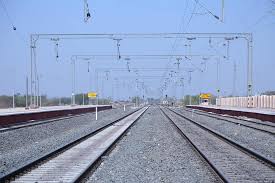
Proposed 3rd and 4th line Gummidipundi and Gudur (Andhra Pradesh): The Ministry of Railways has proposed the development of a third and fourth railway line over 89.96 km between Gummidipundi (GPD) and Gudur (GDR), passing through Tiruvallur District in Tamil Nadu and Tirupati District in Andhra Pradesh. The project aligns with an existing transport network supported by strong road connectivity to major industrial hubs, enabling seamless multimodal freight movement.

The new railway lines will significantly enhance logistics for key sectors including fertilizers, POL, containerized cargo, power plants and cement industries, supporting both inbound raw materials and outbound finished goods. The corridor is projected to handle 25.07 MTPA, facilitated by diversion of freight traffic to the newly sanctioned Gummidipundi – Sullurupeta – Gudur multi-tracking section on the Chennai–Gudur route.

The project will strengthen freight capacity, improve supply chain efficiency and support growing trade movements through Chennai Port.

Proposal to improve financial and operational health of Konkan Railway Corporation Limited (KRCL) – 3rd Financial Restructuring(Maharashtra, Goa & Karnataka): The Ministry of Railways has proposed a 3rd Financial Restructuring initiative to strengthen the financial and operational performance of Konkan Railway Corporation Limited (KRCL) across Goa, Maharashtra and Karnataka. The proposal includes major infrastructure investments aimed at enhancing line capacity, safety and efficiency along the Konkan Railway route.

Key works under the plan include the construction of two new tunnels at Pernem and Old Goa and three new crossing stations at Mayem, Neura-O-Grande and Mookambika Road–Byndoor. These upgrades are expected to reduce congestion, improves operational efficiency and significantly boost regional connectivity.

Proposed 3rd & 4th line between Nidadavolu – Duvvada stations(Andhra Pradesh): The Ministry of Railways has proposed the construction of 3rd and 4th railway lines between Nidadavolu and Duvvada in Andhra Pradesh, covering 198.10 km. The corridor, part of the Howrah–Chennai main line, is a High Traffic Density route under the Mission 3000 MT strategy and falls under the Vijayawada Division of South-Central Railway.

The project aims to address rising freight volumes driven by coal, gypsum, fertilizer imports from expanding Andhra Pradesh ports, while also meeting growing public demand for improved passenger connectivity. The additional lines will enhance capacity for both freight and coaching services, especially toward Visakhapatnam and southern destinations.

The augmentation will support major industrial units including Visakhapatnam Steel Plant, Ramco Cements, Chettinad Cement improving logistics efficiency and contributing to regional industrial growth.

Construction of New 3rd & 4th lines in Nagda-Mathura section(Madhya Pradesh, Uttar Pradesh & Rajasthan): The Ministry of Railways has proposed the construction of third and fourth railway lines between Nagda and Mathura, covering 567.860 km across Uttar Pradesh, Madhya Pradesh and Rajasthan. The corridor forms a vital segment of the Golden Quadrilateral and High-Density Network-3 (HDN-3), serving as a key freight and passenger route connecting Delhi and Mumbai via Kota, Bharatpur, Nagda and Ratlam.

The project is part of the Mission 3000 MT in National Rail Plan and aims to meet rising freight and passenger demand by upgrading the existing double line. Completion of this section—currently the only un-augmented stretch on HDN-3—will significantly boost carrying capacity on the Delhi–Mumbai corridor.

The new lines will support substantial freight growth generated by major industries in the region, including thermal power plants, petroleum terminals, fertilizer plants, cement works and warehousing hubs, thereby strengthening logistics infrastructure and facilitating regional industrial development.

Proposed 3rd and 4th line between Ghaziabad Station – New Sitapur Station(Uttar Pradesh): The Ministry of Railways has proposed the construction of a third and fourth broad-gauge railway line (1676 mm) between Ghaziabad and New Sitapur in Uttar Pradesh, spanning 402.78 km across ten districts. The project aims to enhance connectivity and boost regional development by easing traffic flow toward the Northern Frontier Railways and improving efficiency for both commuter and freight operations in northern markets.

The new lines are expected to reduce logistics costs, improve transportation efficiency, and support sustainable mobility. The corridor is supported by strong road connectivity to major industrial areas, agricultural mandis, logistics hubs and other economic centres, with provisions for upgrades to meet future demand. The region also benefits from proximity to key airports including Indira Gandhi International Airport (Delhi), Bareilly Airport and Chaudhary Charan Singh International Airport (Lucknow), further strengthening multimodal access.

The meeting was chaired by Joint Secretary, Logistics, Department for Promotion of Industry, and Internal Trade (DPIIT).

Govt has undertaken many initiatives to boost export competitiveness and provide support to MSMEs in the global value chain

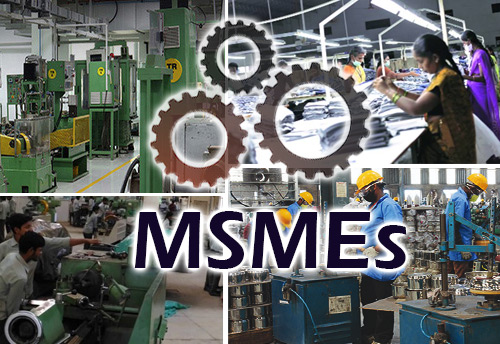
NEW DELHI: The recent trends in exports from MSME sectors reveal that contribution of the MSME sector in overall merchandise exports has increased from 45.74% in 2023-24 to 48.55 % in 2024-25 in USD value terms. In order to promote exports including from MSME sector,the Government has approved the Export Promotion Mission (EPM) as a comprehensive framework to strengthen the overall export ecosystem.

Under EPM, support shall be provided through NIRYAT PROTSAHAN, which focuses on trade finance facilitation for MSME exporters, and NIRYAT DISHA, which shall provide non-financial support including export-quality and compliance assistance, market-access interventions, logistics facilitation, and export ecosystem-building measures. Furthermore, the comprehensive GST rationalisation recently done by the government will strengthen MSMEs fortifying local supply chains in critical sectors like automobiles, textiles, food processing, logistics, and handicrafts. Lower GST rates have made raw materials and services more affordable, motivating small and medium enterprises and start-ups to scale up operations, invest in innovation, and compete both domestically and globally.

In addition, the Government, inter-alia, has undertaken the following initiatives to boost the competitiveness in global value chain: –

  1. PM Gati Shakti National Master Plan enabling comprehensive and integrated planning for multimodal logistics.
  2. National Logistics Policy (NLP), which aims to drive economic growth and business competitiveness of the country through cost-effective logistics network.
  3. Credit Guarantee Scheme for Exporters (CGSE) for providing 100% credit guarantee coverage by National Credit Guarantee Trustee Company Limited (NCGTC) to Member Lending Institutions (MLIs) for extending additional credit facilities up to Rs.20,000 crore to eligible exporters, including MSMEs.
  4. International Cooperation Scheme: The scheme aims to capacity build MSMEs for entering export market by facilitating their participation in international exhibitions/fairs/conferences/seminar/buyer-seller meets abroad as well as reimbursement of various costs involved in exports.
  1. Micro and Small Enterprises- Cluster Development Programme (MSE-CDP) scheme implemented with the objective to enhance the productivity and competitiveness of Micro and Small Enterprises (MSEs) for their holistic development adopting cluster development approach by extending financial assistance to establish Common Facility Centers (CFCs) in the existing clusters and establish/up-grade infrastructural facilities in new/existing industrial estates/areas/flatted factory complexes.
  2. MSME Competitive (Lean) scheme is to enhance the Domestic and Global Competitiveness of MSMEs through the application of various Lean Techniques and thereby achieving reduction in rejection rates, product and raw material movements and product cost.

This information was given by the Minister of State for Micro, Small and Medium Enterprises (Sushri Shobha Karandlaje) in a written reply in Rajya Sabha on Monday.

Govt has taken many steps to provide financial support and technology and trade support to MSMEs

NEW DELHI: The Government of India has taken a number of steps to address the issues and challenges pertaining to the MSME sector in the country. Some of these steps are as under:

  1. New revised criteria for defining MSMEs adopted  in 2020. This has been further revised w.e.f. from 01.04.2025.
  2. Udyam Registration for MSMEs, for Ease of Doing Business w.e.f. 01.07.2020.
  3. Inclusion of Retail and Wholesale traders as MSMEs w.e.f. 02.07.2021.
  4. Non-tax benefits extended for 3 years in case of an upward change in status of MSMEs.
  5. Launch of Udyam Assist platform on 11.01.2023 to bring Informal Micro Enterprises under the formal ambit for availing the benefit under Priority Sector Landing.
  6. Operationalisation of Self Reliant India Fund for equity infusion into MSMEs.
  7. Launch of Rs. 5 lakh crore Emergency Credit Line Guarantee Scheme (ECLGS), for businesses, including MSMEs. The Scheme was operational till 31.03.2023. As per a research report dated 23.01.2023 of the State Bank of India on ECLGS, almost 14.6 lakh MSME accounts, of which about 98.3% of the accounts were in the Micro and Small Enterprises categories, were saved from slipping into non-performing asset classification.

To provide adequate financial support and technology and trade support to various MSMEs, including leather and textile sector, a series of measures have been undertaken, which inter-alia include schemes such as Prime Minister’s Employment Generation Programme for setting up of new micro enterprises in the non-farm sector by providing Margin Money subsidy on the Bank loan, Special Credit Linked Capital Subsidy Scheme with a provision of 25% subsidy to SC/ST MSEs on institutional finance for procurement of Plant & Machinery/ Equipment, Credit Guarantee Scheme for collateral free loans for Micro and Small Enterprises with a guarantee coverage of upto Rs. 10 crore, collateral free loans upto Rs 20 Lakh for Informal Micro Enterprises, PM Vishwakarma Yojana, Mudra Loan, etc.

MSME Champions Scheme has been formulated with an end objective to modernize the processes, reduce wastages, sharpen business competitiveness of enterprises, and facilitate their National and Global reach and excellence. Further, the Ministry of MSME, in order to help the MSMEs to grow technologically and to enhance their competitiveness, has established Technology Centres (TCs) and Extension Centres (ECs) across the country. These TCs/ECs provide various services like technology support, skilling, incubation and consultancy to MSMEs and skill seeker.

This information was given by the Minister of State for Micro, Small and Medium Enterprises (Sushri Shobha Karandlaje) in a written reply in Rajya Sabha on Monday.

Japan’s JERA signs first long-term LNG export deal with India’s Torrent Power

NEW DELHI : Japan’s top power generator JERA has signed its first long-term liquefied natural gas export deal with India’s Torrent Power (TOPO.NS), opens new tab to deliver 4 LNG cargoes annually for 10 years from 2027, the Japanese company said on Monday. Torrent Power will use the LNG, to be supplied on a delivered basis, for its 2,730 megawatt (MW) capacity of power plants in India.

It will also use the LNG cargoes for sale to households, small industries and the transport sector, JERA said. “The partnership strategically leverages the complementary seasonal demand patterns of Japan and India,” it said in a statement.

JERA will use its global fleet during Japan’s lower demand months while supplying to Torrent Power during India’s high demand summer months. Looking ahead, JERA will continue to build a robust LNG portfolio across the Middle East, Asia, and the United States, to develop resilience against market volatility, the company said. JERA is a joint venture between Tokyo Electric Power (9501.T), and Chubu Electric Power (9502.T).

Source : Reuters


Maersk to trial 50/50 ethanol-methanol blend

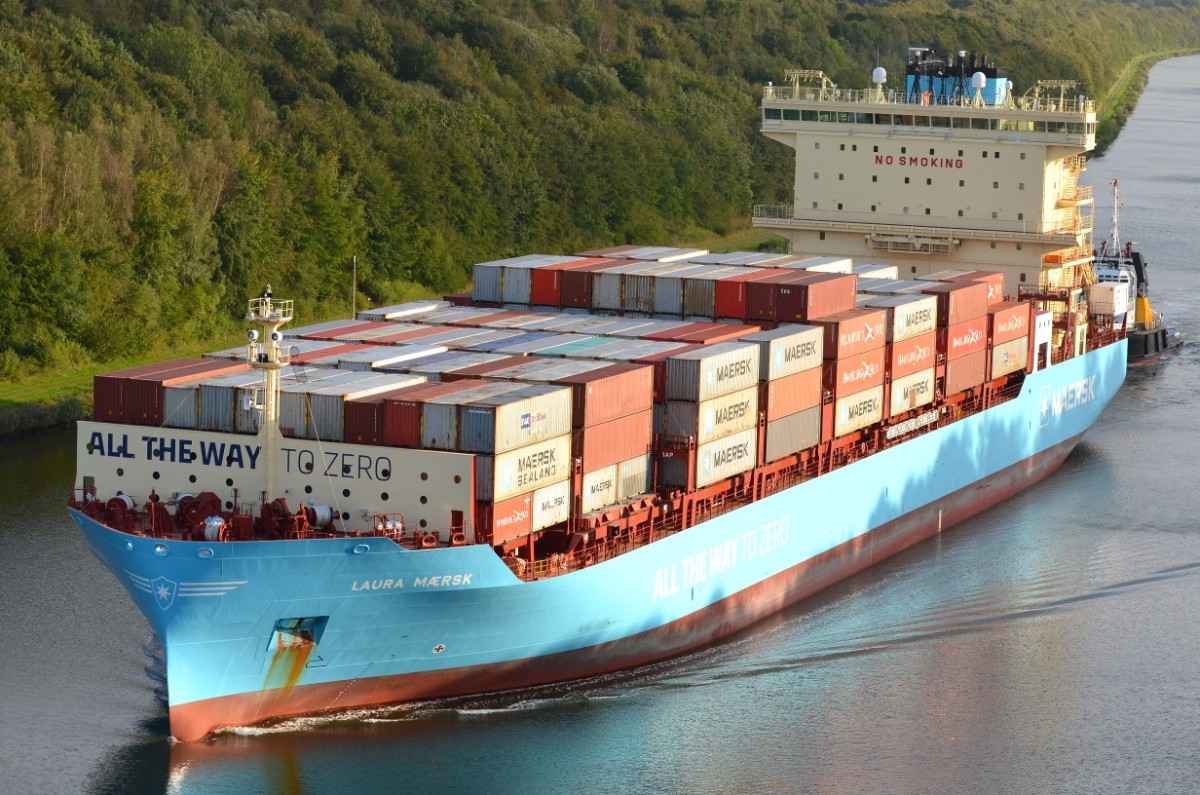
COPENHAGEN : Maersk has announced that building on a successful initial trial, the company will now blend 50% ethanol with 50% methanol in a test onboard the vessel Laura Mærsk. Maersk continues to explore options to diversify its low-emission fuel portfolio by testing ethanol in a dual-fuel methanol engine. The first trial, conducted in October and November, involved a 10% ethanol / 90% e-methanol blend and confirmed that ethanol can be safely and effectively integrated into the fuel mix.

The test underscores the potential to create greater optionality for Maersk’s dual-fuel methanol fleet, essentially enabling dual fuel alcohol vessels.

At Maersk, we believe multiple fuel pathways are essential for the shipping industry to meet its climate ambitions. That means consciously exploring different options and technologies. 

…commented Emma Mazhari, Head of Energy Markets, Maersk. 

The initial trial tested whether an E10 blend would ignite and burn as efficiently as pure methanol while maintaining comparable lubricity and corrosiveness. The results confirm that ethanol can be blended with methanol without compromising engine performance, paving the way for higher ethanol blends.

Beyond the upcoming E50 test, Maersk plans to conduct a trial using 100% ethanol.

Ethanol has a proven track record with an established market and existing infrastructure and offers an additional pathway for decarbonisation. By gradually increasing ethanol content, we gain valuable insights into engine performance and combustion impacts, informing fuel sourcing potential. 

Baltic Index extends Losses on Weaker Rates across All Segments

LONDON: The Baltic Exchange’s Dry Bulk Sea Freight index, which tracks rates for vessels transporting dry bulk commodities, extended losses on Monday, weighed down by weaker rates across all vessel segments.

The main index, which factors in rates for capesize, panamax and supramax shipping vessels, fell for its third straight session, losing 33 points, or 1.2%, to 2,694 points.

The capesize index lost 70 points, or about 1.4%, to 5,013 points.

Average daily earnings for capesize vessels, which typically transport 150,000-ton cargoes such as iron ore and coal, decreased by $580 to $41,571.

Iron ore futures slipped on Monday, as sagging demand in top consumer China, along with increasing equipment maintenance and the lack of new stimulus measures from the country’s top decision-making body, weighed on sentiment.

The panamax index fell by 24 points, or 1.3%, to 1,813 points, its lowest level since November 5.

Average daily earnings for panamax vessels, which usually carry 60,000-70,000 tons of coal or grain, decreased by $217 to $16,313.

Among smaller vessels, the supramax index lost 6 points to 1,430 points.
Source: Reuters

Simplification of customs will be next big reform, says Finance Minister

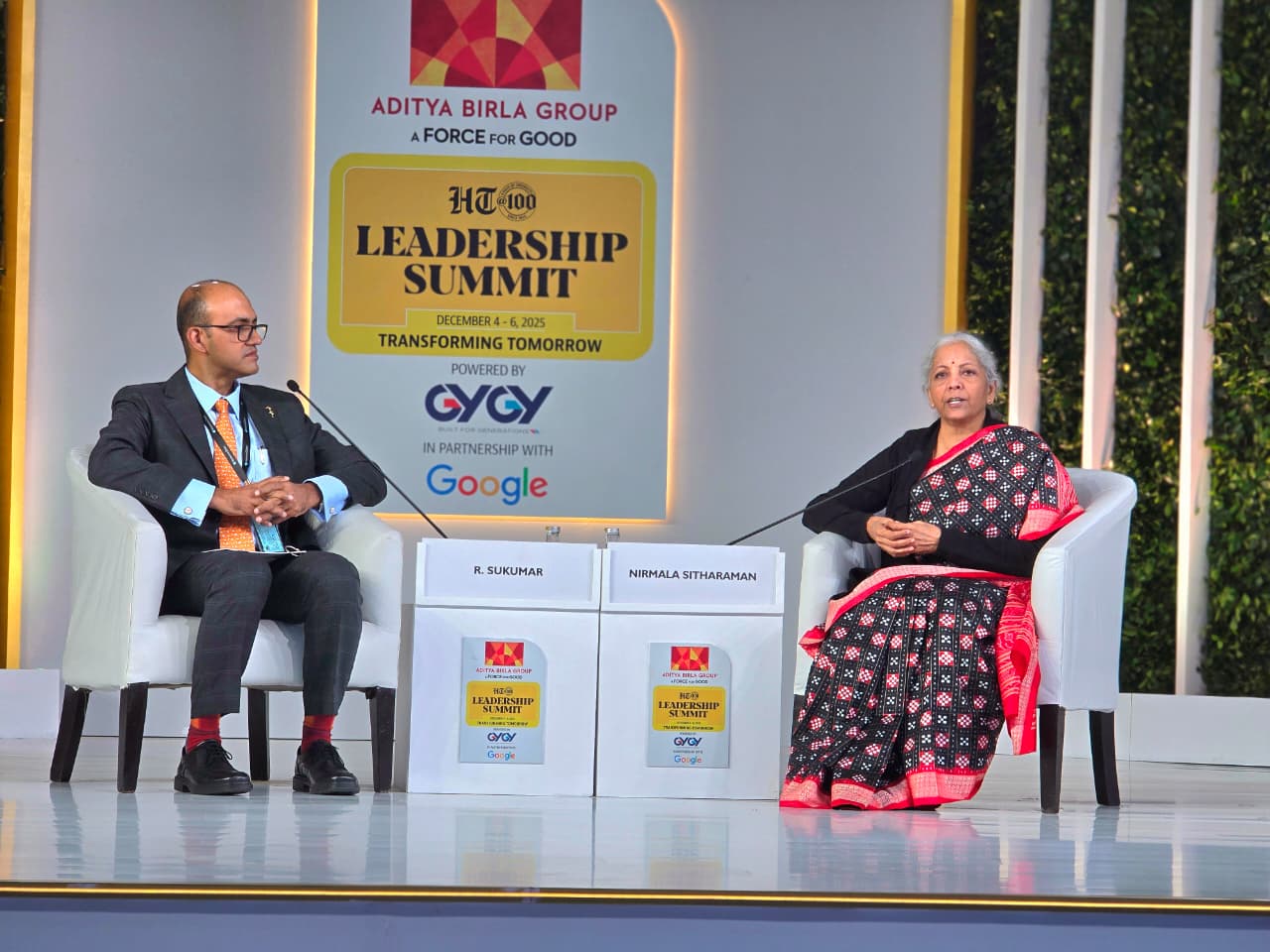
NEW DELHI: Ahead of Budget 2026, Finance Minister Smt. Nirmala Sitharaman on Saturday (December 6, 2025) said the simplification of customs would be the next big reform agenda for the government.

During the current financial year, the government undertook reforms such as rate rationalisation and simplification of the income tax and Goods and Services Tax (GST) in a bid to boost consumption by providing more cash in the hands of the common man.

“We need a complete overhaul of customs… we need to have customs simplified for people to feel that it is not cumbersome to comply… need to make it more transparent,” Ms. Sitharaman said while speaking at the HT Leadership Summit here.

“There is a need to bring the virtues of income tax to the customs side in terms of transparency,” she said, adding that the proposed reforms will be comprehensive and entail customs duty rate rationalisation.

The announcements to this effect can be made in the upcoming Budget, likely to be presented on February 1.

“We have brought down customs duty over the last two years steadily. But in those few items where our rates are considered to be over the optimal level, we have to bring them down as well. Customs is my next big cleaning-up assignment,” she said.

In this year’s Budget, among other measures announced, the government proposed eliminating seven additional customs tariff rates on industrial goods, following the removal of seven tariffs in 2023-24 (announced in the previous budget speech on July 23, 2024). This reduces the total number of tariff slabs to eight, including a zero rate.

On the depreciating rupee against the dollar, Ms. Sitharaman said, it will find its natural level.

The rupee has depreciated about 5% against the U.S. dollar during the calendar year 2025. The rupee breached the 90-a-dollar level for the first time to settle at a fresh all-time low of 90.21 (provisional) on Wednesday (December 3, 2025), down 25 paise from its previous close, amid sustained foreign fund outflows and higher crude oil prices.

Ms. Sitharaman exuded confidence that the GDP growth would be 7% or above during the current financial year.

The Indian economy grew by a higher-than-expected 8.2% — a six-quarter high — as increased factory production in anticipation of a consumption boost from the GST rate cut helped offset deceleration in farm output.

The growth in the second quarter, compared with 7.8% in the preceding three months and 5.6% in the year-ago period, was aided by a strong showing from the services sector, which clocked double-digit growth.

For the first half ended in September, India clocked a growth rate of 8%.

Andhra CM Naidu reviews ongoing infra projects with Gautam Adani

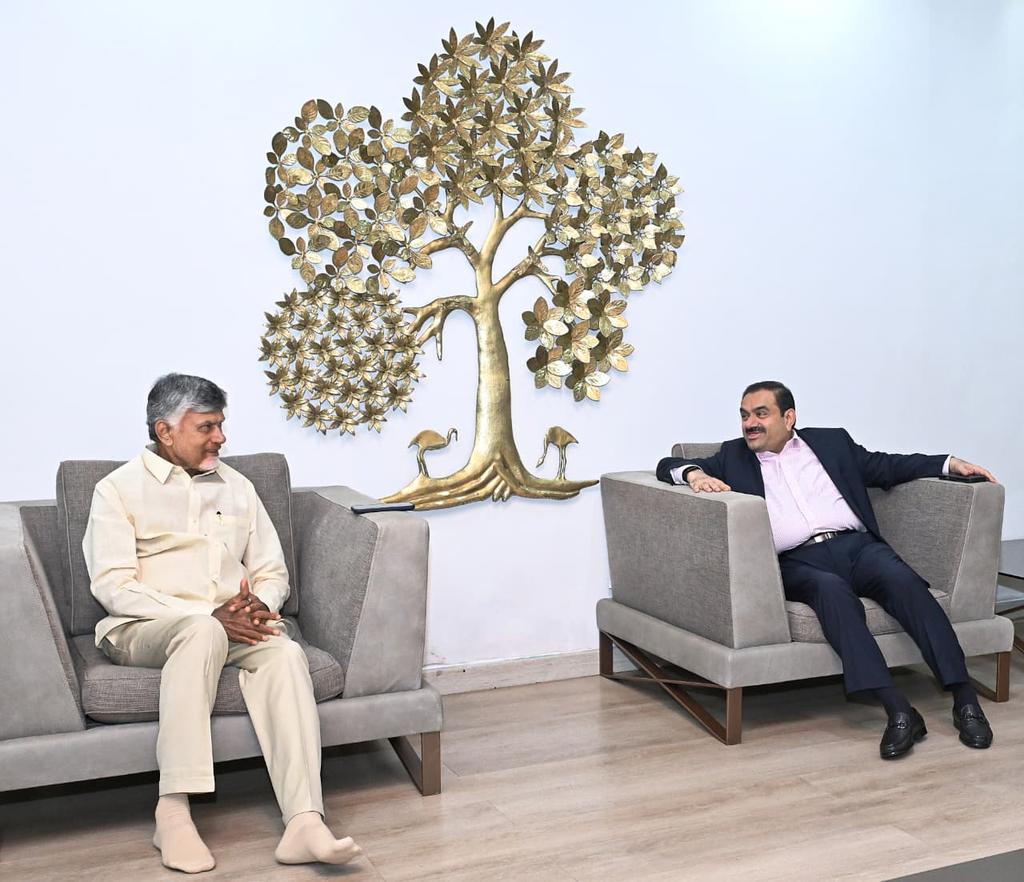
AMRAVATI: Andhra Pradesh Chief Minister Shri N Chandrababu Naidu met Adani Group Chairman Mr. Gautam Adani and Adani Ports & SEZ Ltd Managing Director Mr. Karan Adani to review ongoing infrastructure projects and discuss new investment opportunities in the state.

CM Naidu discussion with Gautam Adani and Karan Adani Andhra CM Naidu reviews ongoing infra projects with Gautam Adani

The Chief Minister noted that the meeting focused on major developments planned in Amaravati and the potential to accelerate growth through collaborative initiatives.

“It was a pleasure to meet Gautam Adani and Karan Adani as we reviewed key infrastructure projects and explored emerging opportunities for Andhra Pradesh,” Shri Naidu said in a post on ‘X’ late Wednesday.

IT Minister Nara Lokesh said he, along with the CM, held discussions with the Adani Group leadership on the progress of existing projects.

“We discussed Adani Group’s ongoing infrastructure projects in Andhra Pradesh and the upcoming new investments planned for the state’s future growth,” said Lokesh in a post on ‘X’.