Home Blog Page 54

AMS Barging christens 9,000 m³ methanol-ready tanker Felicitas as fleet continues to grow

ROTTERDAM: Dutch inland shipping company AMS Barging has christened its new diesel-electric tanker Felicitas at Noordereiland in Rotterdam. Liv and Julie, daughters of AMS Barging co-owner Igor Jansen, performed the naming ceremony.
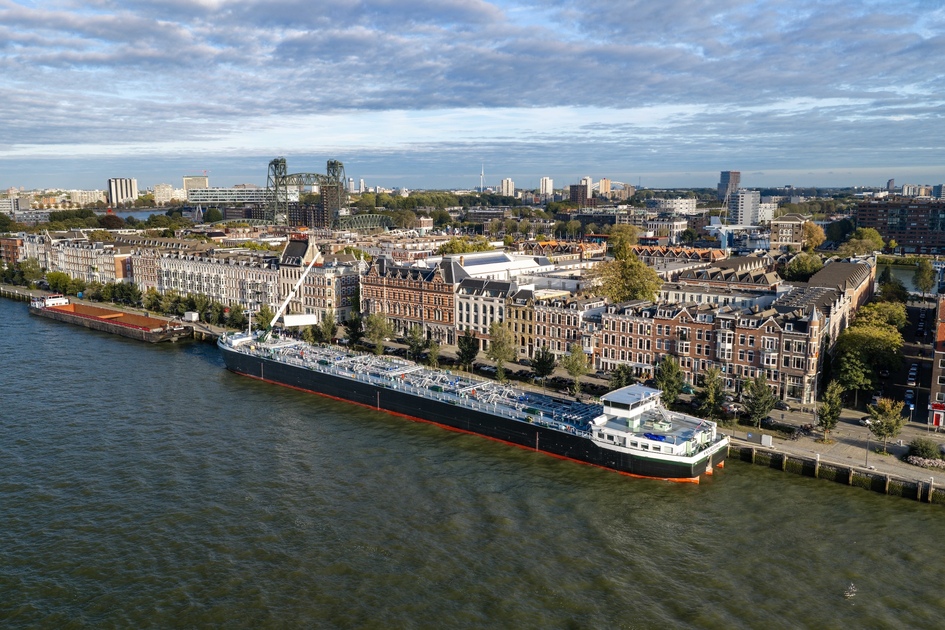
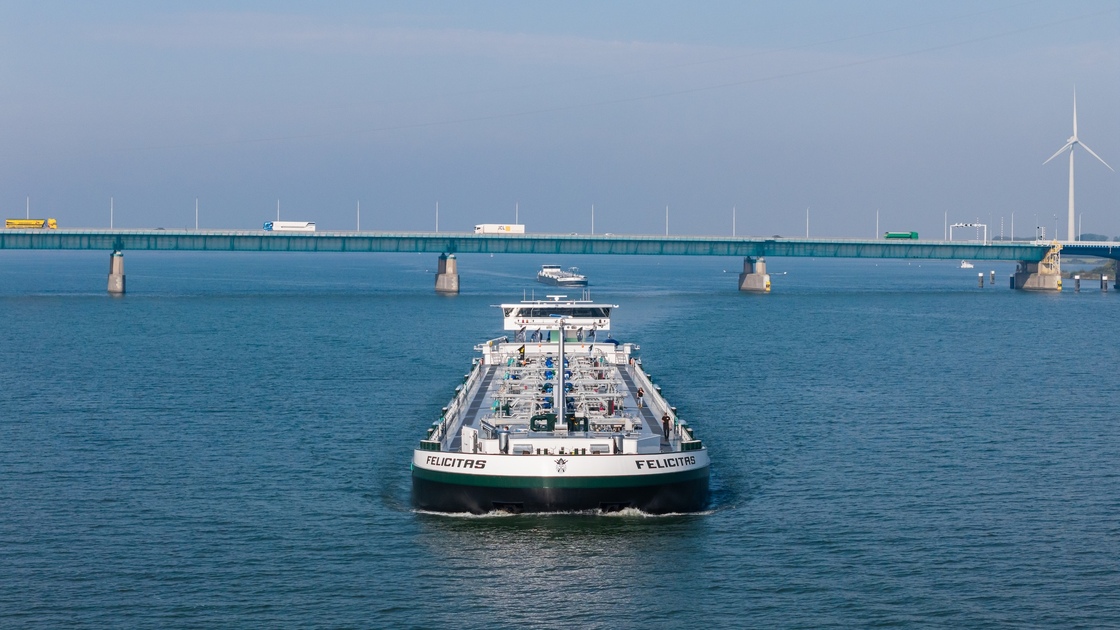
The 135-metre tanker was designed by Rensen Driessen Shipbuilding and fitted out by Den Breejen Shipyard. With a cargo capacity of approximately 9,000 m³, Felicitas features 12 cargo tanks, a dual piping system, two mass flow meters, a nitrogen generator, a bunker boom and a cargo pumping capacity of 1,800 m³ per hour. The vessel is designed to accommodate future modifications for methanol bunkering.

The addition brings AMS Barging’s fleet to 17 vessels. Earlier this year, the inland shipping specialist christened Fortuna, a sister vessel to Felicitas.

Preparing for changing fuel demand

Geopolitical developments and the energy transition are reshaping the international bunker market. AMS Barging is responding with vessels that can transport conventional fuels while allowing for future changes in fuel demand.

Interest in methanol as a marine fuel continues to grow. According to the Methanol Institute, more than 150 methanol-capable vessels are in operation worldwide, with more than 290 on order.

Methanol can significantly reduce emissions of sulphur oxides, nitrogen oxides and particulate matter compared with conventional marine fuels. Renewable methanol can also reduce lifecycle greenhouse gas emissions by more than 90%. The growth in methanol-fuelled shipping is increasing the need for continued investment in bunkering infrastructure.

“No one knows exactly what the fuel mix will look like in ten years’ time. We see methanol as one of the important alternatives,” says Martin van Veen, Commercial Director at AMS Barging. “That is why we invest in vessels that can operate efficiently today while allowing us to respond to future developments.”

Strong demand for efficient tanker capacity

Felicitas has completed her maiden commercial voyage and is now operating on the spot market. AMS Barging reports strong demand for large tankers capable of transporting substantial cargo volumes efficiently. By carrying larger parcels in a single voyage, Felicitas can reduce the number of vessel movements required and make more efficient use of loading and unloading facilities.

The vessel has diesel-electric propulsion and Z-drives, azimuthing propulsion units that improve manoeuvrability. Its engines meet the Stage V emissions standard. AMS Barging has previously reported fuel savings of around 25% with similar diesel-electric propulsion systems, compared with conventionally powered vessels.

“With existing vessels, it can sometimes be difficult to find exactly the combination of technology and capabilities we are looking for. By developing newbuild vessels ourselves, we can incorporate the latest technologies and tailor each vessel to the needs of the market. In doing so, we are investing not only in additional capacity, but also in the future of our fleet,” Van Veen adds.

About AMS Barging

AMS Barging is a Dutch inland shipping company specialising in the transport and bunkering of mineral fuels, chemicals and biofuels. Founded in 2007, the company operates 17 inland tankers across the European market. Its fleet includes LNG-electric and diesel-electric vessels, reflecting a long-standing investment in fuel-efficient propulsion. AMS Barging also provides ship management and sustainability consultancy services.
Sarbananda Sonowal announces two specialised credit risk insurance products for Shipbuilding industry

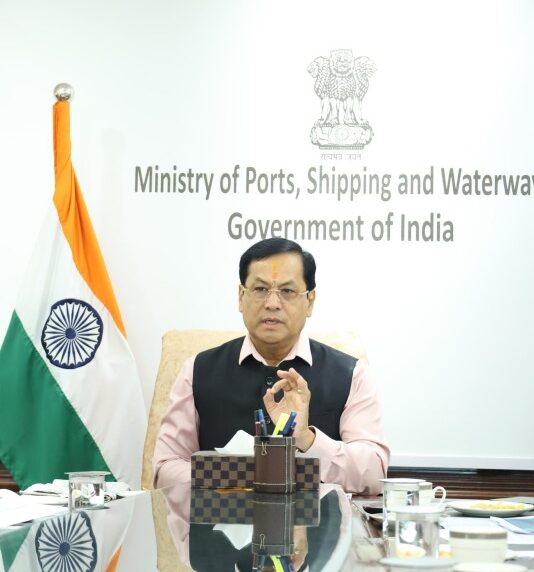
MUMBAI: Union Minister of Ports, Shipping and Waterways Shri Sarbananda Sonowal has announced two specialised credit risk insurance products to support India’s shipbuilding industry under the National Shipbuilding Mission. Addressing the 21st Maritime State Development Council (MSDC) meeting held recently in Mumbai, Shri Sonowal said the Shipbuilding Project Credit Risk Insurance Policy will cover export projects, while the Business Credit Shield Policy-Shipbuilders will protect domestic projects.

Describing shipbuilding as a massive, multi-year undertaking, Mr Sonowal said the government would subsidise insurance premiums and provide direct support to insurers in the event of claims by shipyards. He said the government aims to enable shipyards to build world-class vessels without being held back by delayed payments or sudden shifts in global markets.

In a major step towards ease of doing business, the council resolved that all ports must integrate with the Maritime Single Window (MSW Sagar Setu) by March 2027 to ensure unified digital processes nationwide. The minister also launched the Ready Reckoner for implementing the ‘One Nation One Port Process’ (ONOP) initiative. The council also mandated the electronic publication of port tariffs to ensure transparency.

National Shipping Board engages Deloitte to Advance India’s Maritime Amrit Kaal Vision 2047

NSB–Deloitte Talks Focus on Shipbuilding, Indian Tonnage and Port Modernisation

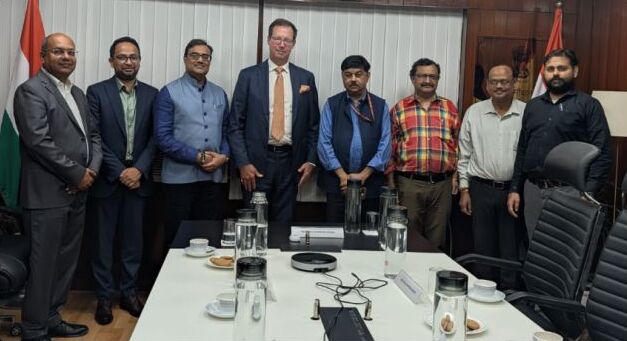
NEW DELHI: The National Shipping Board (NSB), under the chairpersonship of Shri Sameer Kumar Khare, IAS (Retd.), held a constructive meeting with a Deloitte delegation on October 15, 2026, at the NSB office in New Delhi to deliberate on strategic initiatives for advancing India’s maritime ambitions under the Maritime Amrit Kaal Vision 2047.

The discussions centred on roadmaps proposed by various NSB subcommittees to achieve the Vision’s long-term objectives and strengthen India’s position in the global maritime landscape. Key priorities included expanding Indian shipping tonnage, developing a robust shipbuilding, ship repair and ship recycling ecosystem, and increasing India’s share of the global seafarer workforce.

The meeting also examined measures to promote coastal shipping and inland waterways, preserve and document India’s rich maritime heritage, and accelerate port modernisation. These areas represent critical pillars of India’s maritime development strategy, with the potential to enhance domestic shipping capacity, strengthen maritime infrastructure, generate employment and improve the country’s competitiveness in international trade.

Strengthening India’s Maritime Capabilities

Increasing Indian-flagged tonnage and developing domestic shipbuilding and repair capabilities are important to strengthening the country’s maritime self-reliance. Similarly, expanding opportunities for Indian seafarers in the global workforce and promoting coastal and inland waterway transportation can contribute to a more integrated, efficient and competitive logistics network.

The discussions also underscored the importance of preserving India’s maritime legacy alongside the modernisation of its ports and the development of a future-ready maritime ecosystem.

The Deloitte delegation comprised Mr. James Jordan, Mr. NSN Murthy, Mr. Anshuman Saikia and other team members. Shri Sameer Kumar Khare was supported by Mr. S. Bhowmik and Mr. T. Padhi from the NSB Secretariat.

Both sides agreed to remain engaged and take the discussions forward, reflecting a shared commitment to continued dialogue on the strategic priorities identified during the meeting.

The engagement represents a constructive step in advancing the roadmaps proposed by the NSB subcommittees and supporting the broader objectives of the Maritime Amrit Kaal Vision 2047, which seeks to strengthen India’s maritime capabilities and establish the country as a leading force in the global maritime sector.

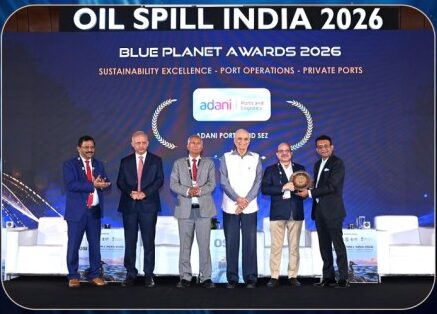
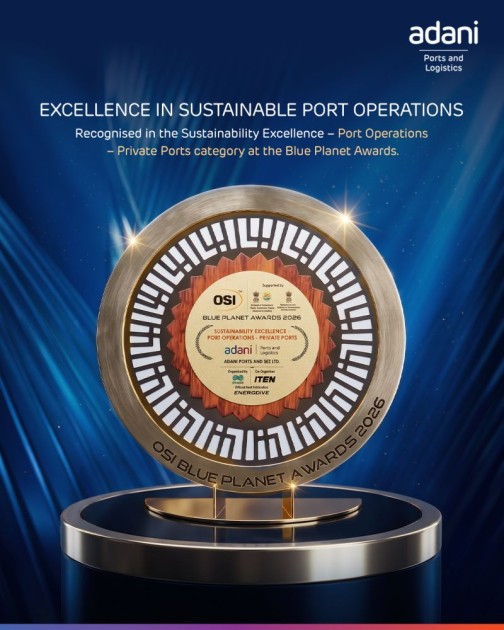
Adani Ports receives Blue Planet Award at Oil Spill India 2026 for maritime risk management and energy transition

NEW DELHI: Adani Ports and Special Economic Zone Ltd. (APSEZ) has received the prestigious Blue Planet Award at Oil Spill India (OSI) 2026, recognising its contribution to advancing maritime risk management and supporting the energy transition.

The recognition highlights the growing importance of responsible port operations, environmental protection and preparedness in addressing emerging challenges across the maritime and offshore sectors.

ADANI PORT AWARDS Adani Ports receives Blue Planet Award at Oil Spill India 2026 for maritime risk management and energy transition

The award was presented in connection with Oil Spill India 2026, the 8th edition of the international conference and exhibition held on October 6–7, 2026, in New Delhi. Organised under the aegis of The Energy & Climate Initiatives Society (ENCIS), the event brought together maritime authorities, industry leaders, environmental experts and technology providers to discuss spill prevention, emergency preparedness, response capabilities and environmental restoration.

The conference, themed “Coastal Guardians: Future-Proofing India’s Waters in an Era of Emerging Risks,” focused on strengthening maritime resilience through innovation, improved risk assessment, technological advancements and collaborative action.

For the port and shipping industry, effective oil spill prevention and response mechanisms are essential to safeguarding marine ecosystems, coastal communities and critical maritime infrastructure. As shipping, port operations and offshore activities expand, the need for robust environmental safeguards and efficient emergency response systems continues to grow.

APSEZ’s recognition underscores the importance of integrating environmental responsibility with operational excellence and long-term sustainability. It also reflects the wider industry focus on strengthening maritime safety while supporting the transition towards cleaner and more sustainable energy systems.

The Blue Planet Award adds to the emphasis on building a resilient maritime sector in which economic growth, environmental stewardship and responsible risk management advance together.

The recognition reinforces the importance of continued collaboration among ports, shipping companies, regulators and environmental stakeholders to protect marine ecosystems and support a safer, more sustainable future for the maritime industry.

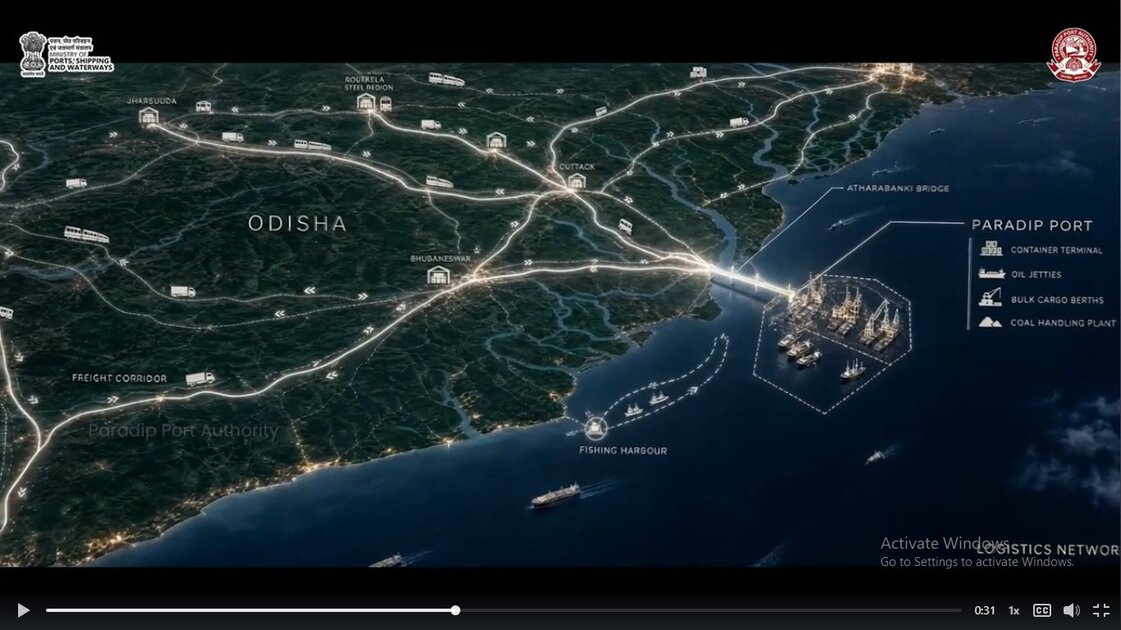
Paradip Port Authority constructs ₹24.89-Crore Atharabanki Bridge to boost Port Connectivity and Cargo Movement

PARADIP: In a significant infrastructure development aimed at strengthening connectivity to one of India’s major maritime gateways, Paradip Port Authority (PPA) has constructed the new Atharabanki Bridge at a project cost of ₹24.89 crore. The 500-metre-long, three-lane bridge is expected to improve traffic movement, facilitate smoother transportation and enhance accessibility around Paradip Port.

The project addresses a key connectivity requirement in the port region, where nearly 3,000 trucks move through Paradip Port every day. By upgrading the existing road infrastructure, the new bridge is expected to help ease congestion, improve the movement of cargo-carrying vehicles and support more efficient port-related logistics operations.

Modern Infrastructure to Address Growing Traffic Demand

The newly constructed bridge marks a major upgrade over the decades-old two-lane bridge, whose capacity and configuration presented limitations for the increasing transportation requirements of the port and its surrounding areas.

With three traffic lanes, the new structure is designed to provide improved road access and facilitate the movement of commercial vehicles serving the port. Better connectivity is expected to benefit transport operators, logistics service providers and other stakeholders associated with Paradip’s cargo-handling ecosystem.

Key Features of the Atharabanki Bridge

The infrastructure project incorporates several important features:

  • Length: 500 metres
  • Configuration: Three-lane bridge
  • Structural component: 30-metre composite girder
  • Project cost: ₹24.89 crore
  • Additional facilities: Dedicated footpaths and a pipeline corridor

The inclusion of dedicated footpaths provides designated space for pedestrians, while the pipeline corridor offers infrastructure provision for pipeline-related requirements.

Strengthening Paradip’s Logistics Ecosystem

As a major maritime gateway on India’s eastern coast, Paradip Port plays a vital role in supporting the movement of cargo and facilitating trade. Efficient road connectivity is essential to ensuring the smooth movement of trucks between the port and the wider regional transportation network.

The Atharabanki Bridge is expected to contribute to improved traffic management, more reliable road access and enhanced operational efficiency for port-linked transportation. Reduced congestion could also help minimise delays for commercial vehicles and improve the overall movement of goods.

Beyond port operations, the infrastructure upgrade is expected to support regional accessibility and economic activity by strengthening a key transport link in the Paradip area.

Infrastructure Investment for Future Growth

The construction of the Atharabanki Bridge reflects the importance of upgrading supporting infrastructure to keep pace with the evolving needs of ports, trade and logistics. As cargo movement and road transportation requirements grow, investments in bridges and connectivity corridors become increasingly important for improving the efficiency of the broader supply chain.

By replacing the limitations of an ageing two-lane bridge with a modern three-lane structure, Paradip Port Authority has taken another step towards strengthening the port’s supporting infrastructure.

The project reinforces the role of efficient connectivity in facilitating cargo movement, supporting regional development and enhancing the overall performance of India’s maritime logistics network.

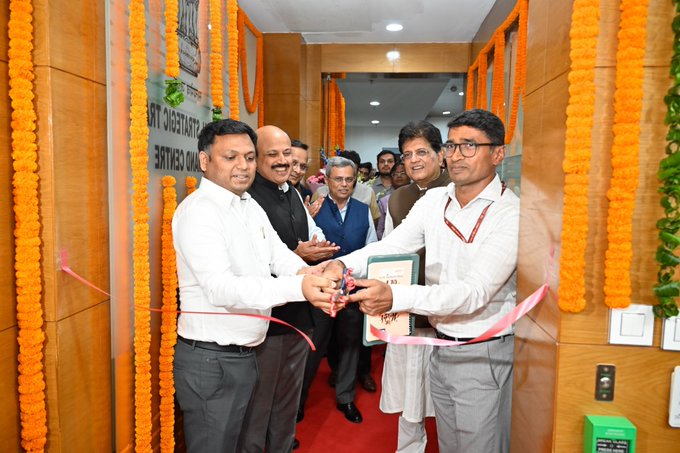
Piyush Goyal launches National Strategic Trade Command Centre

NEW DELHI : Union Minister of Commerce and Industry, Shri Piyush Goyal, launched the National Strategic Trade Command Centre (NSTCC) at Vanijya Bhawan, New Delhi, in the presence of Commerce Secretary, Shri Rajesh Agrawal, and Director General, Director General of Foreign Trade (DGFT), Shri Lav Agarwal.

Speaking on the occasion, Shri Piyush Goyal lauded NSTCC for enabling data-driven, evidence-based trade decisions. While reviewing the SCOMET (Special Chemicals, Organisms, Materials, Equipment and Technologies) dashboard, in particular, he called for regular meetings of the Inter-Ministerial Committee, weekly if required, to clear the backlog of pending applications and ensure that all applications are cleared expeditiously.

Developed by the Department of Commerce, Ministry of Commerce and Industry, NSTCC is a strategic initiative aimed at strengthening the monitoring, analysis and governance of India’s international trade ecosystem through integrated data analytics and evidence-based decision-making.

The Command Centre has been conceptualised to provide senior policymakers and government officials with a consolidated view of India’s trade performance, export promotion schemes, regulatory approvals, application processing and operational indicators. By bringing together information from multiple trade-related systems, NSTCC seeks to facilitate timely identification of emerging trends, operational bottlenecks and areas requiring policy or administrative intervention.

At the core of NSTCC is an integrated analytics and visualisation platform developed to transform trade-related data into actionable insights. NSTCC provides interactive dashboards covering key trade indicators, scheme performance, application pendency, processing timelines, regional trends and compliance-related parameters.

The platform enables users to analyse information across multiple levels, including national trade performance, Regional Authorities, schemes, products, destination markets and individual applications, subject to role-based access permissions.

In its initial phase, the Command Centre brings together dashboards covering key DGFT functions and trade-related domains, including Importer Exporter Code (IEC), Advance Authorisation, Export Promotion Capital Goods (EPCG), Certificate of Origin (CoO), SCOMET, restricted imports and exports, and other regulatory and trade facilitation processes. These dashboards will enable monitoring of scheme utilisation, processing efficiency, export obligations, trade patterns and operational performance across Regional Authorities.

The NSTCC is designed to support three key dimensions of trade governance:

  • Integrated Monitoring: Providing consolidated visibility into trade trends, application processing, pendency and emerging risks, enabling timely identification and resolution of operational issues.
  • Performance Assessment: Facilitating monitoring and benchmarking of schemes, processes and Regional Authorities against defined performance indicators to identify gaps and opportunities for improvement.
  • Evidence-Based Policy Inputs: Identifying recurring bottlenecks, procedural complexities and emerging trade patterns to support policy simplification, process improvements and targeted trade facilitation measures.

The initiative also seeks to strengthen India’s trade intelligence capabilities by enabling product-wise and market-wise analysis, assessment of trade agreement utilisation, identification of export opportunities and monitoring of India’s trade positioning across international markets.

NSTCC has been designed to leverage existing digital infrastructure, including DGFT systems and the Trade Connect ePlatform, while providing a framework for progressive integration of additional datasets from other departments and trade-related agencies.

Going forward, the Command Centre is envisaged to evolve into a broader whole-of-government decision-support mechanism, with phased access for authorised stakeholders, including relevant ministries, states, Export Promotion Councils and other institutions. Its analytical capabilities will also be progressively strengthened through additional data integration, automated alerts and advanced analytics.

The launch of NSTCC marks an important step towards proactive, transparent and responsive trade governance, enabling the Department of Commerce and DGFT to move from periodic reporting towards continuous monitoring, coordinated intervention and evidence-based policy formulation.

The initiative reinforces the Government of India’s commitment to leveraging digital technologies and data-driven governance to strengthen trade facilitation, improve administrative efficiency and enhance India’s competitiveness in global trade.

India’s Merchandise Exports surge 23.04% to USD 44.40 billion in September

NEW DELHI : India’s Merchandise Exports registered a strong growth of 23.04 per cent in September 2026, rising to USD 44.40 billion from USD 36.08 billion in the corresponding month last year, according to data released by the Ministry of Commerce and Industry on Thursday.

The merchandise trade deficit narrowed to USD 30.21 billion in September, compared with USD 33 billion a year ago, even as imports increased to USD 74.61 billion from USD 69.08 billion.

India’s overall exports, including merchandise and services, grew by 10.99 per cent to an estimated USD 80.75 billion during September, against USD 72.76 billion in the same month last year.

Total imports rose to USD 94.05 billion from USD 86.93 billion. However, the combined trade deficit narrowed to USD 13.30 billion from USD 14.17 billion a year earlier.

Merchandise Shipments Drive Export Growth

Commerce Secretary Rajesh Agrawal said merchandise shipments were the key driver of export growth in September.

“If you look at merchandise exports in September, they are at USD 44.40 billion, which is 23.04 per cent higher than last September,” he said during a press briefing.

The growth was supported by higher shipments of electronic goods, petroleum products, engineering goods, chemicals and agricultural products.

Overall Export Growth Accelerates in Second Quarter

Agrawal said India’s overall export growth accelerated in the second quarter of the current financial year compared with the first quarter.

“The second quarter has outperformed the first quarter of this transition year, and the second quarter’s overall export growth has been 15.84 per cent. In the first quarter, overall export growth was 11.84 per cent,” he said.

According to the Ministry’s presentation, India’s overall exports reached an estimated USD 242.6 billion during July-September 2026, compared with USD 233.6 billion in April-June.

The July-September figure was the highest-ever export value recorded for the second quarter, the presentation stated.

The latest figures point to stronger merchandise shipments and improved overall export performance during the second quarter of the current financial year, while the combined trade deficit narrowed year-on-year in September.

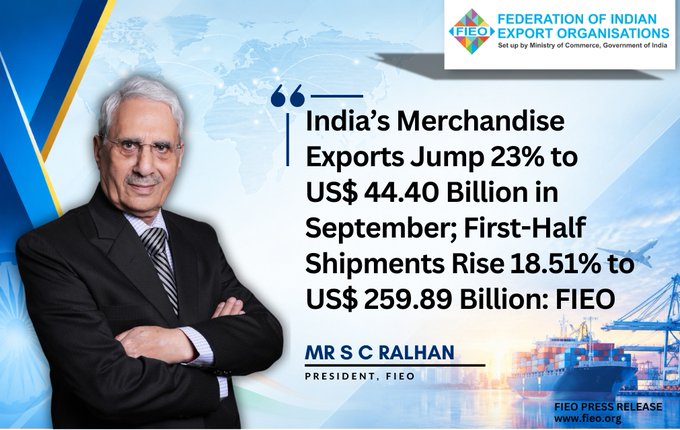
India’s Merchandise Exports jump 23% to US$ 44.40 billion in September; first-half shipments Rrse 18.51% to US$ 259.89 billion: FIEO

NEW DELHI : India’s Merchandise Exports surged 23 per cent year-on-year to US$ 44.40 billion in September 2026, lifting exports for the first half of 2026–27 by 18.51 per cent to US$ 259.89 billion. The strong performance came as imports rose by a comparatively modest 8 per cent to US$ 74.61 billion, narrowing the merchandise trade deficit to US$ 30.21 billion and underscoring the resilience of Indian exporters amid tariff uncertainties, geopolitical tensions and logistics challenges.

Welcoming the performance, Mr S C Ralhan, President, Federation of Indian Export Organisations (FIEO), said: “September’s strong export growth is an encouraging affirmation of India’s competitiveness in a challenging global trading environment. Our exporters continue to respond to uncertainty with agility, strengthening their presence across markets and product categories. The broad-based contribution of traditional and emerging sectors adds depth to this performance.”

Merchandise exports during April–September 2026–27 reached US$ 259.89 billion, growing 18.51 per cent over US$ 219.30 billion in the corresponding period of the previous year. Higher shipments of electronic goods, engineering goods, petroleum products, chemicals, and agricultural products supported this expansion.

“The strength of the first-half performance lies in the diversity of its growth drivers. Technology-intensive exports are adding momentum alongside established sectors such as engineering, chemicals, and agriculture. Sustaining this balance, while expanding our market reach, will be crucial in the second half of the financial year,” Mr Ralhan observed.

India’s total exports of goods and services are estimated at US$ 476.20 billion during April–September 2026–27, an increase of 13.84 per cent over US$ 418.31 billion a year earlier. Despite tariff-related disruptions, the United States remained India’s largest merchandise export destination during the first half of the financial year. India’s imports from the US also increased by 26 per cent to US$ 32.33 billion, compared with US$ 25.66 billion in the corresponding period last year.

“The US retaining its position as our largest merchandise export market underscores the importance of this economic partnership. Alongside strengthening established trade relationships, we must accelerate efforts to diversify export destinations and create fresh opportunities for Indian businesses,” the FIEO President said.

The combined merchandise and services trade deficit in September narrowed to US$ 13.30 billion, against US$ 14.17 billion a year earlier, even as combined imports increased to US$ 94.05 billion from US$ 86.93 billion. Mr Ralhan described the improvement as a positive development, noting that stronger exports were helping contain the overall trade gap despite rising imports.

Looking ahead, Mr Ralhan emphasised that continued policy support, competitive export finance, predictable trade and logistics costs, and faster market diversification would be essential to sustain growth.

“This strong first-half performance provides a firm foundation to advance towards India’s US$ 1 trillion export ambition. The priority now is to translate this momentum into sustained orders and deeper market penetration. With an enabling policy environment, India can expand high-value and technology-intensive exports, build on its traditional strengths and strengthen its participation in global value chains,” he added.

GRSE signs four-vessel contract with ONGC

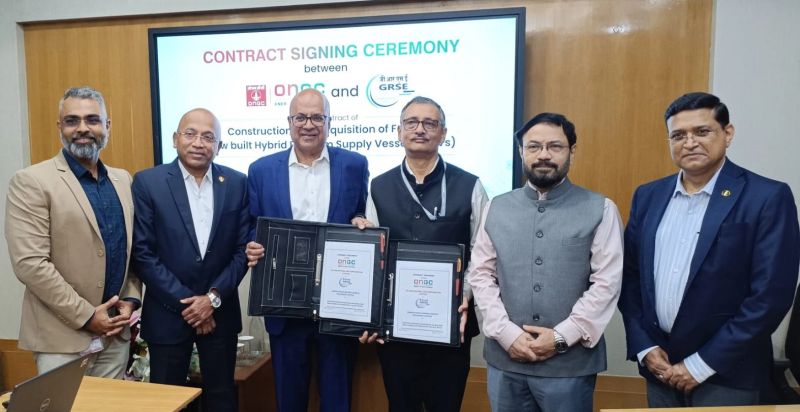
KOLKATA : Garden Reach Shipbuilders & Engineers Ltd. (GRSE), a Navratna Defence Public Sector Undertaking under the Ministry of Defence, Government of India, has signed a contract with Oil and Natural Gas Corporation Limited (ONGC) for the construction of four Hybrid Platform Supply Vessels (PSVs), marking a significant step forward in the shipyard’s foray into specialised offshore support vessels. The contract follows the Notification of Award received by GRSE on 30 July 2026.

The contract was signed by Cdr Shantanu Bose, IN(Retd), Director (Shipbuilding), GRSE, and Shri Ratnesh Kumar, Executive Director (Strategy), ONGC, in the presence of Shri Satyen Kumar, Director (Technical), ONGC, Shri Bhaskar Chowdary Nettem, Director (Production), ONGC, and senior officials from GRSE & ONGC.

The project marks an important addition to GRSE’s commercial shipbuilding portfolio, extending its capabilities in the specialised offshore support vessel segment. The vessels will support ONGC’s offshore exploration and production operations, contributing to the maritime infrastructure required by India’s energy sector.

With an overall length of approximately 80 metres, a beam of 20 metres and a deadweight capacity of 3,000 tonnes, each vessel will feature a clear deck area of around 650 square metres and an endurance of 45+3 days. Designed and built in accordance with the Rules of the Indian Register of Shipping (IRS), the vessels will be equipped to undertake a range of offshore logistics and support functions.

A defining feature of the project is the incorporation of an advanced hybrid propulsion architecture, comprising electrically driven azimuth thrusters and a Lithium-Ion Battery Energy Storage System. The battery system will support peak load management, spinning reserve, dynamic positioning operations and emergency response functions. This configuration is intended to enhance operational efficiency and reduce the environmental impact of vessel operations.

The ONGC contract represents a further step in diversifying GRSE’s order portfolio and applying its shipbuilding expertise to the requirements of the commercial maritime and offshore energy sectors.

Samudera Shipping introduces CIX 8 Service, strengthening India–China Container Connectivity

New Weekly Service Links Nhava Sheva and Mundra with Qingdao via Colombo, Offering an Estimated 23-Day Transit

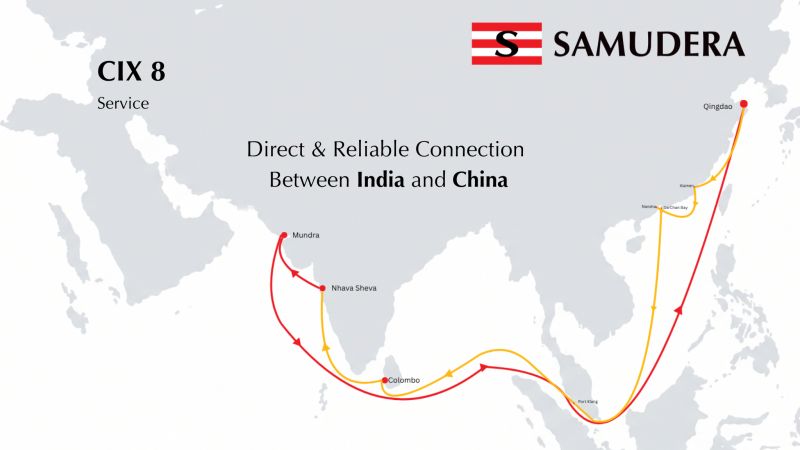
SINGAPORE: Samudera Shipping has introduced its new CIX 8 container service, strengthening maritime connectivity between India, China and Sri Lanka. The service will connect Nhava Sheva (NSA) and Mundra (MUN) on India’s western coast with Qingdao (TAO), a major port in northern China. It will also extend connectivity between Qingdao and the wider Indian Subcontinent through Colombo (CMB), Sri Lanka.

According to industry reports, the CIX 8 service will operate on a weekly sailing frequency, with an estimated transit time of approximately 23 days from Nhava Sheva to Qingdao. The new service is designed to facilitate cargo movements across key Asian trading markets and provide shippers with an additional scheduled container shipping option.

Enhancing Connectivity Between Western India and Northern China

The introduction of CIX 8 adds another shipping option for exporters, importers, freight forwarders and logistics service providers engaged in India–China trade. Nhava Sheva, a key container gateway serving the Mumbai metropolitan region and its industrial hinterland, and Mundra, a major container port in Gujarat, provide strategic access to India’s western and northern markets.

On the Chinese side, Qingdao serves as an important maritime gateway for the country’s northern industrial and manufacturing regions. Improved shipping connections between these ports can support the movement of containerised cargo, including manufactured goods, machinery, industrial inputs and other traded commodities.

The weekly frequency is expected to offer businesses another option for shipment planning, inventory management and coordinating cargo movements between the two countries. Actual transit times and available vessel space will depend on the published sailing schedule and operational conditions.

Colombo Extends the Service’s Regional Reach

A key feature of the CIX 8 network is its connection through Colombo, Sri Lanka, extending the service’s reach beyond the direct India–China port pairing.

Colombo is an important transshipment hub for South Asian container trade, connecting regional cargo flows with international shipping networks. Its inclusion in the service provides an additional link for cargo moving between Qingdao and destinations across the Indian Subcontinent.

This connectivity is particularly relevant to shippers and logistics operators seeking routing options for regional cargo distribution and connections to markets served through Colombo.

Supporting Regional Trade and Supply Chain Efficiency

The launch of CIX 8 reflects the continuing importance of scheduled container shipping services in supporting trade across Asia. For Indian businesses, the additional connection between western Indian ports and northern China could provide greater flexibility when evaluating shipping routes, transit times and cargo availability.

For Samudera Shipping, the introduction of CIX 8 expands its regional service offering and reinforces its focus on connecting major Asian trading centres through scheduled maritime transport.

As trade and supply chains across the region continue to evolve, reliable port connectivity and regular sailing options remain important considerations for businesses seeking efficient and competitive logistics solutions.

The CIX 8 service therefore represents an additional link between India’s key western container gateways, China’s northern maritime hub and Colombo’s regional transshipment network.