Home Blog Page 531

India can expand exports to Russia from USD 5 bn to USD 35 bn by 2030: GTRI

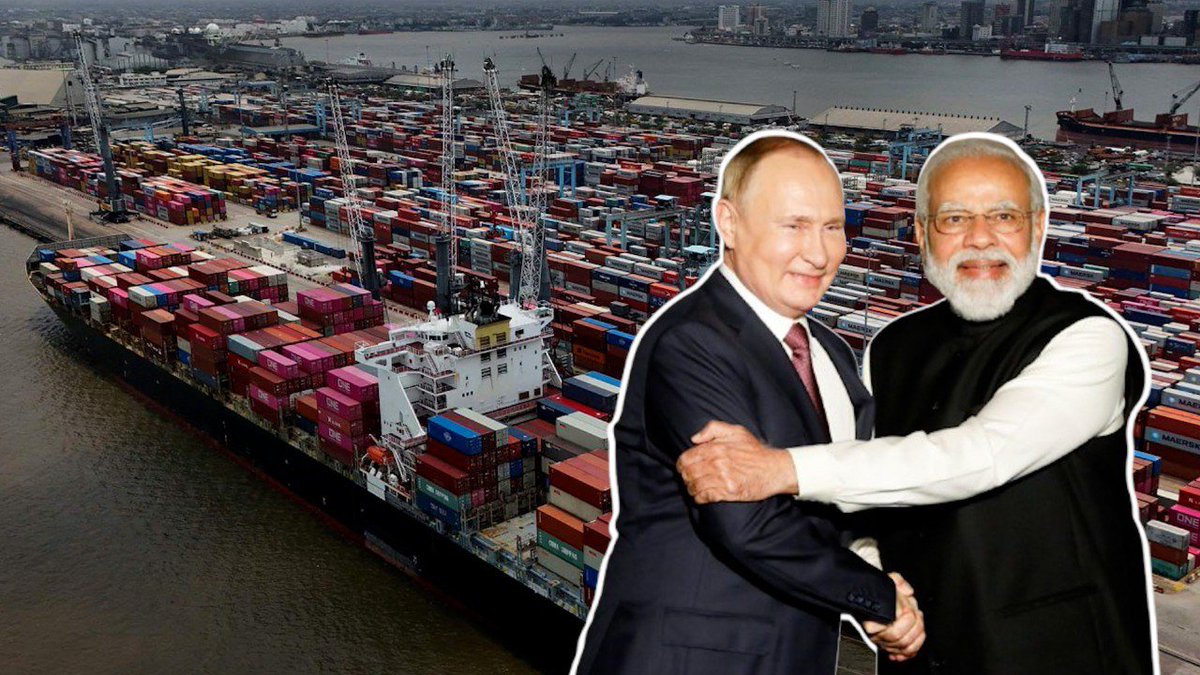
NEW DELHI: India has the potential to raise its merchandise exports to Russia from about USD 5 billion to nearly USD 35 billion by 2030, according to a GTRI report, as President Vladimir Putin’s visit to Delhi places renewed focus on narrowing the wide trade gap between the two countries.

The report shows that even though bilateral trade is touching USD 70 billion, India’s exports stay below USD 5 billion while imports from Russia remain dominated by crude oil. In FY2025, India exported goods worth USD 4.9 billion but imported USD 63.8 billion, leaving a trade deficit of USD 58.9 billion. Crude oil alone formed USD 50.3 billion of these imports, turning the trade relationship into one centred almost entirely on energy.

The GTRI Report explains that India supplies only 2.4 per cent of Russia’s USD 202.6 billion import market. It notes that Russia is a large global buyer in many categories where India is also a major exporter, yet India’s share remains very small. This, the report says, is where the opportunity lies.

Food and agriculture show the widest gaps. Russia imported USD 13 billion worth of food items in 2024, but India’s exports across fruits, oils, meat and dairy together stayed under USD 250 million. Even in areas where India is a strong global exporter, such as meat, oilseeds and fruits, its share in Russia is mostly below five per cent. Processed food is similar, with India’s sales remaining very limited despite strong global capability.

The pattern continues in consumer goods and chemicals. Russia imported USD 3.13 billion of perfumery and essential oils and USD 1.07 billion of soaps and detergents, but India’s presence stayed below three to four per cent in most segments. Pharmaceuticals, although India’s biggest export category to Russia, also reflected low penetration. Russia imported USD 11.8 billion worth of medicines in 2024, while India’s share was USD 413.5 million, despite being one of the world’s largest pharma exporters.

Textiles, apparel and footwear show some of the sharpest mismatches. Russia bought billions worth of fibres, fabrics and clothing, yet India’s exports were a fraction of its global strengths. Big consumer industries like vehicles, furniture and toys displayed the same pattern, with India supplying only tiny amounts to a market that buys heavily from the world.

The report states that expanding India’s exports will not depend only on identifying high-potential product lines but also on fixing payment challenges. With Russian banks limited in accessing SWIFT, exporters face delays and uncertainty. The GTRI analysis says a modern and reliable rupee-rouble settlement system, supported by both sides’ banks, is essential for building confidence and speeding up transactions.

The report adds that India and Russia had earlier solved this problem through a fixed exchange arrangement during the Soviet era. A similar modern system, along with trade missions and stronger institutional support, can help India shift its Russia trade from mainly oil to a wider mix of goods that reach stores and factories across the country.

Source: ANI
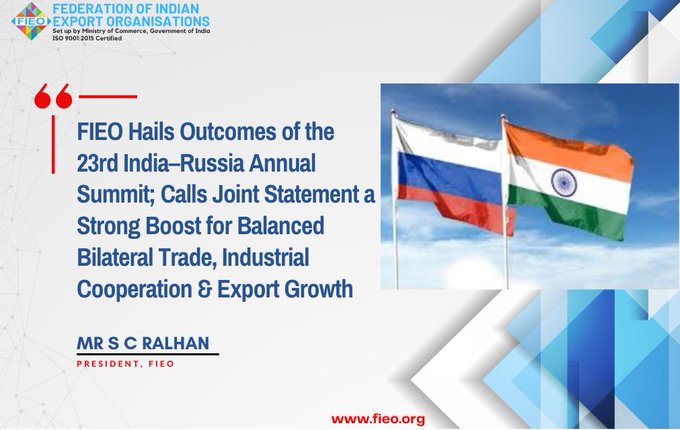
FIEO hails Outcomes of the 23rd India–Russia Annual Summit

NEW DELHI: The Federation of Indian Export Organisations (FIEO) has welcomed the Joint Statement issued following the 23rd India–Russia Annual Summit, describing it as a major step forward in strengthening trade, economic, technological, and connectivity partnerships between the two nations.

Reacting to the developments, FIEO President, Mr S C Ralhan, said: “The Joint Statement reflects a clear and ambitious roadmap to deepen India–Russia trade and economic engagement. The strong emphasis on balanced and sustainable trade growth, enhanced industrial cooperation, logistics connectivity, and new technology-driven partnerships sends a powerful signal of long-term commitment. Exporters are encouraged by India’s renewed focus on unlocking the full potential of this Special and Privileged Strategic Partnership.”

Mr Ralhan noted that Programme 2030 and the reaffirmed intent to work towards USD 100 billion in bilateral trade by 2030 mark a significant milestone. He added, “The commitment to address tariff and non-tariff barriers, improve logistics links, ensure smooth payment mechanisms, and strengthen insurance and reinsurance frameworks will be crucial for boosting India’s exports to Russia. These are exactly the issues our exporters have been facing, and it is reassuring to see them being prioritised at the highest level. As trade volumes rise, it is vital that the trade basket becomes more diversified and balanced, ensuring long-term sustainability for both economies.”

FIEO highlighted the Leaders’ push for deeper cooperation in advanced high-technology sectors, industrial clusters, investment promotion, and joint ventures, with Mr Ralhan stating: “The Summit outcomes open new avenues for Indian exporters in sectors such as engineering goods, pharmaceuticals, agro-products, textiles, gems & jewellery, and technology services. Strengthened industrial partnership will not only diversify trade but also foster long-term supply-chain resilience between the two countries. Additionally, the growing demand for online consumer goods in the Russian market presents significant opportunities for Indian exporters in e-commerce–led retail exports, especially in categories like lifestyle products, health and wellness, home décor, and value-added food items.”

The Federation also welcomed the agreement to enhance bilateral settlements in national currencies, interoperability of payment and financial messaging systems, and consultations on digital currency platforms. “The move toward robust and predictable payment systems will substantially ease trade transactions and reduce uncertainties for exporters. This is a transformative step toward stabilizing India–Russia trade flows,” Mr Ralhan observed.

FIEO appreciated the reaffirmed collaboration in energy, including oil & gas, petrochemicals, LNG/LPG infrastructure, and nuclear projects, and the commitment to resolve investor issues swiftly. “Stable energy cooperation is fundamental to India’s industrial competitiveness, and this will indirectly benefit a wide range of export-oriented sectors,” Mr Ralhan added.

The Federation lauded the Leaders’ focus on strengthening transport corridors such as the INSTC, the Chennai–Vladivostok Maritime Corridor, and cooperation on the Northern Sea Route. “Enhanced connectivity will reduce logistics costs, improve transit predictability, and open new gateways for Indian goods into Russia and the broader Eurasian region,” Mr Ralhan said.

FIEO further welcomed the enhanced cooperation in the Russian Far East and Arctic, including opportunities in agriculture, minerals, manpower mobility, pharmaceuticals, maritime transport, and diamonds. “This region holds major untapped potential for Indian exporters and investors. Regular institutional cooperation will help in expanding India’s economic footprint in these future-oriented geographies,” he noted.

Mr Ralhan said he exuded confidence that the Joint Statement clearly outlines a forward-looking and comprehensive cooperation agenda. “It is a timely boost for the entire export community. FIEO stands ready to work closely with the Government and industry to translate these commitments into concrete trade outcomes, promote a more diversified and balanced trade structure, and enhance India’s export performance—including emerging e-commerce retail export opportunities—in the Russian market.”

India, Russian customs sign protocol for exchange of pre-arrival info on goods, vehicles

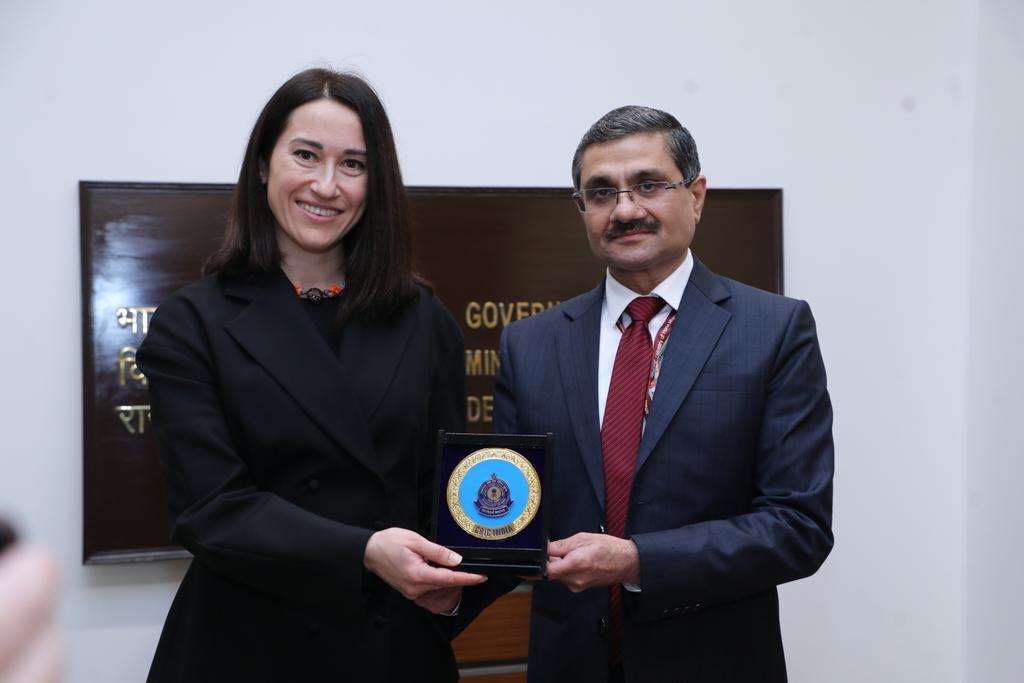
NEW DELHI: Customs authorities of India and Russia on Thursday signed a protocol for cooperation on pre-arrival information exchange in respect of goods and vehicles moved between the two nations, the CBIC said in a post on X.

CBIC FCS 1 1 India, Russian customs sign protocol for exchange of pre-arrival info on goods, vehicles

Central Board of Indirect Taxes and Customs (CBIC) Chairman Shri Vivek Chaturvedi and Deputy Head of Federal Customs Service (FCS) of the Russian Federation Tatiana Merkushova signed the protocol on the sidelines of the 23rd India-Russia Summit.

Pre-arrival information exchange enables customs to assess risks and process consignments in advance, ensuring faster and more secure border clearance.

“This will strengthen trade facilitation while enhancing security, transparency, and overall efficiency in cross-border movements,” the CBIC said in a X post.

Adani Ports and Motherson Group join forces to build Dedicated Auto Export Hub at Dighi Port

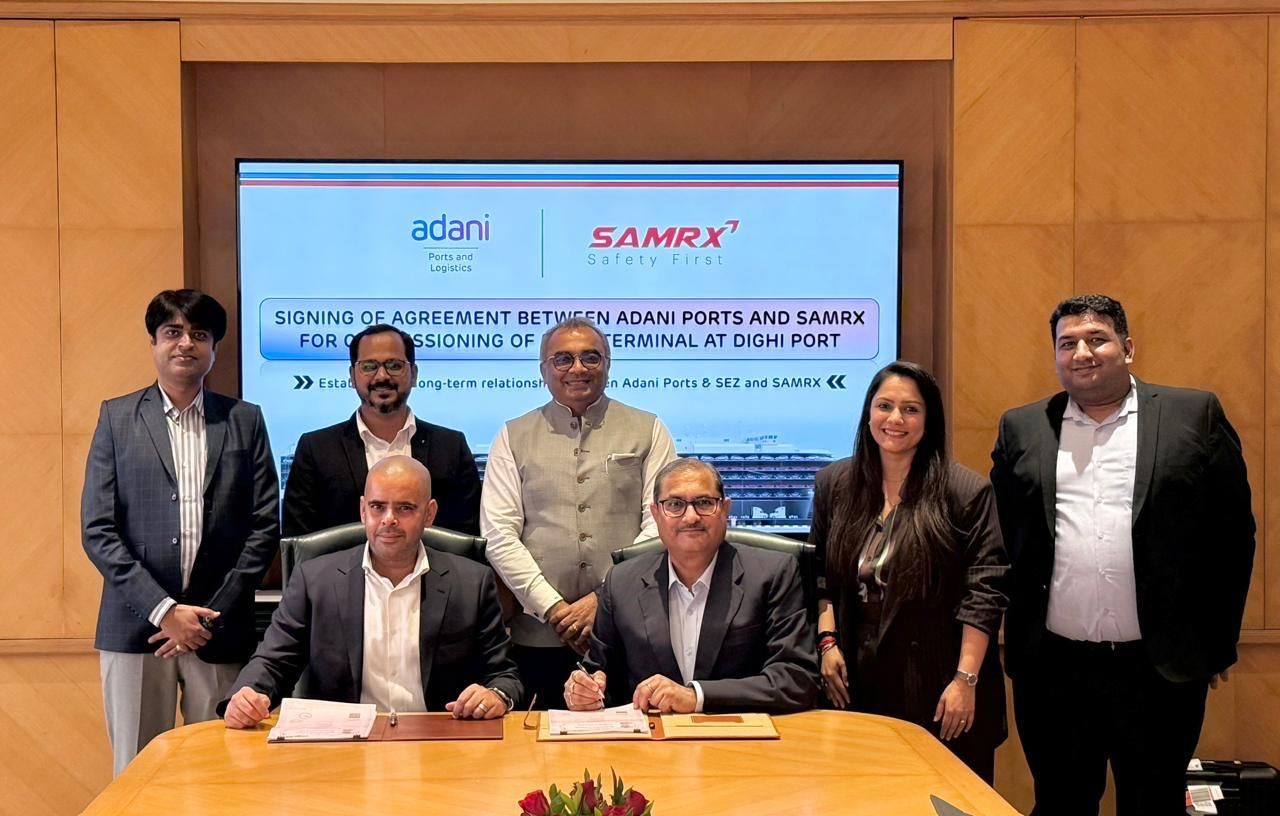
MUMBAI: In a significant boost to India’s automotive export ecosystem, Adani Ports and Special Economic Zone Ltd. (APSEZ) has partnered with Motherson Group to transform Dighi Port in Maharashtra into a major automobile export hub. The initiative is expected to enable the port to handle nearly 200,000 vehicles annually, reinforcing India’s stature in global automotive trade.

The planned Roll-on/Roll-off (RoRo) terminal will offer a seamless gateway for both exports and imports, leveraging APSEZ’s robust port infrastructure and Motherson’s strong presence in the automotive supply chain. This collaboration aims to streamline logistics, reduce turnaround time, and create a more resilient and efficient vehicle movement network across the country.

Situated within the heart of the Mumbai–Pune automotive manufacturing belt, Dighi Port is set to become a strategic node for automobile logistics under the Government of India’s Make in India initiative. The enhanced connectivity will not only support OEMs and component manufacturers but also unlock new global trade opportunities for India’s fast-growing automotive sector.

Mr. Ashwani Gupta, Whole Time Director & CEO of APSEZ, emphasized the transformational potential of this alliance, stating that the partnership “marks a major step toward redefining automotive logistics in India,” while delivering long-term value for customers and communities.

As India continues to accelerate its manufacturing and export ambitions, the new auto-handling capabilities at Dighi Port are expected to drive sustainable growth, strengthen supply chain efficiency, and create a future-ready framework for the nation’s automotive logistics landscape.

RBI raises India 2025-26 GDP forecast by half a percentage point to 7.3%

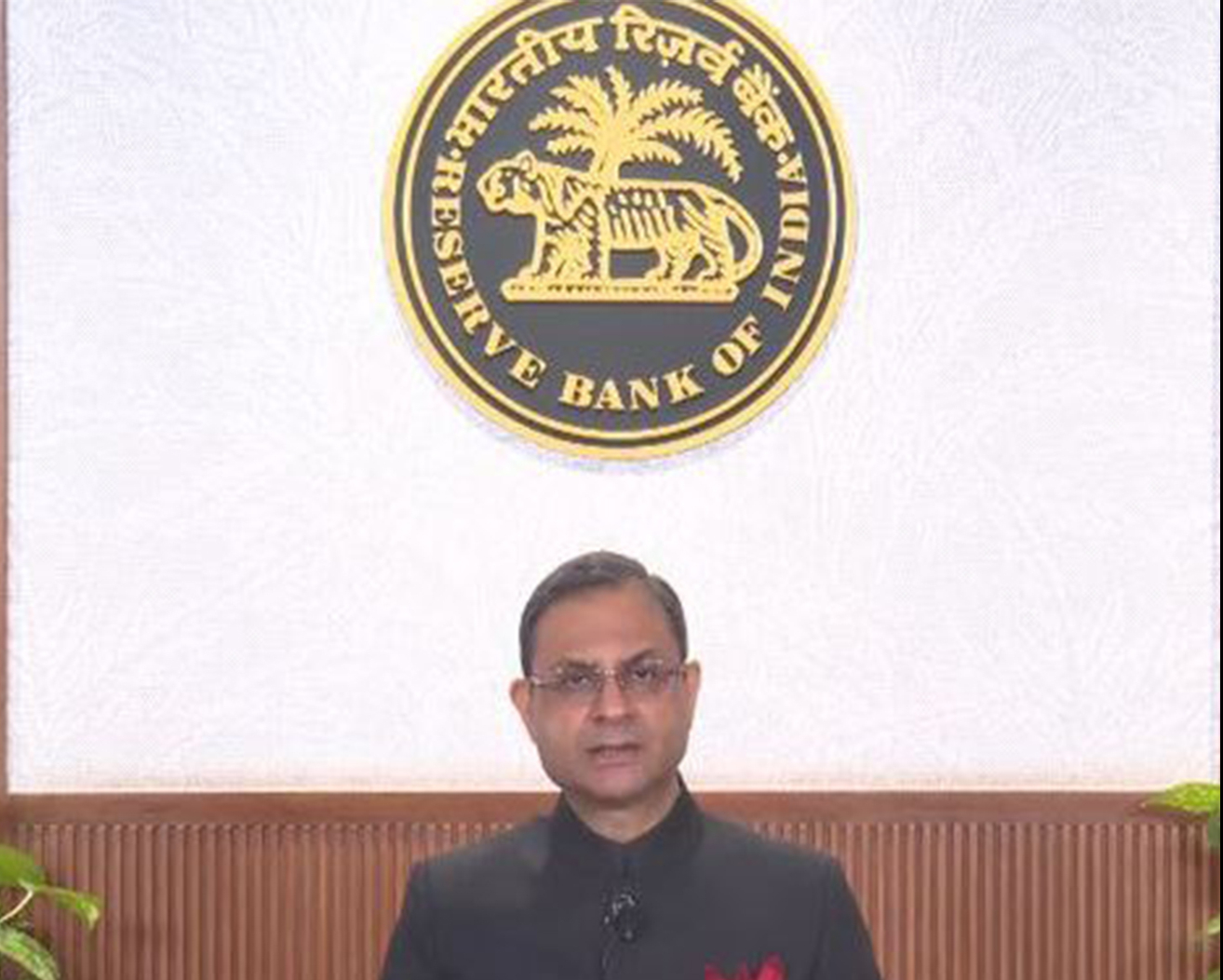
NEW DELHI: The Indian economy is projected to grow at 7.3 per cent in the current fiscal 2025-26, about a half percentage point higher than previously estimated, RBI Governor Shri Sanjay Malhotra said Friday, announcing the decisions of Monetary Policy Committee.

For Q3 and Q4 2025-26, he projected growth at 7 per cent and 6.5 per cent, respectively. For Q1 and Q2 2026-27, the GDP numbers are projected at 6.7 per cent and 6.8, respectively.

The governor said the domestic economy activity is holding up; with rural demand robust aand urban demand recovering steadily.

On the policy rate front, the MPC announced a 25 basis points reduction in the policy repo rate, bringing it down to 5.25 per cent, in a unanimous decision.

The decision was communicated by RBI Governor Shri Sanjay Malhotra after the conclusion of the three-day Monetary Policy Committee (MPC) meeting held from December 3 to 5.

The governor stated that the MPC undertook a detailed assessment of evolving macroeconomic conditions and future outlook before arriving at the unanimous decision to implement the rate cut with immediate effect.

Announcing the decision, the Governor said, “The MPC met on the 3rd, 4th, and 5th of December to deliberate and decide on the policy repo rate. After a detailed assessment of the evolving macroeconomic conditions and outlook, the MPC voted unanimously to reduce the policy repo rate by 25 basis points to 5.25 per cent, with immediate effect.”

The rate cut follows a phase of strong macroeconomic performance supported by robust GDP growth of 8.2 per cent in the second quarter of the current financial year (six-quarter high) and low levels of inflation.

The RBI governor said strong consumption, GST rationalisation buoyed India’s Q2 GDP numbers.
India’s retail inflation fell sharply to 0.25 per cent in October 2025, marking a record low.

This marks a shift from the last monetary policy announcement on October 1, when the RBI maintained the repo rate at 5.5 per cent.

In that review, the MPC had unanimously decided to keep the policy rate unchanged after meeting on September 29 and 30 and October 1 to assess domestic and global economic conditions.

The latest reduction is expected to provide liquidity support and reinforce momentum at a time when GDP numbers remain strong and inflation continues its downward trajectory.

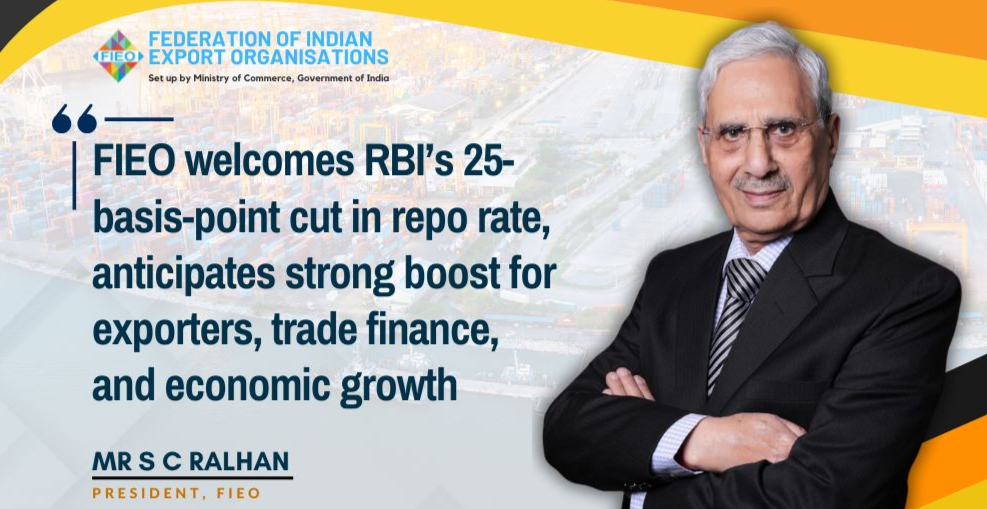
FIEO welcomes RBI’s 25-basis-point cut in repo rate, anticipates strong boost for exporters, trade finance, and economic growth

NEW DELHI: The Federation of Indian Export Organisations (FIEO) welcomed the Reserve Bank of India’s decision to reduce the repo rate by 25 basis points, describing it as a timely and encouraging step that will enhance export competitiveness and ease liquidity constraints across the exporting community.

FIEO President, Mr S C Ralhan, lauded the move, noting that a reduction in borrowing costs comes at a crucial moment for Indian exporters navigating volatile global demand and fluctuating input prices. “We appreciate the RBI’s timely intervention. A 25-bps cut in the repo rate will significantly lower the cost of credit for exporters, enabling them to invest more freely in working capital, technology upgradation, and international marketing efforts. This is a much-needed boost at a time when global demand is volatile and input costs remain unpredictable,” he said.

Mr Ralhan emphasized that lower interest rates will ease the burden of trade financing, support higher production levels, and encourage diversification across export-oriented sectors. For MSME exporters in particular, improved liquidity and reduced financing costs will translate into strengthened cash flows, more competitive margins, and greater capacity to scale operations and enter new international markets.

According to FIEO, the rate cut is expected to generate several positive ripple effects for the export ecosystem. Exporters availing pre- and post-shipment credit will benefit from reduced financing costs, improving profitability and reducing reliance on high-cost credit instruments. Easier access to funds will also help streamline working capital cycles, allowing timely procurement of raw materials, better inventory management, and smoother fulfilment of export orders. Additionally, lower interest rates may encourage industry-wide expansion and modernization, fostering higher value addition and supporting the government’s broader export-promotion objectives. As liquidity improves, exporters may also be better positioned to diversify into new product segments, adopt advanced technologies, and explore untapped global markets—strengthening the resilience and breadth of India’s export basket.

Mr. Ralhan urged banks and financial institutions to ensure that the benefits of the rate cut are passed on swiftly and fully to exporters through reduced lending rates and faster credit disbursal, enabling the sector to realize the full impact of the monetary easing.

In an environment marked by global economic uncertainty and increasing competition, FIEO considers the RBI’s rate cut a welcome relief. The organization remains optimistic that, combined with supportive fiscal and trade policies, this measure will help Indian exporters build scale, sharpen competitiveness, and contribute to sustained export growth in the coming quarters.

Adani Krishnapatnam Port achieves all-time high Single-Day Cargo Handling record

NELLORE:  Adani Krishnapatnam Port Limited (AKPL), a flagship asset of Adani Ports and SEZ Limited (APSEZ), on Wednesday announced a milestone in cargo operations, handling its highest-ever single-day cargo volume of 1,32,800 Metric Tonnes (MT).

The company said it surpassed the previous record of 1,31,966 MT, highlighting the port’s continuous drive for operational excellence and efficiency. The new record was achieved through the collaborative effort of the port’s operations, logistics, and engineering teams, underpinned by its advanced mechanized systems.

AKPL also records its highest-ever monthly fertilizer cargo, reinforcing its role as a key gateway for agricultural imports and operational excellence.

The company stated in a press release that AKPL’s state-of-the-art Automated Fertilizer Handling System ensured quick turnaround times for vessels, enabling fertilizers to reach farmers promptly.

The port’s superior rail and road connectivity further facilitated seamless nationwide distribution, supporting initiatives by the Government of India and the Government of Andhra Pradesh to empower the farming community.

Govt strengthens Logistics Framework to address Global Disruptions and Support Exporters

Centre Approves Export Promotion Mission to Boost MSMEs and First-Time Exporters

NEW DELHI: Global logistics disruptions have led to delays, cost increases, and supply chain challenges impacting exporters. To address this, the Government is actively enhancing logistics infrastructure and streamlining procedures to improve export efficiency. Key initiatives include: the Export Promotion Mission (EPM), Bharat Trade Net (BTN), grassroots programs like Districts as Export Hubs and E-Commerce Export Hubs, National Logistics Policy and PM Gati Shakti. These initiatives are outlined in detail below:

  1. The Central Government has introduced Credit Guarantee Scheme for Exporters (CGSE) for providing 100% credit guarantee coverage by National Credit Guarantee Trustee Company Limited (NCGTC) to Member Lending Institutions (MLIs) for extending additional credit facilities upto Rs.20,000 crore to eligible exporters, including MSMEs. It will strengthen liquidity, ensure smooth business operations, reinforce India’s progress towards Aatmanirbhar Bharat.
  2. The Central Government has also approved Export Promotion Mission (EPM) a flagship initiative announced in the Union Budget 2025-26 to strengthen India’s export competitiveness, particularly for MSMEs, first-time exporters, and labour-intensive sectors. The Mission will provide a comprehensive, flexible, and digitally driven framework for export promotion, with a total outlay of Rs.25,060 crore for FY 2025-26 to FY 2030-31. EPM marks a strategic shift from multiple fragmented schemes to a single, outcome-based, and adaptive mechanism that can respond swiftly to global trade challenges and evolving exporter needs.
  3. Under the International Cooperation Scheme being implemented by the Ministry of Micro Small and Medium Enterprises, financial assistance is provided on reimbursement basis to the eligible Central/State Government organizations and Industry Associations to facilitate visits/participation of MSMEs in international exhibitions/fairs/buyer-seller meets held abroad and for organizing international conferences/seminar/workshops in India with the aim of technology upgradation, modernization, joint venture etc. Further, reimbursement is provided to the first-time Micro & Small Exporters on export shipments for costs incurred on Registration-cum-Membership Certification (RCMC) with Export Promotion Councils (EPCs), Export Insurance Premium and Testing & Quality Certification for export. The Ministry of MSME has signed MoUs with 21 EPCs, Export Credit Guarantee Corporation Ltd. (ECGC) and National Small Industries Corporation Ltd. (NSIC) as implementing agencies for reimbursement of these interventions.
  4. Under the National Industrial Corridor Development Programme (NICDP), implemented by the DPIIT, the state SPVs allot land as per land allotment policy by following conducive fiscal and policy measures being extended to investors including MSMEs. Several relaxations are also offered to potential investors (including MSMEs) by SPVs, including discount to anchor/early-bird investors; lease premium payment flexibility; option for Differential Lease period, etc.
  5. The Marine Products Export Development Authority (MPEDA) supports MSME exporters through Technology Development for Specific Value-added Marine Products (TDSVMP) scheme to assist investment in seafood value addition infrastructure which provides financial assistance with priority to MSME units. This promotes inclusive growth, strengthens the seafood processing ecosystem and encourages the export of value-added marine products from India.
  6. Bharat Trade Net (BTN), announced in the Union Budget 2025, is a flagship digital public infrastructure developed by DGFT under the Ministry of Commerce & Industry. It aims to digitize trade documents, improve access to export finance, and integrate India’s trade ecosystem with global standards. Anchored in India’s G20 advocacy and aligned with international frameworks like UNCITRAL’s MLETR and MLIT, BTN complements platforms such as ULIP and RBI’s ULI to support cost-effective, interoperable, and MSME-friendly trade operations. The initiative enhances MSME competitiveness by enabling simpler, paperless documentation, reducing compliance burdens, and facilitating faster, secure trade transactions recognized globally. BTN also aims to digitize 30 key trade documents for global recognition, enable seamless data exchange across domestic and international agencies, and reduce transaction costs by eliminating data duplication and manual checks. This creates easier access to export finance and supports MSMEs in overcoming trade barriers efficiently, boosting export efficiency and cutting freight costs significantly.
  7. The introduction of grassroots programs like Districts as Export Hubs (DEH) and E-Commerce Export Hubs (ECEHs) enables MSMEs, start-ups, and artisans to access international markets with lower costs and simplified export processes.
  8. Strengthening infrastructure through the National Logistics Policy and PM Gati Shakti enhances multimodal connectivity and reduces logistics costs, directly benefiting MSME exporters by easing supply chain bottlenecks.
  9. Additionally, Export Credit Guarantee Corporation of India (ECGC) has introduced several measures to support MSME exporters amidst global trade challenges including:
    1. Collateral-Free Cover under WT-ECIB: In order to stimulate export credit among MSE exporters, who are not in a position to offer any collaterals or third-party guarantee, a scheme offering ‘Collateral-Free Cover’ has been introduced by ECGC w.e.f. July 1, 2025. The scheme aims to support collateral-free export credit lending by Banks under its WT-ECIB, for export credit working capital limits up to ₹10 crore, without any additional premium. This will enable the banks to offer liberal credit to MSEs.
    2. Enhanced Cover without additional premium under WT-ECIB: In order to compensate banks to a larger extent and to bring down the insurance cost and ease of doing business, the Company is offering enhanced cover of 90% to the eligible banks and accounts for their export credit loans up to ₹50 crore, as against earlier limit of up to ₹20 crore, without any incremental cost, w.e.f. October 1, 2025.
    3. Enhanced cover for Banks (for MSMEs): ECGC is offering enhanced cover of 90% to the banks availing WT-ECIB covers, as against 70% earlier, in respect of small exporter accounts having aggregate export credit working capital limit up to ₹80 crore, with a condition that they pass on this benefit through lower interest rate applicable to accounts with ‘AA’ and equivalent rating, thus facilitating availability of adequate credit at cost effective rates, particularly for MSME exporters.
    4. Enhanced cover for directly sourced business: ECGC is providing enhanced percentage of up to 100% cover to exporters who take policy directly from the Company without involving any alternate channels/brokers. This also acts as a collateral to banks for export credit lending, particularly to MSMEs, who mostly avail policy directly from the Company as generally brokers do not deal with insurance covers with small ticket size, thereby reducing collateral requirement for export credit sanctioned by banks.
    5. Simplified procedure for settlement of claims: In order to provide better service and improve the turnaround time for settlement of claims under Short Term (ST)- ECIB, the Company has simplified the procedure for settlement of ECIB Claims for net principal outstanding up to ₹10 crore irrespective of the limits sanctioned.
    6. MoU with Ministry of Micro, Small and Medium Enterprises (MoMSME): ECGC has signed an MoU with the Ministry of MSME for implementing the ‘Capacity Building of First Time MSE Exporters’ (CBFTE) component of International Cooperation (IC) Scheme. Under the CBFTE scheme, refund of premium up to ₹10,000 in a financial year, is allowed to the eligible exporters holding ‘Small Exporter’s Policy’ and having a valid Udyam registration under ‘Micro’ or ‘Small’ Enterprise category.
    7. The Company is also encouraging MSMEs to enter export markets through various awareness programmes and targeted outreach in collaboration with trade bodies and Export Promotion Councils (EPCs).

The Government of India actively promotes expanding India’s presence in emerging markets like Africa and Latin America. The India-Africa Conclave, organized annually by the Confederation of Indian Industries (CII) with support from the Ministry of Commerce & Industry and the Ministry of External Affairs, facilitates dialogue and cooperation. Additionally, the Government regularly engages with trading partners through institutional mechanisms such as Joint Commission Meetings and Joint Trade Committees to strengthen bilateral trade ties and address trade bottlenecks.

Further, in response to global trade disruptions and tariff challenges, the ECGC has upgraded country ratings for 24 countries across Latin America, Africa, the Middle East, East Asia, and other emerging markets since September 2025. It aims to reduce insurance costs for exports to these regions, encouraging Indian exporters to diversify markets and lessen dependence on restrictive markets.

The Government provides various incentives to industries engaged in value-added exports of traditional products such as spices, coir, and handlooms. For spices, the Spices Board under the Ministry of Commerce & Industry implements the SPICED scheme, which enhances export competitiveness through support for value addition, technology adoption, quality assurance, marketing, and participation in international trade fairs. The scheme also fosters entrepreneurship via Spice Incubation Centres and supports farmers’ groups, SMEs, and exporters from regions like the Northeast and SC/ST communities.

Ministry of Micro, Small & Medium Enterprises, through Coir Board (a statutory body), is implementing the Coir Vikas Yojana (CVY) with the objective of overall and sustainable development of the coir industry in India. The Board extends support to entrepreneurs for participation in international trade fairs and exhibitions, supporting entrepreneurs for quality certification through accredited certification bodies, and organising seminars and workshops on processing technology, packaging, export procedures, foreign trade policies and market development in collaboration with institutions such as DGFT, Customs, IIFT, IIP, IIPM, CPCRI, TNAU, CFTRI and NIFTEM.

The Government of India, Ministry of Textiles is implementing schemes such as the National Handloom Development Programme (NHDP) and the Raw Material Supply Scheme for the development of handlooms across the country. Under these schemes, financial assistance is provided to eligible handloom agencies and weavers for raw materials, looms and accessories, infrastructure development, design and product development, marketing of handloom products in domestic and overseas markets, as well as Weavers MUDRA loans.

Additionally, with a view to making traditional industries more productive, competitive and facilitating their sustainable development, the Government of India has been implementing the Central Sector Scheme titled the “Scheme of Fund for Regeneration of Traditional Industries (SFURTI)”. Under this scheme, 90% financial grant is given to projects which include Common Facility Centres, Raw Material Banks etc. The main objective of the Scheme is to make the traditional industrial clusters more competitive, market driven, productive, profitable and capable of providing sustainable employment for traditional industry artisans and rural entrepreneurs. The Coir Clusters under this scheme build up innovative and traditional skills, improved technologies, advanced processes, market intelligence and new models of public-private partnerships.

This information was given by the Minister of State for Ministry of Commerce & Industry, Shri Jitin Prasada, in a written reply in the Rajya Sabha today.

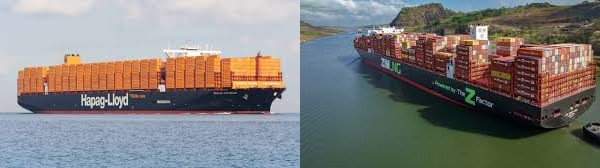
Hapag-Lloyd eyes ZIM acquisition, workers push back

HAMBURG: Hapag-Lloyd, the German shipping company traded in Frankfurt with a market value of 20 billion euros, is interested in acquiring ZIM. However, ZIM’s workers’ committee opposes the move, citing security concerns. They argue that the German company’s shareholders include funds from Saudi Arabia and Qatar, which they claim could pose a risk to Israel.

The Saudi and Qatari shareholders together hold about 35% of Hapag-Lloyd’s shares.

The ZIM board of directors stated: “As previously announced, the board of directors is conducting a strategic review process to explore possible alternatives for delivering value to shareholders, including the potential sale of the company. The process is ongoing, and several entities have expressed interest. The board will not comment on the identity of these entities or the content of their proposals until an agreement is reached or the review process is otherwise completed.”

On Wednesday, the ZIM workers’ committee wrote a letter to Israel’s Minister of Transport, Miri Regev, requesting that the acquisition be blocked. They argue that the deal could endanger the national supply chain, as it would give Saudi and Qatari elements indirect influence over Israel’s maritime lifeline.

The state holds a “golden share” in ZIM, and would need to approve the acquisition by Hapag-Lloyd.

Other international companies are also reportedly interested in acquiring ZIM. This follows Eli Glickman joining Rami Ungar in submitting the first purchase offer.

ZIM directly employs around 1,000 people in the country.

According to the committee, 98% of Israel’s trade by weight relies on maritime transport. “ZIM is the only shipping company that operated during the Swords of Iron war, delivering food, medicine, ammunition, and critical military equipment,” the committee said. “If the company passes into the hands of potentially hostile foreign investors, Israel could lose this capability entirely.”

Last week, Calcalist reported that an international shipping company is in talks with the investment bank Evercore to acquire control of ZIM. The negotiations were believed to be centered on a price higher than the bid submitted by Glickman and Ungar, whose offer was rejected by ZIM’s board of directors.

In August, Calcalist revealed that Ungar was the businessman who joined Glickman and four other senior executives in a management buyout attempt in which the group sought to acquire the company. Their proposal, as far as is known, was $25 per share, valuing ZIM at $2.3-$2.4 billion, compared with its trading value at the time of $1.87 billion.

ZIM’s board, chaired by former Bank Hapoalim chairman Yair Seroussi, rejected the bid and hired Evercore to examine strategic alternatives for the company’s sale. Although ZIM is not currently controlled by a single shareholder, the process could lead to a new controlling interest.

SIIM and CMA CGM sign strategic tropical fruit agreement

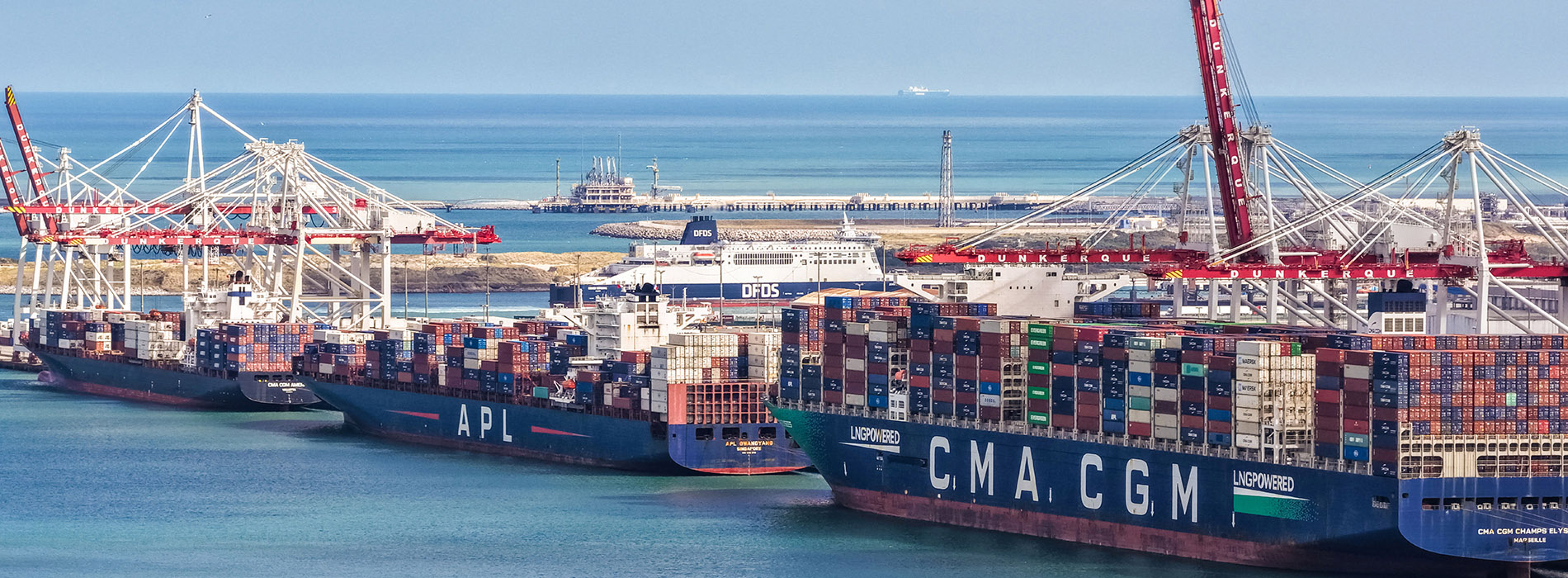
RUNGIS: SIIM ((Société Internationale d’Importation de Fruits et Légumes) and CMA CGM have signed a strategic agreement for 2026 covering the weekly transport of more than 70 refrigerated containers of pineapples and bananas from Latin America to Dunkirk.

With this flow, SIIM said it will consolidate over 5,000 containers originating from Africa and Latin America in 2026.

This partnership ”confirms Dunkirk’s position as France’s leading port for tropical fruits”, a statement noted, strengthening a ”high-performing logistics and food supply chain”.

”After several months of jointly developing a logistics solution from Latin America, CMA CGM and SIIM, a subsidiary of the Omer-Decugis & Cie Group, are strengthening their partnership with the signing of an agreement for the transport of bananas and pineapples from Colombia, Costa Rica and Ecuador to Dunkirk,” the groups confirmed.

The agreement represents an annual volume of more than 80,000 tonnes, now carried by CMA CGM.

From January 2026, more than 70 refrigerated containers will be transported each week on the new configuration of the Newfi (PCRF XL) service linking Latin America to Northern Europe, operated by CMA CGM, with exclusive discharge in Dunkirk, the first European port of call served.

These flows, handled by SIIM – specialising in the production, import and ripening of tropical fruits and vegetables and previously routed through the ports of Rotterdam and Antwerp – will now be directed to the French port.

“By choosing CMA CGM and the Port of Dunkirk for the transport of its fruit, SIIM confirms the reliability and performance of our offer connecting Latin America, the Caribbean and Northern Europe,” said Pascal Hirn, Senior Vice-president of CMA CGM, in charge of shipping lines.

“The strengthening of this service, supported by the arrival of new-generation vessels and the port’s operational capacities, enables us to provide a regular, competitive and sustainable service.

“Together with Dunkirk Port, we are fully committed to supporting the tropical fruit sector and meeting the expectations of French and European importers,” he outlined.

Vincent Omer-Decugis, Chairman and CEO of Omer-Decugis & Cie, highlighted the underlying numbers behind the agreement.

“With this bilateral agreement, which further consolidates our partnership with the CMA CGM Group, 50 per cent of our pineapple and banana volumes will now transit via Dunkirk, in addition to the 20,000 tonnes we were already routing from the African continent (mangoes, coconuts and other exotic fruits) to the French port,” he said.

”This strategic agreement is fully aligned with our 2030 development plan.

“It also reflects our ambitions for a decarbonised and sustainable logistics model, supported by the opening of our new logistics and ripening facility, located immediately next to the container terminal, planned for summer 2027 and whose construction is due to begin next spring,” he said.

Daniel Deschodt, Deputy Managing Director of Dunkirk Port, said the agreement showcased “excellence-driven ecosystem” dedicated to the transport and logistics of temperature-controlled goods at the Port of Dunkirk.

“The strengthening of CMA CGM’s Newfi service expands import opportunities from Latin America, while SIIM confirms, year after year, that it considers Dunkirk a major hub for the logistical handling of its flows,” Deschodt commented.

”The commissioning in 2027 of a major ripening and logistics platform, located immediately adjacent to the container terminal, will bring added value and job creation for the entire port community.

”I sincerely thank our two partners for their trust,” he added.

Omer-Decugis & Cie said that the agreement is part of its ambition to make Dunkirk the main port of destination for its products.

Beyond its West African mango and coconut campaigns, SIIM will now route more than 10,000 TEU through the port in 2026.

”Supported by Dunkirk Port and the wider port community, this partnership further consolidates the French port’s position as a major logistics hub in Northern Europe for the distribution of temperature-controlled fruits and vegetables, and strengthens its status as a preferred gateway for fruits from Africa and Latin America,” it stated.

CMA CGM is now enhancing its service connecting Latin America, the Caribbean and Northern Europe.

The service, linking the French West Indies, the Caribbean and Northern Europe, will increase from six to seven vessels, with enhanced reefer capacity and a new call at Puerto Antioquia, which will facilitate banana exports from Colombia.

”CMA CGM is thus strengthening its role as a logistics partner for imports from Latin America and the Caribbean, essential to France’s food supply,” it pointed out.

As the first port of call, Dunkirk will benefit from a reliable, regular service suited to the needs of French and European importers, thanks to the Flandres Terminal operated by CMA CGM.

CMA CGM also contributes to the decarbonisation of this service through its LNG-powered fleet and through the port’s innovative equipment, such as LNG bunkering and shore-to-ship power connection.

”This shared momentum confirms Dunkirk’s position as a benchmark port for reefer flows and as a pioneer in the energy transition,” the statement concluded.