NEW DELHI: INDIA – RUSSIA: A Time-Tested Progressive Partnership, Anchored in Trust & Mutual Respect
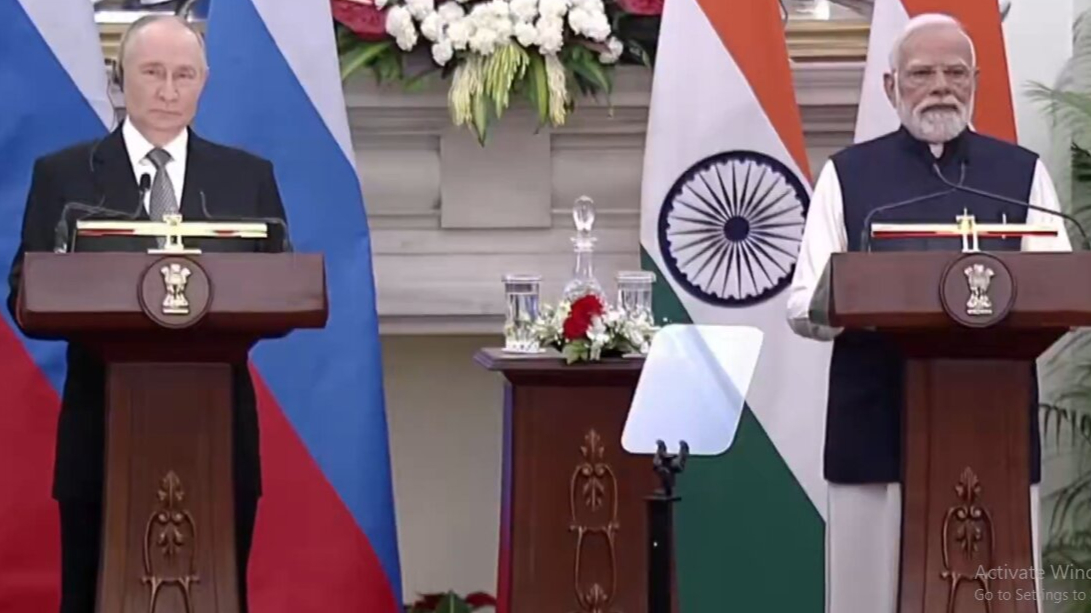
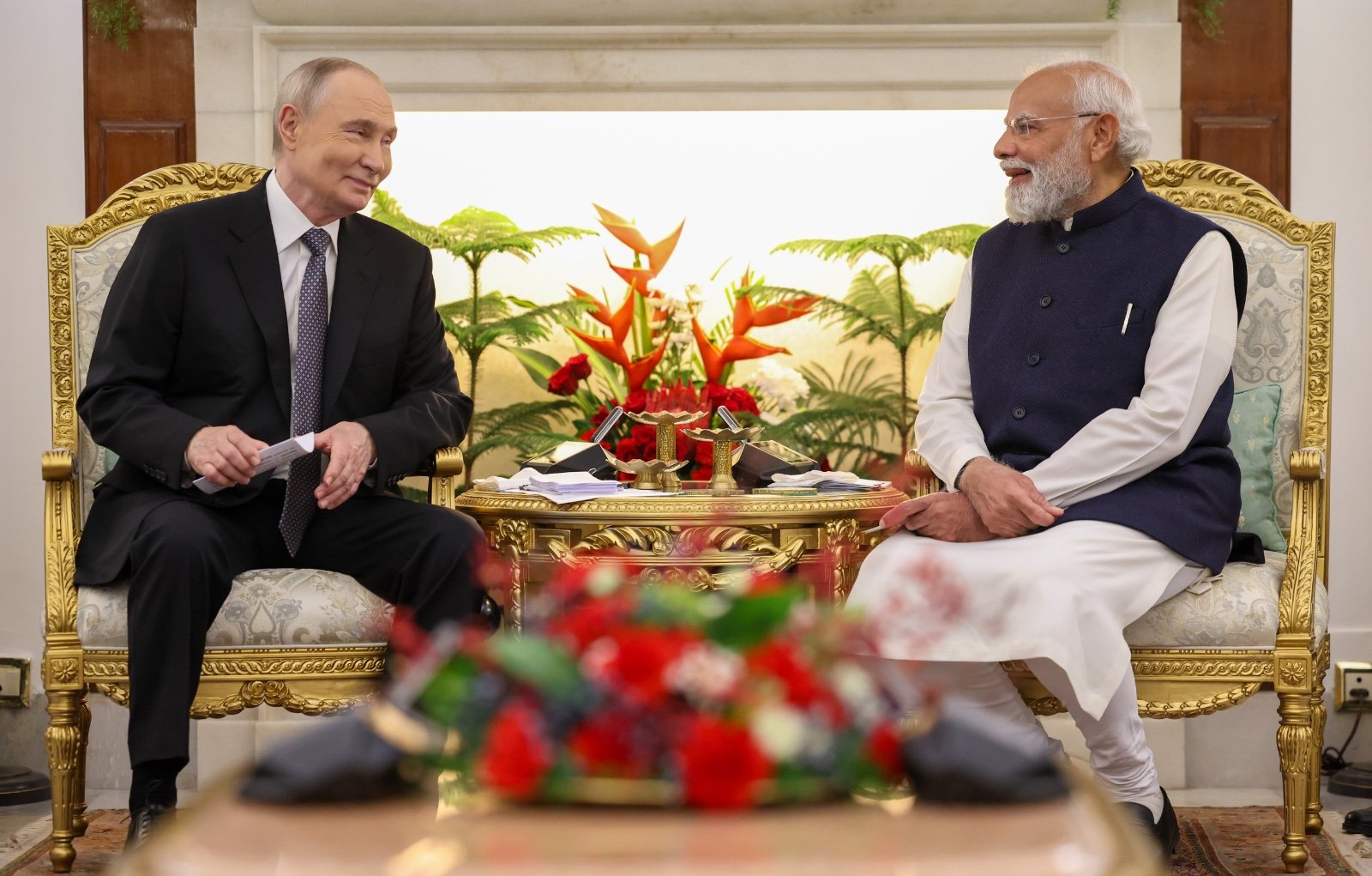
At the invitation of the Prime Minister of India Shri Narendra Modi, the President of the Russian Federation, H.E. Mr. Vladimir Putin, paid a State visit to India on December 04-05, 2025 for the 23rd India-Russia Annual Summit.
The Leaders reaffirmed their support for further strengthening of the Special and Privileged Strategic Partnership between India and Russia. This year marks the 25th anniversary of the Declaration on Strategic Partnership between India and Russia, established during the first State Visit of H.E. President Vladimir Putin to India in October 2000.
The Leaders emphasized the special nature of this long standing and time-tested relationship, which is characterised by mutual trust, respect for each other’s core national interests and strategic convergence. They underscored that, as major powers with shared responsibilities, this important relationship continues to be an anchor of global peace and stability that should be ensured upon the basis of equal and indivisible security.
The Leaders positively assessed the multi-faceted mutually beneficial India-Russia relations that span all areas of cooperation, including political and strategic, military and security, trade and investment, energy, science and technology, nuclear, space, cultural, education and humanitarian cooperation. It was noted with satisfaction that both Sides are actively exploring new avenues for cooperation while further strengthening cooperation in the traditional areas.
The Leaders underlined that India-Russia ties have remained resilient in the backdrop of the prevailing complex, challenging and uncertain geopolitical situation. Both Sides have strived to forge a contemporary, balanced, mutually beneficial, sustainable and long-term partnership. Development of India-Russia relations across the entire spectrum is a shared foreign policy priority. The Leaders agreed to make all efforts to unlock the full potential of the strategic partnership.
The Leaders welcomed the opening of two Consulates General of India in Yekaterinburg and Kazan, and looked forward to their early operationalisation to further strengthen inter-regional cooperation, trade and economic relations and people to people ties.
The Leaders noted with satisfaction the continued intensification of contacts at all levels since the last Summit, including meetings between them on the sidelines of the 16th BRICS Summit in Kazan and the 25th SCO Summit in Tianjin; holding of the 26th Session of the India-Russia Intergovernmental Commission (IRIGC) on Trade, Economic, Scientific, Technological and Cultural Cooperation (IRIGC-TEC) co-chaired by the External Affairs Minister of India and the First Deputy Prime Minister of Russia and the 22nd Session of the IRIGC on Military & Military-Technical Cooperation (IRIGC-M&MTC) co-chaired by the Defence Ministers of the two countries; visits of Lok Sabha Speaker, External Affairs Minister, Raksha Mantri, Minister of Railways, Information Technology, and Information & Broadcasting, Ministers of State of Home Affairs, Defence, Youth Affairs & Sports, Textiles and Vice Chairman NITI Aayog from the Indian side; visits of Russia’s Chairman of the State Duma, First Deputy Prime Minister, Deputy Prime Minister, Minister of Energy, Minister of Culture; and holding of strategic dialogue at the level of National Security Advisors, Foreign Office Consultations, consultations on UN issues, meeting of the Joint Working Group on Counter Terrorism, etc.
Trade and Economic partnership
The Leaders reaffirmed their shared ambition to expand bilateral trade in a balanced and sustainable manner, including by increasing India’s exports to Russia, strengthening industrial cooperation, forging new technological and investment partnerships, especially in advanced high-technology areas and finding new avenues and forms of cooperation.
The Leaders welcomed the adoption of the Programme for the Development of Strategic Areas of India – Russia Economic Cooperation till 2030 (Programme 2030).
The Leaders appreciated the ongoing intensification of the joint work on a Free Trade Agreement on goods between India and the Eurasian Economic Union covering sectors of mutual interest. They also directed both Sides to intensify efforts in negotiations on a mutually beneficial agreement on the promotion and protection of investments.
The Leaders welcomed the results of the 25th and 26th Sessions of the India-Russia Intergovernmental Commission on Trade, Economic, Scientific, Technical and Cultural Cooperation (IRIGC-TEC) and the India-Russia Business Forum held in New Delhi (November 2024) and Moscow (August 2025) respectively.
The Sides underline the importance of an open, inclusive, transparent and non-discriminatory multilateral trade system with the World Trade Organization at its core. Both Sides emphasised that addressing tariff and non-tariff trade barriers, removing bottlenecks in logistics, promoting connectivity, ensuring smooth payment mechanisms, finding mutually acceptable solutions for issues of insurance and reinsurance and regular interaction between the businesses of the two countries are among the key elements for timely achievement of the revised bilateral trade target of USD 100 billion by 2030.
Russia and India have agreed to continue jointly developing systems of bilateral settlements through use of the national currencies in order to ensure the uninterrupted maintenance of bilateral trade. Additionally, the Sides have agreed to continue their consultations on enabling the interoperability of the national payment systems, financial messaging systems, as well as central bank digital currency platforms.
The Sides welcomed steps to ensure long-term supply of fertilizers to India and discussed the potential establishment of joint ventures in this area
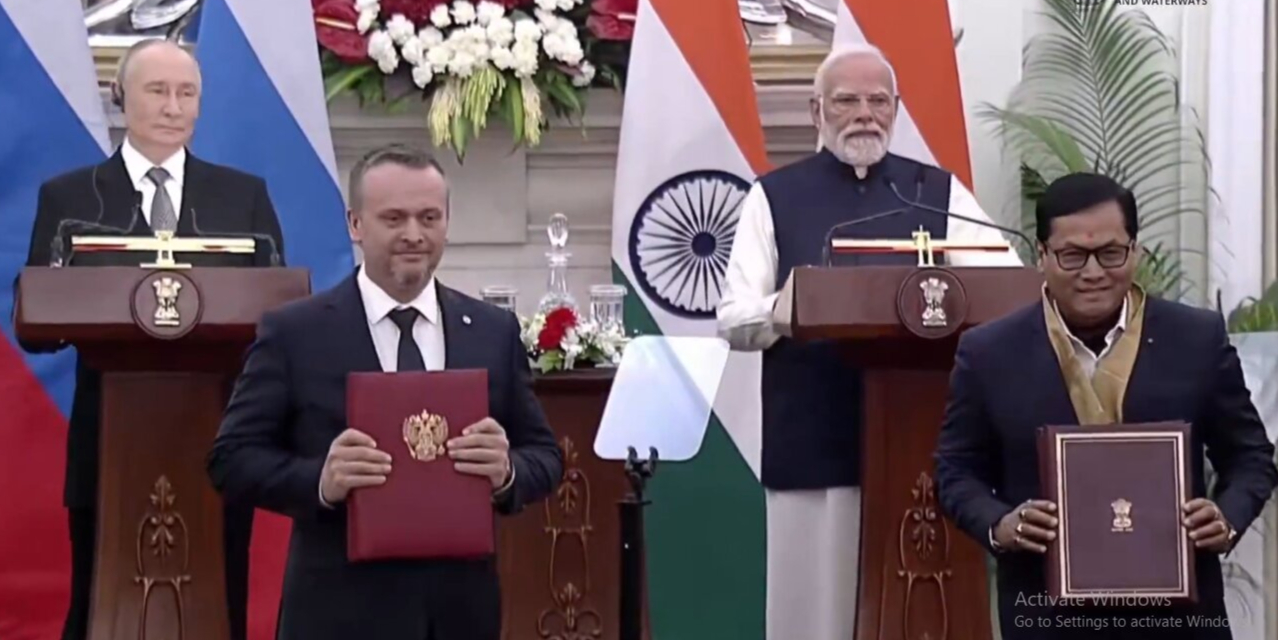
The Sides welcomed the signing of agreements related to mobility of skilled workers.
The Russian Side welcomed the participation of Indian delegations in the Saint Petersburg International Economic Forum (June 2025) and the Eastern Economic Forum (September 2025). The two Sides noted the contribution of the India-Russia Business Dialogue organised on the sidelines of these economic forums for promotion of bilateral trade, economic and investment cooperation.
The Leaders noted the importance of productive and mutually beneficial bilateral trade in mineral resources, including energy sources, precious stones and metals, as well as critical raw materials for the reliability of the international supply chains. Efficient cooperation in this area, carried out by Russia and India as sovereign states, is a significant component of their national security and social wellbeing.
Energy partnership
The two Sides discussed and commended their wide ranging cooperation in the energy sector as a significant pillar of the Special and Privileged Strategic Partnership. The Sides noted the current and potential cooperation between Indian and Russian companies in fields such as oil and oil products, oil refining and petrochemical technologies, oilfield services and upstream technologies and related infrastructure, LNG and LPG related infrastructure, various existing projects in their countries, underground coal gasification (UCG) technology, nuclear projects, etc. They also noted the importance of expeditious resolution of issues related to investment projects in this area, and agreed to resolve the various concerns being faced by their investors in the energy sector.
Transport and Connectivity
The two Sides agreed to deepen cooperation in building stable and efficient transport corridors, with the focus on expanding logistics links for improving connectivity and enhancing infrastructure capacity to support the International North-South Transport Corridor (INSTC), the Chennai–Vladivostok (Eastern Maritime) Corridor, and the Northern Sea Route. They welcomed the signing of the MoU on the Training of Specialists for Ships Operating in Polar Waters.
The Sides noted the fruitful cooperation between the railways of Russia and India, aimed at establishing partnerships in the field of mutually beneficial technology exchange.
Cooperation in the Russian Far East and Arctic
The two Sides confirmed their readiness to intensify trade and investment cooperation in the Far East and the Arctic zone of the Russian Federation. The Program of India-Russia Cooperation in Trade, Economic and Investment Spheres in the Russian Far East for the period from 2024-2029 provides the necessary framework for further cooperation between India and the Russian Far East region, especially in the sectors of agriculture, energy, mining, manpower, diamonds, pharmaceuticals, maritime transport, etc.
Both Sides underscored the importance of holding regular bilateral consultations on Arctic related issues and welcomed the progress made in multi-faceted bilateral cooperation on the Northern Sea Route. The Russian Side appreciated the participation of the Indian delegation in the 6th International Arctic Forum held in Murmansk in March 2025. The Indian Side expressed its readiness to play an active role as an Observer in the Arctic Council.
Civil Nuclear Cooperation, Cooperation in Space
The Sides confirmed their intention to broaden cooperation in nuclear energy, including fuel cycle, life cycle support for operating Kudankulam Nuclear Power Plant (KKNPP) and non-power applications, as well as to elaborate new agenda of interaction in the field of peaceful use of atomic energy and related high technologies. The Sides noted the importance of the cooperation in the peaceful uses of nuclear energy as a significant component of the strategic partnership taking into account the plans of the Government of India to increase India’s nuclear energy capacity to 100 GW by 2047.
The Sides welcomed the progress achieved in implementation of KKNPP including the construction of the remaining NPP units and agreed on adhering to the timeline for supplies of equipment and fuel.
The Sides noted the importance of further discussion on the second site in India for NPP; the Indian Side will strive to finalize formal allotment of the second site in accordance with earlier signed agreements.
The Sides agreed to accelerate technical and commercial discussions on the VVER of the Russian design, research and joint development of NPPs, localization and joint manufacturing of nuclear equipment and fuel assemblies for Russian designed large capacity NPPs subject to terms and conditions as mutually agreeable.
Noting the importance of cooperation in Space, the two Sides welcomed the enhanced partnership between the Indian Space Research Organisation and the Russian State Space Corporation “Roscosmos” in the use of outer space for peaceful purposes, including in the human spaceflight programs, satellite navigation and planetary exploration. They noted the progress in mutually beneficial cooperation in rocket engine development, production and use.
Military and Military Technical Cooperation
Military and Military-Technical Cooperation has traditionally been a pillar of the Special and Privileged Strategic Partnership between India and Russia, which has grown from strength to strength through several decades of joint efforts and fruitful cooperation, steered by the IRIGC-M&MTC.
The Leaders welcomed the outcomes of the 22nd Session of the IRIGC- M&MTC held in New Delhi on December 4, 2025. Responding to India’s quest for self-reliance, the partnership is reorienting presently to joint research and development, co-development and co-production of advanced defence technology and systems.
The Leaders expressed satisfaction with regular military contacts, including the meeting of Defence Ministers in Qingdao in June 2025 on the sidelines of the SCO Member-States’ Defence Ministers’ Meeting. Both Sides appreciated the Joint Military Exercises INDRA of the Armed Forces and reaffirmed their commitment to maintain the momentum of joint military cooperation activities and expand military delegation exchanges.
Both Sides agreed to encourage joint manufacturing in India of spare parts, components, aggregates and other products for maintenance of Russian origin arms and defence equipment under Make-in-India program through transfer of technology and setting up of joint ventures for meeting the needs of the Indian Armed Forces as well as subsequent export to mutually friendly third countries.
Cooperation in Science & Technology
Both Sides called for ramping up government-to-government, academia and private sector collaboration to promote application of critical and emerging technologies.
Recognizing the strategic importance of critical minerals for emerging technologies and advanced manufacturing, the two Sides expressed interest in deepening cooperation in exploration, processing and recycling technologies of critical minerals and rare earths.
Emphasizing the importance of joint research in science, technology and innovation, the two Sides called for strengthening cooperation under the “Roadmap for Science, Technology & Innovation Cooperation”. They agreed to facilitate collaboration between government and private sector to harness opportunities for start-ups and SMEs of the two countries to address societal challenges through innovative technologies, including joint R&D and co-development of technologies. They confirmed their interest in further developing cooperation in the sphere of digital technologies, including those related to information protection, security of critical infrastructure and law enforcement. Both Sides agreed to design and implement soft support programs for start-ups to enable knowledge exchange, capacity building, and greater engagement of innovators and entrepreneurs.
Taking into account the existing rich experience of interaction between India and Russia in the field of science and higher education, the Sides expressed mutual interest in developing partner ties between educational and scientific organizations, including the implementation of various forms of academic mobility, educational programmes, scientific and research projects and the holding of specialized international exhibitions, conferences, seminars. Emphasizing the importance of joint research in science, technology and innovations, the Sides confirmed their readiness to expand cooperation within the framework of the Roadmap for Indian-Russian Cooperation in Science, Technology and Innovations.
Cultural cooperation, Tourism and people to people exchanges
The two Sides agreed that cultural interaction and people to people exchanges are an important component of the India-Russia Special and Privileged Strategic Partnership. They appreciated the participation in major international cultural forums, book fairs, festivals and art competitions organized in both countries and welcomed the holding on a parity basis, of Cultural Exchange Festivals in their countries, aimed at the fullest demonstration of Indian and Russian culture.
Both Sides supported the idea of expanding cooperation in the film industry, including development of joint film production and mutual participation in international film festivals held in India and Russia.
The two Sides appreciated the steady increase in tourist exchanges between Russia and India and welcomed simplification of visa formalities, including introduction of e-Visa by both countries. They agreed to continue the work on further simplification of the visa regime in future.
The two Sides noted with appreciation the enhanced exchanges and contacts between the experts, think-tanks and institutes of India and Russia. Over the years, this track of dialogue has promoted increased mutual understanding between Indian and Russian strategic and policy making circles and businesses so as to further strengthen the Strategic Partnership.
Recognizing the traditionally strong cooperation between India and Russia in the sphere of education, both Sides appreciated efforts to ensure well-being of students and agreed to continue their efforts in promoting educational linkages between universities and educational institutions.
Cooperation in the UN and multilateral fora
Both Sides noted the high level of political dialogue and cooperation between them on issues at the UN and agreed to deepen it further. They stressed the importance of reinvigorating multilateralism, with a central coordinating role played by the United Nations. They also underlined the primacy of respect for international law and emphasized their commitment to the purposes and the principles of the UN Charter.
Both Sides called for comprehensive reform of the UN Security Council to reflect contemporary global realities and to make it more representative, effective and efficient in dealing with issues of international peace and security. Russia reiterated its steadfast support for India’s permanent membership in a reformed and expanded UN Security Council.
The two Sides highlighted their cooperation within the G20 format and agreed to intensify it. They emphasized that the important practical legacy of India’s G20 Presidency in 2023 was the consolidation of the priorities of the countries of the Global South in the agenda of the main platform for international economic and financial cooperation, as well as the entry of the African Union into the ranks of full members of the forum. They welcomed the holding of the Voice of Global South virtual summits under the Indian presidency, which sent an important signal in favour of strengthening the position of developing countries in global affairs.
They emphasized that the G20 is the premier international economic forum that provides a platform for dialogue of both emerging and developed economies on an equal and mutually beneficial footing. They recognized the importance of the continued and productive functioning of the G20, based on consensus and focusing on its key mandate.
Both Sides stressed the importance of strengthening their BRICS partnership and further committed themselves to promote cooperation in the expanded BRICS under the three pillars of political and security, economic and financial, cultural and people-to-people cooperation. They reaffirmed their commitment to the BRICS spirit of mutual respect and understanding, sovereign equality, solidarity, democracy, openness, inclusiveness, collaboration and consensus. Russia pledged its full support for India’s upcoming BRICS Chairship in 2026.
The Sides reiterated the importance of their joint work within the framework of the Shanghai Cooperation Organization (SCO) for further deepening Special and Privileged Strategic Partnership between Russia and India.
India commended the Russian side for the successful hosting of the SCO Council of Heads of Government Meeting in Moscow on 17-18 November 2025 under the Chairmanship of Hon’ble Prime Minister of the Russian Federation. The Russian side appreciated India’s initiative to establish SCO Civilizational Dialogue Forum, the inaugural session of which will be held in India in 2026.
The Sides noted SCO’s increasing role in the formation of representative, democratic, fair multipolar world order, based on universally recognized principles of international law, and cultural and civilizational diversity.
Both sides emphasized the importance of further strengthening SCO’s potential and cooperation in the fields of politics, security, economy, culture and humanitarian ties. In this context the two Sides stressed the necessity of promoting modernization of SCO, especially in the fields of countering terrorism, extremism, separatism, drug trafficking, cross-border organized crime, and information security threats. They will pay special attention to establishment of the Universal Center on Countering Security Challenges and Threats in Tashkent and Counter-Narcotics Center in Dushanbe.
The two Sides agreed to continue interaction within G20, BRICS and SCO on key issues such as efforts towards reformed multilateralism, reform of international economic governance institutions and Multilateral Development Banks, contributing to the achievement of the SDGs in its economic, social and environmental dimensions, stimulating economic growth, enhancing sustainability and developing resilience of international supply chains, including critical minerals, compliance with free and fair trade norms and climate change.
The two Sides intend to further strengthen cooperation within the UN Committee on the Peaceful Uses of Outer Space (UN COPUOS), including the issues of the long-term sustainability of outer space activities.
Both Sides reaffirmed their commitment to further strengthening global efforts for non-proliferation of weapons of mass destruction. Russia expressed its strong support for India’s membership of the Nuclear Suppliers Group. The two Sides urged all members of the international community to work towards enhancing the level of mutual trust in order to promote global peace and security. The Sides emphasized the non-proliferation nature of export controls and their intention to continue cooperation in this area with the aim of ensuring balance between security and commercial consideration, as well as peaceful uses of technology.
The Sides underlined the importance of strengthening cooperation within various regional fora, aimed at deepening regional peace and security, including the East Asia Summit, ASEAN Regional Forum, ASEAN Defence Ministers’ Meeting Plus.
The Parties the need for strict compliance with and consistent strengthening of the Convention on the Prohibition of the Development, Production and Stockpiling of Bacteriological (Biological) and Toxin Weapons and on their Destruction (BTWC), including through its institutionalization, as well as the adoption of a legally binding protocol with an effective verification mechanism. They oppose the establishment of any mechanisms that duplicate functions of the BTWC.
The Sides the urgent need to start negotiations on a legally binding instrument on prevention of an arms race in outer space with the prohibition of the placement of weapons in outer space and the threat or use of force in outer space, from outer space or against outer space. The Sides note that the basis for such a document could be the draft of the Treaty on the Prevention of the Placement of Weapons in Outer Space and of the Threat or Use of Force Against Outer Space Objects as well as the report of the relevant Group of Governmental Experts, adopted in 2024.
The leaders, reaffirming their commitment to the principles reflected in international treaties that ensure the conservation of biological diversity and the protection of rare and endangered species, especially migratory bird species, that uniting our countries.
Both Sides welcomed the adoption of the Framework Agreement by the Russian side to join the International Big Cat Alliance (IBCA). The Indian Side looked forward to Russia’s early joining of the International Solar Alliance and the Coalition of Disaster Resilient Infrastructure (CDRI).
The Sides agreed to continue the development of joint approaches to addressing global economic challenges, mobilising increased access to climate finance and technologies for developing countries and economies in transition, and ensuring a reasonable reform of international institutions of economic governance, in particular multilateral development banks.
Counter Terrorism
Both Sides reaffirmed their commitment to strengthening bilateral and multilateral cooperation in the field of combating such common challenges and threats such as terrorism, extremism transnational organized crime, money laundering, terrorist financing and illicit drug trafficking.
The two Leaders reaffirmed their strong commitment to preventing and countering terrorism in all its forms and manifestations including cross-border movement of terrorists and terrorist financing networks and safe havens. They condemned in the strongest terms the terrorist attack in India in Pahalgam, Jammu and Kashmir, on April 22, 2025, and in Russia at the Crocus City Hall in Moscow on March 22, 2024. They unequivocally condemned all acts of terrorism as criminal and unjustifiable, regardless of their motivation by any religious or ideological pretexts, whenever, wherever, and by whomsoever they may be committed. They also called for concerted actions against all UN-listed terrorist groups and entities, including Al Qaeda, ISIS/Daesh and their affiliates, aimed at rooting out terrorists’ safe havens, countering the spread of terrorist ideology, eliminating terrorist financing channels and their nexus with transnational crime, and halting cross-border movement of terrorists, including foreign terrorist fighters.
The Sides called for an uncompromising fight against international terrorism and extremism in all their forms and manifestations, noting the importance of increasing cooperation in this area, without hidden agendas and double standards on the solid basis of international law and the UN Charter. Besides, they stressed the need for firm implementation of relevant resolutions of the UN Security Council, the UN General Assembly, as well as the balanced implementation of the UN Global Counter-Terrorism Strategy.
Both Sides emphasized the primary responsibility of States and their competent authorities in combating terrorism. They called for a zero-tolerance policy on terrorism and expeditious finalization and adoption of the Comprehensive Convention on International Terrorism in the UN framework, as well as implementation of the UNGA and the UNSC resolutions on countering terrorism and violent extremism conducive to terrorism.
The two Sides recalled the Special Meeting of the UNSC Counter Terrorism Committee (CTC) held in India in October 2022 under India’s Chairship of the CTC and welcomed the unanimously adopted Delhi Declaration on countering the use of new and emerging technologies for terrorist purposes. They noted that the declaration aims to cover the main concerns surrounding the terrorist exploitation of Information and Communications Technology, such as payment technologies, social media platforms and fundraising methods and misuse of unmanned aerial vehicles (UAVs or drones). Both Sides also expressed their readiness to develop further cooperation in this field with a special focus on preventing radicalization and the spread of extremist ideology in the online space. In this regard, they noted with satisfaction the positive dynamics of strengthening relevant mechanisms within the SCO and BRICS formats.
Regional and International Issues
Both Sides noted with appreciation the close coordination between India and Russia on Afghanistan, including through the dialogue mechanism between the Security Councils of both countries. They emphasized the important role of the Moscow Format meetings.
The Leaders welcomed the counter-terrorism measures against international terrorist groups, including ISIS and ISKP and their affiliates, and expressed confidence that the fight against terrorism in Afghanistan would be comprehensive and effective. They stressed the need to ensure urgent and uninterrupted humanitarian assistance to the Afghan people.
Both Sides reiterated their commitment to peace and stability in the Middle East/ West Asia, calling for restraint, protection of civilians and compliance with international law, and the need to refrain from taking actions that could further escalate the situation and compromise regional stability. They stressed the importance of resolving the Iran nuclear issue through dialogue. They expressed concern over the humanitarian situation in Gaza and strongly stressed the importance for all parties concerned to remain committed to agreements and understandings reached between them for cessation of conflict, humanitarian assistance and a sustainable peace.
The Sides noted the importance of expanding efforts to combat climate change and achieving the goals of the United Nations Framework Convention on Climate Change UNFCCC and the Paris Agreement. The Sides welcomed the 1st meeting of the Joint Russia-India Working Group on the issues of climate change and low-carbon development held on September 10, 2025 in New Delhi within the framework of the Memorandum of Understanding on the issues of climate change and low-carbon development. The Sides agreed to intensify the bilateral dialogue on implementing mechanisms of the Article 6 of the Paris Agreement, developing low-carbon technologies and using sustainable finance instruments.
The Sides agreed to continue interaction within G20, BRICS, SCO on the key issues of climate change. The Sides welcomed the results achieved by a coordinated work within the BRICS Contact Group on Climate Change and Sustainable Development; including the launch of the BRICS Climate Research Platform and the BRICS Laboratory for Trade, Climate and Sustainable Development. Both sides encouraged fruitful cooperation in the area of addressing climate change in BRICS during the India Chairship in grouping in 2026.
The Sides noted with satisfaction the resilience of the India-Russia Special and Privileged Strategic Partnership and the convergent and complementary approaches of their foreign policy priorities, and reaffirmed their commitment for further strengthening it. They stressed that India and Russia as major powers will continue to strive for global peace and stability in a multipolar world as well as in a multipolar Asia.
H.E. President Vladimir Putin thanked Prime Minister Shri Narendra Modi for the gracious hospitality extended to him and his delegation in New Delhi and invited him to visit Russia in 2026 for the 24th India-Russia Annual Summit.