Home Blog Page 557

Piyush Goyal to visit Israel for high-level talks on trade, technology and investment

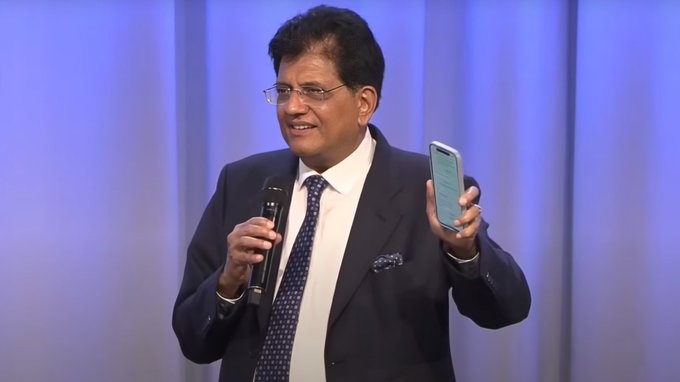
NEW DELHI : Union Minister of Commerce & Industry Shri Piyush Goyal, will be undertaking an official visit to Israel from 20–22 November 2025 on the invitation of Minister of Economy and Industry of Israel, Mr. Nir Barkat. The visit underscores the growing strategic and economic engagement between India and Israel and reflects the shared commitment of both countries to deepen bilateral cooperation across trade, technology, innovation and investment. Shri Goyal will be accompanied by a 60-member business delegation, facilitated by CII, FICCI, Assocham and Start-up India.

During the visit, Shri Goyal will hold high-level bilateral meetings with senior Israeli leadership. Apart from his Israeli counterpart Mr. Nir Barkat, Minister of Economy and Industry, Shri Goyal is also expected to meet a few other Ministers. Discussions are expected to focus on strengthening trade and investment ties, advancing cooperation in key sectors such as agriculture, water, defence, emerging technologies, life sciences, infrastructure, advanced manufacturing and exploring opportunities for enhanced collaboration between businesses of both countries including start-ups. Progress on the proposed India–Israel Free Trade Agreement (FTA) is also expected to be reviewed.

As part of the programme, the Minister will participate in the India–Israel Business Forum, involving leading business associations and industry representatives from both sides. The Forum will include opening and closing plenary sessions, technical discussions, and structured B2B engagements aimed at expanding commercial partnerships, promoting investments, and identifying avenues for joint ventures in priority sectors. In addition, the fourth edition of the high-level CEOs Forum would also be held with prominent CEOs from both sides.

The Minister will also meet senior leaders from major Israeli companies in fields such as agriculture, desalination and waste water treatment, cyber security, smart mobility, infrastructure among others, and interact with prominent Israeli investors.

In addition to official engagements in Tel Aviv, the programme includes visits to key institutions and innovation hubs offering insights into Israel’s cutting-edge technological ecosystem. Cultural and community interactions including engagements with the Indian community, business leaders of Indian-origin also form part of the itinerary.

The visit is expected to further reinforce the longstanding partnership between India and Israel, strengthen economic linkages, and create new pathways for collaboration in areas of mutual interest.
Russia to soon approve nearly 25 Indian fishery units for exports

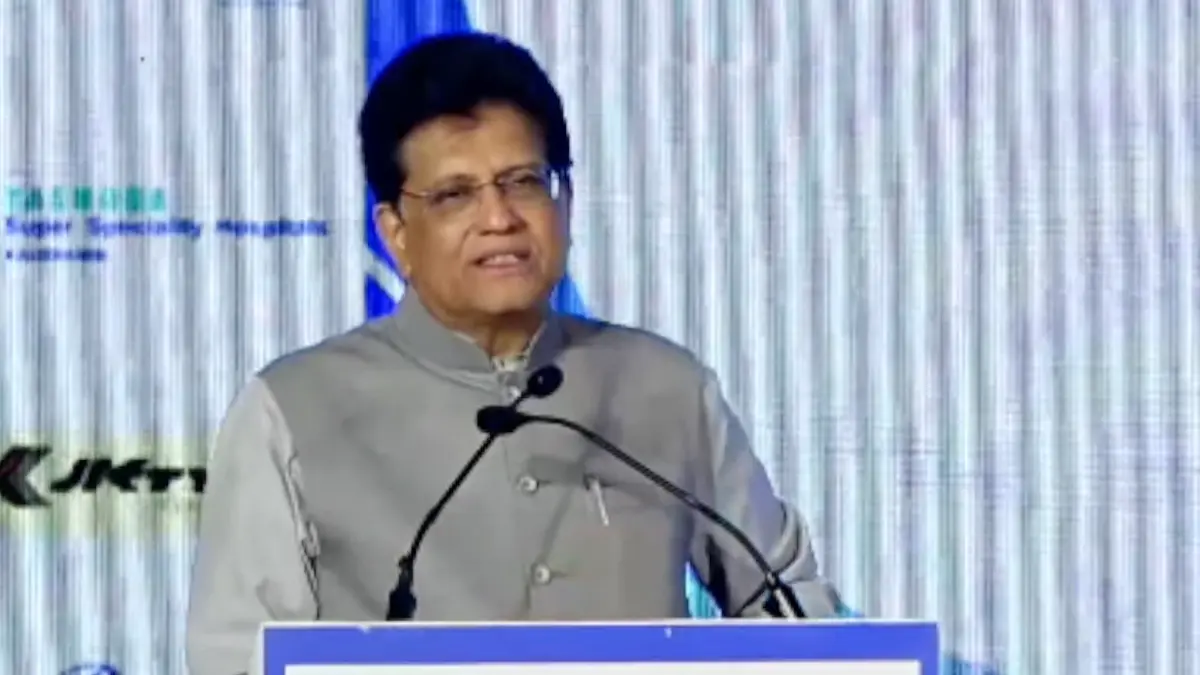
NEW DELHI : Russia is on course to approve nearly 25 fishery units in India, which will make them eligible to supply to the country, Commerce and Industry Minister Shri Piyush Goyal said on Tuesday (November 18, 2025).

Russia Approves Nearly 25 Fishery Establishments
During an interaction with reporters, the Minister disclosed that Russian authorities have either approved or are in the final stages of approving nearly 25 Indian fishery establishments for exports.

“Russia has also inspected and approved, or is in the course of approval, nearly 25 fishery establishments,” Goyal said.

This development follows sustained diplomatic and technical engagements and is expected to give Indian shrimp and marine product exporters fresh access to one of the world’s largest markets for seafood.

EU Relists Over 100 Indian Units
In a parallel breakthrough, more than 100 Indian fishery units have been either newly listed or relisted by the European Union over the past year after rigorous inspections and compliance upgrades.

“We have been engaged with the European Union and have successfully got more than 100 fishery establishments either relisted or listed for the first time,” the Minister stated.

“Exports Will Only Grow,” Asserts Goyal
Addressing concerns over temporary hiccups in certain markets, Goyal struck a confident note: “I think there may have been a small blip, but shrimp exports will only grow, not reduce.”

He reiterated his broader outlook on India’s trade performance: “India’s exports continue to grow and will continue to grow in the future.”

FTA with EU in Final Stages
The Minister also shared that negotiations for a comprehensive free-trade agreement with the European Union are progressing well.

“We are having very good engagement with the EU and I am very confident that in the coming months we should be able to reach an understanding with the EU, subject, of course, to sorting out some of the last-minute or last-mile issues which are currently under negotiation,” Goyal said.

He added that India will announce the pact only when it is “fair, equitable and balanced.”

Stakeholder Consultations Drive Policy
When asked about the roadmap and stakeholder involvement, Goyal underlined the government’s approach.

“As you are aware, Prime Minister Shri Narendra Modi and his government are a listening government and a listening government is always engaging with stakeholders to get newer ideas,” he remarked.

The Minister said regular interactions with domestic industry, FDI and FII investors are helping shape policies that attract higher investment and expand market access.

Source : Republic

PPA welcomes Shri T. Venu Gopal as new Deputy Chairman

PARADIP : Paradip Port Authority (PPA) has formally welcomed Shri T. Venu Gopal as its new Deputy Chairman. Known for his steady guidance and dedicated service, Shri Gopal has earned wide appreciation across the maritime sector. His active contributions to several Indian Ports Association (IPA) and Ministry-level committees highlight his deep expertise and strategic understanding of port operations.

Team PPA expressed confidence that his leadership will further enhance the Port’s growth trajectory, operational efficiency, and overall performance in the years ahead.

MbPA opens berth operations to private players, pushes for faster, cleaner cargo handling at Indira Dock

MUMBAI : In a significant move aimed at boosting efficiency and building a more sustainable cargo ecosystem, the Mumbai Port Authority (MbPA) has invited private sector participation to manage and operate berths at the historic Indira Dock. The authority has launched an Expression of Interest (EoI) to onboard experienced trade partners capable of delivering integrated, clean cargo handling and modern operational practices.

Calling the initiative a forward-looking reform, MbPA Chairperson M. Angamuthu said, “This is a pioneering and innovative approach by Mumbai to develop sustainable business plans. We have called for EoIs to attract the best available trade partners, including the top players in the industry.”

Indira Dock houses 29 berths, of which 22 are available for cargo handling after setting aside those earmarked for the Cochin Shipyard and the Indian Coast Guard. In FY25, these berths processed 5.38 million tonnes of cargo across 401 vessels, with iron and steel cargo accounting for over 85% of the throughput.

Under the revamped operating model, selected private operators will manage the full spectrum of dock operations — from berthing and unberthing to cargo unloading, storage management, and coastal and foreign cargo movement. Contracts will span five years, with an extension option of another five years based on performance.

Angamuthu noted that cargo operations are currently divided among multiple agencies, leading to inefficiencies. The proposed integrated O&M structure is expected to streamline processes, improve berth productivity, reduce vessel idle time, enhance turnaround, cut operational costs, and generate new business opportunities. Private partners will also bring in improved marketing, competitive tariffs, modern equipment, and upgraded storage infrastructure.

The deadline for EoI submission is December 15, 2025. MbPA plans to issue tenders based on the received interest and aims to complete the award process by March 31, 2026.

JNPA shines at Sustain Port India 2025, wins top honors for Green Leadership

GOA : Jawaharlal Nehru Port Authority (JNPA) has been honoured as the Winner under two prestigious categories at Sustain Port India 2025, reaffirming its leadership in sustainable port operations.

At the event held on 13–14 November 2025 in Goa, organised by the Mission Energy Foundation, JNPA received the following awards:

Sustainable Port Operator of the Year 2025

Green Visionary Port of the Year 2025

The recognition underscores JNPA’s continued commitment to sustainability, innovation, and the development of a greener, future-ready port ecosystem. The awards also reflect the port’s proactive initiatives in clean energy adoption, environmental stewardship, and sustainable infrastructure development, positioning JNPA as a model for green growth in India’s maritime sector.

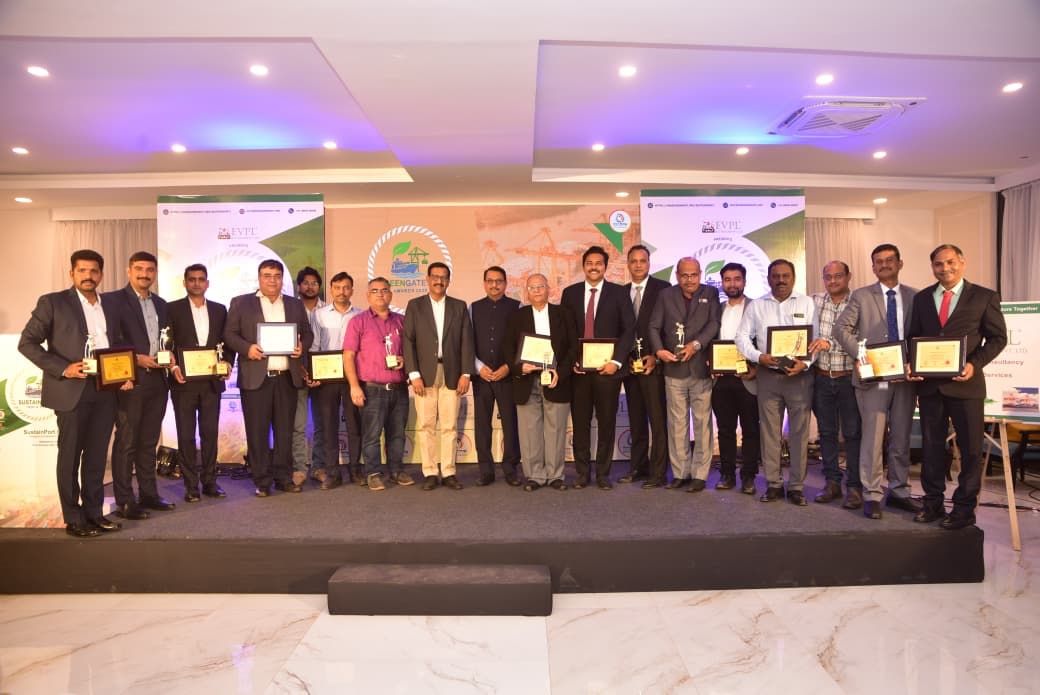
DPA Kandla bags Green Gateway Award for record cargo performance

GOA : Deendayal Port Authority (DPA), Kandla has achieved a remarkable double milestone, securing two prestigious national recognitions for its excellence in sustainability and operational performance.

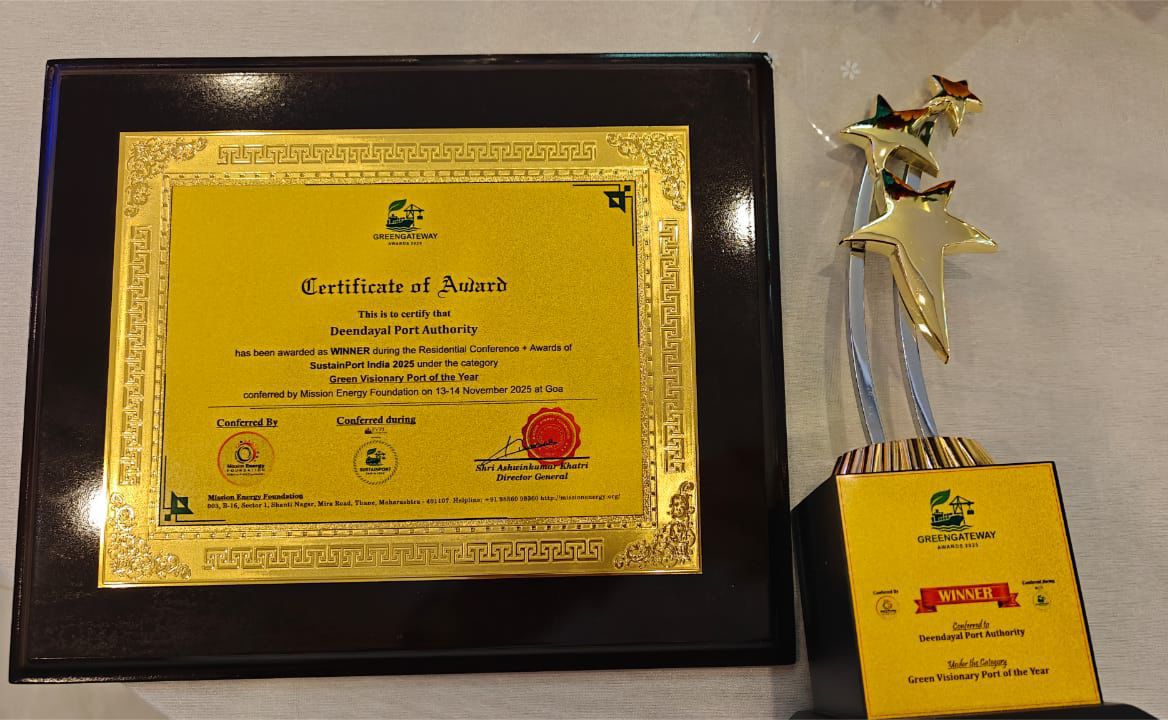
DPA Kandla has been honoured with the Green Gateway Award – Green Visionary Port of the Year at SustainPort India 2025 held in Goa. The award, presented by the Mission Energy Foundation, acknowledges the port’s significant strides in environmental stewardship and its forward-looking approach to sustainable port operations. Capt. Pradeep Mohanty, Deputy Conservator, received the award on behalf of the Port Authority.

Chairman DPA, Sushil Kumar Singh, IRSME, lauded the collective efforts of the port community, attributing the achievement to DPA’s consistent commitment to green initiatives, energy efficiency, clean operations and its broader vision for a sustainable maritime ecosystem.

These national recognitions underline DPA Kandla’s growing leadership in India’s maritime sector, showcasing its dual focus on environmental excellence and operational strength. The honours mark a proud moment for the port and reinforce its role as a key driver of India’s port-led development.

Gujarat Maritime University inaugurates week-long colloquium on International Maritime Law

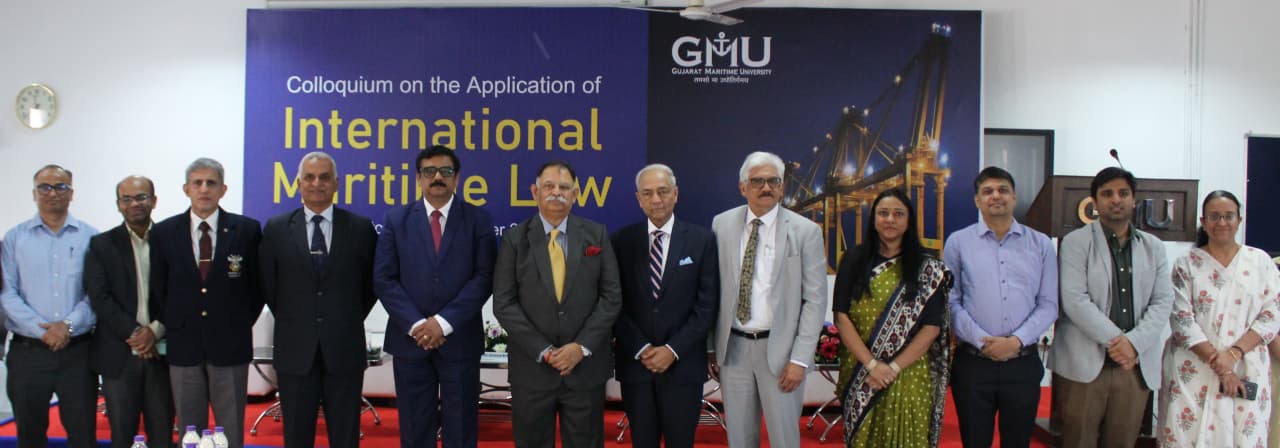
GANDHINAGAR : Gujarat Maritime University on Tuesday inaugurated a prestigious Colloquium on the Application of International Maritime Law, bringing together eminent jurists, naval experts, maritime practitioners, and industry leaders to strengthen national capacity in maritime governance.

The week-long programme was inaugurated by Hon’ble Mr. Justice K.R. Shriram, Former Chief Justice of the High Courts of Madras and Rajasthan. Also present at the inauguration were Hon’ble Justice (Dr.) Mohan Peiris, Former Chief Justice of Sri Lanka; Vice Admiral G. Ashok Kumar, PVSM, AVSM, VSM (Retd), Indian Navy; and Prof. (Dr.) S. Shanthakumar, Provost of Gujarat Maritime University and Director of Gujarat National Law University.

Expanding Maritime Legal Expertise
In his inaugural address, Hon’ble Mr. Justice K.R. Shriram emphasized the specialized nature of maritime law: “Maritime Law is a niche subject. Prior to the Admiralty (Jurisdiction and Settlement of Maritime Claims) Act, 2017, only three High Courts—Bombay, Calcutta, and Madras—had admiralty jurisdiction. The 2017 Act has extended this jurisdiction to High Courts in all coastal states. However, many lawyers and judges remain unfamiliar with the nuances of maritime law. GMU should organize such programmes not only for students but also for bureaucrats, legal professionals and the judiciary.”

Maritime Law: Backbone of Global Trade
Prof. (Dr.) S. Shanthakumar, Provost of GMU, highlighted the critical importance of maritime law: “Maritime law is one of the most critical pillars of the global economic system. With maritime transport moving over 90% of goods traded worldwide, it serves as the backbone of the global economy and provides an essential framework for international trade. Without maritime law, the smooth functioning of global supply chains would be impossible—it provides certainty, predictability, and justice in an industry spanning multiple jurisdictions and involving billions of dollars in transactions daily. For India, with its extensive coastline and ambitious maritime development plans, a strong maritime legal framework is essential for economic growth, trade facilitation, and protecting national interests.”

Aligning with Sagarmala 2.0
Dr. Shanthakumar added, the colloquium aligns with the Government of India’s Sagarmala 2.0 initiative, which aims to transform India into a global maritime hub over the next decade. With an estimated ₹75,000 crore in budgetary support, the initiative focuses on port modernization, shipbuilding and repair, and coastal development. GMU was established to fulfil Hon’ble Prime Minister Shri Narendra Modi’s vision of preparing skilled and competent human resource for this transformative initiative.

Comprehensive Programme
Participants will engage with critical themes including admiralty jurisdiction, the legal status of maritime zones, freedom of the high seas under UNCLOS, ship arrest procedures, and cargo and marine insurance claims. The programme features sessions by key regulatory bodies such as the Directorate General of Shipping, the Indian Coast Guard, and the Indian Register of Shipping. A field visit to the Shipbreaking Yard in Alang will provide practical insights.

The Colloquium aims to bridge academia, policy, and industry by equipping participants with advanced legal, operational, and regulatory knowledge essential for addressing contemporary maritime challenges.

NMPA conducts swift mid-sea medical evacuation, saves crew member’s life

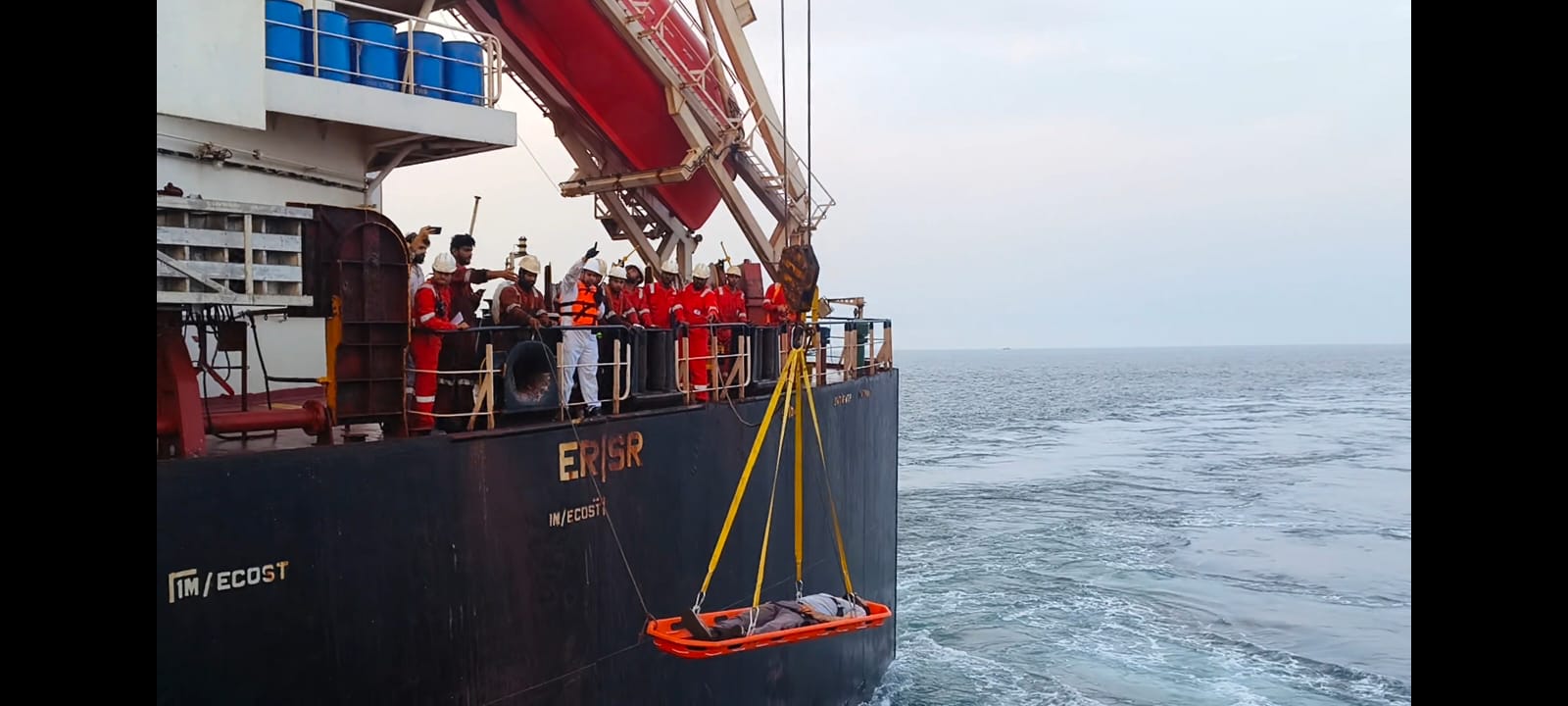
MANGALURU : New Mangaluru Port Authority (NMPA) successfully executed a critical mid-sea emergency medical evacuation today after a crew member aboard the merchant vessel M.V. AMNS STALLION suffered a stroke and became unconscious.

Acting on an urgent distress call, NMPA deployed its tug Ocean Harmony, which promptly reached the vessel and safely transferred the ailing crew member. Upon arrival at the port, the patient was immediately shifted to a nearby hospital using the NMPA ambulance for advanced medical care.

Port officials confirmed that the timely coordination and swift response of the marine and medical teams ensured the patient received essential treatment without delay.

NMPA extended heartfelt appreciation to all team members involved in the life-saving operation.

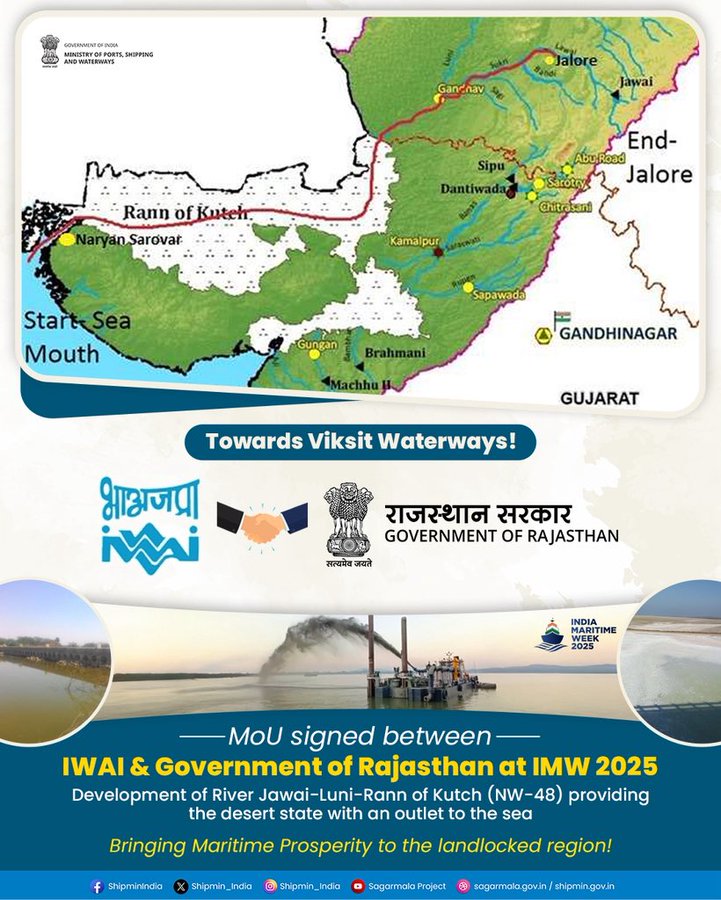
IWAI & State Govt of Rajasthan seal pact to develop Jawai–Luni–Rann of Kutch Waterway (NW-48)

JAIPUR : In a historic stride towards enhancing inland navigation and regional maritime connectivity, the Inland Waterways Authority of India (IWAI) and the Government of Rajasthan have formalized a partnership to develop the Jawai–Luni–Rann of Kutch stretch as National Waterway-48 (NW-48). The initiative marks a transformative moment for Rajasthan as it moves closer to securing direct access to the sea for the first time.

Under the proposed plan, Rajasthan will establish its first inland port at Jalore, enabling seamless cargo movement from the state to the Arabian Sea through the Gulf of Kutch. The waterway corridor — extending through Rajasthan and Gujarat — is envisioned to support large-scale movement of agricultural produce, minerals, industrial goods, and emerging sectors including petrochemicals and green energy.

A Draft Detailed Project Report, prepared after extensive field assessments, is currently under review by IWAI and state authorities. The project is estimated to require significant navigational infrastructure, including channel development and dredging, to ensure year-round vessel movement. Once operational, the waterway is expected to reduce logistics costs substantially and open new avenues for export-oriented industries in western Rajasthan.

Officials anticipate major socio-economic benefits, including new employment opportunities, industrial corridor development, enhanced rural connectivity, and strategic support for large projects such as the upcoming refinery in the Barmer region. The inland port is also expected to evolve into a multimodal hub, integrating road, rail, and water transport for smoother freight handling.

The collaboration aligns with the national vision of strengthening inland waterways as green and efficient transport corridors, and the announcement carries special significance under the ongoing India Maritime Week 2025, which celebrates advancements in India’s maritime and logistics sector.

With work now moving into the detailed planning stage, the Jawai–Luni–Rann of Kutch waterway stands poised to reshape Rajasthan’s economic geography, turning a landlocked state into an emerging participant in India’s maritime growth story.

Railways reduces bulk cement freight charges, supports affordable housing for poor & middle class families

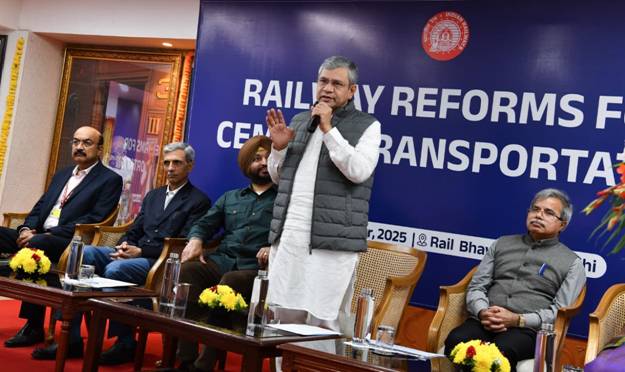
NEW DELHI : The Union Minister for Railways, Information & Broadcasting, and Electronics & Information Technology, Shri Ashwini Vaishnaw unveiled the rationalization of rates for bulk cement in containers and policy for bulk cement terminals. The policy is part of Railways Reforms for Cement Transportation.

Unveiling the Policy in Rail Bhawan in New Delhi, the Union Minister described this moment as a game changer. He said, these reforms will bring down the cost of cement for the middle and poor families as they build their dream home. As per the new policy, distance and weight slabs have been removed. The new rate has been rationalized to ₹0.90 per tonne per kilometre at flat Gross Tonne KM, the Union Minister said.

Shri Ashwini Vaishnaw said, tank containers will be an end to end pollution free logistics solution for bulk cement transportation. The Union Minister said, India is now the world’s second-largest freight carrier, having surpassed the USA. The rail network expansion has increased from 4 km per day (during 2004–14) to 12–14 km per day, making it over three times faster. The broad-gauge rail network is now almost 100% electrified. More than 1,300 Amrit Stations are currently being developed across the country, the Union Minister added.

Rationalization of Freight for Bulk Cement in Tank Containers

The new rate structure has been simplified and rationalized by introducing charges based on the actual tonnage, calculated as the Gross Tonne Kilometre (GTKM) of the train. To enhance Ease of Doing Business, the previous distance and weight slabs have been removed. Under the revised system, freight is charged at a flat rate of ₹0.90 per tonne per kilometre for the actual distance covered.

The policy promotes the use of tank containers to support efficient multimodal, end-to-end logistics for bulk cement. The Tank Container is an effective end-to-end logistics solution for bulk cement transportation and is a proud “Make in India” product. It is designed with standard dimensions of 20 ft × 8 ft × 8.5 ft, offering a payload capacity of 26 tonnes and a gross weight of 31 tonnes. Each container allows efficient operations with a loading and unloading time of just 25–30 minutes. Its design makes it ideal for seamless multimodal transportation—moving easily from train to trailer and back to train—enabling smooth delivery from the point of production to the point of consumption.

Policy for Bulk Cement Terminals

The transportation of bulk cement from manufacturing plants to terminals near consumption centers using specialized wagons is both cost-effective and environmentally friendly. To further support this shift toward efficient logistics, Indian Railways will facilitate the development of bulk cement terminals across the country under the “Bulk Cement Terminal” policy, enabling smoother handling, storage, and distribution of cement.

The bulk cement terminals will be constructed, operated, and maintained with direct connectivity to the railway network to ensure seamless logistics. These terminals will be equipped with essential facilities such as hoppers, silos, bagging plants, and other related infrastructure to support efficient handling, storage, and distribution of bulk cement.

The policy offers several key benefits, including a substantial reduction in cement transportation costs and a significantly smaller carbon footprint compared to road transport, thereby supporting environmental sustainability and reducing road congestion. It enables the movement of large volumes of cement in a single consignment and minimizes packaging requirements while reducing material losses from spillage. Additionally, the policy ensures faster turnaround times through mechanized loading and unloading, enhancing overall efficiency in cement logistics.