Home Blog Page 57

An Ageing Fleet Needs Greater Care; How to protect an Ageing Fleet?

An ageing fleet changes the economics of corrosion protection, writes Steelpaint Director Frank Müller

HAMBURG: Shipping is investing heavily in the next generation of vessels, fuels and propulsion technologies, but a large part of the existing fleet will still be trading well into the next decade. This will mean the steel structure must be protected for much longer.

For instance, Clarksons data from July 2025 showed that 38% of global fleet capacity was more than 15 years old, including 30% of bulk carrier capacity and 33% of containership capacity.

As such, structures, tanks, cargo spaces and working areas have to remain fit for purpose with the older steel requiring greater attention to protect again corrosion.

DNV describes corrosion as the most common cause of hull findings. Its survey data for bulk carriers and oil tankers shows a significant increase in corrosion findings in water ballast and cargo tanks at the third renewal survey, with findings peaking at the fourth, broadly when ships are reaching 15 and 20 years of age.

This should prompt a change in the way owners think about corrosion protection. The question is not how much it costs to coat a structure at the next drydocking, but what level of maintenance will be required over the remaining working life of the vessel.

Certainly, the economics change when a ship is expected to continue operating for another ten or 15 years, or so. Steel protection then becomes part of the asset-life calculation. And owners need to consider how often an area will have to be repaired, how much steel may eventually have to be replaced and how much maintenance can be avoided during the remaining life of the vessel.

Corrosion can cause both local and general reductions in steel thickness, while pitting and grooving can contribute to cracking, holes and leakage. Where deterioration becomes sufficiently advanced, steel renewal may be required between scheduled class surveys, bringing additional repair and off-hire costs.

IMO RULES

Amendments to the IMO Enhanced Survey Programme Code that entered into force in July 2024 also mean certain tanks where protective coatings are below a “good” condition can become subject to more frequent examination. 

Yet corrosion protection becomes particularly difficult where the coating itself is repeatedly challenged.

Tank tops, lower stools and other cargo hold structures on bulk carriers face abrasion and impact during cargo operations. Lashing bridges and other working areas on containerships are similarly exposed to mechanical damage. Once the protective barrier is breached, the underlying steel is again exposed to the marine environment.

This is where coating selection needs to move beyond initial application cost.

The cheapest system at the point of application is not necessarily the lowest-cost system over the remaining life of the structure. If coatings repeatedly require repair, or deterioration eventually results in steel renewal, the owner is paying for that original decision several times over.

For Steelpaint, we are seeing more orders for our single-component, moisture-curing polyurethane coatings as a way of protecting some critical areas against corrosion. These tough coating systems with a zinc-rich primers have been designed specifically for steel structures exposed to aggressive marine and industrial environments and are proven to last.

The single-component chemistry also removes the requirement to mix separate components immediately before application.

All Stelpant coatings can be applied across a broad range of temperatures and at high relative humidity up to 98% and on damp surfaces.

For shipboard maintenance and drydocking, where time and environmental conditions can constrain coating work, those application characteristics have practical significance. But performance after application is ultimately the more important measure.

PATCH TESTS

A three-year comparative trial aboard a 15,300TEU containership provides one example. Steelpaint’s single component zinc-rich polyurethane system was applied to a lashing bridge during drydocking in March 2023. At inspection in July 2026, the coated area showed only minor corrosion and required no crew maintenance.

Such trials matter because ageing-fleet economics will be determined by what happens between drydockings, not what happens during them.

In the year up to June 2026, Steelpaint has been trialled on some 16 bulk carriers with many going on to order full coats. And some of the yards that are now routinely applying Steelpaint systems include Youlian shipyard, Xinya dockyard, Qingdao Beihai shipyard, and Shanghaiyuan shipyard, with bulkheads, tank tops, lower hopper/stools, and hatch coaming the primary application areas.

An older ship is not necessarily a corroded ship, just as corrosion does not automatically make a vessel structurally unsafe.

Inspection, maintenance and timely steel repair remain fundamental. But with substantial proportions of the bulker and containership fleets already beyond 15 years, corrosion protection should increasingly be viewed as part of through-life asset management.

Shipping is rightly spending a great deal of time considering what will power its ships in the future. But many of the ships that will carry those technologies are already afloat. If we expect those vessels to keep trading, preserving the steel structure has to be part of the same conversation.

Singapore strengthens multi-fuel bunkering capabilities and digitalisation at SIBCON 2026

SINGAPORE : New initiatives advance capabilities across marine fuel pathways, strengthen assurance and efficiency for ships bunkering in Singapore, and support electric harbour craft adoption

The 24th Singapore International Bunkering Conference (SIBCON), organised by the Maritime and Port Authority of Singapore (MPA), was opened recently by Mr Murali Pillai, Senior Minister of State (SMS), Ministry of Law and Ministry of Transport. Themed “Charting a Resilient Multi-Fuel Future”, the biennial conference that is being held from 13 to 15 October 2026 is expected to welcome more than 2,000 maritime professionals from over 60 countries, bringing together global leaders across the shipping, energy, and bunkering ecosystem.

  1. Several initiatives were announced at the event to advance capabilities across different marine fuel pathways, strengthen assurance and efficiency for ship-bunkering in Singapore, and support the adoption of electric harbour craft.

Advancing Ammonia Bunkering

  1. MPA and Enterprise Singapore, through the Singapore Standards Council, launched a new Technical Reference for Ammonia Bunkering (TR 148) . The TR covers requirements for safety, bunkering procedures, custody transfer and personnel competencies for the safe conduct of ammonia bunkering. Under the Singapore-Australia Green and Digital Shipping Corridor, MPA and the Pilbara Ports Authority will work together to validate the TR through the sharing of operational experience and relevant information from bunkering trials conducted at their respective ports. This collaboration will help build practical experience and strengthen the standards and operational requirements needed to support the safe and scalable deployment of ammonia bunkering globally.
  2. To support the development of ammonia as a marine fuel, the Singapore Chamber of Maritime Arbitration (SCMA) is developing a model contract for ammonia bunkering transactions. The Singapore Ammonia Bunkering Form will provide buyers and suppliers with a common basis for contracting, helping to provide greater clarity and consistency as the ammonia bunkering market evolves.
  3. Developed over the past year with industry participants and in consultation with MPA, the Form was launched for public consultation at SIBCON 2026. Feedback can be submitted on SCMA’s website until 14 January 2027.

Developing Capabilities Across Other Fuel Pathways

Strengthening the LNG and Bio-Methane Bunkering Capabilities

  1. MPA will invite licence applications to operate liquefied natural gas (LNG) Floating Storage Units (FSUs) in Singapore anchorages by end-2026, subject to regulatory approvals. Following the award of eight new LNG bunker supplier licences in July 2026, the FSUs will expand storage capacity and enhance supply chain resilience to support growing demand for LNG bunkering.
  2. MPA, CMA CGM and Singapore LNG Corporation have also signed an MOU to explore the use of liquefied bio-methane as a marine fuel in Singapore, including how existing gas infrastructure could support its supply and adoption for maritime use .

Singapore’s First Ethanol Bunkering Operation

  1. Singapore will conduct its first ethanol bunkering operation at PSA’s Pasir Panjang Terminal later this week. The operation, involving Maersk, Golden Island Pte Ltd and PSA Singapore, will use bioethanol and be conducted concurrently with cargo operations, with the quantity transferred measured using a mass flow meter (MFM). The operation will assess how Singapore’s existing methanol bunkering technical reference, TR 129, could be adapted for ethanol , and validate the use of MFM systems for ethanol bunkering. The findings will inform the technical and regulatory requirements for future ethanol bunkering operations in Singapore.

Strengthening Bunker Fuel Quality Assurance

  1. MPA and Enterprise Singapore, through the Singapore Standards Council, have introduced two new standards to strengthen bunker fuel quality assurance . A new Singapore Standard for Bunker Sampling (SS 730:2026) will support consistent sampling practices and provide greater assurance over the quality and reliability of bunker fuels supplied in Singapore. A new Technical Reference on the Test Method for Polymers in Residual Based Marine Fuels (TR 155:2026) will establish a standardised method to assess the presence of polymers in such fuels.

Strengthening Digitalisation and Efficiency in Bunkering

  1. Under Phase 1 of the Digital Bunkering initiative, the electronic bunker delivery note has been the default documentation for bunker operations in Singapore since April 2025. Phase 2 aims to enable end-to-end security and automation of bunkering data flow from MFM systems to stakeholders and regulator. It seeks to strengthen data integrity and reduce manual data entry, enabling more efficient and secure information flow across the bunkering value chain.
  2. MPA will launch a grant call in November 2026 to support selected trials for Phase 2. Licensed bunker craft operators can apply together with their technology partners to participate.
  3. MPA will also launch the Bunker Supplier Management System 2.0 in the second quarter of 2027. The upgraded system will provide a unified digital platform for bunkering-related regulatory transactions, licence applications and regulatory submissions. This will improve information visibility and make regulatory transactions more efficient for the industry.

Accelerating Adoption of Electric Harbour Craft in Singapore

  1. MPA will introduce the Early Adopter Scheme for Electric Harbour Craft from 1 January 2027 to catalyse early adoption and support the development of Singapore’s e-HC ecosystem . The two-year grant will support the adoption of eligible e-HC, with the grant quantum based on battery capacity and capped according to vessel size at up to $250,000 per vessel.

Strengthening Regional Oil Spill Response

  1. In conjunction with SIBCON 2026, MPA will conduct a multi-agency joint oil spill exercise on 16 October, including the Revolving Fund Committee exercise with Indonesia and Malaysia, to strengthen response capabilities to oil spills at sea and enhance regional coordination. SMS Murali and representatives from Indonesia and Malaysia will observe the exercise.

2026 World Trade Centers Association Member Forum to Convene Global Network to Shape What’s Next for Global Business

NEW YORK: World Trade Centers Association® (WTCA®) — an international trade organization connecting more than 300 World Trade Center® (WTC®) locations across nearly 100 countries and territories — will virtually host the 2026 WTCA Member Forum from October 27-28, bringing together its global network to exchange ideas, share practical strategies and explore how WTC businesses can prepare for the opportunities shaping the future of global business.

Centered on the theme “Connecting Ideas. Shaping What’s Next,” the annual Member Forum will draw on the collective expertise of WTCA members around the world, with programming focused on turning lessons from across the network into action in local markets. Sessions will explore how WTC businesses are responding to changing industries and investment patterns, strengthening local business communities, creating globally connected opportunities and positioning their organizations and places for the future.

The Forum will open with a briefing from WTCA Chair, Board of Directors John E. Drew and WTCA’s new Chief Executive Officer Annette Gregg, who will share perspectives on the Association’s direction, developments across the global network and priorities for the year ahead.

“This year’s Member Forum comes at a pivotal time for our Association as we recently moved our Headquarters office to One World Trade Center, and announced the appointment of the Association’s new CEO,” said John E. Drew, WTCA Chair, Board of Directors. “The Forum is designed to be an annual touchpoint to reconnect with our members from around the world and tap into one of the greatest strengths of WTCA — the knowledge, experiences and ideas that exist throughout our global membership. We also plan for this to be the Association’s last virtual Member Forum as we are aiming to get back to our in-person format at One World Trade Center starting next year.”

“The Forum marks an important first for me as I join WTCA, and I’m excited to meet our members from around the world and begin this next chapter together,” added Annette Gregg, WTCA Chief Executive Officer. “As I step into this role, I look forward to building on the Association’s strong foundation while exploring new ways to support our members and strengthen the impact of WTCA around the world.”

Throughout the two-day program, WTCA members and industry leaders will share practical approaches and ideas that can be applied across markets. Key sessions include “WTCA Member Power Pitches: Shaping What’s Next,” a fast-paced showcase of ideas and initiatives creating value at WTC locations around the world. The interactive “Introducing the WTC Business Club Playbook: Build Locally. Connect Globally” session will introduce a new framework for building local business communities and creating pathways to introductions, trade support and opportunities across the global WTCA network. The “Future-Ready WTC Businesses: Creating Places that Shape What’s Next” session will explore how evolving industries, investment patterns and ways of working are influencing real estate strategies, as well as how WTC businesses can create environments that attract investment and encourage business collaboration. The interactive “Global Café: Trade in Transition” session will bring members together to exchange perspectives on changing trade policies, tariffs and market conditions, and explore how WTC businesses can connect emerging opportunities across the global network. And the “Technology in Action” session will showcase unique ways WTCA members are putting technology into action — from improving business matchmaking and events to creating new experiences, strengthening services and solving everyday challenges.

“Virtual does not mean less connection,” added Crystal Edn, WTCA Executive Director-Member Services. “Across two days of presentations and interactive workshops, members from every region will exchange ideas and meet peers they would not otherwise reach. We built the program for every level of a WTC team. Everyone will leave with new tools, new ideas and new partners for the year ahead.”

The Forum will also kick off the official countdown to the highly anticipated 57th annual WTCA Global Business Forum, which will be hosted April 4-7, 2027, in Binh Duong Ward, North of Ho Chi Minh City, Vietnam by WTC Binh Duong New City. The session “Destination Vietnam: Bringing the 2027 WTCA GBF to Life” will highlight the market opportunities, business experiences and programming that will shape next year’s global gathering.

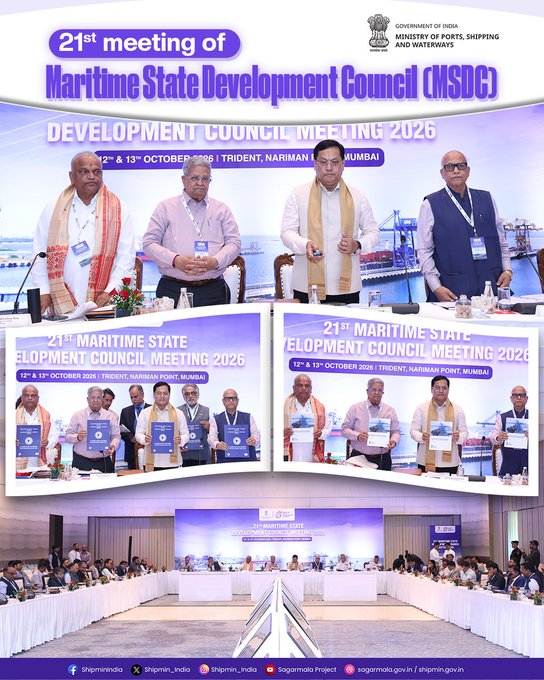
21st Meeting of Maritime State Development Council concludes successfully at Mumbai

MUMBAI: The 21st Meeting of Maritime State Development Council (MSDC) concluded on Tuesday in Mumbai with landmark outcomes for India’s maritime sector. This was the first meeting of the MSDC after its recognition as a statutory consultative body under the Indian Ports Act, 2025, notified on 15th May 2026. The Council, originally constituted in 1997, now functions with an enhanced mandate to promote integrated maritime growth, coordinated policy formulation, and planned development of maritime infrastructure.

Chaired by Union Minister for Ports, Shipping & Waterways, Shri Sarbananda Sonowal, the MSDC meeting brought together Ministers of Coastal States, Administrators of Union Territories, senior officials of State Maritime Boards, Chairpersons of Major Ports, allied maritime institutions, and representatives of Central Ministries. Among the dignitaries present were Shri Kanubhai Desai, Finance Minister of Gujarat; Shri Digambar V. Kamat, Minister (Ports), Government of Goa; Shri Nitesh Rane, Minister of Fisheries & Ports Development, Government of Maharashtra; and Shri Malladi Krishna Rao, Minister from Puducherry. Senior Secretaries and CEOs of Maritime Boards from Andhra Pradesh, Odisha, West Bengal, Karnataka, Tamil Nadu, and Kerala also participated, along with Chairpersons of Major Ports including Deendayal, JNPA, MbPA, Cochin, Chennai, Visakhapatnam, Paradip, SMPA, Kamarajar, and Mormugao. Heads of allied organisations such as the Inland Waterways Authority of India, Shipping Corporation of India, Dredging Corporation of India, Indian Port Rail & Ropeway Corporation, Cochin Shipyard, Indian Maritime University, DPIIT, NITI Aayog, Indian Navy and Coast Guard were also in attendance.

The meeting was preceded by educational port visits to the Mumbai Port Authority Cruise Terminal and Jawaharlal Nehru Port Authority (JNPA), showcasing India’s cruise and container port capabilities.

During the deliberations, the Council adopted the Maritime India Vision 2030 and Maritime Amrit Kaal Vision 2047 targets, which together identify over 500 initiatives across ports, shipping, inland waterways, shipbuilding, green shipping and global collaboration. States and State Maritime Boards were urged to prepare Port Master Plans for Other Than Major Ports aligned with these national targets, with MoPSW sharing the standardized template used by Major Ports.

The Council endorsed the priorities of the National Perspective Plan and urged States to fast-track multimodal connectivity projects through road, rail, inland waterways, pipelines and conveyors. It resolved that States, in coordination with MoPSW, to develop port-linked industrial clusters with land availability, plug-and-play infrastructure and fast-tracked approvals, integrated with port capacity expansion and connectivity projects.

On statutory compliance, the Council approved draft MSDC Regulations and Guidelines on port data and tariff transparency, and instructed all States and Union Territories to notify subordinate rules under Section 77 of the Act within three months.

“The Indian Ports Act gave the MSD council its legal foundation. Today the Centre and the coastal states turned that foundation into a shared work plan, with deadlines every one of us has agreed to meet,” Sarbananda Sonowal said. “This is cooperative federalism in maritime governance, delivering for our ports and for port-led industrialisation.”

In a major step towards ease of doing business, the Council resolved that the One Nation One Port Process (ONOP) reforms, including One Nation One Documentation, Port Process Re-engineering and Inter-ministerial Process Reforms, to be implemented across all ports by March 2027. It further resolved that all ports shall integrate with the Maritime Single Window (MSW – Sagar Setu) by March 2027, ensuring unified digital processes nationwide. Transparency of port tariffs through electronic publication was also mandated. To support uniform implementation, Minister Shri Sarbananda Sonowal launched the Ready Reckoner for Implementing ONOP, a comprehensive guide for Major and Other Than Major Ports. The document includes references to central circulars issued by CBIC, MHA and MoHFW for implementing inter-ministerial process reforms, and sets out clear expectations from State and Union Territory Governments to expedite ONOP implementation.

The Council gave particular emphasis to port connectivity, shipbuilding and cruise shipping. It resolved to prioritise connectivity projects under Sagarmala, implement the National Coastal and Inland Shipping Strategic Plan, promote modal shift of cargo to coastal shipping, facilitate development of shipbuilding, ship-repair and recycling clusters, and leverage the Maritime Development Fund, Shipbuilding Development Scheme and Shipbuilding Financial Assistance Programme for financing. Cruise shipping infrastructure development at Major and Non-Major Ports was also endorsed.

A significant announcement was made by Union Minister Sarbananda Sonowal, introducing two specialized credit risk insurance products to support India’s shipbuilding industry under the National Shipbuilding Mission. Developed under the Shipbuilding Development Scheme (SbDS), these first-of-their-kind insurance policies aim to reduce financial stress in large-scale ship manufacturing. The Shipbuilding Project Credit Risk Insurance Policy (SbPCP), developed by ECGC Ltd., will cover export projects, while the Business Credit Shield Policy–Shipbuilders (BCSPS), developed by The New India Assurance Co. Ltd. (NIACL), will protect domestic projects. The Government of India will subsidise insurance premiums and provide direct support to insurers in case shipyards file claims. Speaking on the occasion, Shri Sonowal said, “Building a ship is a massive, multi-year journey, a single missed milestone payment could stall an entire shipyard’s operations. With these new insurance policies, we are stepping in to give them a real safety net. We want our shipyards to focus on what they do best, building world-class vessels, without the fear of delayed payments or sudden global market shifts holding them back.”

Union Minister Sarbananda Sonowal emphasized the significance of the meeting, stating, “The MSDC has now entered a new statutory phase, strengthening cooperative federalism in maritime governance. With the adoption of MIV 2030 and MAKV 2047 targets, India’s ports and shipping sector will be future-ready, competitive and aligned with global standards. The Council’s resolutions today mark a decisive step towards integrated maritime growth and port-led industrialisation.”

The 21st MSDC has set a jointly owned course of action for integrated development of Major and Non-Major Ports, reinforcing India’s maritime vision under Maritime India Vision 2030 and Maritime Amrit Kaal Vision 2047.

Union Minister Sarbananda Sonowal called the meeting “a meeting of Team India” and tied the council’s work to Prime Minister Narendra Modi’s call of “Sabka Saath, Sabka Vikas, Sabka Vishwas and Sabka Prayas,” or together with all, development for all, trust of all, effort of all.

PM GatiShakti NMP completes five years of transforming India’s infrastructure landscape

NEW DELHI: The PM GatiShakti National Master Plan (PMGS NMP), launched by the Hon’ble Prime Minister Shri Narendra Modi in October 2021, is completing five years, marking significant progress in integrated infrastructure planning and development in the country.

The PM GatiShakti geospatial digital platform has been developed indigenously under Atmanirbhar Bharat by the Bhaskaracharya National Institute for Space Applications and Geo-informatics (BISAG-N). With the vision of bringing synergy across Ministries/Departments and States/Union Territories, PM GatiShakti has established a Whole-of-Government approach to infrastructure planning by integrating geospatial data, facilitating coordinated decision-making and strengthening multimodal, intermodal and last-mile connectivity. Over the last five years, the initiative has evolved from an integrated digital planning platform into a comprehensive geospatial planning ecosystem supporting infrastructure, economic and social-sector development.

The PM GatiShakti digital platform integrated more than 1,800 data layers, covering 58 Central Ministries/Departments and all 36 States/Union Territories. The platform has also facilitated the development and integration of more than 65 software modules/tools and over 100 mobile and web applications, strengthening data-driven infrastructure planning across the country.

The Network Planning Group (NPG) evaluated over 400 infrastructure projects worth approximately ₹20.23 lakh crore based on PM GatiShakti principles. The evaluation framework emphasises integrated planning and development of multimodal infrastructure, last-mile connectivity to economic and social nodes, intermodal connectivity, improved logistics efficiency and synchronised implementation of projects. NPG institutionalised the Whole-of-Government approach.

PM GatiShakti expanded beyond conventional infrastructure planning to support social-sector development and area-based planning. The initiative progressively extended to districts, supporting integrated planning for local socio-economic development, including roads, schools, healthcare facilities, water pipelines and other essential services at the district level.

The PM GatiShakti Public platform, through the Unified Geospatial Interface (UGI), was launched in September 2025, extending selected data-analytics capabilities to private entities and the general public. The Knowledge Management System (KMS), Decentralized Data Uploading and Management System (DUMS) and PMGS-NMP Dashboard have further strengthened knowledge sharing, data governance, decentralised data management and infrastructure monitoring.

Since its launch in 2021–22, PM GatiShakti progressed through successive phases of foundation, expansion, deepening, digitalisation and accessibility. During 2022–23, eight key infrastructure Ministries were onboarded and 71 projects were evaluated. In 2023–24, social-sector integration was undertaken, with 1,463 data layers and all 36 States/Union Territories onboarded.

During 2024–25, economic-sector integration was undertaken, the District Master Plan was launched and 121 projects were evaluated. In 2025–26, the PM GatiShakti Public platform/UGI, KMS, DUMS and Dashboard were launched, with 352 projects evaluated by February 2026.

In 2026, 421 projects worth ₹20.23 lakh crore had been evaluated, alongside the integration of approximately 1,800 data layers, more than 65 tools and over 100 applications. The Integrated Transport and Logistics Authority was also approved by the Union Cabinet.

Over the last five years, PM GatiShakti has progressed from establishing an integrated national planning framework to developing a wider geospatial ecosystem for infrastructure and regional development. Through the integration of data, institutional coordination, project appraisal, digital tools and district-level planning, the initiative continues to support a more integrated approach to infrastructure development.

To leverage the full potential of PM GatiShakti for integrated long-term transport planning, the Government has decided to set up the Integrated Transport and Logistics Authority (ITLA) to strengthen research, planning, appraisal, monitoring and impact assessment within the broad domains of transportation and logistics. Establishment of the ITLA will play a pivotal role in strengthening multimodal infrastructure connectivity, improving infrastructure efficiency, reducing logistics costs and enhancing India’s global logistics competitiveness.

As India advances towards the vision of Viksit Bharat 2047, PM GatiShakti provides a framework for coordinated infrastructure planning, multimodal connectivity and improved logistics efficiency, contributing to the development of an integrated, efficient and future-ready transport and logistics ecosystem.

Gujarat CM Bhupendra Patel meets BlackRock COO Robert Goldstein to explore investment opportunities

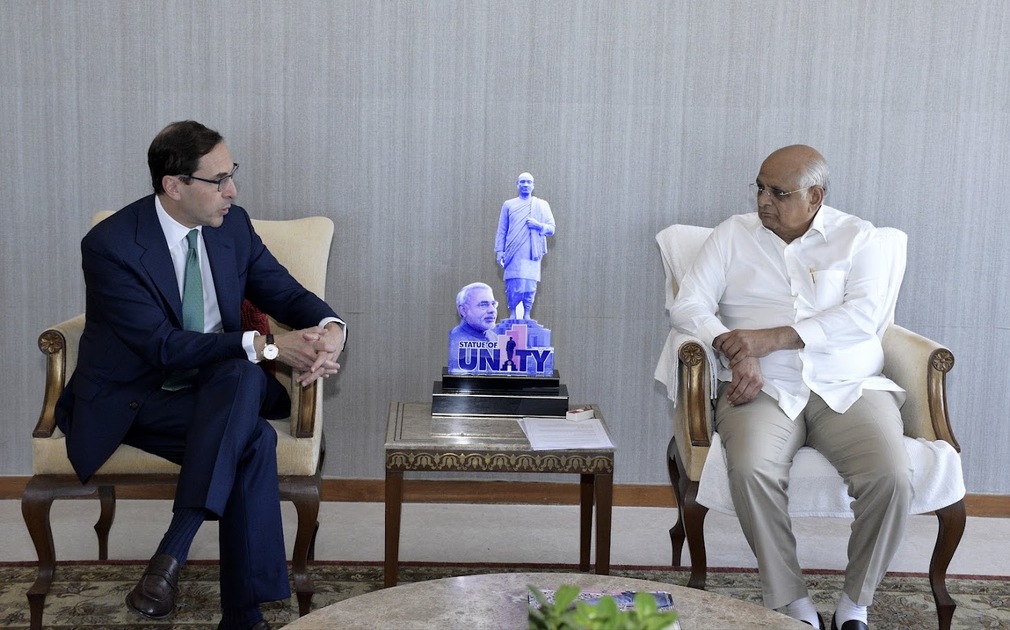
GANDHINAGAR: Gujarat Chief Minister Shri Bhupendra Patel held a meeting with Mr. Robert Goldstein, Chief Operating Officer of BlackRock, the world’s leading asset management company, in Gandhinagar to explore opportunities for expanding the company’s operations in Gujarat International Finance Tec-City (GIFT City).

The meeting follows the Chief Minister’s discussions with Ms. Samara Cohen, Global Head of Market Development at BlackRock, during his recent visit to the United States to promote the upcoming Vibrant Gujarat Global Summit 2027. The interaction marks a step towards strengthening engagement between the Gujarat Government and the global financial services giant.

During the meeting, Shri Patel invited BlackRock to commence and expand its operations in Gujarat, assuring the company of proactive support from the state government. He expressed confidence that BlackRock’s presence in the state’s international financial hub could play a significant role in facilitating investments in Indian businesses, similar to its presence in established financial centres such as Singapore and Hong Kong.

The Chief Minister also invited BlackRock to participate in the Vibrant Gujarat Global Summit 2027, encouraging further engagement on investment opportunities and international business collaboration.

Gujarat Strengthens Its Global Financial Ambitions

The discussions highlighted the growing importance of GIFT City as an international financial and fintech hub, supported by an expanding ecosystem of banking institutions, fund commitments and international financial services companies.

Aligned with the Government of India’s vision of developing a global financial and technology gateway, Gujarat is working to attract leading international institutions and strengthen India’s connections with global capital markets.

BlackRock’s potential expansion could create opportunities to deepen engagement with Indian businesses and financial markets, while exploring avenues in asset management, investment platforms and related financial services, subject to the company’s business plans and applicable regulatory requirements.

Vibrant Gujarat Summit 2027 to Boost Investment Outreach

The meeting forms part of Gujarat’s broader efforts to engage global investors ahead of the Vibrant Gujarat Global Summit 2027. Through outreach to leading financial institutions, the state aims to showcase its investment potential, business environment and growing role in the international financial services sector.

Engagement with BlackRock underscores Gujarat’s efforts to attract global capital, encourage cross-border investment and position the state as a destination for international financial services. The proposed participation of the company in the summit could provide a further platform to explore areas of mutual interest and strengthen investment linkages.

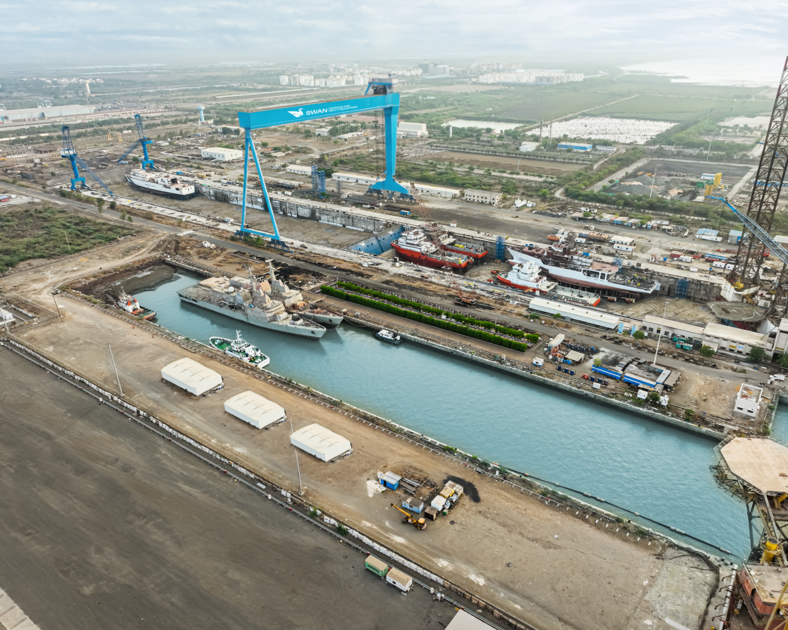
SDHI Reports 2.5x Jump in Operating Revenue in H1 FY27 as the Shipyard Scales Up Execution

MUMBAI: Swan Defence and Heavy Industries Limited (SDHI), India’s leading shipbuilding and heavy engineering company, on Tuesday announced its unaudited financial results for the half year ended September 30, 2026.

Financial Highlights

All the below values are in INR Cr

ParticularsHalf Year Ended
H1 FY27H1 FY26
Revenue from Operations99.4639.99
Total Income167.87111.49
Reported PBT(38.37)(3.48)
Reported PAT524.78(15.17)

* Consolidated Financial Statement has been restated to reflect the Triumph Offshore Private Limited (TOPL) merger with appointed date from 1st April 2024.

SDHI’s firm order book stood at approximately ₹6,500 crore as of September 30, 2026, providing revenue visibility through FY31. The order book comprises six chemical tankers for Rederiet Stenersen AS, four ammonia dual-fuel bulk carriers for Energy ONE Limited, four harbour tugs for Svitzer and a training ship for the Royal Navy of Oman.

Business Highlights

Newbuilds: SDHI secured an order from Energy ONE Limited for four 92,500 DWT ammonia dual-fuel bulk carriers, the first of its kind for an Indian shipyard, with deliveries expected from FY30. The shipyard also secured an order from the A.P. Moller – Maersk backed Svitzer, for four TRAnsverse 3200 harbour tugs, with deliveries scheduled from early 2028.

Ship Repair and Refit: SDHI completed seven ship repair and refit projects, spanning Indian Coast Guard vessels, commercial ships and offshore rigs. These included the refit and dry-docking of ICGS Samudra Pavak, a Pollution Control Vessel (PCV), covering robotic hull scanning and hydroblasting, overhaul of the propulsion, steering and main engine systems, and a full upgrade of the pollution control systems. The project was delivered ahead of schedule, setting a new benchmark for PCV refits of this nature.

Heavy Engineering: Steel cutting commenced for five barge unloaders, each with a capacity of 2,500 tonnes per hour, for L&T Mines and Minerals.

Partnership: SDHI has signed a strategic MoU with DNV, the first such partnership with an Indian shipyard to strengthen capabilities across seven key areas including design certification, repair projects, R&D, supplier ecosystem, next-generation maritime technologies, digital adoption and cybersecurity.

Capacity Expansion under National Shipbuilding Mission: SDHI has received in-principle approval for a brownfield expansion under the Shipbuilding Development Scheme (SbDS). The proposed investment includes a 600-tonne Goliath crane and a 40-tonne ELL crane, which will expand capabilities and improve operational efficiency at India’s largest dry dock. Eligible capital assistance and interest incentives remain subject to the scheme’s conditions.

Commenting on the company’s progress, Rear Admiral Vipin Kumar Saxena IN (retd.), Chief Executive Officer of Swan Defence and Heavy Industries Limited said, “The first half of FY27 marks SDHI’s transition from turnaround to scaled execution. Having completed our resolution plan and settled our obligations to the Committee of Creditors, we have focused on building the systems, processes and teams needed to deliver our order book. Winning export orders again in H1 FY27 reflects the growing confidence of international customers in SDHI and in India as a credible shipbuilding partner. Our priority now is to deliver on time and to global quality standards. At the same time, we expect domestic shipbuilding demand to pick up over the next 12 to 18 months, driven by the Government of India’s push to expand commercial shipbuilding and by proposed defence programmes. SDHI is well placed to win at home and abroad, and to turn that into sustained growth for our shareholders.”

Home to the country’s largest dry dock (662m x 65m) and the largest fabrication capacity of 164,000 tons per annum, SDHI is backed by diversified industrial conglomerate Swan Corp Limited.

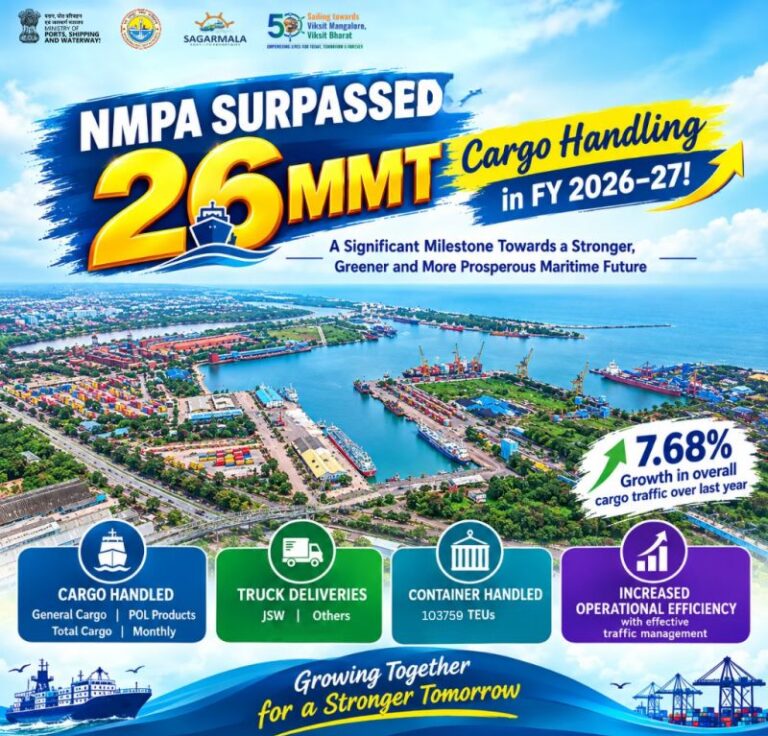
NMPA crosses 26 million tonnes in cargo Handling, records 7.68% growth

MANGALURU: The New Mangalore Port Authority (NMPA) has crossed a significant operational milestone by handling more than 26 million tonnes of cargo in the current financial year as of October 12, 2026, registering an impressive 7.68% growth over the approximately 24.23 million tonnes handled during the corresponding period of the previous financial year.

The achievement reflects the port’s sustained operational momentum, efficient cargo-handling capabilities and continued support from port users, shipping lines, trade partners and other stakeholders. The growth also underscores NMPA’s ongoing efforts to strengthen its operational performance and facilitate the smooth movement of cargo through its facilities.

As one of India’s important maritime gateways on the west coast, New Mangalore Port plays a significant role in supporting the trade and logistics requirements of Karnataka and neighbouring regions. Its strategic location along the Arabian Sea enables it to serve regional industries and facilitate domestic and international trade.

The consistent rise in cargo traffic highlights the importance of efficient port operations, coordinated logistics services and reliable maritime connectivity in meeting the evolving requirements of India’s trade and industrial sectors. Continued collaboration among port authorities, cargo handlers, shipping lines, transport operators and other stakeholders remains essential to sustaining this growth momentum.

The latest milestone reinforces NMPA’s commitment to operational excellence, improved cargo-handling efficiency and the development of a competitive and reliable maritime gateway. By focusing on operational performance and stakeholder engagement, the port continues to contribute to the strengthening of India’s port-led development and logistics ecosystem.

With more than 26 million tonnes of cargo handled by October 12, 2026, NMPA has demonstrated encouraging progress in the current financial year, positioning itself to build on this performance in the months ahead.

The achievement marks another important step in the port’s continued contribution to maritime trade, regional economic development and India’s broader vision of strengthening its maritime infrastructure and logistics capabilities.

Balagarh Mini Port in Hooghly gets ₹539-Crore Road and Bridge Push

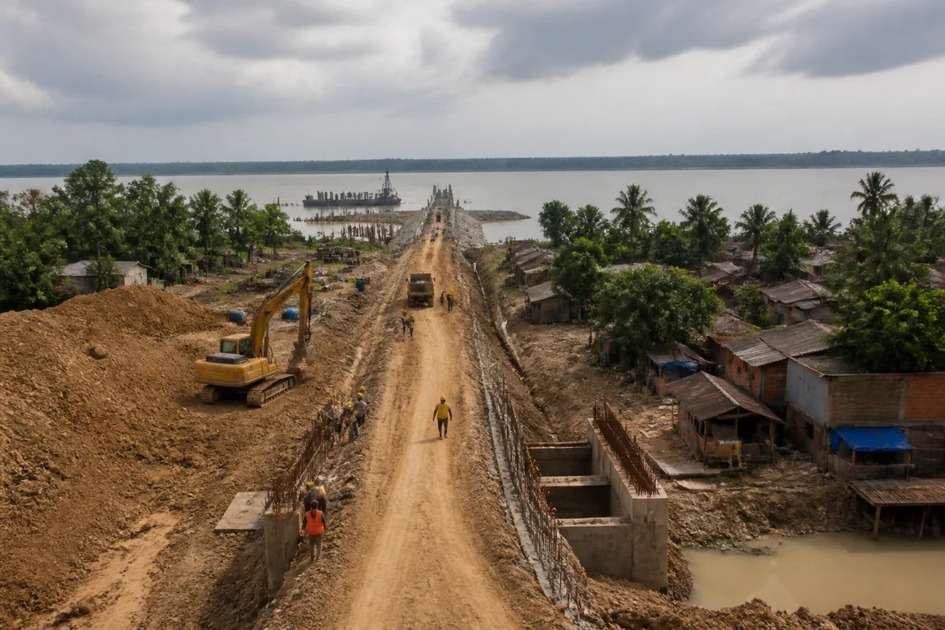
KOLKATA: Work on the road and bridge connecting the proposed Balagarh Mini Port in Hooghly began with a foundation ceremony on Monday, as authorities moved ahead with a ₹539-crore project intended to create an alternative cargo facility and reduce pressure on Kolkata’s Syama Prasad Mookerjee Port.

Balagarh MLA and Minister of State for Health Sumana Sarkar at opening of Balagarh Mini Port in Hooghly 1 Balagarh Mini Port in Hooghly gets ₹539-Crore Road and Bridge Push

The ceremony was attended by Balagarh MLA and Minister of State for Health Sumana Sarkar, former Hooghly MP Loket Chatterjee, Hooghly District Magistrate Khurshid Ali Qadari and officials from the Public Works Department and the port trust, according to a report by Sangbad Pratidin – Bengal.

The Balagarh Mini Port is planned at Sripur Char in Balagarh, on land that had earlier been acquired in connection with plans for a CESC power plant. The port project will include a four-kilometre approach road, a bridge, a port terminal and two jetties. Officials have said the work is expected to be completed within two years.

The project is being positioned as an infrastructure link between port operations and the wider transport network. Loket Chatterjee said the development would support improvements in rail, waterways and roads, while the district administration said the mini port could contribute to the development of Hooghly.

The proposed facility is also being presented as a source of employment for the area. Direct employment is expected to reach 1,500 people once the mini port becomes operational. The report also cites an estimate that between 15,000 and 20,000 people could gain work opportunities through ancillary industries that may emerge around the port.

Sumana Sarkar described the project as a major development for Balagarh and said construction would be completed within two years. She also said local residents had been cooperative. District Magistrate Khurshid Ali Qadari expressed hope that the mini port would help the district’s economic development.

The project follows the foundation-stone ceremony held in Singur last January by Prime Minister Narendra Modi, according to the report. The latest ceremony relates specifically to the road and bridge that will connect the proposed port site to the surrounding transport network.

For residents, the immediate question is when the connectivity works will be completed and how quickly the terminal and jetties can become operational. The authorities’ stated two-year timeline is the next milestone for a project that combines port infrastructure with road, bridge and employment commitments in Hooghly.

Mumbai Port strengthens heavy-lift capabilities with successful handling of oversized coastal cargo

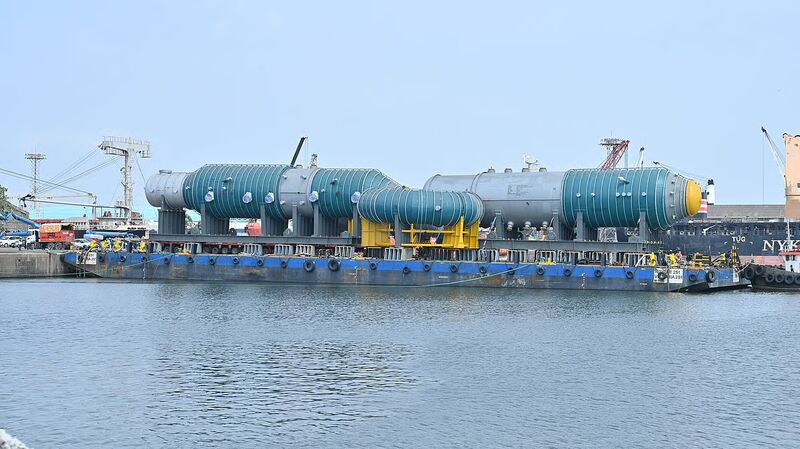
MUMBAI: Mumbai Port Authority (MbPA) has achieved another operational milestone with the successful execution of a specialised Roll-Off operation for heavy-lift coastal cargo, reinforcing its position as a preferred maritime hub for handling complex and oversized consignments.

The operation involved the safe offloading of three massive heavy-lift packages weighing 718 metric tonnes, 502 metric tonnes and 232 metric tonnes, respectively. The cargo formed part of a coastal consignment comprising five packages that originated from the Godrej & Boyce jetty at Dahej, Gujarat, and was transported by coastal barge to Mumbai Port for onward export to Abu Dhabi.

A key feature of the operation was the handling of the cargo at a berth located inside the port’s lock gate. The relatively tranquil waters in this area provided favourable conditions for the specialised Roll-Off operation, supporting the safe and efficient handling of the exceptionally heavy cargo.

The successful execution highlights Mumbai Port’s operational capabilities in managing specialised project cargo that requires careful planning, appropriate infrastructure and close coordination among the stakeholders involved. Such operations are critical for industries handling heavy engineering equipment, industrial machinery and other oversized consignments intended for domestic and international markets.

Mumbai Port’s strategic location, established maritime infrastructure and sheltered waters offer distinct advantages for specialised cargo movements. Its ability to accommodate complex heavy-lift operations further strengthens its role in supporting coastal shipping, project logistics and international trade.

The operation also demonstrates the importance of coastal shipping in facilitating the movement of heavy and oversized cargo between industrial locations and major maritime gateways, providing an alternative to conventional surface transportation for suitable consignments.

With two more similar consignments expected, Mumbai Port Authority is poised to undertake further specialised cargo-handling operations, building on this achievement and reinforcing its capabilities in the heavy-lift and project cargo segment.

The successful operation underscores MbPA’s continued commitment to safe cargo handling, operational excellence and the provision of reliable maritime logistics solutions for India’s growing trade and industrial requirements.