Home Blog Page 60

Piyush Goyal emphasises a twin-track approach of global technologies and employment generation

NEW DELHI: Union Minister of Commerce and Industry, Shri Piyush Goyal, emphasised a twin-track approach of engaging with the world’s best technologies and identifying areas with significant job and business potential.

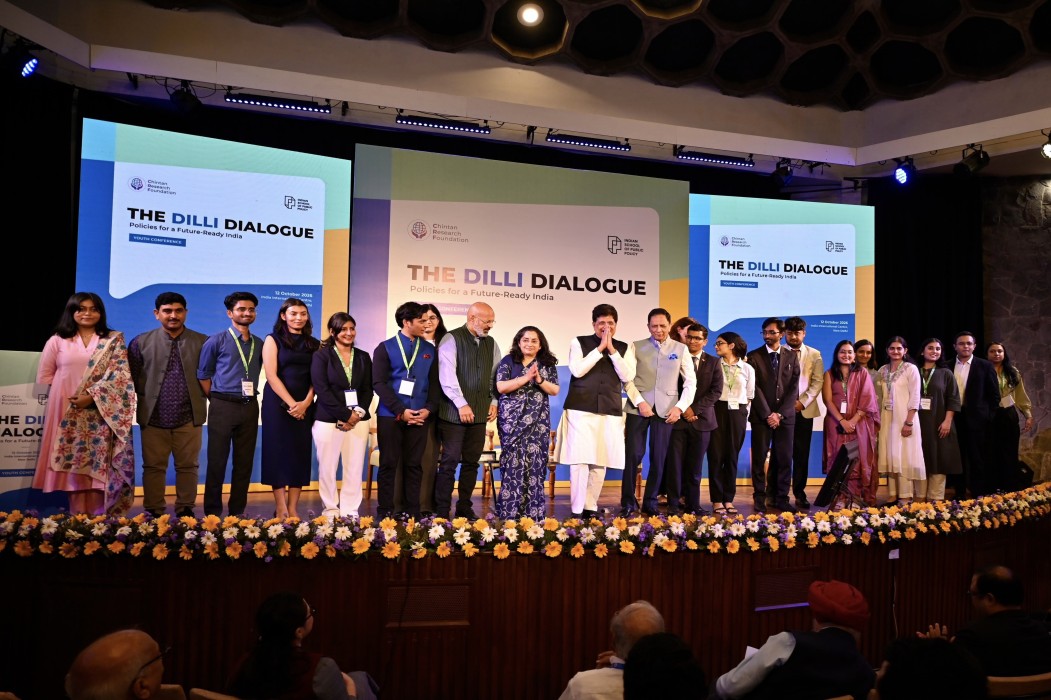
Addressing the ‘Dilli Dialogue: Policies for a Future-Ready India’ in New Delhi, on Monday, he highlighted the importance of creating opportunities for businesses, startups and young people. The Minister said, “We want to be a part of the global marketplace. Providing opportunities for people, providing opportunities for jobs, for our startups, for our youth to come up with newer ideas.”

Shri Goyal highlighted India’s expanding engagement with global markets through Free Trade Agreements (FTAs), emphasising the opportunities these agreements create for Indian businesses and youth. He said that India’s partnerships with developed economies could benefit both sides, with India offering strengths in textiles, footwear, agriculture and food processing while gaining access to advanced technologies and high-quality electronic equipment.

Emphasising India’s approach to global engagement and self-reliance, Shri Goyal said, “We are not closing the doors of India to the world. We are, in fact, opening them wider.”

Shri Piyush Goyal, also emphasised the importance of setting ambitious targets for India’s economic growth and exports while speaking at the event, Shri Goyal referred to the trillion-dollar export target and expressed confidence in India’s ability to achieve it and highlighted the importance of pursuing ambitious national goals as part of the country’s journey towards ‘Viksit Bharat 2047.’

The Minister said that India’s ambition of becoming a developed nation by 2047 is supported by a roadmap identifying sectors that will contribute to the country’s growth. He highlighted the rising demand for goods and services among India’s 1.4 billion people and said that growing imports also indicate opportunities for domestic industry and international investors. He noted that increasing demand for electronics and white goods could encourage investment in domestic manufacturing, including semiconductor factories.

Shri Goyal identified tourism as a sector with substantial potential to generate employment and create new business opportunities. He said that artificial intelligence could improve the efficiency of tourism promotion, while human experiences would remain central to the sector. He stated, “AI can only add to the efficiency of promoting tourism. But otherwise, human experiences will always be AI proof.”

He also highlighted India’s culinary heritage and regional diversity, referring to the potential of Indian food traditions and products such as filter coffee, rasam, idli and dosa.

Shri Goyal also highlighted India’s demographic advantage, noting that its young population offers opportunities at a time when many economies are experiencing ageing populations. He referred to the demand for Indian workers in countries such as Germany and Japan and highlighted the potential for Indian professionals to contribute to international markets. Shri Goyal also highlighted the trust placed in Indian workers internationally, stating that Indians are respected for their honesty and their commitment to caring for others.

Shri Piyush Goyal expressed confidence that India would emerge as a global hub for car manufacturing, stating that international automobile manufacturers would increasingly manufacture in India as market demand reaches a viable scale. Referring to the quotas permitted for car imports from the United Kingdom and the European Union, Shri Goyal explained that these largely covered expensive cars, while the lower-priced segment had not been opened. Citing the examples of luxury automobile manufacturers establishing manufacturing plants in Pune after initially testing the Indian market, Shri Goyal highlighted India’s potential to attract global automobile manufacturers and strengthen its position in global car manufacturing.

Emphasising the importance of quality in strengthening India’s global competitiveness, the Minister called for collective efforts by policymakers, industry stakeholders and institutions, including the Bureau of Indian Standards and the Food Safety and Standards Authority of India, to improve quality standards.

Shri Goyal concluded by emphasising that if India adopts and practises world-class quality standards, no power on earth can stop it and the world is India’s to capture.
CM Naidu urges centre to set up shipbuilding centre at Dugarajapatnam

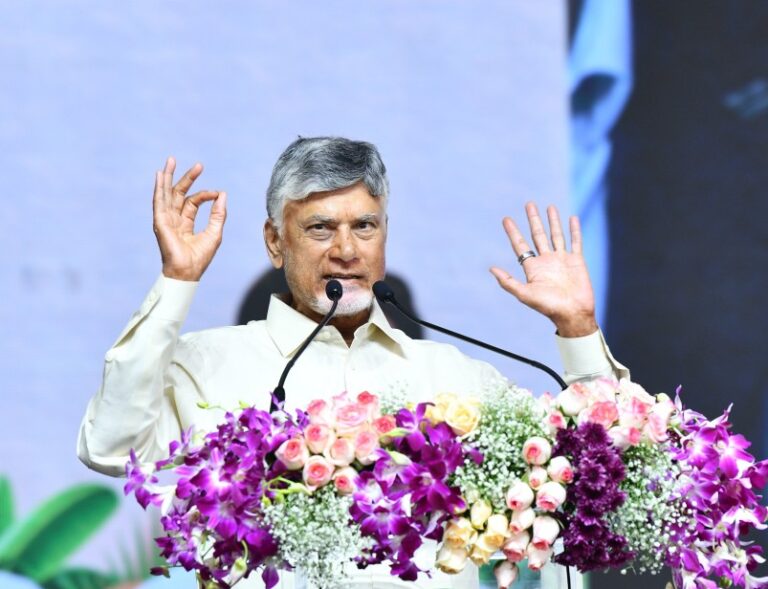
HYDERABAD: Andhra Pradesh Chief Minister Shri N Chandrababu Naidu has sought the Centre’s cooperation to further expand maritime-based economic activities in the state.

According to a statement, during his meeting with Union Minister for Ports, Shipping and Waterways Shri Sarbananda Sonowal on last Thursday, Shri Naidu discussed the development of ports in the state, setting up a terminal at Mulapeta Port and establishing a shipbuilding centre at Dugarajapatnam.

The chief minister explained that the state is accelerating industrial and commercial development based on its ports by effectively leveraging its long coastline.

He said that developing sectors such as shipbuilding, ship repair and marine engineering in conjunction with the existing and proposed ports would create large-scale employment and investment opportunities.

Naidu stated that the development of Mulapeta Port in Srikakulam district would give a major boost to commercial activities in North Andhra.

He sought the Centre’s support for developing the terminal and allied infrastructure required for the port.

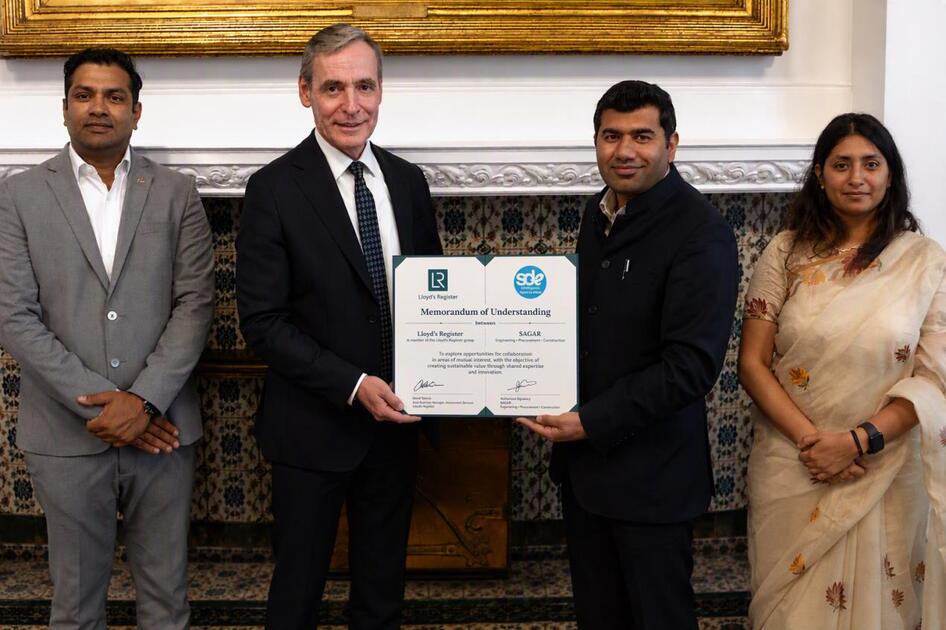
Sagar Defence and Lloyd’s Register join forces to advance certification of autonomous maritime systems

The collaboration will help create a practical pathway for the assurance, certification and deployment of autonomous and remotely operated maritime technologies.

NEW DELHI: Lloyd’s Register (LR) and Sagar Defence Engineering Limited (SDEL) have signed a Memorandum of Understanding (MoU) to help create practical pathways for the safe certification, assurance and regulatory acceptance of autonomous and remotely operated maritime systems.

As interest in autonomous technologies and remotely operated systems grows across commercial, government and defence sectors, developers and operators face increasing pressure to demonstrate that new systems can operate safely, reliably and in line with evolving regulatory requirements.

LR and Sagar Defence will work together to bridge the gap between technological innovation and operational deployment, helping move autonomous maritime systems from concept to approved operation.

The MoU combines LR’s global expertise in classification, assurance and regulatory compliance with Sagar Defence’s experience developing autonomous and remotely operated platforms. The partnership will focus on supporting the classification, certification and operational acceptance of autonomous systems while helping shape the rules, guidance and assurance frameworks needed for wider industry adoption.

The two organisations will work together to develop practical approaches to verification, validation and testing, alongside classification readiness assessments and assurance methodologies.

The collaboration will also support the development of operational concepts, mission profiles and safety cases, while enabling closer engagement with regulators, government agencies and industry stakeholders to support the evolution of certification pathways for autonomous technologies.

David Lloyd, Vice President, Naval and Government Business, Lloyd’s Register, said: “Autonomous maritime capability is moving rapidly from experimentation to operational deployment. For the world’s leading navies, the decisive question is no longer whether autonomy is technically possible, but whether it can be trusted to perform safely, securely and consistently under demanding mission conditions.

“Through this collaboration, Lloyd’s Register will work with Sagar Defence to establish credible, evidence-based pathways from concept development and system integration through trials, certification readiness, operational acceptance and in-service assurance. By combining independent assurance, naval engineering, cyber-resilience and regulatory expertise, we aim to support the development of autonomous systems that are safe, resilient, interoperable and mission-ready, giving operators, acquisition authorities and regulators the confidence to deploy maritime autonomy at pace and scale.”

Mridul Babbar, Director of Sagar Defence Engineering Limited, said: “Autonomous and remotely operated systems are set to play an increasingly important role across maritime and defence applications. Working with Lloyd’s Register will help us strengthen the assurance, certification and regulatory foundations that support these technologies.

“Together, we aim to accelerate the journey to operational deployment and support wider industry confidence in autonomous systems.”

Dipali Kuchekar, Global Director, Naval Autonomous Systems, Lloyd’s Register, said: “Maritime autonomy cannot be assured by looking at the platform, software or mission in isolation. Confidence must be built at system level, considering how the vessel, autonomous functions, sensors, communications, remote operators and supporting infrastructure work together under normal, degraded and failure conditions.

“Our collaboration with Sagar Defence will bring assurance into the development process from the outset. This will help translate operational needs into clear engineering requirements, define proportionate test and evaluation evidence, and support a traceable pathway towards certification, operational acceptance and assurance throughout the system lifecycle.”

Indian Navy commissions indigenous Anti-Submarine Warfare Shallow Water Craft INS Mangrol

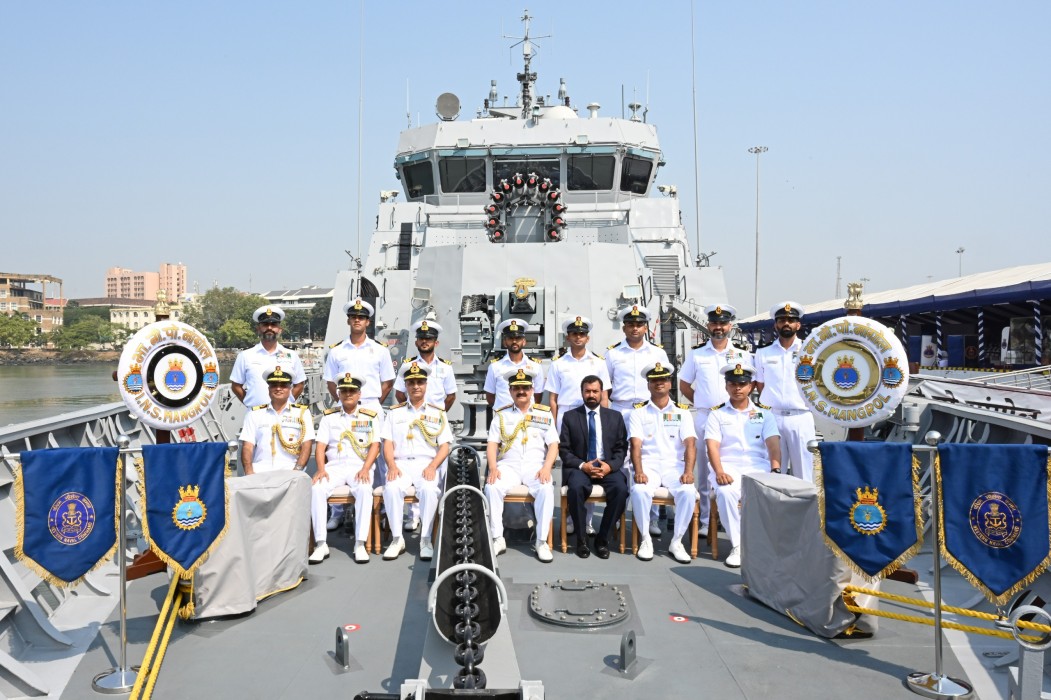
MUMBAI: The Indian Navy commissioned INS Mangrol (P82), the third Mahe-class Anti-Submarine Warfare Shallow Water Craft (ASW-SWC), at the Naval Dockyard, Mumbai, on 12 Oct 2026. The commissioning ceremony was presided over by VAdm Sanjay Vatsayan, Flag Officer Commanding-in-Chief, Western Naval Command.

The commissioning ceremony was attended by senior officers of the Defence Forces, representatives of the Ministry of Defence, Cochin Shipyard Limited (CSL), industry partners and other distinguished dignitaries.

Indigenously designed and constructed by Cochin Shipyard Limited, Kochi, INS Mangrol represents India’s growing capabilities in warship design, construction and systems integration. With over 80 percent indigenous content, the ship reflects the nation’s commitment to Aatmanirbhar Bharat and Make in India, while highlighting the contribution of Indian defence industries and Micro, Small and Medium Enterprises (MSMEs) towards strengthening indigenous naval capabilities.

Designed for operations in coastal and shallow waters, INS Mangrol is equipped to undertake Anti-Submarine Warfare (ASW), underwater surveillance and Low-Intensity Maritime Operations (LIMO), along with mine warfare-related tasks. Its advanced sensors, sonar and weapon systems enhance its capability to detect, track and counter underwater threats in the challenging littoral environment. Powered by three diesel engine-driven waterjet propulsion units, the ship offers high manoeuvrability and rapid response, essential for operations in shallow and confined waters.

VAdm Sanjay Vatsayan, in his address, congratulated the Indian Navy and CSL on the commissioning of INS Mangrol. He highlighted the importance of indigenous warships in strengthening India’s maritime surveillance and anti-submarine warfare capabilities, particularly in the evolving maritime security environment. He also emphasised the growing capabilities of India’s indigenous shipbuilding industry and the Indian Navy’s continued commitment to technological advancement, operational preparedness and self-reliance in defence manufacturing.

INS Mangrol derives its name from the coastal town and prominent fishing harbour of Mangrol in Junagadh district of Gujarat. The ship also carries forward the legacy of the erstwhile INS Mangrol (M85), a minesweeper that served the Indian Navy until April 2004, continuing the naval tradition of preserving the names of distinguished warships.

The commissioning of INS Mangrol marks another significant milestone in strengthening the Indian Navy’s anti-submarine warfare capabilities and coastal defence preparedness. The ship will contribute to safeguarding India’s coastal approaches and maritime interests, enhancing maritime domain awareness and countering underwater threats. Its induction further reinforces the Indian Navy’s commitment to maritime security, regional stability and self-reliance in warship construction, in furtherance of India’s maritime interests in the Indian Ocean Region.

GEODIS certified to provide specialized transport services for the defence sector in Poland

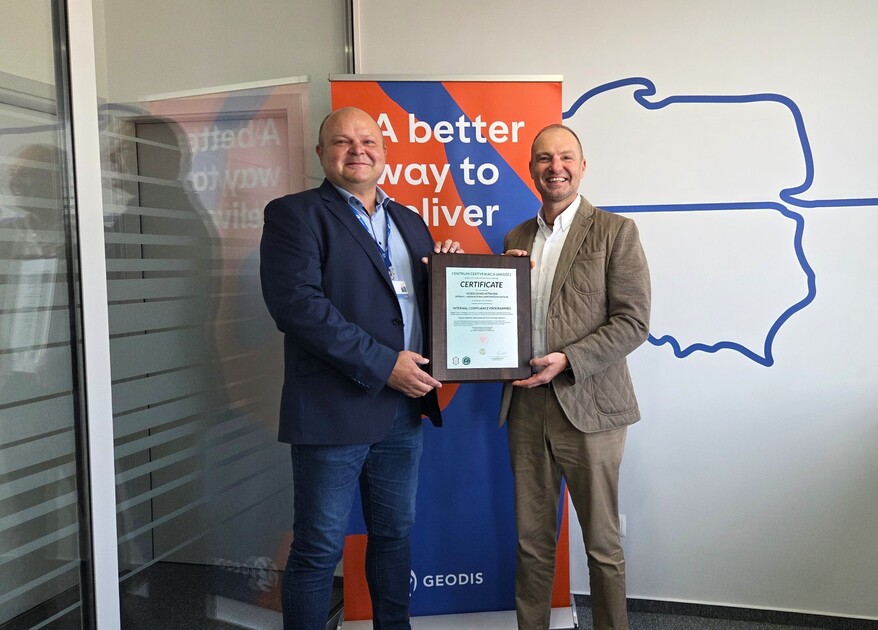
POLAND: GEODIS, a world leader in transport and logistics, obtained the Internal Compliance Programmes certificate in Poland. This certificate expands GEODIS’ capabilities in providing specialized logistics and transport services for the defence sector and companies operating in areas subject to specific legal requirements. This applies to goods, technologies and services of strategic importance, including dual- use products, in accordance with their classification and lists specified in the applicable national and EU legislation. 

The certification – issued by CCJ, an accredited certification body operating within the structures of the Military University of Technology – is a confirmation of GEODIS’ professionalism and responsible approach to safety, regulatory compliance and control of trade with foreign countries. At the same time, it opens up new opportunities for cooperation with companies that, due to the nature of their business, the purpose of their products or the applicable legal requirements, need a logistics partner with appropriate procedures, competences and a supervisory system. 

“This is another step in the development of specialist services of GEODIS in Poland. We send a signal to customers and companies that we are ready to carry out even the most specific products and demanding orders. We guarantee not only high quality of services, but also full confidentiality and compliance, which is crucial in this sector.” said Marc Vollet, EVP of European Road Network at GEODIS.

Obtaining the certificate was preceded by a comprehensive process of preparing the organization, including review and adjustment of internal procedures, audits, employee training, and determination of responsibilities and functions related to the working of the internal control system. 

The operation of the Internal Compliance Programmes is subject to constant supervision and periodic reviews and assessments. 

Possessing a certified Internal Compliance Programmes strengthens GEODIS’ competence in Poland in serving customers for whom supply chain security, regulatory compliance, access control to information and proper supervision of logistics processes are of particular importance. 

This certification is part of GEODIS’ broader sustainability, safety and compliance global strategy, thus confirming the company’s responsibility to customers, partners and the business environment.

deugro and dteq Deliver Two Power Transformers to Scotland

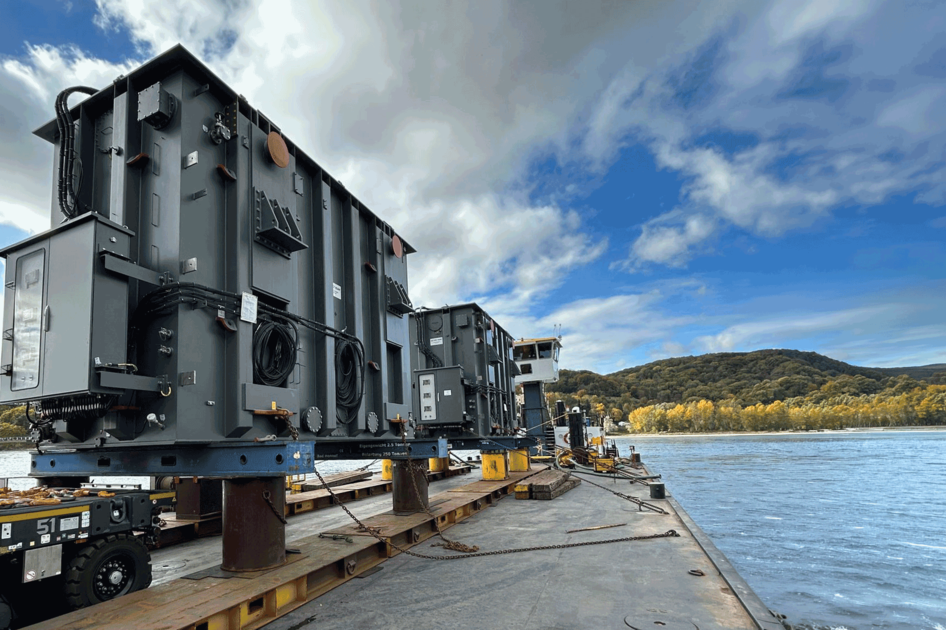
SCOTLAND: In close collaboration, deugro and dteq Transport Engineering Solutions (dteq) delivered two power transformers to a project site in Scotland.

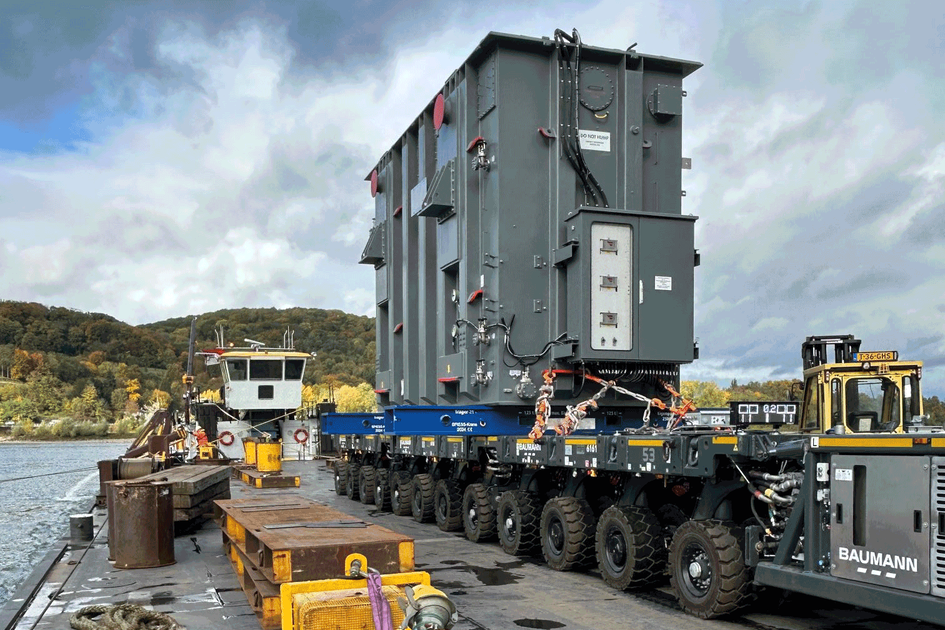
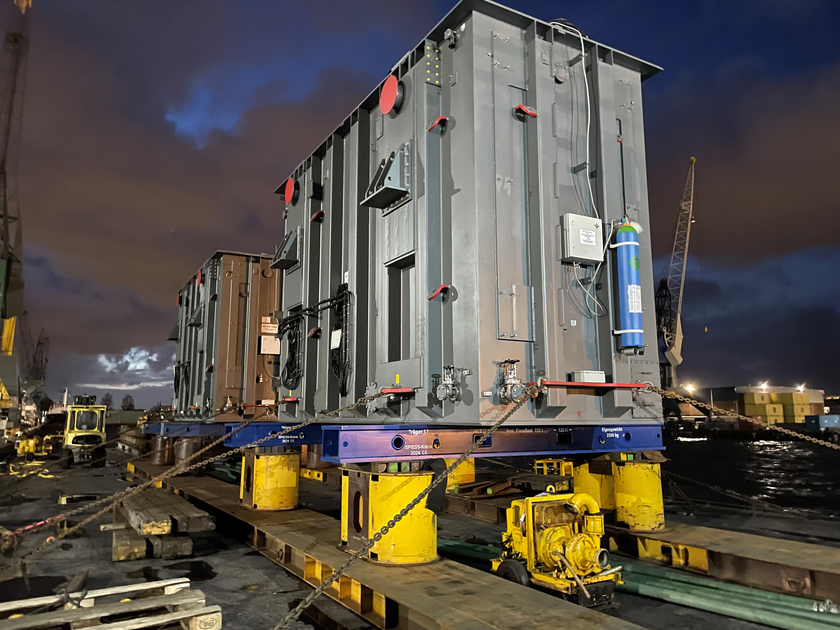
The transformers were collected at the German manufacturing plant and transported—secured in line with dteq’s load-securing design—to a nearby RO/RO jetty, where they were rolled onto a barge and positioned on pre-installed grillage and stool configurations under the personal supervision of deugro Germany and dteq. After seafastening was installed in accordance with dteq’s engineered design, the barge commenced its three-day Rhine transit to the Port of Rotterdam, the Netherlands,where the transformers were discharged.

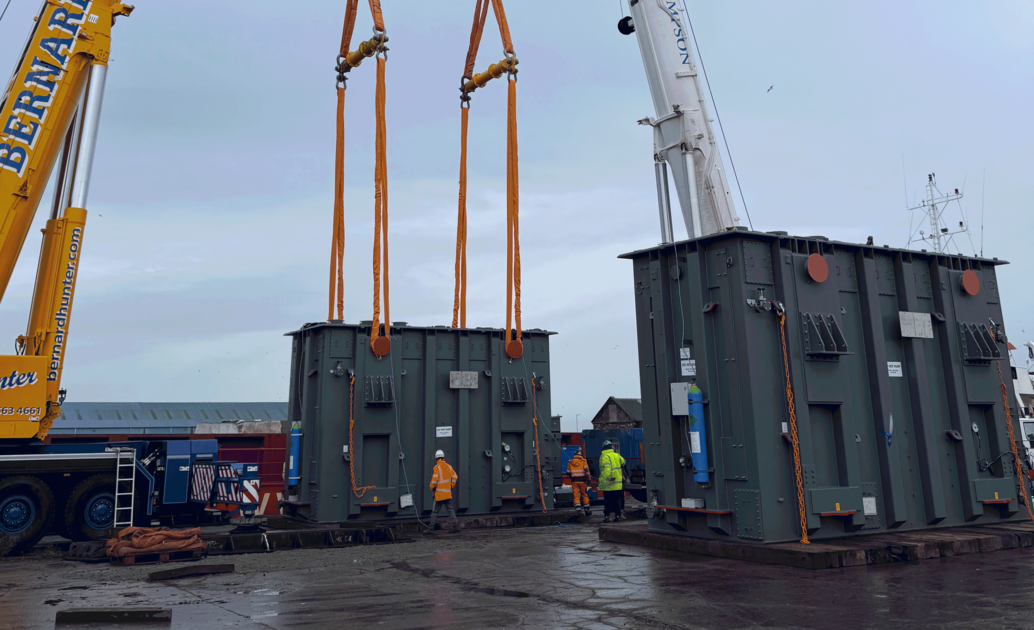
For the onward voyage to Scotland, deugro chartered a coaster vessel, onto which the transformers were loaded, stowed and secured in line with dteq’s lifting and load-securing plans, under the personal supervision of dteq and deugro Netherlands. After a three-day voyage, the vessel arrived on schedule at the Port of Leith in Edinburgh, Scotland, where deugro UK coordinated the discharge of both transformers using tandem lifting operations.

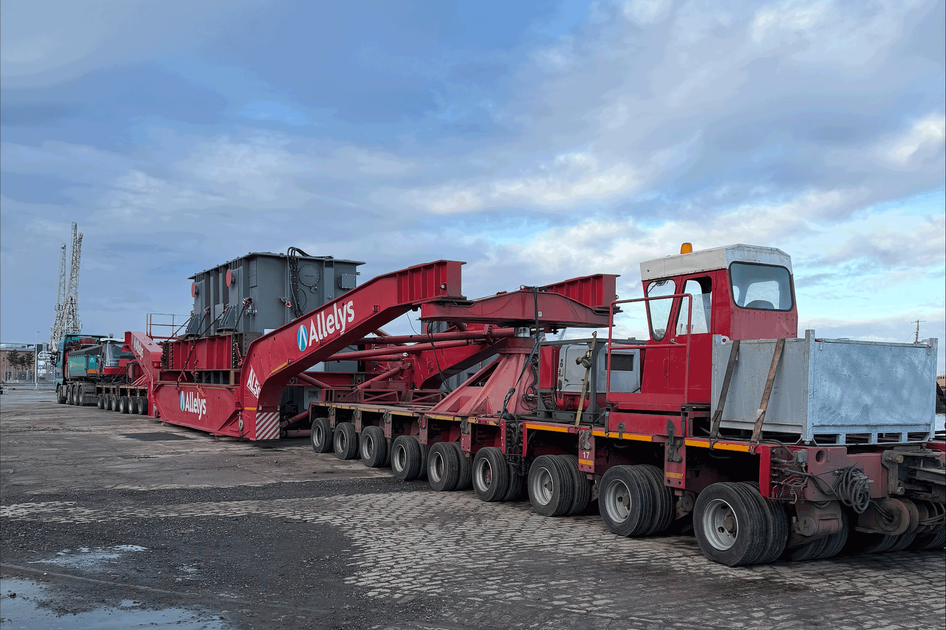
For the last mile to the construction site, deugro UK arranged an 18-axle girder frame. With an overall length of more than 64m, navigating the 74km route with the extremely heavy and sensitive units required utmost caution and precision. The route was therefore surveyed in advance for potential obstacles and bottlenecks, while deugro’s project managers personally accompanied
the transport, supported by escort vehicles and personnel at the front and rear to ensure a smooth and safe delivery.

Both transformers were delivered safely and on schedule to the site’s designated laydown area and installed in accordance with the project timeline via a single-direction jack-and-skid operation.

Alex Vainokivi appointed Managing Director of SRC Estonia

ESTONIA: Alex Vainokivi has been appointed Managing Director of SRC Estonia, part of SRC Group – an international ship modernisation and conversion group. The management change reflects SRC’s aim to drive further growth by expanding its portfolio of proprietary products and technologies as well as its project-based services.

Vainokivi, previously Innovation Manager, takes over day-to-day management from SRC Group’s founder and major shareholder, Hannes Lilp, who remains CEO and Chairman of SRC Group. Lilp will focus on SRC Group’s strategic management, international business development and collaboration with the heads of its subsidiaries.

“Alex’s task is to take SRC Estonia to the next level in business volume and profitability,”
said Hannes Lilp, CEO and Chairman of SRC Group. “This means strengthening cooperation between sales and project delivery and increasing the contribution of our own products to the company’s results. Alex knows our organisation and our customers, and he has demonstrated his ability to bring technical development projects to international partners and prospective clients.”

Vainokivi will be responsible for SRC Estonia’s day-to-day management and business performance. His remit also covers business generated through SRC Nordic and SRC USA and delivered by SRC Estonia. Initially, he will also continue to lead innovation and the development of the company’s own products.

Headquartered in Estonia, SRC Group carries out repair and conversion projects for vessels and offshore installations, from engineering and procurement through to installation and handover. Its projects cover technical conversions, electrical and automation systems, and interior refurbishment. Work is carried out wherever vessels are located, in ports and shipyards worldwide, as well as during voyages.

“My aim is to grow SRC’s business so that increased workload also brings greater profitability. This requires a systematic approach to sales, well-managed projects and clear accountability. Alongside our services, we also want to increase sales of our own technologies so that our engineering expertise and development work generate more value for the company,” said Vainokivi.

Vainokivi joined SRC in March 2019 and has worked in project management, marketing and innovation. He holds a degree in marine engineering and a Master of Business Administration.

As Innovation Manager, he has led the development of Methanol Superstorage, among other projects. The solution replaces the conventional separation space, or cofferdam, around a vessel’s methanol and ethanol fuel tanks with a compact steel-and-elastomer sandwich structure. Depending on the tank arrangement, this can nearly double the space available for fuel. The solution received the Royal Institution of Naval Architects’ Maritime Innovation Award in 2025.

“The next step for our own products is to turn technical achievements into repeat sales. Shipowners need to understand which problem a solution addresses and what economic benefit it offers. This principle must guide both our product development and the conversion projects we propose,” Vainokivi added.

Ship Recycling hits 50-Year Low as Ageing Fleet Balloons

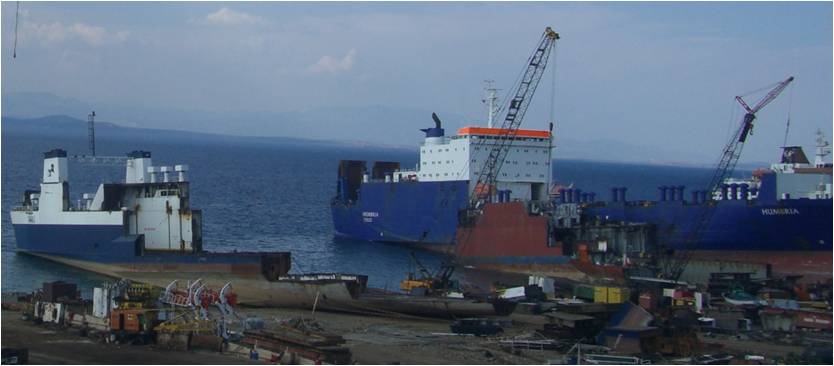
LONDON: Shipbreaking activity has fallen into its most prolonged continuous decline in over fifty years, at a time when the worldwide commercial fleet is amassing record quantities of older vessels.

According to Clarksons Research, merely 273 vessels amounting to 5.5m gt, or approximately 8m dwt, changed hands for scrapping during the opening nine months of 2026 — a 13% drop from the previous year’s already poor level and 60% lower than the typical figure for the 2000s and 2010s.

For five years running, under 0.5% of worldwide fleet tonnage has been demolished each year, a proportion smaller than even the 2006-08 boom period and the most extended stretch of this kind since the early 1970s.

Consequently, over 340m gt of vessels is now aged 20 years or above, a 90% increase within five years and nearly one-fifth of the global fleet, versus 12% in 2021. More than 150m gt has reached 25 years or older, a 75% rise over five years, and a record 68m gt has exceeded 30 years.

Tankers display this pattern most starkly: 22% of their capacity now exceeds 20 years of age, compared with only 8% half a decade earlier. For container ships, that share has doubled to 16%, even with an orderbook surpassing 40% of the current fleet on the horizon. In contrast, just 12% of bulk carrier capacity and 10% of LNG tonnage is older than 20 years.

Demolition economics continue to lack appeal amid the record freight rates of the 2020s. Scrap steel prices in the Indian subcontinent have climbed 20-25% during this year, yet the ClarkSea Index reached a fresh all-time peak of $84,951 per day on Friday, rendering ongoing trading and resale transactions far more appealing.

Clarksons’ most recent recycling market review logs only 8.4m dwt sold for demolition so far this year. It observes sustained purchasing appetite in Bangladesh and Pakistan, whereas Indian yards prefer specialised vessels.

In its latest weekly update, cash buyer GMS remarked that the closing quarter is turning into a test of endurance, as recyclers possess both the capacity and readiness to purchase, while shipowners retain freight income, resale options and time as advantages.

The expanding reservoir of older ships may eventually offer the industry a significant supply-side outlet once freight markets finally adjust downward.

Source: IndexBox

PM Modi lays the foundation stone, inaugurates and dedicates various development projects worth over ₹13,000 crore in Chennai

PM highlighted a recent landmark decision to invest approximately 17,000 crore rupees to transform Thoothukudi’s VOC Port into a World-Class Mega Container and Green Energy Hub, capable of accommodating ultra-large container vessels

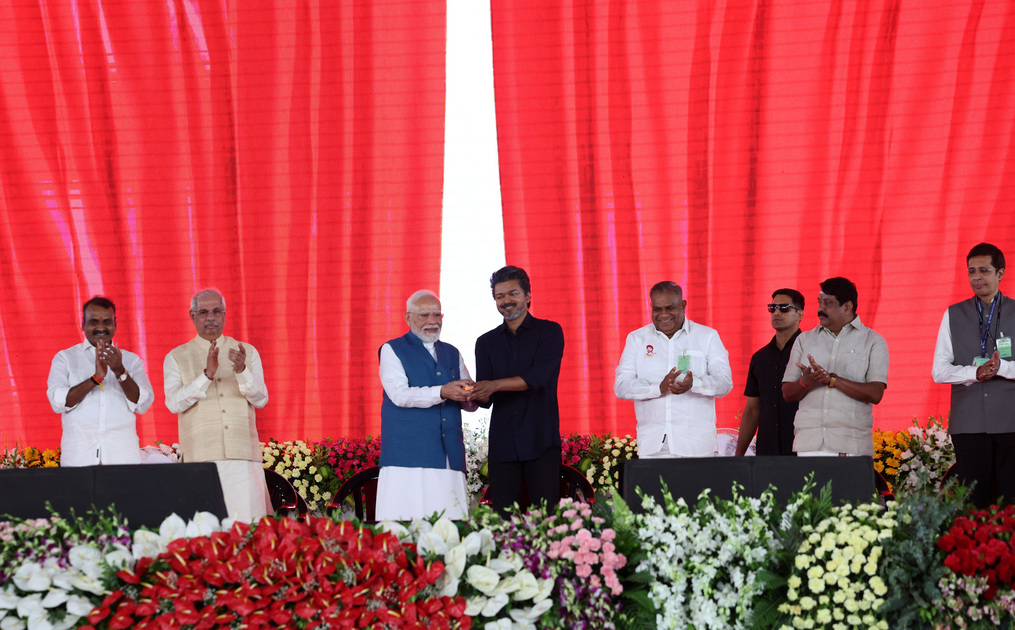
CHENNAI : Prime Minister Shri Narendra Modi on Sunday inaugurated and laid the foundation stones for various development projects worth over ₹13,000 crore across Tamil Nadu. The initiatives included those in the road and rail transport and petroleum sectors.

The PM, along with Tamil Nadu Chief Minister C Joseph Vijay, inaugurated and laid the foundation stones for the developments projects at an event held at the IIT Madras.

The projects include those in National Highways worth around ₹3,700 crore, initiatives in the Chennai Port, Kamarajar Port and V O Chidambaranar Port and Amrit railway stations. He also dedicated to the nation, the Sudha Gopalakrishnan Brain Centre (SGBC) at IIT Madras.

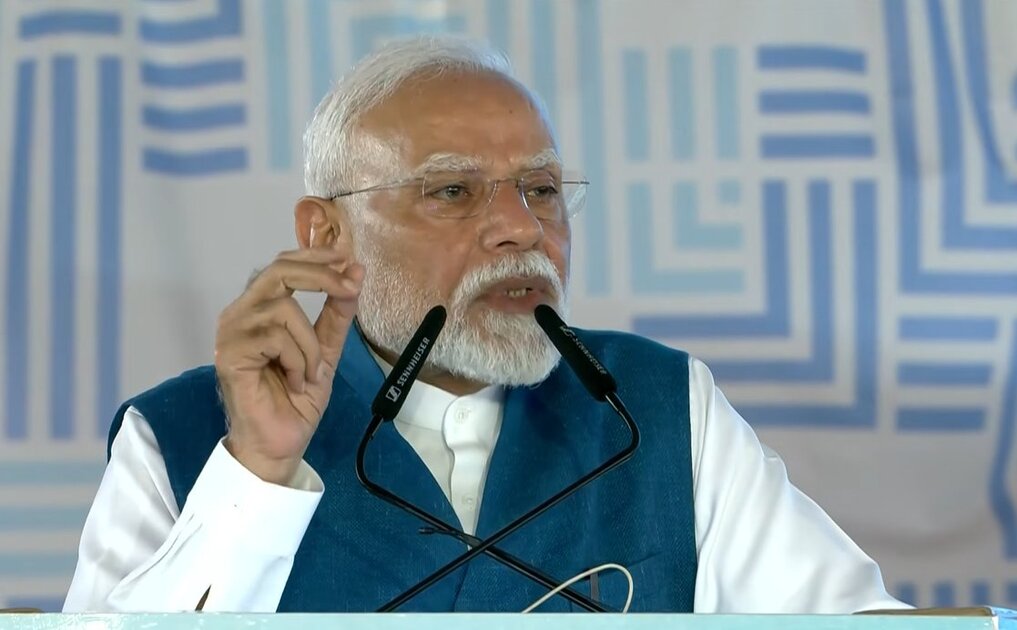
Focusing on the strategic modernization of maritime logistics, the Prime Minister announced that the nation’s port infrastructure is being heavily bolstered to push the shipping sector to unprecedented heights, with Tamil Nadu playing a central role. He highlighted a recent landmark decision to invest approximately 17,000 crore rupees to transform Thoothukudi’s VOC Port into a World-Class Mega Container and Green Energy Hub, capable of accommodating ultra-large container vessels. “This will help Tamil Nadu become a global hub for industry and transport,” asserted Shri Modi.

Highlighting the operational successes of this maritime focus, the Prime Minister pointed out that both the speed and efficiency of Indian ports have drastically improved in recent years. He noted that significantly reducing ship turnaround times by half has allowed domestic products to reach global markets much faster than ever before. “Because of this, India’s products as well are able to reach global markets faster than before,” observed Shri Modi.

Earlier, PM Modi inaugurated the Poonamallee-Vadapalani stretch of Phase II of the Chennai Metro Rail Project, built at a cost of around ₹4,900 crore.

PM Modi and CM Vijay together flagged off the new services and travelled on the Metro train. The new services are covered under Corridor four of Phase two of the Metro Rail project. In the newly inaugurated stretch, there are a total of 11 elevated Metro Stations covering approximately 15 km.

Turning to the blue economy, the Prime Minister underscored the vital role of fishermen in the nation’s Ocean Economy vision. He detailed that thousands of crores have been approved for Tamil Nadu through the PM Matsya Sampada Yojana and other schemes to upgrade fishing harbors, develop landing centers, and improve cold chain facilities. . “Help has also been provided to purchase transport vehicles to keep fish fresh,” noted Shri Modi.

Elaborating on the targeted support provided to coastal communities, the Prime Minister listed several key interventions, including the modernization of the Chennai Fishing Harbour and the development of a ‘Sea-weed Park’ in the state. “Through the Kisan Credit Card, working capital is now also easily available to fishermen,” affirmed Shri Modi.

Celebrating the tangible results of these targeted maritime policies, the Prime Minister proudly announced that national fish production has increased rapidly, driving seafood exports to their highest ever levels in terms of both quantity and value last year. “This is also improving the lives of our fishermen families and people in coastal communities,” asserted Shri Modi.

Concluding his address with a unified vision for the future, the Prime Minister pledged the absolute, unwavering commitment of the central government to assist Tamil Nadu in reaching continuous new heights of prosperity. He called for a collective effort to realize the grand vision of a developed nation by first ensuring a fully developed Tamil Nadu, offering his best wishes for the success of all the newly launched projects. “Together, we will realize the resolve of a Viksit Bharat through a Viksit Tamil Nadu,” affirmed Shri Modi.

PM Narendra Modi inaugurates four infrastructure projects worth ₹158.17 crore of Chennai Port

New facilities to boost EXIM cargo handling, seafarer welfare and cruise passenger experience

CHENNAI: The Hon’ble Prime Minister of India, Shri Narendra Modi, inaugurated four key infrastructure projects at Chennai Port Authority on October 11, 2026, involving a total investment of ₹158.17 crore. The projects are aimed at strengthening cargo-handling capabilities, improving facilities for seafarers and enhancing services for cruise passengers.

According to a post shared by Chennai Port Authority on LinkedIn, the four projects comprise

▪️ Construction of Four EXIM Godowns
▪️ Development of a Paved Storage Yard
▪️ Development of a Seafarers Club
▪️ Improvements to the Cruise Terminal

Enhancing Cargo Handling and Storage Capacity

The construction of four EXIM godowns will strengthen the port’s cargo storage infrastructure, supporting the efficient handling of export-import consignments. The new paved storage yard will provide additional space for cargo storage and facilitate smoother port operations.

These facilities are expected to support the requirements of trade and industry while improving the port’s ability to manage cargo efficiently.

Focus on Seafarer Welfare and Cruise Tourism

Recognising the vital contribution of seafarers to global trade and maritime operations, the Seafarers Club will provide dedicated facilities to support their welfare and comfort.

Meanwhile, improvements to the Cruise Terminal are intended to enhance passenger facilities and the overall cruise experience. The initiative also supports Chennai’s potential to attract cruise traffic and strengthen its position in India’s growing cruise tourism sector.

Strengthening Chennai Port’s Strategic Role

The ₹158.17-crore investment reflects the Government of India’s vision of building modern, efficient ports that facilitate trade, improve maritime services and generate value across the maritime value chain.

As a key maritime gateway on India’s eastern coast, Chennai Port plays an important role in supporting the country’s EXIM trade and regional industrial activity. Investments in cargo infrastructure, seafarer amenities and cruise facilities will help the port respond more effectively to the changing needs of exporters, importers, shipping companies and passengers.

The projects also reinforce Chennai Port’s importance as a strategic economic asset for Tamil Nadu, contributing to trade facilitation, stronger logistics capabilities and regional prosperity.

With these initiatives, Chennai Port Authority continues to advance a more efficient and service-oriented port ecosystem, supporting India’s broader maritime ambitions and the long-term growth of its trade and logistics sectors.