Home Blog Page 72

INTERVIEW: India–UK CETA opens New Trade Corridors, but Competitiveness will define the Winners, says WTCA

India Shipping News Exclusive Interview with Scott Wang, Vice President, Asia Pacific, WTCA, and Badal Saboo, Business Development Lead, India & Asia Pacific, WTCA

India–UK CETA has opened a significant new chapter in bilateral trade, creating wider market-access opportunities for Indian exporters while also raising the bar on compliance, quality, traceability and supply-chain efficiency. As Indian businesses look to translate preferential access into sustainable commercial growth, the focus is increasingly shifting from tariff concessions to the ability to meet international standards, build trusted partnerships and develop resilient global supply chains.

In an exclusive interview with India Shipping News, Mr. Scott Wang, Vice President, Asia Pacific, World Trade Centers Association (WTCA), and Mr. Badal Saboo, Business Development Lead, India & Asia Pacific, WTCA, share their perspectives on how Indian businesses—particularly MSMEs—can leverage the India–UK CETA, identify emerging sectoral opportunities and strengthen their position in global value chains.

The WTCA leaders discuss the sectors with the greatest potential, the importance of rules of origin and sustainability compliance, practical strategies for MSMEs entering the UK market, and India’s growing role as a manufacturing, sourcing and logistics hub. They also highlight the critical role of multimodal connectivity, digital trade documentation, customs efficiency and predictable logistics in converting market access into actual trade flows.

With the WTCA network spanning more than 300 licensed locations across nearly 100 countries and territories, the interview also explores how trusted local networks, trade missions, matchmaking and market intelligence can help Indian companies move beyond a single export market and establish a broader international footprint.

As Mr. Wang emphasises, India’s opportunity is considerable—but market access alone will not create globally competitive companies. Indian businesses will increasingly need to compete on productivity, quality, technology, compliance and reliability, while moving from simply exporting products to building lasting positions within global value chains.

Excerpts from an Interview

Questions

Q. From your perspective, what fundamentally changes for Indian businesses now that the India–UK CETA has entered into force?

Beyond the headline tariff reductions, what are the most significant commercial opportunities that Indian exporters and businesses should be looking at immediately? Do you believe Indian companies are adequately prepared to take advantage of the agreement?

Scott: The Comprehensive Economic and Trade Agreement between India and the United Kingdom (India-UK CETA), signed on July 24, 2025 in London, seeks to enhance bilateral trade to US $120 billion by 2030 by eliminating tariffs on 90% to 99% of goods and liberalizing key services sectors, improving market access, and increasing investment flows between the two nations. It serves not just as policy instruments; they act as strategic frameworks for establishing resilient and reliable trade routes. They also open up new opportunities for collaboration, technology exchange, and participation in value chains across continents.

Despite the tremendous opportunity, there are many challenges for Indian companies in particular SMEs. They’ll need to enhance their awareness and understanding of the FTAs and the requirements. To crack the maze of rules of origin, they’ll need to optimize operation in supply chain management, standardize documentation, deal with the increased cost of the new proceedings, and identify proper partners and agencies for assistances.

Q. Which Indian sectors are best positioned to benefit from CETA over the next three to five years?

Badal: The immediate beneficiaries are the established sectors: textiles and apparel, leather, gems and jewellery, engineering goods, pharmaceuticals, and processed foods. The larger opportunity, which many emerging exporters miss, sits one level deeper: sustainable textiles, technical fabrics, precision-engineered components, EV supply chains, healthcare products and technology-enabled services, where India can compete on specialised capability rather than cost alone.

Q. What should exporters do to meet UK standards on origin, sustainability and traceability?

Badal: Compliance must be designed into the product and business model from day one, not added after the first order arrives. Exporters should map product standards, labelling, testing, rules-of-origin documentation and traceability requirements before quoting a price.

The gaps I see most often among Indian MSMEs are fragmented documentation, limited traceability beyond the first-tier supplier and excessive dependence on a single overseas agent instead of developing direct market understanding. The practical response is a readiness audit, followed by an initial pilot shipment before committing to volume. Where individual MSMEs cannot justify the full cost of testing and compliance, export clusters and industry associations can help pool specialist resources. In a developed market such as the UK, compliance is not merely an overhead: it is what earns and retains a buyer’s trust.

Q. What practical steps should an MSME take when entering the UK market for the first time?

Badal: Start by narrowing the target: one product, one customer segment and one route to market where the business has a genuine advantage, not “the UK” as one undifferentiated opportunity. Then validate the proposition by speaking directly with prospective buyers, distributors and local market experts. Desk research alone will not reveal how purchasing decisions are actually made.

Before scaling, prepare a complete landed-cost model covering duties, freight, certification, distributor margins, returns and working capital. A product that appears competitive at the factory gate may not remain so after these costs are included. Begin with a pilot order or limited regional partnership, independently verify counterparties, and clearly document payment terms, exclusivity, performance obligations and intellectual-property protection. The objective is not one successful shipment; it is a repeatable and sustainable position in the market.

Q. Global supply chains are being reshaped by geopolitical developments, diversification strategies and the growing emphasis on resilience. How do you see India’s position evolving as a manufacturing, sourcing and logistics hub for global companies?

Could the India–UK CETA also encourage British and other international companies to use India as part of their wider Asia-Pacific supply-chain strategy?

Scott: Amid geopolitical developments, diversification strategies and the growing emphasis on resilience, India has been increasingly considered as a first-choice manufacturing and sourcing destination in key sectors. Electronics production has grown nearly six-fold over the past decade. Mobile phone exports crossed approximately US $13.5 billion in just the first half of fiscal 2025-26. Pharmaceutical exports surpassed US $30 billion. The auto component industry generated a trade surplus for the second consecutive year. These numbers reflect learning curves, supplier ecosystem development, and policy continuity working together. FTAs such as India-UK CETA can certainly create incentives for further FDIs, including those from UK and other European countries, in these key sectors. India’s election as Vice-Chair of the Indo-Pacific Economic Framework Supply Chain Council signals formal international recognition of its strategic role in regional trade resilience.

Q. From a trade facilitation perspective, how important will logistics, multimodal connectivity, digital trade documentation, customs efficiency and reliable supply-chain infrastructure be in determining whether Indian exporters can fully capture the benefits of the CETA?

What improvements would you like to see in India’s trade ecosystem to make exports more competitive and predictable?

Scott: CETA creates the market-access opportunity, but logistics and trade facilitation will determine how much of that opportunity Indian exporters can actually convert into business. CETA’s customs chapter calls for electronic declarations and payments, automated risk management, interoperable electronic customs systems. The digital-trade provisions also support electronic trade documents and their legal equivalence with paper documents where possible. These developments will help but India’s trade ecosystem must lower the transaction-cost barrier. The real measure of success will be whether an Indian SME can move a shipment from its factory to a UK customer quickly, digitally, transparently and with a predictable landed cost and delivery date. As such there are a number of areas India can improve such as end-to-end multi-modal connectivity among manufacturing clusters, logistics parks, rail freight corridors, airports and seaports, the transparency and predictability of customs, and reliability of supply chain such as quality, product mix and delivery accuracy.

Q. How can the WTCA network help Indian companies build a broader international footprint?

Badal: Online research can take a company only so far. What moves business forward is trusted local access, and that is the core value of the World Trade Center network: more than 300 licensed locations across nearly 100 countries and territories, including established operations such as WTC Mumbai and WTC Bengaluru in India, connecting businesses with credible buyers, distributors, advisers and commercial ecosystems on the ground.

Beyond introductions, individual WTC operations organise inbound and outbound trade missions, business delegations and sector-focused programmes that help companies understand how one market differs from another. A proposition that works in the UK may require considerable adaptation for the Middle East or Southeast Asia.

For an Indian MSME, this access does not replace commercial preparation or close the transaction on its behalf, but it can remove much of the isolation and guesswork involved in entering a new market. CETA can be the opening corridor; the wider WTC network can help companies build relationships beyond that corridor and develop a broader international footprint.

Q. Looking beyond the India–UK CETA, what is your assessment of India’s prospects in the rapidly evolving global trade landscape?

Scott: With India pursuing greater integration with major economies and supply chains diversifying across Asia, Europe and other markets, what should Indian businesses prioritise over the next five years if they want to become globally competitive and build sustainable international businesses?

India has emerged as the fastest growing major economy and is projected to become the third largest economy in the world by 2030. Given India’s strength in labor abundance, rapidly improving infrastructure, and fast economic/trade integration with other major trading powerhouse in the world through FTAs and other trade facilitation arrangements, there is great opportunity for India to expand its trade presence in the global landscape and make it one of the driving forces to achieve its development goal. On the other side market access alone will not create globally competitive companies. Over the next five years, Indian businesses need to move from competing primarily on cost to competing on productivity, quality, technology, compliance and reliability — and from simply exporting products to building lasting positions in global value chains.

The global World Trade Centers Association (WTCA) network could be a great resource of connectivity and assistance to help companies of all sizes gain from FTAs such as CETA through its core services such as trade information, trade education, inbound and outbound trade missions, as well as matchmaking. From evaluating markets to identifying strategic sectors for business, offering international legal and fiscal benchmarking services, to ensuring that industry challenges are addressed, the WTCA and its WTC operations in India such as WTC Mumbai and WTC Bengaluru are playing a pivotal role in helping Indian companies avail the benefits of FTAs.

Closing Question

Is there one key message you would like to convey to Indian exporters, MSMEs and the wider trade and logistics community regarding the opportunity that the India–UK CETA presents?

Scott: India has a historic opportunity as global supply chains diversify and its network of trade agreements expands. WTCA will work closely with its extensive and growing membership base in India and leverage its global connectivity, state-of-the-art business facilities and top-notch trade services capability to contribute to India’s development by strengthening international collaboration and expanding trade and investment in both directions.
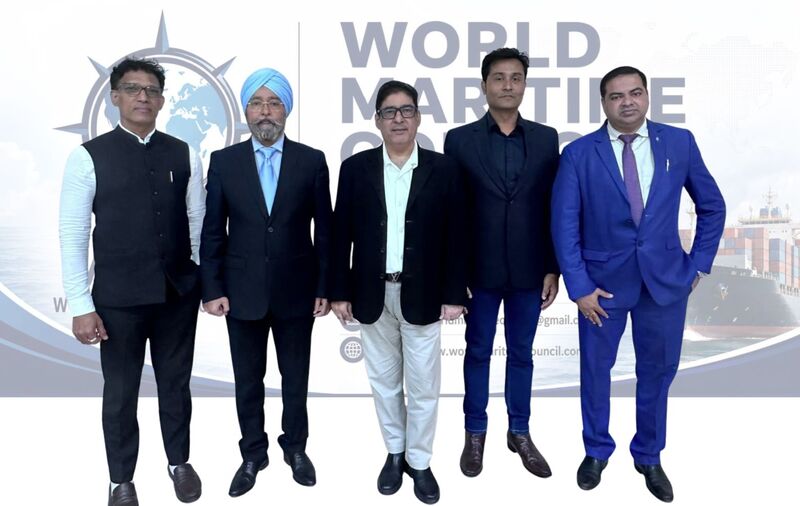
World Maritime Council launched to strengthen India’s Shipping Ecosystem

NEW DELHI: The World Maritime Council (WMC) has been officially launched as a platform aimed at bringing together Recruitment and Placement Service (RPS) companies, Maritime Training Institutes (MTIs), and DGMA-approved empanelled doctors to strengthen collaboration and professional standards across India’s maritime sector.

The newly established council seeks to create a transparent, professional and collaborative platform focused on safeguarding the interests and welfare of Indian seafarers, supporting responsible maritime businesses and promoting sustainable growth across the country’s shipping ecosystem.

Capt. Rishi Sharma, Co-CEO of GMOS WORLD, has been entrusted with the responsibility of serving as Secretary General of the World Maritime Council. Working alongside maritime professionals and industry leaders, he will support the council’s efforts to facilitate dialogue with regulators, promote professional standards and contribute to strengthening India’s position as a globally competitive maritime hub.

The WMC is envisioned not merely as an industry organisation but as a collective platform providing a unified voice to seafarers, training institutions, recruitment agencies, medical professionals and other maritime stakeholders.

By bringing key stakeholders together under a common platform, the council aims to encourage greater transparency, stronger compliance, professional collaboration and seafarer welfare. It will also provide an avenue for stakeholders to engage in policy discussions and contribute to the continued development of India’s maritime framework.

The formation of the World Maritime Council comes at a time when India is seeking to expand its role in global shipping and strengthen the competitiveness of its maritime workforce and institutions. Through greater industry collaboration and responsible practices, WMC aims to contribute to a more sustainable and globally aligned Indian maritime ecosystem.

The council has reaffirmed its commitment to transparency, professionalism, collaboration and seafarer welfare, with the broader objective of ensuring that Indian seafarers and maritime institutions continue to strengthen their presence on the global stage.

NITI Aayog VC visits Paradip Port, applauds modern infrastructure and expansion plans

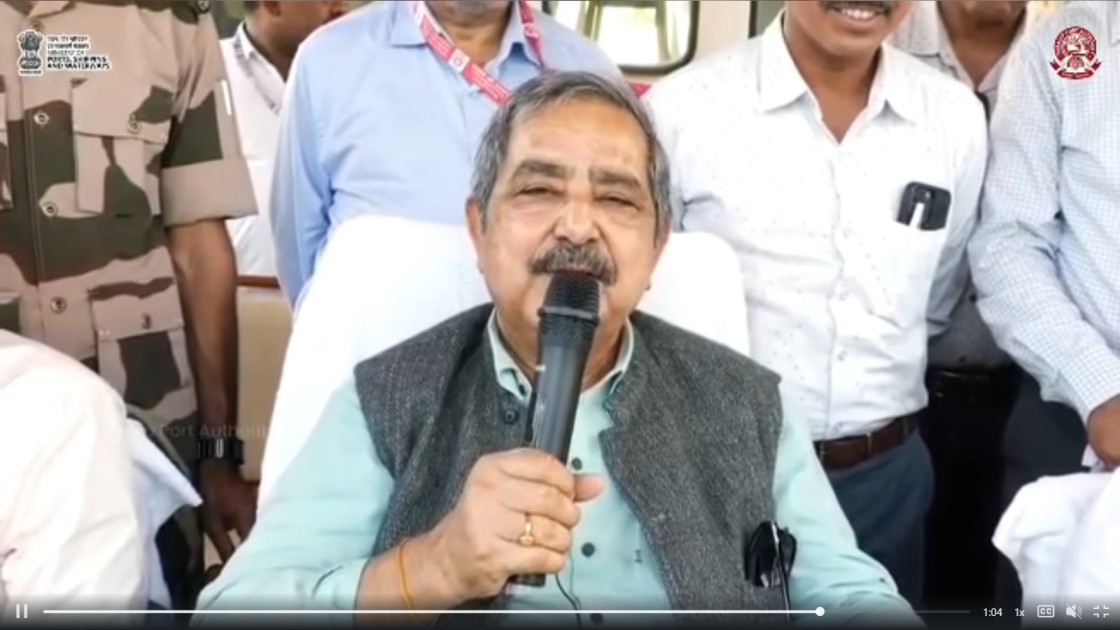
PARADIP: Paradip Port Authority (PPA) welcomed Dr. Ashok Kumar Lahiri, Vice Chairperson, NITI Aayog, during his official visit to Odisha, where he reviewed the port’s modern maritime infrastructure and operational capabilities.

During the visit, Dr. Lahiri toured the Paradip Port harbour along with Shri T. Venu Gopal, Deputy Chairperson, Paradip Port Authority, and witnessed the port’s maritime operations, vessel movements and cargo-handling facilities.

Dr. Lahiri appreciated the port’s ongoing modernisation initiatives, its 16.5-metre draft, operational efficiency and planned expansion projects. Highlighting the importance of modern infrastructure in building a stronger and more competitive India, he described such infrastructure assets as “the modern Taj Mahals” that would remain as a legacy for the nation.

The visit provided an opportunity to showcase Paradip Port’s growing role in strengthening India’s maritime and logistics ecosystem. With continued investments in capacity augmentation, modernisation and operational efficiency, Paradip Port is positioning itself to support the country’s growing trade and logistics requirements.

Professor Prabhakar Sahu, Program Director, Economics & Finance and Nodal Officer, NITI Aayog, Odisha, and Shri Sundara Madhaba Padhi, IAS, Chief Operating Officer (COO), Odisha Maritime Board, were also present during the visit, along with senior officials of Paradip Port Authority.

Paradip Port continues to play a strategic role in India’s maritime growth story and remains committed to enhancing infrastructure, operational capabilities and logistics efficiency in line with the vision of Viksit Bharat.

Chennai Port system to ease container movement

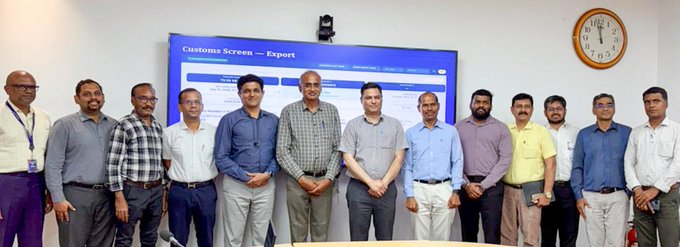
CHENNAI: Chennai Port Authority has launched a digital system ‘Port Setu’ to track export containers on the road between inland warehouses and the port gate. It is the first step towards making gate entry fully paperless.

Port Setu, uses automatic number plate recognition, optical character recognition and RFID readers, linked to the customs ICEGATE platform. It records the time each trailer takes to travel from a container freight station (CFS) to the port.

The system, developed by the Chennai chapter of the National Association of Container Freight Stations (NACFS), went live on September 17 and was formally launched on Wednesday. It forms the first phase of an Intelligent Vehicle Monitoring System (IVMS) being implemented under the central government’s One Nation One Port Process (ONOP) initiative to standardise and digitise procedures across Indian ports.

For the freight stations, the main promise is more efficient use of trucks. Port Setu gives them real-time visibility of trailer arrivals at the port. The authority expects this to cut turnaround times and allow one extra round trip for every six made.

The next phase is expected to take the system closer to a paperless port gate. Under Phase 2 of the IVMS, the container terminals will digitise the verification of seal intactness, a release stated.

Shri Sachin S Kurve, Chairperson of Chennai Port Authority, said the system would provide greater visibility of container movement and help CFSs optimise trailer management.

Mumbai Port’s Jawahar Dweep becomes India’s first plastic-free oil terminal

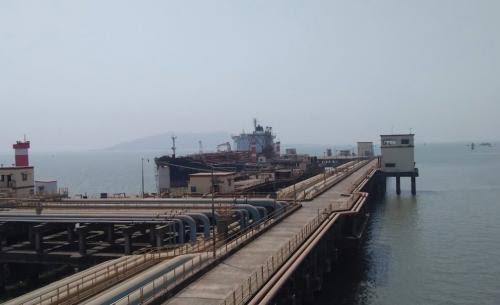
MUMBAI: The Mumbai Port Authority declared its Jawahar Dweep Marine Oil Terminal plastic-free on the Gandhi Jayanti (2 October), marking a significant environmental milestone for India’s maritime sector.

The offshore facility becomes the country’s first oil terminal to completely eliminate single-use plastics, with the announcement made during the Swachhata Abhiyan 2026 cleanliness programme held to mark Mahatma Gandhi’s birth anniversary.

The island terminal, also known as Butcher Island, consists of five berths handling crude oil and petroleum products approximately four kilometres off Mumbai’s coast.

The facility serves major refineries including BPCL, HPCL, IOCL, and ONGC, and petroleum cargo accounts for nearly three-fifths of Mumbai Port’s overall traffic.

He also dedicated new Oil Spill Response facilities to the nation during the event.

The Mumbai Port Authority banned single-use plastics across its premises from September 2021, following the Prime Minister’s national call to curb plastic pollution.

The port authority has now committed to extending similar measures across its docks, residential colonies, and coastal areas throughout the remainder of the year.

Chennai Port strengthens India–Vietnam connectivity with new HAIAN Lines monthly container service

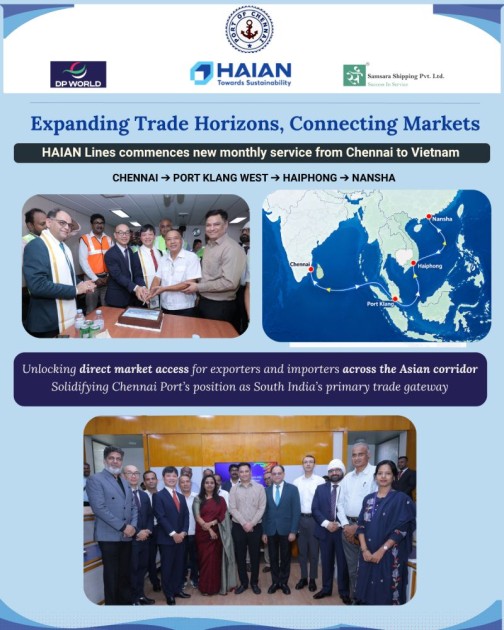
CHENNAI : Chennai Port has strengthened its regional maritime connectivity with the commencement of HAIAN Lines’ CVI monthly container service, establishing an additional regular shipping link between South India, Southeast Asia and South China markets.

The new service commenced with the maiden call of M.V. HAIAN BETA at Chennai Port, marking an important addition to the port’s growing network of international container services. The CVI service will connect Chennai → Port Klang West → Haiphong → Nansha, offering exporters and importers an additional shipping option for accessing key markets across Southeast Asia and South China.

The commencement of the service was marked by a ceremonial flag exchange and cake-cutting ceremony, followed by a stakeholder engagement programme at the DP World Conference Hall. The event brought together representatives from the port, shipping line, terminal and logistics ecosystem to mark the launch of the new service.

Chairperson of Chennai Port, Shri Sachin S. Kurve, IAS, appreciated HAIAN Lines, Samsara Shipping and DP World Chennai for their efforts in commencing the new service. He highlighted the importance of strengthening direct and regular maritime connectivity in supporting the trade community and creating greater opportunities for exporters and importers.

The new service is expected to provide businesses in South India with an additional routing option to important commercial and manufacturing centres in Vietnam and South China, while also enhancing connectivity through Port Klang West, one of the major maritime hubs in the region.

The Chennai–Haiphong connection is particularly significant for strengthening trade linkages with Vietnam, which has emerged as an important manufacturing and trading partner for India. The service can support the movement of containerised cargo across sectors while providing greater flexibility to businesses planning their international supply chains.

For Chennai Port, the introduction of the CVI service further reinforces its role as a key gateway for Tamil Nadu and the wider South Indian hinterland. Enhanced liner connectivity also contributes to greater choice for shippers, improved access to international markets and stronger integration of the region with global maritime trade routes.

With the addition of the HAIAN Lines service, Chennai Port continues to focus on expanding its international shipping network and strengthening its position as a reliable gateway for EXIM trade and regional maritime connectivity.

The commencement of the monthly service is therefore expected to further deepen commercial linkages between South India, Vietnam, Southeast Asia and South China, while supporting the evolving logistics requirements of the region’s exporters and importers.

Alok Tiwari entrusted with additional charge of MD, DFCCIL from 1 Oct 2026

NEW DELHI: The Ministry of Railways (Railway Board) has given additional charge of the post of Managing Director, Dedicated Freight Corridor Corporation of India Ltd. (DFCCIL) to Shri Alok Tiwari.

Shri Alok Tiwari, IRSE, is currently serving as Additional Member (Bridge), Railway Board. He will hold the additional charge of MD, DFCCIL in addition to his own duties.

The arrangement will be effective from the date of assumption of charge on or after 01 October 2026 and until further orders. The decision has been taken pending approval of the Competent Authority.

The order has been issued by Ravi Shekhar, Joint Secretary (Deputation), Railway Board, on 30 September 2026. DFCCIL has been asked to intimate the date of assumption of charge to the Ministry.

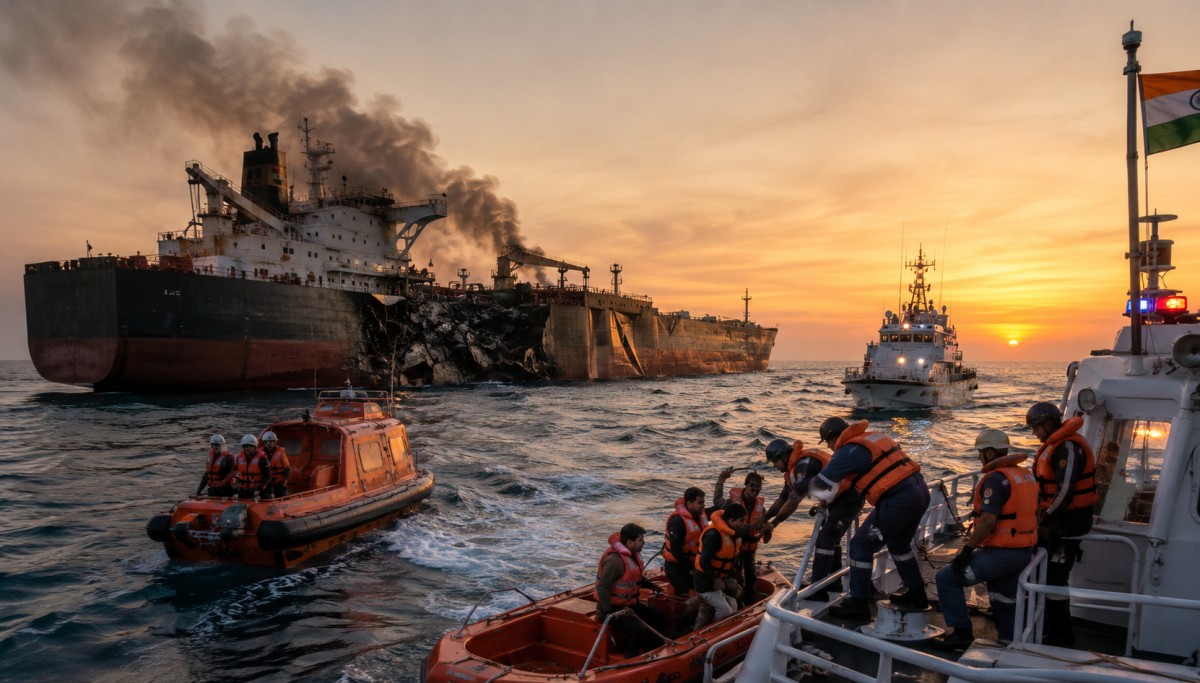
5 Indians rescued after Kuwait-Flagged Tanker ‘MT Kazimah III’ struck in Strait of Hormuz

OMAN: Five Indian nationals aboard a Kuwait-flagged tanker were safely shifted ashore after the vessel was struck by a projectile in the Strait of Hormuz, the Embassy of India in Oman said.

In a post on X on Friday (local time), the Embassy said it had coordinated the rescue of the five Indian nationals aboard the tanker MT Kazimah III after the vessel was hit by a projectile in the region.

The Embassy also expressed gratitude to the Omani authorities for their continued support and assistance during the rescue operation.

“Earlier today, the Mission coordinated rescue of five Indian nationals on board the Kuwait-flagged tanker MT Kazimah III, struck by a projectile in the Strait of Hormuz. All 5 Indian nationals have been shifted ashore safely. We thank the Omani authorities for their continued support and assistance,” the Embassy said in the post.

The vessel is a crude oil tanker currently sailing under the flag of Kuwait and is en route to the port of Lome in Togo.

The development comes as India continues to closely monitor the safety and well-being of Indian seafarers operating on commercial vessels across the Persian Gulf.

Ministry of External Affairs spokesperson Shri Randhir Jaiswal said on Tuesday that more than 4,500 Indian seafarers are currently on board various commercial vessels operating in the area, including 163 Indian seafarers on 12 active cargo ships.

“At this point, we have six India-flagged commercial vessels in the Persian Gulf. We also have six foreign-flagged vessels which are carrying cargo to India. So 12 ships are there. On these ships, we have around 163 Indian seafarers who are on board,” Jaiswal said during a media briefing.

“Apart from this, we also have over 4,500 Indian seafarers who are on board various commercial vessels which are operating in the area,” he added.

Jaiswal said the Ministry of Shipping, in coordination with Indian diplomatic missions and local stakeholders, was monitoring the movement of vessels and the well-being of Indian seafarers.

“Our Ministry of Shipping continues to monitor the movement of these ships and is looking at the well-being of all these seafarers, and as and when required, through our embassies and other stakeholders, they do the needful for their well-being and welfare,” he stated.

“On our side, we remain committed to the safety and well-being of our seafaring community abroad,” Jaiswal said.

The update comes against the backdrop of heightened security risks across global maritime corridors, including the Persian Gulf, the Red Sea and the Black Sea, where commercial shipping has faced recurring attacks.

External Affairs Minister Dr. S Jaishankar had raised concerns over attacks on commercial vessels and seafarers during his address at the 81st United Nations General Assembly last week.

“New challenges in the maritime domain have added to longstanding ones on land. There have been attacks on commercial shipping and seafarers in the Gulf and from the Red Sea to the Black Sea. Indian seafarers have lost their lives, as have others from other nations. This is completely unacceptable,” Jaishankar told the UN assembly.

Jaishankar also said India had joined Liberia and 23 partner nations in an international coalition to mobilise global public opinion and defend commercial shipping routes.

“We must ensure that the safety and security of shipping and seafarers is never compromised. Scrupulously observing international law is an integral element of that endeavour,” Jaishankar urged.

He also called for immediate restraint and de-escalation in the Gulf region to protect civilian crews and ensure uninterrupted energy supplies and global trade.

India’s Crude Imports from Saudi Arabia fell from USD 2.8 Billion in April to USD 0.9 Billion in June: Rubix Data Sciences

MUMBAI: India’s crude oil imports from Saudi Arabia fell from USD 2.8 billion in April 2026 to USD 0.9 billion in June, before recovering to USD 1.4 billion in July, as the West Asia conflict disrupted shipping routes, according to the Rubix Country Insights: Saudi Arabia Update – September 2026, released today by Rubix Data Sciences. Saudi Arabia was India’s third-largest crude supplier by value during April–July 2026, as per Rubix analysis, and crude oil and natural gas together made up 68% of India’s imports from the Kingdom in April–July FY2027, down from 74% a year earlier.

Saudi Arabia’s East-West pipeline, which carries crude to Yanbu on the Red Sea and bypasses the Strait of Hormuz, has provided some resilience to supply. Recent Houthi attacks on shipping in the Bab-el-Mandeb strait add risk to that route. India-bound cargoes from Yanbu now face a longer passage via the Cape of Good Hope, and freight rates for Saudi crude could rise by up to 50%, according to the reports cited in the analysis.

The trade relationship extends well beyond energy. India-Saudi goods trade was USD 41.1 billion between April 2025 and March 2026 (FY2026) and was broadly flat year-on-year at around USD 13.3 billion between April and July 2026 (first 4 months of FY2027). During April-June 2026 (Q2 CY2026), India became Saudi Arabia’s second-largest export destination, ahead of Japan, with a share of about 15%. Saudi Arabia has also committed USD 100 billion in investment in India across energy, petrochemicals, infrastructure, technology, manufacturing, healthcare, and pharmaceuticals.

The Rubix report also assesses the Kingdom’s own outlook. Saudi Arabia’s real GDP growth is projected to slow to 1.7% in 2026, from 4.6% in 2025, as the conflict weighs on oil output and trade. The IMF expects a recovery to 5.5% in 2027 if regional conditions and maritime trade normalise. Foreign investment has continued to flow in. Net FDI inflows rose about 53% to USD 32.6 billion in 2025, moving Saudi Arabia to 13th globally among FDI recipients from 17th in 2024, according to UNCTAD.

Investment reforms are moving in parallel. Since February 2026, the Saudi Stock Exchange (Tadawul) has been open to all categories of foreign investors. The National Privatization Strategy targets SAR 240 billion (about USD 64 billion) in private investment by 2030, through more than 220 PPP contracts. Mining investment is targeted to reach nearly SAR 92 billion during 2025–2030, from about SAR 45 billion in 2024.

Commenting on the findings, Tushar Bhaskar, President, Rubix Data Sciences, said, “India and Saudi Arabia are deepening their economic ties at the same time as the routes that connect them are under strain. The opportunities in infrastructure, manufacturing, logistics, and mining are real, and so is the exposure to freight costs and delivery timelines. Indian businesses trading with or investing in the Kingdom must undertake counterparty and supply-chain risk assessment as a part of the basic planning.”

Why Vessel Suitability must be verified before Signing a Charter Party

By Konstantin Kalnyi, CEO and Founder of Kiev Shipping Ltd.

A vessel can be available, competitively priced and apparently suitable for the required cargo — yet still be the wrong ship for the voyage.

This risk arises because vessel selection is often reduced to a few headline figures: deadweight, hold capacity, open position and freight rate. These figures are important, but they do not establish whether the vessel can safely enter the nominated ports, load the cargo efficiently, comply with the sale contract and complete the voyage without unexpected costs.

Before signing a charter party, cargo interests should therefore examine vessel suitability through four connected areas: the cargo, the ports, the voyage and the proposed contractual terms.

The cargo must be assessed beyond its name

A general cargo description is not sufficient for reliable vessel selection.

“Steel products” may mean coils, plates, pipes, rails or fabricated structures, each with different stowage, securing and lifting requirements. “Machinery” may describe container-sized units or equipment weighing more than the vessel’s crane capacity. Even common dry bulk commodities can differ considerably in density, moisture content, particle size and handling behaviour.

The vessel enquiry should identify, as applicable:

  • Exact cargo description;
  • Total quantity and individual unit weights;
  • Dimensions of oversized pieces;
  • Stowage factor;
  • Packaging;
  • Lifting points and centre of gravity;
  • Stackability;
  • Moisture or contamination sensitivity;
  • Requirement for underdeck carriage;
  • Special ventilation, separation or securing requirements.

For project and breakbulk cargo, the vessel’s nominal crane capacity is not enough. The permitted lifting capacity at the required outreach must be checked, together with the possibility of combining cranes in tandem. The deck or tank-top strength must also be sufficient for the load concentration created by heavy units.

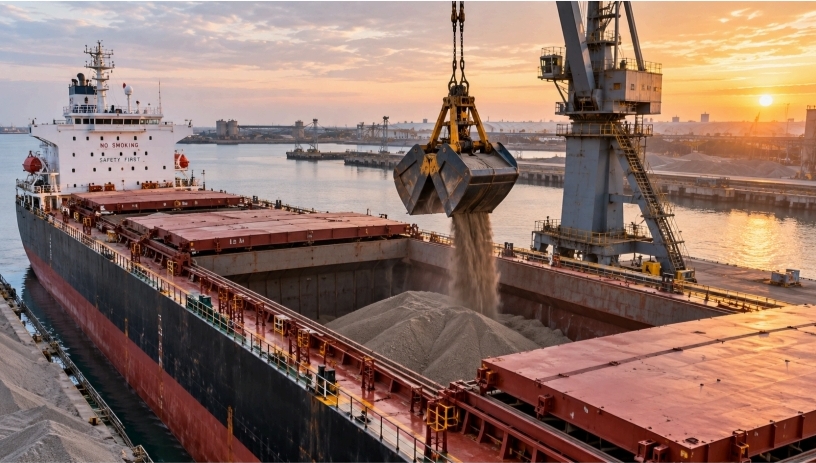
For dry bulk cargo, the relationship between cargo density and hold geometry should be reviewed. A vessel may have sufficient deadweight but be unable to load the intended quantity because the cargo fills the available cubic capacity first. The opposite can happen with dense cargoes: the vessel may reach its permissible draught before the holds are full.

The correct question is not simply whether the vessel can carry the named commodity. It is whether the vessel can carry the actual cargo presented for shipment under the required conditions.

Port compatibility must be confirmed at both ends

A vessel that is suitable at sea may be unsuitable for the loading or discharging port.

Port names alone do not provide enough information. Restrictions can differ between terminals and even between berths within the same port. Before fixing, the chartering team should verify:

  • Maximum permissible draught;
  • Length overall and beam restrictions;
  • Air-draught limitations;
  • Channel and turning-basin dimensions;
  • Berth depth and tidal conditions;
  • Tug and pilotage requirements;
  • Night-navigation restrictions;
  • Availability and capacity of shore cranes;
  • Permissible vessel crane outreach;
  • Quay strength and working area;
  • Hatch-cover or gear restrictions;
  • Seasonal weather and monsoon exposure;
  • Terminal loading and discharging performance.

The arrival draught at the loading port and the expected sailing draught must both be considered. The same applies at the destination, where water density, tides or seasonal restrictions may reduce the vessel’s permissible cargo intake.

Cargo-handling arrangements are equally important. An ungeared bulk carrier may be economical at a modern terminal equipped with shiploaders and unloaders, but unsuitable for a port that depends on vessel cranes. A geared ship may appear suitable until it is discovered that its grabs are unavailable, its crane outreach does not cover the required area or the terminal prohibits a particular operating method.

These matters should be established before the freight is agreed. Discovering a port incompatibility after the charter party has been signed can lead to lightering, a change of berth, additional equipment, cargo reduction, delay or even cancellation.

The vessel must fit the complete voyage

Suitability should not be examined only against the loading operation.

The complete voyage may include canal restrictions, emission-control requirements, war-risk exposure, seasonal trading limits, ice conditions, cargo-residue requirements and restrictions connected with the vessel’s flag, class, age or insurance arrangements.

The vessel’s expected speed and consumption also influence the commercial result. A low freight quotation may be based on a vessel with slower performance or an operational profile that creates a longer voyage. If the cargo is linked to a production programme, sales deadline or downstream project schedule, the financial consequences of delay may exceed the initial freight saving.

The vessel’s previous and subsequent employment may also be relevant. The holds must be capable of being prepared to the cleanliness standard required for the nominated cargo. Residues from a previous shipment can create contamination risk, while the owner may request additional cleaning conditions because of the cargo being offered.

Availability must be assessed realistically. A vessel’s open date is normally based on the expected completion of its previous voyage. Weather, congestion, repairs or slow cargo operations can affect that date. A narrow laycan accepted without examining the vessel’s preceding employment can create a risk that the ship will arrive late or that the owner will request an extension.

Cargo readiness should be verified with the same care. Fixing a suitable vessel does not protect the charterer if the cargo, documents, terminal or inland delivery arrangements are not ready when the ship arrives.

Charter-party wording must support the intended operation

Technical suitability and contractual suitability are inseparable.

A ship may be physically capable of performing the voyage, but the proposed charter-party wording may allocate excessive risk to the charterer. The fixture should clearly reflect the actual cargo, ports, loading method and operational responsibilities.

Important provisions may include:

  • Description and quantity of cargo;
  • Owners’ guarantee of vessel suitability;
  • Permissible cargo tolerance;
  • Loading and discharging rates;
  • Commencement and calculation of laytime;
  • Notice of Readiness requirements;
  • Weather and port-congestion provisions;
  • Crane, grab and equipment responsibilities;
  • Stowage, lashing and securing responsibilities;
  • Hold cleanliness;
  • Cargo residues and vessel cleaning;
  • Demurrage and despatch;
  • Agency arrangements;
  • Bills of lading;
  • Taxes, dues and additional port expenses;
  • Applicable law and dispute-resolution procedure.

Statements made during negotiations should not be left outside the final agreement if the charterer relies on them. If a particular crane capacity, hatch dimension, draught or equipment arrangement is essential, it should be verified and reflected in the fixture terms.

Ambiguous wording often becomes expensive only after an operational problem occurs. At that stage, each party may interpret the agreement differently, while the vessel, cargo and commercial schedule are already exposed.

The lowest freight rate is not a suitability certificate

Freight comparisons are meaningful only when the vessels being compared can perform the same operation under the same conditions.

A lower-priced vessel may create additional costs through reduced cargo intake, slower handling, extra port equipment, shifting, lightering, prolonged laytime or increased demurrage exposure. A more expensive vessel may provide better cargo capacity, stronger cranes, wider hatch openings or greater port flexibility and ultimately produce a lower delivered cost.

Cargo owners should therefore compare the expected total voyage result rather than the headline freight rate alone.

Professional ship chartering services should include more than circulating an enquiry and collecting offers. The broker should challenge incomplete information, verify critical vessel particulars, identify inconsistencies between the vessel and the ports, negotiate protective terms and explain the commercial consequences before the charterer becomes contractually committed.

A practical verification process

Before accepting a vessel, the charterer and broker should complete a documented review of the following four areas:

  1. Cargo suitability: Can the vessel accommodate, lift, stow, secure and protect the actual cargo?
  2. Port suitability: Can the vessel enter, berth, operate and sail from both ports under the expected conditions?
  3. Voyage suitability: Can the vessel complete the intended route within the required schedule and trading restrictions?
  4. Contractual suitability: Does the charter party accurately describe the operation and protect the charterer against foreseeable risks?

This review does not need to delay negotiations. When the cargo and port information is properly prepared, the critical checks can be completed while the commercial terms are being discussed.

The purpose is not to eliminate every possible risk. Shipping always involves operational uncertainty. The purpose is to identify foreseeable incompatibilities before they become contractual disputes or expensive disruptions.

Conclusion

Vessel suitability cannot be confirmed by deadweight, age, position and freight rate alone.

The correct vessel must match the cargo, both ports, the complete voyage and the charter-party terms. A weakness in any one of these areas can undermine the entire fixture.

The most effective time to identify that weakness is before the charter party is signed — while the cargo owner still has the ability to reject the vessel, correct the enquiry, change the operational plan or negotiate appropriate protection.

Careful verification before fixing is therefore not an administrative formality. It is one of the most important commercial safeguards available to a cargo owner.

Author:

image Why Vessel Suitability must be verified before Signing a Charter Party

Konstantin Kalnyi is the CEO and Founder of Kiev Shipping Ltd, a Ukrainian independent shipbroking company established in 2000. He has more than 25 years of experience in international ship chartering, maritime brokerage and commercial vessel management, covering dry bulk, breakbulk, project, general and tanker cargoes.