Home Blog Page 793

Commercial ships advised to keep distance from Iran around Strait of Hormuz

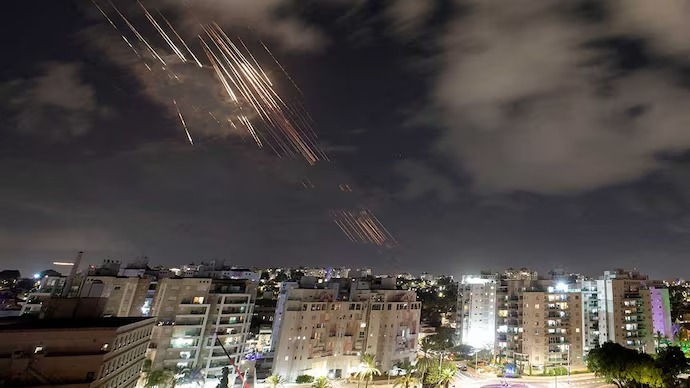
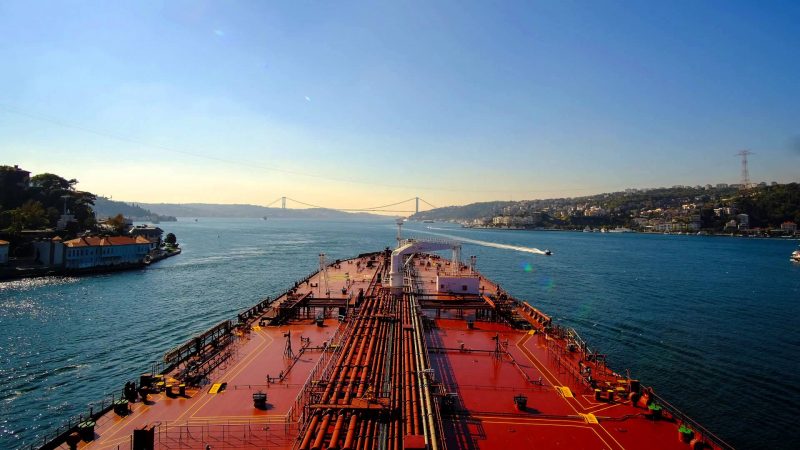
OMAN : Commercial ships are sailing close to Oman and are being advised by maritime agencies to avoid Iran’s waters around the Strait of Hormuz, with the risk of the conflict between Israel and Iran escalating, shipping sources said on Wednesday.

Iran has in the past threatened to close the critical Strait of Hormuz to traffic in retaliation for Western pressure. Any closure of the strait could restrict trade and affect global oil prices.

In the latest measure, ships sailing towards Hormuz are looking to minimise risks and are sailing close to Oman’s coast for much of the journey.

The Gulf of Oman is 200 miles (320 km) wide – much of it international waters – and is bordered by Oman and Iran, as well as the United Arab Emirates and Pakistan, which have territorial waters of 12 miles.

Journeys will still need to be made through Hormuz itself, which is 21 miles (33 km) wide at its narrowest point. The two shipping lanes are just 2 miles (3 km) wide in either direction.

A larger cluster of ships was sailing closer to the Omani coast on Wednesday, while mainly Iranian-flagged vessels were sailing within Iranian waters, according to ship-tracking data.

“Taking into account that during the past, there have been incidents of violations of freedom of navigation and maritime safety for merchant vessels near the shores of Iran, we strongly suggest that Greek-flagged vessels sail, if possible, away from waters of Iranian jurisdiction when in the Persian Gulf, Strait of Hormuz and Gulf of Oman,” the Greek Shipping Ministry said in a statement on Tuesday.

Iran’s Supreme Leader Ayatollah Ali Khamenei said in a statement read by a television presenter on Wednesday that his country will not accept U.S. President Donald Trump’s call for an unconditional surrender, in his first comments since Israel began bombarding Iran on Friday. Iran has responded with deadly barrages across Israel.

Electronic interference with commercial ship navigation systems has surged in recent days around the Strait of Hormuz and the wider Gulf, adding to risks for sailors hauling oil cargoes.

Average earnings for the supertankers that carry a maximum of 2 million barrels of oil have surged in recent days to over $50,000 a day from over $20,000 a week ago, according to analysts.

“The regional threat level remains significant as strikes continue from both Iran and Israel,” the multinational, U.S.-led Combined Maritime Forces JMIC Information Center said in an advisory, adding that the maritime threat level is elevated.

Qatar Energy has instructed tankers to remain outside the Strait of Hormuz and to enter the Gulf only the day before loading, amid military strikes between nearby Iran and Israel, two sources familiar with the matter told Reuters on Tuesday.

Source : Reuters
Iran accuses Israel of ‘endangering’ maritime safety, violating IMO treaties

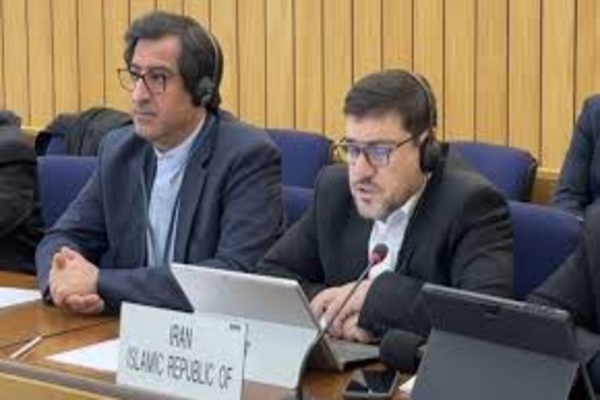
NEW YORK : Israel has jeopardized maritime safety by attacking Iranian energy structures along the Persian Gulf coastline, a senior government official of Iran said on June 18, while accusing the Jewish state of violating several UN treaties.

Since June 13, Israel has launched a series of air strikes on Iranian sites, including nuclear sites and key oil and gas facilities, such as the 12 million cu m/d South Pars Gas Field.

“The Israeli regime has extended its unlawful attacks to include Iran’s vital petrochemical and gas infrastructure in Asalouyeh, a strategic zone located on the northern shores of the Persian Gulf,” said Seyed Ali Mousavi, Iran’s permanent representative to the International Maritime Organization.

“These actions directly endanger international maritime security and the global energy supply chain,” Mousavi said during the UN agency’s 110th Maritime Safety Committee meeting.

Headquartered in London, the IMO regulates international maritime transportation, and its member states are required to ensure safe navigation.

Mousavi added that Israel’s action was supported by “a certain state” — but did not directly name the US, Israel’s military ally — and was in violation of the IMO Convention, the International Ship and Port Facility Security Code, the International Convention for the Safety of Life at Sea, among other international maritime laws.

“What has occurred is not a simple challenge … it is a direct challenge to the integrity of international law and the main role of the United Nations,” Mousavi said.

GPS interference

Iran’s accusation came as maritime authorities, including the Joint Maritime Information Center, reported increased electronic interference near Bandar Abbas in the Strait of Hormuz and several other areas in the Persian Gulf.

Windward reported that at least 928 ships, including 97 tankers and 110 cargo ships, had experienced jamming of their Global Position System near Iranian oil terminals since June 12.

Ships can often report jamming of their Global Position System near conflict zones, which affects their navigational capability, generally as part of collateral damage as military forces try to disrupt each other’s operations.

On June 17, Frontline’s VLCC the Front Eagle collided with an alleged shadow fleet tanker, the Suezmax Adalynn, amid GPS jamming in an incident that the shipowner suggested was not directly related to regional conflicts.

During the MSC meeting, IMO Secretary-General Arsenio Dominguez called on member states to improve compliance with IMO standards and strengthen cooperation and information sharing to safeguard seafarers, vessels, and the marine environment.

But Dominguez separately told reporters on the sidelines that “there’s no indication that ships, seafarers are being targeted” in the current Israel-Iran conflicts and suggested further intervention from the secretariat is not necessary at the current stage.

In recent meetings, IMO member states have recognized safety risks associated with electronic interference and are developing regulatory standards for global navigation satellite systems like GPS, including rules for the voluntary introduction of Very High Frequency Data Exchange System.

VDES is a radiocommunication system that can significantly improve the crew’s ability to locate ship positions and identify surrounding marine environments more accurately when GPS is compromised, according to industry participants.

Source : Platts

Iran and Israel trade accusations at UN shipping agency over sea lanes

LONDON : Iran and Israel accused each other of endangering commercial activity in sea lanes around the Gulf and the Red Sea at the UN’s shipping agency on Wednesday, as their military conflict escalated.

Iran’s delegation told a session of the International Maritime Organization’s security committee that Israel had in recent days extended its “unlawful attacks” to include petrochemical and gas infrastructure in Asalouyeh along Iran’s Gulf coast.

“These actions directly endanger international maritime security and the global energy supply chain,” Iran said in a statement to IMO delegates, which was livestreamed.

“If the international community fails to take urgent and concrete measures to halt this unlawful aggression, the risk of escalation at sea becomes imminent.”

Iran has previously threatened to close the Strait of Hormuz to traffic in retaliation for Western pressure. Any closure of the strait could restrict trade and affect global oil prices.

Commercial ships are being advised by maritime agencies to avoid Iran’s waters around Hormuz, shipping sources said on Wednesday.

Former Iranian Economy Minister Ehsan Khandouzi has said that tankers and liquified natural gas cargoes should only transit the Strait of Hormuz with Iranian permission.

Iranian Supreme Leader Ayatollah Ali Khamenei rejected Donald Trump‘s demand for unconditional surrender on Wednesday, and the U.S. president said his patience had run out, though he gave no clue as to what his next step would be.

Israel’s mission told delegates the IMO’s foundational principle of global maritime navigation safety was being “openly and aggressively threatened” by Iran, partly through support of Yemen’s Houthi militia, whose attacks have severely disrupted shipping through the Suez Canal and Red Sea in recent years.

“Iran has turned our whole region and the Red Sea specifically into a war zone. Through its political, financial and military backing of the Houthi rebels, Iran has enabled a campaign of maritime terrorism against civilian vessels,” Israel said.

“It seeks to weaponize the world’s busiest sea lanes, hold international shipping hostage, and impose its will through violence.”

The London-based IMO is responsible for regulating the safety and security of international shipping and preventing pollution and comprises 176 member state countries.

The statements from Israel and Iran on Wednesday were noted by the Maritime Safety Committee, an IMO spokesperson said.

The agency has faced growing pressures that it was becoming politicised.

In 2023 Russia said the IMO was departing from its technical role because of “external pressure”, which was impacting the fair treatment of all member countries.

Iran’s offer to host a maritime event in 2023 was rejected after a proposal led by the United States to rescind the bid was approved in a vote.

MOL plans strategic investment in Indian logistics

TOKYO : Japan’s Mitsui O.S.K. Lines, Ltd (MOL), the world’s second-largest ship owner by fleet size, is set to make a strategic investment in an Indian logistics startup ‘very soon‘, as part of its broader push to diversify into stable, non-marine revenue streams. The move follows MOL’s recent investment of just under Rs 2,000 crore for minority stakes in commercial real estate developments in Gurgaon and Chennai.
Captain Anand Jayaraman, Executive Officer for South Asia and the Middle East, confirmed the upcoming deal at a media interaction on Tuesday, noting that discussions with the logistics startup have concluded and an official announcement is expected shortly. He, however, declined to share the deal’s financial specifics.

This planned investment aligns with MOL’s evolving business strategy, which includes MOL Plus a corporate venture capital arm established in 2021 to invest in shipping and logistics startups and MOL Switch, launched in 2024 to support clean energy and sustainability ventures. MOL Plus has also set up a dedicated India desk to identify startup opportunities in the region.
“The focus for acquisition is definitely logistics”, said Capt. Jayaraman, adding that MOL prefers to co-invest rather than pursue full acquisitions. He also noted that clean tech startups may attract higher ticket sizes depending on their potential and relevance.

On the maritime front, MOL expressed interest in India’s emerging shipbuilding sector, viewing it as a promising alternative to traditional hubs like Japan, South Korea, and China. While ruling out direct investment in Indian shipyards, Capt. Jayaraman affirmed MOL’s willingness to place vessel orders locally, provided quality and delivery timelines are assured.
“If Indian shipyards can meet global standards, they could become a strong alternative when Chinese and Korean yards are full”, he remarked. MOL’s growing focus on India underscores the country’s rising importance in both logistics and shipbuilding on the global stage.

Source : Silicon India

Mawani launches new IM2 Shipping Service at Jeddah Islamic Port

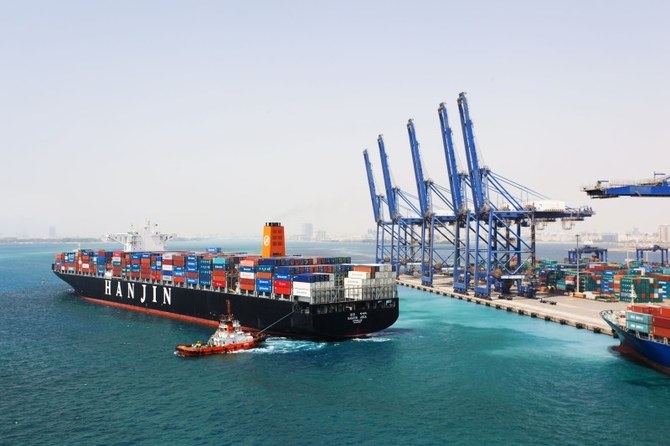
JEDDAH : The Saudi Ports Authority (Mawani) has announced the addition of the new IM2 Shipping Service by Emirates Shipping Line and Wan Hai Lines at Jeddah Islamic Port, aiming to enhance the competitiveness of Saudi ports, facilitate global trade and improve operational efficiency.

The new shipping service will connect Jeddah Islamic Port with three regional and international ports: Mundra (India), Alexandria (Egypt), and Mersin (Türkiye), with a handling capacity of up to 2,800 TEUs.
This endeavor is part of Mawani’s efforts to improve the Kingdom’s ranking in global performance indicators, support the flow of national exports, and align with the objectives of the National Transport and Logistics Strategy, which aim to establish the Kingdom as a global logistics hub linking three continents.

Jeddah Islamic Port boasts 62 multi-purpose berths, a logistics service area for storage and re-export, multiple specialized terminals, two general cargo terminals, two ship repair docks, and various berths for marine services. Its total handling capacity reaches 130 million tons.

DNV awards SeaTech Solutions AiP for new ammonia bunkering vessel design

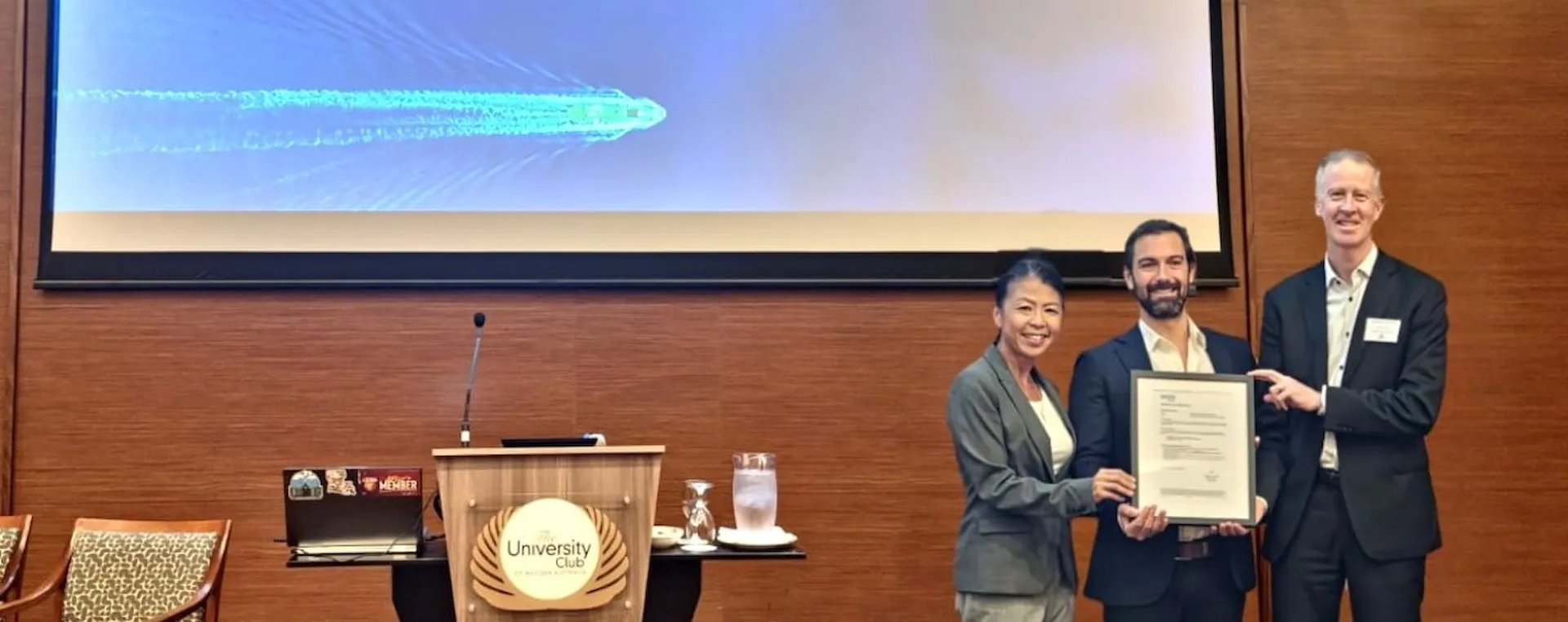
PERTH : As part of the Ammonia Energy APAC Conference 2025, Classification society DNV has awarded an Approval in Principle (AiP) to SeaTech Solutions International (SeaTech) in collaboration with Oceania Marine Energy (Oceania) for the design of a new 10,000cbm ammonia bunkering vessel. This AiP builds on a recent Memorandum of Understanding (MoU) between DNV, SeaTech, and Oceania, initiated at Singapore Maritime Week and signed in April this year.

Located in the Pilbara region, home to the world’s largest bulk export port, the Port of Dampier is emerging as a potential hub for low-carbon ammonia bunkering. Driven by a rising demand for low- and zero-carbon shipping fuels from the region’s mining and export industries, the port has built considerable experience in dealing with ammonia cargoes and vessels and is developing a strategy to facilitate ammonia bunkering operations. This includes the successful completion of its first ship-to-ship pilot bunkering transfer in September 2024. 

Measuring 130-metres, the ammonia bunkering vessel is specifically designed to deliver low-carbon ammonia to ammonia dual-fuelled bulk carriers at the Port of Dampier. It can supply up to 9,000cbm of fuel, sufficient to support two round-trips of iron ore shipment between Australia and North Asia. The vessel’s optimized arrangement and advanced containment systems enable efficient ship-to-ship transfers while ensuring the safe handling of ammonia as both a cargo and marine fuel.

Nick Bentley, Managing Director at Oceania Marine Energy, said: “Oceania is proud to have worked in tandem with DNV and SeaTech to deliver a flagship, low-emissions marine fuel solution at the heart of Australia’s heaviest resource export hub. The completion of this MOU and Approval in Principle (AiP) award by DNV for our 10,000m³ clean ammonia bunker vessel marks a major milestone in developing the supply and bunker operation foundations for the low-carbon shipping Pilbara–Asia green-corridor. This initiative reinforces Oceania’s commitment to deliver 1 million tonnes of clean marine fuel by 2030 and positions Dampier in Western Australia as a future leader, enabling the shipping industry’s transition to near net-zero marine fuel.”

Prabjot Singh Chopra, Vice President of Technology at SeaTech Solutions said: “We are proud to work alongside Oceania and DNV to bring this innovative ammonia bunkering vessel design to life. As part of the maritime industry’s multi-fuel transition to low- and zero-carbon energy, ammonia stands out as a viable option for long-haul shipping—and enabling its safe and efficient delivery is critical. Our vessel design incorporates a high level of automation and smart control systems to ensure safe handling of ammonia, enhancing both crew safety and operational reliability during ship-to-ship transfers. This Approval in Principle marks a key milestone, not just for the vessel, but for the broader ecosystem that must be in place to support ammonia bunkering. With Dampier emerging as a green marine fuel hub, and with SeaTech (Australia) actively engaged in supporting decarbonisation initiatives aligned with Australia’s net zero ambitions, we bring a strong track record and deep expertise to deliver practical, scalable solutions that enable the decarbonisation of global shipping.”

Antony M Dsouza, Senior Vice President & Regional Manager, South East Asia, Pacific & India, Maritime at DNV, added: “Scaling up production and bunkering infrastructure remains one of the biggest challenges in the maritime energy transition, and will be vital to the adoption of alternative fuels at scale. This AiP is another step in realizing operationally ready bunkering capabilities and strengthening industry confidence in the potential of ammonia as a carbon-free fuel for shipping. At DNV, we’re proud to support forward-thinking partners like SeaTech and Oceania with the trusted technical assurance and deep expertise needed to realize the industry’s decarbonization ambitions.”

Although ammonia is a viable alternative fuel, its toxic and corrosive nature demands stringent handling and safety protocols. Mitigating operational risks requires not only comprehensive crew training but also robust technical safeguards and systems. DNV’s latest white paper, Safe Introduction of Alternative Fuels – Focuses on Ammonia and Hydrogen as Ship Fuels, outlines seven steps to assist shipowners and other stakeholders in obtaining approval and deploying ammonia- ships, including the safety challenges, operating procedures, training, and organizational changes needed in today’s complex regulatory environment.

DNV has a long history of working on initiatives to support the development and uptake of ammonia as a marine fuel, including a recent ammonia bunkering safety study for the Global Centre for Maritime Decarbonisation (GCMD), which was utilized in the ship-to-ship ammonia transfer pilot at the Port of Dampier.

An Approval in Principle (AiP) is an independent assessment of a concept within an agreed framework, confirming that the design is feasible, and no significant obstacles exist to prevent the concept from being realized.

‘M/V Trans Samudera’ arrives in Chattogram Port carrying Indian transit container to be transported to Assam

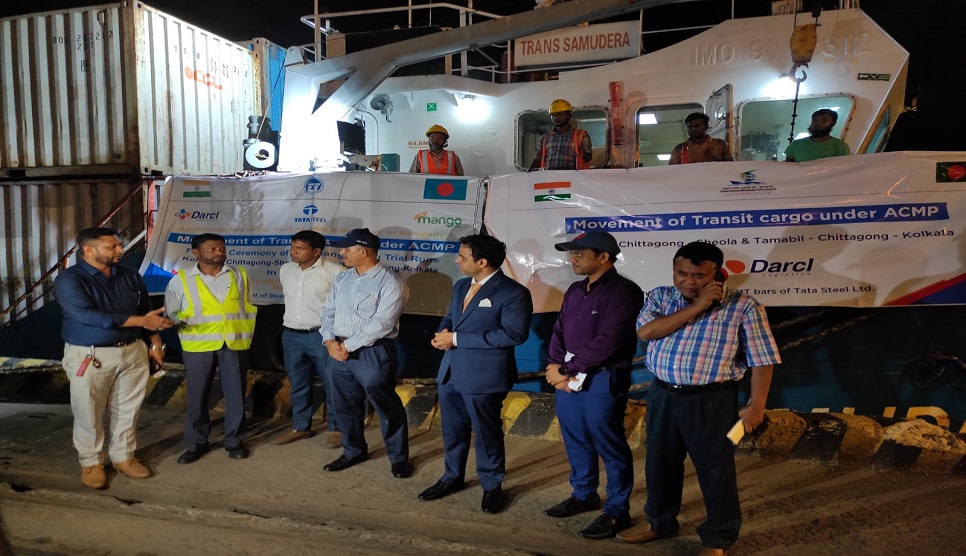
CHATTOGRAM : A vessel named ‘M/V Trans Samudera’ arrived in Chattogram Port today carrying Indian transit container to be transported to the Northeastern State of India (Assam) via the territory of Bangladesh, according to a press note.

This movement of cargo is part of the trial runs being undertaken for the operationalisation of the Agreement to use Chattogram and Mongla Ports for the transit of goods to and from India which was signed between Indian and Bangladesh in 2018.

The trial run is being undertaken by Tata Steel and CJ Darcl Logistics Ltd. on the route Chattogram-Sheola-Sutarkandi.

There are eight approved routes for transit of goods under the Agreement, namely, Chattogram/Mongla Port to Agartala via Akhaura, Chattogram/Mongla Port to Dawki via Tamabil, Chattogram/Mongla Port to Sutarkandi via Sheola, Chattogram/Mongla Port to Srimantapur via Bibirbazar and vice versa on all four routes.

During the visit of Prime Minister of Bangladesh to India in 2019, a SOP was signed to operationalise the Agreement. The first trial movement under this agreement on the route Chattogram-Akhaura-Agartala was successfully conducted in July 2020 wherein four containers, two each of TMT steel and pulses, were delivered at ICP Agartala from Kolkata through Chattogram.

The transit/transshipment of goods under this agreement will reduce both cost and time for transport of goods to Northeastern States of India.

It will also create economic gains for the Bangladesh logistics and services industry (Insurance, transport and Finance industry etc.) as only Bangladesh trucks will be used for transshipment.

In the coming few days, a trial run is expected to be done on the Dawki-Tamabil-Chattogram route which will mark completion of trial runs on all approved routes under this Agreement.

As per the understanding reached earlier this year between the two Governments, necessary permanent standing order/notification would be issued by the Government of Bangladesh after completion of these trials for the operationalization and regular movement of goods under this Agreement.

Smartphones, pharma drive India’s increasing share of bilateral trade with G7 nations

NEW DELHI : According to an analysis by Rubix Data Sciences, India’s merchandise trade with the G7 countries has recorded a healthy 13% compound annual growth rate (CAGR) since FY21, with a strong trade surplus of $28 billion in FY25.

The latest report reveals that smartphone and pharmaceutical exports are the primary drivers of this surge in bilateral trade. Rubix said trade ties with the G7, the United States, the United Kingdom, Germany, France, Italy, Canada, and Japan showcase the growing confidence of Indian industries in tapping into the world’s most advanced economies.

India’s bilateral goods trade with the G7 nations stood at $248 billion in FY25. Exports were valued at $138 billion and imports at $110 billion, resulting in a trade surplus of $28 billion. Notably, India sustained a trade surplus with four key bloc members: the U.S., the U.K., France, and Italy.

India’s top export categories are telecom transmission equipment, smartphones, and pharmaceutical products. Mobile phone exports across all markets saw a 55% year-on-year rise, reaching $24 billion in FY25. Meanwhile, the report said India continued to play a vital role in the global pharmaceutical supply chain, meeting more than 40% of the generic drug demand in the U.S. and 25% of the total pharmaceutical consumption in the U.K..

Over the last five years, India’s export share to G7 countries increased from 29% to 31%. At the same time, imports from these countries declined from 18% to 15%, signalling an improving trade position for India.

Mohan Ramaswamy, co-founder and CEO of Rubix Data Sciences, said the trade surplus with G7 countries reflects the growing global confidence in Indian industries, particularly MSMEs. He noted that Indian exports, from smartphones to life-saving medicines, are gaining trust and traction in mature markets.

Rubix Data Sciences, founded by experienced risk professionals, supports businesses in managing credit risk, building resilient supply chains, and monitoring compliance in India and globally.

Source: Fortune India

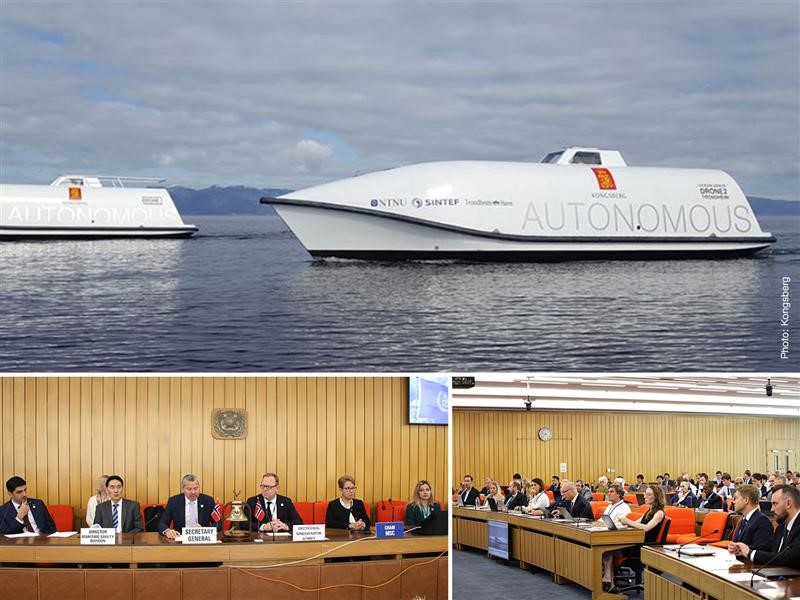
Symposium explores autonomous technological solutions for maritime vessels

LONDON : The latest developments in autonomous shipping were explored at a symposium co-hosted by IMO and the Government of Norway entitled “Maritime Autonomous Surface Ships as a reality: the need for the IMO MASS Code“.

Held at IMO Headquarters on 17 June 2025, the event focused on real-life experiences from existing small- and large-scale MASS projects and the latest developments in legislation, national standards and class notations stemming from ongoing advancements in the field.

The event was intended to set the tone for the MASS discussions at the 110th session of the Maritime Safety Committee, to begin the following day.

IMO Secretary-General, Mr. Arsenio Dominguez, opened the Symposium, and noted the importance of real-world experiences in the development of the non-mandatory MASS Code, stating:

“These insights are vital as IMO works with Member States and international organizations to develop an efficient, safe, secure, environment-friendly, balanced and inclusive regulatory framework.”

The Director General of the Norwegian Maritime Authority, Alf Tore Sørheim, also acknowledged the close relationship between experience and regulatory development:

“To fully realize its potential, technology and regulation must evolve in parallel. Innovation moves fast, and our regulatory frameworks must keep pace to ensure both progress and safety.”

Regulations, innovation, solutions

The day’s programme was composed of five sessions spanning regulatory developments, active projects and forward-looking advances in autonomous shipping. Presentations from regulators, pioneers, operators and researchers highlighted that autonomous shipping is happening now, albeit on a relatively limited scale.

Throughout the sessions, two key themes emerged :

the vast potential held in the synergetic action of humans and machines/technology in improving the safety and sustainability of shipping across various dimensions of autonomy; and
the importance of the ongoing development of the non-mandatory MASS Code at IMO for the expansion of the safe and sustainable use of MASS from the regional to the international scale.
Several speakers emphasized the need for coordination and clarity as the MASS Code continues to evolve. They stressed that autonomous technologies offer clear benefits, but their success depends on rigorous testing, effective regulation, and systems designed around human capabilities.

The Chair of the Maritime Safety Committee, Ms. Mayte Medina, closed the Symposium by recognizing the many achievements along the road to the development of the non-mandatory MASS Code so far, while recalling that the matter of autonomous ships was discussed at IMO in 1964. She also emphasized the iterative relationship between real-life experience and the regulatory work ahead at MSC 110:

“What we have seen today, the concrete experience from the industry, administrations and recognized organizations provides the always necessary background, context and motivation for the work being undertaken in the development of the MASS Code… The current exercise will result in a non-mandatory instrument which primary objective is to set the framework for gaining further experience.”

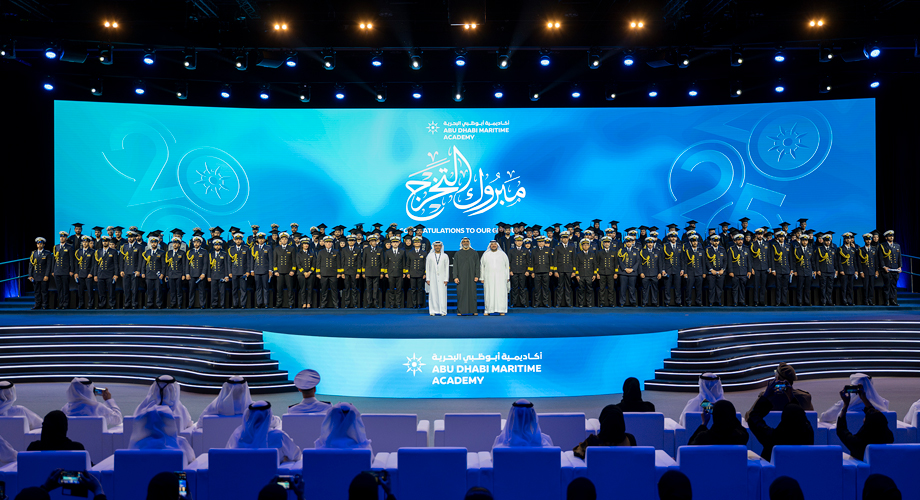
Khaled bin Mohamed bin Zayed attends Abu Dhabi Maritime Academy’s inaugural commencement ceremony

ABU DHABI : His Highness Sheikh Khaled bin Mohamed bin Zayed Al Nahyan, the Crown Prince of Abu Dhabi and Chairman of the Abu Dhabi Executive Council, attended a graduation ceremony of the inaugural cohort of Abu Dhabi Maritime Academy, celebrating 194 graduates.

His Highness Sheikh Khaled bin Mohamed bin Zayed Al Nahyan congratulated the graduates and their families on this achievement, wished them continued success in their academic and professional journeys, and reaffirmed their role in advancing the maritime transport and logistics sector in Abu Dhabi and the wider UAE.

First cohort of trained maritime and nautical professionals fulfils critical need in UAE’s growing maritime and shipping sector. Graduation represents key milestone in development of Abu Dhabi Maritime Academy less than four years after first students enrolled. AD Ports Group hires majority of first graduating class to support growing international maritime and shipping presence.

His Highness also emphasised the pivotal role of Abu Dhabi Maritime Academy in preparing and qualifying national talent, including maritime specialists and logistics engineers, to equip the maritime transport and logistics sector with skilled human capital capable of driving sustainable growth in the industry and enhancing its regional and global competitiveness, as it represents a key pillar of the UAE’s comprehensive economic development.

The ceremony marks a landmark achievement in the development of the Abu Dhabi Maritime Academy, established by AD Ports Group in 2019, and held its first enrolment in September 2021, and has since evolved into one of the Gulf region’s leading maritime training institutions, nurturing top nautical specialists and logistics engineers for the UAE and the wider region.

H.E. Mohamed Hassan Alsuwaidi, Chairman of AD Ports Group said: “We are proud of the attendance of His Highness Sheikh Khaled bin Mohamed bin Zayed at the graduation ceremony of the inaugural cohort of Abu Dhabi Maritime Academy, which is a milestone in the development of the UAE’s maritime and shipping sector, aligning with the UAE leadership’s vision to accelerate efforts aiming to make the Abu Dhabi Maritime Academy a beacon of marine sciences.”

His Excellency added: “In just a short time, the academy has succeeded in playing a leading role in this field, graduating skilled and competent talents who are today prepared to tackle the challenges and requirements of the future. The academy has also established an advanced platform for research and development, which will play an instrumental role in sustaining growth in the maritime sector locally and globally.”

The establishment of ADMA was designed to fill a skills gap and position the UAE as a global leader in maritime knowledge, research, and innovation by providing a local pipeline of trained engineers and navigators for the maritime and logistics sector.

In less than four years since the first class was enrolled, ADMA has grown into a major contributor to maritime education and research in the Gulf. The Academy’s eight core academic programmes include 410 students, 85% of whom are Emiratis.

Dr. Yasser Al Wahedi, the President of Abu Dhabi Maritime Academy, said: “Today’s graduation ceremony is a major achievement of Abu Dhabi Maritime Academy, which is fulfilling a critical role in providing the UAE maritime and shipping industry with a steady supply of certified professionals who will take our industry to the next level.”

Dr. Al Wahedi added: “This academy, the first of its kind in the UAE, has evolved to become a proven driver of prosperous job opportunities in the maritime sector. I want to personally thank the members of this first graduating class for their commitment and enthusiasm and wish them the best of luck in their new endeavours as they serve the growing needs of the global maritime industry.”

Diplomas at the Academy cover 13 specialties, including ship chartering and tanker leasing, marine engineering technology, shipping and marine operations, a chief officer’s programme, marine supply chain management, port management, shipping law, freight forwarding, advanced tug training, and ship handling, among others.

In addition, the Academy offers accredited programmes for CFA, CMA, ACCA, and FRM finance and accounting certification, and provides technical training to the maritime and shipping industries. Since 2021, the Academy has conducted 150 training and development programmes for industry partners, providing 446,000 hours of training to 4,200 trainees. Some training is conducted in the Academy’s Simulation Centre, which has six full-mission maritime simulators and over 400 training models.

Other training is provided on-the-job, and more than 100 students having trained onboard ships worldwide since 2021.

The Academy’s professional staff have also consulted on 43 industry projects in navigation, port and ship design, and maritime piloting, and the Academy has filed 7 patents with the US Patent Office, covering diverse technologies such as earthquake prediction, drone detection, and satellite-assisted mapping of emissions intensity. In addition ADMA established the Maritime Sustainability Research Center, under the umbrella of Maritime Hub Abu Dhabi, Abu Dhabi Maritime’s newly launched platform bridging the gap between public and private sectors with the aim of strengthening Abu Dhabi’s maritime industry.