Home Blog Page 795

Shaping the Future of Logistics: Top Industry Leaders to meet at ‘4th Supply Chain and Logistics Conclave’

A high-impact gathering featuring thought leaders from policy, industry, and academia, focused on resilience, innovation, and strategic foresight in logistics and supply chains.

NEW DELHI : India stands at a pivotal moment in its economic evolution. As growth accelerates and global dynamics shift, the once-stable principles of supply and demand face increasing disruption. Geopolitical realignments, economic volatility, and rising stakeholder expectations are reshaping the business landscape. In this climate of uncertainty, building trust, creating long-term value, and ensuring operational resilience are no longer optional—they are critical to survival and sustainable growth.

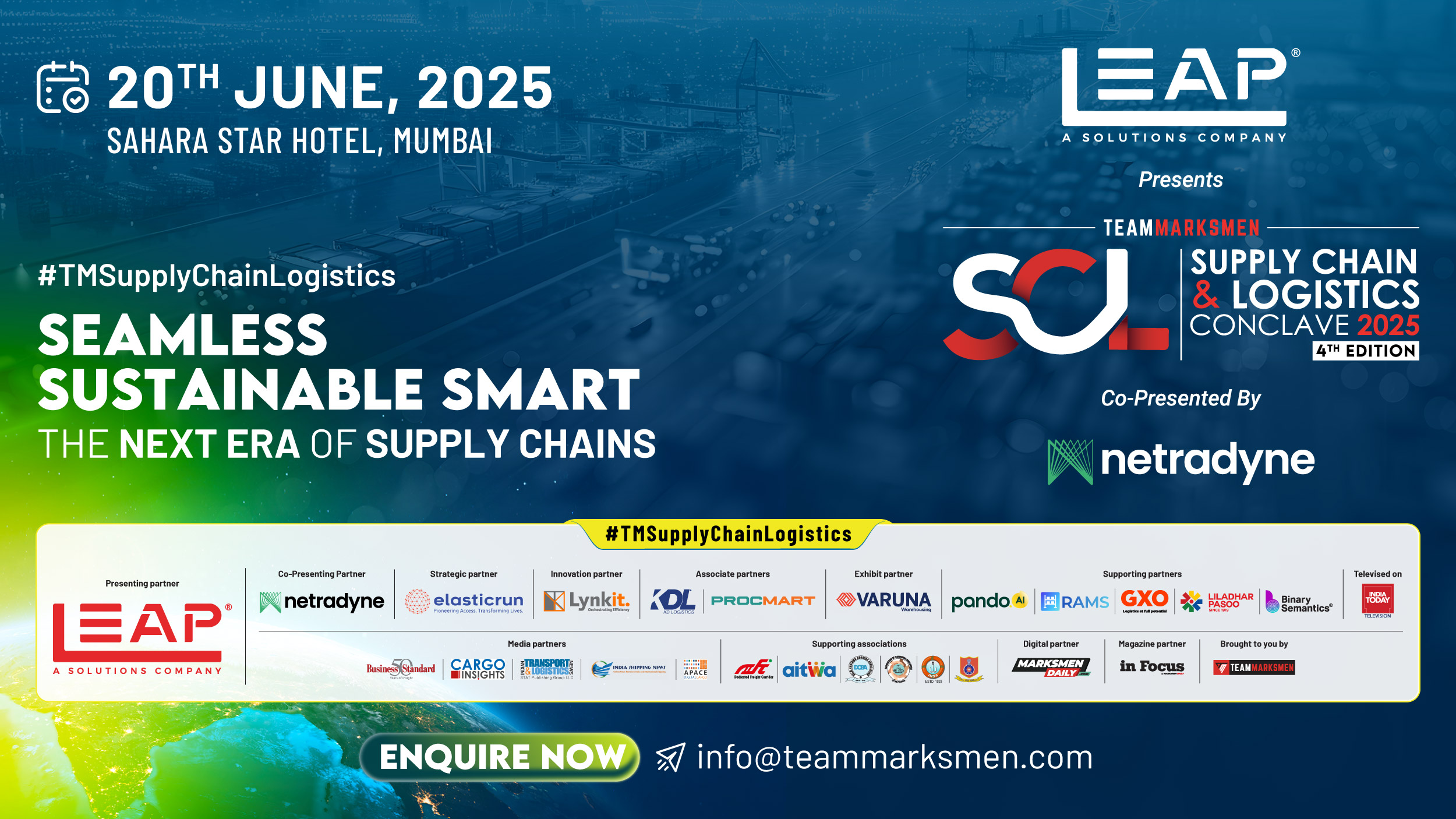
It is in response to these emerging realities that Team Marksmen proudly presents the 4th edition of the Supply Chain and Logistics Conclave 2025, a strategic platform designed to unpack, address, and navigate some of the most pressing industry and societal challenges of our time. As India’s logistics and supply chain sector gears up to become a USD 484 billion powerhouse by 2029, the need for greater resilience, agility, and innovation has never been more apparent. 

This year’s Conclave, presented by LEAP and co-presented by Netradyne, will take place on June 20th in New Delhi. It will bring together over 300 senior stakeholders, including policy makers, industry experts, global think tanks, and academicians, making it one of the most comprehensive gatherings in this space.

A stellar lineup of over 50 plus speakers will headline the event.

Government and policy luminaries gracing the Conclave include:

  • Shri Manjinder Singh Sirsa, National Secretary, Bharatiya Janata Party; Minister of Industries, Food & Supplies, and Environment, Forest & Wildlife, Government of NCT of Delhi
  • Shri B.S. Varma, Minister of State for Steel and Heavy Industries, Government of India
  • Shri Suresh Prabhu, Former Union Cabinet Minister and Chancellor, Rishihood University
  • Shri Surendra Ahirwar, Executive Director – Traffic Commercial, Ministry of Railways, Government of India

Notable corporate and industry leaders include:

  • Avinder Singh, MD & CEO, ams OSRAM
  • Naveen Ahlawat, Chief Procurement Officer & Head – Green Hydrogen and Gasification Projects, Jindal Steel & Power
  • Vikrant Tyagi, Director – Logistics and Supply Chain, Schneider Electric
  • Varun Gupta, Supply Chain Director, Nestlé
  • Devesh S, Senior Director – Global Supply Chain, Biocon Biologics
  • Darpan Khurana Chandra, Director Supply Chain for India & South-West Asia, Coca-Cola
    …among many others.

Key themes will span digital transformation for smarter supply chains, AI and automation for operational excellence, and embedding sustainability into logistics. The conclave will also explore India’s manufacturing supply chains in a global context, the future of retail packaging, and the roadmap for AI-powered supply chain agility.

At its core, the Conclave aims to foster meaningful collaboration and co-creation to build a future-ready supply chain ecosystem aligned with India’s growth vision. With each participant representing a vital link in the value chain, the platform serves as a powerful catalyst for progress, policy influence, and actionable insight.

Adding to the event’s dynamism, the Champions of Supply Chain Awards will honour 30 standout leaders who are redefining procurement, logistics, and end-to-end supply chain excellence. These recognitions, backed by robust research from Coherent Insights, celebrate trailblazers driving innovation, sustainability, and strategic impact.

“Building resilient and reliable supply chains is critical not just for business success, but for national competitiveness and societal well-being,” said Rishi Kapoor, CEO, Team Marksmen Network. “The ripple effects of disruptions are now felt globally. Leaders must embrace agility, sustainability, and innovation. This Conclave brings together the brightest minds to address these challenges and celebrate those setting the benchmark for excellence.”

In an era defined by interconnected risks and interdependent opportunities, the 4th edition of the Supply Chain and Logistics Conclave 2025 aims to be a catalyst for change, and a harbinger of the India being built today for a more prosperous tomorrow. 

To know more about this unique initiative, write to us at contact@teammarksmen.com.  

Allcargo Gati goes live on ONDC Network to empower India’s digital commerce with seamless, efficient logistics solutions

MUMBAI : Allcargo Gati, one of India’s leading express distribution and supply chain companies, has joined the Open Network for Digital Commerce (ONDC) Network, a Government of India backed initiative aimed at democratizing and expanding digital commerce.

This strategic integration enhances the accessibility of reliable, tech-enabled logistics solutions for businesses of all sizes—helping them streamline deliveries, optimize supply chains, and boost operational efficiency.

By joining the ONDC Network, Allcargo Gati reinforces its commitment to driving digital commerce across India. Leveraging its vast logistics infrastructure, advanced warehousing, and AI-driven route optimization, the company offers seamless, end-to-end logistics solutions across 19,800 PIN codes in 735 districts—enabling faster and more efficient deliveries nationwide.

Businesses on the ONDC Network now gain access to Allcargo Gati’s full-spectrum logistics services, including express distribution, warehousing, and last-mile delivery. These services are tailored to suit the unique needs of industries such as automotive, pharmaceuticals, consumer goods, and durable products.

Commenting on the development, Ketan Kulkarni, Managing Director and CEO – Gati Express and Supply Chain Limited, said, “By joining ONDC Network for B2B, we align with the government’s vision of fostering an open and inclusive e-commerce ecosystem. Our mission is to empower customers with seamless logistics solutions that strengthen their market competitiveness. Through our robust express distribution network, we enable businesses of all sizes to efficiently reach customers across every corner of the country.”

Vibhor Jain, Acting CEO and COO at ONDC, added: “Allcargo Gati joining the ONDC Network marks a pivotal shift in how B2B logistics is delivered in India. With logistics costs estimated to be a considerable part of GDP, ONDC’s open, interoperable framework offers a pathway to greater efficiency, better capacity utilization, and reduced costs at scale. This move levels the playing field—empowering small and medium businesses with access to tech-enabled, enterprise-grade logistics infrastructure.”

With a sharp focus on digital transformation, Allcargo Gati continues to enhance its network capacity, optimize its hub-and-spoke model, and integrate advanced technologies to meet the evolving demands of e-commerce. Its presence on the ONDC Network ensures that all buyers and sellers within the ecosystem can easily leverage its services—solidifying Allcargo Gati’s position as a preferred logistics partner in India’s rapidly growing digital economy.

About Allcargo Gati Limited (ACLGATI | 532345 | INE152B01027)

Allcargo Gati (formerly Gati which was founded in 1989) is one of India’s premier Express Distribution provider. With a strong presence across Asia, including a nationwide network that covers 99% of the country’s districts, Allcargo Gati’s unparalleled reach creates the unique advantage of covering every part of India. Company’s integrated and IT-backed multi-modal network allows it to offer end-to-end supply chain solutions specific to varied business requirements. The strategic collaboration with Allcargo enables Allcargo Gati to leverage the strengths of parent’s global network operating in more than 180 countries and enhance its products and services portfolio. Key business verticals of Allcargo Gati include Express Distribution, Air Freight, E-commerce, First and Last Mile Logistics, etc.

It also offers exclusive B2C services like Laabh, Bike Express, Student Express, and others. Its services and solutions have been designed to be flexible and scalable to meet the needs of different businesses across various industry sectors. Allcargo group stays true to its strong commitment to adhere to Environmental, Social, and Governance (ESG) standards and continues to direct efforts towards enhancing its people, technology as well as business processes and operations on a regular basis. The group have set out to achieve 100% carbon neutrality by 2040. Recently brand Gati has been Recognized as a Well-Known Trademark by the Indian Trademark Registry.

Kochi Coastal Police file case against owner, captain and crew of MV Wan Hai 503

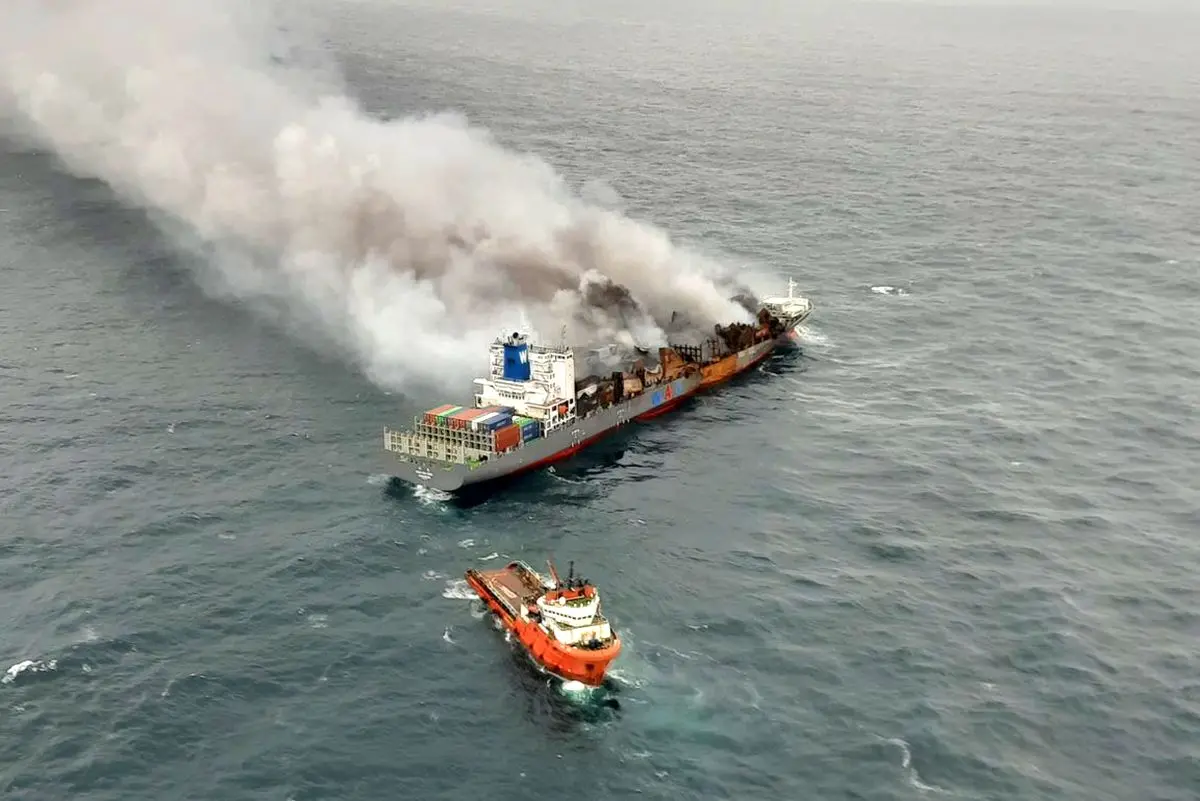
KOCHI : The Fort Kochi coastal police in Kerala have registered a case against the owner, captain and crew of the Singapore-flagged merchant vessel MV Wan Hai 503 which caught fire off the Beypore coast in Kerala on June 9.

This was the second such case in succession to be registered by the Coastal police, which had registered in connection with the sinking of another merchant vessel MSC Elsa 3 off the Kochi coast. The FIR, which was registered on Tuesday (June 17, 2025), stated that the ship was navigated rashly in a way that could be dangerous to human life, despite the presence of flammable materials, chemicals, and explosives on the vessel.

The Fort Kochi coastal police in Kerala have registered a case against the owner, captain and crew of the Singapore-flagged merchant vessel MV Wan Hai 503 which caught fire off the Beypore coast in Kerala on June 9.

This was the second such case in succession to be registered by the Coastal police, which had registered in connection with the sinking of another merchant vessel MSC Elsa 3 off the Kochi coast.

Container, lifeboat from Singapore-flagged cargo ship Wan Hai 503 wash ashore in Kerala’s Alappuzha

The FIR, which was registered on Tuesday (June 17, 2025), stated that the ship was navigated rashly in a way that could be dangerous to human life, despite the presence of flammable materials, chemicals, and explosives on the vessel.

It refers to the fuel and other oils leaked into the sea from the vessel and the fall of containers overboard. Dangerous fumes were also released following the fire outbreak, the FIR said.

The incident affected fishermen, biodiversity and the environment in the region, besides hindering the free movement of vessels. The case was registered under the Bharatiya Nyaya Sanhita Sections 282 (rash navigation of vessel), 285 (danger or obstruction in public way or line of navigation), 286 (negligent conduct with respect to poisonous substance), 287 (negligent conduct with respect to fire or combustible matter), 288 (negligent conduct concerning explosive substance), and 3 (5) (common intention) of the Bhartiya Nyaya Sanhita.

CMA CGM in talks with Indian yards for LNG-powered vessels

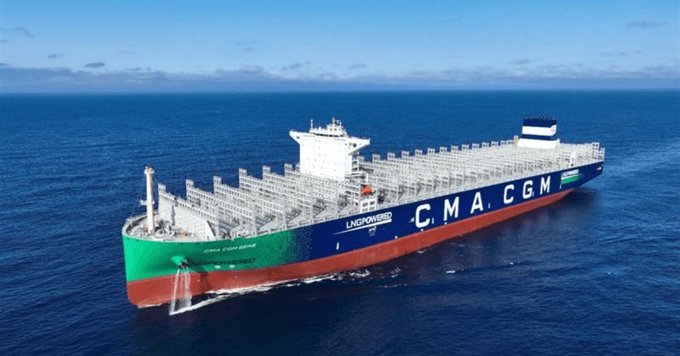
MARSEILLE : French shipping giant CMA CGM is in negotiations with Indian shipbuilders to build LNG-powered container vessels, according to India’s Ministry of Ports, Shipping and Waterways.

As reported by CMA CGM, the prominent French shipping company is in advanced discussions with Indian shipyards to construct LNG-powered container vessels. This initiative is part of a broader strategy to enhance its footprint in India’s maritime industry.Beyond shipbuilding,CMA CGM is channeling investments into port adn inland infrastructure projects. Notably, they are working on a $200 million expansion at the Nhava Sheva Freeport Terminal and are involved in the upcoming Vadhavan Port project.

The company’s ambitions in India span various sectors including shipping, container terminals, multimodal logistics, and maritime industrial development. Recently, they introduced two Indian-flagged ships—CC Vitoria and CC Manaus—and established a new shipping entity at GIFT City in Gujarat.

Last week marked an important visit from Shri T.K.Ramachandran, India’s Secretary of the Ministry of Ports, Shipping and waterways to CMA CGM’s headquarters in Marseille. This visit followed Prime Minister Shri Narendra Modi’s official trip to France earlier this year were he engaged with CMA CGM representatives.

Modi’s February 2025 trip was significant as it was his sixth visit to France and came shortly after President Macron attended India’s republic Day celebrations as chief guest earlier that year.

During thier discussions, both leaders highlighted India’s maritime potential along with global partnerships under initiatives like the India-Middle East-Europe Economic Corridor (IMEC), which was unveiled during the G20 summit held in Delhi last September.They committed to enhancing collaboration for IMEC’s implementation.

During Ramachandran’s June 12 visit to Marseille, CMA CGM executives briefed him on advancements since Modi’s February meeting.They outlined their expansion strategy focusing on five main areas: shipbuilding collaboration, boosting the Indian-flagged fleet size, enhancing inland logistics systems, fostering innovation within maritime operations, and increasing investments into industrial growth within India’s maritime sector.

CMA CGM also expressed interest in tapping into India’s ship recycling market—especially around Alang—and indicated plans to procure containers and green steel from local manufacturers as part of their sustainability objectives globally.

Currently employing over 2,200 digital experts across India, CMA CGM is contemplating establishing research hubs dedicated to maritime innovation across major cities like Mumbai or Chennai—aiming for future advancements within the shipping industry.

Hapag Lloyd commences digital Manual Forwarding Notes through ODeX platform in India

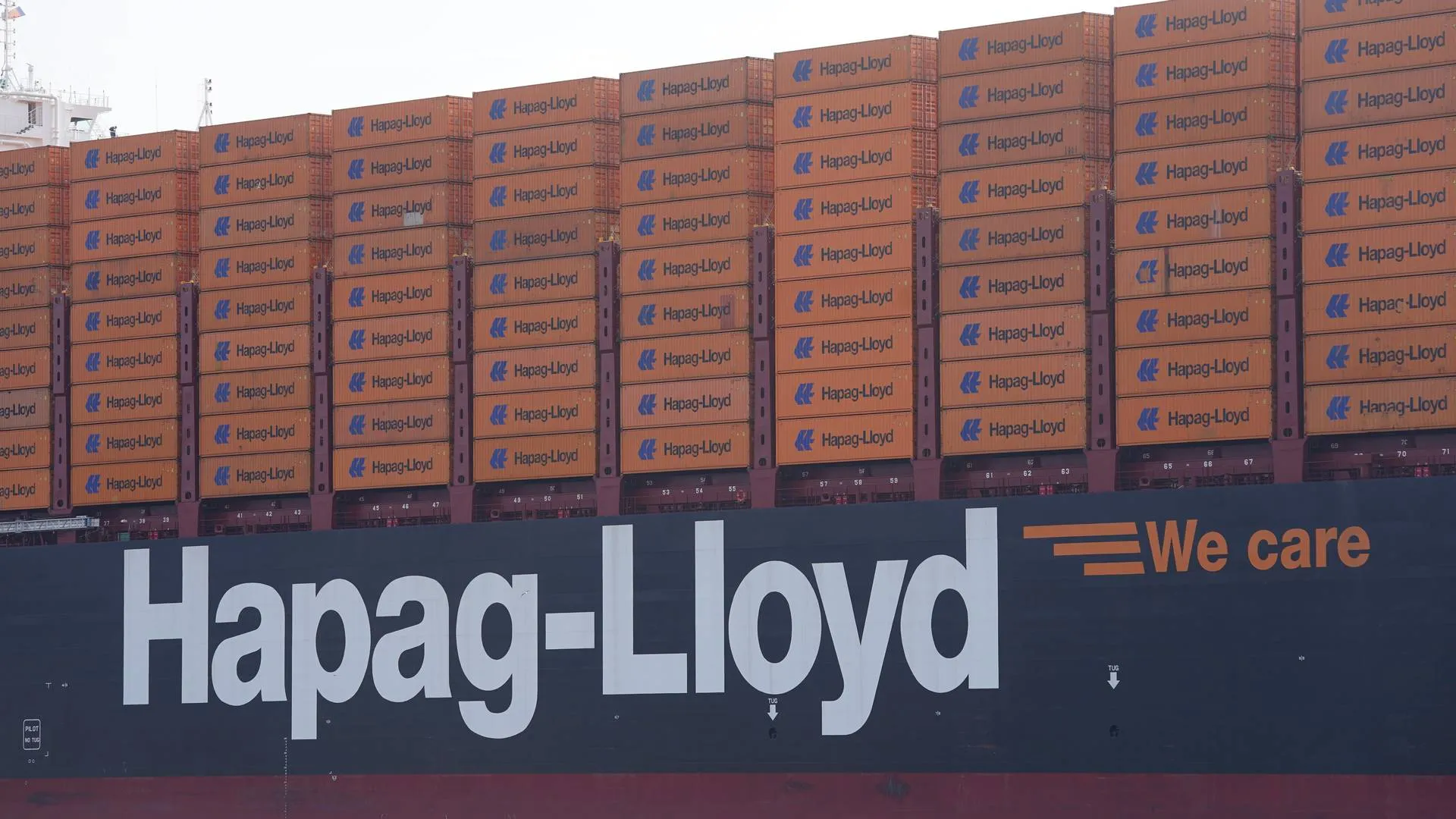
MUMBAI : Hapag Lloyd pleased to announce that the digitally processed Manual Forwarding Note via the ODeX platform in India is now live, effective June 17, 2025.

Customers are requested to submit Manual Forwarding Note (Outside Window Issue) requests directly through ODeX.

Please note the following guidelines:

  • Manual Forwarding Note requests can only be submitted after the standard cutoff (i.e., ETA minus 5 days) has passed and the disclaimer has been accepted.
  • The final cutoff for submitting such requests is ETA minus 3 days.

To ensure smooth and timely processing, we kindly request that all customers adhere to these timelines when submitting requests via ODeX.

Additionally, please note:

  • The Manual Forwarding Note must be applied via the ODeX platform.
  • Afterwards, the respective ICD will only accept the digitally generated Manual Forwarding Note.

Key advantages:

  • Immediate processing eliminates the need for email correspondence.
  • Unified Platform: Apply for both normal and manual forwarding notes in one place.
  • Centralized tracking: Monitor all forwarding notes from a single dashboard.

Softlink Global partners with Mumbai Rozgaar to bridge Logistics Skills Gap

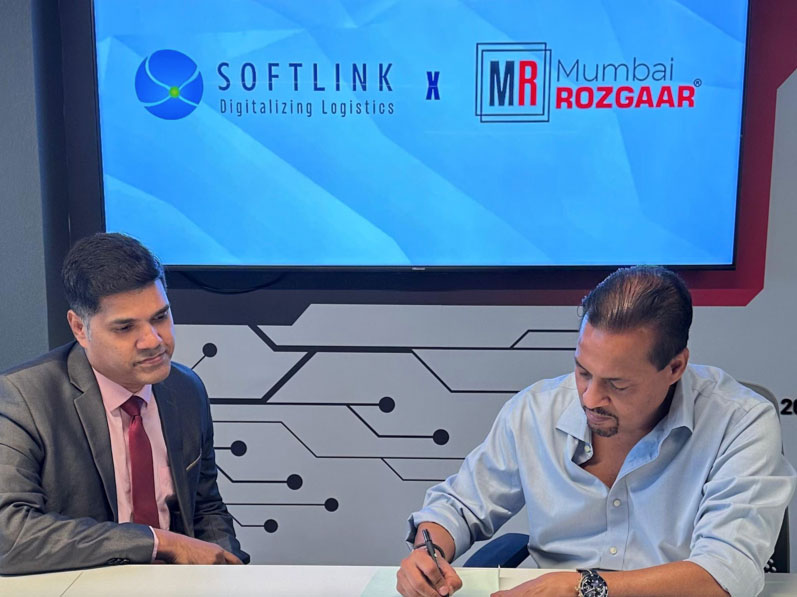
MUMBAI : Softlink Global has entered into a Memorandum of Understanding with Mumbai Rozgaar to create India’s first end-to-end talent pipeline dedicated to freight forwarding, customs brokerage and allied logistics services. The alliance joins Softlink’s three-decade domain expertise with Mumbai Rozgaar’s recruitment reach to supply job-ready professionals for operations desks across India, the Middle East and Africa.

Logistics is one of the country’s largest employment engines, yet thousands of frontline seats remain vacant while millions of semi-skilled workers struggle for formal jobs. The new partnership turns that mismatch into opportunity through:

1. Certified, 3-month internships on live logistics systems

2. Role-based training tracks –  Documentation Executive, Operations Coordinator, Warehouse Assistant and more

3. Guaranteed interviews and placement support across Softlink’s 800+ client locations

4. A target to place 2,000 candidates within 18 months

 “We see freight forwarders losing business because desks are empty,” said Amit Maheshwari, CEO, Softlink Global. “By matching unemployed youth with industry-validated training and real jobs, we’re investing in both social mobility and sector efficiency.”

Alan Castelino, Managing Director & CEO, Mumbai Rozgaar Pvt. Ltd., added:

 “Our strength in scalable recruitment, combined with Softlink’s technology footprint, lets us open new career doors for communities that mainstream hiring often overlooks.”

The initiative will operate under Softlink Academy, the company’s skilling arm, extending its reach into vocational colleges, community centres and state employment exchanges. Cohorts begin in August 2025; participating employers can book slots immediately.

About Softlink Global

Softlink Global is the digital backbone of freight and logistics, trusted by more than 10,000 organisations in over 50 countries. Its flagship platform, Logi-Sys, unifies freight, customs, warehouse, transport, CRM, finance and compliance on the cloud, enabling scalable, data-driven operations.

About Softlink Academy

Softlink Academy bridges the gap between education and industry with stackable courses in freight forwarding, customs compliance and supply-chain technology. Graduates leave with hands-on experience on live ERP systems and proven job placement records.

About Mumbai Rozgaar Pvt. Ltd.

Founded in 2010, Mumbai Rozgaar is a full-service HR partner to more than 400 companies across 25 industries in India and overseas. Its agile, client-centred model delivers end-to-end manpower solutions at scale.

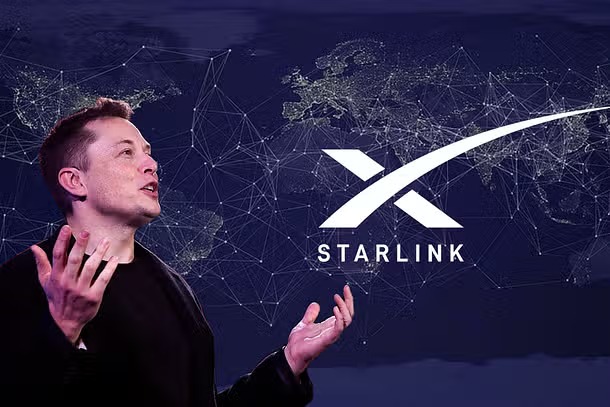
Elon Musk’s Starlink gets green light to launch satellite internet services in India

NEW DELHI : The Elon Musk-backed internet technology firm, which leverages satellite communications to deliver high-speed internet, will now enter one of the world’s fastest-growing digital markets.

In a significant development for India’s digital landscape, Communications Minister Jyotiraditya Scindia revealed on Tuesday that Starlink has been officially granted a license to operate in India.

The Elon Musk-backed internet technology firm, which leverages satellite communications to deliver high-speed internet, will now enter one of the world’s fastest-growing digital markets.

Major Boost for India’s Digital Ambitions
Sharing details of his meeting with Gwynne Shotwell, President and COO of SpaceX, Scindia posted on X: “Had a productive meeting with Ms Gwynne Shotwell, President & COO of SpaceX, on India’s next frontier in connectivity. We delved into opportunities for collaboration in satellite communications to power Digital India’s soaring ambitions and empower every citizen across the country. With India’s digital revolution under the leadership of PM Shri Narendra Modi, satellite technologies are not just relevant, they’re transformative. Ms Shotwell appreciated the license granted to Starlink, calling it a great start to the journey.”

Starlink’s entry has already triggered intense discussion within the Indian telecom sector. Debates have emerged around key issues such as spectrum allocation and concerns of predatory pricing, as industry stakeholders assess the implications of this new competition.

Partnerships and Growing Competition
Earlier in March, India’s dominant telecom players—Jio and Airtel—announced collaborations with SpaceX to integrate Starlink’s services into their offerings. These two telecom giants collectively command more than 70 per cent of India’s market share, and their partnerships with SpaceX are expected to play a crucial role in shaping Starlink’s rollout in the country, reported The Hindustan Times.

With this new license, Starlink becomes the third entity cleared by India’s Department of Telecommunications to deliver satellite-based internet services. The other two are Eutelsat OneWeb and Jio Satellite Communications. Meanwhile, Amazon’s Kuiper project remains under review, still awaiting the necessary regulatory clearances to join the race.

How Starlink Operates: The Low Earth Orbit Advantage
Unlike traditional satellite providers that depend on high-altitude geostationary satellites, Starlink employs an extensive network of low Earth orbit (LEO) satellites positioned about 550 kilometers above the planet’s surface. This LEO constellation currently includes around 7,000 satellites, with plans to eventually expand to more than 40,000 units. By operating in this lower orbit and using a mesh network, Starlink can offer broadband speeds suitable for demanding activities such as video streaming, online gaming, and virtual meetings.

Developed under the banner of SpaceX—founded in 2002 by Elon Musk—Starlink represents Musk’s vision of bridging the global digital divide through space-based internet solutions. Its entry into India marks another step in Musk’s larger plan to expand global connectivity, particularly in remote and underserved regions.

Nuclear-Powered Ships may reshape trade with cleaner, faster transport

By Will Wade

The commercial shipping industry is chasing a novel carbon-free propulsion technology as it pursues a lofty climate goal: nuclear power.

Shipping accounts for more planet-warming greenhouse gas emissions than Japan. The sector is responsible for 3 per cent of all emissions globally, but the international body overseeing it has pledged to cut climate pollution by as much as 30 per cent by 2030 and eliminate it by 2050. Nuclear power — long a source of propulsion for the military — is a tantalizing solution for an industry largely reliant on highly polluting bunker fuel, though it will likely prove hard to insure.

While there are clean fuels in development like ammonia, the dearth of affordable options to power massive cargo ships has created an almost “insurmountable problem,” according to Mikal Boe, chief executive officer of Core Power Ltd. In a bid to address it, his company is leading an effort that includes HD Korea Shipbuilding & Offshore Engineering and utility Southern Co. to develop commercial vessels powered by carbon-free nuclear reactors.

There are significant technical and regulatory challenges and higher upfront costs, but Boe said the approach has the potential to make ships faster and cheaper to operate while also being able to carry more cargo. “This is the solution to one of the biggest conundrums,” he said. “If we could do this right now, there would be an enormous pent-up demand.”

The Core-led group is focused on getting a fission-powered vessel in the water by 2035. They’re planning to use a reactor from TerraPower LLC, a climate tech company backed by billionaire Bill Gates, which expects to begin testing the design in 2029. Southern completed last year the first new nuclear power plant in the US in decades and will bring its expertise to bear.

The effort comes as nuclear power experiences a revival on land as well. Artificial intelligence is increasing energy demand, and tech companies and governments are turning to both traditional nuclear and betting on more futuristic forms like fusion and the small modular reactors that Core is looking to use.

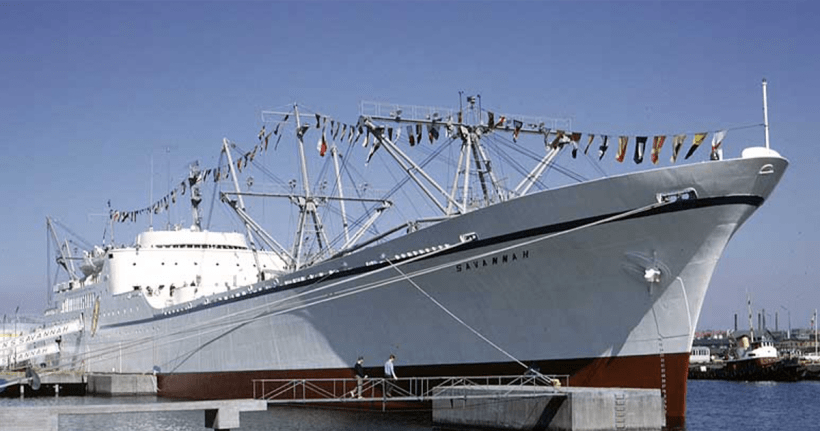
The first oceangoing reactor was deployed on a US submarine in 1955. A handful of civilian vessels were developed starting with the NS Savannah in 1959, but most eventually retired due to high costs and technical issues. Today, there are about 160 vessels worldwide that rely on fission. The technology is primarily used in military vessels, especially aircraft carriers and submarines, as well as Russian icebreakers in the Arctic.  

However, the ​​​​​​commercial shipping industry’s emissions targets have prompted companies to reevaluate the idea, according to Jose Esteve, offshore gas and power market leader for Bureau Veritas SA, a French product-testing firm.

Some companies are exploring the use of carbon-free fuels like ammonia while others are testing the addition of sails. AP Moller-Maersk A/S, the Danish container giant, is already operating container ships that run on low-carbon methanol, and other companies are using hydrogen to power vessels. But the supply chains to produce these fuels are still developing, and Esteve is skeptical they’ll be ready when big ships start requiring them by the ton at every port.

“Those alternative fuels will not be there when we need them,” he said. “Not at a cost that makes them a viable alternative.”

 He’s more confident that the nuclear industry will be able to deliver reactors to transform the global fleet. Esteve expects to see the first ships powered by atomic energy tested by the middle of the next decade, with wider usage by the late 2030s.  

Still, transitioning to a nuclear-powered fleet will require some significant changes to the regulatory landscape. For starters, commercial insurance companies won’t provide coverage for ship that runs on fission because the potential cost of a nuclear accident is simply too high. Without insurance, few civilian ports would allow a nuclear-powered cargo ship to dock. That’s not an issue for naval vessels that can dock in military harbors, but it makes the technology a non-starter for commercial shipping.

There are also significant safety and security concerns, according to George Moore, a scientist-in-residence at the Middlebury Institute of International Studies in Monterey, California. While the fuel expected to be used for shipping doesn’t have the high concentration of uranium needed for a weapon, it’s still radioactive and commercial ships would be vulnerable to piracy or sabotage. That raises the specter of an intentional nuclear incident. Commercial ships are also typically less durable than naval vessels, increasing the risk of an accidental radiation leak due to a collision.

While regulatory agencies could develop policies to address some of those concerns, Moore said the industry seems more focused on developing the technology and the potential market.

“The industry hasn’t looked at all these issues,” which makes developing ships a risky idea, said Moore.

At a meeting this month, the International Maritime Organization will be discussing potential changes to the safety code for nuclear merchant ships. The group is also likely to vote in October on whether to impose financial penalties on some polluting vessels.

New nuclear technologies may reduce some of the risk, Moore said. Navy ships typically used pressurized water reactors, which circulate hot water under high pressure. If there were an accident, that pressure means radioactive material could be dispersed over a significant distance, enough to imperil much of a port and any ships in the area.

But TerraPower and other companies are developing a new generation of reactors to operate at normal pressure. That would help reduce the danger area, known as the emergency planning zone, in the case of an accident. The goal, said Boe, is an emergency planning zone that’s no bigger than the ship.

If these issues can be addressed, a nuclear-powered ship would offer several advantages over vessels that burn fuel, even of the carbon-free variety. Most ships today sail well below their maximum speed, often as much as 30 per cent to 40 per cent slower than their engines are rated, which lowers emissions and reduces operating expenses by burning less fuel, said Boe.

But nuclear ships would have no emissions, and they wouldn’t need to pay for fuel, allowing them to travel at top speed. This would mean faster deliveries and higher revenue for shipping companies. Plus, big ships need big fuel tanks, which can take up precious space. That wouldn’t be necessary on a ship with a reactor, and Boe estimates there would be about 10 per cent more space for cargo.

Nuclear-powered ships could also reduce downtime by cutting out the need to refuel. The typical container ship spends a total of about a month of every year just refueling, according to Sangmin Park, a vice president with HD Korea Shipbuilding and Offshore Engineering, who’s leading the company’s effort to develop a nuclear ship. The reactors under consideration for cargo ships may have enough nuclear fuel to last for decades, which is essentially the entire expected lifecycle of the vessel.

Shipowners will also save money by not buying fuel, though the payoff will take some time because the initial costs will be higher. Nuclear systems are pricey, and Park estimates that a new ship would cost double or perhaps even triple the price of a standard cargo ship. But over an expected 25-year life of a vessel, the total cost would be less than half, he estimates.

“The nuclear-powered ship is good for general emissions, but it’s also good for the economy in the long term,” Park said.

Source : BS

X-Press Feeders Group and COSCO SHIPPING Lines sign Partnership and Leasing Agreement to enhance Feeder Connectivity

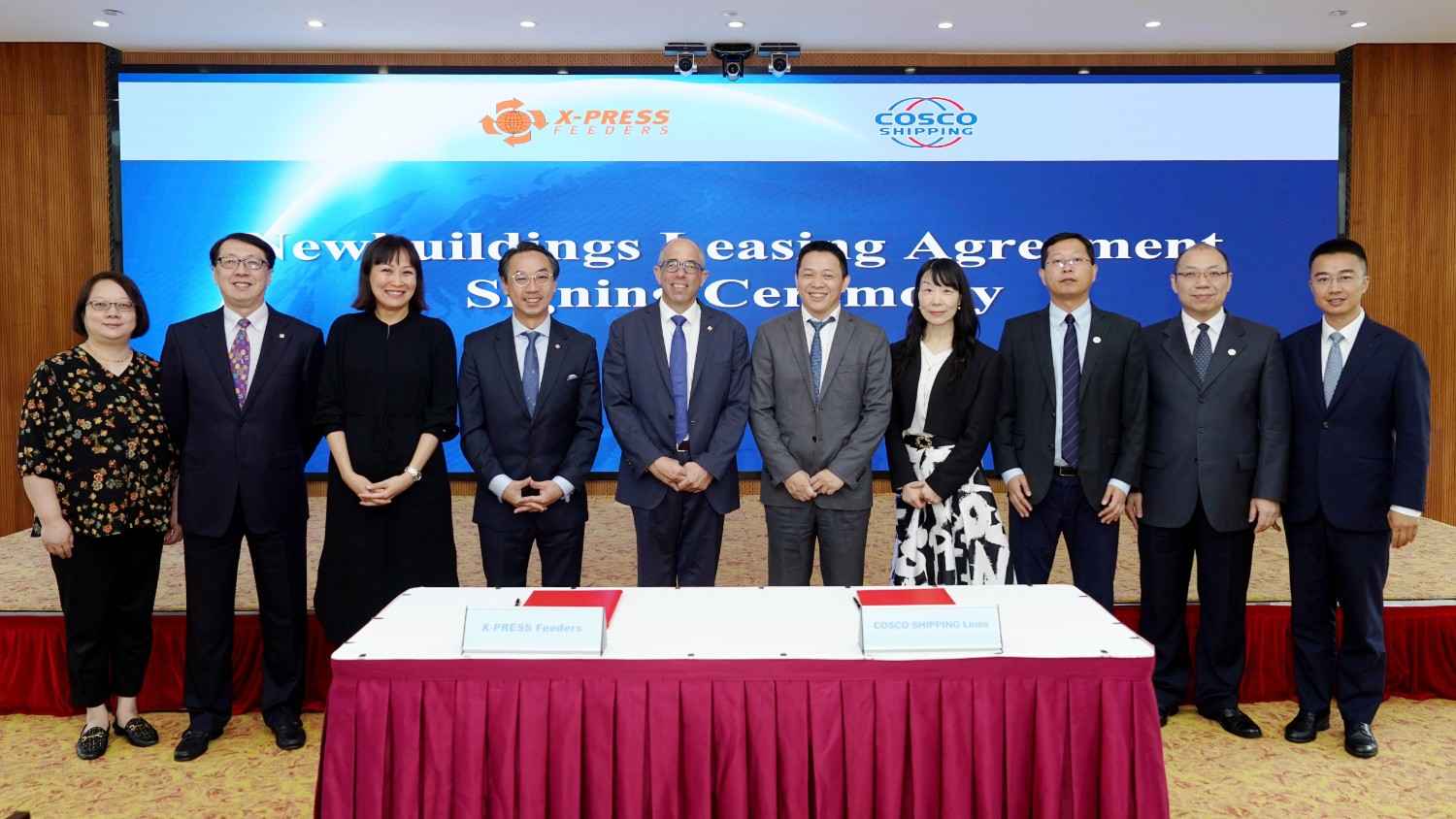
SINGAPORE : X-Press Feeders Group, the world’s largest independent common carrier, has signed two agreements with COSCO SHIPPING Lines, one of the world’s largest mainline operators, to expand network coverage, strengthen mainline-feeder coordination and improve service reliability.

The agreements were signed by Francis Goh, Chief Operating Officer of X-Press Feeders Group and Irene Cheng Jin, Deputy Managing Director of COSCO SHIPPING Lines on 18 June 2025.  Under the partnership agreement, both companies will explore opportunities to cooperate as partners in feeder services across Asia, the Middle East, the Mediterranean, North Europe and Latin America. For the leasing agreement, X-Press Feeders Group will provide COSCO SHIPPING Lines with the first option to charter newbuild vessels from X-Press Feeders Group, which may be deployed to support joint services where appropriate.

With the shipping industry facing stricter decarbonisation targets, evolving trade flows, and increasing demand for end-to-end logistics, this collaboration reflects a shared commitment to building more sustainable and resilient supply chains.

“This collaboration reflects our shared commitment to building a more connected and sustainable shipping network,” said Francis Goh, Chief Operating Officer of X-PressFeeders Group. “By aligning our capabilities and vision, we aim to deliver more efficient, customer-centric solutions.”

About X-Press Feeders 

X-Press Feeders, which was founded in Singapore in 1972, is the world’s largest independent common carrier. Starting out in Southeast Asia, we are now operating throughout Asia, Middle East, Africa, Caribbean, Latin America, Mediterranean and Europe. As ‘The Global Common Carrier’, our mission is to provide the best feeder solutions and be the feeder carrier of choice. X-Press Feeders as an independent common carrier does not own, lease, or operate any containers. We provide transportation services only to container operators and not to proprietary cargo interests or the general shipping public, allowing us to act as a trustworthy and completely impartial contractor. X-Press Feeders operates a fleet of more than 100 vessels, calling at more than 180 ports worldwide. X-Press Feeders aims to achieve net zero emission by 2050 and be the ‘Greener Feeder Carrier of Choice’. We will be the world’s first feeder carrier to operate containerships powered by green methanol.

About COSCO SHIPPING Lines

COSCO SHIPPING Lines, one of the core business segments of COSCO SHIPPING Group, was formed with the integrated container businesses of COSCO Container Lines Co., Ltd and China SHIPPING Container Lines CO., Ltd since 1st March 2016. The Company is mainly engaged in global container shipping services and related global logistics and supply chain businesses. COSCO SHIPPING Lines and Orient Overseas Container Line (OOCL), as Dual Brand, own and operate 551 container vessels with a total capacity of 3.4 million TEUs, being one of the leading carriers in the world. The Company operates over 400 global shipping routes, connecting over 600 ports across more than 140 countries and regions. The Company integrates global logistics nodes such as warehouses, railroads, trailers, barges, customs, etc., while coordinating and deploying its global resources with commitment to providing the customers with integrated services comprising “Container shipping + port + related logistics”.

Namakkal Poultry Industry achieves major leap; exports eggs to US

CHENNAI : In a significant leap for the poultry industry in Tamil Nadu’s Namakkal district, a consignment of one crore eggs has been shipped to the United States for the first time, meeting that country’s strict standards. The eggs, supplied by two firms and dispatched from V O Chidambaranar Port in Thoothukudi, are expected to reach US shores in the coming days.

Namakkal, often referred to as the egg capital of India, is renowned for its robust poultry industry. The district produces approximately five to six crore eggs daily and is a major exporter to several countries in the Middle East, Africa, and Sri Lanka. Its network of hundreds of poultry farms has previously supplied crores of eggs to Qatar during the FIFA World Cup in 2022, underscoring its global significance in the egg export market.

The eggs were shipped in 21 temperature-controlled containers, each carrying about 500,000 eggs. According to a poultry farm owner, the eggs meet the strict standards set by US food authorities.

K Singaraj of the Tamil Nadu Poultry Farmers Association (TNPFA) stated that the industry in Namakkal is eagerly awaiting the US response to the shipment. “Though we export eggs from Namakkal to several countries, US authorities accepting our products will be a significant win for the industry here. This will help poultry farmers in a big way. Exporting to the US will also bring us more opportunities to supply eggs to other countries,” Singaraj added.

Another poultry exporter noted that 90 per cent of the eggs exported from India originate from the Namakkal zone, which ships about 200 million eggs monthly to Gulf and African nations.

“We are waiting for the news of the shipment being accepted in the US. Such a development will help the poultry industry and follow strict protocols since the US market enforces some of the world’s strictest food safety, quality, and disease-control protocols. This will help us remain competitive,” he added.

For Namakkal producers to gain entry, they had to demonstrate compliance with rigorous requirements, including minimum weight of 60 g per egg, grade A/A+ quality, and certification of no highly pathogenic avian influenza (HPAI).

This is reportedly the first time the US has sought consignments from India, prompted by widespread outbreaks of highly pathogenic avian influenza (HPAI) in major egg-exporting countries like Brazil, Turkey, and Canada.

Egg products entering the United States must be accompanied by an official inspection certificate issued by the central competent authority of the exporting country. All shipments must be presented at an official import inspection establishment or at a domestic establishment for reinspection by FSIS inspection personnel.