Home Blog Page 81

New cargo securing guidance prioritises personnel safety and reduces damage risks

The revised guidelines aim to protect personnel, reduce cargo damage and improve port efficiency.

LONDON: Lloyd’s Register (LR) has worked with Jurong Port in Singapore to revise its Best Practice Guidelines for Stowage and Securing of Steel & General Cargoes, placing personnel safety at the heart of cargo operations.

The updated guidance aims to ensure the safety of all personnel engaged in cargo handling activities, while also helping prevent cargo damage and improve the efficiency of discharge operations across ports and supply chains.

Despite advances in vessel design and cargo handling, poor stowage, inadequate securing arrangements and inconsistent cargo presentation continue to contribute to cargo damage, operational delays and safety incidents.

As supply chains become more complex and project cargoes and steel products continue to grow in size and value, ensuring cargo is prepared correctly before it reaches the port has become increasingly important.

The new guidance seeks to address these challenges by promoting a more consistent and practical approach to cargo preparation, stowage and securing. It provides practical recommendations for cargo owners, shippers, vessel operators, stevedores and terminal operators to reduce risk throughout the cargo handling process.

The revised guidelines were assessed against key international regulations, including the IMO Code of Safe Practice for Cargo Stowage and Securing (CSS Code), IMO MSC.1/Circ.1353 on Cargo Securing Manuals, relevant provisions of the ISM Code and recognised industry best practice for the transport and handling of general cargo.

LR’s review focused on the practical realities of transporting and discharging general cargoes, covering areas such as cargo accessibility, segregation, dunnage arrangements, bundling methods, lashing practices and the presentation of cargo for safe and efficient stevedoring operations.

The revised guidance also incorporates lessons learned from operational experience and common deficiencies observed in general cargo shipments.

Taylor Wamburg,  Regional Advisory Lead, Lloyd’s Register, said: “The industry continues to see avoidable cargo damage, safety risks and operational disruption resulting from poor stowage, inadequate securing arrangements and insufficient consideration of discharge requirements.

“Good guidance bridges the gap between regulatory requirements and the practical realities of cargo operations. By working with Jurong Port to update these guidelines, we are helping the industry adopt safer, more consistent practices that protect people, cargo and vessels while supporting more efficient port operations.”

Willie Liao, Senior Manager, Strategic Port Planning & Transformation, Jurong Port, said: “Good stowage, adequate securing and careful planning for discharge requirements are critical to safe and efficient cargo operations.

“By working with Lloyd’s Register to strengthen these guidelines, we aim to promote greater consistency in industry practices that reduce safety risks, cargo damage and operational disruptions, while improving the productivity and reliability of cargo handling.”

Carbon costs put engine performance under scrutiny: CMT

HAMBURG: With bunker prices having increased by 76% since the US war on Iran, together with an ageing fleet operating longer voyages as ships navigate around conflict zones, shipmanagers and crews need to look more closely at their engines if they want to reduce costs, advises engine monitoring specialist CM Technologies (CMT).

CMT believes the combined effect of higher fuel costs, older ships (average age is 13 according to Clarksons data) and machinery and tighter emissions requirements is increasing the value of detailed engine performance data.

“Shipowners cannot control the carbon price, and they have limited control over the price of bunker fuel, but they can investigate whether their ageing ships and engines are running as efficiently as they can,” said David Fuhlbrügge, Joint Managing Director, CMT.

Aside from the commercial pressures associated with VLSFO currently trading at around US$881/mt, the introduction of regulations targeting carbon emissions means regular engine performance monitoring is also crucial to keeping carbon penalties down.

Shipping is already included in the EU Emissions Trading System, while methane and nitrous oxide were included in the scheme in 2026.

FuelEU Maritime has also entered its first verification period this year, while IMO’s Carbon Intensity Indicator continues to require ships of 5,000gt and above to calculate and report operational carbon intensity.

“Small problems result in significant increases in specific fuel oil consumption and spikes in carbon emissions,” he said. “But if crews have reliable cylinder pressure and combustion data, they can make the necessary adjustments to reduce emissions and energy losses.”

Referencing the company’s flagship PREMET®X diesel performance analyser, Fuhlbrügge explained that the technology measures cylinder pressure during engine operation, allowing engineers to examine the combustion process and identify any anomalies.

The portable device uses a Kistler PiezoSMART pressure sensor to analyse and export engine pressure data, while the PREMET Fleet Manager tool can compare engine performance across shipping fleets. All information is uploaded to the browser-based PREMET Cloud allowing data from sister engines to be compared and trended.

Fuhlbrügge said the ability to trend measurements is particularly important because a single engine reading provides only part of the picture.

“Before considering what can be changed around the ship, it makes sense to know whether the machinery already installed is giving the performance expected from it,” he said.

PREMET X can also be supplied with CMT’s acoustic emission sensor to provide additional information on the fuel-injection process. The non-penetrative sensor detects acoustic signals generated by events including fuel passing through the injector nozzle, injector needle movement and the opening and closing of the fuel pump spill.

This allows engineers to examine injection timing and identify deviations, late combustion or leaking injectors without penetrating the engine’s high-pressure fuel lines.

CMT has more than 200 companies operating the latest generation of PREMET X, with each shipping company having between 1 and 50 devices. “If we include older generation models, the number is significantly higher,” said Fuhlbrügge.

India’s first port-based e-Methanol production facility to produce and supply green fuel to ships at Deendayal Port Authority (DPA) in Kandla

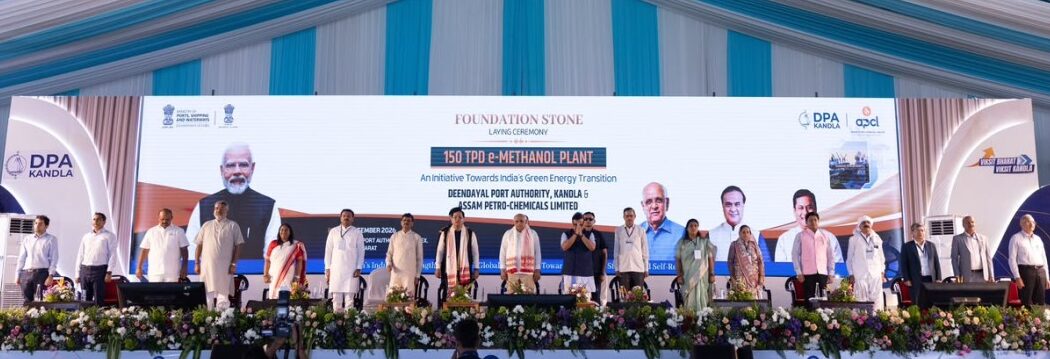
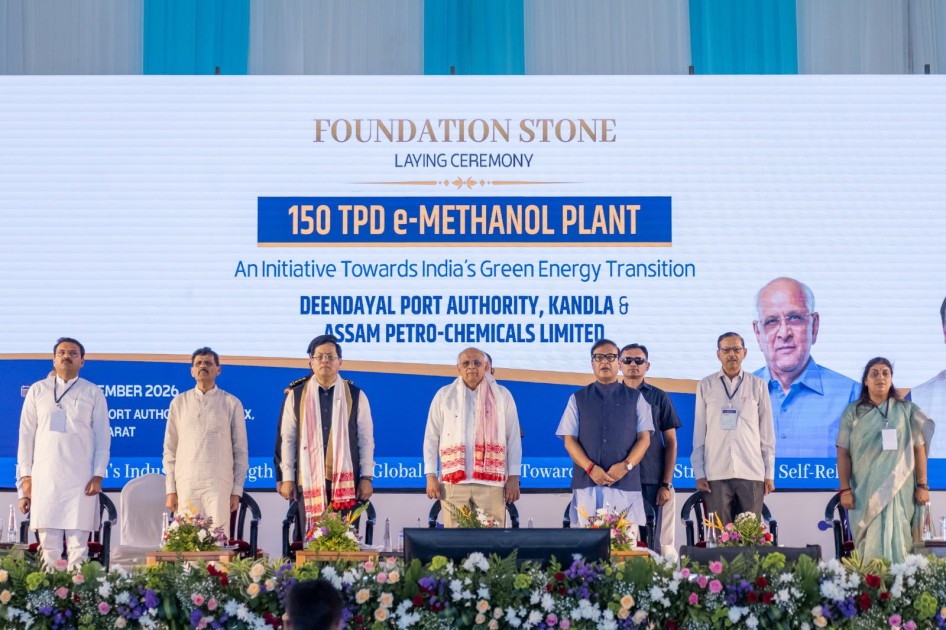
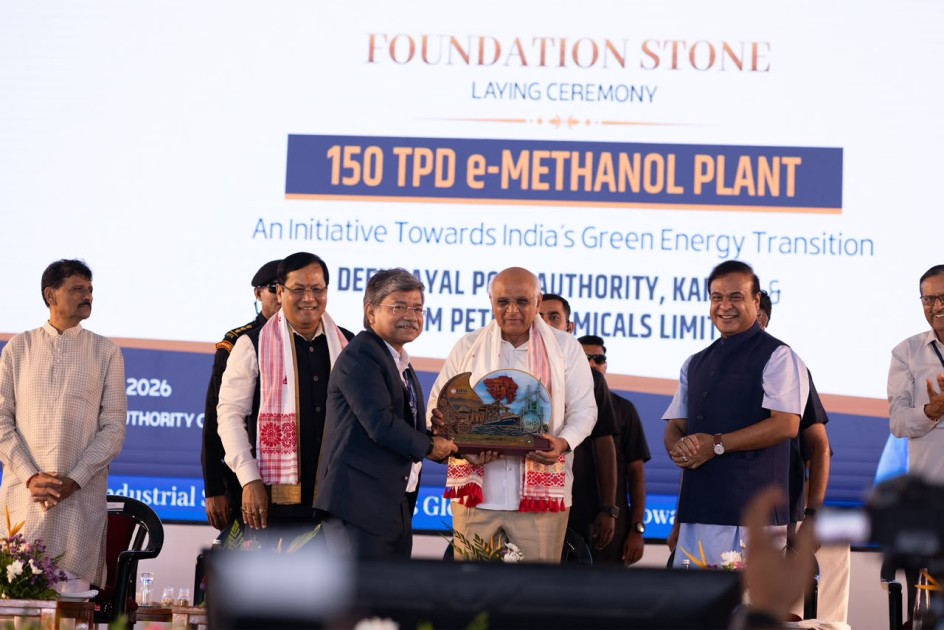
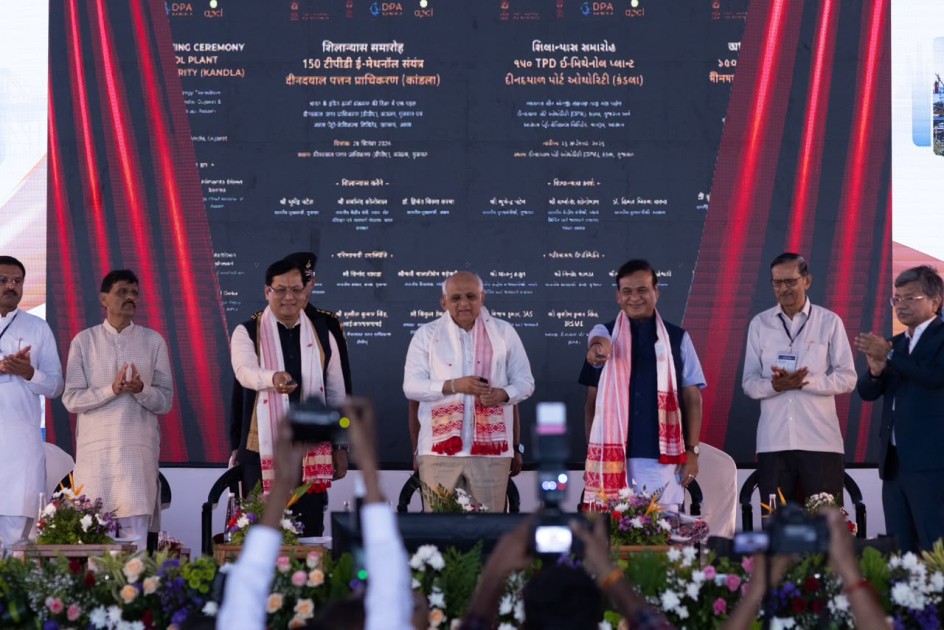
GANDHIDHAM: India took a major step toward becoming a green energy exporter as Gujarat CM Shri Bhupendra Patel, Union Minister of Ports, Shipping and Waterways (MoPSW), Shri Sarbananda Sonowal and Assam’s CM Dr Himanta Biswa Sarma laid the foundation stone for the country’s first port-based e-methanol plant at Deendayal Port Authority (DPA) in Kandla.

WhatsApp Image 2026 09 26 at 5.34.40 PM 1 edited India's first port-based e-Methanol production facility to produce and supply green fuel to ships at Deendayal Port Authority (DPA) in Kandla

The 150-tonne-per-day plant will use renewable power, water and biogenic CO2 to produce e-methanol, a green fuel that will enable cleaner shipping, and supply it to vessels plying on the Asia-Europe International Trade Corridor, one of the world’s busiest trade routes. The project positions India as exporter of green fuel to global shipping.

The Rs 2,300 crore plant is a joint initiative of Deendayal Port Authority (DPA) and Namrup-based Assam Petro-Chemicals Ltd. (APCL), and will be installed in phases, as scalable modules. It shall be amongst the largest e-methanol production facilities in India and shall create more than 3,500 direct and indirect jobs. It shall stimulate the complete green energy value chain in and around Kandla, including transportation, storage, supply and other associated ancillaries involved in production of green molecules.

The ceremony was held at the DPA Exhibition Ground in Gandhidham.
The project supports Prime Minister Narendra Modi’s commitment to reach Net Zero emissions by 2070 and comes amid a wider push to expand India’s maritime sector. The government plans to add 100 new ships to the country’s merchant fleet over the next five years and aims to make India one of the world’s top five ship-owning nations by 2047. Global shipping major Maersk has also begun ordering containers manufactured in India.

Sarbananda Sonowal, who represents Dibrugarh in the Lok Sabha, noted that Assam Petro-Chemicals is based in Namrup in his constituency. He also drew on the cultural ties between Assam and Gujarat, citing the legend of Lord Krishna of Dwarka and Rukmini of the Northeast, the story of Usha and Aniruddha of Tezpur, and the works of the 15th-century Assamese saint Srimanta Sankaradeva.

“Under Prime Minister Shri Narendra Modi ji‘s leadership, India is growing faster and greener than ever, and Gujarat is proud to lead that journey,”

Bhupendra Patel said. “Kutch and the long coastline of Gujarat will now power the world’s ships through Kandla. This plant turns our renewable strength into an export and makes Gujarat’s coast a gateway for India’s green energy to the world.”

“PM Narendra Modi ji has given India the confidence to lead, not follow,” Sarbananda Sonowal said. “Just as India is now building its own ships and containers, it will soon make the clean fuel that powers global trade. In the years ahead, Kandla can become a green-fuel hub on the Singapore–Rotterdam route, and this plant a model for every major port in the country. It will open skilled careers for our youth and carry India firmly toward net zero by 2070 and in achieving the goals of VIKSIT BHARAT @ 2047.”

“PM Narendra Modi ji has placed the Northeast at the heart of India’s growth story, and Assam is repaying that trust with enterprise and ambition,” Dr Himanta Biswa Sarma said. “Blessed with the mighty Brahmaputra, abundant sunshine and vast hydropower potential, Assam is ready to become a green energy powerhouse. Today, an Assam company carries that strength from Namrup to Kandla, proving that the Northeast will power India’s clean energy future.”

Also present were Kutch Lok Sabha MP Vinod Chavda, Gandhidham MLA Maltiben Kishor Maheshwari, Assam Petro-Chemicals Chairman Bikul Deka and Vice Chairman Hemanta Gogoi, and Deendayal Port Authority (DPA) Chairman Sushil Kumar Singh among other dignitaries from the government as well as from both the organizations.

Amit Shah inaugurates development projects worth ₹1,472 crore and flagged off the country’s first LNG-powered train from Sabarmati Railway Station in Ahmedabad

0

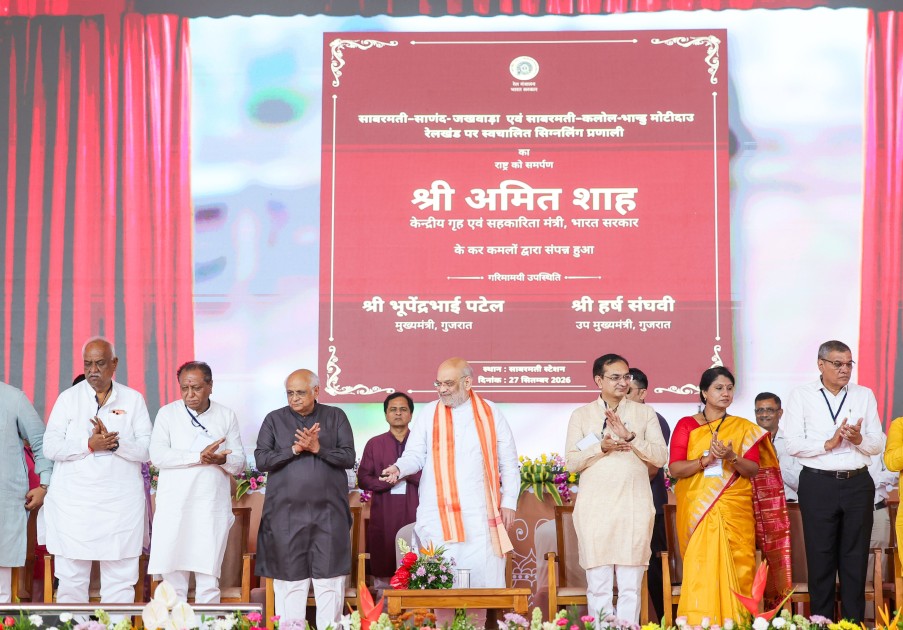
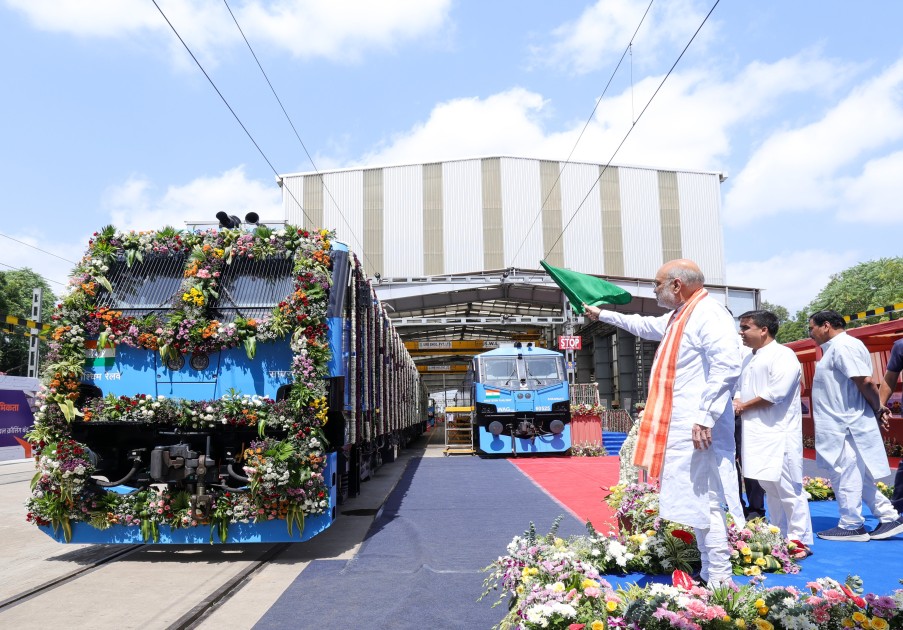
AHMEDABAD : Union Home Minister and Minister of Cooperation Shri Amit Shah on Sunday inaugurated development projects worth ₹1,472 crore and flagged off the country’s first LNG-Powered Train from Sabarmati Railway Station here in Ahmedabad, Gujarat. He also inaugurated the WAG-12 Maintenance Shed being established for the maintenance of railway locomotive engines. Gujarat Chief Minister Shri Bhupendra Patel and several other dignitaries were present on the occasion.

SABARMATI TRAIN AMIT SHAH Amit Shah inaugurates development projects worth ₹1,472 crore and flagged off the country’s first LNG-powered train from Sabarmati Railway Station in Ahmedabad

Addressing the programme, Union Home Minister and Minister of Cooperation Shri Amit Shah said that several railway projects have been initiated yesterday in the Sabarmati division, focusing on environmental sustainability, passenger amenities and the safety of rail passengers. He said, Satyagraha, simple living, rural development and khadi, the journey of translating all these experiments into action on the ground began from Sabarmati itself. Shri Amit Shah said that Sabarmati Railway Station has now undergone significant development, but in the 1980s, passengers had to walk nearly two kilometres even to find a rickshaw from the station. He said that the Sabarmati Railway Station has witnessed a major transformation in terms of passenger amenities, safety and connectivity.

Shri Shah said that the development works inaugurated and foundation stones laid today, at a cost of ₹1,472 crore, will prove to be highly significant for the region in the coming days. He said that a WAG-12 Maintenance Shed has been constructed here at a cost of ₹700 crore for the maintenance of railway locomotive engines. The ‘Kavach’ train protection system has been introduced on the Sabarmati–Kalol–Sabarmati rail section at a cost of ₹48 crore to enhance safety. In addition, works have commenced for the implementation of ‘Kavach’ on the Ahmedabad–Palanpur and Ahmedabad–Samakhiali rail sections, as well as the doubling of the Sabarmati–Sarkhej railway line.

Shri Amit Shah said that today, an engine with a 12,000-horsepower twin-section capacity has been commissioned, which can haul nearly as much freight as 600 trucks single-handedly. Earlier, two locomotives were required for this purpose, but now a single WAG-12 can perform the same task. He said that this will mark an important milestone in the history of Indian Railways. Shri Shah said that a LNG-powered train has also been inaugurated today, which will make a significant contribution to environmental conservation in the years to come.

Union Home Minister Shri Amit Shah said that after Shri Narendra Modi became Prime Minister in 2014, several new facilities were introduced in the railways and the railway network was modernised. He said that the successful trial of the country’s first double-stack long-haul container train from Jawaharlal Nehru Port Trust (JNPT), Mumbai, to Vadodara has been completed. He said that the country has limited rail tracks for freight transportation, but if the concept of double-stack freight trains succeeds, the freight-carrying capacity will nearly double. He said that an 11,000-kilometre-long corridor is now being converted into a four-lane network, which will significantly facilitate traffic movement towards Delhi–Howrah and Delhi–Guwahati.

Shri Amit Shah said that it was under the leadership of Prime Minister Modi that the Dedicated Freight Corridors, the Rapid Rail System and premium railway stations were introduced. He said that recently, Prime Minister Modi inaugurated a hydrogen-powered train, making India one of only four countries in the world to possess this technology. He said that 97 per cent of bio-toilets were installed during the Modi government’s tenure. 87 per cent of LHB coaches were manufactured in India during the Modi government’s tenure. Railway electrification stood at only 30 per cent before Prime Minister Modi assumed office, while the remaining 70 per cent was completed during his tenure. He said that under the Modi government, the railway safety budget has increased by 67 per cent, while locomotive production capacity has increased by 66 per cent.

Union Home Minister Shri Amit Shah said that Prime Minister Modi launched the concepts of ‘Make in India’ and ‘Aatmanirbhar Bharat’, and as a result, the country has now made significant progress towards manufacturing equipment such as locomotives domestically. He said that in 2015–16, the railways consumed 293 crore litres of diesel, but this has declined to 108 crore litres in 2024–25. He said this is a major achievement that receives relatively little attention. Shri Shah said that railway electrification was only 75 kilometres in an entire year in 2010–11, whereas 7,188 kilometres were electrified in a single year in 2023–24. He said that 99.6 per cent of the railway network has now been electrified, and the remaining 0.4 per cent will also be completed soon. He said that railway electrification stands at 92 per cent in China, 68 per cent in Spain, 60 per cent in France and 49 per cent in the United Kingdom, a relatively small country. India will surpass these countries by achieving 100 per cent electrification. He said that Sweden is the only country in the world to have achieved 100 per cent railway electrification, but the total length of railway lines in Sweden is nearly ten times less than that of India.

Union Home Minister Shri Amit Shah said that, if Gujarat is taken as an example in terms of the railway budget, the rail budget from 2009 to 2014 was merely ₹589 crore. In contrast, the budget for just one year, 2026–27, stands at ₹17,366 crore. He said that the difference in the pace of development is clearly visible. He said that the people of the country should tell opposition party leaders who make reckless statements to discuss issues with facts and figures. Shri Shah questioned the opposition party about what it had done during its tenure. He said that apart from scams, scandals and corruption amounting to ₹12 lakh crore over 10 years, the opposition party had done nothing. Shri Shah said that in 12 years, not even the slightest allegation of corruption has been levelled against Modi Ji.

Deendayal Port crosses 90 MMT cargo milestone with 27% Year-on-Year growth

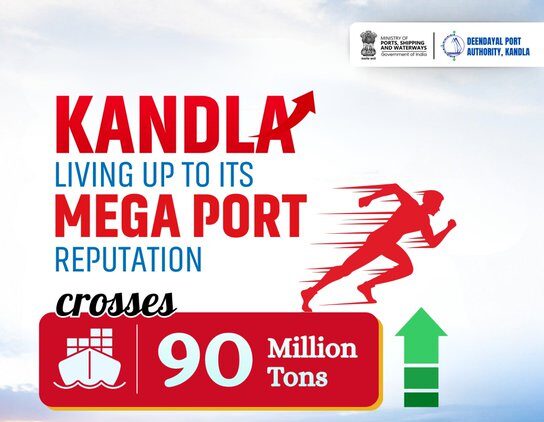
GANDHINAGAR: Deendayal Port Authority (DPA), Kandla, has achieved another significant operational milestone by crossing the 90 million metric tonne (MMT) cargo mark, registering an impressive 27% year-on-year growth.

The latest achievement underlines the sustained growth in cargo volumes at Deendayal Port and reinforces its position as one of India’s key maritime gateways. The strong year-on-year performance reflects the Port’s growing operational capabilities and its contribution to facilitating the movement of cargo through the country’s maritime trade network.

Crossing the 90 MMT mark further strengthens Kandla’s reputation as a “Mega Port”, with the port continuing to handle increasing cargo volumes while focusing on operational efficiency, capacity utilisation and seamless cargo movement.

The milestone also highlights the importance of Deendayal Port in supporting industries and businesses across its hinterland by providing efficient maritime connectivity for domestic and international trade.

The 27% year-on-year growth demonstrates the pace at which cargo activity at the port is expanding. Higher throughput, efficient port operations and strong connectivity with the hinterland are contributing to Kandla’s continued growth as a preferred gateway for cargo movement.

With India’s maritime sector playing an increasingly important role in strengthening supply chains and supporting economic growth, the performance of major ports such as Deendayal Port remains critical to facilitating efficient trade flows.

The latest milestone reflects DPA Kandla’s continued focus on handling more cargo, improving operational efficiency and strengthening maritime connectivity, in line with India’s broader objective of expanding port capacity and enhancing logistics competitiveness.

As Deendayal Port continues its growth trajectory, crossing 90 MMT with 27% year-on-year growth marks another important step in its journey towards becoming an even stronger and more efficient maritime gateway for India.

90 MMT crossed. 27% growth. Another milestone for Kandla. Another step forward for India’s maritime growth.

Mumbai Port handles 718 MT heavy lift package in specialised roll-off operation

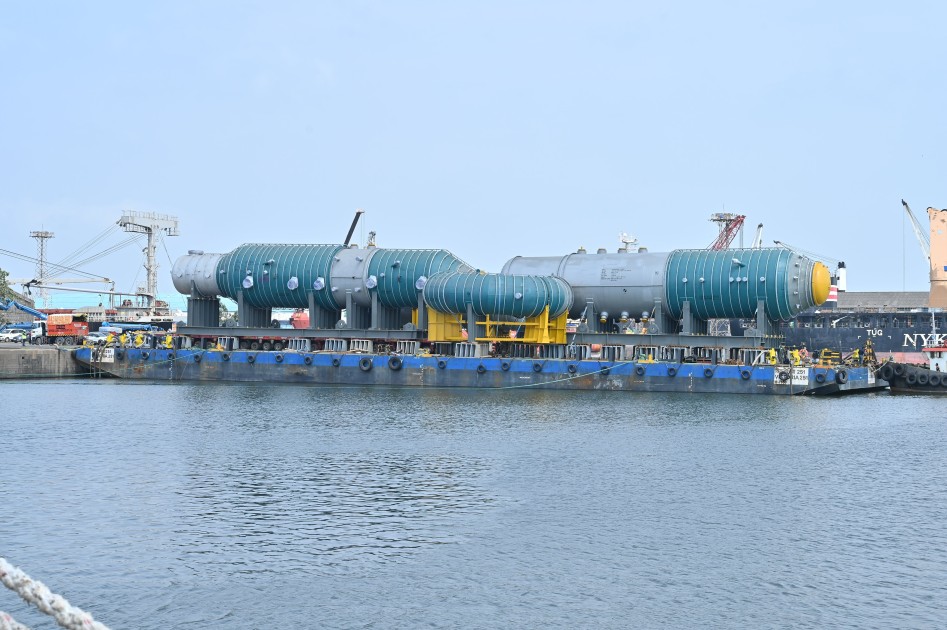
MUMBAI: Mumbai Port Authority (MbPA) successfully handled three exceptionally heavy Over Dimensional Cargo (ODC) packages through a specialised Barge Roll-Off operation on 24 September 2026. The operation highlights Mumbai Port’s capability to handle complex heavy-lift and project cargo and support the movement of Indian-manufactured industrial equipment to international markets.

The three packages, weighing 718 MT, 502 MT and 232 MT, were transported by barge from Dahej, Gujarat, to Mumbai Port for onward export to the Abu Dhabi National Oil Company (ADNOC), UAE. The cargo will be stored at Mumbai Port until an onward vessel is available for shipment to Abu Dhabi.

The cargo comprised a PG Cooler weighing 718 MT, a Riser & Downcomer weighing 502 MT and a Steam Drum weighing 232 MT. Due to their exceptional size and weight, the packages could not be handled through conventional discharge methods using ship’s gear or shore cranes.

Mumbai Port Authority adopted a specialised Barge Roll-Off method for the safe transfer of the cargo. The barge was berthed perpendicular to the berth, with its deck aligned with the wharf. Hydraulic puller trailers were then moved onto the barge and positioned beneath the packages. The trailers lifted the packages using their hydraulic systems and carefully rolled them from the barge onto the wharf.

The availability of a berth inside Mumbai Port’s lock gate was an important advantage for the operation. The calm water conditions within the lock gate provided the stability required to maintain proper alignment between the barge and the quay during the transfer of the heavy cargo.

The operation demonstrates the benefits of combining coastal shipping, specialised port infrastructure, storage facilities and international maritime connectivity for the movement of large industrial consignments. Coastal transportation provides an important logistics option for equipment whose size and weight make conventional movement difficult.

The successful operation also highlights Mumbai Port’s role as a maritime and logistics gateway connecting industrial centres on India’s western coast with global markets. It reflects the importance of efficient ports and coastal shipping in supporting domestic manufacturing, project logistics and exports.

Mumbai Port Authority remains committed to providing efficient and reliable cargo-handling solutions and strengthening Mumbai Port’s role in supporting India’s maritime trade and manufacturing-led exports.

Adani Group’s Dhamra Port makes history, port to run fully on renewable power

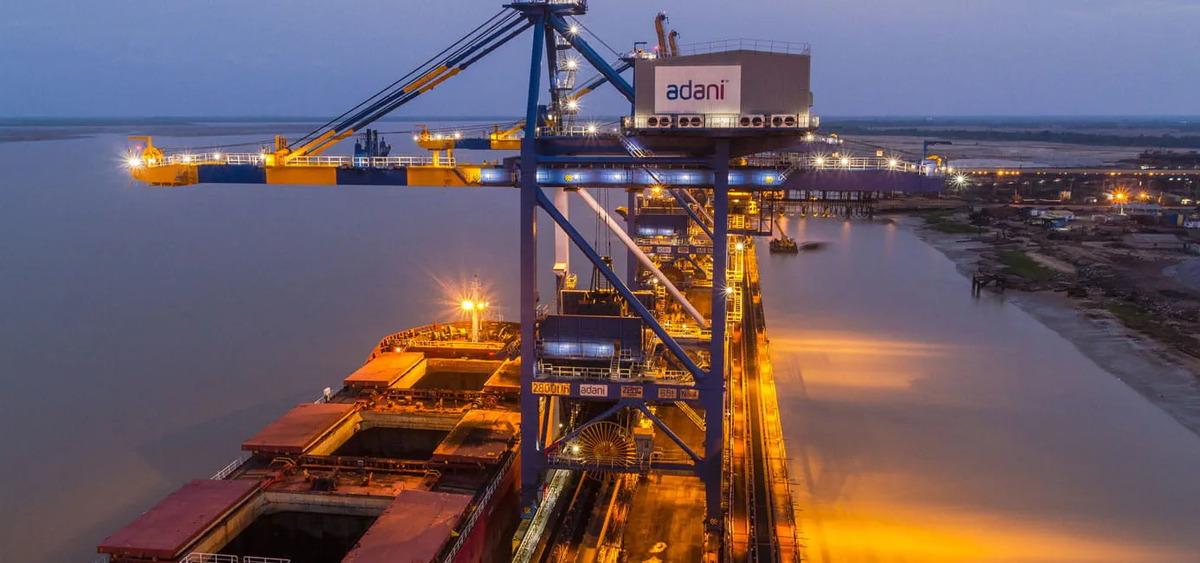
BHADRAK: Dhamra Port in Odisha, operated by Adani Ports and Special Economic Zone (APSEZ), has shifted its entire electricity consumption to renewable power, becoming India’s first large-scale private multi-cargo port to operate fully on renewable electricity, according to the company.

The port, which handles more than 48 million tonnes (MT) of cargo annually, now meets more than 90 lakh units of monthly electricity demand from renewable sources. At its current operating level, its renewable power consumption exceeds 108 gigawatt-hours (GWh) on an annualised basis, APSEZ said.

The shift, effective August 2026, is part of APSEZ’s long-term Net-Zero strategy and is expected to reduce emissions associated with purchased electricity while improving the environmental performance of the energy-intensive port operations.

The transition has been achieved through a combination of captive renewable power, third-party access arrangements and green-power procurement under Odisha’s regulatory framework.

About 25-30 per cent of Dhamra’s renewable electricity comes from APSEZ’s captive hybrid power plant at Khavda in Gujarat, while another 10-15 per cent is sourced through third-party access. The remaining requirement is met through a Green Consumer arrangement with Odisha’s distribution utility.

Renewable electricity now powers round-the-clock operations at the port, including cargo handling, storage, rail-linked activities and other critical infrastructure.

Dhamra, located on the Odisha coast between Haldia and Paradip, is one of eastern India’s key deep-draft ports. It has an installed capacity of 60 MT and handled 48.8 MT of cargo in the financial year ended March 2026.

The port has six dry-cargo berths, rapid-loading silos, wagon tipplers, track hoppers, mechanised storage yards and jetty equipment, along with rail and road connectivity to mineral-rich hinterlands across Odisha, Jharkhand and West Bengal.

The move makes Dhamra the latest large-scale industrial and logistics facility to increase its reliance on renewable electricity as companies seek to reduce emissions from operations and meet longer-term decarbonisation targets.

PSA Mumbai achieves 2-hour 05-minute turnaround for Dedicated Double-Stack Train at JNPA

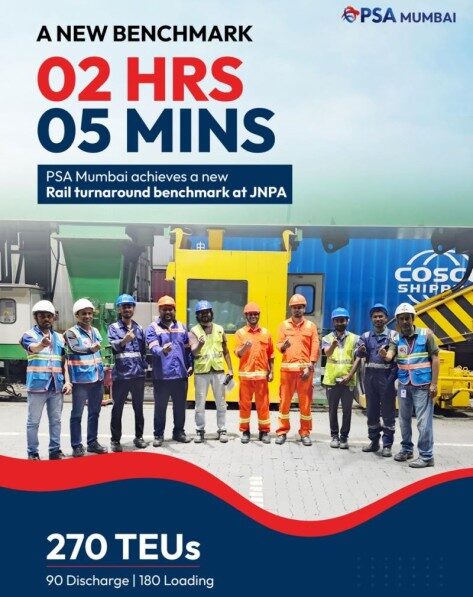
NAVI MUMBAI: PSA Mumbai has achieved a significant operational milestone by completing a 2-hour 05-minute turnaround for a Dedicated Double-Stack Train at Jawaharlal Nehru Port Authority (JNPA), handling a total of 270 TEUs.

The operation involved the discharge of 90 TEUs and loading of 180 TEUs, with the dedicated double-stack train subsequently moving towards ICD Varnama. The operation was carried out in association with the Container Corporation of India Ltd. (CONCOR).

The achievement reflects the importance of precision, meticulous planning, seamless coordination and disciplined execution across the teams involved in the rail and terminal operations.

The rapid turnaround demonstrates the growing focus on enhancing the efficiency of rail-linked container movement at JNPA and strengthening the integration between port terminals, rail operators and inland container depots.

By enabling faster handling and turnaround of double-stack trains, such operational efficiencies can contribute to improved cargo velocity, better utilisation of rail infrastructure and more reliable supply-chain connectivity.

PSA Mumbai said the milestone reinforces its continued focus on operational excellence, efficiency and reliability, while supporting the seamless movement of cargo through India’s port-led logistics network.

The achievement also underlines the growing role of rail-based container transportation and double-stack operations in improving connectivity between major gateway ports and inland logistics hubs.

PSA Mumbai continues to focus on raising operational standards and delivering faster, more efficient and reliable cargo-handling solutions for customers.

JSW Tuticorin Multipurpose Terminal sets new 24-hour discharge record

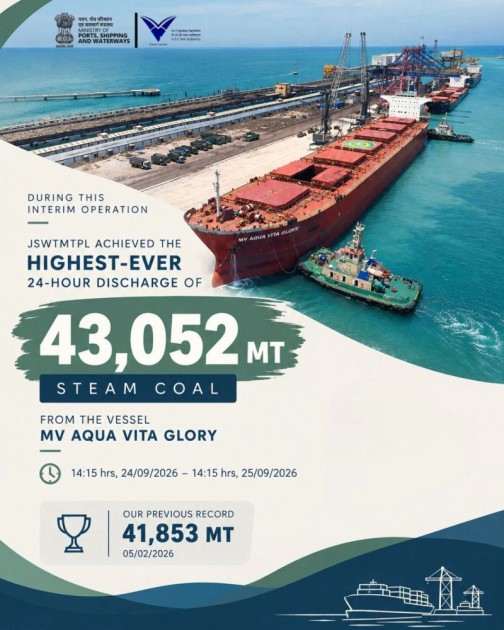
TUTICORIN: JSW Tuticorin Multipurpose Terminal Private Limited has achieved a significant operational milestone by recording its highest-ever 24-hour cargo discharge of 43,052 metric tonnes (MT) of steam coal during the vessel operation of MV AQUA VITA GLORY.

The record was achieved over a continuous 24-hour period from 14:15 hrs on September 24, 2026, to 14:15 hrs on September 25, 2026, marking a new benchmark in the terminal’s cargo-handling performance.

The latest achievement surpasses the terminal’s previous best 24-hour discharge performance of 41,853 MT, recorded on February 5, 2026.

The new record highlights the terminal’s growing operational capabilities and its focus on improving cargo-handling productivity through efficient processes and coordinated operations.

The achievement comes during the terminal’s ongoing interim operations, which commenced on May 7, 2026, and demonstrates its ability to handle large volumes of bulk cargo efficiently within a continuous operating window.

The performance reflects the terminal’s emphasis on operational efficiency, productivity enhancement and timely cargo handling, which are important factors in supporting faster vessel turnaround and improving overall port logistics.

The record discharge of steam coal from MV AQUA VITA GLORY further demonstrates the terminal’s ability to deliver consistent and high-performance cargo-handling operations while responding to the requirements of its customers and vessel operators.

With continued focus on operational improvements and efficient utilisation of terminal infrastructure, JSW Tuticorin Multipurpose Terminal is strengthening its capabilities as an important facility for bulk cargo handling in the region.

The achievement of 43,052 MT in 24 hours marks another important milestone in the terminal’s operational journey and sets a new benchmark for its cargo-handling performance.

MoPSW official visits DBGT to review terminal operations and infrastructure

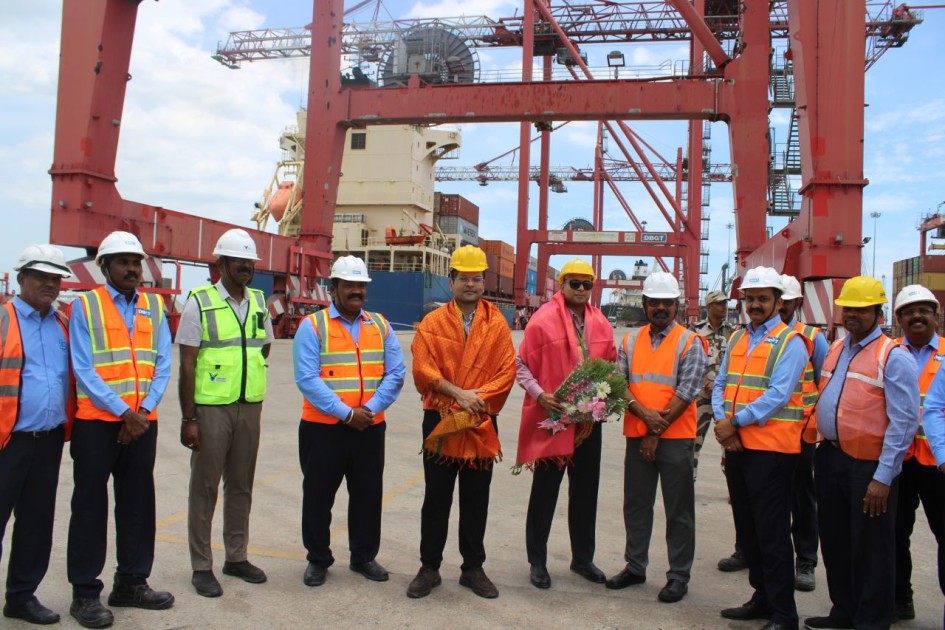
THOOTHUKUDI: Dakshin Bharat Gateway Terminal (DBGT) hosted Shri Samarth Verma, IAS, Director, Ministry of Ports, Shipping and Waterways (MoPSW), along with officials from V.O. Chidambaranar Port Authority (VOC Port), during an official visit to the terminal on September 23, 2026.

The visiting delegation was warmly welcomed by Mr. Senthil Kumar Subramanian, CEO, DBGT, and Mr. Maneksha, COO, DBGT, along with the terminal’s senior department heads.

During the visit, the DBGT management team provided an overview of the terminal’s operations, infrastructure, handling capabilities and key operational highlights. The interaction also provided an opportunity to showcase the terminal’s modern facilities and its operational capabilities in supporting efficient container movement through the Port of Thoothukudi.

The discussions focused on DBGT’s role in facilitating efficient container handling, improving trade connectivity and supporting the evolving requirements of India’s maritime logistics sector.

The visit also highlighted the importance of collaboration between government authorities, port stakeholders and terminal operators in strengthening port-led development and enhancing the efficiency of India’s logistics ecosystem.

DBGT expressed its appreciation to the MoPSW and VOC Port officials for their visit and for the valuable interaction and insights shared during the engagement.

With its focus on operational efficiency, modern infrastructure and customer-oriented services, Dakshin Bharat Gateway Terminal continues to contribute to the growth of Thoothukudi Port and India’s maritime logistics network.

DBGT – Connecting Trade, Enabling Growth.