Home Blog Page 829

ICG races to prevent oil spill near Kerala: A breakdown of what happened and efforts undertaken to ward off grave ecological threat

NEW DELHI : The Indian Coast Guard (ICG) has ramped up its efforts to deal with a potential ecological threat that may arise due to the sinking of a cargo ship off the Kerala coast in the India Ocean. A Liberian cargo ship, MSC ELSA lll, bound for Kochi capsized near Alappuzha off Kerala coast in the early hours of Sunday (25th May) causing the concerns of oil spill reaching the shores of Kerala and Tamil Nadu.

“Pollution response operation is still going on. Apart from three ships, a dedicated pollution control vessel Samudra Prahari was also mobilized from Mumbai. That the oil spill is only in patches, not continuous, is a feat,’’ said the Defence spokesperson in Kochi.

Captain Abdul Kalam Azad, nautical advisor to Government of India and Director General of Shipping Shyam Jaganathan told media that 50 containers have been traced across seven sites in Kerala.

“Efforts underway to retrieve them within two days. The Directorate General of Shipping and the State Disaster Management Authority are working closely, with volunteers aiding the coastal cleanup. Oil recovery, retrieval of drifting containers and removal of beached containers are on the top of priority. July 3 has been set as a deadline for oil recovery,” he said.

Azad said within six hours of the incident, the directorate had convened a meeting with all stakeholders and that eight interagency meetings had been held since then. “Indian Coast Guard’s swift action prevented any major oil spill,” he said.

Officials said the capsized ship had 12 containers with calcium carbide. Of these, five containers had fallen off into the sea, but they haven’t beached anywhere.

The containers with calcium carbide were arranged in the hull of the ship and hence they had gone down the sea along with the ship. The seabed will be scanned to recover these containers, officials said.

The Indian National Centre for Ocean Information Services (INCOIS) director Dr T M Balakrishnan Nair Wednesday confirmed that there were traces of oil along Alappuzha coast. “Our six-member team has found small patches of oil slick along the coast. These are bunker oil used in ships. As the oil spill has been contained almost, we do not expect a massive oil slick. However, it would continue to appear in southern Kerala coast in the coming days also. Everything depends upon how much oil has leaked out from the ship,” he said.

On the impact of marine life, Dr Balakrishnan said it would depend upon the quantity of the oil being oozing out from the ship. “The direction of the wind and the current also decide on the impact and spread of oil slick during the monsoon season, which is the breeding period for many fish varieties,” he said.

Meanwhile, a high-level meeting attended by officials of various departments was held in Thiruvananthapuram to address the environmental issues emerging from the ship mishap.

Besides empty containers, nurdles — small plastic pellets used for making products — have also got deposited along several places in the southern coast, officials said.

State pollution control board chairperson S Sreekala said the board had decided to conduct a drone survey to identify the deposits of plastic pellets in Kollam and Thiruvananthapuram coast.

“The shipping firm has been alerted about it. Our offices in association with the district collectors in the two districts will deploy volunteers to clean the coast of nurdles,” she said.

State fisheries minister Saji Cherian said officials were told to examine the quality of fish along the southern and central Kerala coast.

Source : Indian Express
94th NPG Meeting under PM GatiShakti evaluates key infrastructure projects

NEW DELHI : The 94th meeting of the Network Planning Group (NPG) was convened today to evaluate key infrastructure proposals in the Metro Rail and Civil Aviation sectors. The projects were assessed for alignment with the principles of the PM GatiShakti National Master Plan (PMGS-NMP), with a focus on enhancing multimodal connectivity, last-mile integration, and intermodal coordination to improve logistics efficiency and socio-economic outcomes.

A total of five infrastructure proposals were evaluated—four Metro Rail projects proposed by the Ministry of Housing and Urban Affairs (MoHUA), and one Greenfield Airport project proposed by the Ministry of Civil Aviation (MoCA). These initiatives are expected to reduce travel time, support urban decongestion, and stimulate regional growth across the concerned areas.

Projects evaluated:

Ministry of Housing and Urban Affairs (MoHUA)

Extension of Metro Line from Aerocity to IGD T-1:
A 2.16 km underground extension of the Aerocity–Tughlakabad corridor to Indira Gandhi Domestic Terminal-1 (IGD T-1) has been proposed. It includes the development of a new metro station at IGD T-1 and will connect key residential zones including Tughlakabad, Khanpur, Saket, Mehrauli, and Vasant Kunj. The extension will enhance airport access and regional transit, especially for commuters from Faridabad via the Tughlakabad interchange.

Extension of Line 8 (Magenta Line): Ramakrishna Ashram Marg to Indraprastha:
This 9.913 km fully underground metro corridor will connect major landmarks such as Central Vista, India Gate, Pragati Maidan, the War Memorial, Delhi High Court, Shivaji Stadium, and others. A proposed station at India Gate will offer visitors a safe and convenient transport alternative. The project aims to reduce reliance on private vehicles and Intermediate Public Transport (IPT), while promoting sustainable, clean urban mobility.

Extension of Line 10 (Golden Line): Tughlakabad to Kalindi Kunj:
The proposed 9 km elevated corridor will pass through Ali Village, Ali Vihar, and Madanpur Khadar. It will facilitate an important interchange at Kalindi Kunj with the existing Magenta Line, linking the Violet and Magenta lines. This corridor will improve airport access and connectivity between Noida, Greater Noida, and the rest of Delhi, enhancing travel convenience and commuter efficiency.

Metro Corridor from Noida Sector-51 to Knowledge Park V, Greater Noida:
Covering a total length of 17.435 km (7.263 km in Noida and 10.172 km in Greater Noida), this project will directly link Noida with the newly developed Greater Noida West township. It is expected to provide major relief to commuters in the expanding urban sectors of Greater Noida.
Ministry of Civil Aviation (MoCA)

Development of Greenfield Airport at Bundi, Kota (Rajasthan):
MoCA has proposed a Greenfield Airport over approximately 400 acres to meet growing air travel demand in the Kota region. The airport will accommodate A321-200 type aircraft and feature a modern terminal building with capacity for 500 arrivals and 500 departures during peak hours. Additional infrastructure will include a runway, apron, taxiways, isolation bay, technical block, ATC tower, fire station, and support facilities. The airport is expected to boost economic growth, tourism, and trade, and will particularly benefit lakhs of students and families who travel to Kota—now a national hub for competitive exam preparation.
The meeting was chaired by Joint Secretary, Department for Promotion of Industry and Internal Trade (DPIIT), Shri Pankaj Kumar.

Snowman Logistics reports 9.8% Annual Revenue Growth

MUMBAI : Snowman Logistics  announced its financial results for the quarter and financial year ended 31st March 2025.

For Q4 FY25, the Company recorded total revenue of ₹137.01 Crores, up from ₹126.54 Crores in the corresponding quarter of the previous year, reflecting a growth of 8%. Profit After Tax (PAT) for the quarter was ₹3.90 Crores as against ₹2.15 Crores. EBITDA stood at ₹24.38 Crores, compared to ₹29.86 Crores in Q4 FY24.

For the full financial year, revenue stood at ₹552.53 Crores, marking a 9.8% increase over ₹503.37 Crores in FY24. Annual EBITDA was ₹93.53 Crores (FY24: ₹108.32 Crores), and PAT was ₹5.69 Crores (FY24: ₹12.71 Crores).

Mr. Prem Kishan Dass Gupta, Chairman, Snowman Logistics Limited, said: “The Company delivered strong revenue growth during the year, driven by continued expansion of its distribution business and the strategic shift towards a 5PL model. This performance was achieved despite a challenging market environment, marked by muted consumption trends across India. Additionally, the Company’s earnings were impacted following Amazon’s decision to shut down the fulfilment centre operation model in India, which led to the exit of dedicated warehousing operations previously provided to them. Our new projects at Kolkata and Krishnapatnam had faced some delays, and we expect our Kolkata facility to be operational any day now, with Krishnapatnam coming in the second quarter. In addition, we plan to continue expanding our network and are in the process of finalising new locations for cold storages as per requirement of both our existing & potential customers, for which the projects should commence in the second half of the year.”

About Snowman Logistics Limited

Snowman Logistics is the market leader in integrated temperature-controlled logistics services, catering to the varied cold chain logistical requirements of its clients, on a pan-India basis. With 41 strategically located warehouses, having a total pallet capacity of 1,41,197 across 20 cities including the key markets of Mumbai, Chennai, Bengaluru & Kolkata etc. Snowman caters to its comprehensive network of reputed clients, which source and consume temperature-sensitive products in bulk amounts. Snowman caters to various services like dairy products including butter and cheese, canned food items, poultry and meat, seafood, healthcare, and pharmaceutical products.

TVS SCS Q4 results reflect strong operational momentum

CHENNAI : TVS Supply Chain Solutions Limited , a global supply chain solutions provider and one of the largest and fastest growing integrated supply chain solutions providers in India, today announced its consolidated financial results for the fourth quarter and full year ended March 31, 2025.

The Company reported a Profit Before Tax (PBT) of ₹13 Cr for Q4 FY25, up from ₹5 Cr in the same quarter last year. For the full fiscal year, PBT stood at ₹29.3 Cr, a significant turnaround from a loss of ₹36.1 Cr in FY24. Sequentially, the Company demonstrated strong momentum across key metrics, including EBITDA, PBT, and PAT, compared to Q3 FY25.

For the full year ended March 31, 2025, the Company narrowed its net loss to ₹9.7 Cr, a substantial improvement from (₹57.7 Cr) in FY24. This reflects continued operational discipline, focused business development efforts, and effective cost optimisation initiatives. Q4 FY25 Profit After Tax (PAT) was reported at (₹3.9 Cr), compared to a profit of ₹5.4 Cr in Q4 FY24. Revenue for the year reached ₹9,996 Cr, up from ₹9,200 Cr, marking a year-on-year (YoY) growth of 8.6%.

The company has two operating segments: Integrated Supply Chain Solutions (‘ISCS’) and Network Solutions (‘NS’). Below is the summary of the business and financial performance of the two operating segments, along with the summary of the consolidated financial performance.

Integrated Supply Chain Solutions (‘ISCS’):

Integrated Supply Chain Solutions segment (‘ISCS’) (Amount in ₹ Cr)Q4 FY25Q4 FY24Q3 FY25Y-o-Y Growth Q4Q-o-Q Growth Q4FY25FY24Y-o-Y Growth FY25
ISCS Revenue1,421.01,379.51,301.13.0%9.2%5496.55240.04.9%
ISCS Adj. EBITDA122.0133.1114.1(8.4%)7.0%523.5536.2(2.4%)
ISCS Adj. EBITDA margin %8.6%9.6%8.8%——9.5%10.2%—

In the ISCS segment, overall revenue grew 4.9% in FY25. North America operations remained strong, contributing consistently to the segment’s performance. India portfolio stayed resilient and supported stronger bottom-line margins.

Network Solutions Segment (‘NS’):

Network Solutions segment (‘NS’) (Amount in ₹ Cr)Q4 FY25Q4 FY24Q3 FY25Y-o-Y Growth Q4Q-o-Q Growth Q4FY25FY24Y-o-Y Growth FY25
NS Revenue1,077.91,046.81,143.53.0%-5.7%4,4993,96013.6%
NS Adj. EBITDA49.547.042.45.2%16.6%168.6185.8-9.3%
NS Adj. EBITDA margin %4.6%4.5%3.7%——3.7%4.7%—

The NS segment reported a revenue of ₹1,078 Cr in Q4 FY25, up from ₹1,047 Cr, in the same quarter last year, reflecting a 3% YoY growth. For the full year ended March 31, 2025, revenue from the segment reached ₹4,499 Cr, representing a robust 13.6% increase over FY24.

Summary of Consolidated Financial Performance:

In ₹ CrQ4 FY25Q4 FY24Q3 FY25Y-o-Y Growth Q4Q-o-Q Growth Q4FY25FY24Y-o-Y Growth FY25
Revenue from operations2498.82,426.32,444.63.0%2.2%9995.79200.08.6%
Adj. EBITDA156.4174.5150.3-10.4%4.0%667.4710.2-6%
Adj. EBITDA margin %6.3%7.2%6.1% —6.7%7.7%—
PBT before exceptional items13.0  5.0-15.2161.7%—29.3-9.6—
PBT as reported13.05.0-15.2161.7%—29.3-36.1—
PAT as reported-3.95.4-23.8——-9.7-57.7—
PAT margin %-0.2%0.2%-1.0%——-0.1%-0.6% 

Commenting on the performance, Ravi Viswanathan, Managing Director, TVS Supply Chain Solutions Ltd., said, “We delivered a strong performance this year in a challenging macroeconomic environment. Our consistent focus on deepening engagement with marquee clients has been pivotal in driving our growth. In FY25, we secured ₹1,009 Cr worth of new contracts, underscoring the effectiveness of our business development initiatives. Our Global Fortune 500 customer base expanded from 78 to 91, a testament to the trust leading organisations place in our capabilities.”
He further added, “With a record-high order pipeline of ₹5,250 Cr, we are entering the new fiscal with strong momentum and enhanced visibility. We are optimistic that our strategic initiatives will deliver results in FY26 and beyond and continue on our upward growth trajectory towards achieving a PBT margin of 4%.”
R Vaidhyanathan, Global Chief Financial Officer, TVS Supply Chain Solutions Ltd., said, “We closed FY25 with a positive operating cash flow of ₹195 Cr, underscoring our focus on financial discipline and efficient working capital management. Compared to Q3, we made a strong recovery in Q4 across all the regions, which enabled us to close this quarter with a PBT of ₹13 Cr as compared to a (₹15 Cr) loss in the preceding quarter. On a full-year basis, our PBT improved to ₹29 Cr in FY25, compared to a loss of ₹10 Cr in FY24. Looking ahead, we remain committed to driving operational leverage through strategic cost take-out initiatives across regions that will improve our profitability and sustain strong cash flow generation to further strengthen our financial position.”
About TVS Supply Chain Solutions

Promoted by the erstwhile TVS Group and now part of TVS Mobility Group, TVS Supply Chain Solutions Limited (“TVS SCS” or “Company”) is an India-based multinational company that pioneered the development of the supply chain solutions market in India. For the last two decades, TVS SCS has managed large and complex supply chains across multiple industries in India and in key global markets through customised tech-enabled solutions. The Company’s customers span across numerous industries such as automotive, industrial, consumer, tech and tech infra, rail and utilities, and healthcare.

The company operates in 26 countries with over 17,000 employees and works with 91 Fortune Global 500 customers.

Chabahar Port capacity to be expanded, linked to rail network by mid-2026

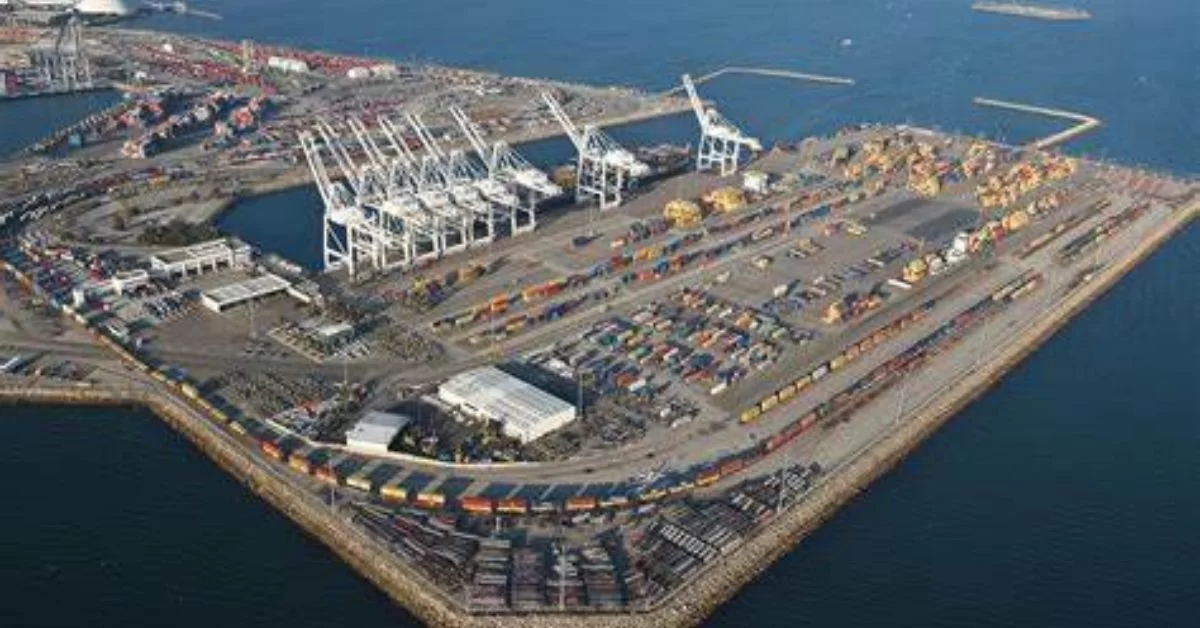
CHAHBAHAR : An Indian state-run company’s operations at Iran’s Chabahar Port are set to get a boost when the facility’s capacity is substantially expanded and connected to the Iranian railway network by mid-2026, people familiar with the matter said.

India and Iran have continued their efforts to further develop Chabahar port despite the potential threat from the US administration of ending waivers to sanctions that benefited the facility on the Gulf of Oman, the people said on condition of anonymity.

Work is underway to expand the Chabahar port’s capacity from 100,000 TEUs (twenty-foot equivalent units) to 500,000 TEUs and to connect the port to the Iranian railway network by completing 700-km of tracks to connect Chabahar and Zahedan. Both projects are expected to be complete by the middle of next year, the people said.

“Things are moving but not at the pace we would like,” one of the people said. “But we seem to be on course for a breakthrough by next year.”

The completion of the rail link will allow India and Iran to use the port as a gateway to the International North-South Transport Corridor (INSTC) and increase access to markets in Central Asian and Eurasian countries, the people said. Efforts to realise the port’s full potential also figured in discussions during Iranian foreign minister Abbas Araghchi’s visit to New Delhi earlier this month.

In May last year, India and Iran signed a 10-year agreement for operations at Shahid Beheshti terminal of Chabahar port. Besides a commitment to invest $120 million to acquire equipment for port operations, India offered a credit window of $250 million for developing infrastructure around the deep-sea port.

While the US administration announced in February this year that it could potentially end waivers to sanctions on Iran that had benefited Chabahar, the people said no action had been taken in this regard by Washington so far.

A national security presidential memorandum signed by US President Donald Trump in February directed secretary of state Marco Rubio to “modify or rescind sanction waivers”, including those related to Chabahar port. Since then, the Trump administration has launched talks with Iran on its nuclear programme, raising hopes that there wouldn’t be any immediate action related to sanctions. Iran and the US held their fifth round of negotiations on the nuclear issue last week.

The developments have come at a time when there has been a steady increase in the handling of cargo by Chabahar port in recent years. According to figures provided by the government in Parliament, the volume of goods moved through Chabahar port in Iran has increased from 1.2 million tonnes in FY21 to 2.84 million tonnes in FY24.

In December 2018, state-run India Ports Global Limited took over operations at Shahid Beheshti terminal at Chabahar port through its wholly owned subsidiary, India Ports Global Chabahar Free Zone.

Since 2018, the port has handled more than 450 vessels, 134,082 TEUs of container cargo and more than 8.7 million tonnes of bulk and general cargo, external affairs minister S Jaishankar told Rajya Sabha last November. India has supplied port equipment worth $24 million so far and the process for procuring the remaining equipment is underway, he said.

India and US may agree on interim trade pact by June 25 : Reports

NEW DELHI : India and the US might agree on an interim trade pact by June 25, as per a report that quoted sources. This comes after sources had earlier said that the trade pact is likely by July 8.

According to a report in news agency PTI, the sources said, “Talks are moving. Things are on track.”

This development comes after White House economic adviser Kevin Hassett indicated that India is among a select group with agreements “close to the finish line.” US President Donald Trump had earlier indicated that they were not in a rush and a trade deal would be finalised if it is mutually beneficial.

Special Secretary in the Department of Commerce Rajesh Agrawal, who is India’s chief negotiator, concluded his four-day visit to Washington last week, where he held talks with his US counterpart. Commerce and Industry Minister Shri Piyush Goyal also concluded his Washington visit last week, which is believed to have given a push to the talks. Goyal also met US Commerce Secretary Howard Lutnick twice during his visit.

Earlier reports also stated that India is pushing for a full exemption of the 26 per cent reciprocal tariff that the US had imposed on domestic goods. The pause on the reciprocal tariff would be suspended after July 9.

Both the countries are aiming to conclude the first phase of the bilateral trade agreement by September-October this year.

The US remained India’s largest trading partner for the fourth consecutive year in 2024-25, with bilateral trade valued at $131.84 billion. The US accounts for about 18 per cent of India’s total goods exports, 6.22 per cent of imports, and 10.73 per cent of the country’s total merchandise trade.

India recorded a trade surplus of $41.18 billion in goods with the US in 2024-25. This surplus has grown steadily from $22.73 billion in 2020-21 to $35.32 billion in 2023-24.

Both countries aim to more than double bilateral trade to $500 billion by 2030.

India is seeking duty concessions for labour-intensive sectors such as textiles, gems and jewellery, leather goods, garments, plastics, chemicals, shrimp, oil seeds, grapes, and bananas in the proposed trade pact. The US, in turn, wants duty concessions on certain industrial goods, automobiles—especially electric vehicles—wines, petrochemical products, dairy, and agricultural items like apples, tree nuts, and genetically modified crops.

Indian Railways and Wabtec unveil 1st locomotive for export to West Africa

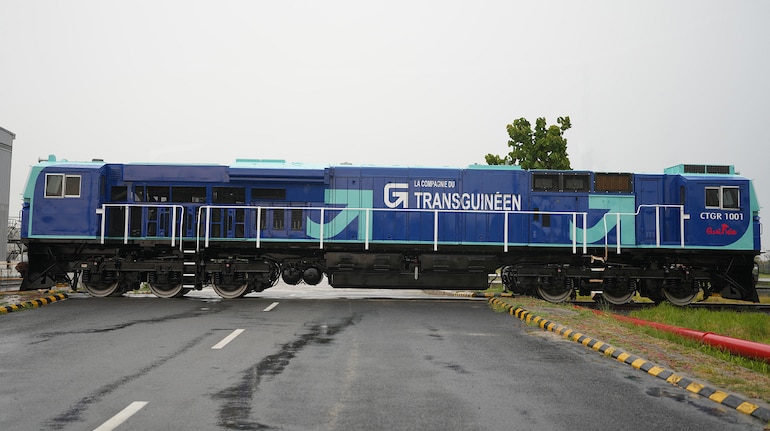
PATNA : In a significant development, Wabtec and Indian Railways showcased on Monday their first freight locomotive manufactured in Bihar to be exported to West Africa next month. The Railways had announced in September last year that its Marhowra manufacturing unit in Bihar would soon start exporting locomotives to Africa.

“We have lived up to our commitments and this achievement underscored the global competitiveness of Indian manufacturing and engineering,” a railway official said.

Besides unveiling the loco’s first look, the company also held its naming ceremony at the Marhowra plant, attended by senior officials from Wabtec, Indian Railways, and representatives from the West African country.

Established in 2015 as a public-private partnership (PPP) between Indian Railways and Wabtec, the Marhowra facility has already delivered over 700 locomotives to the Railways over the past nine years.
The plant is part of a broader initiative that includes maintenance sheds in Roza (Uttar Pradesh), Gandhidham (Gujarat) and Gooty (Andhra Pradesh).

“In 2015, Indian Railways placed an order for 1,000 fuel-efficient Evolution Series locomotives of 4,500 HP and 6,000 HP, to be delivered over 11 years,” Sujatha Narayan, Senior Vice President and India Region Leader from Wabtec, told PTI during the naming ceremony.

“This export order is a testament to the quality and reliability of our products,” she added.

Company officials said that the export order includes over 100 locomotives to be delivered over four years.

They added that the first two units are currently undergoing safety checks and are expected to be shipped via Mundra Port in Gujarat by June 2025.

These locomotives have been customized to meet the specific requirements of the West African country, including adaptations for standard gauge tracks and local environmental conditions, the officials said. Wabtec engineers conducted multiple site visits to ensure the locomotives align with operational needs.
“The export deal coincides with the West African country’s launch of its largest iron ore mining project, which requires enhanced freight capabilities,” Narayan said. The company has also scaled up its workforce to ensure continued delivery to Indian Railways alongside the export commitment.

EVERFAST Freight Forwarders participated in PPL AGM 2025 in Hong Kong

NEW DELHI : EVERFAST Freight Forwarders (P) Ltd is proud to announce its participation in the PPL Annual General Meeting (AGM) 2025, held from May 25th to 28th at the prestigious Kerry Hotel, Hong Kong.

This highly anticipated international gathering of logistics professionals under the banner of PPL Networks offers a dynamic platform for networking, strategic collaborations and future-oriented discussions. As committed members of the global freight forwarding community, EVERFAST is excited to engage with peers from across the world and contribute to shaping the future of freight logistics.

Mr. Job John and Ms. Guddi Rawat, who bring their leadership and expertise to the global stage, represented EVERFAST at this year’s AGM.

Job John, General Manager at EVERFAST stated, “The PPL AGM is more than just a meeting, it’s a celebration of global collaboration. We are eager to connect, share ideas, and drive new partnerships that redefine industry standards.”

Further into the conversation Guddi Rawat, Business Development Manager at EVERFAST, added “I’m thrilled to be part of this vibrant network and to explore innovative ways we can deliver greater value to our partners and clients.”

The PPL AGM 2025 promises engaging sessions, one-on-one meetings, and unforgettable cultural experiences in one of Asia’s most iconic cities.

EVERFAST continues its journey of excellence in freight forwarding.

About EVERFAST Freight Forwarders (P) Ltd

EVERFAST is a leading freight forwarding company offering comprehensive logistics solutions tailored to the needs of global commerce. With a commitment to reliability, efficiency, and customer satisfaction, EVERFAST continues to build a reputation as a trusted name in the logistics industry.

Container lines profits and margins drop sharply in Q1

TORONTO : John McCown’s Blue Alpha Capital said that the container shipping industry reported a $9.9 billion net profit in the first quarter of 2025. This represents a 36.4% or $5.7 billion decrease over the preceding quarter with earnings standing at $15.6 billion in Q4 2024.

The results of 11 listed companies, comprising 64.5% of the total showed a net profit of $6.4 billion. Three of the companies are the container sector results of Mitsui OSK Lines, NYK, and K-Line, the three shareholders of Ocean Network Express (ONE).

It is the second straight quarter of decline in earnings for the container sector. The high for container shipping in terms of earnings in 2024 came in Q3 a net profit for the sector $26.8 billion as the market reacted to diversions via the Cape of Good Hope to avoid Houthi attacks in the Red Sea acting to soak up excess capacity from newbuildings entering the fleet.

In line with the drop in profitability analyst Alphaliner reported a drop in margins of the nine largest publicly traded container lines.“The average operating margin for the leading container carriers fell to its lowest level in four quarters, despite the front loading of cargo by American shippers looking to get ahead of Chinese tariffs,” it said in its weekly report.

It said the nine companies reported EBITs showed average margin of 18.1% in Q1 2025 compared to a 25.8% margin the previous quarter.

Looking ahead McCown expects earnings to decline further in Q2 2025 with a net income ranging from $5.0 to $6.6 billion, noting that this was well below the $10.2 billion in earnings for container lines in Q2 2024 when results were climbing due to Red Sea diversions.

“The balance of 2025 is certain to be among the most eventful periods ever for the container shipping industry. Buckle up as its likely to have lots of twists and turns,” McCown concluded.

MOL seeks support from Japanese Govt over EU sanctions

TOKYO : Japanese shipping company Mitsui OSK Lines Ltd. has approached the Japanese government for assistance after the European Union unexpectedly imposed sanctions on three of its liquefied natural gas (LNG) tankers connected to a Russian energy project.

The European Council announced its 17th round of sanctions last week to increase pressure on Russia and close loopholes in previously imposed restrictions. As part of this move, three Mitsui OSK ships, North Moon, North Ocean, and North Light, were added to the sanctions list.

These vessels are managed by Mitsui OSK and were recently involved in transporting LNG from the Yamal LNG project in Russia. While the Yamal project itself is not under any sanctions, the tankers loaded LNG cargoes that were transshipped near the Russian port of Murmansk. This is a common practice where ice-class vessels bring the cargo from the Yamal plant, and other tankers pick it up at Murmansk for further delivery.

MOSK CEO, Takeshi Hashimoto, expressed disappointment over the decision. According to him, the firm had always understood that the Yamal LNG project was not subject to sanctions, so the sudden targeting of the vessels came as a shock. He said that the company is now reaching out to the EU through multiple channels, including diplomatic efforts via the Japanese government.

Hashimoto stated that some of the sanctioned vessels are already loaded with LNG, and Mitsui OSK plans to unload them as soon as possible. However, he acknowledged that these ships are likely to remain out of use for an indefinite period due to the sanctions.

He also mentioned that LNG demand had surged earlier this year. From January to March, LNG stockpiling increased due to concerns about possible tariffs from U.S. President Donald Trump. Although demand dropped in April, it rose again in May after tensions between the U.S. and China eased. Mitsui OSK expects this strong demand to continue through May and June.

Mitsui OSK is now dealing with a tough situation as it tries to maintain stable LNG supply operations amid sudden geopolitical issues. The involvement of the Japanese government suggests that the issue has escalated beyond corporate negotiations and may require diplomatic resolution.