Home Blog Page 830

Smart Maritime Council adds emissions data to Standardised Vessel Dataset with Version 2.0 update

DUBLIN : The Smart Maritime Council has released Version 2.0 of its Standardised Vessel Dataset (SVD), adding support for emissions reporting following the inclusion of new data fields within the IMO Compendium on Facilitation and Electronic Business (IMO Compendium), adopted at the conclusion of the 49th Facilitation Committee meeting (FAL 49) in March.

This latest update builds on the original SVD model published in 2024, which introduced a standardised list of Noon Reporting data points aligned with the IMO reference model, including IMO Data Numbers, ISO 19848 tags, and standardised units and naming conventions for more than 100 data fields.

Version 2.0 expands the scope of the model to include a range of additional standardised emissions reporting datapoints, offering harmonised formats to support compliance with mandatory regulations such as the IMO Data Collection System (DCS), EU MRV, FuelEU Maritime, and Carbon Intensity Indicator (CII) reporting.

The new data items were developed through a collaborative project involving BIMCO, IACS, and members of the Smart Maritime Council including ABS Wavesight, Bureau Veritas, ClassNK, DNV and Lloyd’s Register, before being submitted to the IMO Expert Group on Data Harmonisation (EGDH) to be included in the IMO Compendium as an additional ‘Fuel oil consumption and CII reporting dataset’.

“The expansion of the SVD to include emissions reporting data is a critical step forward in enabling easier, more consistent sharing of vessel performance information across systems and stakeholders,” said Rob O’Dwyer, Chairman of the Smart Maritime Council.

“Version 2.0 aligns with the expanded IMO Compendium model to support more efficient, accurate and non-proprietary emissions reporting, offering a shared framework that can be freely adopted by any company looking to improve the quality and interoperability of their data.” he added.

The updated dataset is available to download free of charge from the Smart Maritime Network website, alongside an open-source GitHub library created by Wilhelmsen Group company Ceataec to assist users in applying the data standard to digital projects.

Inmarsat NexusWave to support sustainable scallop harvesting for new Ava Ocean vessel

LONDON : Inmarsat Maritime, a Viasat company, has renewed its cooperation with Ava Ocean in a deal that will see the Norwegian company implement Inmarsat’s latest fully managed bonded connectivity service, NexusWave, on board its new non-invasive scallop harvesting vessel later this year.

Specialising in sustainable scallop harvesting in the Barents Sea, Ava Ocean – formerly known as Tau Tech – already relies on Inmarsat’s Fleet Xpress to meet the connectivity needs of its existing ship. Adopting NexusWave for its latest delivery will allow the company to further advance its sustainability and digitalisation initiatives.

The state-of-the-art NexusWave solution seamlessly combines multiple high-speed networks in real time, including GX Ka-band, LEO, LTE and a resilient L-band network, with plans to incorporate the ViaSat-3 Ka-band network in the future. NexusWave offers unlimited data, global coverage, and high speeds, enabling Ava Ocean to protect the marine environment and safeguard the well-being of its 30+ crew members by ensuring seamless connectivity for operational and safety purposes, alongside ‘home-like’ internet access for crew, in even the most isolated locations.

Preben Molnes, Operation Manager, Ava Ocean, said: “Our unique fishing operation takes place in the Barents Sea, where Fleet Xpress has been valuable to maintain stable communications supporting both operations and crew welfare. For the new vessel, we look forward to upgrading to Inmarsat’s NexusWave, further improving communication channels onboard.”

Christopher Hansen, Sales Manager, Inmarsat Maritime, said: “It is a privilege to continue our collaboration with Ava Ocean – a company that leads the way in sustainable seabed harvesting in the Arctic Ocean. Designed to meet our customers’ evolving needs, NexusWave seamlessly integrates multiple networks in real time to deliver fast, always-on connectivity that supports digital transformation and enhances crew welfare to a standard commensurate with a new era of shipping.”

Dedicated to protecting and revitalising the ocean floor, Ava Ocean has developed game-changing technology that facilitates the identification, selection, and sorting of bottom-dwelling marine fauna. This approach – underpinned by reliable, high-speed network coverage for sustainable, safe, and secure operations – allows the company to harvest scallops without damaging a vital but highly fragile marine ecosystem.

Tailwind strengthens global supply chains with new intra-Asia service

HAMBURG : To cater to the specific needs of its customers, the shipping and logistics experts at Tailwind are constantly striving to enhance their portfolio of services. As a premium partner across the entire supply chain, Tailwind will now be expanding its sea-freight product within Asia. Starting 17 June, the route of the Tiger Express Service (TEX) will be expanded to include one call in Vietnam and two in Malaysia.

TEX to connect four Asian countries

This expansion will open new options for Tailwind customers, as it will give them greater planning security for their transport routes between four Asian countries. The TEX service will continue to cast off from Chattogram in Bangladesh every two weeks and then make its first call at Port Kelang in Malaysia. From there, the service will make its next stop in Ho Chi Minh City, Vietnam, before returning to Chattogram via Port Kelang and Colombo in Sri Lanka.

Tailwind will deploy two container ships on the TEX service: the 1,700 TEU “Nordtiger” and the 1,900 TEU “ASL Peony”.

Maximum reliability and high flexibility

“With this intra-Asia service, we are offering a reliable transport solution, such as for raw materials and semi-finished goods for the textile industry, but also for other sectors. This will help us to make international supply chains even stronger,” says Nico Peters, VP Commercial Management at Tailwind Shipping Lines. “As our customers have come to expect, we will offer maximum reliability and high flexibility on all our services.” This expansion will give Tailwind customers connections between key locations in Southeast Asia and Europe.

Port Kelang: An ideal strategic location for transshipment

Containers bound for Europe in the shipping company’s Panda Express Service (PAX) will be transshipped in Port Kelang. Including the Malaysian port in the sailing schedule as the PAX’s last port of call in Asia underlines the carrier’s commitment to making the supply chains between Asia and Europe more resilient – especially for time-critical goods. Just like external customers, Tailwind’s parent company Lidl will also benefit from this expansion, as it will enable the retail company to make its own supply chains for textile goods even more streamlined. Malaysia’s largest seaport is a stable logistics hub in Southeast Asia and, thanks to its comprehensive infrastructure, ensures reliable and punctual handling – making it the ideal partner for Tailwind. Port Kelang is replacing the former PAX transshipment option at the Sri Lankan Port of Colombo, but all the other ports currently on the PAX service’s route will remain on the sailing schedule.

Route of the PAX starting 17 June 2025

Route: Qingdao—Ningbo—Dachan Bay—Port Kelang—Barcelona—Koper and back

Route of the TEX starting 17 June 2025

Route: Chattogram—Port Kelang—Ho Chi Minh City—Port Kelang—Colombo—Chattogram

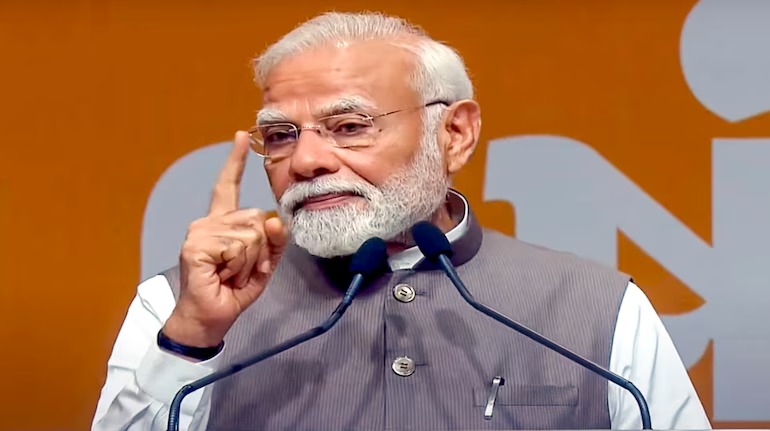
PM Modi shares mantra to make India World’s third largest Economy, in Gujarat

GANDHINAGAR : Prime Minister Shri Narendra Modi on Tuesday shared that while India has become the world’s fourth-largest economy, there are clamours about becoming the third-largest economy. PM Modi said that Indian cities hold the potential to make India the world’s third-largest economy. PM Modi also urged the citizens to set a clear and collective goal: that by 2047, when India completes 100 years of independence, we will become a fully developed nation — and we will do so without relying on foreign products.

Sharing the economic development mantra, PM Modi said, “The potential of our small cities is immense. To move from the fourth-largest economy to the third, we must focus on the urban development of these cities. They are the engines of our future growth.”

In a veiled dig at Congress leader Rahul Gandhi, the Prime Minister said that there exists an ecosystem that tries to tarnish India’s image on the global stage, not because of facts, but because of ideological differences. “Some people find it hard to accept progress simply because it doesn’t align with their narrative,” said PM Modi.

Calling upon the states to boost tourism, PM Modi said that India must remain focused on boosting tourism. He shared examples of Gujarat’s Kutch and Vadnagar, sharing that both cities have undergone remarkable transformation, thus attracting tourists. “Vadnagar, like Kashi, is an ancient center of civilization. There is evidence of over 2,800 years of continuous history. It is our responsibility to bring such heritage sites onto the world map and showcase their cultural and historical significance,” he said.

He also reiterated his ‘vocal for local’ remark, urging people to support and promote products made in India. “No matter how profitable foreign goods may seem, our priority must be to support and promote products made in India. If you take a closer look at the items we use daily, you’ll be surprised to see how many are still imported — even something as sacred as our Ganesh idols is often manufactured abroad,” said PM Modi.

PM Modi shared that if people are serious about building a developed and self-reliant India, then ‘Operation Sindoor’ is not just the responsibility of armed forces but it is the responsibility of all 140 crore Indians.

Participation of private sectors essential for strengthening Ports : Sarbananda Sonowal

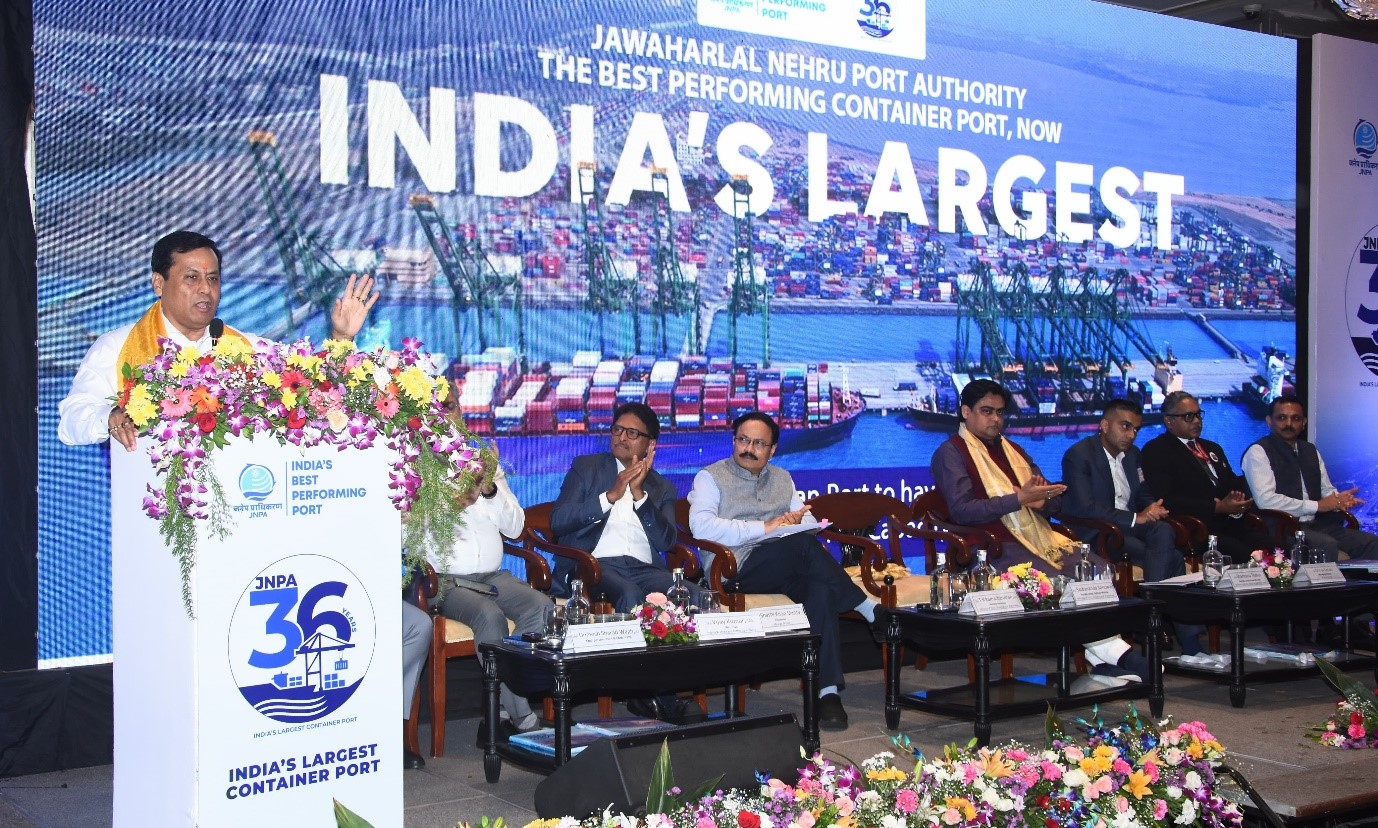
MUMBAI : Union Minister for Ports, Shipping and Waterways, Shri Sarbananda Sonowal, emphasised the essential role of private sector participation in strengthening India’s ports to realise the vision of Amrit Kaal Vision 2047.

Addressing the 36th Anniversary celebration of the Jawaharlal Nehru Port Authority (JNPA) in Mumbai, Sonowal commended JNPA for its successful 36-year journey, highlighting its achievement as the largest container port in the country, having handled a record 10 million TEUs (Twenty-foot Equivalent Units) of cargo. He underscored the significant contribution of private entities in assisting JNPA to reach this milestone.

Shri Sonowal advocated for the Prime Minister’s vision of ‘Vocal for Local and Local to Global’, calling for a global outlook. He stated that each port in the country is working towards enhancing its capacities across various aspects. He added that the Vadhvan Port is expected to be completed within 10 years, with the first phase anticipated to be completed in the coming five years.

Reiterating India’s aspiration to become one of the top five maritime nations globally, he urged all stakeholders, including private players, to exert all possible efforts to create an ecosystem that invites global participation in India’s maritime journey.

Addressing the gathering, Union Minister of State for Ports, Shipping and Waterways, Shri Shantanu Thakur, congratulated JNPA on achieving the landmark of handling 10 million TEUs of cargo. He emphasised the importance of clear, well-maintained, and sustainable ports to boost productivity.

Secretary of the Ministry of Ports, Shipping and Waterways, Shri T.K. Ramachandran, noted that JNPA has secured full marks in all 11 parameters outlined in Prime Minister Shri Narendra Modi’s vision for Amrit Kaal @ 2047. He highlighted the significance of port-led industrialisation and the development of a ‘Safe, Smart, and Sustainable’ maritime sector in India.

Speaking on the occasion, Chairperson of JNPA, Shri Unmesh Wagh, highlighted various initiatives undertaken by JNPA in sectors such as green energy, solar power, and the Special Economic Zone (SEZ), among others.

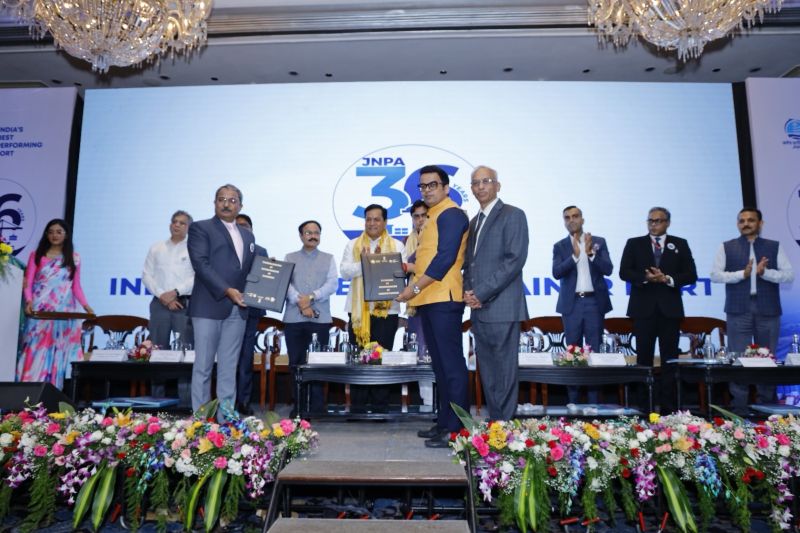
The event also witnessed the signing of two significant Memoranda of Understanding (MoUs) for the Vadhvan Port Skilling Programme. The first MoU, signed between Vadhvan Port Project Ltd. (VPPL) and Sahyadri Farms, aims to develop the skills of rural youth, farmers, and farm produce companies through targeted training under the skilling programme. The second MoU, signed between VPPL and Rural Enhancers Projects Pvt. Ltd., outlines their intent to participate in the development of a terminal at Vadhvan Port for handling container, bulk, and liquid cargo. Additionally, the event featured the unveiling of the ’36 Years, 36 Milestones’ coffee table book, highlighting JNPA’s journey since its inception. Various terminals, stakeholders, and employees were felicitated on the occasion for the landmarks achieved during the year 2024-25.

Addressing the media regarding the oil spill incident off the coast of Kerala, Shri Sonowal informed that the situation is being continuously monitored, and the ministry is in close coordination with the concerned authorities. The Director General of Shipping has been instructed accordingly, and all necessary steps are being taken to protect marine life and the environment.

VPPL signs MoU with Rural Enhancers Projects for development of a terminal at Vadhvan Port

MUMBAI : Vadhvan Port Project Ltd (VPPL) signed an MoU with Rural Enhancers Projects Pvt. Ltd. for the development of a terminal at Vadhvan Port Project Ltd. The terminal will be equipped to handle containers, bulk, and liquid cargo, while also developing world-class infrastructure to support marine services and intermodal connectivity. This strategic collaboration also emphasizes sustainability through digital solutions, a robust IT framework, and focused initiatives for manpower training and skill development.

The MoU was exchanged between Shri Unmesh Sharad Wagh, IRS, Chairman, JNPA and CMD, VPPL, and Mr. Ambar Ayade, Managing Director & CEO, Rural Enhancers Group.

The MoU was signed during the 36th Foundation Day Celebrations of JNPA. We are proud to take a significant step toward the development of Vadhvan Port, poised to become India’s next mega port, said the release.

India’s Maritime Transformation: e-Samudra, Sustainability & Vision 2047

NEW DELHI : The maritime sector is a cornerstone of India’s economy, with an extensive 11,000-kilometer coastline, 12 major ports, and over 200 minor ports strategically positioned to facilitate global trade. Handling 95% of the country’s cargo volume and 75% by value, India’s shipping industry underpins its economic growth and energy security. Key initiatives such as Maritime India Vision 2030, Sagarmala, and PM Gati Shakti aim to expand port capacities, improve logistics, and enable seamless multimodal connectivity—driving India toward a sustainable, competitive maritime future. The vision targets an increase in cargo handling capacity to over 300 million tons annually.

The government is actively promoting coastal shipping and waterway connectivity through initiatives like Sagar Mala and Amritkal 2047, with a focus on achieving port carbon neutrality—aiming for 60% renewable energy-powered operations. The Directorate General of Shipping (DGS), operating under the Ministry of Ports, Shipping, and Waterways, plays a pivotal role in regulating maritime safety, compliance, and seafarer training, evolving towards a more integrated Maritime Administration.

A significant transformation is underway with the rollout of e Samudra, a comprehensive web-based digital platform designed to streamline and unify maritime operations. Developed by CMS Limited, e Samudra will host over 63 modules covering ship registration, certification, port services, maritime safety, and more, enabling digitized certificates, smart notifications, efficient tracking, and integrated data management. Scheduled for launch in October 2025, it will serve as a single interface for statutory functions, ensuring transparency, speed, and ease of doing business.

Aligned with India’s broader vision of technological advancement and sustainability, e Samudra incorporates cutting-edge tools like geospatial platforms, maritime security systems, and data analytics—facilitating deep decision support and predictive insights. The initiative aims to modernize maritime governance, enhance safety standards in line with IMO regulations like SOLAS and MARPOL, and promote green shipping practices such as LNG adoption and renewable energy use at ports.

The ongoing digital transformation addresses legacy system limitations—fragmented workflows, outdated technology, cybersecurity concerns, and scalability issues—by consolidating functions into a unified, cloud-hosted platform. This transition aims to improve efficiency, reduce manual processes, and foster a customer-centric approach. Stakeholders across national and international players are actively engaged in this process, with comprehensive training and interoperability ensuring smooth adoption.

Supported by the expertise of CMS Computers and guided by national policies like Wiksit Bharat 2047 and Maritime India Vision 2030, the initiative envisions a future where India emerges as a global maritime leader—driving economic growth, ensuring energy security, and advancing sustainable, technology-driven maritime governance.

Jeena & Company expands Bhiwandi storage facility to boost operational efficiency

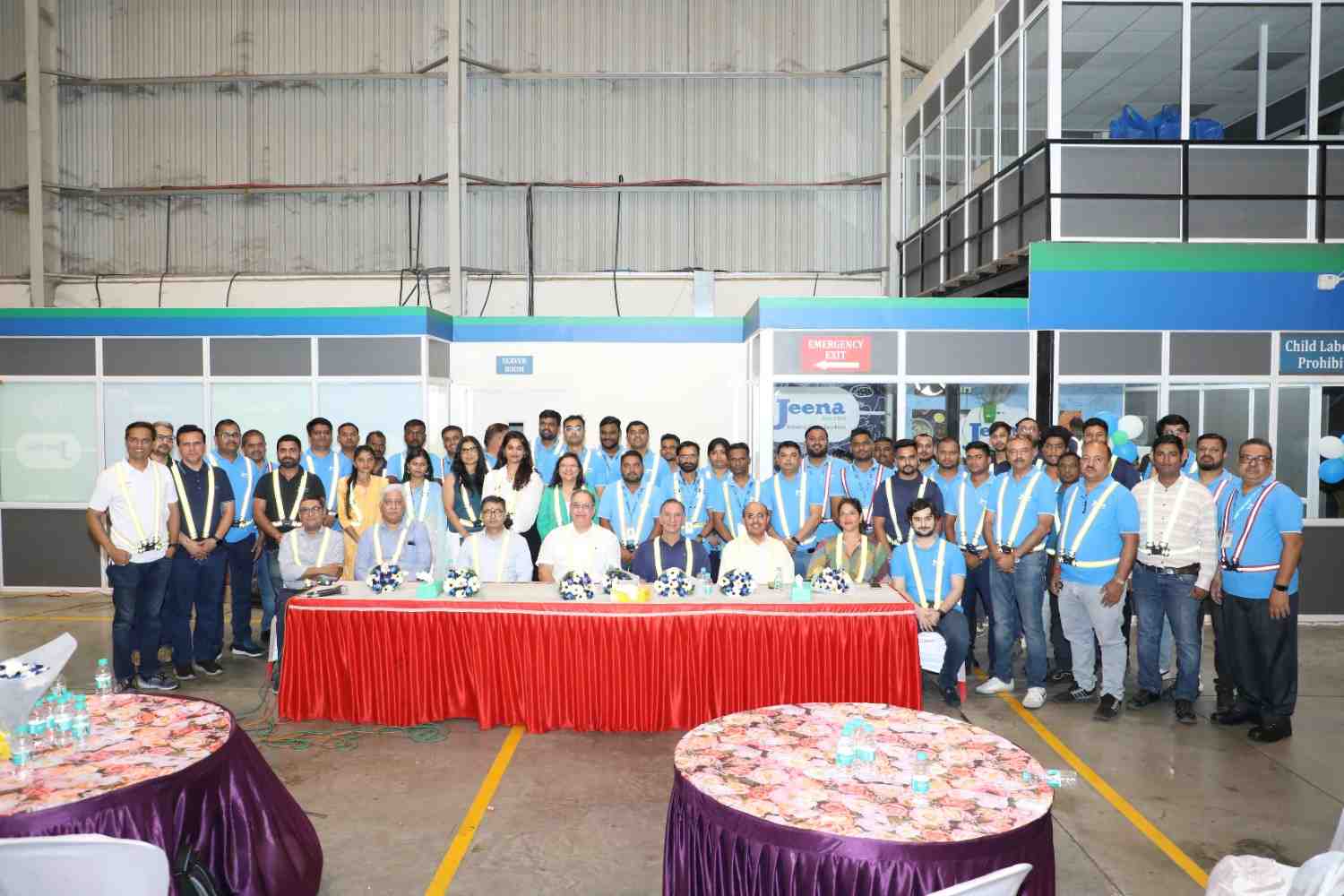
MUMBAI : Jeena and Company, a 125-year-old pioneer in logistics, delivering trusted and future-ready freight forwarding solutions has expanded its storage infrastructure at Bhiwandi, Mumbai facility.

The Bhiwandi warehouse, which spans over 1.10 Lakh square feet, has a clear centre height of 50 feet and 30 feet shoulder height, providing a high-volume, scalable logistics environment. The facility design includes G+7 and G+6 heavy-duty pallet racking system, G+7 multi-tier shelving system. The warehouse also offers 2 forklifts, 2 stackers, and 14 hand pallet trollies. Its flexible design aims to allow optimised storage space thereby, empowering sellers to boost their business.

This capacity expansion includes a 20% increase in storage capacity, adding over 1000 additional pallet positions through heavy duty racking. Additional 16,000 new location bins have been added to manage high volume freight and expand storage capabilities.

Jeena’s Bhiwandi facility features a spiral chute to handle gravity-fed material for swift movement of smaller consignments from upper floors to the ground, cancelling operative disruptions between the packaging and dispatch process.

Speaking on the development Prediman Koul, Chief Executive Officer, Jeena & Company said, “Evolution is an essential to our business. This capacity expansion at our Bhiwandi facility is meant to further streamline operations and reduce turnaround time. We are conscious of keeping ahead of the times and upgrading ourselves as per customer requirements. Proactive investment in infrastructure and technology helps us to offer ease and convenience to our partners.”

Jeena is a leading third-party, end-to-end logistics service provider offering tech-enabled inventory management, pick, pack and all value adds, management of e-commerce operations and box in box out. The company also offers ambient temperature control and bonded FTWZ facilities (Free Trade Warehousing Zone).

About Jeena and Company: 

Founded in 1900, Jeena & Company is a leading global logistics and supply chain solutions provider with operations across 60 countries, six continents, and 27 offices in India.

A trusted legacy brand with a customer-first approach, Jeena specializes in pharma, life sciences, automotive, defense, and project logistics, offering air and sea freight, specialised warehousing with line assembly, last-mile delivery, customs clearance, and documentation services.

As one of India’s largest national customs brokers, Jeena has pioneered industry-first innovations, including paperless documentation. With recent expansion into Sydney, Australia, the company is strengthening its global footprint in the UK, Europe, the US, Africa, Germany, China, and New Zealand.

India’s export projection of USD 1 Trillion for 2025-26 : President, FIEO


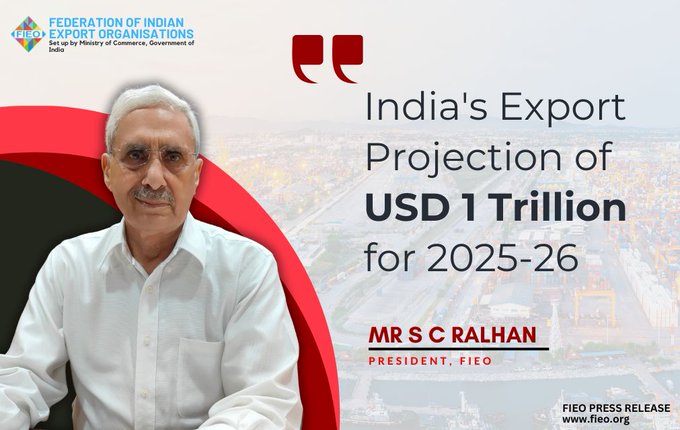
NEW DELHI : Mr. S C Ralhan, President, FIEO stated that, India’s export sector achieved a significant milestone in the fiscal year 2024–25, with total exports reaching a record $824.9 billion, marking a 6.01% increase from the previous year’s $778.1 billion. This growth was propelled by:

a. Services Exports: Surging 13.6% to $387.5 billion, driven by strong performances in IT, business, financial, and travel-related services.
b. Merchandise Exports: Reaching $437.4 billion, with non-petroleum goods exports hitting a record $374.1 billion, up 6% from the previous year.


We are aiming at an export of US$ 1 Trillion by the end of the fiscal with Merchandise exports of US$ 525-535Bn (Growth of about 12%) and Services exports of (US$ 465 -475 Bn with Growth of about 20%)

Strategies to Enhance Future Export Performance

To build upon this momentum and achieve sustained growth in both goods and services exports, the following strategies are recommended:

  1. Diversification of Export Markets: Expanding into emerging markets and strengthening trade relations with existing partners can mitigate risks associated with over-reliance on specific regions.
  2. Promotion of Value-Added Products: Shifting focus from raw materials to value-added products can increase export earnings and reduce vulnerability to price fluctuations in global commodity markets.
  3. Strengthening Trade Agreements: Negotiating and implementing Free Trade Agreements (FTAs) with key partners can facilitate easier market access and reduce trade barriers.
  4. Enhancement of Export Competitiveness: Investing in quality infrastructure, reducing logistics costs, and ensuring compliance with international standards will improve the competitiveness of Indian exports.
  5. Support for Small and Medium Enterprises (SMEs): Providing SMEs with access to finance, and market information will enable them to participate more effectively in international trade.
  6. Adoption of Digital Technologies: Leveraging digital platforms for marketing, sales, and customer engagement can open new avenues for exports, particularly in services sectors.


By implementing these strategies, India can enhance its export performance, contributing to economic growth and positioning itself as a formidable player in global trade.

Rising Protectionism and NTMs:

The global trade landscape in 2025 is increasingly characterized by a resurgence of protectionist policies, marking a significant shift from the liberalization trends of previous decades. This protectionism manifests through heightened tariffs, non-tariff barriers (NTBs), and strategic trade measures, impacting global commerce and economic stability. The number of import restrictions among G20 economies has soared to 4,650 — up 75% since 2016 and nearly 10 times the number in place in 2008.  In early 2025, the U.S. escalated its trade measures by increasing the average effective tariff rate from 2.5% to an estimated 27%, the highest in over a century. EU is focussing on NTMs based on environment and sustainability to put pressure on MSMEs. While some NTMs serve legitimate regulatory objectives, many are turning into Non-Tariff Barriers (NTBs) when used to discriminate or create disguised protectionism.

Three of the most prominent EU regulations illustrating this shift are:

  • EUDR (EU Deforestation Regulation)
  • CBAM (Carbon Border Adjustment Mechanism)
  • ESPR (Eco Design Sustainable Product Regulation)

All the three will come into force from 1st January, 2026 . The ESPR framework is implemented through Digital Product Passport providing complete traceability of product throughout its lifecycle.

Digital Product Passport:

The Digital Product Passport (DPP) is a transformative regulation being introduced by the European Union (EU) under its Green Deal and Circular Economy Action Plan. The DPP aims to digitally record, store, and share information about a product’s entire life cycle—from raw materials to manufacturing, usage, recycling, and disposal.

DPP basically depict the lifecycle of every product sold in the EU. This passport include:

  • Material composition and sources (e.g., recycled content)
  • Carbon footprint and energy use
  • Repairability and recyclability
  • Compliance with environmental and social standards
  • Certifications and regulatory compliance
  • End-of-life instructions

It will be mandatory for a wide range of products, starting with sectors like electronics, batteries, textiles, and construction materials from 1st Jan, 2026 with wider rollouts expected by 2026–2030.

India is a major exporter to the EU across several sectors that will be directly impacted by the DPP. The DPP could affect Indian exporters, especially MSMEs:

1. Increased Compliance Burden

MSMEs will need to digitally document every stage of the product life cycle, including sourcing, energy use, and end-of-life impact—something many are not currently equipped to do.

2. Risk of Market Access Barriers

Non-compliance with DPP requirements may lead to rejection of consignments or loss of competitiveness in the EU market, which is becoming increasingly sustainability-focused.

3. Cost of Digital Integration

Creating and maintaining digital passports may require investment in technology, software, and expertise, which could be burdensome for small exporters.

4. Need for Transparency

Indian exporters will have to ensure full supply chain traceability—something currently lacking in many traditional sectors like textiles, leather, and electronics.

Initiative by the Government and FIEO/EPCs

We request the Government to create sector-specific task forces to study DPP requirements and build compliance roadmaps and develop a national framework or digital infrastructure that can help exporters generate DPPs efficiently. The Government may also provide assistance or grants to MSMEs to adopt traceability and product lifecycle management systems.

FIEO, EPCs (Export Promotion Councils), and MSME Ministry should run extensive capacity-building programs to educate exporters about: Product sustainability, Digital traceability tools and EU regulations and expectations

The Digital Product Passport is not just a regulatory requirement—it’s a shift towards sustainable, transparent, and digital trade. For India, especially its 6.3 crore MSMEs, this could be a challenge but also an opportunity to upgrade manufacturing processes, embrace green technologies, and increase global trust in Indian products.

Government restores RoDTEP benefits for AA, SEZ, and EOU Exports

NEW DELHI : The Government of India has announced the restoration of benefits under the Remission of Duties and Taxes on Exported Products (RoDTEP) scheme for exports made by Advance Authorization (AA) holders, Export-Oriented Units (EOUs), and units operating in Special Economic Zones (SEZs). The benefits will be applicable for all eligible exports made from 1st June 2025 onwards.

The decision comes as part of the government’s sustained efforts to boost India’s export competitiveness in global markets. The benefits under RoDTEP for these categories were previously available until 5th February 2025, and their reinstatement is expected to provide a level playing field for exporters across sectors.

Operational since 1st January 2021, the RoDTEP scheme is designed to reimburse exporters for embedded duties, taxes, and levies that are not otherwise refunded under any other existing scheme. It is compliant with World Trade Organization (WTO) norms and is implemented via a comprehensive end-to-end digital platform to ensure transparency and efficiency.

As of 31st March 2025, total disbursements under the RoDTEP scheme have crossed Rs. 57,976.78 crore, underscoring its significant role in supporting India’s merchandise exports.

For the Financial Year 2025–26, the Government has allocated Rs. 18,233 crore under the scheme. The support will cover 10,780 HS lines for Domestic Tariff Area (DTA) exports and 10,795 HS lines for AA/EOU/SEZ exports, ensuring broad-based coverage for diverse sectors of the economy.

The reinstatement of RoDTEP benefits for special export categories reflects the government’s continued commitment to creating a conducive, competitive, and compliant export ecosystem that drives India’s long-term trade growth.