Home Blog Page 868

Karan Adani aims to make Vizhinjam Port most efficient in logistics cost terms

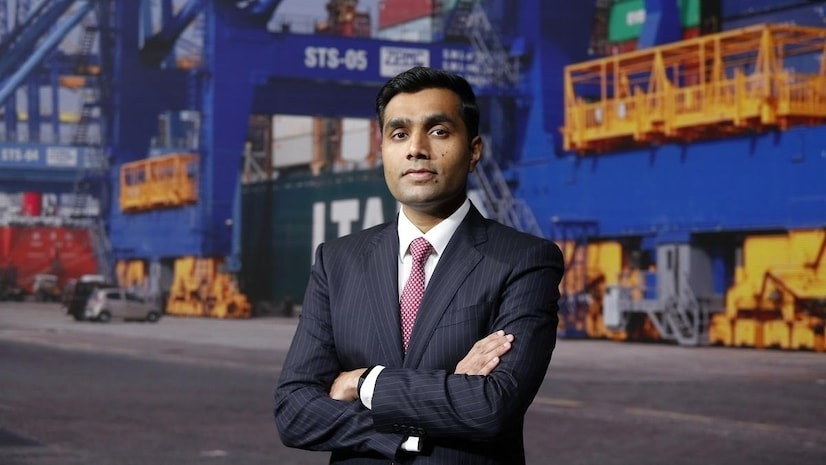
THIRUVANANTHAPURAM : Adani Group’s ports business MD Karan Adani, on Friday said they aim to make the just-launched Vizhinjam International Deepwater Multipurpose Seaport the most efficient port and help traders reduce their logistics costs.

The Prime Minister dedicated to the nation on Friday the Vizhinjam International Deepwater Multipurpose Seaport, the country’s first dedicated container transshipment port.

Talking to ANI, Karan Adani, MD, Adani Ports and SEZ, said they expect Phase 2 of the seaport in Kerala to be completed by 2028. The work for Phase 1 of the seaport is now complete.

Vizhinjam Port will reduce reliance on foreign ports for cargo transshipment. Its natural deep draft of nearly 20 meters and location near one of the world’s busiest sea trade routes further strengthen India’s position in global trade.

The seaport’s current capacity is 1.2 million twenty-foot equivalent units (TEUs), and the aim is to increase it to 5 million TEUs by 2028.

“We have to make this (seaport) one of the most efficient ports, not just in the country, but globally, and help the Indian importers and exporters reduce their logistics costs,” Karan Adani said.

Karan Adani said that Adani Ports’ business targets at least a 25-30 per cent reduction in logistics costs.

On the launch of operations at their ambitious seaport, which has faced several challenges, “We are proud that we built a full-class asset that will help the country and that the country can be proud of. Most importantly, it was one of the most challenging projects for the group. And it’s good to see it coming to life and coming into operation.”

The execution of the Vizhinjam Port project was fraught with challenges – natural calamities, material shortages, agitations resulting from apprehension related to coastal erosion and livelihood loss, and the Covid pandemic that caused further delays.

“We faced two cyclones, we faced strikes, we had seven million tons of rocks to bring in, which was a big challenge. But I must appreciate that the team has been extremely dedicated and strong in their commitment, and most importantly, I must thank the government of Kerala and the people of Trivandrum for supporting the project even during the toughest times,” Karan Adani said.

Amidst trade uncertainty emanating from US trade policy, he asserted that India is in a sweet spot.

“So I think globally, though there is uncertainty, there is still growth. And we do believe that the South Asia region is going to grow. And if the country (India) needs to grow, trade has to grow almost twice the country’s growth. And we are very bullish that the marine infrastructure, the ports, will be the key enabler in driving that growth,” Karan Adani said.

On the ambitious India-Middle East Corridor project, Karan Adani said their ports on the Indian western coast and in Israel’s Haifa can play a key role.

“I think it is a critical project for the country because it gives an alternate route outside the Suez Canal. That doesn’t mean that the Suez Canal will shut down, but it just gives you an alternate route available to hedge your bets and avoid any disruption, as we saw when the ships grounded in the Suez Canal and affected the whole supply chain. As a country, if we have to be self-reliant in manufacturing and supply chain, IMEC plays a very important role. And that is where, on the Indian side, our ports on the western coast and the exit at Haifa, where we would like to connect and see how we can help the end consumers and the Indian exporters and importers improve their cost,” he weighed.

When asked about expansion plans for Adani Ports’ business, without getting into specifics, he said that they always actively look for ports outside of India, predominantly in Southeast Asia.

“This is our region. And we want to play in the Bay of Bengal and the Arabian Sea network. That is what we are looking at,” he added.

Source : ANI

US-China trade tensions will not impact our ports : Karan Adani

THIRUVANANTHAPURAM : Adani Ports and Special Economic Zones’ (APSEZ) Managing Director Karan Adani said on May 2nd that despite the potential impact of the new US tariffs on Sino-US trade, the company is not overly concerned as it is not dependent on either of the countries for traffic, and nor does it have any ports there. Instead, it believes its growth will come from supply chains shifting to India.

“Not all countries produce everything, and consumption is going to be there. It’s a matter of how production is shifting from one country to another. That is where India has been taking a few steps, and there will be more opportunities as the process is accelerated. When manufacturing increases, there is a large multiplier effect, and trade growth doubles,” he added.

The son of Adani Group Chairman Gautam Adani, Karan Adani was speaking to mediapersons after Prime Minister Shri Narendra Modi formally inaugurated the Vizhinjam International Seaport near Thiruvananthapuram, which has been commercially operational since December 2024. The event was also attended by Kerala Chief Minister Pinarayi Vijayan, Thiruvananthapuram’s Lok Sabha MP Shashi Tharoor, and other dignitaries.

The dedicated transshipment port is a public-private partnership, where the government of Kerala owns the port with APSEZ acting as the concessionaire. The state government has developed some preparatory infrastructure for the port, including a 2.9 kilometre-long breakwater (a barrier built in the sea to protect a harbour from the force of waves) .

Vizhinjam’s location made it an attractive proposition for a dedicated transshipment deepwater port, being located 10 nautical miles from a major global marine trade route between China and southeast Asia, and Europe and north America.

Despite fears of trade between the world’s two largest economies — US and China —reducing as a result of the tariffs, other forms of trade will compensate for that, Karan Adani said.

“India is manufacturing for increasing domestic consumption, because of which there is higher movement of raw materials. Manufacturing for export will also increase, and there is an opportunity there. For a port, any trade is good trade. Vizhinjam is not dependent on any country, it is dependent on India. Even if US-China trade reduces, there will be other trade that will have to move through this region, i.e, Kerala and Colombo (where APSEZ has a port), ” Karan explained.

He further said that the company sees opportunities in the India-Middle East-Europe Corridor (IMEC), with APSEZ operating multiple ports and terminals on the west coast of India, Dar-es-Salaam in Tanzania, as well as the Haifa port in Israel. Karan, however, conceded that many practical problems remain in the way of IMEC becoming a major force in global trade, including customs provisions and other paperwork.

The next frontier for expansion is the southeast Asian market, he said, and the company is evaluating countries such as Indonesia, Vietnam, and Philippines for the same.

The Vizhinjam port and the Colombo West International Terminal are crucial for APSEZ to gain market share in the transshipment category. Currently, around 75 percent of India’s transshipment cargo is handled by ports outside India, according to industry data.

APSEZ’s management noted that besides cornering international traffic, the Vizhinjam port can help move cargo from domestic ports to overseas markets as well.

For Phase-I of the project, the port has a capacity of 1 million TEUs (twenty foot equivalent units, the standard size of a shipping container) per year, for which the state government and the APSEZ are spending Rs 8,686 crore, including around Rs 819 crore from the union government in the form of viability gap funding. The project went through numerous delays due to local land disputes, inclement weather, and Covid.

The port’s capacity is expected to increase to around 5 million TEUs by 2028, for which the roughly Rs 13,000 crore expenditure will be borne by APSEZ through internal accruals, explained Karan. He added that with efficiency measures such as automation, the company is planning to reduce around 30 percent of the cost of handling a container, which is around $40 currently.

India bans Pakistani ships from ports to ensure, in aftermath of Pahalgam terror attack

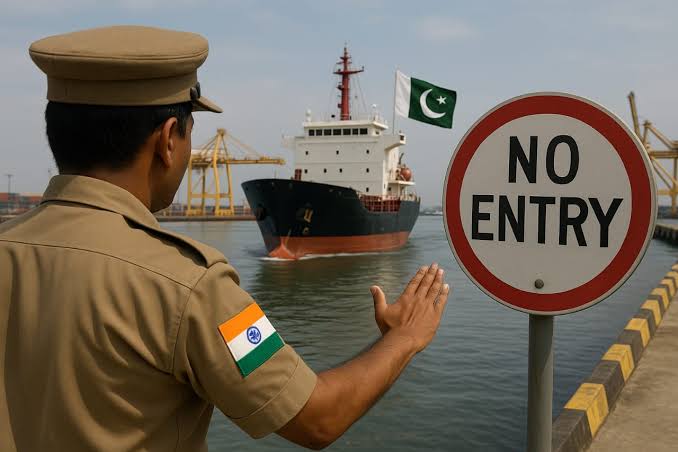
NEW DELHI : MoPSW has banned Pakistani-flagged ships from entering Indian ports and prohibited Indian-flagged vessels from visiting ports in Pakistan. The restrictions, effective immediately, have been imposed under Section 411 of the Merchant Shipping Act, 1958, to safeguard Indian assets, cargo, and port infrastructure.

“The objective of the Act is to foster the development and ensure the efficient maintenance of an Indian mercantile marine, in a manner best suited to serve national interests,” the order issued by the ministry said.

The order will remain in force until further notice, as part of efforts to bolster security and ensure the smooth functioning of India’s maritime interests.

“A ship bearing the flag of Pakistan shall not be allowed to visit any Indian port, and an Indian-flagged ship shall not visit any ports of Pakistan,” the order states.

The ministry said that the action has been taken in the interest of “safety of Indian assets, cargo, and connected infrastructure”, as well as to further the objectives of “Indian shipping.”

It also added that any exemption from the order will be “examined and decided on a case-to-case basis.”

Following the terror attack in Jammu and Kashmir’s Pahalgam on April 22, which claimed 26 lives, India has taken a series of measures in response to Pakistan’s support for cross-border terrorism.

These actions include suspending the Indus Waters Treaty, closing the Integrated Check Post at Attari, and reducing the staffing of High Commissions.

India bans direct, indirect imports from Pakistan
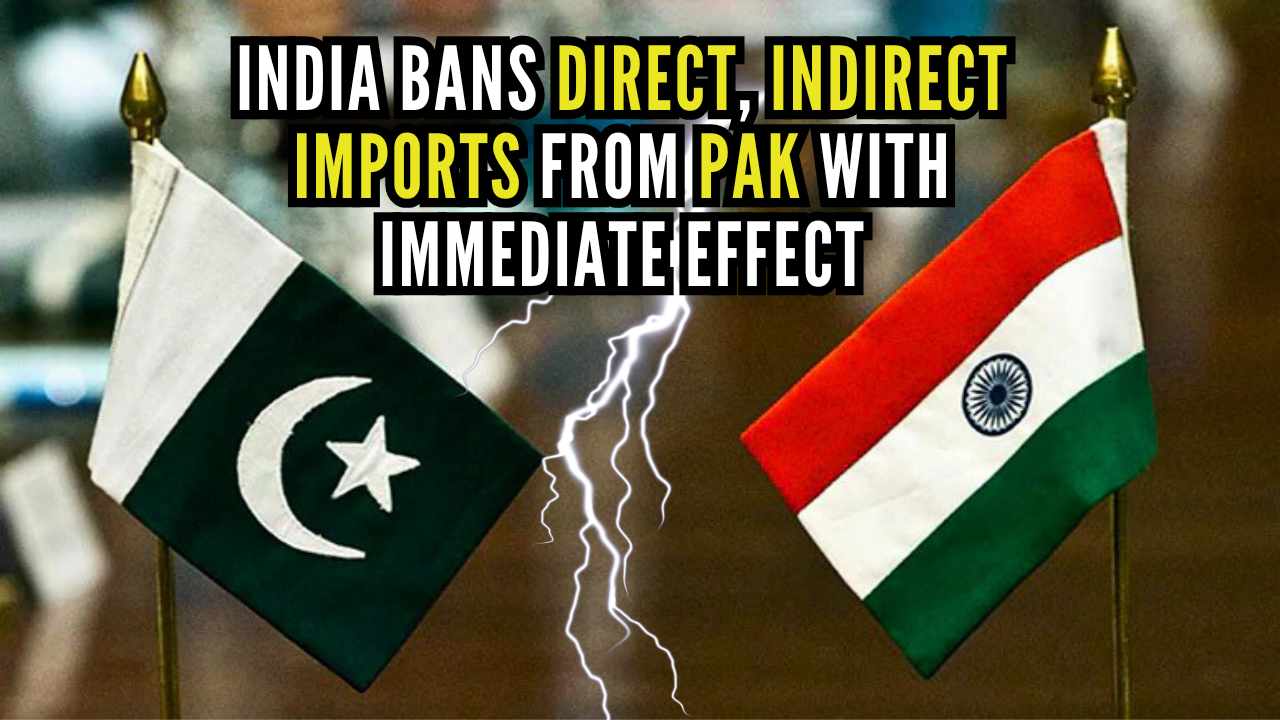
Earlier, Centre imposed an immediate ban on the direct and indirect import of all goods from Pakistan, according to a notification issued by the ministry of commerce.

A provision has been added to the Foreign Trade Policy (FTP) 2023 “to prohibit direct or indirect import or transit of all goods originating in or exported from Pakistan with immediate effect until further orders,” as stated in the notification issued on May 2.

The Wagah-Attari crossing, the only trade route between India and Pakistan, was closed following the Pahalgam attack.

Imports from Pakistan, mainly consisting of pharmaceuticals, fruits, and oilseeds, had been declining since the 2019 Pulwama attack, when India imposed a 200 per cent duty on Pakistani goods.

DGFT prohibits import of all goods originating in or exported from Pakistan to India

NEW DELHI : The Directorate General of Foreign Trade (DGFT), Ministry of Commerce and Industry, has issued a notification prohibiting import of all goods originating in or exported from Pakistan to India.

This will prohibit import of goods from Pakistan directly or through any other trade route.

The directive, issued via Notification No. 06/2025-26 dated 2nd May 2025, has come into effect immediately. A new paragraph, Para 2.20A, has been inserted in the FTP 2023:

“Direct or indirect import or transit of all goods originating in or exported from Pakistan, whether or not freely importable or otherwise permitted, shall be prohibited with immediate effect, until further orders. This restriction is imposed in the interest of national security and public policy.”

India’s FY26 growth to outpace IMF forecast, projected at up to 6.8%: Fin Secy

NEW DELHI : Finance Secretary Ajay Seth stated on Friday that India’s Economy is likely to grow between 6.3 per cent and 6.8 per cent in 2025-26, with actual growth probably settling near the middle of that range.

This projection exceeds the International Monetary Fund’s (IMF) forecast of 6.2 per cent. Seth’s growth estimate aligns with the Economic Survey’s earlier forecast for FY26.

However, this comes at a time when several multilateral agencies have reduced their growth projections for the Indian economy.

Last month, the IMF lowered its FY26 economic growth forecast for India from 6.5 per cent to 6.2 per cent, citing potential trade risks stemming from the US’s global tariff war.

The United States recently announced a 27 per cent reciprocal tariff on Indian goods, pointing to India’s average 52 per cent duty on US imports.

This measure is part of a broader American strategy to address trade imbalances and protect domestic industries. The US has temporarily reduced this tariff to 10 per cent, providing some relief to India and other trading partners.

Despite the positive growth outlook, Seth emphasised that India’s public debt remains elevated and must be reduced through sustained fiscal consolidation.

“One must remain committed to fiscal consolidation for two key reasons,” Seth said, noting that high public debt is a major factor in credit rating agencies’ cautious view of India.

“They believe our capacity to withstand another crisis on the scale of COVID-19 is limited at this point,” he added.

Seth also pointed out that India’s interest payments as a proportion of tax revenue are relatively high compared to countries like Indonesia, which holds a better credit rating.

The Union government has criticised global credit rating agencies for undervaluing India’s sovereign rating despite the country’s strong growth, reforms, and macroeconomic stability.

Despite India’s consistent GDP growth, large foreign exchange reserves, a stable financial system, and political stability, the country continues to receive a sovereign credit rating just above the investment grade, according to the Centre’s arguments.

AVG Logistics bags Rs 198 Cr long term contract from Indian Railways

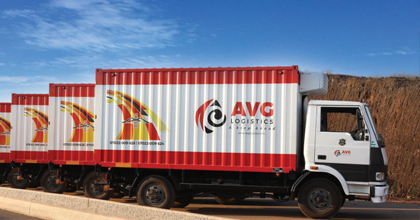
NEW DELHI : AVG Logistics Limited has secured a significant 6-year contract with the Indian Railways for the operation of a leased Parcel Cargo Express Train (PCET). This dedicated freight train will establish a vital link between Agartala (Tripura) / Guwahati (Assam) and Delhi / Ludhiana (Punjab), undertaking four round trips each month. Over the entire contract period, a total of 313 trips are scheduled, promising consistent and reliable transportation services. Initially, the train will have a carrying capacity of 364 tonnes per trip, which is set to increase to 484 tonnes after the first six months of operation.

This strategic partnership will enable AVG Logistics to provide expeditious and seamless connectivity over a distance of 2768 kilometres with each journey completed in approximately 90 hours. The long-term contract is valued at approximately Rs 198 crore over the six-year period, highlighting the scale and importance of this collaboration for both AVG Logistics and the Indian Railways in bolstering freight transportation across the country.

AVG Logistics Limited, established in India in 2010, is a prominent multimodal logistics solutions provider. They offer customised, technology-driven services encompassing transportation (road & rail), warehousing (including cold chain), distribution and supply chain management, including 3PL. With over 50 automated branches across India, they manage a 3000+ vehicle fleet and 705,000 sq. ft. of warehousing. Their 400+ professionals deliver 24/7 integrated logistics services.

AVG Logistics serves a wide array of esteemed clients, including major players like Nestle, HUL, DS Group, Apollo Tyres, JK Tyres, ITC, Airtel, MRF, Jubilant, Ultra Tech Cement and Coca Cola, alongside numerous other retail and multinational companies across various industries in India. The company has a market cap of over Rs 350 crore and the stock is up by 20 per cent from its 52-week low of Rs 200.55 per share.

APEDA mulls export growth strategy for agri and processed foods, calls stakeholders for a Chintan Shivir

NEW DELHI : Government is committed to reduce logistical barriers and enhancing market access for Indian agri and processed food products. This was stated by Shri Sunil Barthwal, Secretary Department of Commerce, in his address at a high-level Chintan Shivir organized by Agricultural & Processed Food Products Authority(APEDA) here.

Shri Barthwal pointed out that “Academia and Research institutions must be a part of multisectoral consultations so that Research and Development can be a major focus for innovation and sustainability in agri exports.” He emphasised that, agricultural production and productivity both are the need of the hour. He reaffirmed the Ministry’s commitment to further deliberate on the ideas and strategies discussed during the sessions.

The consultative dialogue brought together senior officials from the Union Government, Central Ministries, representatives from State Governments, policy experts, industry leaders from Agri trade and Processed Foods sector to deliberate on strategies for enhancing the export of Agricultural And Processed Food Products from India.

The inaugural session of the Chintan Shivir was co- chaired by Shri Sunil Barthwal, Secretary of Department of Commerce, and Shri Subrata Gupta, Secretary of Ministry of Food Processing Industries (MoFPI). The session was also graced by the Special Secretary, Department of Commerce Shri Rajesh Agrawal, Additional Secretary, Department of Animal Husbandry & Dairying, Smt. Varsha Joshi, and other senior officers of the Union and State governments, policymakers and industry leaders.

In his opening remarks, Secretary of Ministry of Food Processing Industries (MoFPI), Shri Subrata Gupta highlighted the importance of infrastructure development and value addition to ensure sustainable export growth. He emphasised that there is a need to develop infrastructure, Sanitary and Phytosanitary standards at par with international norms, tariff plans and more synergy between Union Government, State Government, various departments and Industry stakeholders. He identified key potential products and sectors for processed foods exports like Alcoholic Beverages, Nutraceuticals and Value-Added Products.

The Special Secretary, Ministry of Commerce & Industry, Shri Rajesh Agrawal, emphasized the critical role of synergistic efforts among Union government, State Government, industry stakeholders and farming communities in realizing India’s agri-export potential. He emphasised on the need to have a more synergetic approach amongst various stakeholders to take new agriculture, processed food and Value Added Products to new geographies.

This Chintan Shivir is a first, one of its kind collaborative dialogue facilitated by the Ministry of Commerce and Industry and APEDA with over 70 stakeholders from the Union Government, State Governments, Industry Leaders and Line Ministries at Vanijya Bhawan. 14 States from across the country namely Andhra Pradesh, Bihar, Chhattisgarh, Gujarat, Haryana, Punjab, Maharashtra, Madhya Pradesh, Rajasthan, Telangana, Tamil Nadu, Uttarakhand, Uttar Pradesh and West Bengal participated in the inaugural session. Industry Leaders of Agri and Processed Food sectors were represented by LT Foods, KRBL, Amul, Organic India, ITC, Meatzza, Suguna Foods, Kaybee, TPCI, Organic India, Allanasons, Fair exports, HMA exports, amongst others participated in the dialogue.

The Shivir was divided into five parallel technical breakout sessions focusing on specific Agri-Trade Commodities and Processed Food sector, as under:

Basmati and Non-Basmati Rice: engaged states such as Punjab, Haryana and Telangana as well as industry giants like LT Foods and KRBL. The discussion addressed export barriers, financial and policy support and branding strategies for Indian rice.
Animal Products: brought together key exporters and state representatives to identify value chain improvements and international compliance strategies.
Horticulture with participation from states like Maharashtra, Tamil Nadu and Andhra Pradesh as well as companies such as Kaybee, explored ways to enhance quality, improve logistics, and strengthen industry-academia linkages.
Processed Foods: involved stakeholders like Britannia and Haldiram’s focusing on value addition, regulatory streamlining and branding of Indian products globally.
Organic Products: discussed opportunities in expanding India’s footprint in global organic markets with contributions from Organic India, AMUL, ITC, and regulatory bodies like FSSAI.

DP World and Delhi Capitals launch Campaign Film Highlighting Cricket’s Transformative Power

NEW DELHI : DP World, a leading global provider of smart logistics solutions, has unveiled an inspiring new campaign film in partnership with Delhi Capitals, celebrating the transformative power of cricket when driven by purpose. The film highlights how cricket can open doors, create opportunities and positively impact communities.

The film brings together an impressive lineup of global cricket stars including KL Rahul, Faf du Plessis, and Mitchell Starc, alongside women’s cricket trailblazers Meg Lanning, Alice Capsey, and Sarah Bryce. It marks the latest milestone in DP World’s partnership with both the Men’s and Women’s Delhi Capitals teams, underscoring a shared commitment to inclusivity and impact through sport.

Set against the vibrant backdrop of local neighbourhoods across India, the film vividly captures
DP World’s grassroots commitment to making cricket more accessible. A standout scene features young aspiring players being mentored by life-sized holographic projections of their cricketing idols blending inspiration with innovation to deliver a personal, powerful training experience.

Hemant Kumar Ruia, Executive Vice President, Head of DP World India said, “India is central to DP World’s global operations, both in scale and strategic importance. Cricket holds a special place in the hearts of millions here, and through our Beyond Boundaries Initiative, we are using the power of cricket to connect with communities in India. We are providing access to cricket by providing grassroots clubs with cricket kits, equipment, and facilities through repurposed logistics containers. Our partnership with Delhi Capitals reflects a shared commitment to enabling this access, nurturing local talent, and fostering a spirit of inclusion. This film captures our unifying purpose, showcasing how we are supporting cricketing talent at the grassroots level, while building relationships that matter, both on and off the field.”

As part of its global Beyond Boundaries Initiative, DP World is converting 50 repurposed shipping containers into fully equipped cricket facilities for grassroots clubs worldwide. Each container is stocked with professional-grade kits including bats, helmets, gloves, pads and kit bags. The containers are also multipurpose to suit the local community’s needs, serving as pavilions and dressing rooms – all with the ambition of making the game more accessible.

Since its launch in 2023, the initiative has seen DP World roll out five repurposed containers across key Indian cities including Mumbai, Chennai, Ahmedabad, and Delhi, along with the distribution of 1,250 cricket kits to aspiring players in India. In 2024, the Delhi Capitals team supported the unveiling of containers at Delhi’s Aerocity Ground, reinforcing the commitment to bringing the game closer to communities and nurturing the next generation of talent.

Watch the campaign film here:
IG: https://www.instagram.com/p/DI31ZhqxixT | YT:https://youtu.be/5PrCMmO4E-8

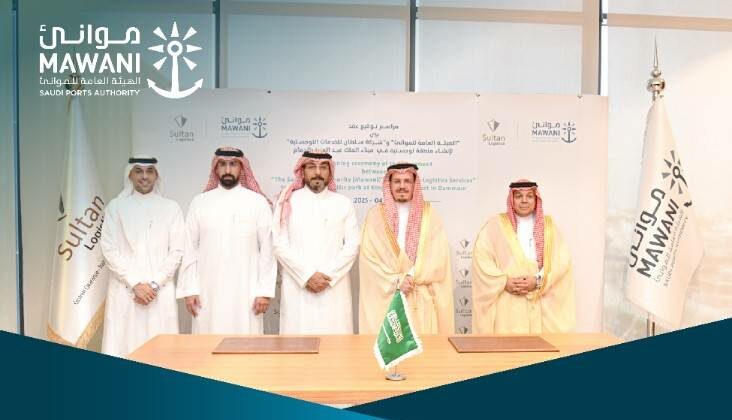
Mawani and Sultan Logistics signed a Contract to Establish a Logistics Park with Investment of up to SAR 200 Million at King Abdulaziz Port in Dammam

RIYADH : The Saudi Ports Authority (Mawani) and Sultan Logistics have signed a contract to establish a logistics park at King Abdulaziz Port in Dammam, with an investment of up to SAR 200 million. The new park will span an area of 197,000 square meters, aiming to enhance the port’s competitiveness, increase its operational efficiency, and elevate the level of logistics services provided.

The contract was signed by the Acting President of the Saudi Ports Authority, Mr. Mazen bin Ahmed Al-Turki, and the Chairman of Sultan Logistics, Mr. Ali Sultan Al-Qahtani, in the presence of several officials.

This logistics park is part of Mawani’s initiatives aligned with the objectives of the National Transport and Logistics Strategy, which seeks to establish logistics parks inside and outside the Kingdom’s ports. The initiative aims to solidify Saudi Arabia’s standing as a global logistics hub, provide high-efficiency logistics services, drive national development, and support the Kingdom’s economic and social ambitions in line with Saudi Vision 2030.

The logistics park will feature warehouses covering 35,000 square meters, administrative offices, and a yard dedicated to the storage and maintenance of dry and refrigerated containers. It will also include a re-export area, contributing to enhancing the level of logistics services and supporting commercial movement with high operational capabilities.

The new logistics park will strengthen the competitive advantage of King Abdulaziz Port by offering specialized logistics services, increasing private sector participation in economic development, and promoting economic diversification.

It is worth noting that 2024 witnessed the launch, cornerstone laying, and inauguration of eight logistics parks and centers, with a total private sector investment of nearly SAR 2.9 billion. These investments are part of the broader development of over 20 logistics centers under Mawani’s supervision across Saudi ports, with total investments exceeding SAR 10 billion. Among the highlights was the inauguration of Maersk’s largest global logistics investment at Jeddah Islamic Port, valued at SAR 1.3 billion and covering 225,000 square meters.

Netanyahu vows response after Houthi missile hits near Israel’s main airport

TEL AVIV : Israeli Prime Minister Benjamin Netanyahu has vowed to retaliate against the Houthis after a missile fired by the group struck the grounds of Israel’s main airport.

In a video posted on social media, Netanyahu threatened strikes, saying: “We attacked in the past, we will attack in the future”.

The missile, fired from Yemen by the Iran-backed group, landed near the main terminal of Ben Gurion airport on Sunday morning, Israeli authorities said.

Four people were injured by the blast, with another two injured on their way to a shelter,Israeli media reported, citing emergency services. None were seriously hurt.

Later on Sunday, the Houthis said they would impose “a comprehensive aerial blockade” on Israel by repeatedly targeting its airports, in response to Israeli military plans to expand operations in Gaza.

Israel’s defence minister, Israel Katz, responded to the attack by saying: “Anyone who hits us, we will hit them seven times stronger”.

In a later statement, Netanyahu said “attacks by the Houthis emanate from Iran”, adding Israel would respond to the Houthi attack, and to Iran “at a time and place of our choosing”.

Unverified footage posted online appeared to show drivers on a road nearby pulled over to take cover as a projectile lands, creating a plume of black smoke near the airport, which is on the outskirts of Tel Aviv.

The airport has now reopened to flights, after temporarily halting them – though several major airlines, including Lufthansa, Air France and Delta, cancelled Sunday’s flights to and from the airport.

Sirens were activated in several parts of the country as the missile approached – and the Israeli Air Force said it was investigating the failure to intercept it.

Citing defence sources, Israeli media reported that both Israel’s long-range Arrow air defence system and a US-made Terminal High-Altitude Area Defense (Thaad) battery failed to intercept the missile.

Senior Israeli police commander Yair Hetzroni showed journalists a crater caused by the impact of the missile, which airport authorities said had landed beside a road near a Terminal three parking lot.

“You can see the scene right behind us here, a hole that opened up with a diameter of tens of metres and also tens of metres deep,” Hetzroni said, adding that there was no significant damage.

Netanyahu is set to meet ministers and defence officials on Sunday to discuss a response, local media reported.

The Houthis, an Iran-backed rebel group based in Yemen, have regularly launched missile attacks at Israel in solidarity with Hamas in Gaza, but it is rare for one to make it through Israel’s sophisticated air defences.

The group have also been carrying out attacks on ships in the Red Sea, which the US has responded to by leading a bombing campaign against it – which the UK has assisted in.

Source : BBC News