Home Blog Page 869

Trump’s call for free U.S. passage through Suez Canal sparks outcry in Egypt

CAIRO : U.S. President Donald Trump’s recent call for free passage of American ships through the Suez Canal has triggered widespread condemnation in Egypt, where legal experts, political leaders, and citizens have denounced his remarks as legally groundless and a serious threat to the international order.

On Saturday, Trump posted on Truth Social, a social media platform he majority-owns, that U.S. military and commercial vessels should be allowed to travel through both the Panama Canal and the Suez Canal free of charge.

He claimed both routes would “not exist” without the United States and said he had asked Secretary of State Marco Rubio to immediately “take care of, and memorialize, this situation.”

“Trump’s proposals about international waterways constitute a serious threat to international peace, security, and public order,” Ayman Salama, professor of international law at Cairo University, told Xinhua.

Salama highlighted the 1888 Constantinople Convention, which established the fundamental principles governing international dealings with the Suez Canal, preserving the right of all countries to benefit from this global waterway.

He said Trump’s “legally baseless” claims, which ignore the sovereignty of coastal states over their territorial waters and straits, could lead to interference in countries’ internal affairs, a clear violation of the general principle of non-interference of contemporary international law.

Warning against disruption to international trade and harm to the global economy by U.S. interference, the Egyptian legal expert urged the international community to stand firm in defending international laws and conventions and take serious steps to safeguard the legal bases for navigation.

Meanwhile, Samaa Soliman, Deputy Chairman of the Foreign, Arab, and African Affairs Committee of the Egyptian Senate, affirmed that “only Egypt is responsible for securing and protecting the Suez Canal,” and the revenues generated from canal transit fees are a legitimate sovereign resource backing the national economy and serving Egyptian citizens, and shall not be impaired under any pretext or justification.

The Egyptian senator termed Trump’s call as “unjustified interference in the affairs of a sovereign state, and is inconsistent with the principle of mutual respect between states.”

Soliman said that the Suez Canal and the Egyptian economy have been harmed by the U.S. as its unfair policies on the Palestinian issue fueled the region’s instability and failed to stop the Houthis in Yemen.

Egypt’s revenues from the Suez Canal fell by more than 60 percent year-on-year in 2024 amid the Red Sea tensions, resulting in a loss of nearly 7 billion U.S. dollars, according to the Suez Canal Authority (SCA).

Sayed Abdel Aal, President of Egypt’s socialist Tagammu Party, said in a statement on Sunday that “(Trump’s) remarks not only represent provocative rhetoric but also reveal a hateful colonial mentality.”

The party leader explained that canal fees are fair and are determined according to international standards, without discrimination, adding that the United States cannot impose exceptional conditions.

“Trump’s call can only be viewed as economic colonialism in a new garment,” he added.

Also on Sunday, the Egyptian Parties Alliance, which includes approximately 42 political parties, condemned Trump’s statement, criticizing it as “ignoring historical facts.”

The controversy has ignited strong reactions on Egyptian social media, particularly regarding Trump’s suggestion that the United States deserves credit for the canal’s existence.

“Our grandfathers built the Suez Canal with their blood when America was engulfed in civil war. We will continue the course of our ancestors, and Trump will not impose his conditions on us,” read one widely shared post.

The canal, which opened in 1869, has long been the linchpin of global trade, connecting the Mediterranean and Red Seas. Despite its complex colonial history under French and British control, the canal has remained a powerful symbol of national pride for Egyptians, particularly since its nationalization in 1956 by President Gamal Abdel Nasser, a pivotal moment in Egypt’s modern history.

Source: Xinhua

Cargo arrivals at US Port of Los Angeles to fall by 35% next week as trade war heats up

NEW YORK : Container ship arrivals at the port of Los Angeles are expected to fall by 35% next week when compared with the same week a year ago, the executive director of the port said.

Gene Seroka, Executive Director of the Port of Los Angeles, said cargo from China makes up 45% of volumes through the port annually.

“This is a precipitous drop in volumes with a number of American retailers stopping all shipments from China based on the tariffs,” Seroka said in an interview on CNBC.

The expected slowdown comes after nine months of year-on-year increases in volumes as Chinese exporters accelerated shipments to circumvent the tariffs, and US retailers pulled volumes forward for the same reason.

Container ships and costs for shipping containers are relevant to the chemical industry because while most chemicals are liquids and are shipped in tankers, container ships transport polymers – such as polyethylene (PE) and polypropylene (PP) – are shipped in pellets. Titanium dioxide (TiO2) is also shipped in containers.

They also transport liquid chemicals in isotanks.

Seroka said he anticipates the fall in volumes to persist until a trade agreement is reached between China and the US.

“Until some accord or framework is reached with China, the volumes coming out of there – save a couple of different commodities – will be very light at best,” Seroka said.

Seroka thinks US retailers have about five to seven weeks of inventory, and that manufacturers likely also pulled forward components so there could be a delay before consumers notice any shortfalls.

Rates for shipping containers from China have been relatively stable over the past six weeks despite the decrease in volumes. Over the past week, rates from southeast Asia and Vietnam rose above rates from China as the trade war contributes to shifting trade patterns.

Shipowners have dramatically increased blank sailings amid efforts to support rates or at least stop the slide.

Rates from Shanghai to New York have fallen by 49%, and rates from Shanghai to Los Angeles have fallen by 52% from the most recent highs in September, according to supply chain advisors Drewry and as shown in the following chart.

Market intelligence group Linerlytica said ocean carrier Zim has withdrawn its Central China Express line after the last departure on 10 April. The line was launched in July 2024 and called at Shanghai, Ningbo, Los Angeles, Shanghai using five ships of 4,500-5,300 TEU (20-foot equivalent units). The last sailing was made by the 5,500 TEU Mississippi that departed from Ningbo on 10 April and made its last call at Los Angeles on 24 April 2025.

Zim said the withdrawal was in response to a sharp drop in Chinese exports to the US following the imposition of punitive tariffs.

U-Freight sees opportunities of a global e-commerce logistics market that is predicted to soar in 2025

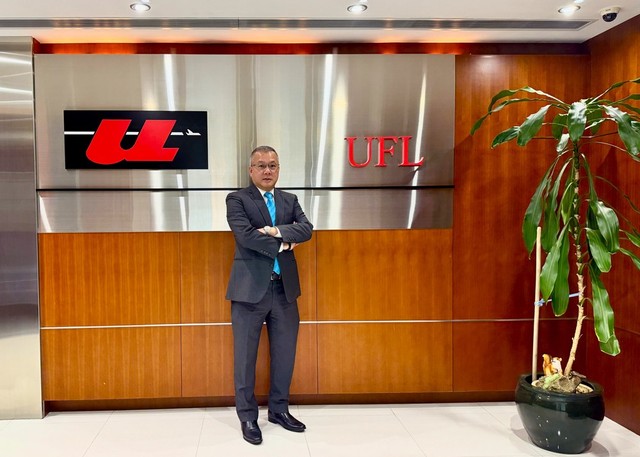
HONG KONG : Commenting on a recent report that suggests the global e-commerce logistics and fulfilment market is set to grow by 15.5% in 2025, Simon Wong CEO of the U-Freight Group says his company is ready to meet the ever-increasing challenges of providing logistics services to this ever-expanding sector of global trade.

Wong says: “Transport intelligence (Ti), a major provider of market research solutions to the global logistics industry, says that whilst President Trump’s intention to abolish the de minimis rules and impose tariffs on imports has introduced significant uncertainty into the market, the sector shows no signs of being blown off course.

“That mirrors the U-Freight Group’s current experience where changes in demand patterns associated with the ongoing emergence of e-commerce, is also driving development in merchandising, warehousing, and distribution patterns.”

According to Ti Insight, following a post-Covid contraction in 2022, the market has regained its sharply upward trajectory, reporting double digit growth rates in the past two years. In 2024 the market was valued at EUR521.9 billion (USD569 billion), double the market value recorded just before the pandemic in 2019.

“This information certainly helps to justify our company’s early entry and on-going investment to meet the ever-increasing challenges of providing logistics services to this rapidly expanding sector of global trade.”

The CEO of the Hong Kong-based international freight forwarding and logistics group adds that at U-Freight, in its development of e-commerce logistics solutions, it is continually trying to address the key issues stemming from increasing volumes of business-to-business (B2B) and business-to-consumer (B2C) e-commerce shipments and the time sensitivities involved.

“Examples of those efforts include investment in several of the company’s warehouse facilities to enable them to act as e-commerce fulfilment centres (EFCs).“

At its EFC in Hong Kong, there has been an ongoing investment programme in an autonomous mobile robot (AMR) fleet and intelligent racking system.

These are used to move inventory shelves and pallets to workstations, eliminating the need for operators to leave their stations, improving putaway and picking accuracy, and reducing labour intensity.

Wong adds: “We are a logistics partner of choice for the growing number of online channels and platforms which entrepreneurs are using to sell their own designs and products, including  global eCommerce shipping platforms, and are heavily involved in the Fulfilled by Amazon programme in several countries.

“Our e+Solutions (ePlus) product assists small businesses with their e-commerce logistics fulfilment needs.

“All of these initiatives have helped us boost efficiency and capture more value, in order to capitalise on the opportunities that e-commerce is presenting.

“Consumer habits have transformed, and this will power domestic and cross-border e-commerce and e-fulfilment needs for years to come.”

UK freight association launches new advisory body to focus on Heathrow cargo redevelopment

LONDON : The British International Freight Association (BIFA) has launched a cargo community advisory body, which will undertake a lot of the activity previously covered by the CCSUK User Group.

The first important task of the advisory body is to focus on the impact of the planned massive redevelopment of the cargo village at Heathrow Airport and the associated freight management systems.

Steve Parker, BIFA director general, says: “Whilst we wait for the promised third runway, BIFA is focusing on the airport’s cargo development.

“On behalf of our members, BIFA is already working closely with the airport to support its ambitious plans to deliver a fundamental change to the way cargo operates at the airport.

“Our intention with the establishment of an advisory body is to allow BIFA members and other stakeholders to work with the airport authority to have a central role and be at the forefront of discussions in what needs to be addressed.”

Working closely with BT, the new advisory body will focus on the modernisation of freight systems which facilitate the sharing of information amongst the key stakeholders.

The group will also work with Heathrow Airport to represent the freight forwarding community and other stakeholders in discussions around the development of the Heathrow cargo centre widely known as the ‘Horseshoe’.

Parker adds: “The plans unveiled last October will mean a significant redevelopment of the cargo estate, which is set to commence in the next two to three years, as the airport looks to accommodate rising demand, modernise some ageing first-line cargo handling facilities, and improve cargo flows and efficiency.”

To head the new advisory group, BIFA has recruited Andy Cooke, who has had a long career with DHL Global Forwarding, most recently as a senior management team member and VP Value Added Services.

Cooke brings many years of knowledge and experience that will be invaluable in driving forward the work of the new advisory body.

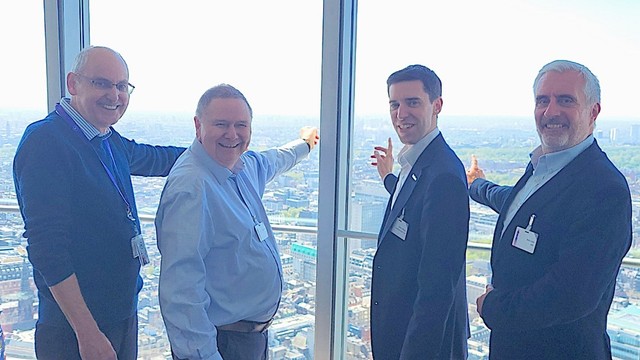
The advisory body was officially launched at an event organised by BIFA that took place at the BT Tower in London on April 29.

This event outlined the structure of the advisory body going forward, and also allowed attendees to voice their opinions, along with providing input on how the operational challenges that will come with the cargo village redevelopment can be addressed.

At the meeting, Parker emphasised the significance of this new advisory body and encouraged members that were present to inspire other members to engage and attend future meetings.

He concluded: “BIFA is already a member of a strategic governance board set up by the airport authority, which had its first meeting earlier this year.

“We want to be the conduit through which BIFA members can be at the heart of what is being developed for cargo at Heathrow.

“By participating in this advisory body, BIFA members and other stakeholders will be able to help shape best practice as the redevelopment of the cargo area begins; and develop methods via which the group can represent members’ interests on this subject in conjunction with the airport authority.”

Port Houston to Host 4th Annual Houston International Maritime Conference

HOUSTON : Houston is home to the nation’s biggest port and is host city for maritime’s hottest event, the Houston International Maritime Conference. With the nation’s largest petrochemical complex, 5th-ranked container terminals, and the busiest waterway in the U.S., all located in Houston, it’s the perfect location for this premier maritime conference. The 4th annual Houston International Maritime Conference (HIMC25) will be held on November 2-5, 2025 at the Hilton Americas in Downtown Houston. Registration for the conference opened on, April 29.

Building on the success of previous years’ sold-out events, HIMC25 will address the most urgent challenges and exciting opportunities facing the global maritime industry today. This year’s four-day event will bring together leading industry experts to explore critical topics, such as the evolving landscape of global supply chains, the influence of tariffs on international trade, and the regulatory changes that are impacting the maritime industry. HIMC25 will offer a platform for in-depth discussions on how the sector is responding to these shifts and adjusting its strategies for long-term success. The conference will also feature panels on tanker shipping, port infrastructure, the foreign trade zone, supply chain fluidity, and a keynote presentation by Panama Canal Administrator Dr. Ricaurte Vasquez Morales.

This year’s event is expanding its focus to include conversations around the liquid bulk and chemical tanker market and petrochemical sector. The energy industry underpins the global economy—powering energy systems, manufacturing, and everyday lives around the world —and Houston is unmatched in its impact. With this addition, HIMC25 includes the full scope of maritime operations along the Houston Ship Channel—including container, breakbulk, and tanker shipping—uniting industry leaders to chart the course for the future of this critical global gateway.

“At Port Houston, we don’t simply react to shifts in the market—we are actively planning and driving the conversation,” said Charlie Jenkins, CEO at Port Houston. “HIMC25 will allow leaders throughout the industry to share proven methods and new ideas to better position us all for the future. With the expanded focus on tanker shipping and all facets of the maritime supply chain, this year’s conference reflects the full scope of activity along the Houston Ship Channel. We are proud to host this important event once again and I look forward to the dialogue.”

Valuable insight and expertise is provided by the HIMC Advisory Committee. The committee’s contributions will help build a well-rounded program that addresses the future of global trade and maritime operations, ensuring a comprehensive and forward-thinking conference.

The Advisory Committee includes:

●     Chad Burke, Economic Alliance Houston Port Region

●     Candy Cervantes, EFL Global

●     Will Connell, IMC Logistics

●     Eloy Cortez, International Longshoremen’s Association

●     John Cypher, Greater Houston Partnership

●     Vincent DiCosimo, Targa Resources

●     Shay Downing, JS&J Solutions

●     Joey Frederick, Top Lift North America

●     Jon Gold, National Retail Federation

●     John Hark, Bertling Logistics and Adjunct Professor, Texas A&M University

●     Stephanie Hughes, Maersk

●     Shaun Leone, Sunburst Truck Lines, Inc.

●     Davey Miller, MRS-CMC

●     Dave Morgan, Cooper/Ports America

●     Giancarlo Morgera, MSC

●     John Moseley, Port Houston

●     JJ Plunkett, Houston Pilots Association

●     Rupak Rauniar, Professor of Supply Chain, University of Houston, Downtown

●     Lynn Stacy, OEC Group

“We appreciate the direction and essential insights provided by our HIMC Advisory Committee members, who bring extensive knowledge and experience from various sectors of the industry,” said Jenkins. “Their contributions play a crucial role in shaping the conference agenda, ensuring that HIMC25 tackles the most significant and timely challenges facing the maritime sector.”

HIMC25 will also offer expanded networking opportunities, providing attendees with ample chances to connect with key industry players, including producers, BCOs, NVOCCs, ocean carriers, freight forwarders, tanker companies, petrochemical industry leaders, technology providers, motor carriers, and more. These interactions will foster collaboration, creating new opportunities for growth across the sector.

Registration opened April 29 with Early Bird pricing of $475 per ticket available until August 31, 2025. Regular pricing of $575 takes effect on September 1, 2025. Brand-visibility and sponsorship opportunities are also available. Buy tickets or learn more at www.porthouston.com/himc.

About Port Houston

For more than 100 years, Port Houston has owned and operated the public wharves and terminals along the Houston Ship Channel, including the area’s largest breakbulk facility and two of the most efficient container terminals in the country. Port Houston is the advocate and a strategic leader for the Channel. The Houston Ship Channel complex and its more than 200 private and eight public terminals is the nation’s largest port for waterborne tonnage and an essential economic engine for the Houston region, the state of Texas and the U.S. The Port of Houston supports 1.54 million jobs in Texas and 3.37 million jobs nationwide, and economic activity totaling $439 billion in Texas and $906 billion in economic impact across the nation. For more information, visit the website at PortHouston.com

Marlink launches External Attack Surface Management solution to provide proactive cyber threat detection

OSLO : Marlink, a leader in managed services for business-critical IT solutions, has released External Attack Surface Management (EASM), to help protect customers from cyber threats before they strike.

Following the successful launch of Marlink Cyber, this innovative solution identifies weaknesses in external digital infrastructure and supports protection measures across all market verticals served by Marlink.

The growth in digitalisation across maritime, energy, yachting and enterprise sectors means companies are often unaware of how exposed their digital assets can be. Marlink Cyber’s EASM solution provides continuous, automated protection by identifying possible data leaks, misconfigurations, spoofed domains and other vulnerabilities that exist across an organization’s internet-facing systems.

Marlink customers will benefit from EASM in the following ways:

  • Real-Time Asset Discovery: Instantly map exposed digital assets across your environment;
  • Vulnerability Detection: Identify unpatched systems and configuration issues;
  • Threat Intelligence Integration: Leverage insights from global threat feeds curated by Marlink’s cyber experts;

Marlink’s EASM solution provides 24/7 monitoring, enabling users to remain protected around the clock with expert guidance available when needed. It also provides Dark Web and credential leak detection, which includes deep scans of the dark web for stolen data and obscure threat actor databases.

The solution requires no hardware or implementation time; customers can begin scanning and protecting their assets immediately after signup. EASM supports compliance with international standards such as ISO 27001 and the IACS Unified Requirement E26, helping customers maintain operational security and meet regulatory demands.

“The launch of EASM marks another milestone in Marlink’s mission to redefine cybersecurity standards through constant innovation and customer-centric services,” said Nicolas Furgé, President Marlink Cyber. “EASM is not just about finding vulnerabilities, it’s about gaining full visibility into your network, anticipating threats, and proactively securing your IT assets before hackers can exploit them.”

The Port of Klaipėda begins 2025 with strong momentum

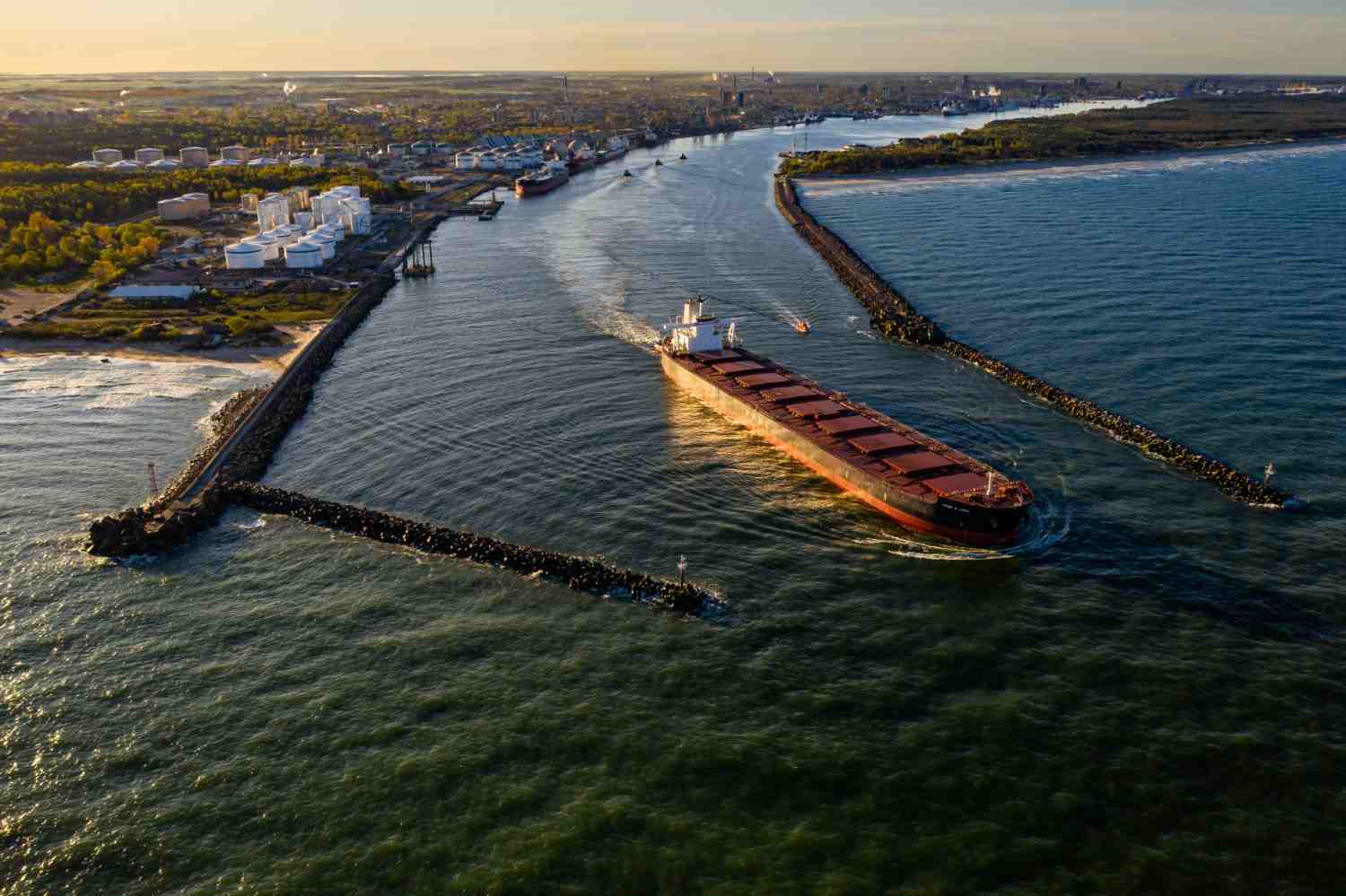
KLAIPEDA : The Port of Klaipėda has achieved a strong start to 2025, nearly 10 million tonnes of cargo handled in the first quarter — a 15% increase compared to the same period last year. This growth, amounting to almost 1.3 million additional tonnes, was driven largely by record-breaking results in container and LNG cargo handling. Klaipėda Port further strengthened its leading position among Baltic ports, expanding its market share to nearly 41%.

“The results of the first quarter confirm that Klaipėda Port is moving in the right direction. Growth is not a coincidence — it is the outcome of consistent work, strategic decisions, and the ability to adapt in a changing environment”, – says Algis Latakas, Director General of Klaipėda State Seaport Authority.

In total, 9,75 million tonnes of cargo were handled in the first quarter of this year.  The biggest contributor to the positive cargo handling performance at the Port of Klaipėda in recent months was the increased handling of container cargo, which grew by one-third (+33%), or 723 thousand tonnes. This is the best quarterly result ever in the container handling segment of the Port of Klaipėda. Another record was set in LNG cargo handling, with 100 thousand tonnes handled – an 18% increase compared to last year.

There was a significant increase in handling of construction materials and minerals (+62% or 228 thousand tonnes) and bulk fertilisers (+92% or 162 thousand tonnes). Growth was also recorded in the Ro/Ro (+7% or 109 thousand tonnes). There was also an increase in the cargo of oil products (+7% or 66 thousand tonnes).

In the first quarter of this year, compared to the same period last year, there was a 19% drop in handling of agricultural products (-275 thousand tonnes), a 10% drop in handling of timber and forestry products (-21 thousand tonnes), and an 81% drop in handling of liquid fertilisers (-92 thousand tonnes).

In the first quarter of 2025, most of the cargo reached the Port of Klaipėda by road. 62% of cargo arrived by wheeled vehicles and 28% by rail. The rest arrived by sea and pipeline (LNG cargo).

In the first quarter of this year, 12 vessels were repaired by vessel repair companies operating in the Port of Klaipėda.

The total amount of cargo handled by Baltic ports in the first quarter of this year grew by 4 percentage points, and reached 23,8 million tonnes. The Port of Klaipėda’s market share among Baltic ports has increased as well. Having grown by 4 percentage points, the market share now stands at nearly 41%. The market share of the Port of Riga has fallen by almost 2 percentage points and now stands at 18.3%. The Port of Tallinn’s market share has decreased by almost 0.6 percentage points and currently stands at 14%.

Wattlab launches SolarDeck: plug-and-play solar power for seagoing shipping

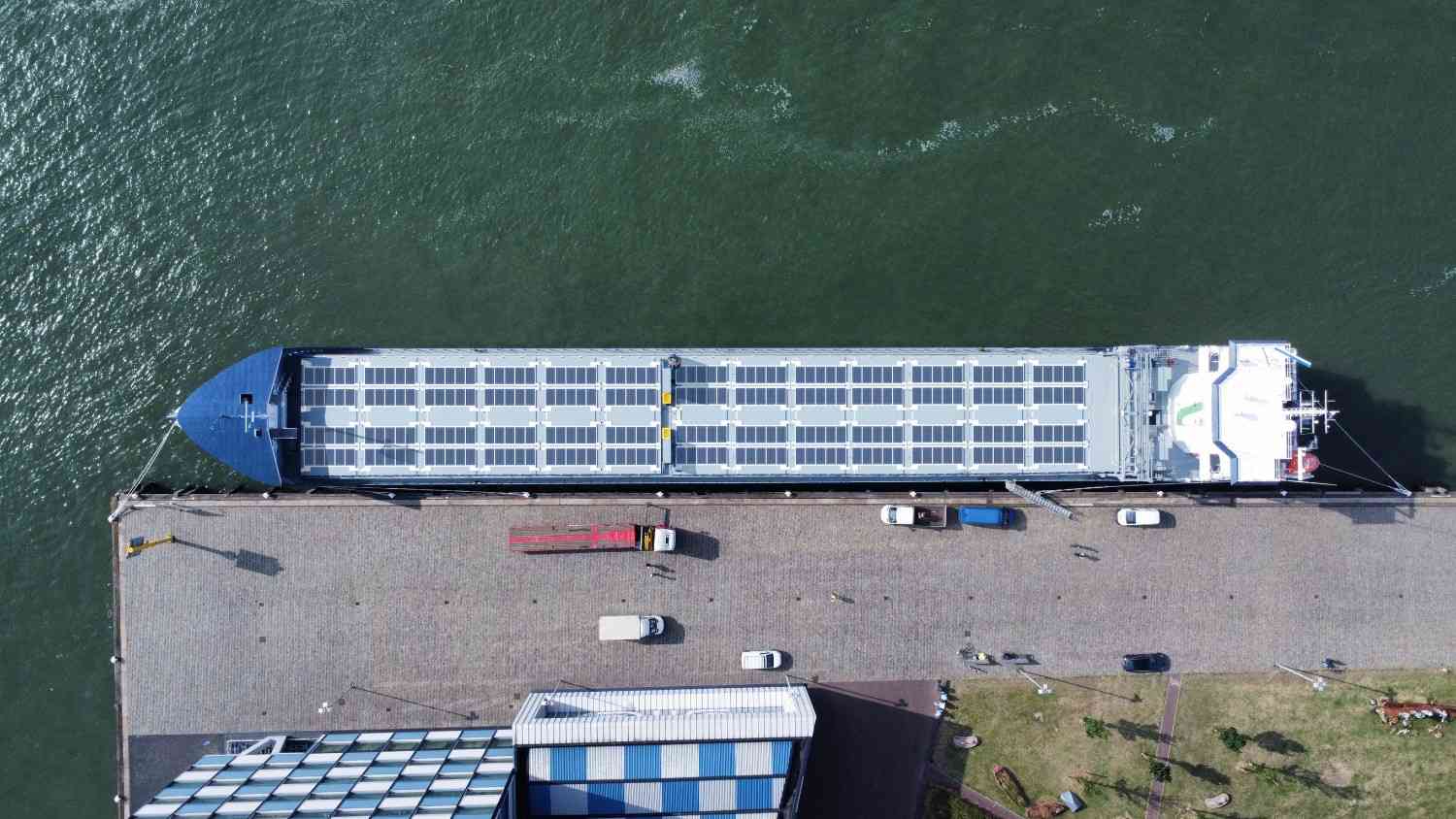
ROTTERDAM : Wattlab, the Netherlands-based maritime solar specialist, is proud to introduce its SolarDeck to the seagoing shipping industry. SolarDeck is a modular and scalable system of deck-mounted solar panels that yield significant reductions in fuel consumption and CO2 emissions. Moreover, based on installation on a seagoing general cargo vessel, SolarDeck combines substantial savings via Fuel EU Maritime and EU ETS regulations and an expected return on investment of 3-5 years.

Established in 2017, Wattlab has spent its first years of operations focusing on the inland shipping sector with its Solar Flatrack. This is a modular solar energy system consisting of movable and stackable integrated solar panels and inverters. To date, Wattlab’s SolarHatches have been installed on more than 25 inland shipping vessels.

With the aim to reduce fuel costs for seagoing shipowners and facilitate the continued decarbonisation of the maritime sector, Wattlab is now expanding into the seagoing shipping industry with SolarDeck.

“At all times during the design of SolarDeck, we prioritised the shipowner’s requirements. We know that ‘time is money’. That’s why the SolarDeck can be installed in a minimum amount of time using container twist lock fittings. It also does not impact normal loading and unloading procedures,” says Wattlab’s CEO Bo Salet. “However, we also know – for cargo shipowners especially – that ‘space is money’. In the event of a deck load such as offshore wind blades, the ship’s crew can store the SolarDeck inside the volume of a 20-foot container, thus freeing up the deck for cargo.”

Developing SolarDeck with Vertom and TNO

SolarDeck has proven credentials: in collaboration with the Dutch Organisation for Applied Scientific Research TNO and international shipping company Vertom, Wattlab has spent the previous 18 months developing and testing the new system on board Vertom’s 7,280dwt general purpose dry cargo vessel Anette, in a project co-financed by the European Union’s Just Transition Fund. The results from the testing phase are positive.

“The test results show that SolarDeck performs well in the tougher environment – in terms of salinity and rougher sea states – of coastal shipping. Because salt water can drain freely from the solar panels, there’s no chance of a salt crust forming. As such, SolarDeck generates the expected power output levels,” Salet explains. “Furthermore, the system is robust enough to withstand storms as well as the usual day-to-day activities on board a seagoing cargo ship – while staying safe at all times.”

Fuel and emission reductions

Based on the test results (Vertom’s Anette is 119 metres long and 14 metres wide), Wattlab predicts reductions of 20 MT fuel and 68 MT CO₂ emissions per year for this coaster-type. Such numbers are substantial enough to have a significant impact on a shipowner’s EEXI and CII scores in addition to potential savings via Fuel EU Maritime and EU ETS regulations. Note that for larger vessels, the efficiency gains are also (much) larger.

“We are excited to introduce SolarDeck to the seagoing shipping industry – to show shipowners what this system can mean to their operations,” Salet concludes. “SolarDeck isn’t just a green upgrade. With a return on investment of 3 to 5 years, it’s a smart investment.”

JTF Fund

Wattlab’s SolarDeck pilot project has been co-financed by the European Union’s Just Transition Fund (JTF). The JTF is a new instrument of the Cohesion Policy 2021-2027, as the first pillar of the Just Transition Mechanism in the context of the European Green Deal aiming at achieving EU climate-neutrality by 2050.

PM Modi dedicates Vizhinjam International Seaport in Kerala worth ₹8,800 crore to the nation

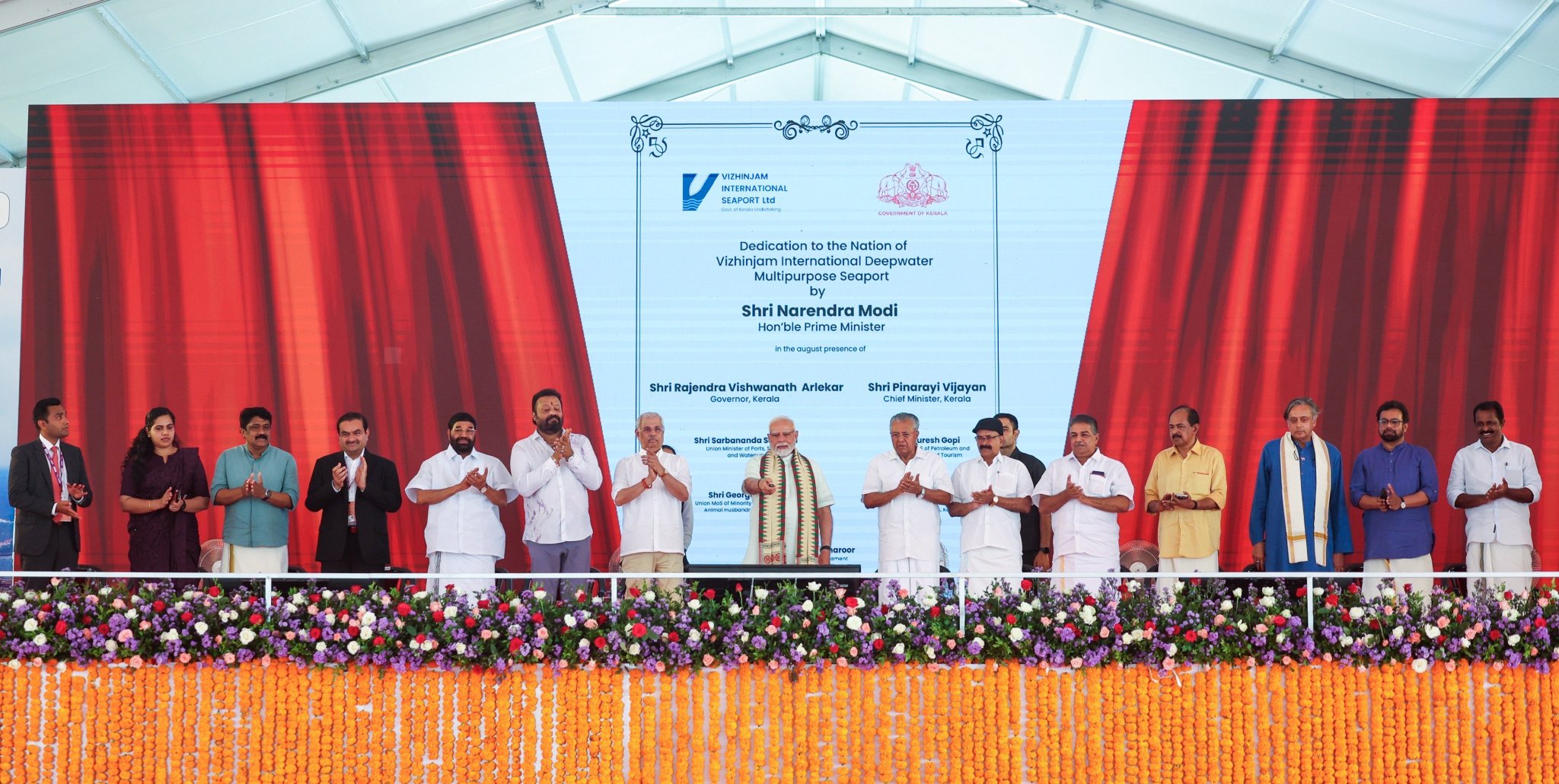
THIRUVANANTHAPURAM : Prime Minister Shri Narendra Modi dedicated Vizhinjam International Deepwater Multipurpose Seaport worth Rs 8,800 crore to the nation on Friday in Thiruvananthapuram, Kerala. Addressing the gathering on the auspicious occasion of the birth anniversary of Bhagwan Adi Shankaracharya, the Prime Minister highlighted that three years ago, in September, he had the privilege of visiting the revered birthplace of Adi Shankaracharya. He expressed his joy that a grand statue of Adi Shankaracharya has been installed in the Vishwanath Dham complex in his parliamentary constituency, Kashi. He emphasized that this installation stands as a tribute to the immense spiritual wisdom and teachings of Adi Shankaracharya. He further highlighted that he also had the honor of unveiling the divine statue of Adi Shankaracharya at the sacred Kedarnath Dham in Uttarakhand. The Prime Minister noted that today marks another special occasion as the doors of the Kedarnath temple have been opened to devotees. Prime Minister Modi underscored that Adi Shankaracharya, originating from Kerala, established monasteries in different corners of the country, awakening the consciousness of the nation. He emphasized that his efforts laid the foundation for a unified and spiritually enlightened Bharat.

Shri Modi highlighted the vast ocean, rich with immense possibilities, standing on one side, while on the other, nature’s breathtaking beauty adds to the grandeur. Amidst all this, he emphasized that the Vizhinjam Deep-Water Sea Port has now emerged as a symbol of new age development. He extended his congratulations to the people of Kerala and the entire nation on this remarkable achievement.

Underscoring that the Vizhinjam Deep-Water Sea Port has been developed at a cost of ₹8,800 crore, the Prime Minister remarked that the capacity of this transshipment hub will triple in the coming years, enabling the smooth arrival of some of the world’s largest cargo ships. He pointed out that 75% of India’s transshipment operations were previously conducted at foreign ports, leading to significant revenue loss for the country. Emphasizing that this situation is now set to change, he asserted that India’s money will now serve India and the funds that once flowed outside the country will now generate new economic opportunities for Kerala and Vizhinjam’s people.

Shri Modi remarked that before colonial rule, India witnessed centuries of prosperity, emphasising that at one point, India held a major share in the global GDP. He highlighted that what set India apart from other nations during that era was its maritime capacity and the economic activity of its port cities. Noting that Kerala played a significant role in this maritime strength and economic growth, he highlighted Kerala’s historical role in maritime trade, emphasizing that through the Arabian Sea, India maintained trade links with multiple nations. He noted that ships from Kerala carried goods to various countries, making it a vital hub for global commerce. “Today, the Government of India is committed to further strengthening this channel of economic power”, he added and asserted, “India’s coastal states and port cities will become key centers for the growth of a developed India”.

“The port economy reaches its full potential when infrastructure and ease of doing business are promoted together”, emphasised the Prime Minister, stating that over the past 10 years, this has been the blueprint of the Government of India’s port and waterways policy. He highlighted that the government has accelerated efforts for industrial activities and holistic development of states. He further remarked that the Government of India, in collaboration with state governments, has upgraded port infrastructure under the Sagarmala Project and strengthened port connectivity. He noted that under PM Gati Shakti, waterways, railways, highways, and airways are being rapidly integrated for seamless connectivity. He added that these reforms in ease of doing business have led to greater investment in ports and infrastructure sectors. The Prime Minister stated that the Government of India has also reformed regulations concerning Indian seafarers, yielding significant results. He pointed out that in 2014, the number of Indian seafarers was below 1.25 lakh. Today, this figure has surged beyond 3.25 lakh. He emphasized that India now ranks among the top three countries globally in terms of seafarer numbers.

Highlighting that a decade ago, ships faced long waiting times at ports, significantly delaying unloading operations, Shri Modi noted that this slowdown affected businesses, industries, and the overall economy. He stressed that the situation has now transformed and over the past 10 years, India’s major ports have reduced ship turn-around time by 30%, improving operational efficiency. He remarked that due to enhanced port efficiency, India is now handling greater cargo volumes in shorter durations, strengthening the nation’s logistics and trade capabilities.

“India’s maritime success is a result of a decade-long vision and effort”, exclaimed the Prime Minister, underlining that over the past 10 years, India has doubled the capacity of its ports and expanded its National Waterways eightfold. He noted that today, two Indian ports are among the global top 30 ports, while India’s ranking on the Logistics Performance Index has also improved. Additionally, he pointed out that India is now among the top 20 countries in global shipbuilding. The Prime Minister further remarked that after strengthening the country’s basic infrastructure, the focus has now shifted towards India’s strategic position in global trade. He announced the launch of Maritime Amrit Kaal Vision, which outlines India’s maritime strategy to achieve the goal of a developed India. He recalled the G-20 Summit, where India collaborated with several major countries to establish the India-Middle East-Europe Economic Corridor, highlighting Kerala’s critical role in this corridor, emphasizing that the state will greatly benefit from this initiative.

Underscoring the critical role of the private sector in elevating India’s maritime industry to new heights, Shri Modi said that under Public-Private Partnerships, thousands of crores have been invested over the past 10 years. He emphasized that this collaboration has not only upgraded India’s ports to global standards but has also made them future-ready. He noted that private sector participation has driven innovation and enhanced efficiency.

Prime Minister highlighted that India is advancing towards the establishment of a shipbuilding and repair cluster in Kochi. He emphasized that once completed, this cluster will create numerous new employment opportunities, providing Kerala’s local talent and youth with a platform for growth. The Prime Minister further stated that India is now setting ambitious targets to strengthen its shipbuilding capabilities. He noted that this year’s Union Budget introduced a new policy to promote the construction of large ships in India, which will significantly boost the manufacturing sector. He emphasized that this initiative will have direct benefits for MSMEs, generating a large number of employment and entrepreneurship opportunities across the country.

“True development is achieved when infrastructure is built, trade expands, and basic needs of the common people are met”, stressed the Prime Minister, remarking that the people of Kerala have witnessed rapid progress over the past 10 years, not just in port infrastructure, but also in highways, railways, and airports. He highlighted that projects like the Kollam Bypass and Alappuzha Bypass, which had been stalled for years, were advanced by the Government of India. He also noted that Kerala has been provided with modern Vande Bharat trains, further strengthening its transport network and connectivity.

Shri Modi emphasized that the Government of India firmly believes in the principle that Kerala’s development contributes to India’s overall growth. He remarked that the government operates with the spirit of cooperative federalism, ensuring Kerala’s progress across key social parameters over the past decade. He highlighted several initiatives that have benefited the people of Kerala, including Jal Jeevan Mission, Ujjwala Yojana, Ayushman Bharat, and Pradhan Mantri Suryagarh Free Electricity Scheme.

Reiterating that the welfare of fishermen remains a top priority, the Prime Minister noted that under Blue Revolution and Pradhan Mantri Matsya Sampada Yojana, projects worth hundreds of crores have been sanctioned for Kerala. He further highlighted the modernization of fishing harbors, including Ponnani and Puthiyappa. Additionally, he remarked that thousands of fishermen in Kerala have been provided Kisan Credit Cards, enabling them to receive financial assistance worth hundreds of crores.

Underlining that Kerala has always been a land of harmony and tolerance, Shri Modi highlighted that centuries ago, Saint Thomas Church, one of the oldest churches in the world, was established here. He acknowledged the recent moment of grief that has touched people across the world when Pope Francis passed away a few days ago, leaving behind a profound legacy. He added that President Droupadi Murmu represented India at his funeral, paying respects on behalf of the nation. Shri Modi once again expressed his condolences to all those mourning this loss from the sacred land of Kerala.

Paying tribute to Pope Francis, acknowledging his spirit of service and his efforts to ensure inclusivity within Christian traditions, the Prime Minister remarked that the world will always remember his contributions. He shared his personal experiences, expressing his gratitude for having had multiple opportunities to meet Pope Francis. He noted that he received special warmth from him and cherished their discussions on humanity, service, and peace, which will continue to inspire him.

Extending his best wishes to all present at the event, Shri Modi envisioned Kerala as a major center for global maritime trade, leading to the creation of thousands of new jobs. He reaffirmed the commitment of the Government of India, working alongside the state government, to advance this goal. Shri Modi concluded by expressing confidence in the capabilities of Kerala’s people and stated, “India’s maritime sector will reach new heights”.

The Governor of Kerala, Shri Rajendra Vishwanath Arlekar, Chief Minister of Kerala, Shri Pinarayi Vijayan, Union Ministers, Shri Suresh Prabhu, Shri George Kurien were present among other dignitaries at the event.

Background

Vizhinjam International Deepwater Multipurpose Seaport worth Rs 8,800 crore is country’s first dedicated container transshipment port that represents the transformative advancements being made in India’s maritime sector as part of the unified vision of Viksit Bharat.

Vizhinjam Port, having strategic importance, has been identified as a key priority project which will contribute in strengthening India’s position in global trade, enhance logistics efficiency, and reduce reliance on foreign ports for cargo transshipment. Its natural deep draft of nearly 20 meters and location near one of the world’s busiest sea trade routes further strengthens India’s position in global trade.

Together, we sail towards a stronger, bolder India: Gautam Adani

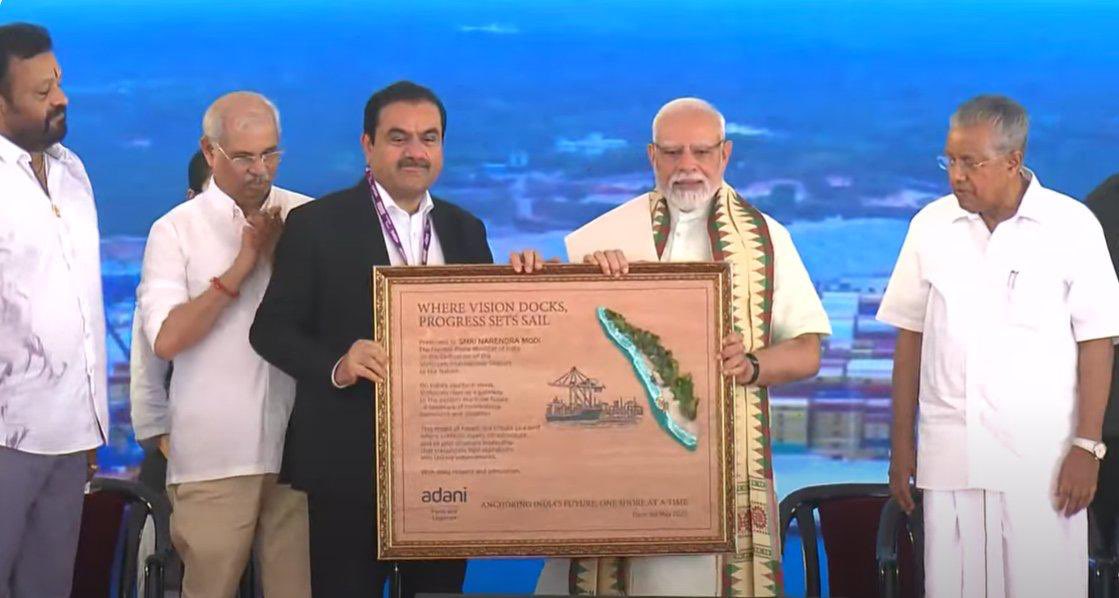
THIRUVANANTHAPURAM : Gautam Adani, Chairman of the Adani Group, on Friday said he is grateful to Prime Minister Shri Narendra Modi and Kerala Chief Minister Shri Pinarayi Vijayan for their support towards building India’s first deep-sea automated port which is a future global transshipment hub, adding that together, “we sail towards a stronger, bolder India”.

This is a triumph of vision, resilience, and partnership, said Gautam Adani as PM Modi dedicated to the nation the Vizhinjam International Deepwater Multipurpose Seaport worth Rs 8,900 crore.

“Today, at Vizhinjam, history, destiny, and possibility came together as a 30-year-old dream of Kerala became India’s gateway to the world,” said the billionaire industrialist in a post on X.

“We are proud to have built India’s first deep-sea automated port. A future global transshipment hub. This is a triumph of vision, resilience, and partnership,” Gautam Adani added.

The Adani Group Chairman further stated that “together, we sail towards a stronger, bolder India.”

Vizhinjam Port, having strategic importance, has been identified as a key priority project that will contribute to strengthening India’s position in global trade, enhance logistics efficiency, and reduce reliance on foreign ports for cargo transhipment.