Home Blog Page 92

Shantanu Thakur reviews expansion, cargo growth and green maritime development of Mormugao Port Authority

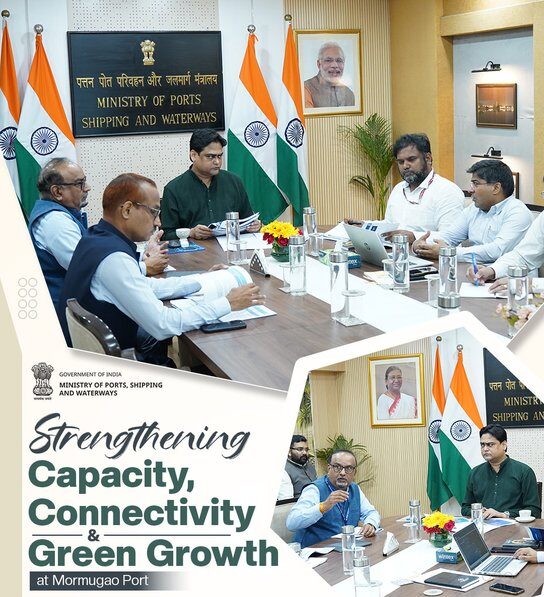
GOA: Union Minister of State for Ports, Shipping & Waterways, Shri Shantanu Thakur, chaired a comprehensive review of the Mormugao Port Authority (MPA), taking stock of the port’s operational and financial performance, infrastructure development, cargo growth, port-led industrialisation and future expansion plans.

The review focused on strengthening Mormugao Port’s capacity and operational efficiency while ensuring that the port remains aligned with India’s broader objectives of building modern, competitive and environmentally sustainable maritime infrastructure.

Key areas discussed included improving cargo-handling capabilities, strengthening port infrastructure, enhancing logistics connectivity and identifying opportunities for further cargo growth. The review also examined the port’s financial performance and measures to support greater efficiency and long-term sustainability.

The Minister emphasised the importance of accelerating infrastructure development and creating an enabling ecosystem for port-led industrialisation, with Mormugao positioned to play a greater role in supporting regional trade, industries and supply chains.

The meeting also highlighted the growing importance of green growth and sustainable port operations, with a focus on integrating cleaner technologies, improving resource efficiency and advancing environmentally responsible maritime infrastructure.

Future expansion plans were also reviewed, with emphasis on developing Mormugao Port as a more efficient, resilient and future-ready maritime gateway. Strengthening cargo-handling capacity and improving connectivity are expected to support the port’s ability to cater to emerging trade and industrial requirements.

The comprehensive review underlined the Ministry’s continued focus on transforming India’s ports through capacity enhancement, operational efficiency, infrastructure modernisation, financial sustainability and green maritime development.

With strategic investments and continued focus on sustainable growth, Mormugao Port is poised to further contribute to Goa’s maritime economy and India’s evolving logistics and trade network.

DP World Cochin welcomes New Shipping Service connecting India to Key Middle East Hubs

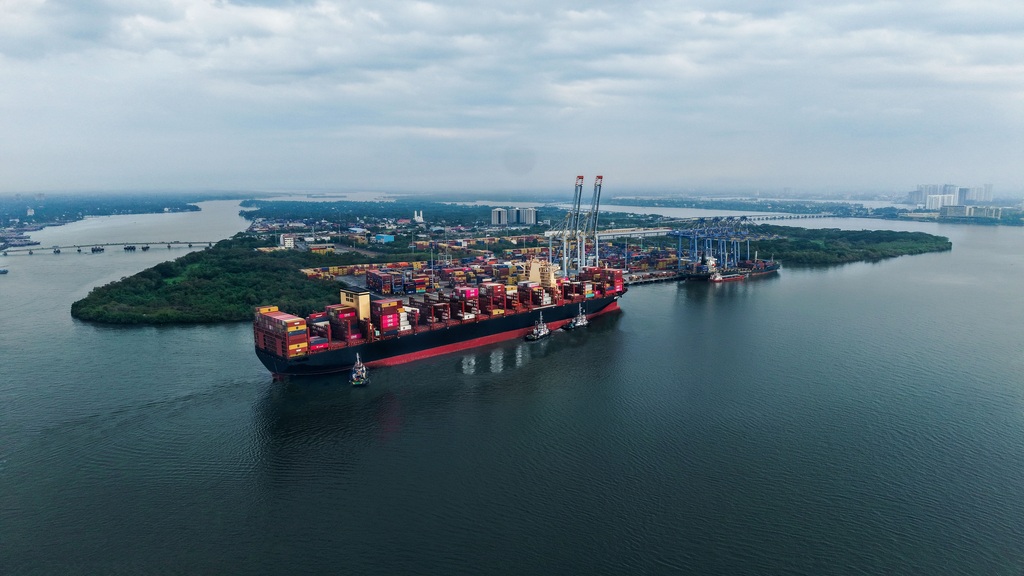
KOCHI: DP World Cochin’s International Container Transhipment Terminal (ICTT) has begun receiving calls from the MGR IFR Service, a new shipping connection linking the port directly with key destinations in the UAE, Oman and Yemen. The new service provides customers with faster access to key Middle East markets, expands connectivity options and strengthens supply chain resilience for businesses across southern India.

Cochin 2 DP World Cochin welcomes New Shipping Service connecting India to Key Middle East Hubs
DCIM\100MEDIA\DJI_0078.JPG

The new MGR IFR service connects two major Indian gateways; Cochin in Kerala and Nhava Sheva in Maharashtra with Fujairah (UAE), Sohar (Oman) and Aden (Yemen) on a fortnightly rotation.

The service is operated by two vessels, M.V. MARSA VIRGO and M.V. MARSA ZENITH, each offering a capacity of more than 500 TEUs per voyage. It began with the inaugural call of M.V. MARSA VIRGO at DP World Cochin, where the terminal handled over 1,000 TEUs.

The rotation of Cochin, Nhava Sheva, Fujairah, Sohar, Aden, Cochin, enables faster cargo movement and strengthens DP World Cochin’s expanding portfolio of global shipping services. The direct connection gives exporters and importers in southern India more efficient access to Middle East markets and onward global trade routes.

DP World Cochin continues to enhance connectivity for customers while recording strong cargo growth. In August, the terminal achieved its highest‑ever monthly throughput of 97,952 TEUs, representing a 51% year‑on‑year increase. This follows monthly throughput of more than 74,000 TEUs in the preceding months.

Ravinder Johal, COO Ports & Terminals, Commercial and Operation – SCO, CA, LEVANT & EGYPT region, DP World said:

“The new port call under the MGR service expands our network and gives customers greater choice, reliable connections and improved reach to key markets in the Middle East. By working closely with our shipping line partners, we are not only strengthening supply chain resilience but also providing solutions that help EXIM businesses navigate disruption, optimise cargo flows deliver more efficiently. Our focus remains on enabling customers to make confident operational decisions through dependable connectivity and integrated logistics support”.

Cochin’s strategic location offers critical coastal connectivity to ports across India, from Gujarat to Kolkata, and serves as a key transit point for cargo moving between India’s east and west coasts. DP World has also developed Kerala’s first Free Trade Warehousing Zone (FTWZ) at Cochin, co-located with the terminal, providing customers with integrated warehousing and trade capabilities to support EXIM trade and regional economic growth.

Hindustan Shipyard achieves precision docking of three vessels simultaneously at Ship Repair Complex

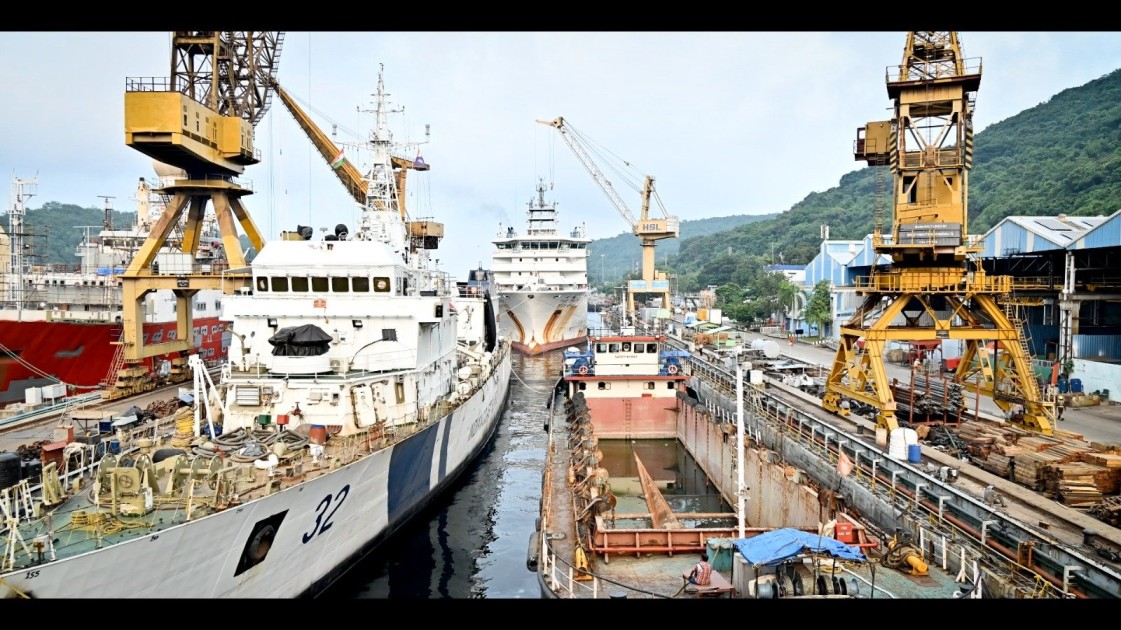
VISAKHAPATNAM : Hindustan Shipyard Limited (HSL) has achieved a notable feat in precision ship repair operations with the successful concurrent docking of three vessels at its Ship Repair Complex (SRC) on 19 September 2026.

The three vessels — CG Platform, LGT Navya and Samudra Ratnakar — were docked simultaneously, demonstrating the shipyard’s advanced docking capabilities, operational discipline and expertise in handling complex ship repair requirements.

The operation involved extremely tight clearances, with the vessels positioned with just around four metres of side clearance between them. Adding to the complexity, Samudra Ratnakar was positioned only 40 centimetres above the dock floor, requiring highly controlled movements and precise positioning throughout the docking process.

The operation was led by Dockmaster Shri P. Syama Sundar, AGM, along with a specialised team of capstan operators, riggers and dock crew. The team carefully laid and aligned the dock blocks to achieve the required timing, positioning and vessel stability during the docking operation.

Through coordinated and controlled movement, all three vessels were safely positioned at their designated locations in the dock. The operation was followed by a detailed underwater inspection, during which vessel seating and clearances were thoroughly verified before repair activities commenced.

The successful operation highlights the importance of experience, technical precision, disciplined execution and close coordination in complex ship repair operations. Every stage, from dock-block alignment and vessel movement to final positioning and underwater verification, required careful attention to safety and accuracy.

HSL said the achievement reflects the capability of its Ship Repair Complex and its workforce to undertake demanding docking operations with precision and confidence.

The concurrent docking of three vessels marks another demonstration of HSL’s focus on strengthening ship repair readiness, operational efficiency and faster turnaround times, while maintaining stringent standards of safety and technical execution.

NISAA holds 41st AGM in New Delhi, reaffirms commitment to North India’s Shipping and Logistics Growth

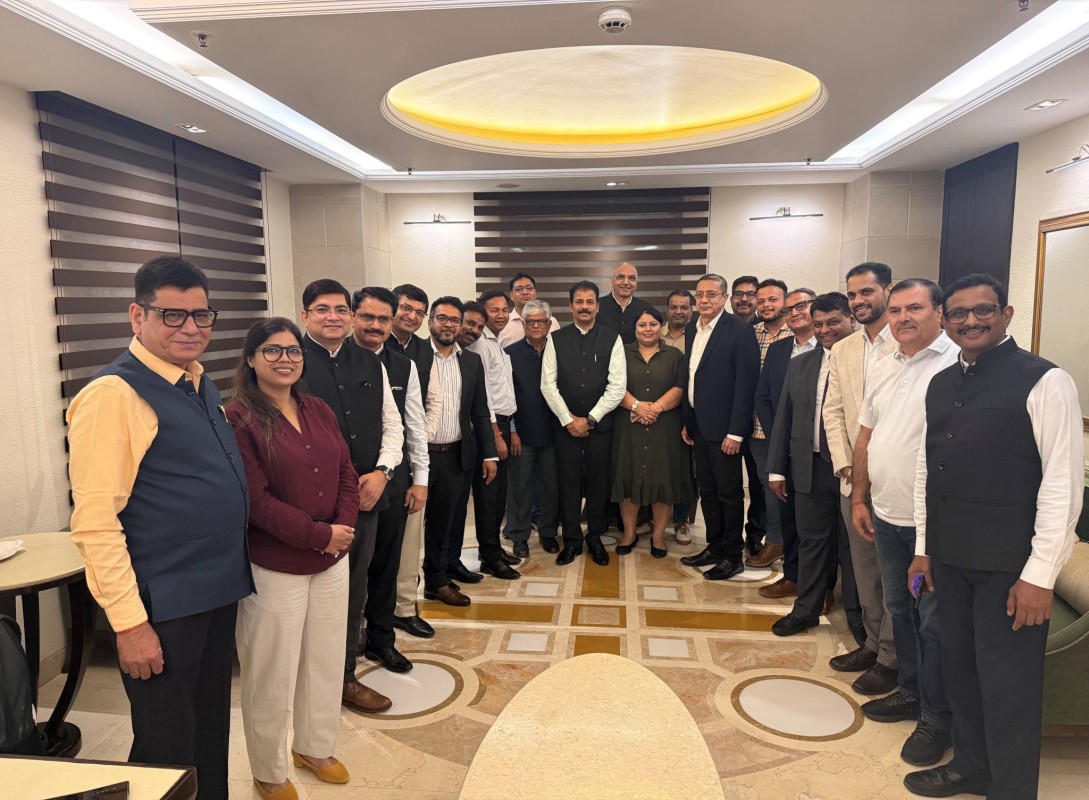
NEW DELHI: NISAA Holds 41st Annual General Meeting in New Delhi, Reaffirms Commitment to North India’s Shipping and Logistics Growth

The AGM also reviewed and confirmed the minutes of previous meetings and held detailed deliberations on a range of issues relevant to the shipping and logistics fraternity. Discussions covered trade facilitation, infrastructure bottlenecks, operational challenges and member welfare, with members sharing their views on measures that could further improve the ease and efficiency of logistics operations.

Members appreciated the transparent and structured conduct of the AGM and the Association’s continued efforts to maintain an effective platform for collective discussion and industry engagement.

Delivering the Vote of Thanks, Mr. Ravi Kant Chauhan, Vice President, NISAA, expressed gratitude to the members for their active participation, continued support and confidence in the Association. He also acknowledged the contribution of the Executive Committee and reiterated NISAA’s commitment to working collectively with members and stakeholders towards the development of the shipping and logistics industry in North India.

Felicitation of Manish Sharma

Following the formal AGM proceedings, NISAA members felicitated Mr. Manish Sharma, formerly associated with Hapag-Lloyd India, on his superannuation in March 2026. The felicitation recognised his contribution and association with the shipping industry.

The evening concluded with cocktails and dinner, providing members and industry colleagues an opportunity to network, exchange views and further strengthen professional relationships within the maritime and logistics community.

The successful conclusion of the 41st AGM reaffirmed NISAA’s role as a collective platform representing the interests and concerns of the shipping and logistics fraternity in North India.

Going forward, the Association remains focused on facilitating constructive industry dialogue, addressing operational and infrastructure-related challenges, supporting trade facilitation and working closely with stakeholders to contribute to the sustainable growth and development of India’s maritime and logistics ecosystem.

CONCOR operationalises New Jaipur–Fatuha Domestic Rail Stream, Targets ₹46.24 Lakh Revenue per Rake

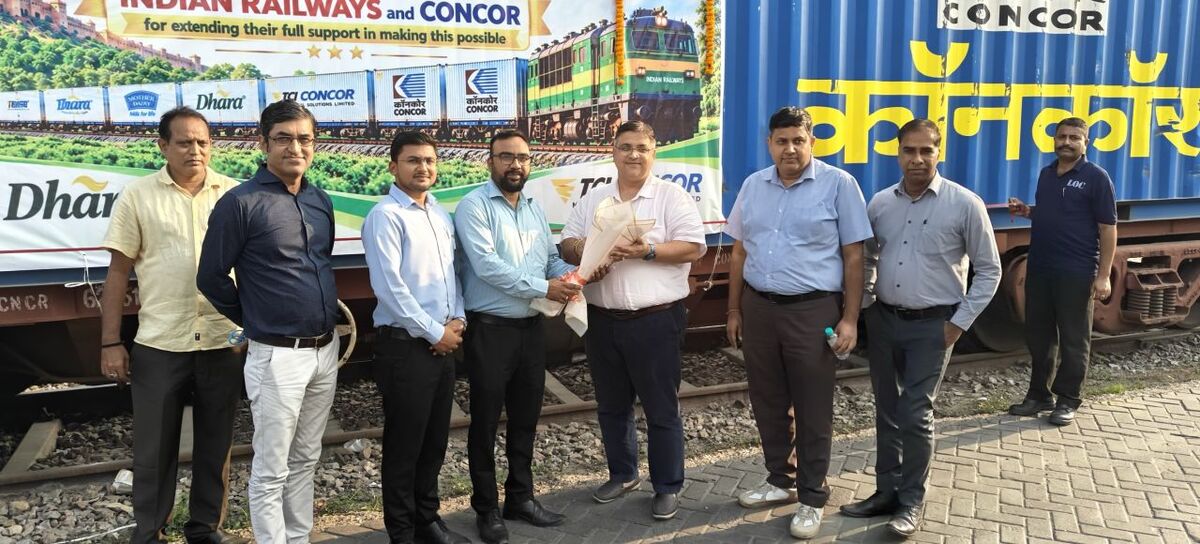
JAIPUR: In a significant development aimed at strengthening sustainable domestic logistics connectivity between Rajasthan and Eastern India, the Container Corporation of India Limited (CONCOR) has successfully operationalized a new multimodal domestic rail stream from Kanakpura, Jaipur, to Fatuha near Patna, Bihar.

The maiden rake commenced its journey on September 21, 2026, carrying Dhara Brand Edible Oil of Mother Dairy, marking the first-ever CONCOR movement from Jaipur to Fatuha.

The new rail service represents an important addition to CONCOR’s domestic freight network and is expected to provide an efficient, reliable and environmentally friendly transportation solution for cargo moving between Western/North-Western India and the Eastern region.

₹46.24 Lakh Revenue Potential per Rake

According to the details shared by the CONCOR Kanakpura/Jaipur team, the new rail stream has an estimated revenue potential of approximately ₹46.24 lakh per rake. The movement is expected to generate a business potential of around two rakes per month, creating a regular rail-based logistics channel for the movement of commodities between the two regions.

The movement of Dhara Brand Edible Oil, a prominent product of Mother Dairy, on the maiden rake also underlines the growing role of rail transportation in supporting the movement of essential consumer goods across long distances.

Strengthening Jaipur–Eastern India Logistics Connectivity

The operationalisation of the Jaipur–Fatuha stream is significant from both a commercial and logistics perspective. Jaipur’s Kanakpura terminal serves as an important logistics point in Rajasthan, while Fatuha, located in the Patna region, provides access to the growing consumption and distribution markets of Bihar and Eastern India.

The new service can potentially provide shippers with an alternative to conventional road-based long-distance transportation, while supporting greater efficiency and improved supply-chain planning.

Rail-based freight movement also offers environmental benefits by helping reduce the dependence on road transportation for long-haul cargo. The new stream therefore aligns with the broader objective of promoting sustainable and multimodal logistics solutions in India’s domestic supply chain.

A New Milestone for CONCOR Kanakpura/Jaipur

The Jaipur–Fatuha movement is particularly noteworthy for the CONCOR Kanakpura/Jaipur team, as it represents the first CONCOR rail movement from Jaipur to Fatuha.

The successful launch reflects efforts to identify new domestic cargo opportunities and develop dedicated rail solutions connecting production and consumption centres across different regions of the country.

With a potential frequency of two rakes per month, the new stream could also contribute to expanding CONCOR’s domestic business portfolio and strengthening its presence in the Rajasthan–Eastern India logistics corridor.

The successful commencement of the service has been welcomed as a collaborative achievement involving CONCOR, Mother Dairy and other stakeholders whose efforts contributed to making the new logistics stream operational.

The Jaipur–Fatuha rail connection thus marks another step towards building a more efficient, sustainable and integrated domestic freight network, while opening new opportunities for rail-based cargo movement between Rajasthan and Eastern India.

Jodhpur’s export logistics gains speed with ‘Furniture Express’

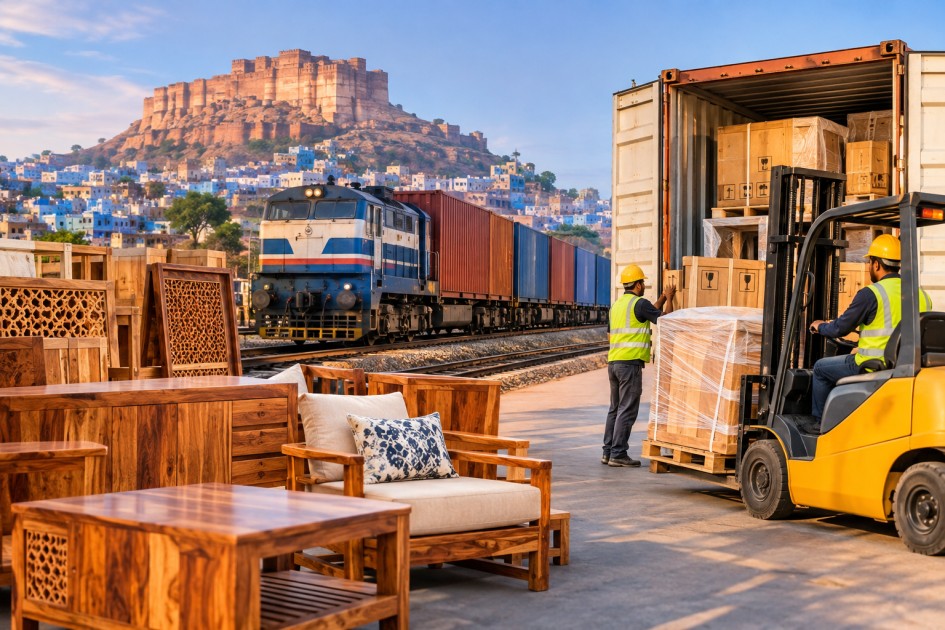
JODHPUR: Exporters in Rajasthan are reaping significant business benefits from “Furniture Express” – a dedicated rail service for exporting local handicraft and furniture. According to an official from the industries department, the freight service connecting Jodhpur to Mundra Port has transported over 2,100 containers so far via 36 trains. In response to growing demand, two to three train rakes are currently being operated weekly, he added.

This initiative plays a pivotal role in providing more accessible, reliable, and competitive export logistics facilities, particularly for Jodhpur’s furniture, handicraft, guar gum, and other export industries.

The official said that a key commercial advantage of the “Furniture Express” is the availability of empty containers in Jodhpur. With containers from major shipping lines like MSC, OOCL, and others available at the RAJSICO ICD in Jodhpur, local exporters no longer need to rely on other cities or distant locations to source empty containers.

“This helps Jodhpur-based exporters minimise delays caused by container shortages and reduce additional logistical costs. The timely availability of empty containers allows exporters to plan the packing and export of their goods more effectively,” he said.

The official said that the availability of empty containers at Jodhpur and the subsequent movement of loaded containers to Mundra Port via regular rail services provide exporters with integrated logistics solutions. This system ensures the timely availability of empty containers while reducing reliance on road transport and associated transportation costs.

The official added that the “Furniture Express” rail service was launched on February 28 this year by state government-owned enterprise, Rajasthan Small Industries Corporation Limited (RAJSICO), in collaboration with Doon Logistics Private Limited. The rail service, he added, has achieved significant milestones in a short span of time.

“The objective of this service is to provide reliable, competitive, and regular container transport and logistics facilities to furniture manufacturers and other exporters in Rajasthan,” he said.

He stated that as a result of RAJSICO appointing a cargo management and transport service provider and business promoter in October 2025, the ICD (Inland Container Depot) at Jodhpur was reactivated.

This service is being operated in collaboration with major shipping partners, including Hapag-Lloyd, the J.M. Baxi Group, MSC, and OOCL. This enables Jodhpur-based exporters to access a wider range of shipping options and provides them with greater flexibility regarding container availability.

Source: BS

India’s electronics and engineering exports to China rise 40% amid persistent trade gap

NEW DELHI: India is selling more manufactured goods to China, with electronics emerging as a bright spot in a trade relationship that remains overwhelmingly tilted in Beijing’s favor.

Indian exports to China rose almost 40% in the five months through August, an analysis of government data shows, with electronics and engineering goods among the biggest drivers. Industry executives in India say demand created by the global AI and data-center build-out is contributing to some of the growth.

The figures show exports to China tripled to $3.18 billion in the fiscal year ended March, driven by products including printed circuit board assemblies, smartphones, display modules and telecom equipment. Electronics shipments have continued to rise this fiscal year, climbing more than 15% in the April-August period from a year earlier.

The increase, however, comes off a relatively low base and has done little to narrow India’s vast trade imbalance with its neighbor.

“The surge in exports to China is partly driven by pressure on suppliers to meet the demand for high-end equipment required for AI-related products and as data centers proliferate,” said Rajoo Goel, secretary general of the Electronic Industries Association of India. “This has encouraged exports of electronics from India to China.”

For New Delhi, the recent gains offer some support for a years-long effort to expand manufacturing and secure a bigger role in global supply chains. It also comes as India and China seek to repair relations from a multi-decade low, while Washington’s tariff policies give the two governments another incentive to deepen economic engagement.

“It shows that Indian manufacturing is beginning to win credibility in one of the world’s most competitive global value chains,” said Pankaj Mohindroo, Chairman of Indian Cellular and Electronics Association.

The increase in exports, while still small, suggests Beijing may be becoming more receptive to Indian goods in the current geopolitical environment, said Arun Kumar Garodia, Managing Director at Corona Steel Industry Pvt.

There is an important wrinkle in the numbers, however.

Chinese customs data don’t record a comparable increase in printed circuit boards arriving from India, with much of the rise instead showing up under smartphones and other telecom products. Differences is how the two countries classify goods probably make it difficult to determine precisely what is behind the increase, according to industry executives.

Besides, China remains a relatively small destination for Indian goods, accounting for 4.4% of exports in the year-ended March, compared with just over 3% a year earlier. The US, India’s biggest market, takes almost a fifth.

The recent gains in exports also barely dent the imbalance between Asia’s two biggest economies. India imported $131.6 billion of Chinese goods in the year ended March, accounting for almost 17% of its imports and vastly exceeding the value of goods it sold to China.

Yet, exporters are confident Indian shipment to China will continue to grow. The latest figures showed the gains extended beyond electronics. Engineering exports to China increased about 21% in the April-August period from a year earlier, including machinery and parts, auto components and hand tools, according to exporters.

“The task now is to sustain these exports and expand across components, sub-assemblies and finished products, while deepening Indian design and component capabilities,” Mohindroo added.

IMF chief says world economy faces multiple risks despite resilience

NEW YORK: The world economy faces risks from stubborn inflation, higher debt service cost and artificial intelligence (AI) investment though it has proven to be more resilient than many feared, according to Kristalina Georgieva, Managing Director of the International Monetary Fund (IMF).

Speaking in a dialogue at a special edition of the Qatar Economic Forum in New York City on Sunday, Georgieva said, “Inflation is stubborn. We are not anticipating a quick resolution. And that means that many central banks have to tighten.”

Georgieva noted that the fight to secure price stability also increased the cost and difficulty of debt service. There is a lot of understanding of the necessity of fiscal consolidation, but not enough action, she added.

Moreover, Georgieva highlighted the potential risks from leverage and circular financing in AI investment, saying this is “something that we have to be mindful of.”

“If AI disappoints, because we have these high expectations, if they don’t materialize, disappointment may lead to potentially a shock to the system,” warned Georgieva.

Risk in AI financing is “primarily concentrated in the United States” while many other players in Asia and Europe are included in the supply chain of AI, added Georgieva.

The IMF’s new projection on the world economy to be released in October will reflect the fact that the risks will remain high, according to Georgieva.

“Having growth that would be hovering around 3 percent is a massive achievement, given all the shocks we have been experiencing,” said Georgieva.

Georgieva said she saw optimism from remarkable, fast action when it’s necessary to counter the energy supply shock.

“While there is a lot of talk about a fragmented world. And indeed, it is less unified. It is still a world in which we are interdependent and we cooperate,” said Georgieva.

“We have to be careful and cautious. The risks are high and uncertainty is the new normal,” she added.

“All Iranian airlines will be shut down around the world”: US threatens secondary sanctions against foreign airports, fuel suppliers

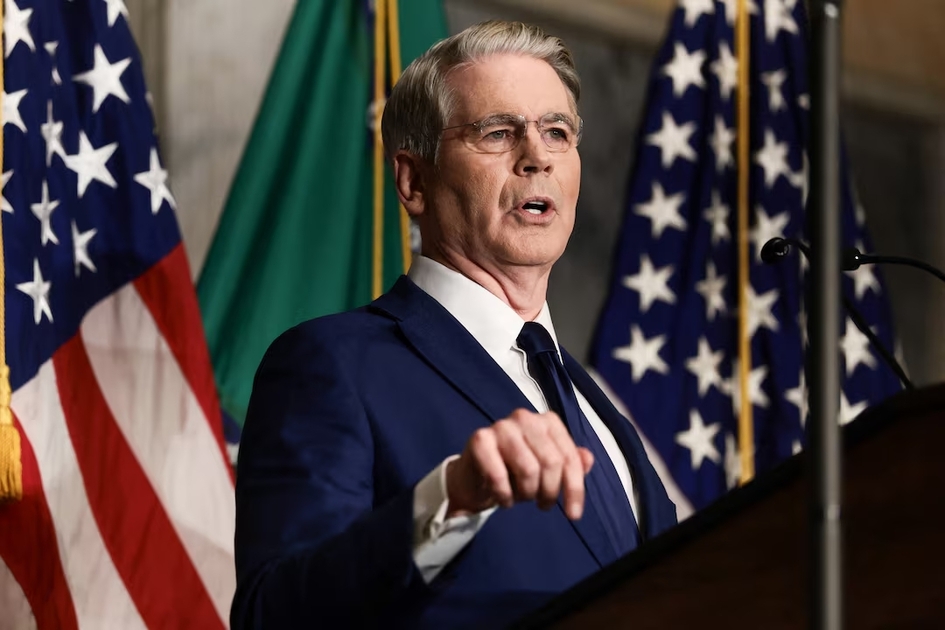
WASHINGTON D.C.: United States Treasury Secretary Scott Bessent has warned that Iranian airlines could be effectively shut out of international travel from Wednesday (local time), on September 23, as Washington threatens secondary sanctions against foreign companies that continue providing services to Iran’s carriers.

According to Al Jazeera, Bessent said on Monday that “on September 23, all the Iranian airlines will be shut down around the world,” as the Trump administration steps up economic pressure on Tehran.

The warning extends beyond Iranian airlines to foreign airports, fuel suppliers, ticketing companies and other businesses involved in supporting the carriers’ international operations.

“If they land, you cannot provide them with fuel, you cannot provide them with landing services, you cannot sell them tickets, or you will be knocked out of the dollar system,” Bessent said, according to Al Jazeera.

The latest threat comes amid the Trump administration’s broader sanctions campaign aimed at restricting Iran’s access to international financial and commercial networks.

Earlier this month, the US Treasury imposed sanctions on Iranian airlines that had not previously been targeted, along with companies outside Iran accused of supporting Iran’s aviation sector.

Iran’s aviation industry has already faced significant restrictions due to years of US sanctions, which have limited Iranian carriers’ ability to purchase new aircraft and obtain spare parts and maintenance services.

The latest measures form part of a wider US sanctions regime targeting Iran’s economy, including its energy, shipping, technology, gold and digital-asset sectors. Secondary sanctions can expose foreign businesses dealing with sanctioned Iranian entities to restrictions on their access to the US financial system.

Bessent’s comments came a day after talks with Chinese Vice Premier He Lifeng, ahead of a planned meeting between US President Donald Trump and Chinese President Xi Jinping.

China is among Iran’s key economic partners and diplomatic supporters, making Beijing’s cooperation significant to Washington’s efforts to restrict Tehran’s access to international finance.

According to Al Jazeera, Bessent said Chinese officials had been “very engaged” in discussions surrounding the US pressure campaign.
He also said Washington was holding positive discussions with Chinese financial authorities, including People’s Bank of China Governor Pan Gongsheng, over compliance with US sanctions targeting Iran.

Houthis push for control of Yemen highlands as Trump is said to have called off strikes

RIYADH/DUBAI: Houthi fighters pushed to seize strategic heights in Yemen on Monday to cut off the Red Sea coast ​from remaining areas held by Saudi-backed forces, after a report that President Donald Trump had called off US strikes on the group at the last minute.

A lightning advance by the ‌Iran-backed group this month has extended the wider Middle East conflict to a new theatre and further threatened global energy supplies. Washington has so far rebuffed repeated pleas from Saudi Arabia’s Crown Prince Mohammed bin Salman to join the fight in Yemen.

The New York Times reported that the Trump administration had prepared to launch airstrikes on Sunday against the Houthis after fresh pleas from the Saudi crown prince. But the newspaper said Trump called off the airstrikes at the last minute, even as troops were loading bombs onto aircraft.

Reuters ​could not immediately verify the Times’ report. The US military’s Central Command referred questions to the White House. The White House did not immediately respond to an email seeking comment. Rashid al-Alimi, the Riyadh-based ​president of Yemen’s Saudi-backed, internationally recognised government, asked Trump by phone on Sunday for US military help, four sources told Reuters. Two of the sources, one Yemeni and one ⁠Western, said Trump made no direct pledge of support during the call.

Riyadh was apparently struck on Saturday for the first time since the escalation began, with explosions heard and smoke visible near the airport. The Houthis ​said they had fired missiles at the Saudi capital; the Saudis have not commented.

FIGHTING IN HIGHLANDS
The Houthis, who have controlled Yemen’s capital since 2014, seized the country’s Red Sea coast this month in an advance that routed forces of ​the Saudi-backed government. Saudi Arabia has launched hundreds of strikes in recent days on the fighters’ positions in the highlands, the Houthis say.

According to the United Nations, nearly 700 people have been killed and thousands injured in the flare-up in fighting. Nearly 130,000 Yemenis have fled homes within Yemen, and more than 3,000 have fled by boat across the Red Sea to Africa. Five Yemeni military sources told Reuters the Houthis were now seeking to seize strategic heights, known as the Kahboub Mountains, in two provinces, Taiz and ​Lahij, which separate the Red Sea coast from the government-held south.

Fighting has centred on the outskirts of the remote mountain Al-Wazi’iyah district in Taiz province, and Ras al-Ara along the Indian Ocean coast between the Bab el-Mandeb ​Strait at the Red Sea’s mouth and the government’s base in Aden, the sources said.

“The government forces appear to remain largely in a defensive posture following the loss of the Bab el-Mandeb area, while the Houthis are seeking to maintain the ‌momentum of their ⁠advance, despite being exposed to intensive air strikes,” said Mohammed Al-Qadhi, a veteran Yemeni journalist now working as a political analyst.

“These mountains could become critical to determining whether the Houthis succeed in consolidating their recent territorial gains or whether government forces will be able to retain the positions necessary to mount a counteroffensive.”

SAUDI OIL EXPORTS
The surge in fighting between Saudi Arabia and the Houthis creates a dilemma for Trump, under pressure to help Saudi allies but anxious not to further expand the deeply unpopular war he launched as “Operation Epic Fury” in February against Iran. The United States bombed the Houthis for two months in early 2025, but Trump called off those strikes after reaching a ceasefire, ​and has kept out of the Yemen conflict since.

The ​Houthis’ Red Sea advance risks cutting off the main ⁠alternative route Saudi Arabia has used for oil exports that bypass disruption through the Strait of Hormuz. Saudi Arabia has responded by increasing shipments through Hormuz, where a small number of tankers are increasingly shuttling back and forth to bring out oil, charging record fees of as much as a quarter of the cargo’s value to brave the ​wartime risk. They then transfer the oil to other ships in the Indian Ocean, bound for customers in Asia or elsewhere.

Traders say Saudi Arabia has sold 60 million ​barrels of oil both this month ⁠and next, to be loaded from off Oman on the far side of Hormuz. Satellite data shows Saudi exports through Hormuz reaching 2.9 million barrels per day in recent days, up from just 700,000 in August.

That has helped put a cap on the global price of crude, which has retreated closer to $100 a barrel after approaching $110 last week. But consumers and industries are still paying record prices for some refined fuels, with the US retail price of diesel hitting another all-time ⁠high on Monday.

In ​the latest reported attack in Hormuz, Britain’s UKMTO maritime security agency said a ship sailing into the strait had been hit with a ​projectile, causing minor injuries to crew. It also said it had learned of an earlier strike on a gas tanker.
Diplomacy in the wider conflict has largely been stalled since a June interim agreement between the United States and Iran collapsed within weeks. Iran’s President Masoud Pezeshkian ​is due to fly on Tuesday to New York to attend the UN General Assembly.

Source: Reuters