Home Blog Page 132

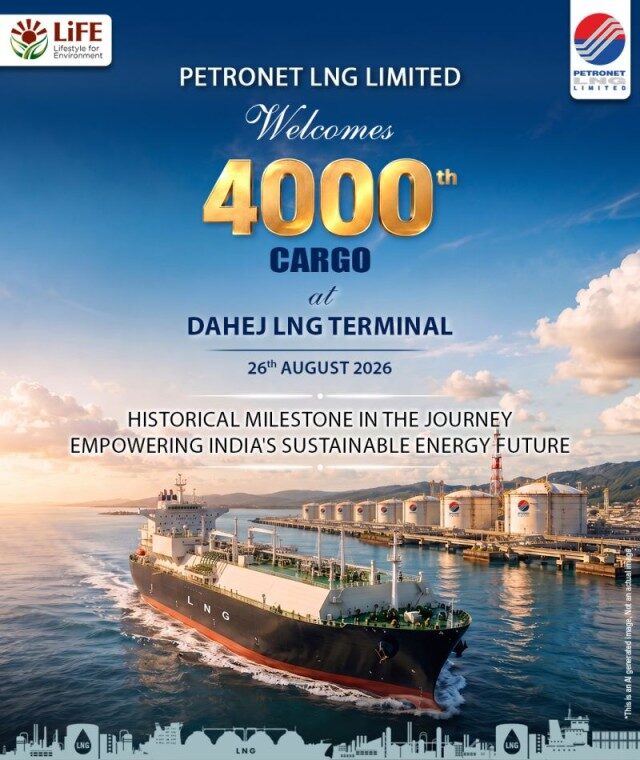
Petronet LNG marks arrival of 4,000th LNG cargo at Dahej Terminal, Gujarat

DAHEJ : Petronet LNG Limited (PLL) has achieved a major milestone with the successful receipt of its 4,000th LNG cargo shipment at the Dahej LNG Terminal in Gujarat on August 26, 2026, marking another significant chapter in India’s energy journey.

The landmark achievement comes amid a challenging global LNG landscape, with prolonged geopolitical conflicts in the Middle East and disruptions across international LNG supply chains. Despite these challenges, Dahej LNG Terminal has continued to demonstrate resilience, operational excellence and its critical role in ensuring reliable energy supplies for the country.

Notably, the terminal has received its latest 1,000 LNG cargoes in just over four years, underscoring the sustained growth in India’s LNG demand and the increasing importance of natural gas in the nation’s evolving energy mix.

Since commencing operations in 2004, the Dahej LNG Terminal has emerged as India’s largest LNG gateway, playing a vital role in meeting the country’s growing energy requirements. Located in the challenging and turbulent waters of the Gulf of Khambhat, the terminal has consistently maintained high standards of operational efficiency and safety while handling LNG cargoes over the past two decades.

The milestone further reinforces PLL’s contribution to India’s energy security and energy transition ambitions, supporting the wider adoption of natural gas across industries and strengthening the country’s access to global LNG supplies.

The achievement also reflects PLL’s continued commitment to world-class standards of safety, security, sustainability and environmental stewardship. The successful handling of 4,000 LNG cargoes represents not only a significant operational accomplishment but also the collective efforts of PLL’s employees, stakeholders, vessel operators and partners.

With India steadily expanding the role of natural gas in its energy basket, the Dahej LNG Terminal is expected to remain a key pillar of the country’s energy infrastructure, supporting a more secure, resilient and sustainable energy future.

The arrival of the 4,000th LNG cargo at Dahej is therefore more than a milestone—it is a testament to Petronet LNG’s enduring commitment to energising India’s growth and powering the nation’s future.

First goods train flagged off from Mahendragarh’s new Rs 1,300 crore integrated multi-modal logistics hub

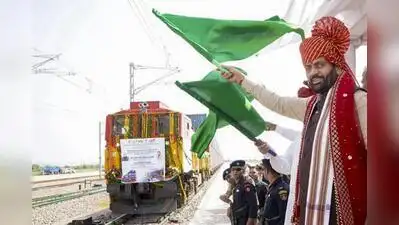
CHANDIGARH : Haryana Chief Minister Shri Nayab Singh Saini on Sunday (23 August) flagged off the first freight train from the newly constructed rail yard at the Integrated Multi-Modal Logistics Hub in Nangal Chaudhary, Mahendragarh district.

The IMLH’s first phase is being developed over 408 acres at a cost of approximately Rs 1,300 crore, while the railway link was built at a cost of around Rs 280 crore.

Once fully operational, the hub will have the capacity to handle around two million containers annually, positioning it as one of North India’s largest logistics facilities.

Speaking at the event, Chief Minister Shri Saini told industrialists that Haryana would no longer remain merely a producer of goods, but would emerge as a major hub for efficiently connecting its products with both global and domestic markets.

The entire project will eventually cover 886 acres in two phases, with work on the first 408-acre phase already completed.

Modern facilities for freight movement, warehousing, loading and unloading and rapid dispatch have been incorporated to reduce logistics costs and improve industrial efficiency.

Railway Board approves merger of Chennai MRTS with Chennai Metro

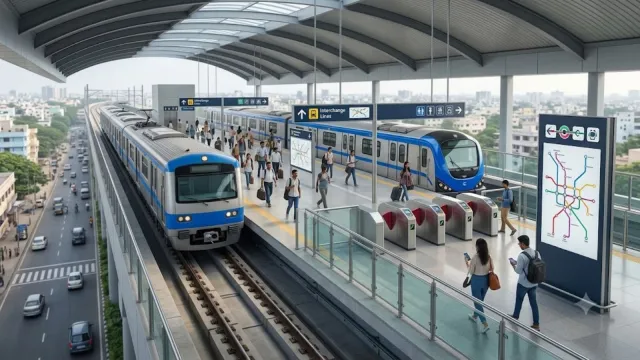
CHENNAI : Railway Board has approved the long-awaited merger of Chennai Mass Rapid Transit System (MRTS) with Chennai Metro Rail (CMRL), initiating integration of suburban corridor management under a single state-led framework and a two-year transfer of operations. The approval follows years of talks and is reflected in a draft memorandum of understanding outlining asset and responsibility transfers. The Railway Board issued an update on August 12, 2026 approving the draft MoU signed by Southern Railway and the Tamil Nadu government in May and setting a framework for a phased shift of operation and maintenance.

The transition will proceed in two stages. Under the draft MoU Southern Railway will transfer MRTS assets and general operation and maintenance responsibilities within 90 days while excluding core train operations and maintenance. Over a two-year period train operations and remaining maintenance will be progressively transferred to CMRL, with the state to make the agreed payment in full or in instalments.

Proposed assets for transfer include land, stations and other infrastructure covering 19 of the 21 MRTS stations, together with tracks, signalling and telecom systems, lifts and escalators, foot overbridges and EMU rolling stock. MRTS originated in the 1975 First Master Plan for Chennai and passenger services initially ran between Chennai Beach and Velachery; the corridor was extended to St Thomas Mount and commissioned in March 2026, including Puzhithivakkam and Adambakkam while one station remains not operational.

The merger requires coordination at Chennai Beach and Fort, with platforms 9 and 10 at Beach proposed for MRTS services and a crossing arrangement at Fort to enable track connectivity. A single track between Fort and Beach is currently in place and any proposal to double that section will be reviewed by Southern Railway according to operational needs and land policy. A special committee of senior officials will oversee the merger, coordinated by the Convenor of the Chennai Unified Metropolitan Transport Authority; integration could improve maintenance and passenger facilities but may affect existing services and restoring direct trains from St Thomas Mount to Arakkonam and Gummidipoondi.

US sanctions on Iran: China’s scramble for oil may add to India’s crude, freight costs

NEW DELHI : The latest US sanctions on Iran could hit India through higher crude oil prices, costlier freight and insurance, tighter payment channels and renewed pressure on the rupee, even as the direct impact on trade is expected to remain limited, according to experts.

The bigger risk for India is not the loss of Iranian crude, New Delhi currently has limited direct exposure, but what happens to global oil markets if Iranian supplies are squeezed further.

China, the biggest buyer of Iranian oil, could be forced to compete more aggressively for Russian and other alternative barrels, pushing up prices for Indian refiners as well.

US Treasury Secretary Scott Bessent on August 24 announced a fresh wave of sanctions and put Iran’s trading partners on notice, as Washington launched an “economic D-Day” campaign aimed at ending its six-month war with Tehran by choking off the West Asian nation’s economic lifelines.

“We are launching an economic onslaught against Iran’s financial connections around the globe,” Bessent said, describing the effort as the “economic asphyxiation of this regime.”

The Treasury’s latest action expands the sectors exposed to US secondary sanctions to digital assets, technology, gold, aviation and shipping.Oil prices steadied on August 25, after falling more than 2 percent in the previous session, as investors assessed the impact of harsher US secondary sanctions against Iran.

For India, analysts say, the most immediate transmission channel is likely to be energy, followed by shipping, insurance and payment disruptions.

China’s hunt for alternative crude may push up India’s oil bill

“India’s direct exposure to Iranian crude is currently very limited, as India does not buy Iranian crude. Therefore, tighter sanctions won’t materially impact direct imports in the immediate term. India’s bigger exposure comes from second-order effects, particularly through China,” said Sumit Ritolia, Lead Research Analyst, Modelling and Refining, Kpler.

“If China, which imports the vast majority of Iranian crude, is forced to source oil elsewhere, it will increase competition for the alternative barrels that India relies on. This demand reshuffling would likely push benchmark prices higher, resulting in a higher import bill for India,” he said.

China imported 823,000 barrels per day (bpd) of Iranian oil in July and 534,000 bpd in August, according to data provided by ICRA.

The Chinese response is therefore critical for the global oil market. If Beijing’s refiners increase purchases of Russian crude and other alternative supplies, Indian refiners could face greater competition for barrels that have become an important part of India’s energy mix.

“Even during the Strait of Hormuz blockade during the war, Chinese haven’t been buying much oil aggressively because they have been tapping their own reserves. One of the apprehensions was that if China comes to the market, it will tighten supply,” said Prashant Vasisht, Senior Vice President and Co-Group Head, Corporate Ratings, ICRA Limited.

International Energy Agency members have also been liquidating strategic reserves. Out of the 400 million barrels earmarked for release, around 293 million barrels have been liquidated, according to Vasisht.

“So once these countries start coming back and China comes to the market too then there would be additional competition for the existing available crude supplies. And as China has come to the market for Russian crude in a big way, it can tighten supplies and increase oil prices,” he said.

Praveen Rai, Director, Grant Thornton Bharat also noted that that every $10 per barrel increase in crude prices could widen India’s current account deficit by around 0.3-0.4% of GDP. Therefore, the biggest fallout for India would likely come not from direct trade with Iran, but from tighter global energy markets and higher energy costs,” Rai said.

Higher oil prices could pressure rupee, inflation

India imports close to 90 percent of its crude requirements, making the country highly sensitive to sustained increases in global oil prices.

“The renewed escalation in the Iran conflict presents a significant macroeconomic risk for India, primarily through higher energy prices rather than an immediate shortage of crude,” Ritolia said.

A sustained rise in crude prices would widen India’s import bill, put pressure on the rupee and current account and feed into inflation through freight, aviation, manufacturing and other energy-intensive sectors.

India’s merchandise deficit widened to nearly $32 billion in July 2026 as crude oil and petroleum product imports rose 17.6 percent year-on-year to $18.31 billion

The government may initially shield consumers from the full increase in petrol, diesel and LPG prices, but that would shift the burden to public finances and oil-marketing companies, he said.

Brent crude was hovering around $92 per barrel on August 25.

Brent crude touched as high as $126/bbl in April amid raging West Asia war. It fell sharply from above $100 a barrel after the US-Iran ceasefire was announced in June, dropping below $80 but has started to rise again amid continued tensions in the region.

“For India, the principal risk is therefore higher oil prices rather than a physical shortage of crude. Elevated crude prices would raise the import bill, put pressure on the rupee, and add to inflationary pressures,” said Rai.

Russian crude may not offer an easy solution

Indian refiners are likely to continue diversifying purchases, including towards Russian crude where feasible, while seeking additional supplies from the Middle East and other regions.

But Russia may have limited additional volumes available for India.

“Tighter sanctions on Iran are unlikely to benefit Russia to a large extent because Russia is already supplying maximum volumes to India, running at roughly 2.5–2.8 mbd, or about half of India’s imports,” Ritolia said.

“Instead, a shortfall in available discounted barrels globally poses a broader risk to global supply tightness.”

Russian crude is already trading at premiums, according to Ritolia. Higher premiums would directly affect India’s import bill and refinery economics.

“Russian crude has become the backbone of India’s energy security, allowing refiners to sustain high utilisation rates while reducing dependence on Hormuz-transited supplies. Increasing premiums significantly increase India’s import bill, worsen inflationary pressures, put additional strain on the current account and weaken energy security. Domestic fuel prices would come under considerable upward pressure,” he said.

Tighter sanctions on Iranian oil could benefit alternative suppliers such as Russia, Saudi Arabia, the UAE, and the US by redirecting demand away from Iranian barrels.

Longer shipping routes could add to India’s costs

The energy risk is not limited to the price of crude.

India may have to source more oil from distant markets if Middle Eastern supply routes remain disrupted. That would increase transit times, tie up working capital and raise freight and other logistics costs.

“The Strait of Hormuz has been choked for some time now. But there are these alternate routes like Fujairah, Yanbu, and the Red Sea. Now, if they target across these locations also then it is a cause for concern. The flow through the Red Sea has come down to 22-23 vessels per day from 77 vessels earlier,” said Vasisht of ICRA.

He said India may need to diversify its crude sourcing to more distant markets, which could hurt in two ways.

Freight rates on key supply routes have risen 137-411 percent since late February and war-risk insurance for a single Strait of Hormuz voyage climbed to as high as $7.5-10 million, as per analysts.

First, if global supply becomes increasingly constrained, the demand-supply imbalance could worsen. Second, sourcing more crude from markets such as the US would mean longer transit times, tying up working capital and increasing freight and logistics costs.

India’s exposure to the Gulf also extends beyond crude. The country imports as much as 90 percent of its LPG requirements from the Middle East, making any prolonged disruption in regional energy flows a wider concern.

Direct impact on India-Iran trade seen limited

The direct impact on India-Iran trade is likely to remain limited because bilateral trade has already fallen sharply following years of US sanctions, banking restrictions and the loss of Iranian crude as a major Indian import.

India’s total trade with Iran stood at $1.04 billion in April-June of FY27, primarily driven by a sharp increase in imports from the country.

Exports to Iran fell 57.2 percent year-on-year to $149.38 million in April-June 2026, from $349.02 million in the corresponding period a year earlier, according to data from the commerce ministry.

Basmati rice remained India’s largest export item to Iran, at $103.13 million in the quarter.

Other significant exports included sugar, non-basmati rice: $6.74 million, drug formulations and biological, handicrafts, tea and spices.

The latest sanctions could nevertheless make this smaller trade relationship more expensive and difficult by raising payment, insurance and shipping costs, exporters said.

India has traditionally routed a significant portion of Iran-bound exports through the UAE, which has acted as a trading and financial hub.

“Most of our exports go through UAE and then payment comes through UAE, but Dubai and Iran trade is not happening. We used to invoice only UAE, so we used to get dollars. But it was flown to Iran,” an Indian exporter said.

Banks, insurers, shipping companies and intermediaries may become increasingly cautious about Iran-linked business, potentially increasing compliance costs or refusing transactions altogether.

The impact could be particularly significant for rice exporters.

India exported $109.9 million of rice to Iran during April to June of 2026

Any prolonged disruption to the UAE-Iran trade corridor could therefore affect Indian basmati millers and exporters, particularly through higher freight and payment costs.

For pharmaceuticals, however, the latest sanctions are adding pressure to a market where India’s position has already weakened because of Iran’s efforts to build domestic manufacturing capacity.

“Fortunately for us, a couple of years ago, Iran established local manufacturing units. During this shift towards localisation, from pharma to bulk drug imports, India no longer enjoyed the same position. Iran started importing intermediates as well, and not just APIs,” said Namit Joshi, Chairman, Pharmaceuticals Export Promotion Council of India (Pharmexcil).

“The impact would have been felt a couple of years ago, but not now. Iran has been trying to establish its own domestic manufacturing units,” he said.

Data shows India’s exports of bulk drugs and drug intermediates to Iran at only $0.39 million in April-June 2026, while exports of drug formulations and biologicals stood at $6.31 million.

India’s imports from Iran have increased sharply in the latest quarter, although the rise is heavily influenced by a very low comparison base and an increase in petroleum-product imports.

Provisional data shows India’s imports from Iran rose to $890.32 million in April-June 2026, from $96.41 million in the same period a year earlier.

Petroleum products accounted for $154.37 million of imports, while fresh fruits contributed $21.97 million and plastic raw materials $5.99 million.

The headline increase of more than eight times should therefore be treated cautiously. The previous year’s base was exceptionally low and the rise does not represent a broad-based surge across India-Iran trade.

India once depended heavily on Iranian crude

India was once a major buyer of Iranian crude, importing both light and heavy grades because of their compatibility with Indian refineries and favourable commercial terms.

At its peak, Iran accounted for around 11.5 percent of India’s oil imports, according to Kpler.

That relationship changed after the US tightened sanctions in 2018. India stopped importing Iranian crude in May 2019, replacing those volumes with supplies from West Asia, the US and other producers.

India briefly resumed purchases this year after the US administration allowed a 30-day window for Iranian oil loaded before March 20. Imports reached around 133,000 bpd in April, but Indian refiners stopped buying Iranian crude after the waiver expired.

“India’s direct dependence on Iranian crude is limited today, but its energy security remains closely tied to the Gulf region and the Strait of Hormuz, through which a significant share of its and the global oil trade moves,” Rai said.

That means the latest US sanctions do not immediately remove a major source of crude for India.

Instead, the bigger threat is what happens to the replacement barrels.

Source : Moneycontrol

‘Massive casualties’ after flash floods, landslide strike China-Nepal border

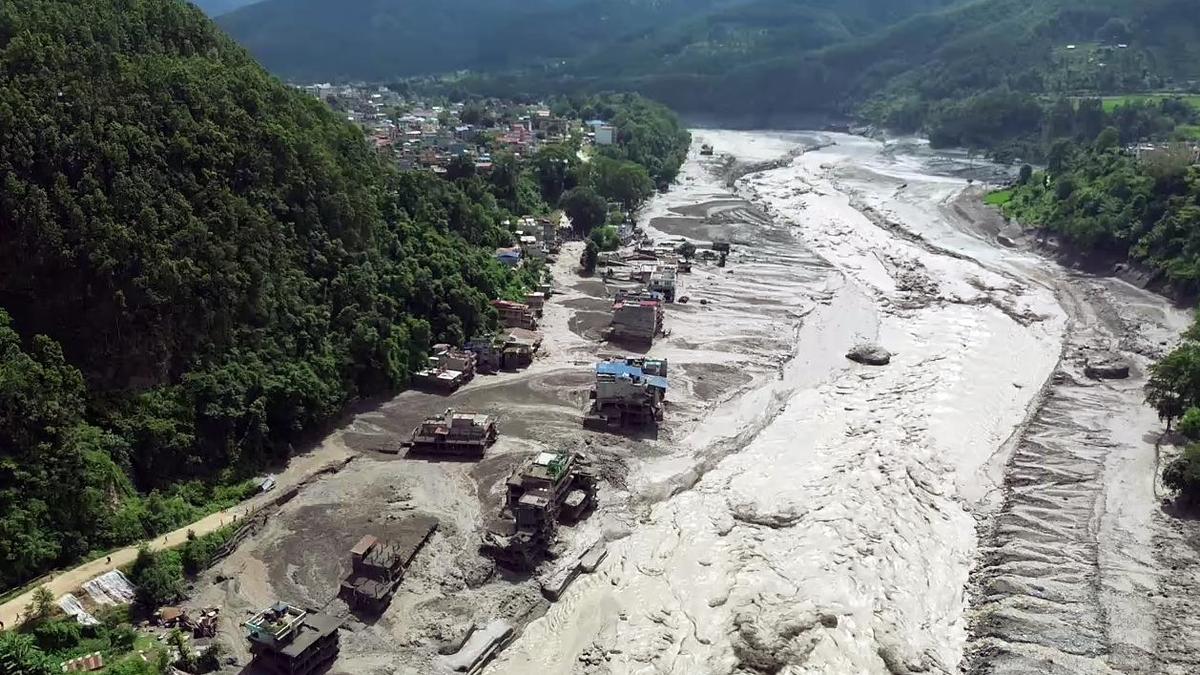
KATHMANDU : Dozens of people were dead and hundreds of others – many of them foreign tourists – were missing on Wednesday night, hours after massive flash floods and landslides engulfed a border area between China and Nepal. Chinese state media reported that the disaster struck Nepal at around 9am, spilling over into Gyirong county in the Tibet autonomous region, causing “major casualties and missing persons” at a border checkpoint in the county, which is administered by the city of Shigatse. Footage circulating online showed a landslide descending on the Gyirong Port checkpoint in seconds as people on the ground fled, before mud and debris obscured the camera. The South China Morning Post could not independently verify the video. Gyirong Port is Tibet’s main foreign trade port and handles the vast majority of China’s trade with Nepal.

Quoting a rescue command centre in Gyirong, state broadcaster CCTV reported that by 8pm three people were dead and 265 were missing after the landslide in the county. Shanghai-based news outlet The Paper quoted Nepalese police as saying 97 people had been killed and 54 rescued in Nepal.

In Nepal, 384 tourists and travellers were missing – 93 Nepalese and 291 foreigners, according to the Nepal Tourism Board. The board said the missing foreigners included citizens from India, Australia, the United States, Britain and the Netherlands. The nationalities of 111 individuals had yet to be confirmed. The Kathmandu Post quoted Rijan Bhakta Kayastha, a professor at Kathmandu University and climate researcher, as saying that an ice avalanche falling into the upstream section of the Lhende Khola River might have created a surge of water sweeping downstream, causing a flash flood in the Bhotekoshi River. Kayastha noted that the initial assessment was based on preliminary findings between Nepali and Chinese scientists.

Meanwhile, Nepal’s disaster management agency said it had received similar findings, but emphasised that the assessment was initial and that official efforts remain focused on search and rescue. Chinese President Xi Jinping ordered local authorities to “spare no effort” in the search and rescue mission, evacuating residents, promptly treating the injured and minimising casualties. Xi also called for monitoring and early warning systems to be strengthened, and prevention of secondary disasters.

Soldiers and personnel from the People’s Armed Police, a paramilitary law enforcement agency, had arrived at the scene for emergency rescue and disaster relief operations. The authorities have closed the road leading to the Gyirong checkpoint for the next seven days.

State-owned construction and emergency response firm China Anneng Construction Group sent 200 emergency personnel as well as geologists and engineers to the site, with 100 more on standby for deployment, according to state news agency Xinhua. The team deployed to the disaster zone brought construction machinery and advanced equipment, including reconnaissance drones, 3D laser scanners and life detectors, the report said.

China’s embassy in Nepal had activated its emergency response mechanism and checked on Chinese nationals and enterprises in the disaster zone, the mission said in a statement.

It also called on the Nepalese government to conduct full-scale rescue operations. China Newsweek reported that about 60 Chinese personnel were working for the Tibet Tianlu construction company on a highway repair and improvement aid project near the port when the disaster struck. A family member of one employee was quoted as saying that the company’s office was just 3km (1.9 miles) from the customs building at the port and he had lost contact with his wife and the entire team.

More than 10 Chinese workers employed on other construction projects were also living in nearby low-rise factory buildings, which were all swept away, the man said.

China is Nepal’s second-largest trading partner, accounting for roughly 16.9 per cent of the country’s total trade. It is also a major source of imports for the Himalayan country. China allows trade and transit through six border points, five of which are in Shigatse, the second-largest city in Tibet.

However, disruptions caused by flash floods earlier this year had left hundreds of vehicles stranded and contributed to a 24 per cent drop in electric-vehicle imports in Nepal’s financial year ending in mid-July, local media reported. In 2018, China announced that it would build what it calls a Trans-Himalayan Multi-Dimensional Connectivity Network with Nepal – involving railways and communication links – as part of the Belt and Road Initiative.

For Nepal, this network could be a lifeline. The landlocked nation has suffered multiple devastating, months-long economic blockades imposed by New Delhi – most notably in 1969, 1989, and 2015 – which choked off vital supplies of fuel, medicine and food.

For this reason, Kathmandu views Beijing as an indispensable strategic counterweight to its southern neighbour. Nepal joined the Belt and Road Initiative in 2017, but progress on related projects has been slow, constrained by weather disruptions, poor local infrastructure and geopolitical friction. A cornerstone project, the proposed Rasuwagadhi-Kathmandu Rail Line that would connect Gyirong with Kathmandu, remains at the planning stage.

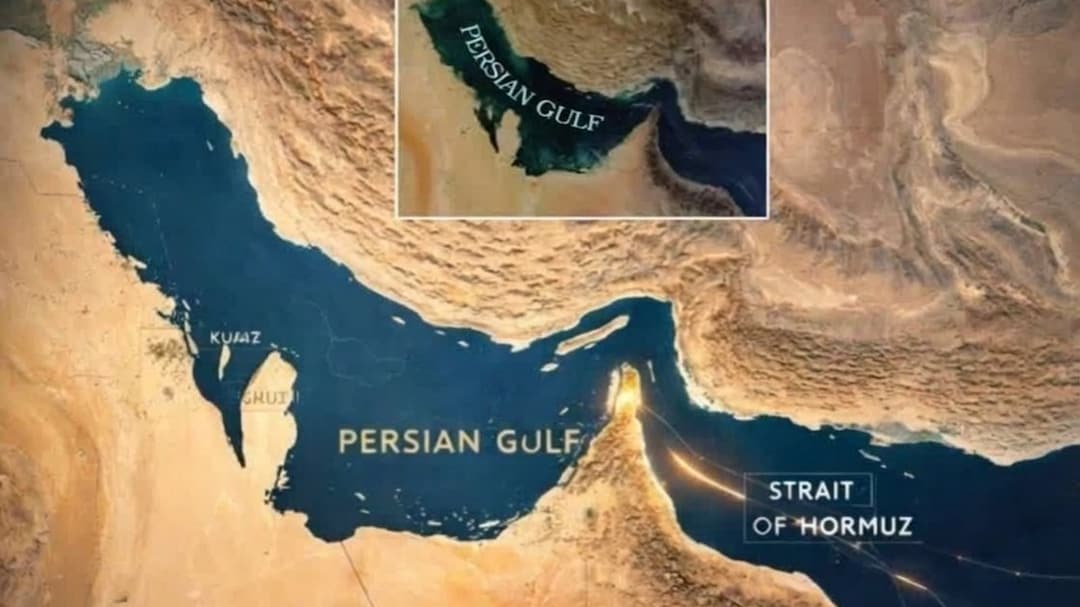
Iran, Oman agree on new temporary route in Hormuz

TEHRAN: A top Iranian official says Iran and Oman have agreed on a new temporary route for shipping in the Strait of Hormuz, but insisted that the waterway will not reopen until the United States fulfils its commitments under an interim peace deal signed in June.

The remarks by Kazem Gharibabadi, Iran’s deputy foreign minister for legal and international affairs, came on Tuesday, after Iran and Oman’s top diplomats held talks in Tehran to finalise the details of a phased framework for managing the strait.

Iran and Oman, both coastal nations on the strait, have been in on-and-off talks for weeks about controlling traffic through the strategic waterway, which handled one-fifth of global oil and liquefied natural gas shipments before the US-Israel war on Tehran began in February.

Most ⁠shipping in the strait has been shut down since then.

Gharibabadi, speaking on state television, said Iran and Oman had agreed the new route’s entry “would be through our territorial waters, and part of the exit route would also be through our territorial waters”.

The transit corridor would be seven miles (11.3km) wide, he said.

“The agreed-upon transit route with Oman is a temporary route,” he added.

Earlier on Tuesday, Iran’s Foreign Minister Abbas Araghchi met with his Omani counterpart, Badr Albusaidi, in Tehran to discuss the temporary navigation corridor as well as a project to clear mines from the strait, according to a joint statement.

Albusaidi said on X he hoped the countries would “soon announce” the corridor, adding that “future management of the strait and a permanent solution will follow in due course.”

Technical talks are planned to develop a long-term arrangement, including mechanisms for information sharing and navigational and security services, according to the statement.

Mines in Hormuz
The Strait of Hormuz became a flashpoint after Tehran responded to the US-Israel war by closing the waterway. It then announced a new shipping route through its territorial waters, bypassing the internationally recognised Traffic Separation Scheme adopted by the International Maritime Organization (IMO) in 1968. Tehran said that route had been mined.

Then in June, when Iran and the US signed a Memorandum of Understanding (MoU) to end the war, Oman and the IMO announced a new transit corridor in the Strait of Hormuz – backed by the US – that hugged the Omani coast.

Iran said the so-called southern route violated the MoU and launched attacks on ships using the corridor, resulting in the collapse of the interim deal.

Diplomatic efforts towards a broader peace deal have since stalled, and passage through the strait remains dangerous. An oil tanker was disabled by an unidentified projectile on Tuesday near Oman’s Ash Shishah, close to the strait’s entrance, the United Kingdom’s maritime trade watchdog said.

Gharibabadi, in his comments on Tuesday, said Iran would not consider the strait open despite the agreement with Oman.

He also dismissed a claim by US President Donald Trump that all mines had been cleared from the strait’s international waters, saying it was “only aimed at calming the markets”. He warned that US mine-detection vessels would become “very good targets” if they entered the area.

Gharibabadi insisted the US must fulfil its commitments under the MoU – including sanctions relief and the release of frozen Iranian assets – if it wants a return to the diplomatic track.

He also urged countries to resist US pressure over sanctions on Iran.

Trump had announced last week the “most crushing economic operation ever” against Iran, and threatened sanctions against any country that does business with it.

“We are urging countries not to succumb to American pressure regarding the sanctions that Washington wants to impose on us,” Gharibabadi said, adding that Washington was “mistaken about its ability to enforce its sanctions against our neighbours”.

He said an earlier US sanctions campaign under Trump had failed to achieve its goals and predicted new measures would meet the same fate.

“The new American sanctions are doomed to failure, and we have our own methods to counter them,” he added.

DP World records highest monthly throughput in Jeddah since operations began in 1999

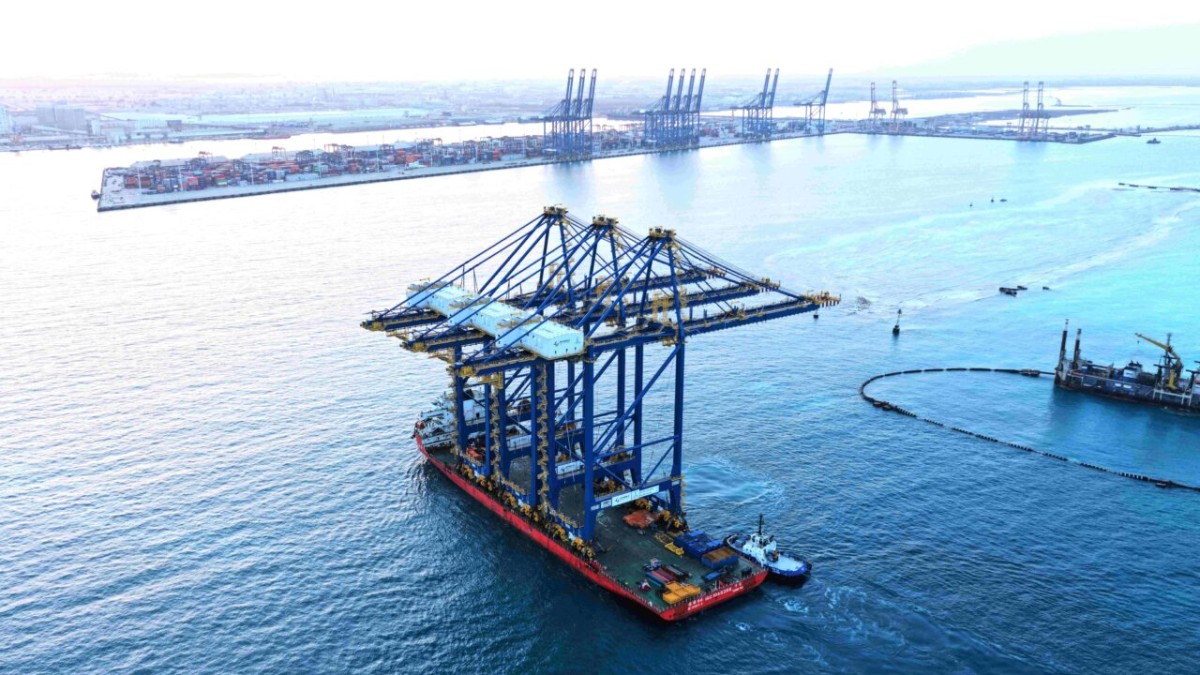
JEDDAH: The South Container Terminal (SCT) at Jeddah Islamic Port handled over 221,200 twenty-foot equivalent units (TEUs) in July 2026, its highest monthly throughput since DP World began operating the terminal in 1999. The record takes monthly volumes above levels recorded before the disruption to Red Sea shipping began in late 2023.

SCT also recorded its highest-ever monthly export volume over the same period, handling 79,720 TEUs, as growing trade flows continue to drive demand through Jeddah.

The record performance follows strong growth in the first half of the year, when SCT volumes rose nearly 79% year-on-year. Growth was recorded across imports, exports and transshipment, with 390 vessel calls during the first six months of the year. The terminal has also continued to attract new services, including a Wan Hai-operated mainline container vessel that made its maiden call in July.

“Jeddah is a key gateway for Saudi Arabia’s trade, connecting businesses in the Kingdom with regional and global markets. As trade flows grow, our focus is on building the capacity and connectivity needed to move cargo seamlessly across the wider regional network. By strengthening the links between ports, inland logistics and distribution facilities, we are giving customers more options and more reliable routes to market.” Ahmad Yousef Al-Hassan, CEO & MD, DP World GCC.

The July record comes as shipping services gradually return to the Red Sea following the disruption that began in late 2023. With monthly throughput now above pre-disruption levels, higher cargo flows are being supported by both the recovery in shipping activity and DP World’s investment in additional terminal capacity, equipment and infrastructure.

DP World’s recent investments at SCT include:

· Three additional quay cranes, bringing the terminal’s quay crane fleet to 17,

· 17 automated electric rubber-tyred gantry cranes (AeRTGs),

· 35 electric terminal tractors,

· 30 additional trailers,

· Upgrades to reefer and cold-storage infrastructure.

These investments are strengthening SCT’s ability to handle higher vessel and cargo volumes, while further expansion is underway to increase annual capacity to 5 million TEUs. “The July record reflects the continued growth in trade moving through Jeddah. As volumes increase, our priority is to ensure the terminal has the capacity, equipment and operational capability to support our customers. We are also strengthening inland connectivity and logistics capabilities to support customers as their supply chain requirements evolve.” Mohammad Alshaikh, CEO, DP World KSA

SCT is a key part of DP World’s integrated logistics network in the region, linking maritime trade through Jeddah Islamic Port with inland transportation, warehousing and distribution. This includes the development of the US$250 million, 415,000 square-metre Jeddah Logistics Park, which will provide additional logistics and distribution capacity close to the port and support more efficient movement of goods between Jeddah and markets across the Kingdom.

7th high-level meeting between ICG and Vietnam Coast Guard held in Chennai

CHENNAI: The 7th High-Level Meeting (HLM) between the Indian Coast Guard (ICG) and Vietnam Coast Guard (VCG) was held in Chennai on August 25, 2026 under the framework of the 2015 Memorandum of Understanding on Coast Guard Cooperation.

The meeting was co-chaired by Director General Paramesh Sivamani, Director General, Indian Coast Guard, and Major General Luong Dinh Hung, Vice Commandant, Vietnam Coast Guard.

The discussions focused on strengthening bilateral cooperation in key areas including Maritime Search and Rescue (SAR), Maritime Law Enforcement, Marine Pollution Response and capacity building. Both sides reviewed ongoing bilateral engagements, including professional exchanges and ship visits, and reaffirmed their commitment to enhancing cooperation and interoperability.

The two Coast Guards emphasised the importance of regular institutional interactions, training programmes, professional exchanges, sharing of best practices and ship visits to further strengthen mutual trust, coordination and operational cooperation.

The HLM reaffirmed the shared commitment of India and Vietnam to work together in the spirit of friendship and cooperation towards promoting maritime safety, security and environmental sustainability in the region.

As part of the ongoing bilateral engagement, the India-Vietnam Coast Guard Joint Exercise, SAHYOG-HOPTAC, is scheduled to be conducted at sea on 27 August 2026. The exercise will provide an opportunity for both Coast Guards to enhance operational coordination, strengthen interoperability and exchange best practices.

Lokayan 2026 – INS Sudarshini departs Lisbon after three-day port call

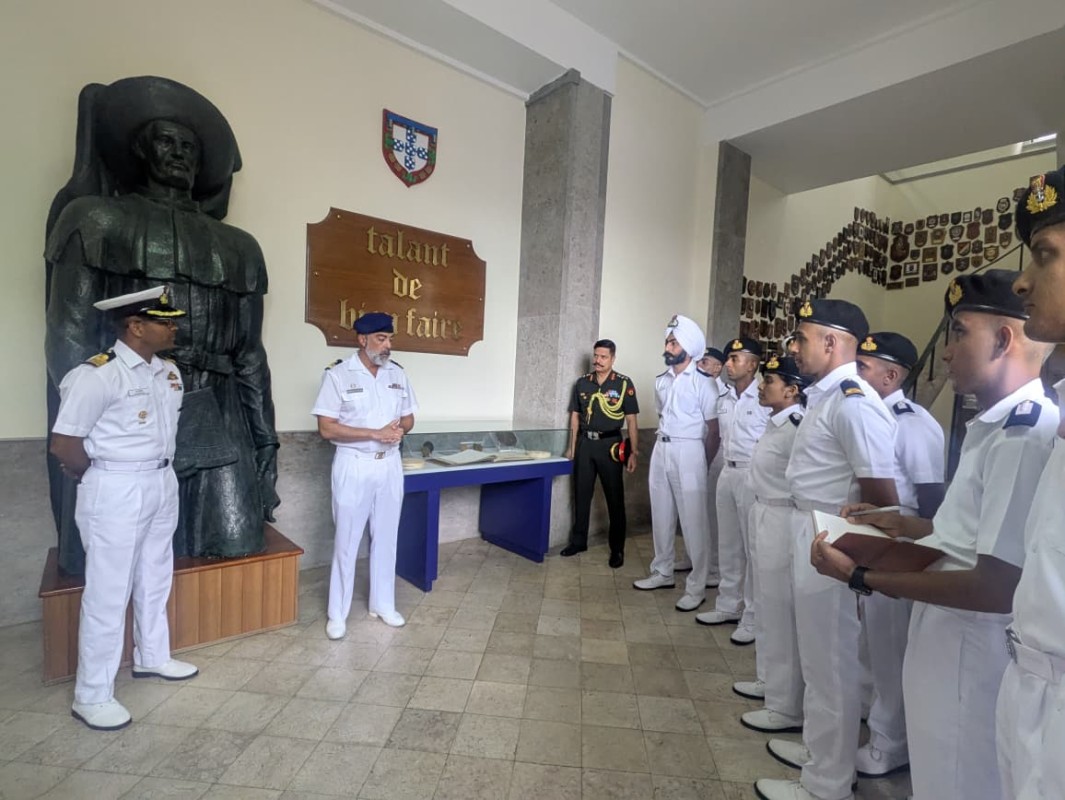
LISBON : The Indian Navy’s sail training ship INS Sudarshini concluded her three-day port call at Lisbon, Portugal, on 25 Aug 2026, as part of her ongoing Lokayan 26 transoceanic expedition.

INS Sudarshini Lokayan 2026 – INS Sudarshini departs Lisbon after three-day port call

During the port call, the Commanding Officer of INS Sudarshini called on Rear Admiral Miguel Bessa Pacheco, Commandant, Portuguese Naval Academy, and Rear Admiral Joao Paulo Silva Pereira, Deputy Fleet Commander, Portuguese Navy. The engagements reinforced the institutional ties and mutual understanding between the two navies. As part of the professional engagements, sea trainees from the Indian Navy visited the Portuguese Naval Academy (Escola Naval), where they interacted with their Portuguese counterparts, toured the historic campus and training facilities, and exchanged perspectives on seamanship and tall-ship sail training. The port call also featured a deck reception onboard with senior Portuguese military officials, members of the diplomatic corps and the Indian diaspora.

The visit of INS Sudarshini to Portuguese ports of Ponta Delgada and Lisbon underscores the enduring maritime cooperation and partnership between the two nations.

India’s growing Maritime Workforce brings Maritime Healthcare into focus

MUMBAI: India’s maritime sector is facing a growing healthcare challenge as the wellbeing pressures associated with life at sea come into sharper focus. The 2025 SEAFiT Crew Survey Report, which highlights gathered responses from 21,775 seafarers across 1,703 vessels, recorded an overall Crew Wellness Index of 70.1%, down from 72.5% in 2024. The report also identified wellbeing as the weakest of its key indicators, at 61.1%, highlighting the continuing pressures around physical and mental wellbeing, sleep, nutrition, recreation and access to healthcare.

Behind this workforce growth is an important healthcare requirement. Seafarers often spend extended periods at sea in physically demanding environments, where access to comprehensive medical facilities can be limited. This makes medical fitness before deployment an important component of maritime safety, while also increasing the importance of reliable healthcare infrastructure on shore.

Among the healthcare providers supporting this evolving ecosystem is MedRabbits Healthcare and Clinic, which has entered maritime healthcare with DG Shipping certification to conduct mandatory pre employment medical examinations for Merchant Navy officers and crew. Its Mumbai clinic combines consultations with diagnostics including laboratory tests, ECG, TMT, X ray, sonography and audiometry, enabling multiple assessments under one roof. The certification extends MedRabbits’ integrated healthcare model to the specialised medical needs of seafarers, while helping streamline assessments for a workforce operating within strict deployment schedules.

Another provider contributing to this ecosystem is HealthChek Diagnostics, which offers specialised medical examinations for seafarers and maritime professionals in Delhi NCR. Its DG Shipping approved assessments cover physical fitness, vision, hearing and respiratory health, while its NABL accredited facilities provide blood and urine tests, ECG, TMT, pulmonary function testing, audiometry, X ray and ultrasound. By combining clinical assessments with diagnostics, the centre supports the medical requirements of India’s maritime workforce.

Based in Visakhapatnam, Medwale Medical Centre specialises in healthcare for the shipping and offshore sectors. As a DG Shipping approved medical centre, it provides pre-sea, periodic and pre employment medical examinations for seafarers, along with certification and referral services. The centre also offers Offshore Energies UK medical services for offshore personnel, supporting both maritime and offshore occupational healthcare. Its presence in Visakhapatnam further strengthens its role in supporting India’s growing shipping workforce.

In Bengaluru, Shipcrew Medical Centre provides specialised medical services for seafarers, including pre employment, CDC and CoC, cruise line, offshore and flag state examinations, along with vaccinations. Its assessments follow DG Shipping and applicable flag state guidelines, supported by in house laboratory and radiology services such as blood tests, chest X ray, ultrasound, ECG, TMT, 2D echo, audiometry and pulmonary function testing. The centre also offers telemedical support for seafarers at sea, extending its services beyond pre deployment medical assessments.

As India’s maritime workforce continues to grow alongside the country’s expanding role in global shipping, strengthening this healthcare ecosystem will become increasingly important. A growing seafaring workforce needs not only training and employment opportunities but also reliable medical infrastructure to ensure professionals are fit for life at sea. Providers such as MedRabbits Healthcare, HealthChek Diagnostics, Medwale Medical Centre and Shipcrew Medical Centre reflect this shift, moving maritime healthcare beyond standalone certification towards a more coordinated ecosystem that supports seafarers before and during their journeys at sea.