Home Blog Page 133

Millions of pellets, one casualty : India’s Nurdle Rules expose a new P&I problem

By Priyatham Sanjeeva Reddy Ramidi

A container ship casualty can be measured in familiar units: tons of fuel spilled, containers lost, days of salvage, kilometers of shoreline affected, or millions of dollars in claims. Plastic pellets complicate that picture because the unit that matters may be counted in the millions before anyone knows exactly where they went.

India’s new requirements for the carriage of plastic pellets, commonly known as nurdles, therefore deserve attention for more than their environmental purpose. They also expose a difficult maritime investigation and liability problem: how do authorities, shipowners and insurers reconstruct responsibility after countless tiny pieces of cargo leave a container, spread through the sea and wash ashore over a wide area?

The Directorate General of Shipping’s Circular No. 19 of 2026 introduces specific controls for plastic pellets carried in freight containers. Containers carrying pellets must be stowed below deck, rather than on exposed deck positions, and packaging must meet strengthened standards.

The requirements apply to shipments from 15 April 2026 and are subject to Flag State and Port State inspection. The timing is significant. The 2025 sinking of MSC Elsa 3 off Kerala demonstrated how a container casualty can quickly become a prolonged coastal response.

Following the sinking, Indian Coast Guard surveillance and shoreline-cleanup efforts continued as nurdles and other pollutants affected parts of Kerala and Tamil Nadu. The casualty gave India a practical view of a problem that the International Maritime Organization has been discussing for several years.

At IMO level, recommendations adopted in 2024 called for stronger packaging, clear identification of containers carrying plastic pellets and safer stowage, preferably below deck. In April 2026, IMO’s Marine Environment Protection Committee agreed to develop a mandatory international code for the maritime transport of plastic pellets.

India has effectively moved ahead of that future global regime.

The logic behind below-deck stowage is straightforward. A container placed beneath deck is less exposed to the conditions that can result in containers being lost overboard. Stronger packaging creates another layer of defense if a container is damaged. These are sensible loss-prevention measures.But prevention is only one side of the issue.

Once pellets enter the sea, the casualty changes character.

Oil usually creates a visible pollution footprint. Containers can be identified by numbers. Damaged cargo often remains associated with a particular unit. Nurdles behave differently. Individual pellets are tiny, buoyant and mobile. Currents, tides and weather can disperse them over large distances, while repeated beaching and refloating can extend the response long afterthe original casualty.

For investigators, the first question may appear simple: where did the pellets come from?
After a known container casualty involving declared pellet cargo, the answer may seem obvious. Yet major incidents rarely remain simple once claims, enforcement and cost recovery begin. Investigators may need to establish which containers contained pellets, whether packaging failed before or after the containers entered the sea, what quantities were actually released, when the release occurred, and which shorelines can reasonably be connected to the casualty.

That makes documentation unusually important.

Cargo declarations, container numbers, bills of lading, packing records, stowage plans and photographs may become central evidence. So might samples collected from shorelines. Different polymer types, colors, sizes or additives may help distinguish one shipment from background plastic pollution or another release.

The investigation may also need oceanographic evidence. Current modelling, wind, tides and the timing of shoreline discoveries can help establish whether a particular accumulation is consistent with the casualty under investigation.

This is where a small piece of plastic can become a large P&I problem. A shipowner facing a pellet release may encounter costs connected with shoreline cleanup, surveys, monitoring, disposal, third-party property or economic impacts, and potentially wreck or cargo-removal issues depending on the circumstances and applicable law. IMO itself notes that liability for pellet-cleanup costs depends on the specific incident, relevant international conventions and national law.

For a P&I Club, that creates two related challenges. The first is response. Unlike a conventional cargo claim, the priority may quickly become environmental mitigation. Local authorities, cleanup contractors, surveyors, correspondents and scientific specialists may all become involved while pellets continue to move. The second is attribution. Insurers need to distinguish reasonable casualty-related costs from contamination that cannot reliably be connected to the insured event. That is not necessarily an attempt to avoid responsibility. It is a basic requirement of fair claims handling. If a coastline already contains legacy microplastics, every pellet recovered after a casualty cannot automatically be assumed to have come from one ship.

At the same time, uncertainty cuts both ways. A shipowner cannot reasonably argue that dispersed cargo is no longer its problem merely because individual pellets cannot be tracked visually from vessel to beach. The practical solution is early evidence preservation.

If a vessel loses containers carrying plastic pellets, the investigative response should begin almost immediately. Authorities and interested parties should identify the exact pellet cargo, obtain representative samples where possible, preserve packaging and shipping documentation, map confirmed sightings, record the timing of shoreline impact and establish an agreed sampling methodology.

That approach would help both environmental response and later claims handling. India’s new rule also places greater importance on the chain of responsibility before the ship sails. The carrier depends on the shipper to correctly declare the cargo and package it appropriately. The vessel must then incorporate that information into its stowage plan. If the shipment is mis declared, improperly packed, or incorrectly stowed, the later casualty investigation may extend well beyond the actions of the master and crew.

This is an important point because the maritime conversation around nurdles can too easily become focused only on ships. The risk begins before the container reaches the vessel. Manufacturers, packers, shippers, freight forwarders, terminal operators and carriers each occupy a point in the containment chain. India’s approach recognizes that preventing pollution requires the cargo to be identified, contained and positioned appropriately before heavy weather or a casualty tests those defenses.

The wider significance extends beyond India. IMO’s decision to develop a mandatory code suggests that stronger international requirements are coming. India’s 2026 rules may therefore offer an early test of how practical controls work in real-world shipping.

The industry should pay close attention to what follows: inspection findings, compliance difficulties, packaging performance and, unfortunately, any future incidents. Plastic pellets look harmless when contained in a bag. At sea, their scale is deceptive. One lost container can transform a cargo problem into a shoreline problem, an environmental response, an investigation and ultimately an insurance dispute.

India’s new rules are an important preventive step. Their larger lesson, however, is that modern automatically be assumed to have come from one ship. At the same time, uncertainty cuts both ways. A shipowner cannot reasonably argue that dispersed cargo is no longer its problem merely because individual pellets cannot be tracked visually from vessel to beach.

The practical solution is early evidence preservation. If a vessel loses containers carrying plastic pellets, the investigative response should begin almost immediately. Authorities and interested parties should identify the exact pellet cargo, obtain representative samples where possible, preserve packaging and shipping documentation, map confirmed sightings, record the timing of shoreline impact and establish an agreed sampling methodology.

That approach would help both environmental response and later claims handling. India’s new rule also places greater importance on the chain of responsibility before the ship sails. The carrier depends on the shipper to correctly declare the cargo and package it appropriately. The vessel must then incorporate that information into its stowage plan. If the shipment is mis declared, improperly packed, or incorrectly stowed, the later casualty investigation may extend well beyond the actions of the master and crew.

This is an important point because the maritime conversation around nurdles can too easily become focused only on ships. The risk begins before the container reaches the vessel. Manufacturers, packers, shippers, freight forwarders, terminal operators and carriers each occupy a point in the containment chain. India’s approach recognizes that preventing pollution requires the cargo to be identified, contained and positioned appropriately before heavy weather or a casualty tests those defenses.

The wider significance extends beyond India. IMO’s decision to develop a mandatory code suggests that stronger international requirements are coming. India’s 2026 rules may therefore offer an early test of how practical controls work in real-world shipping.

The industry should pay close attention to what follows: inspection findings, compliance difficulties, packaging performance and, unfortunately, any future incidents. Plastic pellets look harmless when contained in a bag. At sea, their scale is deceptive. One lost container can transform a cargo problem into a shoreline problem, an environmental response, an investigation and ultimately an insurance dispute.

India’s new rules are an important preventive step. Their larger lesson, however, is that modern marine pollution is not always measured by the size of what enters the water. Sometimes the smallest cargo creates the most difficult claim.

Author : Priyatham Sanjeeva Reddy Ramidi

Disclaimer: The views expressed by Priyatham Ramidi in this interview are his independent professional opinions and are provided for general informational purposes. They do not constitute legal, insurance, classification, regulatory, security, or vessel-specific advice. Operational decisions are entirely based on the circumstances and of the individual vessels at their own discretion and made in conjunction with the Master’s agreement along with technical
managers, flag administration, classification society, P&I Club or insurers, brokers, and relevant authorities.
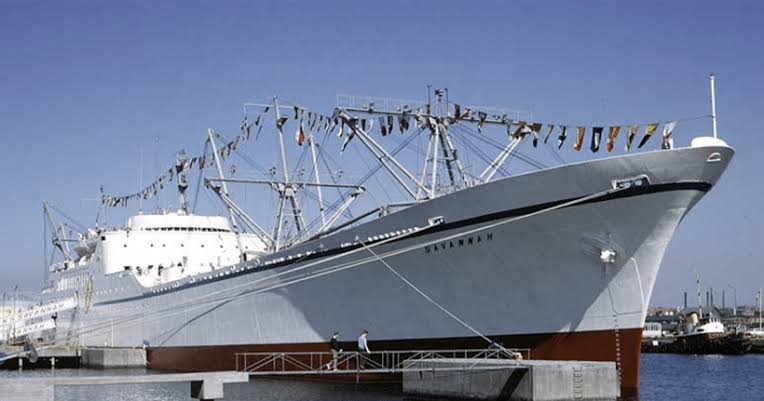
US and UK firm to push for Nuclear-Powered Merchant Fleet to curb China’s Shipbuilding

LONDON: The administration of US President Donald Trump is pushing to build a fleet of nuclear-powered merchant ships through a public-private partnership with a British company to counter China’s shipbuilding industry, the British daily Financial Times reported on the 24th (local time).

Maritime Administrator Stephen Carmack of the US Department of Transportation’s Maritime Administration (MARAD) announced in an interview with FT that a public-private memorandum of understanding would be signed that day with Core Power, a company headquartered in London.

The company has established a cooperative relationship with the Port of Corpus Christi in Texas, US.

Carmack said the signing of the memorandum will accelerate the development of nuclear propulsion technology for maritime shipping, adding that they will compete with China’s shipbuilding industry on technology rather than price.

The goal is to accelerate the creation of a US-flagged nuclear-powered merchant fleet by establishing a regulatory framework that ensures rapid licensing, insurance acquisition, port access, and high safety standards.

Core Power plans to begin construction of its first nuclear-powered vessel in 2028.

The company stated that it has raised about 200 million dollars, or approximately 277 billion won in Korean currency, from investors including major Japanese conglomerates such as Mitsui, Mitsubishi, and Sumitomo.

The agreement does not include federal funding guarantees.

Although nuclear propulsion technology has been used in military submarines for decades, it has failed to attract interest from the commercial sector due to high construction costs, port entry bans, and complex international liability regulations.

Currently, the country with the most civilian nuclear-powered ships is Russia, which has widely adopted the technology for Arctic icebreakers.

In June of this year, the American Bureau of Shipping (ABS) issued Approval in Principle, an initial-stage evaluation, for a nuclear-powered vessel design proposed by a Massachusetts Institute of Technology (MIT) marine consortium.

At an International Atomic Energy Agency (IAEA) event in Washington this week, senior US officials are scheduled to meet with representatives from countries such as Britain, France, Japan, and South Korea to discuss the development of nuclear shipping technology.

Mikal Bøe, CEO of Core Power, said it is strategically essential for the US and its allies to pursue nuclear-powered merchant ships because China is moving in that direction.

He stated that nuclear propulsion increases vessel speeds by 50% to 75% and allows them to carry more cargo, making it competitive compared to current fossil fuel-based systems.

“There are 8,200 ships suitable for nuclear propulsion that need to be replaced over the next 25 years,” he said. “We think we can capture 10 to 20 percent of those during that period.”

According to Core Power’s estimates, the fuel cost per ton over the lifecycle of a nuclear-powered vessel is expected to be between 690,000 and 830,000 won, a level comparable to conventional shipping fuels.

While many of the technical hurdles have been overcome, shipowners remain skeptical about liability issues in the event of an accident and the cost of the vessels.

Themisplokis Sapsis, a professor at the MIT consortium, explained that nuclear ships cannot become a reality without insurance because “someone has to pay the price if something goes wrong.”

He also noted that advances in reactor designs have improved safety, which is important for building favorable public opinion for nuclear-powered ships that require a common regulatory framework to move from country to country.

Industry executives also point out that nuclear-powered vessels will bring an entirely new economic model to the industry.

Currently, it is common for the charterer of a vessel to cover the fuel costs required for a voyage.

However, because nuclear-powered ships purchase their fuel at the time of construction and can operate for more than 20 years, costs are expected to be shared in a different way.

This has led to projections that new opportunities could be created to invest directly in capital expenditures during ship construction to ease the burden on shipowners and operators.

Concerns also remain regarding securing enough nuclear engineers to serve on commercial vessels, arranging resources to train existing crews, and public acceptance of nuclear-powered ships docking in ports.

Most industry executives forecast that nuclear-powered ships will enter service no earlier than the 2030s.

Source: SBS World News

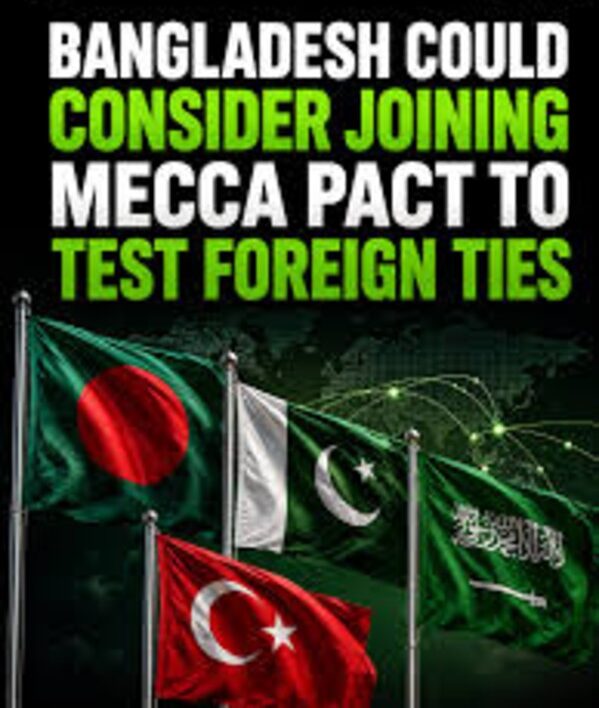
Bangladesh could consider joining Mecca pact, in test for foreign ties

DHAKA: Bangladesh could consider joining the Mecca pact, a mutual defence agreement signed this month ​between Saudi Arabia, Turkey and Pakistan, a minister said, a move that could complicate its foreign relations, particularly with neighbouring India.

Ties have been ‌strained as Bangladesh accused Indian border forces of forcibly pushing in people while it seeks extradition of former Prime Minister Smt Sheikh Hasina, who has lived in exile in India since her ouster in a protest movement in August 2024.

“If there is a security arrangement among Islamic nations in the Middle East, it is not unusual for us to consider participating. It is being viewed ​positively,” said Junior Foreign Minister Humayun Kabir. “They are inviting the leadership of Bangladesh, particularly Prime Minister Tarique Rahman, to come and participate,” he told ​reporters on Monday.

A source in the Bangladesh foreign ministry told Reuters that Saudi Arabia had invited Dhaka to join the ⁠pact, but did not say when the invitation was made. The source sought anonymity as he was not authorised to speak to media.

The three Sunni Muslim-majority countries ​signed the agreement, modelled on NATO’s collective-defence principle, in the Saudi holy city of Mecca this month.

They pledged that an armed attack on one member would be treated ​as an attack on all, amid heightened tension in the regional conflagration that has brought Iranian missile fire across the Middle East. Bangladesh, like Turkey, is a secular republic, although more than 90% of its population identifies as Sunni Muslim.

Asked for comment on the minister’s remarks, the embassies of Saudi Arabia, Turkey and Pakistan in the South Asian country did not immediately respond ​to requests for comment. Turkey, which has NATO’s second-largest army, has said the pact with nuclear-armed Pakistan and top oil exporter Saudi Arabia was open to expansion.

TEST OF ​LONG-STANDING FOREIGN POLICY
Analysts say joining a military alliance would test Bangladesh’s long-standing foreign policy of avoiding rival geopolitical camps to help it attract investment, expand exports and maintain economic ties ‌with competing ⁠powers. The economy relies on exports of readymade garments, most of which go to Britain, the European Union and the United States, while remittances from millions of workers abroad, mainly in the Middle East, are a major source of foreign exchange.

Formal alliance membership could complicate Bangladesh’s ties not just with India, but also China, Iran, Japan, Kuwait, Oman, Qatar, Russia, the United Arab Emirates and the United States, said geopolitical analyst Kollol Kibria. “These relationships would not automatically break, but once Bangladesh joins a military ​bloc, the question of which side Bangladesh ​is on becomes much harder to ⁠avoid,” Kibria said.

COMPLICATIONS IN TIES WITH INDIA
The invitation comes at a delicate moment in Bangladesh’s relations with India under Rahman’s six-month-old government, despite efforts by both to ensure cordial ties. The prime minister has yet to decide whether to visit India, Rahman’s spokesperson ​said this month, as Dhaka awaits New Delhi’s response to its extradition request for Hasina.

Dhaka has previously called for ​a “propitious environment” for such ⁠a visit after Hasina spoke to journalists in New Delhi this month, a move criticised by Bangladesh.

India’s foreign ministry spokesperson on the Mecca pact said it was closely following developments in West Asia.

Analysts said New Delhi was unlikely to welcome Bangladesh’s membership of a security alliance that includes arch foe Pakistan, although Dhaka would ultimately need to weigh ⁠the broader ​economic and strategic consequences of such a move.

The perception of alignment could create risks for Bangladesh’s ​export-driven economy, reliant on stable commercial and diplomatic ties with a wide range of partners, said Asif Shahan, a development studies professor at Dhaka University.

“If Bangladesh joins this alliance, several countries, including India, will ​not be pleased,” Shahan added. “However, that should not be the basis of Bangladesh’s decision.”

Source: Reuters

GCMD outlines practical approach to quantity assurance in marine biofuel supply chains

SINGAPORE: The Global Centre for Maritime Decarbonisation (GCMD) today released its report, Quantity assurance in marine biofuel supply chains, outlining a practical approach to help shipowners verify that they receive both the total quantity of fuel and the renewable content contracted. The approach draws on evidence from GCMD’s end-to-end marine biofuel supply chain trials conducted under commercial operating conditions.

Biofuels are purchased not only for their energy content, but also for the renewable content and emissions reductions they represent. The renewable fraction determines the green premium and underpins GHG accounting and regulatory compliance, yet blend ratios, such as B24 or B30, are typically supplier-declared rather than independently verified. Closing this verification gap will strengthen confidence in marine biofuel transactions.

Ensuring reliable measurement of total quantity transferred

Mass flow meters (MFMs) have become the preferred method for custody transfer, as they provide a transparent and auditable basis for determining the quantity of fuel transferred.

However, adding fatty acid methyl ester (FAME) to conventional marine fuels, such as Very Low Sulphur Fuel Oil (VLSFO) or High Sulphur Fuel Oil (HSFO), can reduce the final blend’s viscosity, potentially pushing it outside the validated operating range of the MFM installed on the bunker barge. To maintain measurement integrity, the viscosity of the final blend should therefore be assessed under the actual transfer conditions against the applicable MFM operating range. This can be managed through appropriate transfer-temperature control or by using MFMs that have been validated for broader ranges.

Verifying the renewable fraction in biofuel blends

Verifying the renewable fraction requires appropriate analytical methods. FAME-based blends can be verified through compositional analysis, while hydrotreated vegetable oil (HVO)-based blends require radiocarbon analysis because renewable and fossil hydrocarbons cannot be distinguished through compositional testing.

Interpreting analytical measurements, however, is not straightforward. Neat FAME may contain up to 3.5% non-ester material, so the measurable FAME content of a finished BXX blend may not exactly match its declared blend ratio.

Laboratory methods also have finite measurement precision. A difference between a measured result and a declared blend ratio therefore does not necessarily indicate incorrect blending or under-delivery.

Completing GCMD’s three-pillar biofuels assurance framework

Together, the three pillars of GCMD’s quality, quantity, and GHG emissions abatement assurance framework address whether the fuel is fit for use, delivers the claimed emissions reductions, and contains the contracted fuel quantity and renewable content.

Professor Lynn Loo, CEO of GCMD, said, “Buyers need confidence that they have received both the fuel and the renewable content they paid for. This report provides a practical, evidence-backed basis for verifying renewable fuel claims, protecting commercial value and supporting credible GHG accounting as marine biofuel use scales.”

Lloyd’s Register wins Austal contract for Australian Army landing craft program

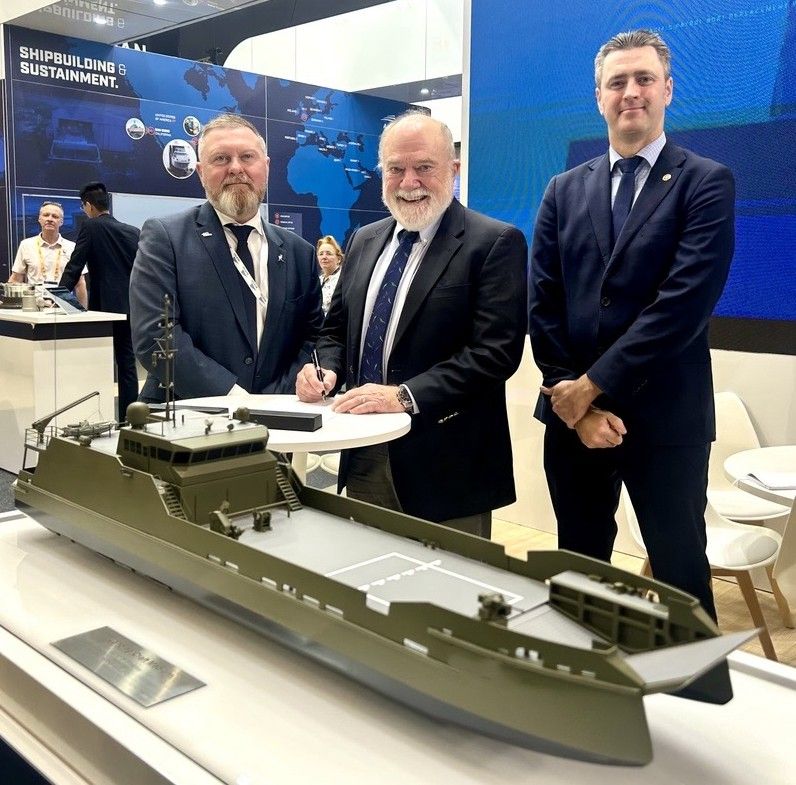
LONDON: Lloyd’s Register (LR) has secured a contract worth A$11m ($7.2m) from Austal Defence Australia (ADA) to provide naval classification services for the Australian Army’s Landing Craft Medium (LCM) platform.

The agreement will see LR provide classification services throughout the LCM build program, supporting vessel quality, compliance and assurance from construction through to delivery.

The over A$1.029 billion Design and Build Tasking Statement for 18 LCM vessels is being delivered by ADA under the Strategic Shipbuilding Agreement (SSA) and represents a major investment in sovereign shipbuilding and defence capability.

LR personnel will be embedded at the Henderson shipyard in Western Australia for the duration of the program.

LR will work alongside ADA to verify that construction activities and quality processes meet agreed standards throughout the vessel build program.

The award further strengthens LR’s position within Australia’s growing naval shipbuilding sector, following recent involvement in major defence program including the Hunter Class Frigate program and other new-build and sustainment projects across the region.

Steve McDowall, Director Naval Business Australasia at Lloyd’s Register, said: “Australia is making a significant long-term investment in sovereign continuous Naval shipbuilding capability, and platforms such as the Landing Craft Medium are critical to that ambition.

“We are proud to support Austal the Australian Department of Defence and the Australian Army by providing independent classification and assurance throughout the build programme, helping ensure these vessels are delivered safely, efficiently and to the highest standards.

“This agreement builds on a long-standing relationship between LR and Austal and reflects the confidence both industry and defence organisations place in independent assurance as they deliver increasingly complex maritime programs.

David Lloyd, Vice President Naval and Government Business at Lloyds Register, said: “Lloyds Register is proud to partner with ADA and Defence Australia on this extremely important Landing Craft Medium build program for the Australian Army.  We are committed to bringing our wide-ranging Naval capabilities to assist in ensuring its success and further supporting the Australian continuous Naval shipbuilding program.

Gavin Stewart, Executive General Manager Austal Defence Australia, said: “We welcome the continuation of our long-standing relationship with Lloyd’s Register on this important program. Independent classification provides valuable assurance throughout the construction process and supports our commitment to delivering the highest quality capability for the Australian Army.”

About Lloyd’s Register

Lloyd’s Register (LR) is a global professional services group specialising in marine engineering, technology and digital solutions. We were created more than 260 years ago as the world’s first marine classification society to improve and set standards for the safety of ships.

Today we are a leading provider of classification and compliance services to the defence, marine and offshore industries, helping our clients design, construct and operate their assets to accepted levels of safety and environmental compliance.

We also provide advisory services and digital solutions, supporting fleet and voyage performance and optimisation.  Through OneOcean, LR delivers integrated digital solutions supporting voyage planning, optimisation, compliance, training and fleet performance across more than 30,000 vessels globally. 

In the race to zero emissions, our research, advisory and technical expertise and industry-firsts are supporting a safe, sustainable maritime energy transition.

Lloyd’s Register Group is wholly owned by the Lloyd’s Register Foundation, a politically and financially independent global charity that promotes safety and education.

About Austal:

Austal is Australia’s global shipbuilder and defence prime contractor designing, constructing and sustaining some of the world’s most advanced commercial and defence vessels. In August 2025 the Australian Government appointed Austal Defence Australia Pty Ltd, a subsidiary of Austal Ltd, as its Strategic Shipbuilder for the construction of key Defence vessels in Western Australia.

For almost 40 years Austal has contracted more than 360 vessels for over 122 commercial and defence operators in 59 countries, worldwide.

Austal is Australia’s largest defence exporter and first ASX-listed shipbuilder. Austal has industry-leading shipyards in Australia, the United States of America, the Philippines and Vietnam, with service centres worldwide.

Austal manufactures and delivers large, complex vessels to the United States Department of Defense, United States Coast Guard, Australian Department of Defence and Australian Department of Home Affairs and other defence and border force agencies around the world.

Having designed, manufactured and delivered iconic monohull, catamaran and trimaran commercial vessel platforms – including the world’s largest trimaran ferry and multiple defence programs such as the Littoral Combat Ship (LCS) and Expeditionary Fast Transport (EPF) for the United States Navy, Austal’s capability has expanded to include the delivery of Offshore Patrol Cutters for the United States Coast Guard, nuclear submarine modules for US Virginia and Columbia class submarines, auxiliary vessels for the United States Navy and landing craft and patrol boats for the Australian Department of Defence.

DBMatic and Weforsea Shipping turn long-standing collaboration into maritime technology company MariControl

URK (THE NETHERLAND): DBMatic, part of De Boer Marine, and Weforsea Shipping have joined forces to launch MariControl, a new maritime data technology company built on years of cooperation between the two businesses. DBMatic brings experience in onboard hardware and data infrastructure, while Weforsea Shipping adds software and maritime digitalisation expertise.

The idea grew out of the two companies increasingly working on different parts of the same vessel data chain. By integrating data collection, onboard hardware, connectivity, software and AI-driven analysis, MariControl aims to give shipowners and operators one environment in which vessel data can be collected, interpreted and used.

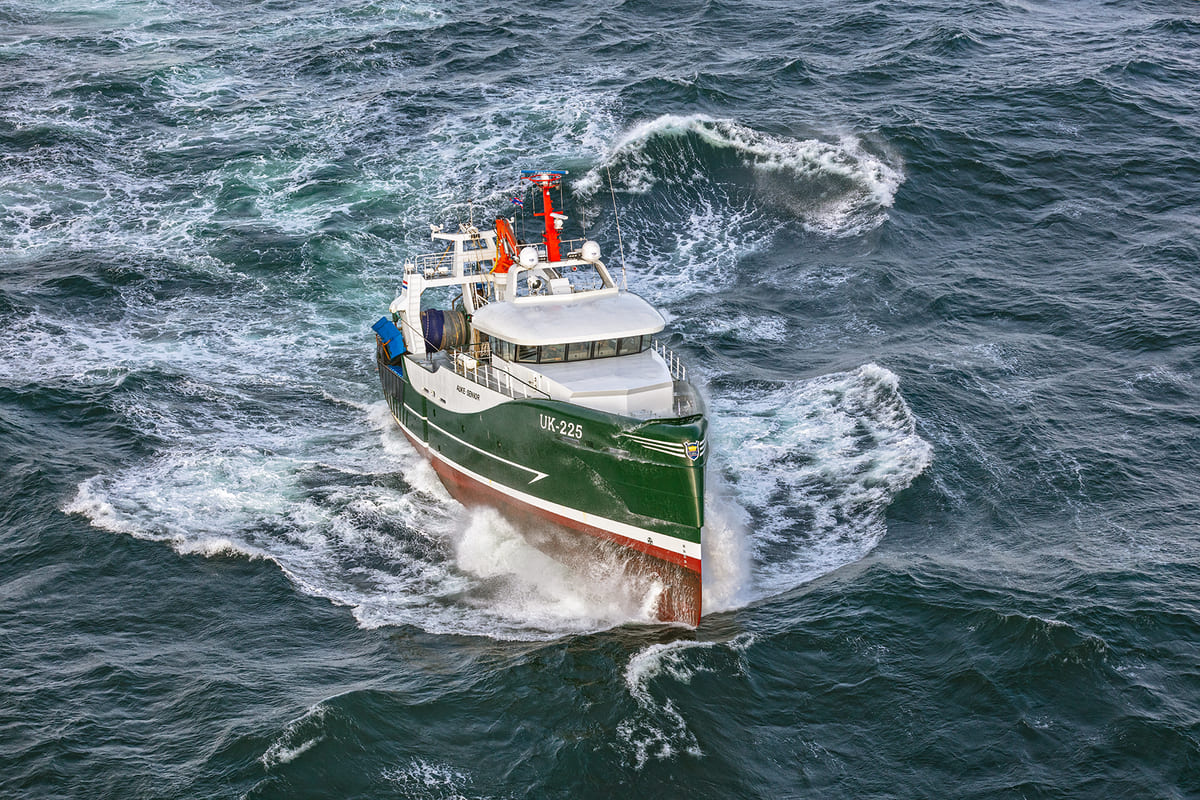
DBMatic and Weforsea technology is already installed on more than 250 vessels. One example is the modern fishing trawler UK225 Auke Senior, where DBMatic hardware and sensors are integrated with Weforsea software to provide voyage optimisation, energy-efficiency insights, market data and weather information through a single dashboard.

MariControl will serve the shipping and fishing industries as operators face growing pressure to reduce fuel consumption and emissions, simplify reporting requirements and turn growing volumes of onboard data into useful operational insight. Rather than adding another standalone system, MariControl will connect onboard sensors, equipment and communications infrastructure with software, dashboards and AI-driven analytics. The goal is to make vessel data more useful in day-to-day decisions on board and ashore.

Applications will include vessel performance monitoring, predictive maintenance, weather routing, fuel and emissions optimisation, digital reporting and compliance, as well as AI-supported tools for the fishing industry. The platform can, for example, help determine which route offers the best balance between fuel consumption, weather and voyage time.

MariControl Managing Director Louwe Post said: “The future of the maritime industry does not lie in standalone systems, but in one intelligent ecosystem where data, hardware and AI work seamlessly together. MariControl brings those elements together in one platform.”

One of MariControl’s first areas of focus will be digital reporting and compliance. Reporting modules are intended to reduce administrative workload for shipowners and crews by using data already available from the vessel, without immediately requiring major new hardware installations on board. This comes as maritime reporting becomes increasingly digitalised and regulatory requirements continue to grow.

MariControl will initially focus on customers in the Netherlands and the wider European market, with the ambition to expand internationally over the coming years. The new company will also be introduced to the maritime market at SMM Hamburg. For existing customers of DBMatic and Weforsea Shipping, current service agreements, installed systems and existing points of contact will continue.

Co-owner Meindert-Jan de Boer added: “MariControl was founded on the belief that the maritime industry needs more than a technology supplier. By combining our expertise in hardware, software and AI, we want to help maritime businesses turn their own operational data into better decisions and prepare for the next phase of digitalisation.”

About MariControl
MariControl is a maritime data technology company created by DBMatic and Weforsea Shipping. The company combines onboard hardware, software, connectivity and AI to help shipping and fishing companies improve vessel performance, reduce fuel consumption and support better operational decision-making. MariControl also develops reporting and compliance solutions aimed at reducing administrative workload for shipowners and crews.

“India plans 100 new ships to cut $75 billion foreign freight bill:” Sarbananda Sonowal at ‘Sagar Samvad’ of National Shipping Board

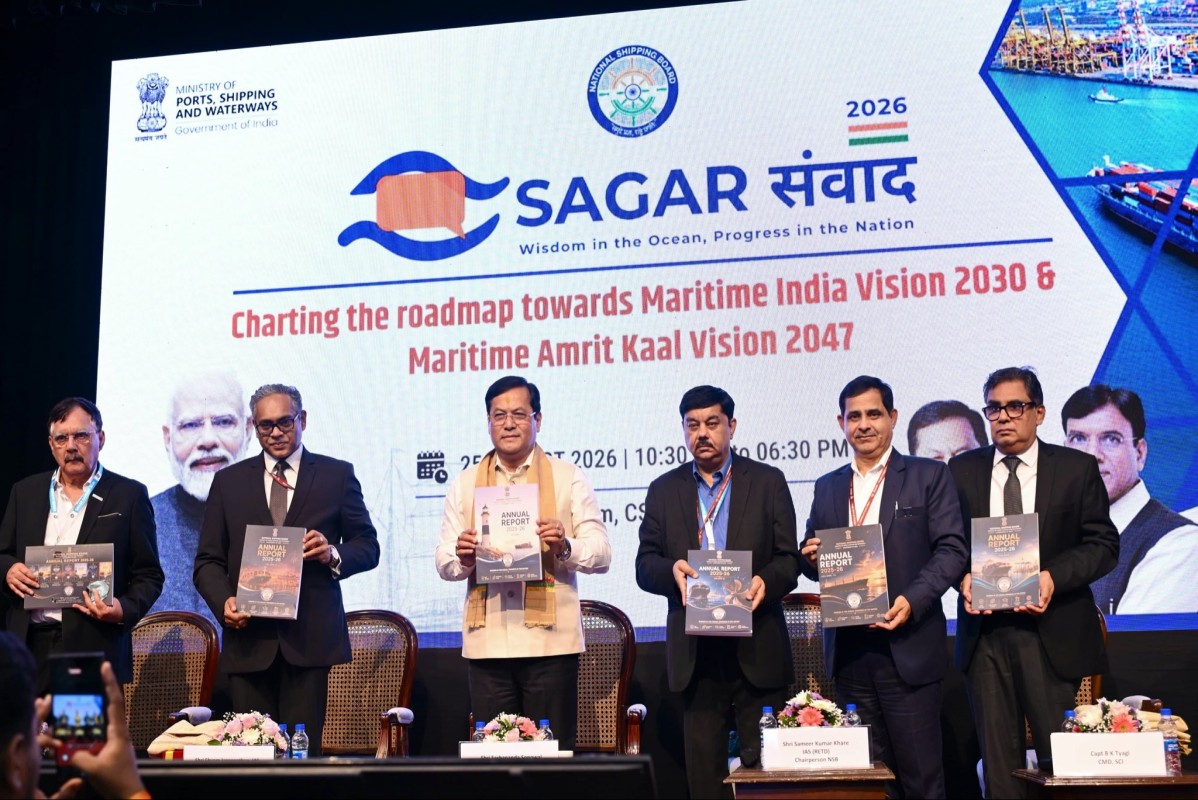
NEW DELHI : The National Shipping Board (NSB) held its first ‘Sagar Samvad’ on here on Tuesday, using the day-long dialogue to press for a five-point roadmap including to add 100 vessels to India’s foreign-dependent merchant fleet over the next five years, as expressed by the Union Minister of Ports, Shipping & Waterways (MoPSW), Shri Sarbananda Sonowal during his speech.

SONOWAL BHARAT NIRMAN SUMMIT 1 2 “India plans 100 new ships to cut $75 billion foreign freight bill:” Sarbananda Sonowal at ‘Sagar Samvad’ of National Shipping Board

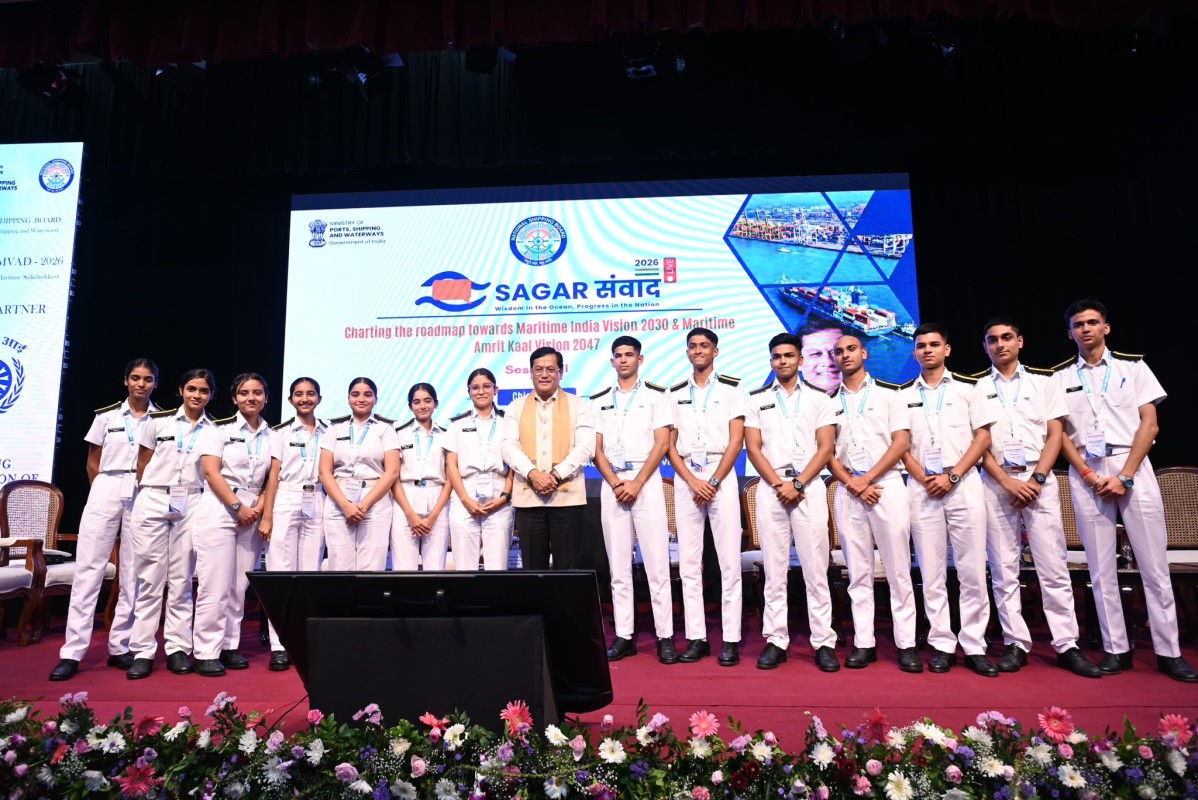
The event, themed “Charting the Roadmap Towards Maritime India Vision 2030 and Maritime Amrit Kaal Vision 2047,” was held at the Civil Services Officers Institute on Vinay Marg and drew senior officials, shipowners, financiers and young cadets from India’s maritime training institutes. Sagar Samvad, which means “ocean dialogue,” carries the board’s motto as its theme line: “Wisdom in the Ocean, Progress in the Nation.”

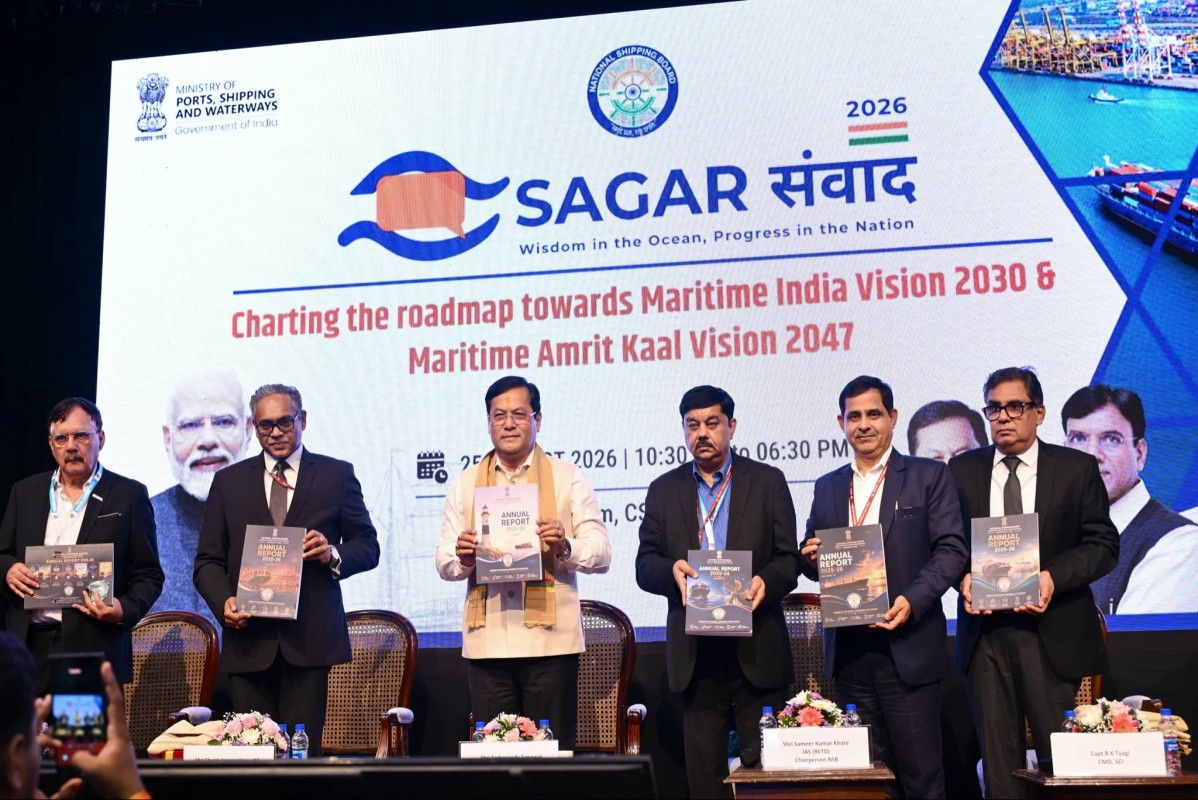
The inaugural edition of Sagar Samvad was chaired by Union Minister Sarbananda Sonowal, who launched the board’s first official website. NSB Chairperson Sameer Kumar Khare used the session to submit the board’s annual report for 2025-26, subcommittee reports containing the policy advice for the government to Sonowal, outlining the board’s work since its reconstitution in May 2025.

“The National Shipping Board (NSB) is older than the ministry it advises, a statutory body constituted in 1958 with one job: make sure India’s shipping policy is written only after listening to the people who sail it, own it and pay for it,” Sarbananda Sonowal said. “Under the dynamic leadership of Prime Minister Narendra Modi, under the re-enacted Merchant Shipping Act, 2025, and the new National Shipping Board Rules, the mandate has been renewed and strengthened. That is exactly why a platform like ‘Sagar Samvad’ matters, bringing policymakers, industry captains, technocrats and civil society into one room to argue, test ideas and build intellectual consensus in the open as per the highest tradition of a thriving democracy like India. That consensus, and nothing else, is what will carry us to an Atmanirbhar Shipping Bharat by 2047.”

WhatsApp Image 2026 08 26 at 8.07.55 AM “India plans 100 new ships to cut $75 billion foreign freight bill:” Sarbananda Sonowal at ‘Sagar Samvad’ of National Shipping Board

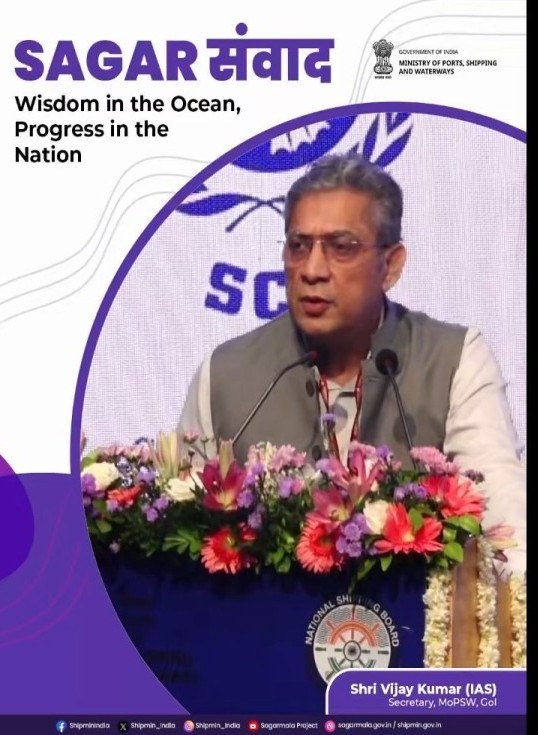
Also in attendance was Vijay Kumar, Secretary of the Ministry of Ports, Shipping and Waterways. Sonowal held a special interaction with trainee officers from maritime training institutes, taking questions from what organisers called the sector’s “Yuva Shakti,” or youth power. Sonowal also acknowledged the success of the Container Manufacturing Assistance Scheme, worth ₹10,000 crore, with global shipping major Maersk now ordering containers built on Indian soil.

“I welcome the National Shipping Board’s five-point roadmap, fiscal reform, assured cargo support, access to competitive financing, regulatory streamlining and a genuine ease of doing business,” Sarbananda Sonowal said. “Taken together, these are not five separate tasks; they are the architecture of a nation choosing, at last, to own its own trade. Under the visionary leadership of Prime Minister Shri Narendra Modi, we are quadrupling our port capacity to 10,000 million tonnes a year by 2047. NSB’s task is to ensure Indian shipowners stand inside that growth, not watching it sail past on someone else’s deck.”

Later in the day, a session on “Maritime Labour Force: Opportunities and Challenges” was chaired by Union Minister of Labour & Employment and Youth Affairs & Sports, Shri Mansukh Mandaviya. The session took up the state of India’s seafaring workforce, among the largest in the world, against the board’s own findings on wage taxation, pension gaps and welfare provisions facing Indian seafarers, tying the government’s youth and labour policy directly to the country’s maritime ambitions.

Speaking at the session, Union Minister Mansukh Mandaviya said, “India’s maritime sector has the potential to become a major engine of employment for our young workforce and position India as the world’s leading supplier of skilled seafarers. Under the leadership of our dynamic Prime Minister Narendra Modi, we are expanding quality training capacity, with steps taken to strengthen industry-led skilling, create wider employment pathways, address gender disparity and equip our workforce with skills for emerging segments such as cruise shipping and advanced shipbuilding. A skilled and future-ready maritime workforce will be central to achieving our Maritime India Vision 2030 and building India’s shipbuilding capabilities under Maritime Amrit Kaal Vision 2047.”

Union Minister Mansukh Mandaviya emphasised that India must leverage the expanding global demand for skilled maritime professionals to create high-quality employment opportunities for its growing youth population. He called for coordinated efforts among the government, maritime industry, trade bodies and training institutions to expand training capacity, strengthen market outreach for Indian seafarers and build future-ready skills. He also emphasised the need to address gender disparity in maritime employment, develop specialised talent for emerging segments such as cruise shipping and create a skilled workforce capable of supporting India’s ambition to become one of the world’s leading shipbuilding nations.

shantanu thakur sagar samvad “India plans 100 new ships to cut $75 billion foreign freight bill:” Sarbananda Sonowal at ‘Sagar Samvad’ of National Shipping Board

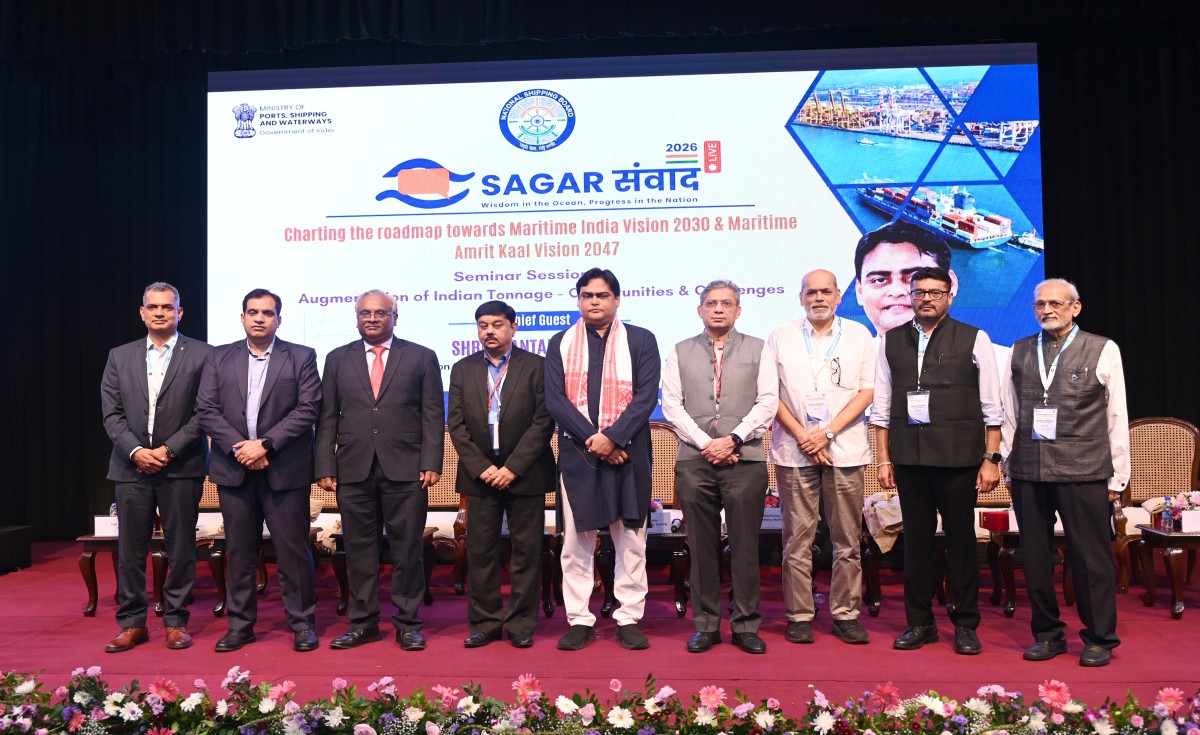
The Union Minister of State for Ports, Shipping and Waterways, Shantanu Thakur presided over a panel discussion titled “Augmentation of Indian Tonnage: Opportunities and Challenges.”

“India pays close to $75 billion every year in freight to foreign shipping lines, to move cargo as critical as our crude oil, our gas, our coal and our urea,” Shantanu Thakur said. “That is not a performance problem for Indian shipowners, it is a competitiveness and demand-partnership problem. For India to become a Viksit Bharat by 2047, we cannot depend on the goodwill of others to secure our own trade routes. We must command our own waterline.”

The session also featured addresses by Capt. M.P. Basin and C.V. Subbarao. The valedictory panel on tonnage augmentation saw Atul Jadhav, Vice-President of the Indian Maritime Foundation; Anil Devli, Chief Executive Officer of the Indian National Shipowners’ Association and an NSB member; Capt. S.I.A.K. Azad, Nautical Adviser at the DGMA; Ashutosh Sharma, Chief General Manager at the International Financial Services Centres Authority in Gandhinagar; Rahul Modi, President of the Container Shipping Lines Association and an NSB member; and Capt. Pankaj Kumar, Managing Director of Diamond Blue Shipping Solutions.

Panelists said flying the Indian flag remains 16% to 20% costlier than operating under a foreign one, a gap they attributed to India’s tax on ship imports and maintenance services, tax deducted at seafarers’ wages, tax on freight and higher domestic capital costs, expenses foreign competitors do not carry. Yet under the sector’s Right of First Refusal mechanism, Indian owners are still expected to match foreign freight rates to win cargo, the panel said.

The panel proposed a five-pillar roadmap: fiscal reform, assured cargo support, access to competitive financing, regulatory streamlining and improved ease of doing business (EODB). The measures, if adopted, could help India add 100 ships to its fleet within five years, a step toward the Maritime Amrit Kaal Vision, or MAKV, 2047 target of ranking among the world’s top five ship owning nations, the panel argued.

In his welcome speech, NSB Chairperson, Sameer Kumar Khare said, “This entire effort draws inspiration from the vision of our Prime Minister, who has placed the Blue Economy at the centre of Viksit Bharat under the Maritime Amrit Kaal Vision 2047. Under the decisive leadership of Shri Sarbananda Sonowal, that vision has translated into high-impact infrastructure, port modernisation, and green shipping reforms on the ground.”

The National Shipping Board (NSB) is a statutory advisory body under the Merchant Shipping Act, 2025, that counsels the government on shipping policy, tonnage, seafarer welfare and port-linked maritime development.

The inaugural edition of ‘Sagar Samvad’ programme of NSB brought together maritime stakeholders, industry representatives and experts across three sessions, with discussions centred on the roadmap for Maritime India Vision 2030 and Maritime Amrit Kaal Vision 2047. One of the sessions focused on “Maritime Labour Force: Opportunities & Challenges”, covering employment generation, seafarer skills, workforce development and emerging opportunities in the sector. Another session, “Augmentation of Indian Tonnage: Opportunities & Challenges”, examined the need to expand India’s shipping fleet and strengthen the country’s maritime capacity. The deliberations provided a platform for industry and stakeholders to share perspectives on building a stronger, more competitive and future-ready Indian maritime sector.

Gujarat CM holds round table meetings with entrepreneurs of TiE Toronto and Canadian Hindu Chamber of Commerce

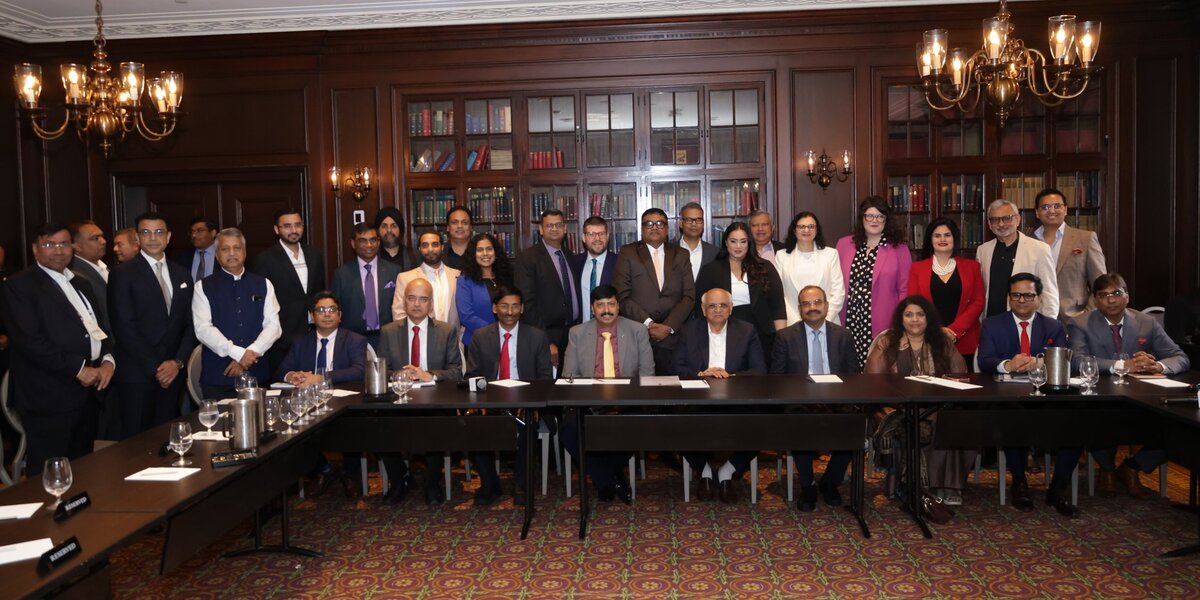
TORONTO: On the second day of the Gujarat delegation’s visit to Toronto as part of its US-Canada tour in connection with the Vibrant Gujarat Summit-2027, two round table meetings were organised under the leadership of Chief Minister Shri Bhupendra Patel.

As part of this series of round table meetings, the Chief Minister held a meeting with around 30 representatives of TiE – The Indus Entrepreneurs.

During his interaction with startup founders, entrepreneurs and TiE members, he discussed Prime Minister Narendra Modi‘s futuristic vision of building a globally competitive, innovation-driven economy, according to the CMO.

Referring to Gujarat’s emergence as the growth engine of the nation’s development, the Chief Minister held discussions on further strengthening collaboration and partnerships between Canadian enterprises and Gujarat-based enterprises, particularly in the fields of technology, public policy, financial services and fintech. He also apprised TiE members of the State’s robust startup ecosystem, investor-friendly policies and world-class infrastructure facilities.

TiE Toronto was established in 2000 with the objective of serving as a bridge connecting the Government of Canada and the business community with successful Canadian entrepreneurs across the world. TiE members come from diverse sectors such as software, hardware, healthcare, biotech, media, telecom, IT services and financial institutions. Entrepreneurs, investors, experts and industry leaders connect through TiE to share knowledge and experience, build contacts and promote business development.

During his discussions with these members, the Chief Minister invited them to explore opportunities for investment, innovation and scaling in Gujarat ahead of the upcoming Vibrant Gujarat Summit-2027, the CMO stated.

Gujarat CM Canada Chamber of Commerce 1 Gujarat CM holds round table meetings with entrepreneurs of TiE Toronto and Canadian Hindu Chamber of Commerce

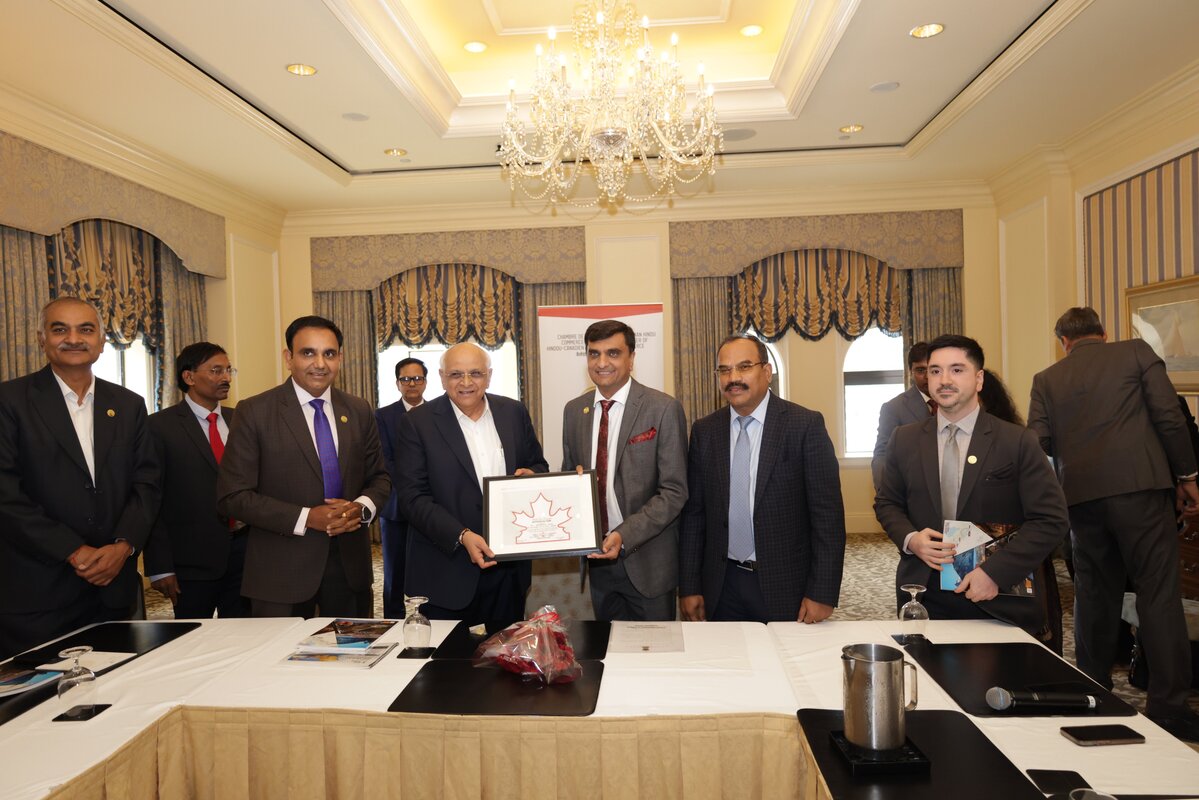
In another round table meeting with the Canadian Hindu Chamber of Commerce, the Chief Minister appreciated CHCC’s keen interest in participating in the Vibrant Gujarat Summit-2027.

Chief Minister expressed confidence that the new avenues for B2B engagements, investments and partnerships resulting from this interaction would further strengthen economic ties between Canada and Gujarat, the CMO highlighted.

Chief Secretary MK Das, Additional Chief Secretary of the Finance Department T Natarajan, Additional Chief Secretary of Industries Mamta Verma, and other senior secretaries of the Gujarat delegation also joined the Chief Minister during the round table meeting.

GMU hosts ‘Coast Connect 2026’: Workshop on the Coastal Shipping Act, 2025

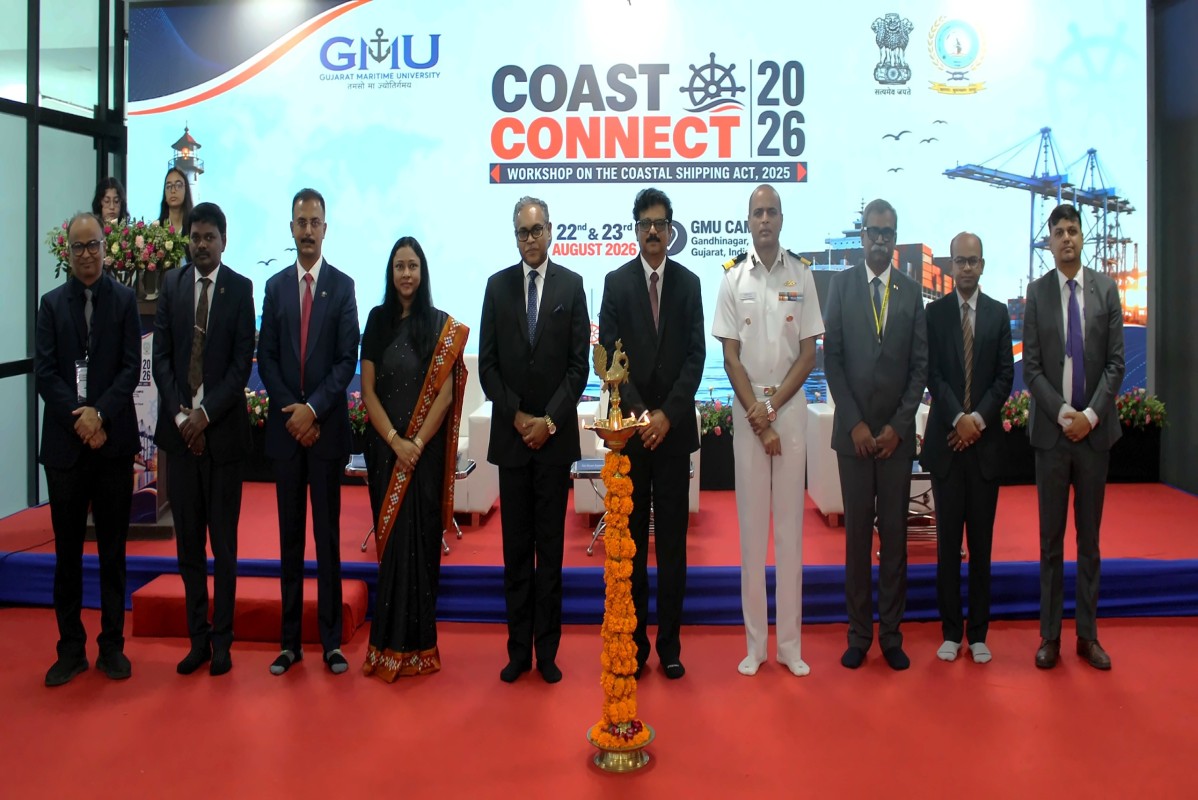
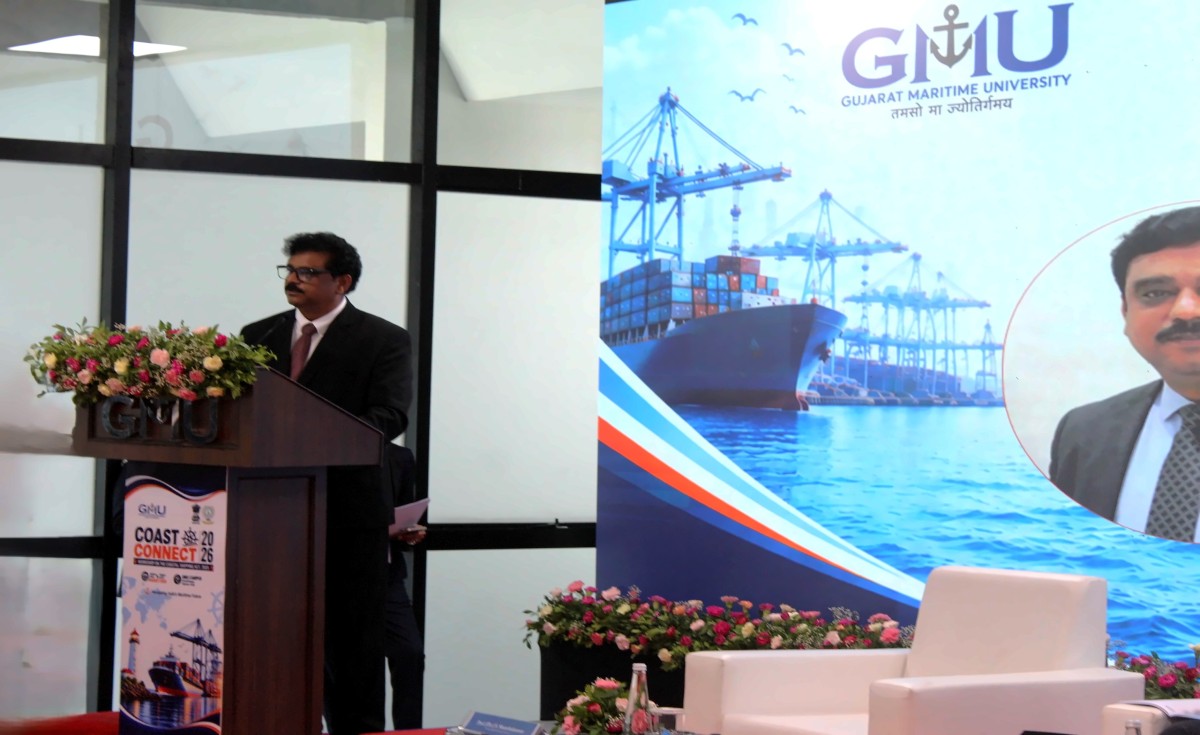
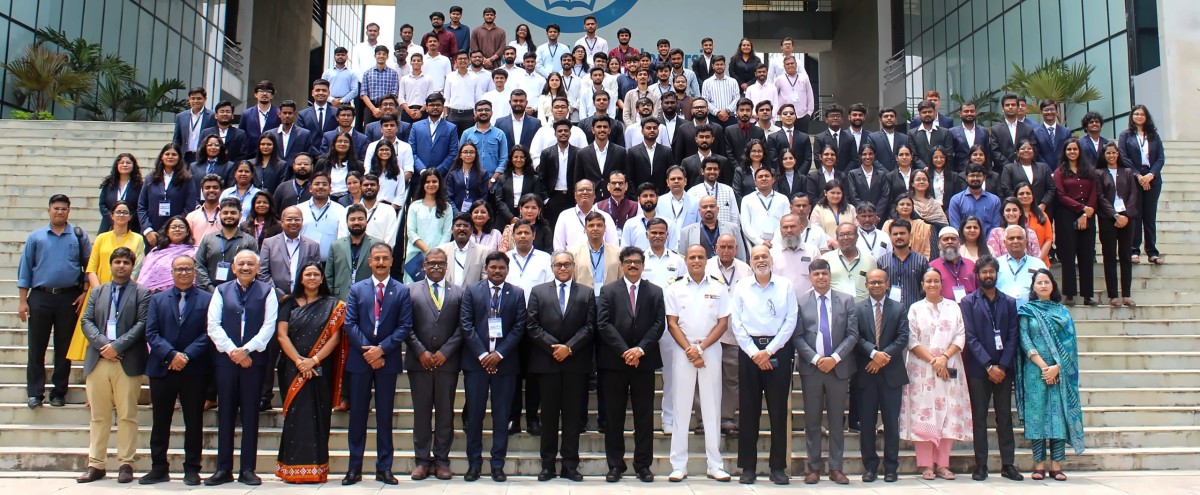
GANDHINAGAR: Gujarat Maritime University (GMU) organised a two-day workshop, “Coast Connect 2026,” in collaboration with the Directorate General of Maritime Administration (DGMA), Government of India, and the Centre for Social Knowledge and Action (SETU). The workshop was dedicated to the Coastal Shipping Act, 2025, and the future of India’s coastal shipping ecosystem.

The workshop brought together participants from across India’s maritime ecosystem — including shipping companies, port authorities, logistics and supply chain professionals, policymakers and regulators, academics and researchers, technology providers, marine insurers and financiers, and fishing communities — to deliberate on the opportunities, challenges, and practical pathways for implementing the new legislation.

Inauguration by the Director General of Maritime Administration

The workshop was inaugurated by Shri Shyam Jagannathan, IAS, DGMA, as Chief Guest, in the presence of Shri Aniket Singh, Deputy Inspector General, Indian Coast Guard; Prof. (Dr.) S. Shanthakumar, Provost, Gujarat Maritime University; along with senior officials, maritime professionals, academics, experts, faculty members, and students.

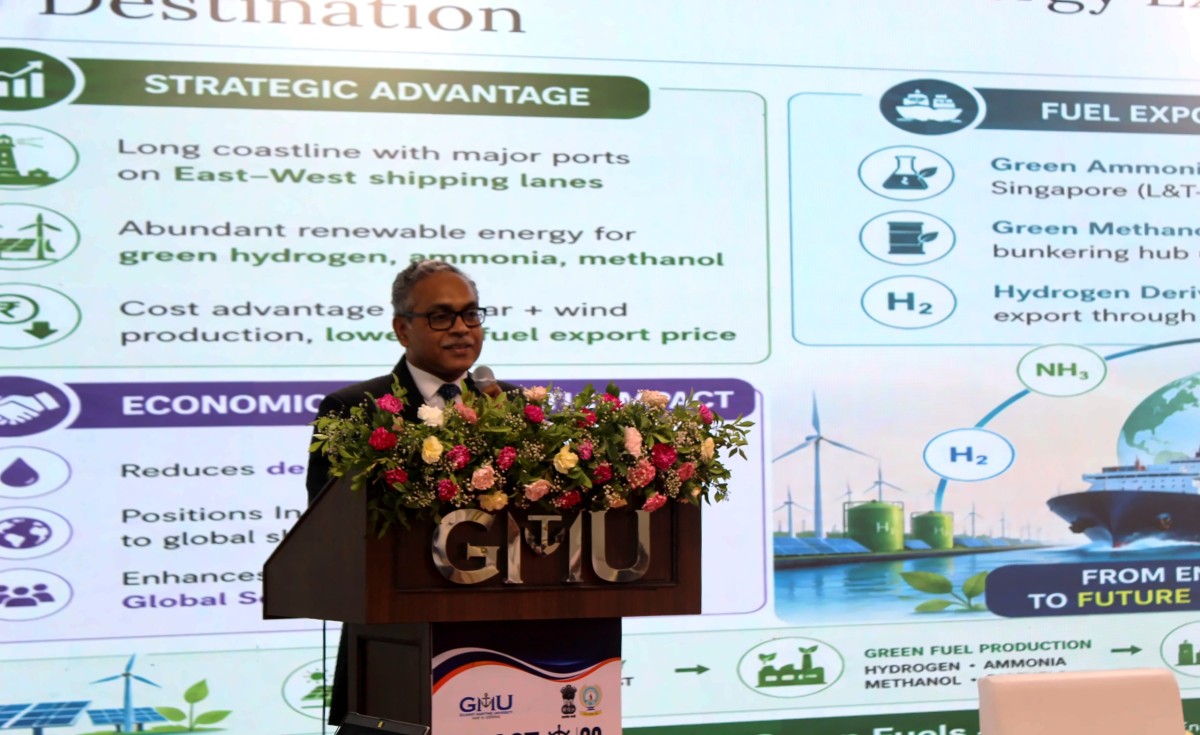
Delivering the keynote address, Shri Jagannathan emphasised the role of universities in generating research and policy dialogue to inform effective maritime regulation, while drawing attention to port development, ship recycling, workforce welfare, and India’s transition towards green ports, green ships, and maritime decarbonisation.

Indian Coast Guard DIG Shri Aniket Singh highlighted the complementary relationship between maritime security and maritime commerce, and outlined the Coast Guard’s role in law enforcement, search and rescue, pollution response, and environmental protection.

GMU Provost Prof. (Dr.) S. Shanthakumar highlighted the potential of coastal shipping as a cost-effective, energy-efficient, and environmentally sustainable mode of transportation. He emphasised its potential to reduce logistics costs, strengthen connectivity, and contribute to the vision of Aatmanirbhar Bharat and Viksit Bharat.

Four Thematic Tracks

The workshop’s deliberations were organised around four thematic tracks, offering a comprehensive examination of the economic, regulatory, technological, and social dimensions of coastal shipping:

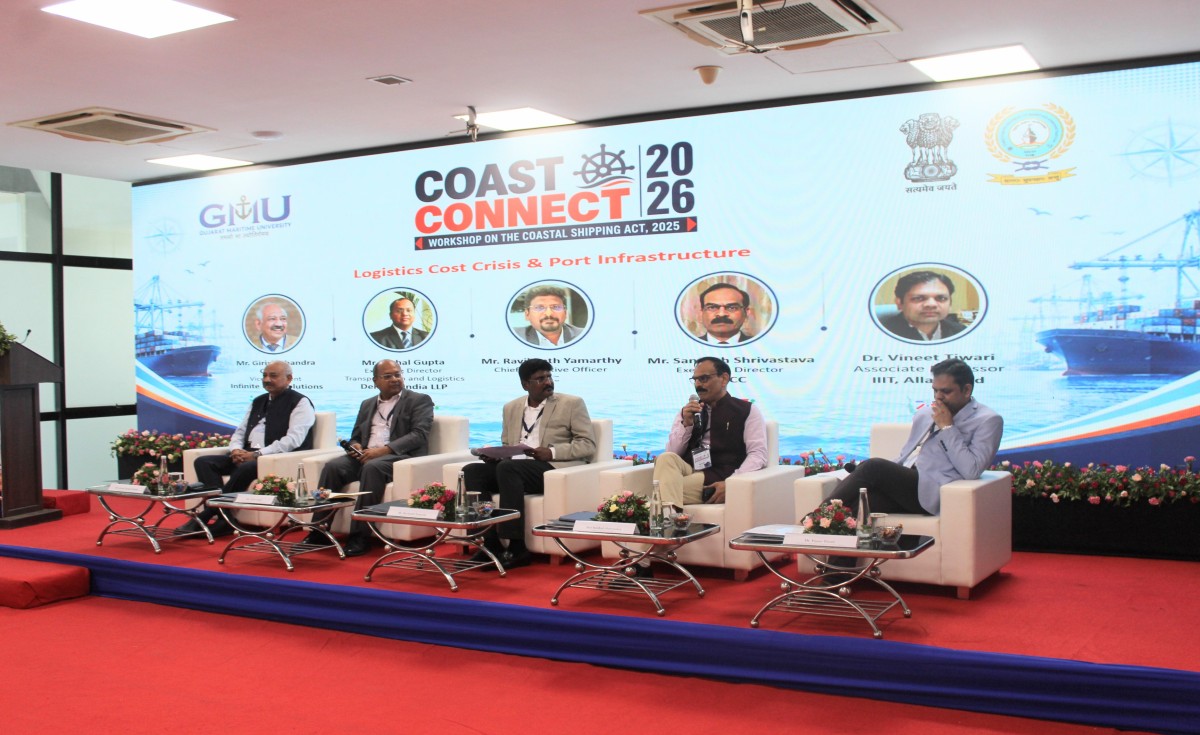
Track A – “Logistics Cost Crisis & Port Infrastructure”

Track A.JPG GMU hosts 'Coast Connect 2026': Workshop on the Coastal Shipping Act, 2025

This track examined the infrastructure and commercial ecosystem required to make coastal shipping a viable component of India’s multimodal logistics network, covering port readiness, cargo aggregation, multimodal connectivity, Dedicated Freight Corridors, coastal terminals, last-mile connectivity, PPP models, investment, and workforce development.

Panellists emphasised that coastal shipping cannot operate as an isolated transport mode — effective integration of ports with rail, road, and inland waterways is essential to achieving meaningful reductions in end-to-end logistics costs — and highlighted the importance of specialised maritime and logistics skills to support the sector’s expansion.

The track featured Mr. Ravi Kumar Moka, Ship Surveyor-cum-Deputy Director General (Tech.) (Coastal), Directorate General of Maritime Administration; Mr. Ravikanth Yamarthy, Chief Executive Officer, Logistics Skill Council; Mr. Vishal Gupta, Executive Director – Transportation and Logistics, Deloitte India LLP; Shri Sandesh Shrivastava, Executive Director, DFCC, New Delhi; Mr. Girish Chandra Gandhi, Vice President, Infinite Civil Solutions Pvt. Ltd.; and Dr. Vineet Tiwari, Associate Professor, Indian Institute of Information Technology, Allahabad.

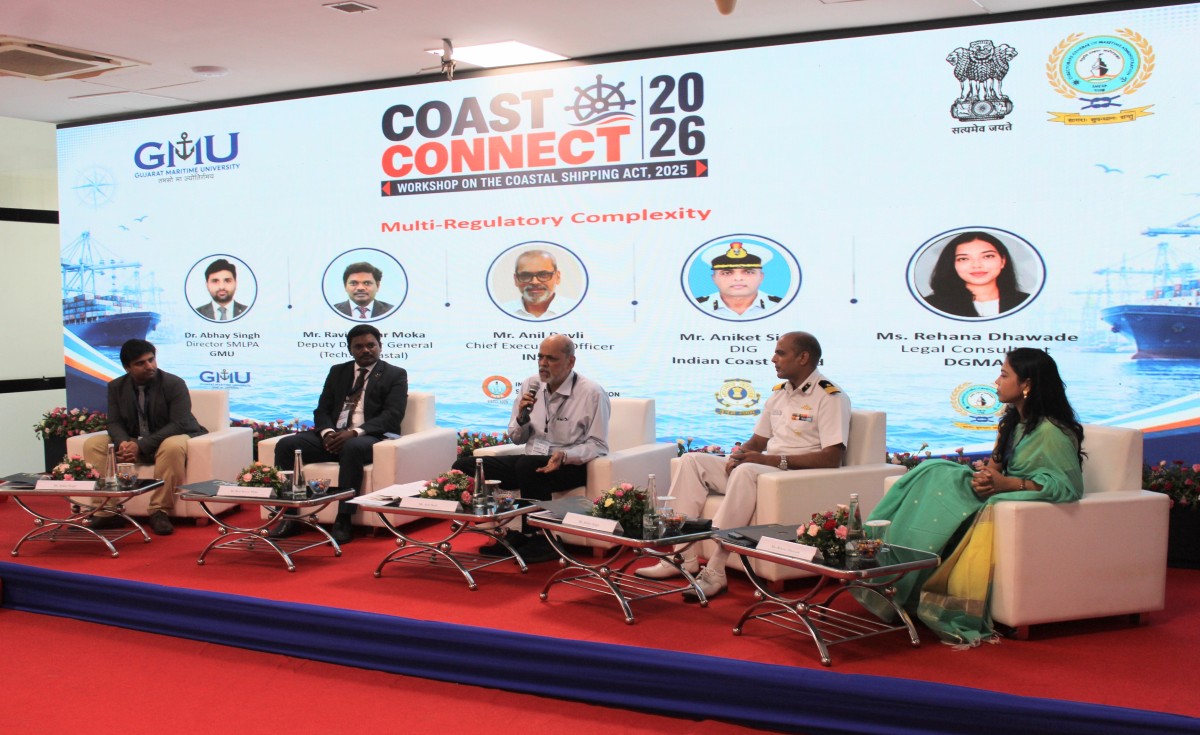
Track B – “Multi-Regulatory Complexity”

Track B.JPG GMU hosts 'Coast Connect 2026': Workshop on the Coastal Shipping Act, 2025

This track addressed the legal and regulatory architecture of the Coastal Shipping Act, 2025, including cabotage, licensing, jurisdiction, regulatory compliance, and the interaction of the new legislation with existing maritime laws and international frameworks. Panellists placed particular emphasis on regulatory clarity, predictable timelines, and streamlined processes as essential to ease of doing business and investor confidence, and examined the complexities arising from the application of different laws across India’s maritime zones.

The track featured Mr. Anil Devli, Chief Executive Officer, Indian National Shipowners’ Association (INSA); Mr. Ravi Kumar Moka; Mr. Aniket Singh, DIG, Indian Coast Guard; Dr. Abhay Singh, Director (I/c), School of Maritime Law, Policy & Administration, GMU; and Ms. Rehana Dhawade, Legal Consultant, DGMA.

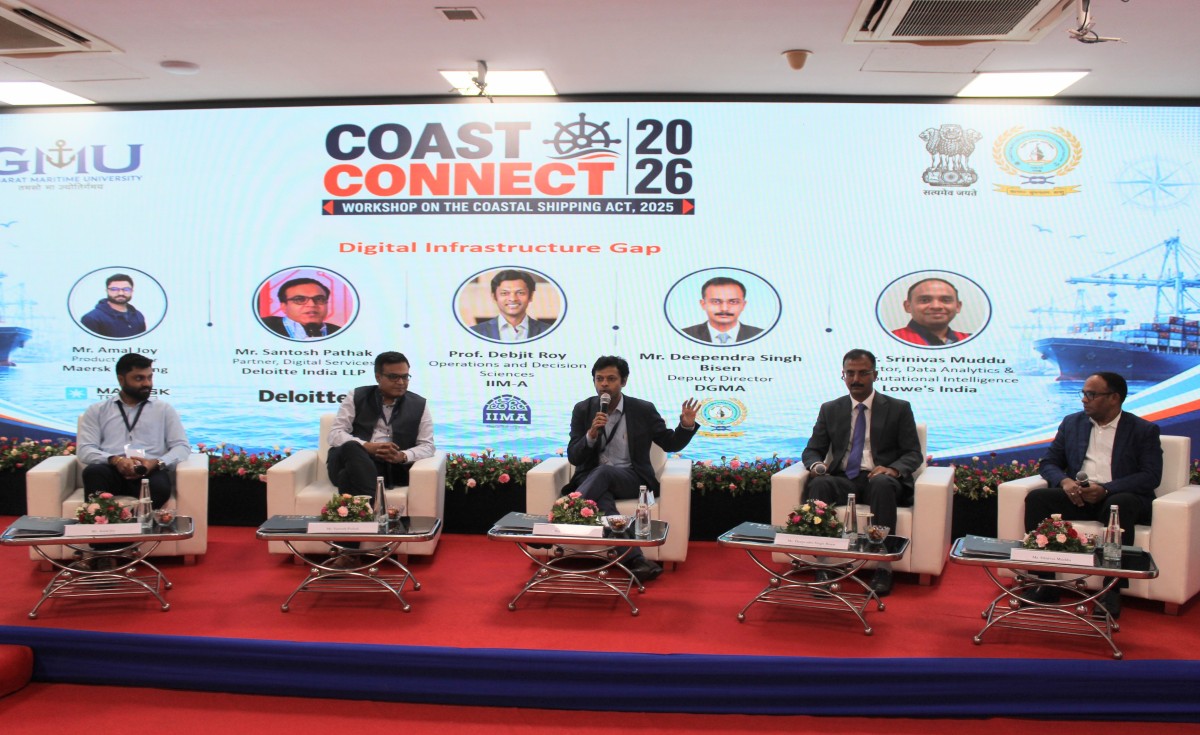
Track C – “Digital Infrastructure Gap”

Track D.jpg GMU hosts 'Coast Connect 2026': Workshop on the Coastal Shipping Act, 2025

This track focused on the technological foundations required for effective implementation of the Act and the future growth of coastal shipping, covering digital infrastructure, data integration, AI, cybersecurity, AIS/VMS, national databases, and technology-enabled regulatory systems. A key point of discussion was the proposed National Database for Coastal Shipping, which seeks to integrate information across multiple platforms and organisations to improve real-time visibility, transparency, regulatory compliance, and data-driven decision-making.

The track featured Prof. Debjit Roy, Operations and Decision Sciences, IIM Ahmedabad; Mr. Deependra Singh Bisen, Deputy Director, Directorate General of Maritime Administration; Mr. Srinivas Muddu, Director, Data Analytics & Computational Intelligence, Lowe’s India; Mr. Santosh Pathak, Partner, Digital Services, Deloitte India LLP; and Mr. Amal Joy, Product Owner, Maersk Training.

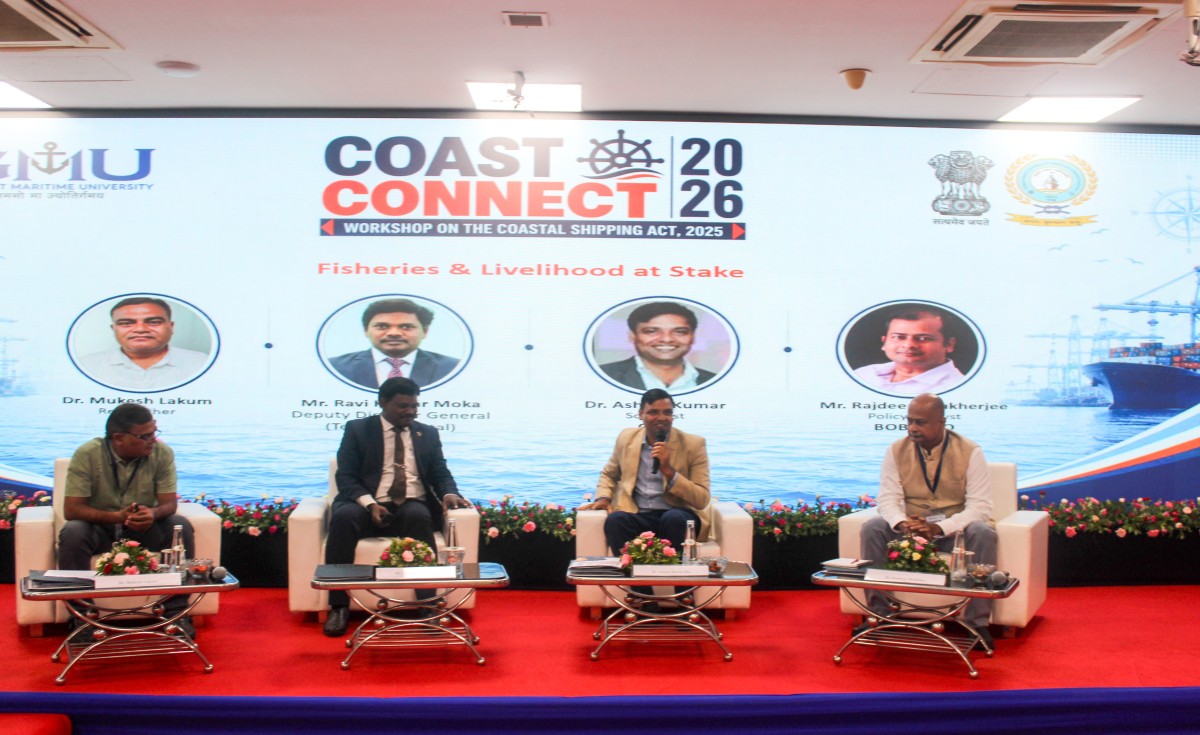
Track D – “Fisheries & Livelihood at Stake”

Track C.jpg GMU hosts 'Coast Connect 2026': Workshop on the Coastal Shipping Act, 2025

This track brought the concerns of coastal communities into the wider policy dialogue, examining the relationship between commercial maritime activity and fisheries, traditional livelihoods, access to fishing grounds, and safety — underscoring the need for maritime development to remain sensitive to the communities dependent on India’s coastal waters.

The track featured Dr. Rajdeep Mukherjee, Policy Analyst; Mr. Ravi Kumar Moka; Dr. Ashish Kumar Jha, Scientist, CIFT, Veraval, Gujarat; and Dr. Mukesh Lakum, Researcher, SETU: Centre for Social Knowledge and Action.

A dedicated coastal community panel, moderated by Dr. Dharmesh Raval, Director, School of Maritime Management, GMU, brought together representatives of coastal communities, providing an important platform for direct community perspectives.

Across the four tracks, the workshop underscored that the success of the Coastal Shipping Act, 2025 will depend on more than legislative reform. Integrated infrastructure, regulatory predictability, digital systems, skilled human resources, maritime security, environmental sustainability, and protection of coastal livelihoods will all be critical to translating the potential of coastal shipping into tangible economic and social outcomes.

Coast Connect 2026 reaffirmed Gujarat Maritime University’s commitment to fostering meaningful government–industry–academia–community engagement and to contributing to a contemporary, responsive, and inclusive maritime regulatory framework for India’s coastal shipping sector.

GMU group coast connect GMU hosts 'Coast Connect 2026': Workshop on the Coastal Shipping Act, 2025

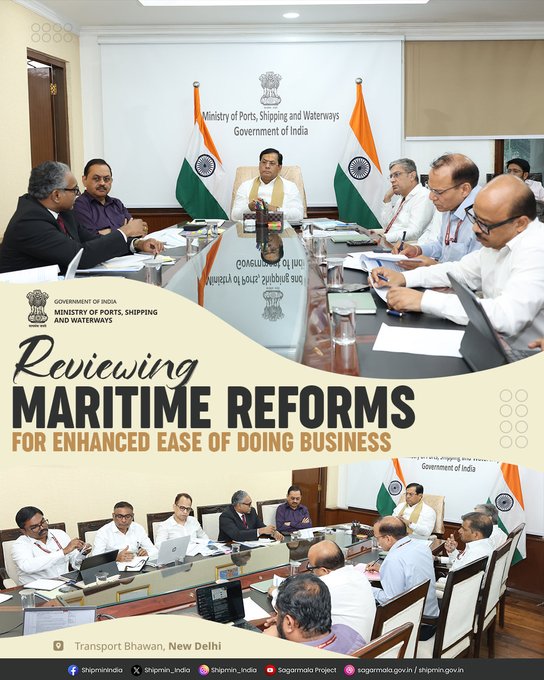
Sarbananda Sonowal reviews Maritime Reforms to strengthen EoDB across Indian Ports

NEW DELHI: Union Minister for Ports, Shipping & Waterways Shri Sarbananda Sonowal chaired a high-level review meeting with senior officials of the Ministry of Ports, Shipping & Waterways (MoPSW) to assess the progress of key maritime reforms aimed at further strengthening Ease of Doing Business (EoDB), operational efficiency and service delivery across India’s ports.

The meeting reviewed the implementation of several transformative initiatives focused on legislative modernisation, digital governance, process simplification, standardisation and technology-driven improvements in the maritime sector.

Shri Sonowal emphasised the need for continued reforms that reduce procedural complexities, improve transparency and ensure faster, more efficient services for port users, shipping companies, exporters, importers and other maritime stakeholders. He called upon officials to ensure that reforms translate into tangible improvements on the ground, particularly through faster clearances, streamlined documentation and better coordination among various agencies.

A key focus of the review was the ongoing drive towards digitalisation of maritime governance. The Ministry has been advancing integrated digital platforms and technology-enabled systems to provide seamless services, reduce paperwork and improve real-time monitoring. Recent initiatives such as the E-Samudra platform are aimed at creating a comprehensive, paperless and citizen-centric maritime ecosystem, strengthening transparency and efficiency in service delivery.

The Minister also reviewed measures aimed at standardising port procedures and documentation. Under the Ministry’s One Nation–One Port Process initiative, port-related processes are being harmonised to eliminate inconsistencies, reduce documentation and minimise delays, thereby improving the overall efficiency of India’s logistics chain.

Shri Sonowal further stressed the importance of effective grievance redressal and time-bound resolution of pending issues, directing officials to strengthen monitoring mechanisms and ensure regular follow-up on matters concerning stakeholders. He highlighted the need for greater coordination among the Ministry, port authorities, maritime institutions, other government agencies and industry to accelerate decision-making and implementation.

The review also covered the progress of legislative and policy reforms designed to create a more modern, transparent and investment-friendly maritime framework. These reforms are intended to support efficient port operations, facilitate trade and strengthen India’s competitiveness as a global maritime and logistics hub.

The Minister called for a result-oriented and accountable approach to implementation, with clear timelines, regular monitoring and prompt resolution of bottlenecks. He reiterated that technology, institutional coordination and policy reforms must work together to create a more efficient and globally competitive maritime ecosystem.

The reform agenda is aligned with the Government’s broader vision of Viksit Bharat 2047 and the objective of positioning India as a leading global maritime power. Shri Sonowal emphasised that India’s ports must continue to evolve into modern, smart, efficient and stakeholder-friendly gateways, capable of supporting the country’s expanding trade and logistics ambitions.

The meeting reaffirmed the Ministry’s commitment to advancing the maritime sector through the principle of “Reform, Perform, Transform and Inform”, with a strong emphasis on improved governance, digital innovation, operational excellence and stakeholder-centric service delivery.