Home Blog Page 26

India sets sights on becoming a Top Five Global Shipbuilding Nation; Investment Conclave 2026 to bring Global Maritime Leaders to New Delhi

NEW DELHI: India is stepping up its efforts to strengthen its position in the global shipbuilding industry, with the Government of India preparing to host the India Shipbuilding Investment Conclave 2026 in New Delhi on November 16–17, 2026. The high-level investment forum is aimed at bringing together leading international shipyards, original equipment manufacturers (OEMs), maritime technology providers and investors to explore collaborative opportunities and accelerate investments in India’s shipbuilding and maritime manufacturing ecosystem.

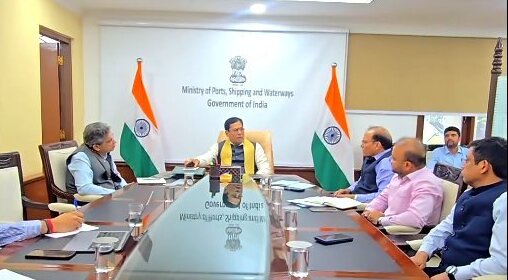
Announcing the upcoming conclave through a LinkedIn post, Shri Sarbananda Sonowal, Union Minister of Ports, Shipping and Waterways, said that the premier forum would provide a platform for global maritime industry leaders and investors to unlock significant collaborative opportunities in India’s maritime manufacturing sector.

The Minister also informed that he had reviewed the preparations for the event with senior officials. Emphasising the Government’s commitment to the country’s shipbuilding ambitions, he stated that, driven by the vision of Hon’ble Prime Minister Shri Narendra Modi, India is fully committed to elevating itself into the Top Five global shipbuilding nations.

Organised under the aegis of the Ministry of Ports, Shipping and Waterways, the conclave is envisioned as a focused, investment-oriented platform to translate India’s growing shipbuilding ambitions into concrete investment partnerships, technology collaborations and greenfield shipyard development projects.

Global Shipbuilding Investment Dialogue at the Centre

A key component of the conclave will be the Global Shipbuilding Investment Dialogue, designed as a private, action-oriented forum for anchor investments, technology partnerships and the development of new shipbuilding facilities in India.

The initiative seeks to connect global shipbuilding leaders with India’s emerging industrial and maritime opportunities, providing a platform to discuss investment prospects, manufacturing capabilities, supply-chain partnerships and the development of a comprehensive shipbuilding ecosystem.

The programme will focus on India’s shipbuilding demand outlook, policy support, incentives and financing architecture, alongside presentations on five proposed investment-ready shipbuilding clusters. These locations are expected to showcase waterfront infrastructure, land availability, logistics connectivity and supporting industrial ecosystems.

Five States to Showcase Shipbuilding Investment Opportunities

The conclave will highlight five proposed shipbuilding investment clusters across Andhra Pradesh, Gujarat, Maharashtra, Odisha and Tamil Nadu.

These locations will be presented to prospective investors as potential destinations for shipyard development and associated maritime manufacturing activities. The initiative is intended to facilitate engagement between international investors, state governments, port authorities and special purpose vehicles (SPVs), helping prospective partners assess infrastructure, connectivity and project implementation opportunities.

The participation of global shipyards, OEMs and technology providers is expected to provide opportunities for collaboration across ship construction, marine engines, equipment manufacturing, engineering, marine systems, skills development and other supporting segments of the maritime value chain.

Two-Day Programme Focused on Investment and Implementation

According to the conclave programme, the first day, November 16, will feature principal-level discussions, beginning with the Minister’s welcome address and opening keynote, followed by sessions on India’s shipbuilding opportunities, policy framework, investment incentives and financing mechanisms.

A dedicated greenfield cluster showcase will present the five proposed investment locations, followed by a roundtable involving global maritime leaders to deliberate on supply chains, skill development and investment facilitation.

The programme will also include curated panel discussions covering engines, marine systems, engineering, skills and other supporting areas of the shipbuilding ecosystem. Pre-scheduled one-to-one meetings with cluster teams, SPVs, port authorities and state government representatives will provide prospective investors with opportunities for focused discussions.

The first day’s proceedings will conclude with a session on the way forward, emphasising clearly identified responsibilities, single-window follow-through and an action-oriented implementation plan.

On November 17, participating delegates will undertake site visits to one of the five proposed shipbuilding clusters in Andhra Pradesh, Gujarat, Maharashtra, Odisha or Tamil Nadu, according to their vessel strategies and investment interests. The visits will include infrastructure and logistics assessments, interactions with SPV, state and port leadership, and discussions on implementation requirements.

Strengthening India’s Maritime Manufacturing Ecosystem

The India Shipbuilding Investment Conclave 2026 represents an important step in India’s efforts to attract international capital, advanced technologies and industrial partnerships into its domestic shipbuilding sector.

Beyond shipyard development, the initiative is expected to encourage the growth of a wider maritime manufacturing ecosystem encompassing marine equipment, engines, engineering services, technology solutions, skilled manpower and supporting supply chains.

The proposed investment clusters, combined with structured engagement between global industry leaders and Indian authorities, are intended to create a pathway for translating investment interest into actionable projects.

With the Government placing increased emphasis on expanding domestic shipbuilding capabilities and strengthening India’s maritime industrial base, the conclave will provide an opportunity to bring international expertise and investment closer to the country’s long-term shipbuilding ambitions.

As India works towards its stated objective of becoming one of the world’s Top Five shipbuilding nations, the November conclave is expected to serve as a significant platform for building international partnerships, identifying investment opportunities and advancing the country’s aspirations in global maritime manufacturing.
IIFT GIFT City campus hosts AAROHAN 2026, Government and Academia to explore the future of Global Business

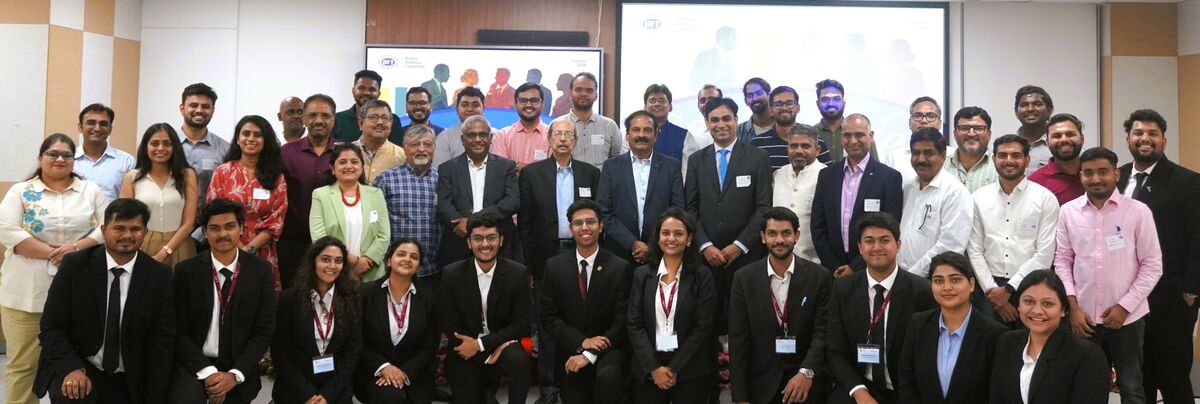
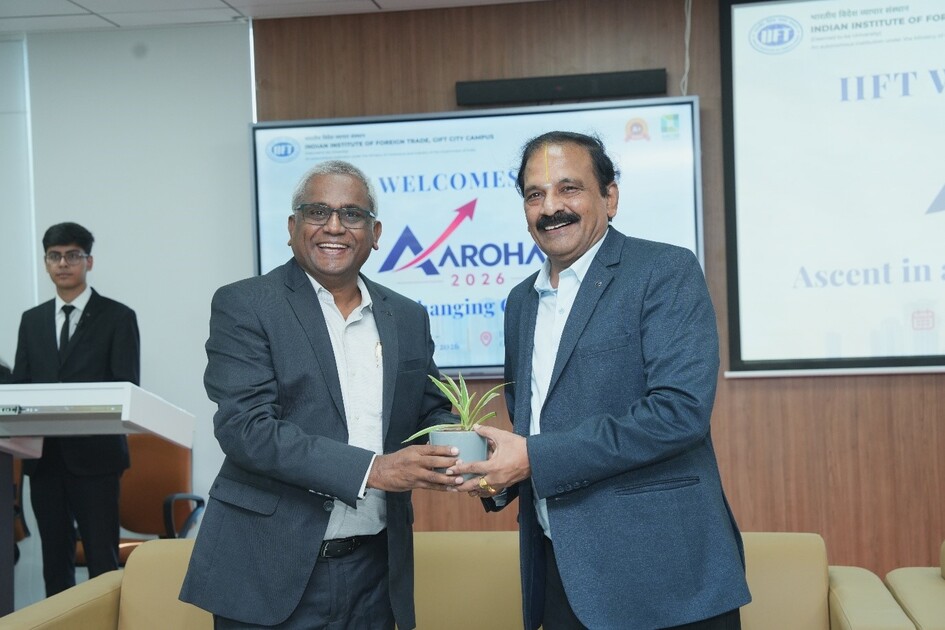
GANDHINAGAR : The Indian Institute of Foreign Trade (IIFT), GIFT City Campus, is hosting AAROHAN 2026 – Ascent in a Changing Global Economy, a two-day business conclave bringing together distinguished industry leaders, academicians, professionals and students to deliberate on the emerging forces transforming the global business landscape.

ARY00979.JPG IIFT GIFT City campus hosts AAROHAN 2026, Government and Academia to explore the future of Global Business

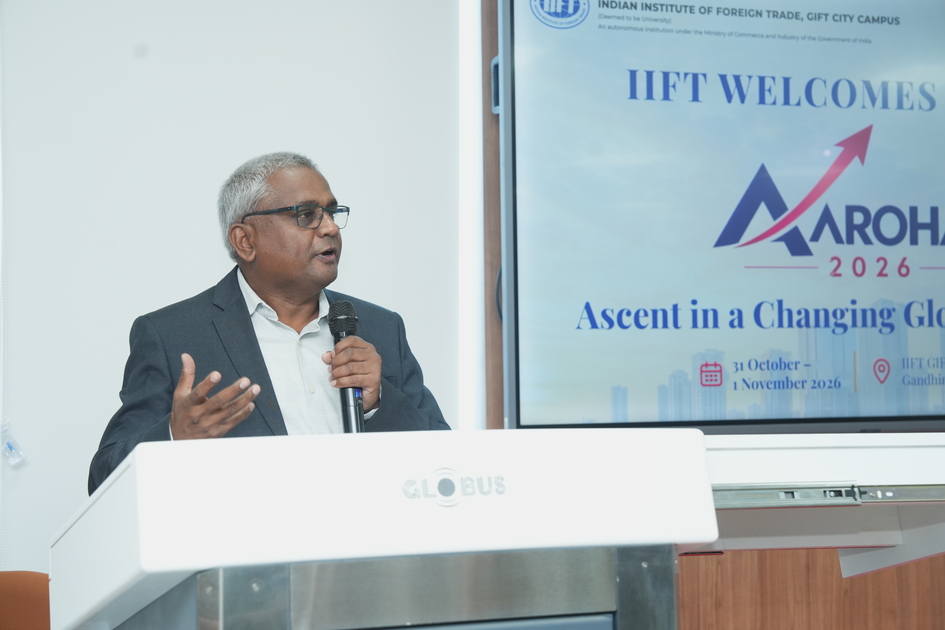
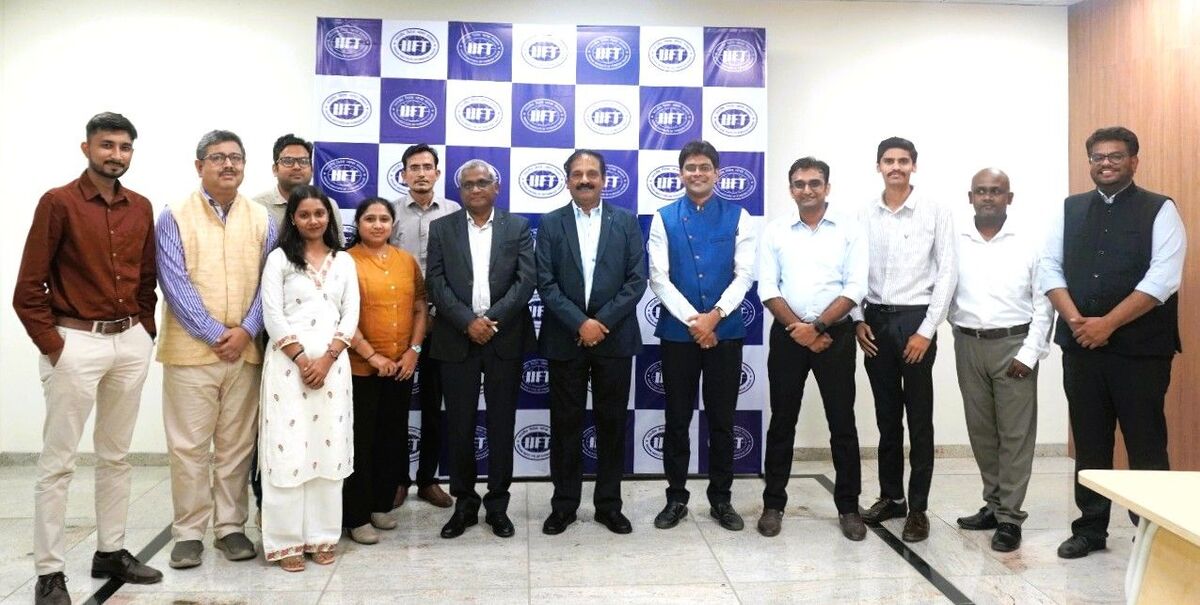
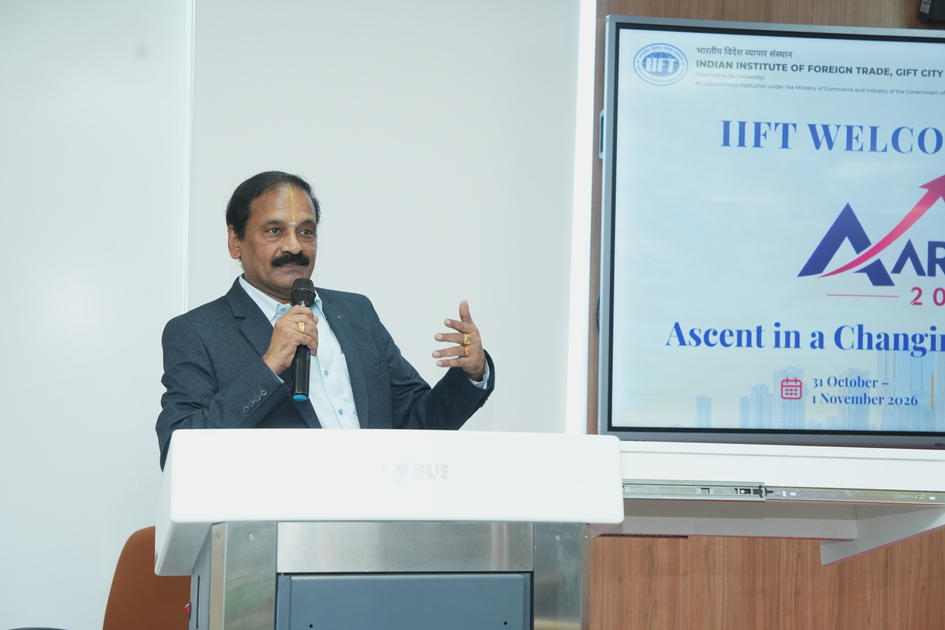
The conclave was inaugurated by Dr. K. Rangarajan, Hon’ble Vice Chancellor, Indian Institute of Foreign Trade. While delivering the keynote address, Hon’ble Vice Chancellor highlighted the significance of organising AAROHAN 2026 at IIFT GIFT City Campus, particularly in the context of GIFT City’s emergence as an international financial and business hub. He emphasised the importance of FTA’s, bringing industry leaders, policymakers and academicians onto a common platform to deliberate on the changing dynamics of global trade, finance and business.

ARY00962.JPG IIFT GIFT City campus hosts AAROHAN 2026, Government and Academia to explore the future of Global Business

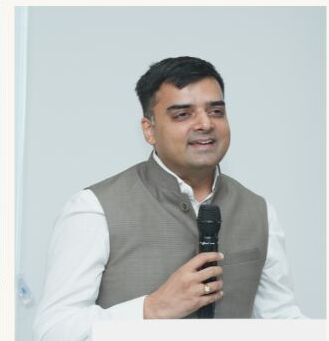
Dr. Rajendra Prasad Sharma, Professor and Campus Head, IIFT GIFT City Campus, delivered the welcome address. Dr. Sharma highlighted the vision behind AAROHAN 2026 and the importance of creating platforms where students can engage with industry leaders and gain first-hand insights into business practices. He also spoke about IIFT GIFT City Campus’s endeavour to build strong industry connections, leveraging its presence in GIFT City to create greater opportunities for experiential learning, professional interaction and exposure to the evolving business and financial ecosystem.

Dr.Rahul Singh Jt DGFT IIFT GIFT City campus hosts AAROHAN 2026, Government and Academia to explore the future of Global Business

Dr. Rahul Singh, Joint Director, DGFT and Development Commissioner Surat SEZ, delivered the special address, highlighting presence of IIFT in Gujarat as strategically important, given the state’s strong position as a hub for international trade, exports, logistics and entrepreneurship.

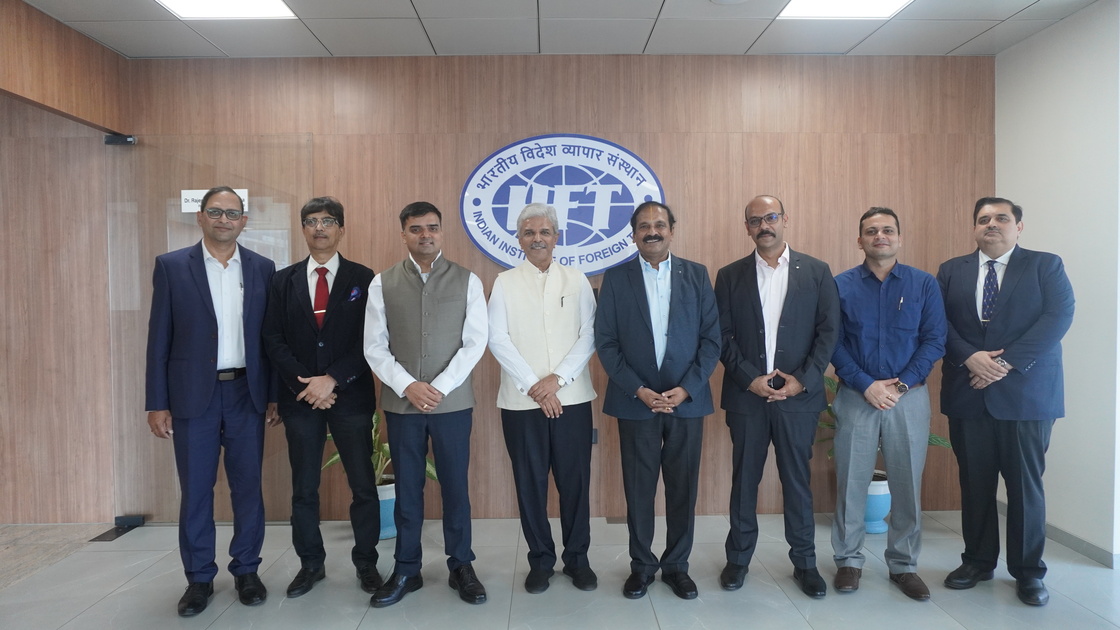
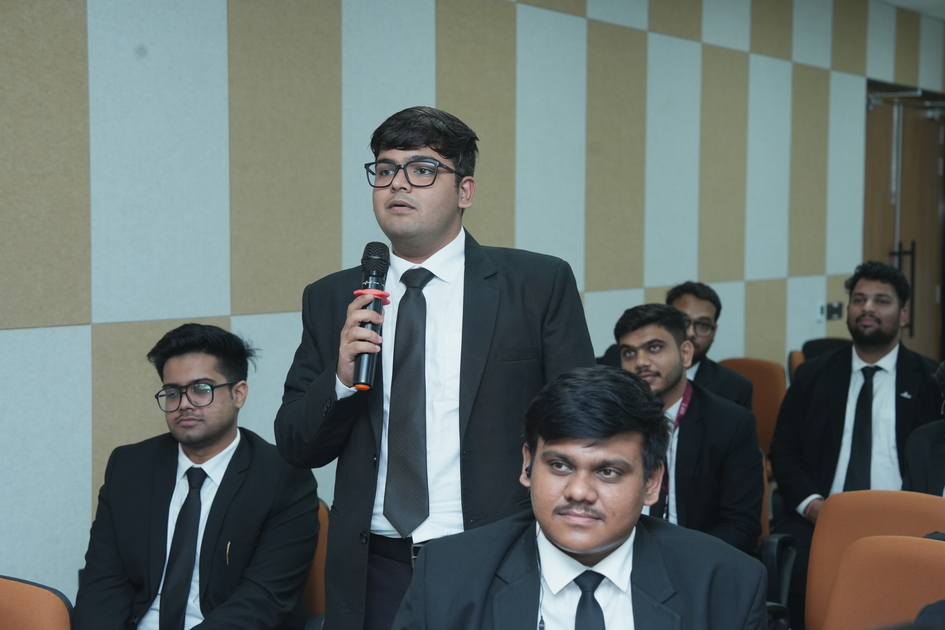
AAROHAN 2026 features four thematic panel discussions covering international trade, marketing, finance, supply chain and operations, and consulting. The conclave brought together diverse perspectives from leading organisations, government institutions and the corporate ecosystem, providing a platform for deliberations on emerging challenges, opportunities and strategies shaping the global business landscape. The International Management Forum (Student Council) at IIFT GIFT City Campus, reflected the spirit of student engagement, collaboration and institutional participation, bringing together diverse perspectives through a thoughtfully curated and coordinated event.

DAY 1 | Exploring the Changing Landscape of Trade and Marketing

The first day featured two significant panel discussions focusing on the evolving dynamics of international trade and the changing strategies of global brand building.

DSC01177.JPG IIFT GIFT City campus hosts AAROHAN 2026, Government and Academia to explore the future of Global Business

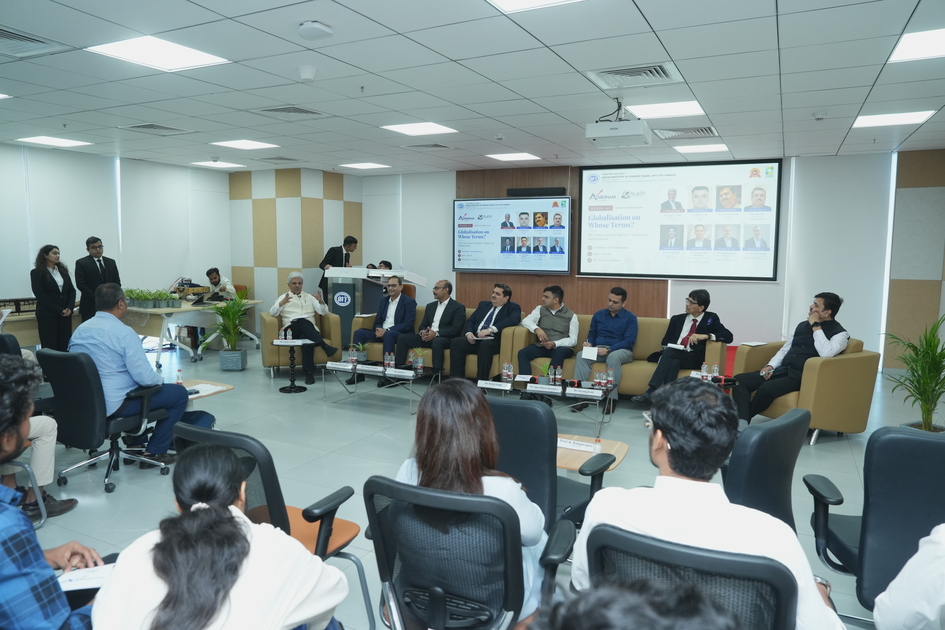
PANEL 1 | TRADE IN TRANSITION

Globalisation on Whose Terms? The Contest Between Markets, Nations and Multinationals

The session was moderated by Mr. Samir J. Shah, National President, Air Cargo Agents Association of India (ACAAI), and featured an eminent panel of industry and government representatives: Dr. Rahul Singh – Joint Director, Directorate General of Foreign Trade (DGFT) & Development Commissioner, Surat SEZ, Mr. Jayprakash Goel – Joint Director, Federation of Indian Export Organisations (FIEO), Mr. Amit Oza – Founder & CEO, Astramar Shipping, Mr. Devang Joshi – Director, Anchor Lines, Mr. Nitin Mohan Shandilya – Vice President, International Business, Tata Consumer Products, Mr. Pankaj Patodia – Vice President, International Business, Jesons Industries Limited, Mr. Ashutosh Gupte – Head of International Business, Godrej & Boyce Mfg. Co. Ltd.

PANEL 2 | MARKETING IN MOTION

Think Global, Act Local: Redefining Brand Growth in a Fragmenting Global Economy

The second panel was moderated by Dr. Rajendra Prasad Sharma, Professor and Campus Head, IIFT GIFT City Campus, the panel brought together accomplished marketing and business leaders: Mr. Gaurav Sarda – Chief Marketing Officer, Symphony Ltd., Mr. Rajiv Dubey – Vice President & Head of Media, Dabur India Ltd., Mr. Rajeev Nanda – Executive Vice President, International Business, Zydus Lifesciences, Mr. Jigar Patel – Pharmaceutical Scientist, Founder, Cosmetics Concept Research & Former Co-founder, Brillare

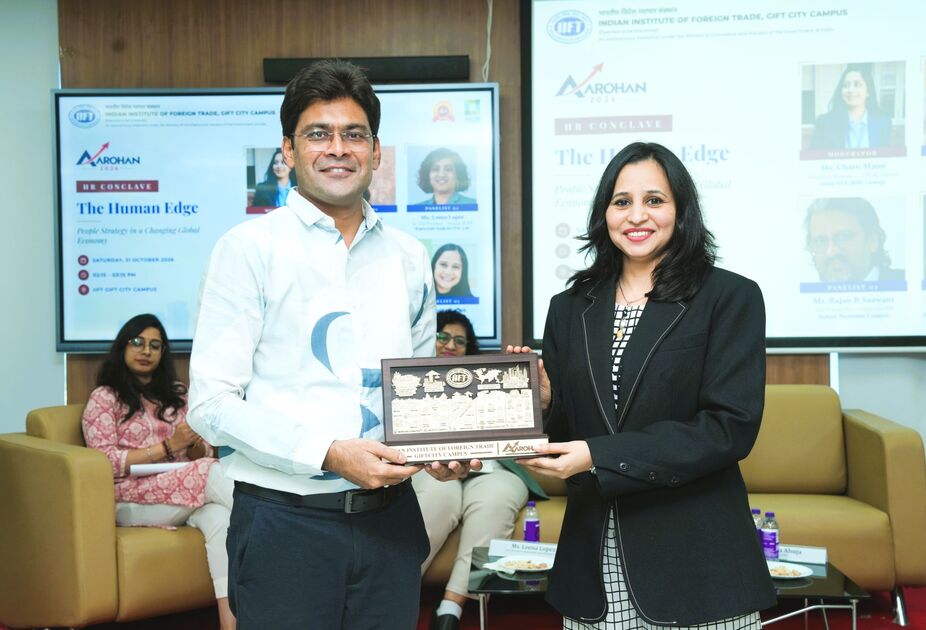
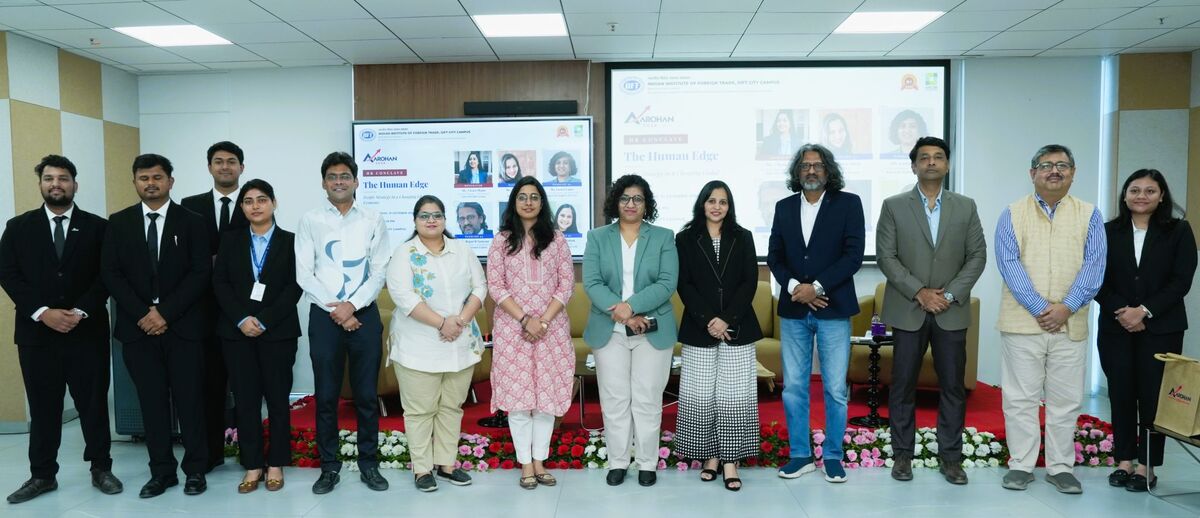
Shifting the focus to the future of people management, IIFT GIFT City Campus also hosted a premier HR Conclave on “The Human Edge”  – featured as a hallmark segment of AAROHAN 2026

The session was moderated by Ms. Charu Maini, Assistant Manager – HR & Admin, India INX (BSE Group, GIFT City), and featured an eminent panel of HR leaders: Ms. Preeti Ahuja – CHRO, Husk Power Systems, Mr. Ashish Lal – Head HR, Swan Defence and Heavy Industries Ltd., Mr. Rajan B. Saawant – Vice President – Corporate HR, Indoco Remedies Limited, Ms. Leena Lopez – Senior Vice President – Strategy & HR, Knowcraft Analytics Private Limited.

DAY 2 – The second day of AAROHAN 2026 continued the deliberations with two significant panel discussions focusing on the transformation of financial markets and the growing importance of resilient supply chains, operational excellence and strategic consulting.

PANEL 3 | Finance

The Evolving Financial Landscape: Innovation, Resilience and Growth

The panel on finance moderated by Dr. Priyanka Jain, Faculty Finance, the panel will bring together distinguished professionals from the financial services and investment ecosystem: Mr. Ronit Kar – Director & CEO, ViewTrade IFSC, Mr. Mayank Devpura – Vice President, CareEdge Global IFSC Ltd., Mr. Manish Kumar – Senior Vice President, HDFC Bank, Mr. Utsav Shah – Head of International Solutions, Nuvama Private, Mr. Mihir Shirgaonkar, CFA – VP, Alternative Investments, Phillip Ventures IFSC Pvt. Ltd.

PANEL 4 | Supply Chain & Operations and Consulting

Built for Volatility: Rewiring People, Technology and Supply Chains in a Fragmented World

The concluding panel was moderated by Mr. Amit Gadhvi, Head of Human Resources & Admin Operations, Cloudoffis. The session will feature experienced leaders from the consulting, manufacturing and supply chain ecosystem: Mr. Haresh Panjavani – Senior Director, Capgemini Invent; Head of Supply Chain & Procurement Consulting, Mr. Raja Kumar – Head, Logistics (Aftermarket), Endurance Technologies Ltd.; Supply Chain & Logistics Leader and Author, Mr. Anurag Jain – Managing Director, Accenture; Global Network Advisory, Supply Chain & Engineering, Dr. Dhaval Sheth – Partner, Grant Thornton Bharat LLP; Transformation Consulting and GTM

The two-day business conclave AAROHAN 2026 will provide students with valuable exposure to contemporary business perspectives, emerging industry trends and real-world managerial challenges. The discussions will highlight the interconnectedness of global trade, finance, marketing, human resources and supply chain operations in shaping the future of business. The conclave will reinforce the campus’s vision of nurturing globally competent, industry-ready and future-focused business leaders equipped to navigate an evolving global economy.

IIFT Aarohan 1 IIFT GIFT City campus hosts AAROHAN 2026, Government and Academia to explore the future of Global Business

About Indian Institute of Foreign Trade (IIFT)

The Indian Institute of Foreign Trade (IIFT) is a premier institution of the Government of India, functioning as an autonomous organisation under the Department of Commerce, Ministry of Commerce & Industry. Established in 1963, IIFT has been contributing to education, research, capacity building, and thought leadership in international trade and business. The establishment of the Indian Institute of Foreign Trade GIFT City Campus marks a significant expansion of the Institute’s presence in Western India, strategically located in GIFT City, India’s first International Financial Services Centre (IFSC). The IIFT GIFT City campus offers its flagship two-year, full-time MBA (International Business) programme, Short-Term Management Development Programmes (MDPs) for industry, government, MSMEs and other stakeholders and also plans to launch the Executive Programmes. With Gujarat’s strong position in India’s exports, IIFT GIFT City Campus aims to further contribute to this leadership by strengthening capabilities in international trade, export procedures, documentation, research, consultancy and global business practices, serving as a one-stop knowledge partner for building globally competitive organisations.

Paradip Port Authority and East Coast Railway review terminal operations to strengthen rail-port connectivity and efficiency

Senior railway officials visit Paradip Port to assess ground-level operational preparedness, review terminal-specific challenges and enhance coordination for seamless cargo movement

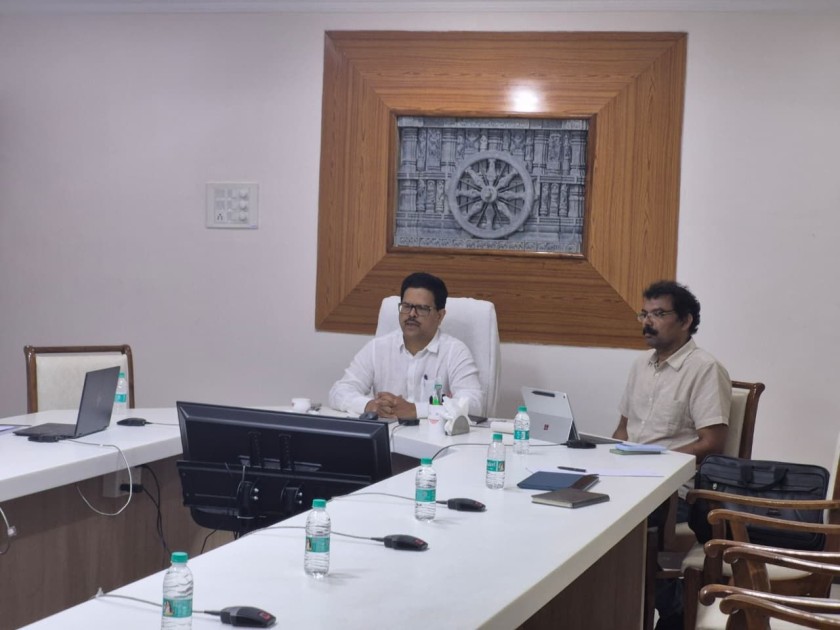
PARADIP: Paradip Port Authority (PPA) and East Coast Railway (ECoR) have undertaken a joint review of operational preparedness and existing challenges across the port’s terminals, reaffirming their commitment to strengthening rail-port coordination and improving cargo handling efficiency.

A delegation from East Coast Railway, Khurda Road, Bhubaneswar, visited Paradip Port to assess ground-level operational arrangements and review issues affecting operations across its various terminals.

The delegation comprised Mr. K.V.S.R.K. Kishore, Chief Freight Transportation Manager (CFTM), East Coast Railway, and Mrs. Preeti Rana, Senior Divisional Operations Manager (Sr. DOM), East Coast Railway.

During the visit, Shri Susanta Kumar Purohit, IRSEE, Chairperson, Paradip Port Authority; Shri T. Venu Gopal, Deputy Chairperson, Paradip Port Authority; and Heads of Departments (HODs) participated in the review and discussions.

The deliberations focused on evaluating operational preparedness at the terminal level, identifying existing challenges and examining issues requiring coordinated attention from the port and railway authorities. The discussions also provided an opportunity to assess operational requirements and strengthen the coordination mechanisms necessary for efficient movement of cargo through the port.

Strengthening Rail-Port Coordination

Rail connectivity plays a critical role in the movement of bulk and other cargo handled at Paradip Port, linking the port with industrial centres, hinterland markets and key consumption destinations. Effective coordination between the port authority and railway administration is therefore essential for ensuring efficient cargo evacuation, optimising terminal operations and improving the overall logistics chain.

The joint review reflects the importance of regular institutional engagement between Paradip Port Authority and East Coast Railway in addressing operational issues and facilitating smoother cargo movement.

Through coordinated efforts, both organisations are looking to enhance operational efficiency, improve infrastructure utilisation and strengthen the reliability of logistics services for port users and trade stakeholders.

The visit underscores Paradip Port Authority’s continued focus on operational excellence and collaborative engagement with railway authorities to support growing cargo requirements and strengthen India’s port-led economic development.

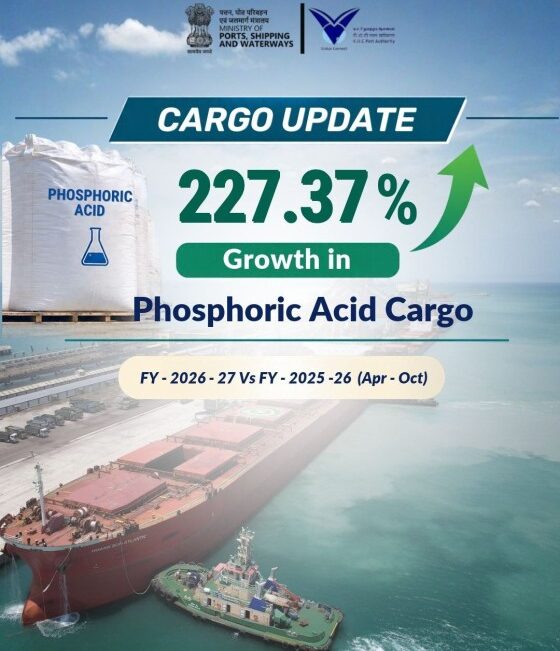
VOC Port records 227.37% growth in Phosphoric Acid cargo handling during April–October FY 2026–27

TUTICORIN: V.O. Chidambaranar (VOC) Port Authority has registered an impressive 227.37% growth in phosphoric acid cargo handling during April–October FY 2026–27, compared to the corresponding seven-month period of FY 2025–26, marking a significant improvement in the port’s performance in this specialised cargo segment.

The substantial growth reflects the port’s strengthening cargo handling capabilities, operational efficiency and continued efforts to attract higher cargo volumes. The performance also highlights VOC Port’s growing role in facilitating the movement of industrial and chemical commodities through India’s maritime trade network.

Phosphoric acid is an important industrial commodity, particularly for the fertiliser and chemical manufacturing sectors. The sharp increase in its handling at VOC Port underscores the importance of efficient port infrastructure and seamless cargo operations in supporting industrial supply chains and the movement of essential raw materials.

The achievement reinforces VOC Port Authority’s commitment to expanding its cargo portfolio, strengthening operational capabilities and improving service delivery for port users and stakeholders.

With its continued focus on infrastructure development, cargo diversification and operational excellence, VOC Port is working towards further strengthening its position as a key maritime gateway on India’s southeastern coastline, contributing to the country’s trade and economic growth.

Adani Vizhinjam Port welcomes first-ever import container from China, marks new milestone in global trade connectivity

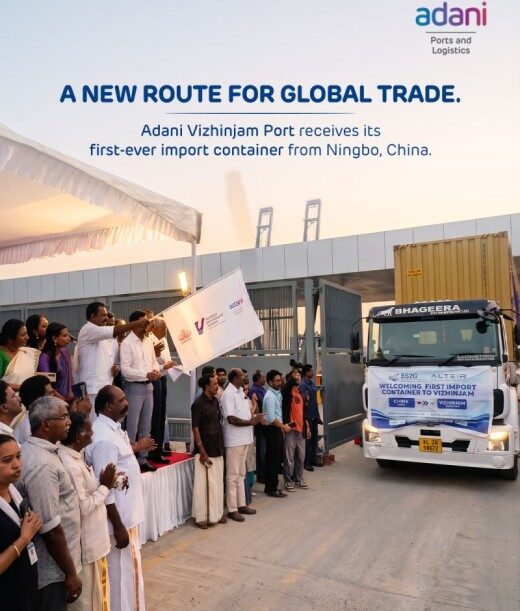
VIZHINJAM : Adani Vizhinjam Port has achieved another significant milestone in its development as an international maritime gateway by receiving its first-ever import container from Ningbo, China. The landmark shipment, arriving aboard the vessel MSC Sabrina III, marks an important step in the port’s evolution from an emerging transshipment hub towards a broader gateway for international imports and exports.

The arrival of the first import container represents a new chapter in Vizhinjam’s growing role in India’s maritime trade network. It demonstrates the port’s expanding capabilities in handling international cargo and opens new possibilities for businesses seeking efficient maritime connectivity with global markets.

Adani Ports and Logistics described the achievement as a new route for global trade, highlighting the significance of welcoming the first import container from China. The company noted that this development would bring international trade closer to businesses across South India while creating fresh opportunities throughout the logistics ecosystem.

The milestone is particularly significant for the southern Indian region, where improved access to international shipping services can support exporters, importers, manufacturers and logistics service providers. Direct access to import cargo through Vizhinjam can offer businesses an additional maritime gateway, strengthening regional supply-chain connectivity and expanding trade possibilities.

Strengthening Vizhinjam’s Role in International Maritime Trade

Strategically located along India’s southwestern coastline, Vizhinjam has been developed with the ambition of emerging as a major international container transshipment and maritime logistics hub.

The handling of its first import container adds another dimension to the port’s expanding operational profile. While its transshipment capabilities remain central to its development, the commencement of import container handling represents progress towards establishing a wider range of cargo and trade services.

The development is also expected to create opportunities for greater participation by shipping lines, freight forwarders, customs brokers, transport operators, container logistics companies and other stakeholders across the maritime supply chain.

New Opportunities for South India’s Trade and Logistics Sector

The commencement of import container operations is expected to strengthen the port’s relevance for businesses across Kerala and neighbouring southern states. Improved maritime access can support more efficient cargo movement, provide additional routing options and enhance the competitiveness of regional trade.

For the logistics industry, the development could open up opportunities in container transportation, warehousing, distribution, customs clearance and integrated supply-chain services.

With the arrival of the first import container from Ningbo aboard MSC Sabrina III, Adani Vizhinjam Port has taken another step towards its ambition of becoming an important gateway connecting Indian businesses with international markets.

The milestone reinforces Vizhinjam’s growing significance in India’s maritime infrastructure landscape and reflects the continuing expansion of the country’s port-led trade and logistics capabilities.

SCI delivers strong quarterly performance in Q2 FY 2026-27, reinforces operational and financial strength

MUMBAI : The Shipping Corporation of India Ltd. (SCI), India’s premier national shipping company, has reported another strong quarterly performance for the second quarter of FY 2026-27, demonstrating its continued operational excellence, financial discipline and resilience amid an increasingly challenging global geopolitical environment.

The performance reflects SCI’s sustained focus on operational efficiency, prudent financial management and effective deployment of its shipping assets. Despite uncertainties in international trade, geopolitical tensions and evolving conditions in global shipping markets, the company has maintained its growth momentum and achieved record performance during the quarter.

SCI’s consistent performance underscores its ability to navigate a dynamic maritime business environment while maintaining operational reliability and strengthening its financial position. Its continued emphasis on efficient fleet utilisation, disciplined operations and responsive business strategies has contributed to its strong quarterly results.

As a key player in India’s maritime transportation sector, SCI plays an important role in supporting the country’s international trade, energy transportation and maritime connectivity. Its shipping operations contribute to the movement of essential commodities and strengthen India’s participation in global maritime trade.

The latest quarterly achievement also reflects the company’s commitment to creating sustained value for its shareholders while supporting the broader national vision of Viksit Bharat. With a continued focus on operational excellence, financial prudence and long-term growth, SCI remains committed to strengthening India’s shipping capabilities and advancing the country’s maritime ambitions.

The strong Q2 FY 2026-27 performance marks another significant milestone in SCI’s growth journey, reinforcing its position as a resilient and strategically important force in India’s shipping industry.

PSA Mumbai sets new monthly and weekly container handling records in October 2026

Terminal handles a record 313,500 TEUs during the month and achieves a weekly high of 80,500 TEUs, while managing nearly 85,000 truck movements without gate congestion

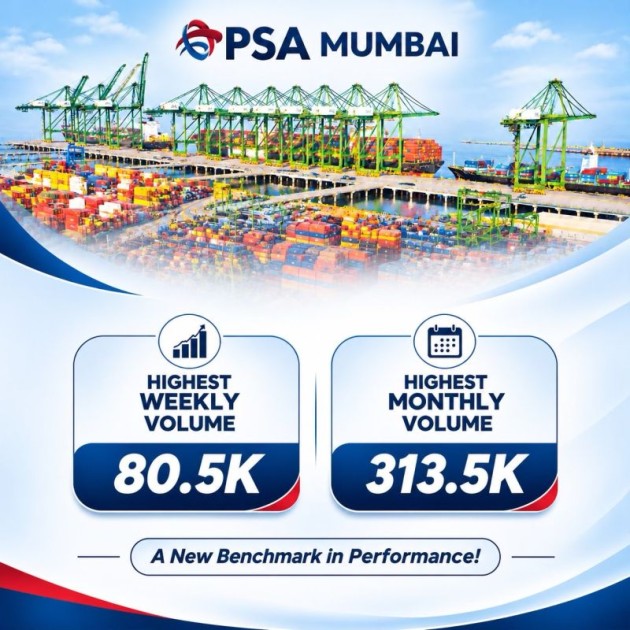
MUMBAI: PSA Mumbai has achieved a new milestone in container handling performance, setting fresh monthly and weekly records in October 2026, reflecting its operational efficiency, workforce commitment and continued focus on delivering reliable services to customers and industry partners.

The terminal handled an unprecedented 313,500 TEUs during October, establishing a new monthly benchmark. Adding to this achievement, PSA Mumbai also registered its highest-ever weekly throughput of 80,500 TEUs during the final week of the month, demonstrating its ability to manage high cargo volumes while maintaining operational efficiency.

Another significant achievement was the management of nearly 85,000 truck movements without any congestion at the terminal gates. This performance highlights the effectiveness of the terminal’s operational coordination, gate management and collaboration among its workforce and logistics partners.

Commenting on the achievement, PSA Mumbai highlighted the collective efforts of its professional team, acknowledging the dedication, perseverance and shared commitment of employees in consistently raising operational benchmarks. The terminal emphasised that its performance reflects a unified approach towards providing the highest standards of service to customers and partners.

The latest milestones further reinforce PSA Mumbai’s role in supporting container trade through Jawaharlal Nehru Port Authority (JNPA), one of India’s key maritime gateways. Efficient terminal operations, seamless cargo movement and effective coordination with road transport stakeholders remain critical to strengthening supply chain connectivity and facilitating the country’s growing international trade.

With these record-breaking achievements, PSA Mumbai continues to demonstrate its commitment to operational excellence and customer service, contributing to the sustained growth of JNPA and India’s maritime logistics sector.

Jeena & Company appoints Priyank Jain as Chief Financial Officer

MUMBAI: Jeena & Company, a global leader in freight forwarding and supply chain solutions, has announced the appointment of Priyank Jain as Chief Financial Officer.

Based at the company’s Mumbai Corporate office, Mr. Jain reports directly to CEO Prediman K. Koul and will lead the Finance & Accounts function, and the team will be reporting into him.

He is a seasoned corporate finance professional and Chartered Accountant with over 15 years+ of experience spanning finance, accounting, and strategic leadership. He began his career at SBS Group as a Manager, where he handled internal audits, account finalisation, mergers and acquisitions, and had a played a major role in expanding company operations to different geographies. He holds experience in managing end-to-end finance administration, including cost control, budgeting, accounting, tax reporting, and financial analysis. During his service tenure at BDP International as well, he had set up an annual business planning and budgeting process and introduced a stronger MIS culture to track operational and financial performance more closely.

His last organisation was Mahindra Logistics Ltd., where he joined as Deputy General Manager. he drove system and process improvements that delivered meaningful annual cost savings, helped build an integrated finance system to sharpen operational efficiency, and led a revenue assurance project focused on improving the accuracy of revenue estimates through better data extraction and validation.

Since he joined Jeena, he has been driving finance transformation, streamlining financial processes, and fostering operational excellence to enhance efficiency, accountability, and informed decision-making across the organisation.

Jain holds a Bachelor of Commerce degree from Mumbai University and is a Chartered Accountant from ICAI Mumbai, and holds a Diploma in IFRS, UK. He also got trained under esteemed faculty at IIM Ahmedabad while he pursued Finance leadership program. 

“I am excited and look forward to my journey at Jeena and I am deeply grateful to our Partners and the CEO for showing their trust upon me. Jeena’s 125-year journey will help me witness both the sides of the coin- the old legacy and the digital transformation it is going through. My focus will be on building financial systems and processes that are strong enough to support the company’s next phase of growth, while staying true to the discipline and reliability that have defined Jeena for over a century. I look forward to working closely with the leadership team and the finance function to help drive that forward,” says Priyank Jain.

Commenting on the appointment, Prediman K. Koul, Chief Executive Officer, Jeena & Company, said, “Priyank brings a strong mix of financial discipline and hands-on operational experience in logistics, which fits well with where we are headed as a business. As we scale toward our next phase of growth, his ability to build robust systems and drive financial rigour will be a real asset to the team.”

Piyush Goyal inaugurates Vanijya Bhawan and Udyog Bhawan in Jaipur

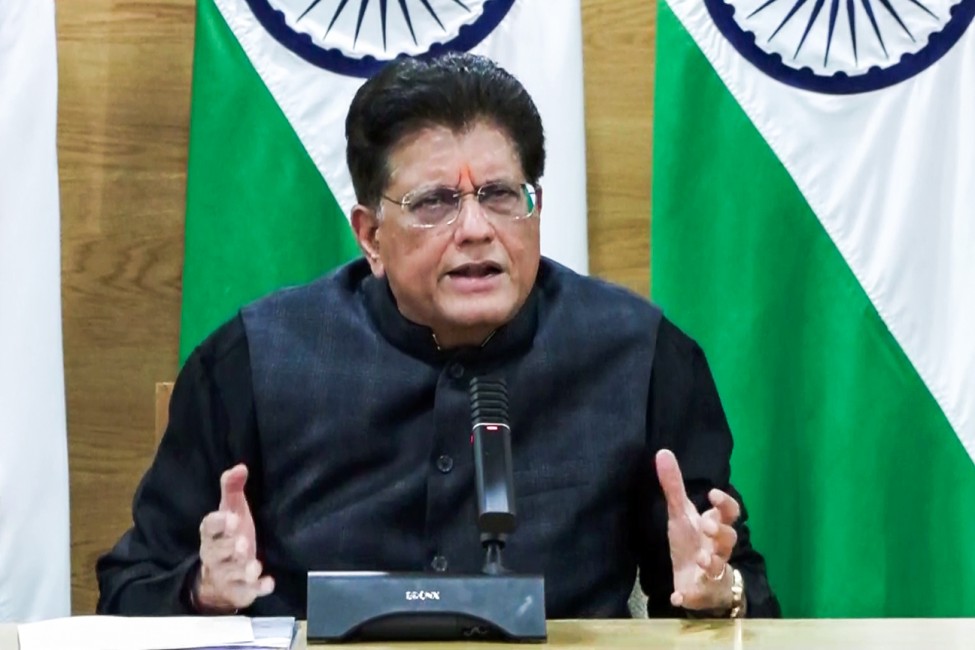
JAIPUR : Union Minister of Commerce and Industry Shri Piyush Goyal on Wednesday virtually inaugurated Vanijya Bhawan and Udyog Bhawan in Jaipur, marking the beginning of the co-location of offices of the Ministry of Commerce and Industry and its associated and affiliated organisations at a single location. Jaipur has become the first city and the first State capital to bring all these offices together under one roof.

Congratulating the Departments of Commerce and Departments for Promotion of Industry and Internal Trade (DPIIT) on the initiative, Shri Goyal said that the project should mark the beginning of rapid action towards implementing the concept across the country, particularly in every State capital. He said that these centres would serve as hubs to support industry and international trade and function as one-stop locations for activities relating to the promotion of exports, investments and internal trade. They would also support businesses and industry in their journey towards Viksit Bharat 2047.

Emphasising that the initiative must become a collective commitment of the entire ecosystem, Shri Goyal called for the active participation of government offices, stakeholders, State Government representatives, exporters, importers, investors and businesses. He stressed that the objective should go beyond administrative consolidation and extend to transforming service delivery, simplifying processes and making it easier to do business and comply with the laws of the land.

The Minister directed that all processes, including applications for licences and permits, SCOMET approvals and other services, should move entirely online. He set 31st March 2027 as the deadline for completing the necessary digitisation, including the digitisation of past data and records at the Regional Authorities (RAs) of the Directorate General of Foreign Trade (DGFT) across the country. From 1st April 2027, no person should be required or expected to visit any of the offices physically for these services.

He said that, wherever physical verification of original documents is necessary, a small counter could be provided to facilitate verification and uploading of documents. Computers could also be installed at office entrances to enable simultaneous verification and uploading of documents, wherever required. The Minister encouraged self-certification and greater trust in stakeholders, stressing that the Government should demonstrate its confidence in citizens and businesses.

Shri Goyal also called for the simplification of processes, formats and forms, and urged the departments to break organisational silos and work collectively to deliver better outcomes for businesses and citizens. He said that improved coordination between the two departments and the various organisations under the Ministry would be essential to achieving the objectives of the initiative.

The Minister informed that the Ministry currently has around 500 offices and 46 organisations. Except for very large campuses, such as the large office of ECGC in Mumbai, which would continue to function independently, the other offices would be brought under the co-location arrangement. He clarified that the co-located centres would not provide services only for the organisations physically situated there but would facilitate services across all 46 organisations and different departments under the Ministry.

He said that even where officials of a particular organisation were not physically stationed at a co-located office, people would be encouraged to interact with them through video conferencing. Accordingly, Shri Goyal directed that adequate video conferencing facilities be provided at every co-located office, with the provision to expand them to two or three counters depending on the size and requirements of the office.

The Minister emphasised that these centres should increasingly function as facilitation and promotion offices. Their role would be to promote investments and foreign trade, assist people seeking guidance, attract investments into India, encourage capital expenditure in the country and promote exports. He clarified that their purpose should not be limited to facilitating the issuance of licences.

Shri Goyal said that the co-location of offices, digitisation and introduction of faceless assessments would enhance transparency, accountability and public confidence. A unified presence of the Ministry of Commerce and Industry in each State would assure businesses and stakeholders that they could access support and guidance through a single location.

Highlighting the importance of efficient service delivery amid considerable uncertainty and volatility in international trade and global geopolitical affairs, the Minister said that time was of the essence and competitiveness was crucial for success. He called upon officials to ensure that the functioning of every office was facilitative, supportive, friendly and helpful. He added that bringing offices together under one roof would also help establish checks and balances in their functioning.

The Minister directed that every office be equipped with CCTV cameras connected to a central server in Vanijya Bhawan, New Delhi, to enable random monitoring of work being undertaken across the country. He clarified that the objective was not continuous monitoring but periodic checks to oversee functioning and provide protection against theft and other such incidents.

He further directed that all offices must possess the necessary approvals required for their functioning, including Fire Brigade approvals and approvals under the Shops and Establishments Act. Emphasising the importance of workplace facilities, he said that every office must have high-quality toilets for men and women, with multi-gender facilities wherever appropriate in smaller offices. All offices must also have accessible toilets for persons with disabilities. He stressed that the quality of these facilities should be at least at par with, and preferably better than, those at Vanijya Bhawan, New Delhi, and directed that adequate resources be allocated for this purpose.

Shri Goyal also emphasised that furniture and equipment should be modular wherever possible and that all procurement, including furniture, equipment, lighting and curtains, should be domestic or Swadeshi, except where absolutely unavoidable.

The Minister urged officials to examine opportunities for further reducing timelines and introducing deemed approvals wherever feasible. He called upon the Secretaries, Additional Secretaries and Joint Secretaries to regularly conduct video conferences or hybrid meetings with stakeholders across different regions. He also stressed the need to continuously identify ways to reduce paperwork and make it easier for people to obtain services and outcomes from the Ministry’s offices.

Shri Goyal said that the initiative would strengthen teamwork within the two departments and among various internal and external stakeholders, improve coordination between different wings of the Ministry and enhance overall operational efficiency. It would help the Ministry become more contemporary and modern while preparing it for its role in the journey towards Viksit Bharat 2047.

Highlighting the expanding responsibilities of the Ministry in the context of several new trade agreements and the opening up of new markets, the Minister said that India had emerged as a bold, confident and unstoppable economy on the global stage. He emphasised the need to prepare the country for the goal of becoming a USD 30 trillion economy by 2047.

Reiterating that the fundamental responsibility of the Ministry was to serve the people and businesses of India, Shri Goyal said that, as Prime Minister Shri Narendra Modi has emphasised, the citizen is like God and the Government’s responsibility is to serve citizens with that spirit.

Allcargo Logistics reports PAT of ₹33 Cr, a ₹48 cr turnaround, and 12% gross profit growth in H1 FY 2027

MUMBAI: Allcargo Logistics Limited, an integrated logistics provider through its Domestic Supply Chain, Express Distribution and Consultative Logistics businesses, announced its consolidated financial results for the period ended September 30, 2026, reporting an improvement in profitability supported by consistently improving customer service levels, pricing discipline and operational efficiencies.

The company’s gross profit grew 13% year-on-year in Q2FY27 & 12% in H1FY27, while EBITDA increased 24% year-on-year in Q2FY27 & 31% in H1FY27. The company also reported a Pre-Exception PBT of ₹24 crore in Q2FY27, representing a healthy 167% year-on-year growth, compared with ₹9 crore in Q2FY26.

The improvement reflects the company’s continued focus on strengthening operating margins across its domestic logistics businesses. In Express Distribution, sustained/consistent progress in service levels, enhanced customer engagement and improving network efficiencies have enabled revenue growth and yield improvement. In Consultative Logistics, higher throughput from existing customers on the back of efficient service, improved warehouse utilisation and cost optimisation contributed to a sequential improvement in gross margins.

Commenting on the performance, Mr. Ketan Kulkarni, Managing Director and Chief Executive Officer, Allcargo Logistics Limited, said, “Our overall H1FY27 performance demonstrates a continued progress in strengthening the fundamentals of our domestic logistics business. The improvement in profitability and margins underlies the benefits of pricing discipline, cost recovery and process optimisation.

In Express Distribution, while growth moderated during this quarter, we adopted measures to improve customer engagement, service quality and network efficiency. Our goal now is to leverage this customer centric service delivery to drive volume growth while maintaining the pricing gains achieved over the past few quarters.

As we have entered the festive season, we are witnessing a recovery in volumes and expect this momentum to continue. In Consultative Logistics, higher volume from existing customers, improved warehouse utilisation and tighter cost management are supporting margins.

In H2FY27, profitable growth along with revenue expansion remains our priority. To attain that, we will continue to our three-pronged strategy – further improving service levels, increasing capacity utilisation and reducing operating costs.”

Financial Performance:

Overall Performance: The company reported a PAT of ₹19 crore in Q2FY27, a healthy 487% year-on-year growth, compared with loss of ₹(5) crore in Q2FY26. Revenue grew 3.4% year-on-year in Q2FY27, while H1FY27 revenue increased 7.1%year-on-year. Gross profit grew 13% year-on-year in Q2FY27 and 12% year-on-year in H1FY27. The EBITDA margin for H1FY27 stood at 13.4%, with EBITDA increasing 31% year-on-year.

Express Distribution: Shipment volumes remained broadly stable sequentially at approximately 3.11 lakh tonnes in Q2FY27, compared with 3.12 lakh tonnes in Q1FY27. Customer-segmentation initiatives, loyalty programmes, service-quality improvements and network optimisation are supporting volume recovery.

Consultative Logistics: Revenue increased by ₹9 crore during the quarter year-on-year, supported by higher throughput from existing customers. Also improved the company margins aided by cost optimisation and recovery of additional costs from customers.

Outlook: The company expects festive-season demand to support growth in Q3FY27, with automotive, electronics, heavy engineering and e-commerce contributing to volume growth. Priorities for H2FY27 include restoring volume growth, protecting yields, improving capacity utilisation and strengthening cash generation.