Home Blog Page 3

“We have become significant state in development”: Sarbananda Sonowal credits PM Modi for Assam’s growth

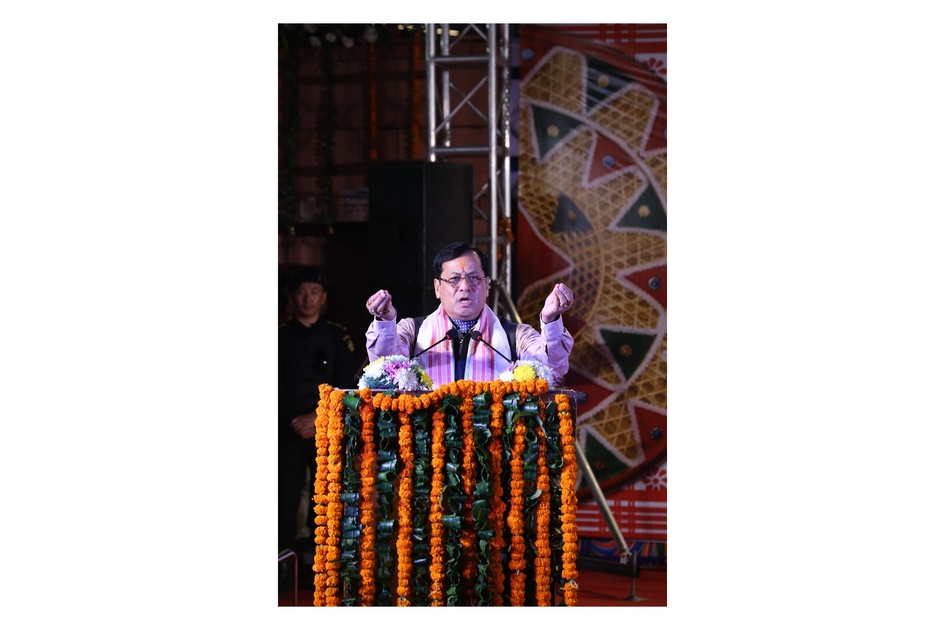
NEW DELHI: Union Minister Shri Sarbananda Sonowal on Monday credited Prime Minister Shri Narendra Modi‘s initiatives for the development of Assam and the Northeast over the last 12 years, saying the state has emerged as a significant contributor to the country’s development.

Speaking on the sidelines of the Assam Day celebration at Bharat Mandapam during the 45th India International Trade Fair (IITF 2026)., Sonowal said, “Assam has become a significant state in the country in terms of development. The primary reason for the success Assam and the entire Northeast region have achieved in development over the last 12 years is the special role played by Prime Minister Narendra Modi.”

Highlighting the initiatives taken by the Centre for the region, he said, “Since assuming office, the Prime Minister has consistently taken initiatives for the development of Assam and the Northeast—whether in the construction of roads and bridges, or the establishment of medical, engineering, agricultural, and fashion design institutes…”

Earlier in the day, Assam Chief Minister Himanta Biswa Sarma inaugurated a new Assam House in New Delhi’s Dwarka area, marking the state’s third official guest house in the national capital.

Speaking to ANI after the inauguration, CM Sarma highlighted that the newly constructed facility at Dwarka Sector 13 will significantly ease accommodation and logistical challenges for residents visiting the national capital from Assam.

“We had two bhawans (state guest houses) in New Delhi. We were also allotted some land in Dwarka. Today, we have built one more Assam House in Delhi, and it will provide convenience to the people coming from our state of Assam. I feel that a good infrastructure has been built, and it will be very useful for the people of Assam,” he said.

Assam Minister Keshab Mahanta was also present at the inauguration ceremony.

DGMA implements revised IMO Guidelines for enclosed space entry aboard ships to strengthen seafarer safety

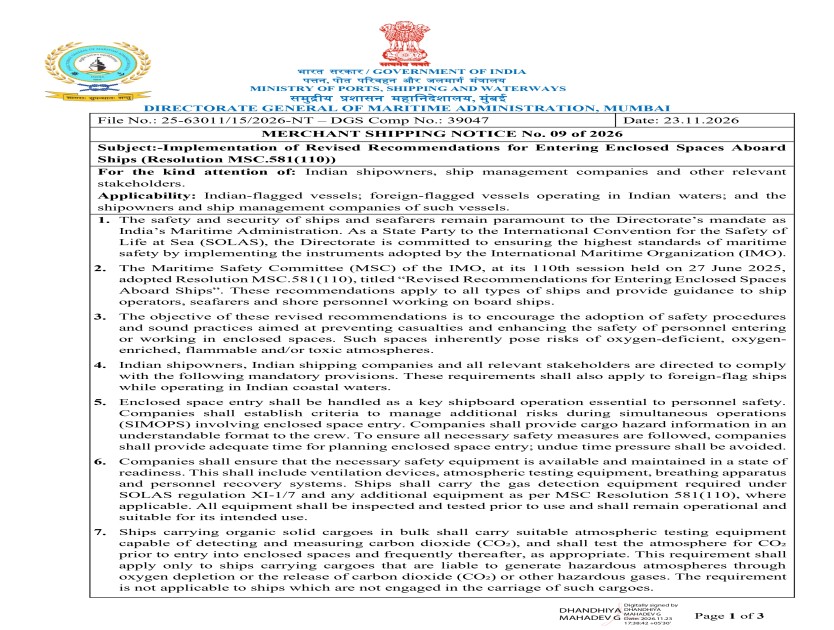
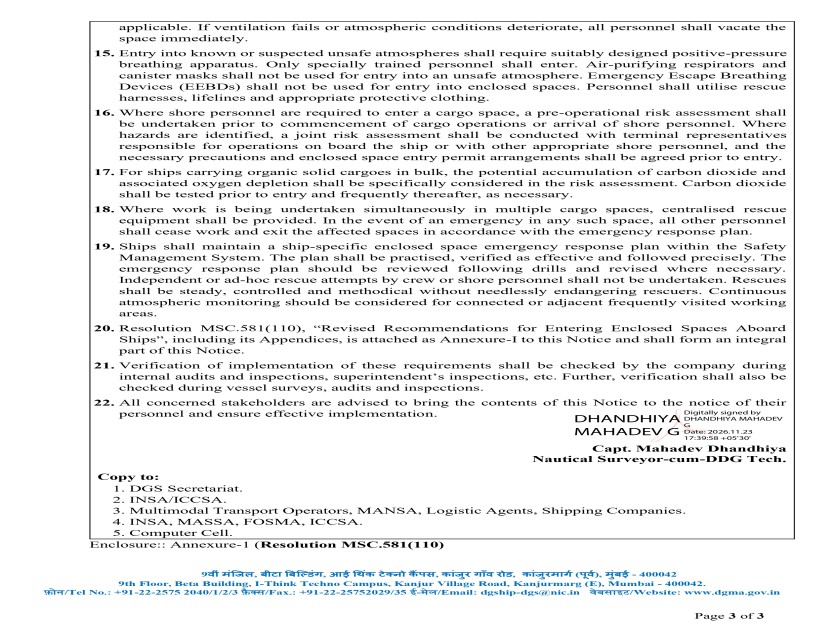
MUMBAI: The Directorate General of Maritime Administration (DGMA) has implemented revised recommendations for entering enclosed spaces aboard ships through Merchant Shipping Notice No. 09 of 2026, in accordance with the International Maritime Organization’s (IMO) Resolution MSC.581(110), titled Revised Recommendations for Entering Enclosed Spaces Aboard Ships.

The new requirements aim to strengthen onboard safety management practices, prevent enclosed space-related accidents and protect the lives of seafarers and other personnel working aboard vessels.

The Notice applies to Indian-flagged vessels, foreign-flagged vessels operating in Indian waters, shipowners and ship management companies. All concerned stakeholders have been directed to ensure effective implementation of the prescribed safety measures.

Comprehensive Safety Requirements for Enclosed Space Entry

Under the revised recommendations, shipping companies are required to strengthen their enclosed space safety management systems through comprehensive training, hazard identification, risk assessment and emergency preparedness.

Key requirements include:

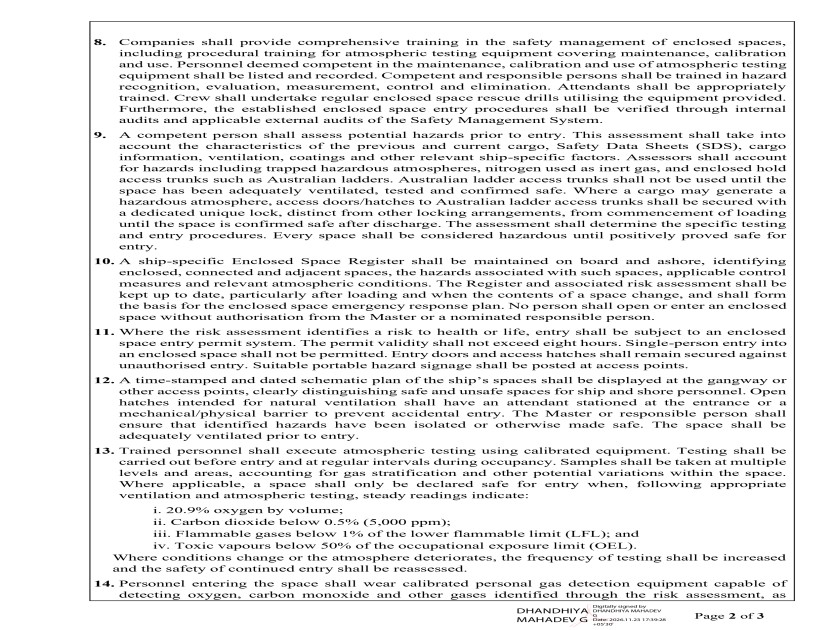
Comprehensive Safety Training: Companies must provide specialised training to crew members and responsible personnel in enclosed space safety, atmospheric testing equipment, hazard recognition and rescue procedures. Regular enclosed space rescue drills are also mandatory.

Mandatory Risk Assessment: A competent person must assess potential hazards before entry, considering previous and current cargoes, Safety Data Sheets (SDS), ventilation, coatings and other ship-specific factors. Every enclosed space must be treated as hazardous until it is positively confirmed safe.

Enclosed Space Register: Ships must maintain an updated, ship-specific Enclosed Space Register identifying enclosed, connected and adjacent spaces, associated hazards, control measures and relevant atmospheric conditions.

Enclosed Space Entry Permit: Where risks to health or life are identified, entry must be authorised through a formal permit system. The permit shall not remain valid for more than eight hours. Single-person entry into enclosed spaces is strictly prohibited.

Atmospheric Testing and Monitoring: Trained personnel must conduct atmospheric testing using calibrated equipment before entry and at regular intervals during occupancy. The prescribed safe-entry parameters include 20.9% oxygen by volume, carbon dioxide below 0.5% (5,000 ppm), flammable gases below 1% of the Lower Flammable Limit (LFL), and toxic vapours below 50% of the Occupational Exposure Limit (OEL).

Personal Gas Detection Equipment: Personnel entering enclosed spaces must wear calibrated personal gas detection equipment capable of detecting oxygen, carbon monoxide and other gases identified through the risk assessment.

Strengthened Emergency Preparedness and Rescue Procedures

The Notice places particular emphasis on emergency preparedness and the prevention of secondary casualties during rescue operations.

Entry into known or suspected unsafe atmospheres requires suitably designed positive-pressure breathing apparatus, and only specially trained personnel are permitted to undertake such entry. Air-purifying respirators, canister masks and Emergency Escape Breathing Devices (EEBDs) must not be used for entering enclosed spaces.

Ships are also required to maintain ship-specific enclosed space emergency response plans within their Safety Management Systems. These plans must be regularly practised, reviewed and updated following emergency drills.

Where multiple cargo spaces are being worked simultaneously, centralised rescue equipment must be provided. Particular attention must also be given to carbon dioxide accumulation and oxygen depletion in ships carrying organic solid bulk cargoes.

The Notice further requires appropriate coordination and joint risk assessments when shore personnel need to enter cargo spaces, ensuring that necessary precautions and enclosed space entry permits are agreed upon before entry.

Compliance and Verification

Implementation of these requirements will be verified through company internal audits and inspections, inspections by ship superintendents, vessel surveys and other applicable audits and inspections.

The revised recommendations under IMO Resolution MSC.581(110), including its appendices, have been attached as Annexure-I and form an integral part of the Merchant Shipping Notice.

The Directorate has advised all concerned stakeholders to familiarise their personnel with the requirements and ensure effective implementation across their operations.

With the implementation of these strengthened safety measures, DGMA reinforces India’s commitment to improving maritime safety standards, enhancing onboard emergency preparedness and ensuring safer working environments for seafarers and maritime personnel.

India calls for end to attacks on commercial shipping, safe navigation in Black Sea at UNSC amid Russia-Ukraine conflict

NEW YORK: India has called for an immediate end to attacks on commercial shipping and seafarers in the Black Sea, stressing that safe navigation through international waterways must be restored at the earliest amid the ongoing Russia-Ukraine conflict.

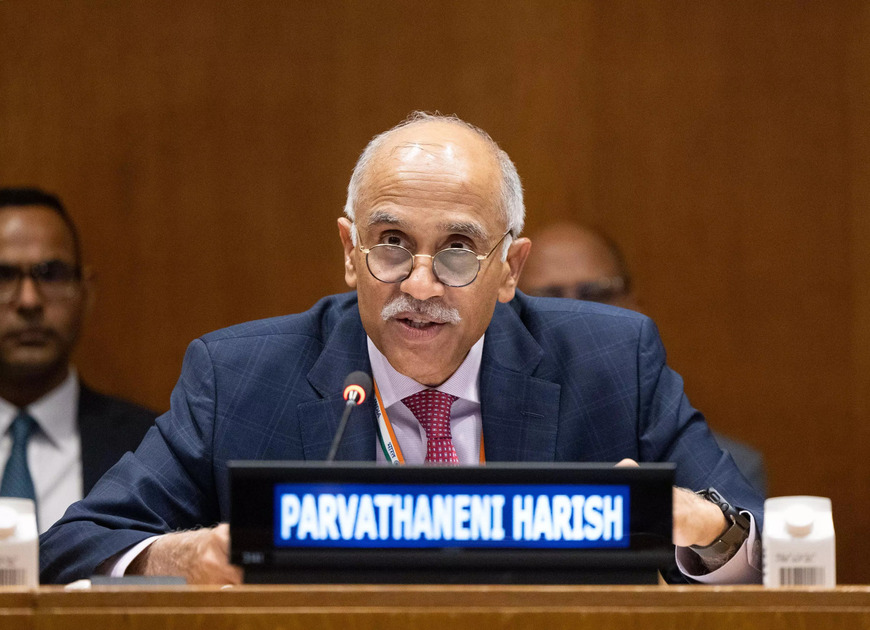
Addressing a high-level briefing at the United Nations Security Council on Monday (local time), India’s Permanent Representative to the UN, Ambassador Harish Parvathaneni, said the ongoing conflict, now in its fifth year, had far-reaching consequences because of interconnected global supply chains. He reiterated India’s readiness to contribute to all efforts towards a peaceful resolution.

“The world has become inextricably interconnected. It is impossible that the implications of the conflict, that is in its fifth year now, would not be felt everywhere, given our interwoven supply chains. And India has been on record, conveying at the highest level that we are ready to contribute to all efforts towards a peaceful resolution. Every day of the war pushes humanity backwards. As Prime Minister Narendra Modi has noted, the world has to move from ‘endless war to the end of war’,” Parvathaneni said.

Highlighting the impact of the conflict on global food security, he said armed conflicts disrupted agriculture, displaced communities, damaged infrastructure and hindered humanitarian access, with their consequences extending to energy, fertiliser, transport and agricultural trade.

“Any conflict exacerbates food insecurity by disrupting agriculture, displacing communities, damaging infrastructure and hindering humanitarian access. Its consequences extend globally through disruptions to energy, fertiliser, transport and agricultural trade, disproportionately impacting the Global South,” he said.

Parvathaneni said the Security Council must prioritise humanitarian access, the protection of civilian infrastructure and freedom of navigation to ensure that humanitarian supplies and legitimate trade were not affected.

He highlighted the importance of the Black Sea region to global food security, noting that the region and India together accounted for almost a fifth of global cereal production. Russia and Ukraine together accounted for nearly a quarter of global exports of wheat, maize and barley.

“My country’s commitment to protection of Black Sea lifelines of global food supply is rooted in the appreciation that this region, just like my nation, is one of the food baskets of the world. The granaries of the Black Sea region and India combined account for almost a fifth of the global cereal production. In terms of cereal exports, the region is even more significant. Russia and Ukraine together account for almost a quarter of global exports of wheat, maize and barley,” the envoy said.

He also highlighted India’s humanitarian assistance to countries facing food insecurity, citing wheat supplies to Afghanistan, rice to Sudan and humanitarian aid to Palestine.

The Indian envoy said the Global South was disproportionately affected by food, fuel and fertiliser crises arising from global conflicts. He stressed that uninterrupted commercial shipping and the movement of essential supplies were particularly important for countries with limited capacity to absorb disruptions.

“India has consistently emphasised that the costs of conflict are not shared equally. Global South countries are the most adversely affected by the food, fuel and fertiliser crisis caused by today’s global conflicts. That concern has sharpened as the Global South is also bearing the brunt of energy shortages. India’s External Affairs Minister, Dr. S. Jaishankar, noted at the G20 FMM last month that fertiliser shortages stem partly from the Black Sea and partly from the Gulf and Red Sea. For India, this is why dialogue and diplomacy, safe commercial shipping, and uninterrupted grain and energy flows are practical necessities,” Parvathaneni said.

Recalling the Bengal famine of 1943, which killed more than three million people in India, he said the tragedy demonstrated how distant conflicts and wartime priorities could have devastating human consequences.

“The pain and suffering caused by the devastating Bengal famine of 1943 in India that killed over 3 million people in India is a stark reminder of the terrible human cost of a distant conflict caused by unchecked wartime priorities and calculations,” he said.

Raising concerns over attacks on merchant vessels in the Black Sea, Parvathaneni referred to incidents involving four ships and the loss of Indian lives.

“In the Black Sea, the MV Omorfi was attacked on 18 July, and an Indian crew member lost his life. In October, three Indian nationals were aboard the MV Royad Mammadov when it came under attack. Additionally, two more ships, MV Golden Leo and MV AGN RAGNAR, were struck, resulting in four (04) dead and two (02) missing Indian seafarers,” he said.

He thanked partner countries for their assistance in repatriating Indian seafarers from attacked vessels and providing care to those who had sustained injuries.

“We call for an end to the targeting of commercial shipping and seafarers and for safe navigation through international waterways to be restored at the earliest,” Parvathaneni said.

He also highlighted India’s efforts to strengthen international cooperation on maritime safety, noting that India and Liberia had launched the Group of Friends on Safety and Security of Shipping and Seafarers at the United Nations during the high-level week earlier this month.

The voluntary mechanism supports the International Maritime Organisation (IMO) and the International Labour Organisation (ILO) in addressing the safety and security of commercial shipping and seafarers.

Emphasising India’s direct engagement on the issue, the envoy said New Delhi was working with both sides on the safety of shipping and seafarers in the Black Sea and grain export corridors.

“India is moving beyond advocacy and engaging both sides directly on the safety of shipping and seafarers in the Black Sea and grain export corridors. Our leadership has reiterated support for an early end to the conflict and for an ‘enduring peace’. My Prime Minister was firmly on the side of the Global South when he noted that ‘this is not an era of war’. For the Global South, peace is not in the abstract. It is achieved when hungry mouths are fed, when a ship reaches the port, and when a seafarer returns home safe,” Parvathaneni said.

Source: ANI

DFCCIL explores Technical Collaboration with Jindal Stainless to Strengthen Advanced Railway Infrastructure

NEW DELHI: In a significant step towards strengthening the technological capabilities and long-term sustainability of Dedicated Freight Corridor (DFC) infrastructure, the Dedicated Freight Corridor Corporation of India Limited (DFCCIL) is exploring opportunities for technical collaboration with Jindal Stainless Limited for the wider application of stainless steel in railway infrastructure.

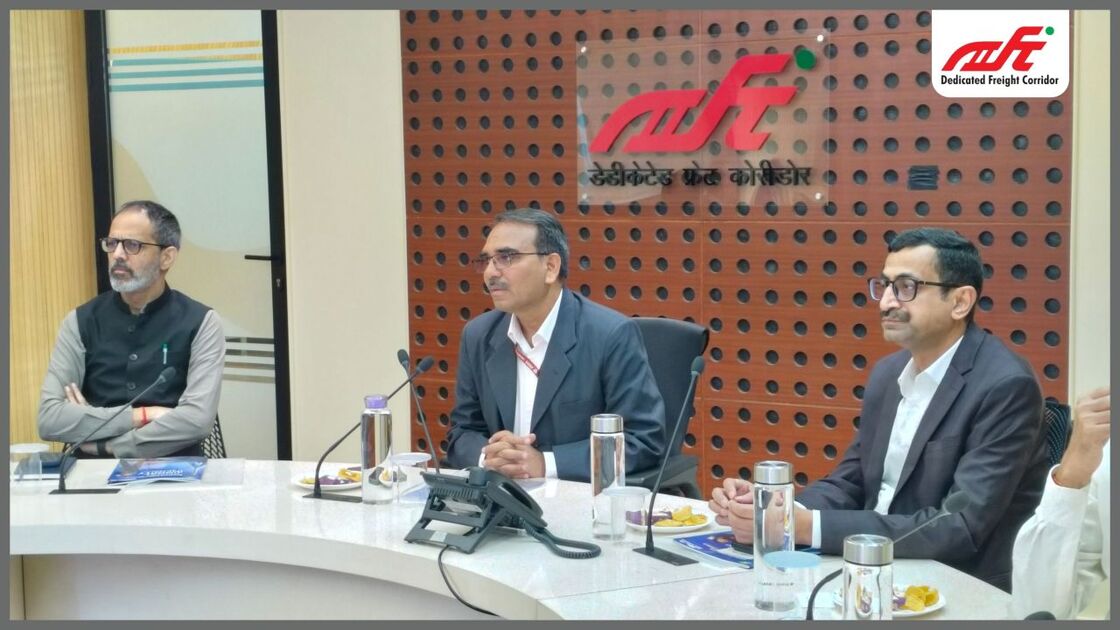
Shri Alok Tiwari, Managing Director, DFCCIL, chaired a meeting with representatives of Jindal Stainless Limited at DFCCIL’s Corporate Office to deliberate on technical knowledge-sharing, material innovation and potential areas of collaboration for incorporating stainless steel in railway infrastructure projects.

During the interaction, Jindal Stainless proposed organising a dedicated technical session for DFCCIL’s engineering team. The proposed session will focus on global developments in stainless steel technology, material selection and design standards, structural performance, durability and life-cycle cost comparisons, along with international case studies demonstrating successful applications of stainless steel in infrastructure projects.

The discussions also provided an opportunity for both organisations to exchange technical expertise and examine the potential use of stainless steel in critical railway infrastructure, particularly railway bridges, Road Over Bridges (ROBs) and other structural components.

A key area of discussion was identifying suitable opportunities for pilot applications in upcoming DFCCIL projects. Such initiatives could help assess the technical and economic feasibility of stainless steel solutions under Indian railway operating conditions while providing valuable insights into their long-term performance and maintenance requirements.

Driving Innovation and Sustainable Infrastructure

The growing emphasis on durable, resilient and sustainable infrastructure has increased the importance of advanced construction materials in the development of modern railway networks. Stainless steel, known for its corrosion resistance, durability and reduced maintenance requirements, offers potential advantages in infrastructure applications, particularly in locations exposed to challenging environmental conditions.

Its application, subject to project-specific engineering assessments and life-cycle cost evaluations, could contribute to enhancing structural longevity, reducing maintenance interventions and improving the overall life-cycle efficiency of railway assets.

For DFCCIL, which is spearheading the development and operation of dedicated freight corridors across India, exploring innovative material solutions is aligned with the broader objective of developing world-class railway infrastructure with enhanced operational reliability and long-term sustainability.

The proposed technical engagement with Jindal Stainless represents an opportunity to leverage industry expertise, evaluate emerging material technologies and identify practical applications that could add value to future infrastructure development.

As India’s dedicated freight corridor network continues to expand, such industry–institution collaborations could play an important role in bringing advanced engineering practices and innovative construction materials into the country’s railway infrastructure ecosystem.

VOC Port Strengthens Role in India’s Coastal Shipping Growth as Cargo Traffic Rises 32.27%

Coastal cargo now accounts for nearly one-third of total port traffic; coastal vessel movements increase 38.21% during April–October 2026

TOOTHUKUDI: As India places increasing emphasis on coastal shipping to improve domestic freight connectivity and logistics efficiency, V.O. Chidambaranar Port is emerging as an important participant in this transition, recording a 32.27% growth in coastal cargo handling during April–October 2026.

The Port handled 83.53 lakh tonnes of coastal cargo during the seven-month period, compared with 63.15 lakh tonnes in the corresponding period of the previous financial year. Coastal cargo’s contribution to the Port’s overall throughput increased from 25.03% to 32.06%, reflecting the growing importance of domestic maritime freight in its cargo operations.

The growth was supported by higher movement of key industrial commodities. Coastal coal handling increased by 50.58%, from 44.52 lakh tonnes to 67.04 lakh tonnes, while slag traffic rose by 67.74%, from 1.26 lakh tonnes to 2.11 lakh tonnes. Increased movement of phosphoric acid, furnace oil, and iron and steel materials further contributed to coastal cargo activity.

The expansion was also reflected in vessel movements, with the Port handling 170 coastal vessels against 123 during the corresponding period last year, an increase of 38.21%.

Notably, coastal cargo growth substantially outpaced the Port’s overall cargo growth of 3.27%. Total cargo throughput increased from 252.3 lakh tonnes to 260.5 lakh tonnes during April–October 2026. Container handling also registered growth of 2.56%, rising from 5.03 lakh TEUs to 5.16 lakh TEUs.

The performance highlights the growing role that coastal shipping can play in supporting industrial supply chains and domestic freight movement. By providing an alternative to long-distance land transportation for suitable cargo, coastal shipping offers opportunities to improve logistics efficiency, reduce transportation costs, and strengthen connectivity between industrial and maritime centres.

Shri Susanta Kumar Purohit, IRSEE, Chairperson, V.O. Chidambaranar Port Authority, stated: “The strong growth in coastal cargo reflects the increasing relevance of maritime transport to India’s domestic logistics network. Coastal shipping offers considerable potential to make freight movement more economical and efficient, particularly for industrial commodities transported over long distances. At V.O. Chidambaranar Port, we are committed to strengthening coastal connectivity and supporting the competitiveness of Indian industry and EXIM trade. This is aligned with the vision of Hon’ble Prime Minister Shri Narendra Modi for Viksit Bharat 2047.”

With coastal cargo now contributing nearly one-third of its total traffic, V.O. Chidambaranar Port’s performance underscores its increasing participation in India’s efforts to develop a more efficient, integrated, and maritime-oriented domestic freight network.

NMPA conducts local-level oil spill response exercise to strengthen marine environmental preparedness

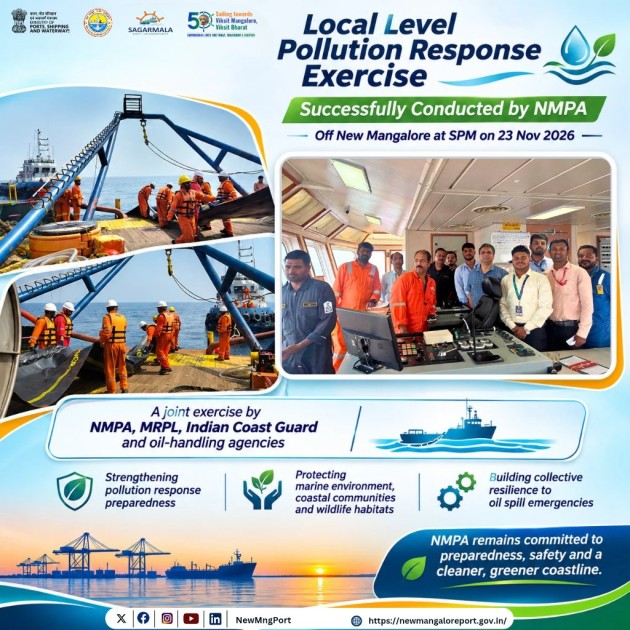
MANGALURU : The New Mangalore Port Authority (NMPA) successfully conducted a Local-Level Pollution Response Exercise on November 23, 2026, at the Single Point Mooring (SPM) facility off New Mangalore, reinforcing its commitment to maritime safety, environmental protection and preparedness against marine pollution incidents.

The exercise was jointly organised by NMPA, Oil and Natural Gas Corporation (ONGC) and Mangalore Refinery and Petrochemicals Limited (MRPL), with active participation from the Indian Coast Guard and oil-handling agencies.

The drill was designed to strengthen coordination among port authorities, oil-handling agencies and maritime response organisations in managing potential oil spill emergencies. Through simulated oil spill scenarios and practical response operations at sea, participating teams gained valuable operational experience in addressing the challenges associated with marine pollution incidents.

The exercise provided an important platform to assess emergency preparedness, enhance inter-agency coordination and familiarise participating personnel with the operational challenges involved in oil spill response and containment.

Particular emphasis was placed on protecting the marine environment, coastal communities and wildlife habitats while safeguarding the ecological integrity of coastal waters. The coordinated participation of various stakeholders also highlighted the importance of an effective and timely response mechanism in minimising the environmental impact of accidental oil spills.

The successful conduct of the exercise reflects the collective commitment of NMPA, ONGC, MRPL, the Indian Coast Guard and other participating agencies towards strengthening marine pollution response capabilities and ensuring safer and more environmentally responsible port operations.

Adani Kattupalli Container Terminal successfully berths MV Cornelia Maersk, demonstrating advanced vessel-handling capabilities

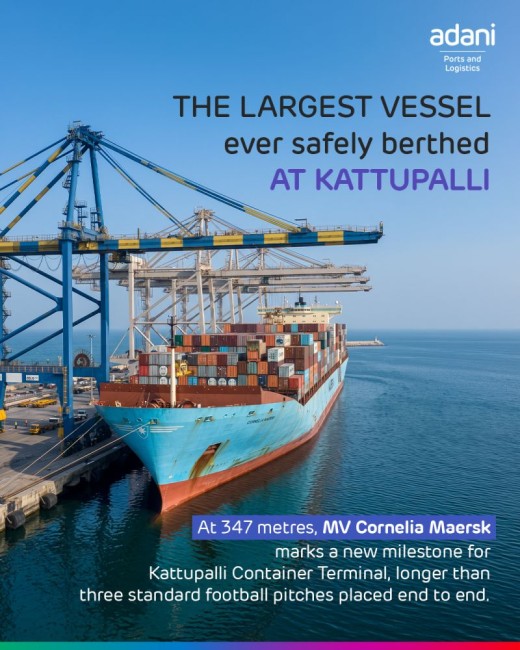
CHENNAI : Kattupalli Container Terminal, operated by Adani Ports and Special Economic Zone Ltd. (APSEZ), has achieved another significant operational milestone with the successful berthing of MV Cornelia Maersk, demonstrating its capability to accommodate large container vessels through advanced marine infrastructure, efficient port operations and professional vessel-handling expertise.

The vessel, measuring approximately 347 metres in length overall (LOA), arrived at Kattupalli on November 17, 2026. According to the port’s vessel schedule, the call involved a total of 4,614 container units, equivalent to approximately 7,751 TEUs, comprising import and export cargo movements.

The successful berthing reflects the terminal’s ability to safely accommodate large vessels and efficiently coordinate marine operations, including vessel manoeuvring, pilotage, berthing arrangements and terminal-side activities.

Advanced Marine Infrastructure and Container Handling Facilities

Kattupalli Port is equipped with deep-draft berths and modern marine infrastructure, enabling it to handle container vessels of up to 390 metres in length and vessels with a draft of up to 15 metres.

The container terminal is supported by eight quay cranes, including twin-lift capabilities, and 18 Rubber-Tyred Gantry (RTG) cranes, facilitating efficient container handling and yard operations.

The port also benefits from modern harbour tugs, experienced marine pilots, direct berthing facilities and all-weather operational capabilities, supporting round-the-clock vessel operations.

Its supporting logistics infrastructure includes a six-lane gate complex, dedicated truck parking facilities, a Direct Port Delivery (DPD) warehouse and extensive container storage areas. Strong road connectivity and the availability of nearby Container Freight Stations (CFSs) and empty container yards further support seamless cargo evacuation and delivery.

Strengthening India’s Maritime and EXIM Logistics Network

The successful call of MV Cornelia Maersk reinforces Kattupalli’s growing importance as a strategic container gateway on India’s eastern coastline. Its modern facilities and operational capabilities contribute to improving port efficiency, supporting international shipping services and strengthening export-import logistics connectivity.

The milestone also reflects APSEZ’s continued focus on developing world-class port infrastructure, enhancing operational performance and providing reliable maritime logistics solutions to global shipping lines and trade stakeholders.

The successful berthing of MV Cornelia Maersk marks another important step in Kattupalli Container Terminal’s journey towards becoming a preferred destination for large container vessels, reinforcing its commitment to safety, operational excellence and India’s growing maritime ambitions.

Adani Hazira Port handles First-Ever Ammonium Sulphate Cargo of 55,000 MT, Strengthens Cargo Diversification

HAZIRA: Adani Hazira Port has achieved a significant operational milestone by handling Ammonium Sulphate for the first time, marking another important step towards diversifying its cargo portfolio and strengthening its capabilities to handle a wider range of commodities.

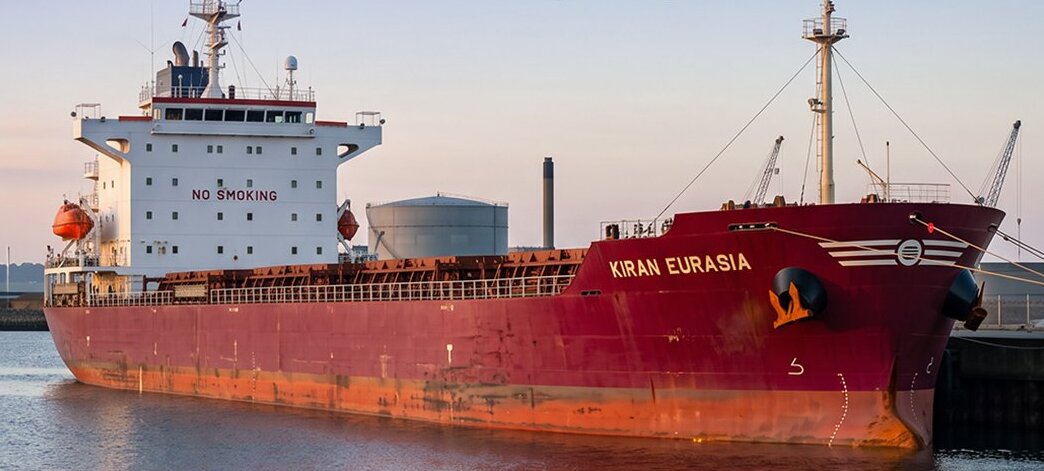
According to a recent update shared by Adani Ports and Special Economic Zone Ltd. (APSEZ), the port successfully discharged 55,000 metric tonnes (MT) of Ammonium Sulphate from M.V KIRAN EURASIA for multiple customers, achieving an impressive discharge productivity of 10,991 MT per day.

The successful handling of this new commodity underscores Adani Hazira Port’s operational preparedness, efficient cargo-handling infrastructure and ability to accommodate the evolving requirements of diverse customers. The achievement also reflects the port’s focus on expanding its cargo-handling capabilities while maintaining high standards of operational efficiency and service delivery.

The addition of Ammonium Sulphate to the port’s cargo basket represents a strategic move towards broadening its commodity mix and creating opportunities to serve a wider customer base. Ammonium Sulphate is an important fertiliser and industrial chemical, with applications in agriculture and various industrial processes. Its efficient handling at Hazira further strengthens the port’s potential to support regional industrial and agricultural supply chains.

Located on the western coast of Gujarat, Adani Hazira Port is an important maritime gateway serving the industrial hinterland of Gujarat and neighbouring regions. Its strategic location and connectivity to major industrial and commercial centres make it a significant component of India’s maritime logistics network.

The first-ever handling of Ammonium Sulphate, coupled with the strong discharge productivity achieved during the operation, highlights APSEZ’s continued emphasis on operational excellence, customer-centric services and cargo diversification.

With the successful addition of another commodity to its portfolio, Adani Hazira Port continues to reinforce its position as a versatile maritime logistics hub, aligned with India’s growing trade and industrial requirements.

Transworld Shipping Lines strengthens Fleet with Acquisition of 55,569 DWT Vessel ‘TW Mangala’

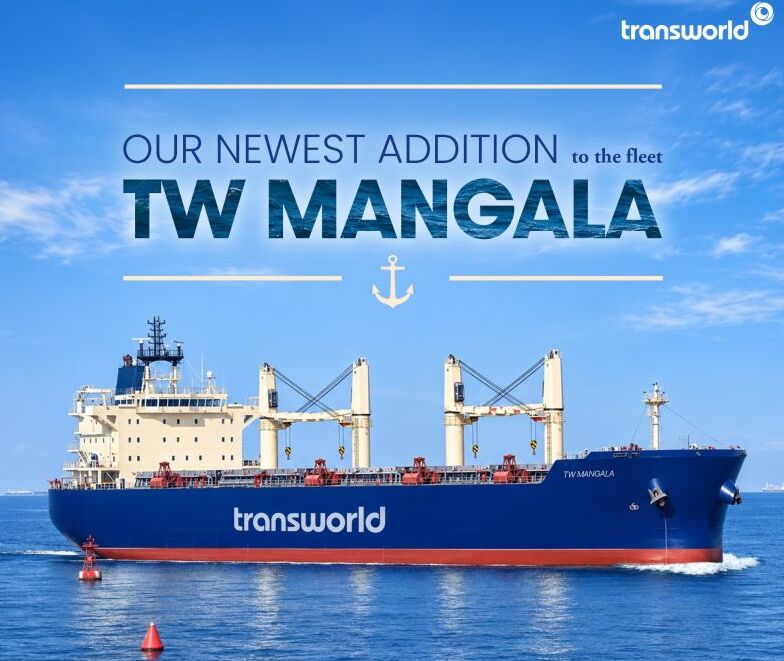
KAKINADA: Transworld Shipping Lines Limited has further strengthened its maritime fleet with the acquisition of a new vessel, TW Mangala, having a deadweight tonnage (DWT) capacity of 55,569 MT. The acquisition was finalised on November 23, 2026, in Kakinada, marking another significant milestone in the company’s fleet expansion strategy and its commitment to enhancing operational capabilities.

Announcing the development through its LinkedIn post, Transworld expressed pride in welcoming TW Mangala to its growing fleet, describing the acquisition as an important step towards building stronger capabilities, expanding its operational reach and reinforcing its position in the maritime and shipping sector.

The addition of the 55,569 DWT vessel reflects Transworld Shipping Lines’ continued focus on expanding its fleet capacity and strengthening its ability to serve evolving maritime transportation requirements. The acquisition is expected to further enhance the company’s operational flexibility and provide additional capacity to support its shipping activities.

The latest fleet addition also underscores Transworld’s commitment to sustained growth through strategic investments in maritime assets, operational infrastructure and long-term partnerships.

As the global shipping industry continues to navigate changing trade patterns and increasing demand for efficient maritime transportation, fleet expansion remains an important factor in strengthening competitiveness and operational resilience.

With the acquisition of TW Mangala, Transworld Shipping Lines Limited has taken another step forward in its growth journey, reaffirming its focus on expanding its maritime capabilities and building a stronger presence in the shipping industry.

The acquisition of TW Mangala represents not just an addition to the fleet, but another milestone in Transworld’s commitment to growth, stronger capabilities and a more connected maritime future.

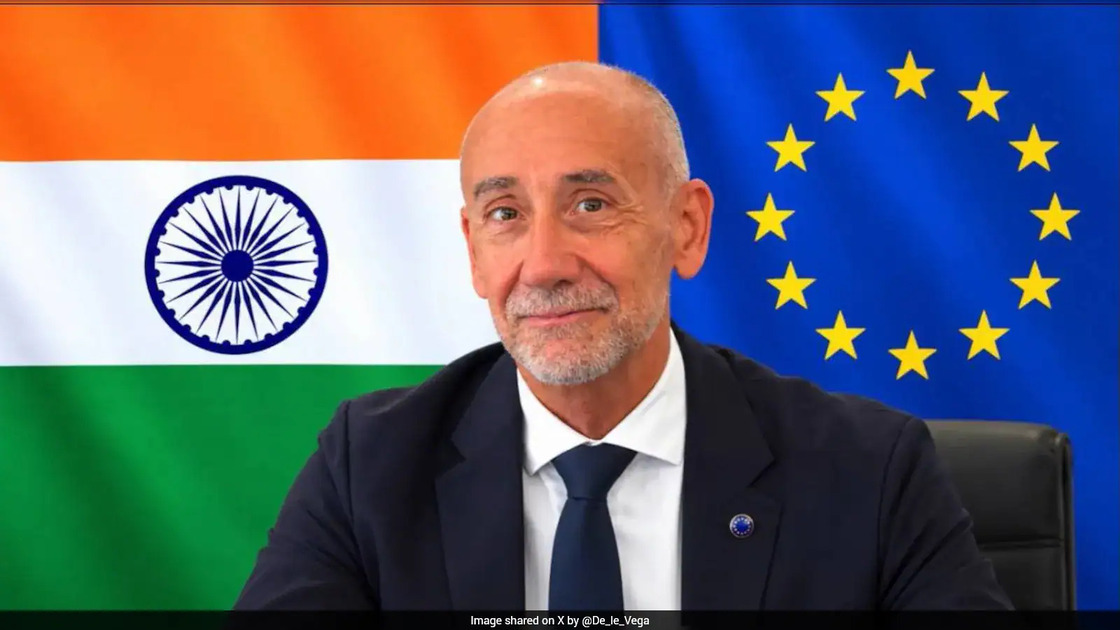
EU-India FTA likely to be signed in December, may come into force by mid-2027: EU Ambassador

NEW DELHI: The India-European Union Free Trade Agreement (FTA) is expected to be signed in December and could come into force by the middle of 2027, European Union Ambassador to India Jean-Eric Paquet said on Monday, outlining the remaining steps in the agreement’s implementation.

In a video message shared on X, Paquet said negotiations for the agreement concluded successfully at the India-EU summit in January this year, following which teams from both sides worked on finalising and technically refining the text.

He said the European Commission proposed the agreement’s signature to the Council in September, and European ministers were currently discussing whether to give the go-ahead for its signing.

“The wide expectation is that we will have agreement to sign in December. And this is where we also hope to have a high-level visit coming to Europe for that signature,” Paquet said.

Explaining the next steps, the EU Ambassador said that after the agreement is signed, it will undergo scrutiny by the European Parliament, which will have to give its assent before it can enter into force.

He said the European Parliament’s Foreign Affairs Committee had recently visited Delhi and explained the process of scrutiny.
Paquet further cited the chair of the European Parliament’s Foreign Affairs Committee as expecting the Parliament to form its view in spring, expressing optimism about a positive outcome.

Clarifying that the assessment was that of the committee chair, Paquet said he was not speaking on behalf of the European Parliament.
He said the agreement could subsequently enter into force by the middle of 2027, with its benefits beginning to accrue from the time it comes into effect.

“Once the free trade agreement is signed, on the European side, we then move to the scrutiny of the European Parliament, which needs to give its assent. We just had the Foreign Affairs Committee of the European Parliament in Delhi, and they explained how this works. There will be substantial scrutiny of the document, but then the European Parliament can only say whether it agrees with the agreement or not, so it doesn’t open a new negotiation. The chair of the committee said that he expects the Parliament to form a view in spring, and he was very, very optimistic that it would be a positive view. So, I’m not saying it on behalf of the European Parliament; I’m quoting the chair of the Foreign Affairs Committee in the European Parliament. With that, the free trade agreement can then enter into force, let’s say by the middle of 2027. And this means that at entry into force, the benefits occur,” he said.

According to the Commerce Ministry, the pact is expected to significantly benefit labour-intensive sectors, including textiles, apparel, leather, footwear, marine products, gems and jewellery, handicrafts, engineering goods and automobiles.

The agreement is also expected to bring down tariffs on nearly USD 33 billion worth of Indian exports in labour-intensive sectors to zero upon its entry into force, creating opportunities for MSMEs, women, artisans, youth and professionals.

India has also secured favourable market access for agricultural and processed food products, while safeguarding sensitive sectors, including dairy, cereals, poultry and certain other agricultural products. In addition to trade in goods, the agreement covers services, digital trade, customs and trade facilitation, intellectual property rights and mobility of professionals.

The FTA also provides a framework for facilitating the movement of skilled Indian professionals to European countries, with commitments covering intra-corporate transferees, contractual service suppliers and independent professionals across several sectors.

Bilateral trade in goods between India and the European Union stood at EUR 118 billion in 2025, according to the European Commission.