Home Blog Page 4

Cotton import are allowed until December: Giriraj Singh

PUNE: Union Textiles Minister Shri Giriraj Singh said on Sunday that “import allowances are in place until December” and that “we will assess the situation further if the need arises.”

“Due to the impact of drought in Maharashtra this year, cotton production has declined by 15-20%, necessitating imports for the industry,” Singh told reporters in Pune after meeting officials from the Cotton Corporation of India, the Central Silk Board and the handloom, handicraft and jute sectors.

“The government has provided exemptions to facilitate this,” Singh said.

The Centre waived customs duties on cotton imports from June 1 to October 31. The Department of Revenue extended the exemption by two months, through December 31, 2026, under Notification No. 35/2026-Customs dated October 30. The Ministry of Textiles said the extension was expected to give textile and apparel manufacturers more flexibility in sourcing cotton and help ease pressure on raw material costs.

The Cotton Association of India’s first estimate for the 2026-27 season, dated November 2, put Maharashtra’s cotton pressing at 91 lakh bales of 170 kg each, down nearly 20 per cent from 113.35 lakh bales in the previous season. It estimated nationwide cotton pressing at 280 lakh bales, down about 14 per cent from 325.69 lakh bales last season.

Separately, the Maharashtra Agriculture Department’s first advance estimate put the state’s cotton lint production at 45.85 lakh bales of 170 kg each for 2026-27, down 42.3 per cent from 79.53 lakh bales in its final estimate for 2025-26.

The Cotton Association of India projected domestic cotton consumption at 365 lakh bales, unchanged from the previous season. It estimated imports at 65 lakh bales, compared with 71.60 lakh bales last season. With opening stocks of 72.88 lakh bales, the association projected total cotton supplies of 417.88 lakh bales for the season ending September 2027.

GRSE delivers 120th Warship, ASW-SWC ‘Ashank’ to Indian Navy

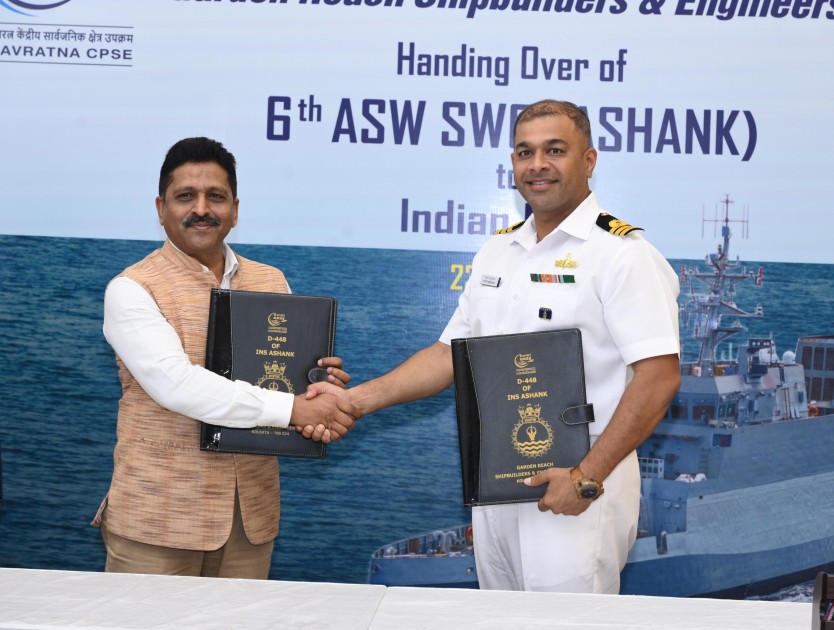
KOLKATA : Reinforcing its steady progress in delivering frontline naval platforms, Garden Reach Shipbuilders & Engineers Ltd. (GRSE), a Navratna Public Sector Undertaking under the Ministry of Defence, Government of India, delivered Ashank, an Anti-Submarine Warfare Shallow Water Craft (ASW-SWC) being built for the Indian Navy. The delivery comes just 18 days after the handover of Amini, on 05 Nov 26, marking GRSE’s second delivery within the month. The warship was accepted by Rear Admiral Gautam Marwaha, VSM, CSO (Tech), HQENC on Monday, 23 Nov 26.

With this delivery, GRSE has built 120 warships, of which 82 have been delivered to the Indian Navy, marking another milestone in the shipyard’s contribution to India’s naval capabilities.

The name ‘Ashank’, signifying fearlessness and an undaunted spirit, aptly reflects the warship’s role in safeguarding India’s maritime frontiers. Designed to meet the Indian Navy’s requirements for anti-submarine warfare in coastal waters, Ashank adds to the Navy’s operational capabilities in the littoral domain.

The ASW-SWC programme also represents a significant stride in indigenous defence manufacturing. Incorporating approximately 88% indigenous content, these vessels feature a 30mm Naval Surface Gun manufactured by GRSE. The programme reflects the shipyard’s capabilities in integrating complex indigenous systems and technologies into frontline naval platforms, in keeping with the national vision of Aatmanirbhar Bharat.

GRSE is currently building 12 frontline naval platforms, comprising one Project 17A Advanced Stealth Frigate, two ASW-SWCs, four Next Generation Offshore Patrol Vessels and five Next Generation Corvettes. In addition, the shipyard is constructing 36 other vessels, including 13 export platforms. This diverse and substantial order book reinforces GRSE’s position as a key contributor to India’s maritime security, indigenous defence manufacturing and growing shipbuilding capabilities.

DHL Supply Chain sees 12% year-on-year sustainable revenue growth as companies transform their global supply chains

SINGAPORE: As geopolitical uncertainty, changing trade patterns, and technological development reshape global supply chains, companies are increasingly looking for long-term logistics partners that can provide resilience and combine global scale, sector expertise, and technology.

This shift is creating new opportunities for DHL Supply Chain, DHL Group‘s contract logistics business. In the third quarter of 2026, reported revenue increased by 12.0% year-on-year, with growth across all regions: 13.1% in the Americas, 11.7% in Europe, the Middle East and Africa (EMEA), and 9.9% in Asia Pacific. Growth spans across sectors including life sciences and healthcare, new energy, technology, retail, consumer, and automotive.

“Supply chain resilience has become a strategic differentiator for many companies,” said Hendrik Venter, CEO, DHL Supply Chain. “Our customers have to manage greater complexity while improving resilience to supply disruptions, productivity, and flexibility. They need long-term partners that understand their industries, can scale proven technology in operations, and have the capability to provide end-to-end supply chain solutions across global markets. The growth we are seeing across regions and sectors shows that this approach is resonating with our customers.”

Investing in capabilities for changing customer needs

DHL Supply Chain continues to invest in identified high-growth markets, long-term partnerships, and strategic sector-specific initiatives. These investments include AI and robotics, automation, and acquisitions.

“Across Asia Pacific, we’re seeing customers think much further ahead about their supply chains,” said Javier Bilbao, CEO, DHL Supply Chain Asia Pacific. “They want the flexibility to grow, but they also need the confidence that their logistics operations can keep pace. That’s why we’re investing alongside our customers in the technology, infrastructure and capabilities they need, not just for where their business is today, but for where they want to take it next.”

Recent investments across the region reflect these changing needs. In Australia, DHL Supply Chain has invested €5 million in autonomous case-handling robots at its pharmaceutical-grade facility in Sydney, which serves more than 40 Life Sciences and Healthcare customers. In the Philippines, it is expanding warehousing and logistics services for Terumo and has opened a 5,000 square metre built-to-suit facility in Cebu for Teradyne.

The region’s growing semiconductor industry is also driving demand for specialized logistics capacity. The new DHL Chitose Logistics Center in Hokkaido, Japan, is due to begin full operations in February 2027, while in India, a semiconductor logistics facility of up to 40,000 square metres is planned in Dholera, Gujarat.

Automation is another area of growing demand. Customers are using it to improve productivity, increase capacity and make operations more resilient. In Japan, for example, DHL Supply Chain has introduced an automated storage and retrieval system for Baycrew’s, building on earlier investments in RFID technology and automated packing lines.

DHL Supply Chain is also adding capacity to support customers as they grow. In Vietnam, it is investing €63 million in the new DHL North Logistics Campus in Hung Yen, with infrastructure designed to support advanced automation as customer needs evolve.

Long-term customer commitments provide secure future growth

The Total Contract Value (TCV) of new customer contracts signed in 2026 is expected to far exceed €8 billion, supported by a qualified pipeline of more than €36 billion. TCV represents the lifetime value of contracts signed during the year rather than annual revenue and provides an indication of business secured for future operations. These commitments are broadly spread across DHL Supply Chain’s global regions and sectors, with the Americas expected to account for approximately 45% of 2026 TCV, EMEA 35%, and Asia Pacific 20%.

With operations in more than 55 countries and a contract renewal rate of approximately 90%, DHL Supply Chain is well positioned to pursue its objective of growing a minimum of two percentage points faster than every contract logistics market it operates in.

This is also reflected in Asia Pacific, where strong customer satisfaction is supporting continued growth with existing customers. A record number of customers are expanding their partnerships with DHL Supply Chain into additional markets, building on successful solutions from one market to another. At the same time, larger and more sophisticated automation projects are leading to longer-term customer commitments.

“Our customers are trusting us with critical parts of their business, and we don’t take that lightly. Many of them have been growing with us for years and we’re now seeing successful partnerships extend into new operations and new markets across the region. That continued trust is one of the strongest signals that we’re delivering what our customers need, and it’s something we have to keep earning,” added Bilbao.

At a Glance

What is driving DHL Supply Chain’s growth?

Companies are reshaping their supply chains in response to geopolitical uncertainty, changing trade patterns, and technological developments. This is driving demand for logistics partners with global reach, industry expertise, and the ability to manage complex supply chain transformations while strengthening resilience and security across markets.

How is this reflected in DHL Supply Chain’s business?

DHL Supply Chain reported revenue growth of 12.0% year-on-year in the third quarter of 2026. Growth was broad-based across all regions, reaching 13.1% in the Americas, 11.7% in Europe, the Middle East and Africa (EMEA), and 9.9% in Asia Pacific.

Which sectors are contributing to DHL Supply Chain’s growth?

Growth spans several sectors, including life sciences and healthcare, technology, retail, consumer, new energy, and automotive. Expanding customer relationships in pharmaceuticals, specialized logistics for new energy industries, and growing demand from the data center ecosystem illustrate opportunities in sectors undergoing major transformation.

How is DHL Supply Chain investing behind this growth?

DHL Supply Chain is investing in technology and digitalization, infrastructure, and specialized capabilities. This includes AI and robotics, automation, targeted acquisitions, and strategic partnerships to support customers in high-growth markets and sectors.

In Asia Pacific, automation is gaining traction, driven by requirements for greater productivity, capacity, resilience and operational efficiency.

What do long-term customer commitments indicate?

The Total Contract Value (TCV) of new customer contracts signed in 2026 is expected to far exceed €8 billion. TCV represents the lifetime value of these contracts and provides an indication of business secured for future operations. The commitments are geographically diversified, with the Americas expected to account for approximately 45% of 2026 TCV, EMEA 35%, and Asia Pacific 20%.

In Asia Pacific, strong customer satisfaction is driving growth with existing customers, as they are expanding their partnerships with DHL Supply Chain into additional markets, building on successful solutions from one market to another. Larger automation projects are also leading to longer-term customer commitments.

DHL – The logistics company for the world
DHL is the leading global brand in the logistics industry. Our DHL divisions offer an unrivalled portfolio of logistics services ranging from national and international parcel delivery, e-commerce shipping and fulfillment solutions, international express, road, air and ocean transport to industrial supply chain management. With approximately 389,000 employees in more than 220 countries and territories worldwide, DHL connects people and businesses securely and reliably, enabling global sustainable trade flows. With specialized solutions for growth markets and industries including technology, life sciences and healthcare, engineering, manufacturing & energy, auto-mobility and retail, DHL is decisively positioned as “The logistics company for the world”.

DHL is part of DHL Group. The Group generated revenues of approximately 82.9 billion euros in 2025. With sustainable business practices and a commitment to society and the environment, the Group makes a positive contribution to the world. DHL Group aims to achieve net-zero emissions logistics by 2050.


Time Ticking: Two Weeks for Governments to Green-Light Framework for Cutting Shipping Emissions

LONDON:  As a crucial fortnight of meetings opens at the International Maritime Organization opens in London, the Clean Shipping Coalition calls on member states of the UN’s shipping agency to back adoption without further delay of the Net-Zero Framework (NZF) – the UN shipping body’s proposed mechanism for reducing shipping emissions. 

Following the IMO’s deferral of a decision on the NZF in October 2025, the upcoming Intersessional Working Group on Reduction of GHG Emissions from Ships (ISWG-GHG 23 Nov 23-27) and the Marine Environment Protection Committee (MEPC 85, Nov 30-Dec 4), provide an opportunity to reaffirm commitment and a platform for adoption for this crucial framework. 

“The clock is ticking – IMO member states have just two weeks to protect the global climate from shipping emissions – they must adopt the Net-Zero Framework without further distraction or diversion”, said Lukas Leppert, President of the Clean Shipping Coalition. “IMO member states have already created a greenhouse gas strategy and agreed and approved the regulatory framework to deliver on that strategy – now it’s time to adopt and implement the NZF. The book is closed on further wrangling, it’s time for governments to show courage by taking action now to reduce shipping’s climate heating emissions.”

“The product of years of negotiations, the Net-Zero Framework reflects findings from the IMO’s Comprehensive Impact Assessment, is a long-negotiated compromise that brings together a multitude of interests and positions, and is supported by a broad majority.”


“Since October 2025, when IMO member states voted to adjourn the adoption session for one year, various alternative proposals to the NZF were introduced and intensively discussed, but were neither able to demonstrate a comparable reduction in emissions nor gather sufficient support”, said Leppert. “These alternative proposals aimed at supplanting or distracting from the NZF have fallen away, proving the NZF as the best and only course ahead.”

“Recent election results have showcased broad support for tackling climate change”, said John Maggs, the Clean Shipping Coalition’sRepresentative at the IMO. “ Brazil, one of the key architects of the NZF, saw climate a central issue during the presidential elections that saw Luiz Inácio Lula da Silva secure a fourth term. Additionally, the blue wave of the US mid-terms could reshape the climate policies of one of the strongest opponents of the NZF. With the impetus for seeking ‘alternative proposals’ apparently fading, countries can now reassess their positions and hopefully stand firm in support of the NZF.”

“IMO Member States must use ISWG-GHG 23 and MEPC 85 to secure adoption of the Net-Zero Framework,” said Andrew Dumbrille, Co-Director of Equal Routes. “Adoption would make well-to-wake GHG fuel intensity requirements mandatory for the first time. To deliver on that promise, the Life Cycle Assessment (LCA) Guidelines must fully account for methane slip and upstream methane emissions from LNG. Robust methane accounting is part of how the Framework lays the foundation for a just and equitable transition for those most affected by shipping’s emissions.”

“By adopting a common global framework for the shipping industry – the NZF – the IMO provides a level playing field and enables the ramp-up of sustainable solutions”, said Sönke Diesener, Senior Policy OfficerMaritime Transport at NABU. “A clear reduction pathway, including a binding goal for 2040, and financial support for sustainable fuels will provide the planning security required to invest into climate-friendly technologies and fuels. The maritime industry stands ready to decarbonize and is waiting for the IMO’s regulatory signal to get started.”

“Pollution from shipping emissions is dirty and dangerous, causing an estimated 250,000 premature deaths and six million cases of child asthma each year and rivaling major industrialized economies in climate impacts”, said Delaine McCullough, Shipping Program DirectoratOcean Conservancy. “Adopting the agreed upon Net-Zero Framework is the IMO’s quickest and most effective way to protect communities, address climate change, and create certainty for the shipping industry for decades to come.”

“The IMO has an opportunity to put shipping on a credible path to net zero, but ambition without accountability is just words on paper”, added McCullough. “The Net-Zero Framework must deliver meaningful emissions cuts, incentivize truly cleaner fuels, and generate funding to help countries make the transition. We need a deal that closes loopholes, prevents new fossil fuel lock-in and puts the resources behind the promises. As this year’s stunning weather disasters make clear, our ocean and the industry cannot afford to kick the hard decisions down the road again.”

“Three years ago, the IMO promised a just and equitable transition for shipping, leaving no one behind; in the coming days, governments must deliver on that promise by adopting the Net-Zero Framework, with ambitious economic measures at its heart”, said Anaïs Rios, Senior Shipping Policy Officer, Seas At Risk. “There is nothing just or equitable about protecting shipping’s dependence on fossil fuels while passing the costs of climate inaction onto the world’s most vulnerable communities. For countries dependent on imported food, those costs are not abstract. They threaten food security, livelihoods and lives. Over the next fortnight, IMO member states must agree on adoption of the NZF.”

“The biggest danger at MEPC 85 is no longer delay, but a rushed deal that would have shipping reliant on polluting fossil LNG and crop biofuels over real solutions”,
said Alex Springer, Deputy Shipping Director at T&E. “IMO member states, including the EU, must resist the pressure from an entrenched minority to reach any deal at the cost of ambition.”

“The IMO must seize this opportunity to transition to clean fuels and eliminate much of the harmful pollution from shipping”, said John Steelman, Deputy Director of  Clean Air Task Force’s Transportation Decarbonization program. “To ensure the Net Zero Framework is as effective as it needs to be, it must incentivize the shipping industry to invest in truly low-carbon fuels and engines as well as innovative ship designs and operations.” 

Background:
The shipping sector makes up 2-3% of global greenhouse gas emissions – pumping 1 billion tonnes of GHGs into the atmosphere every year, comparable to the world’s fifth biggest emitting country, Japan. The IMO has committed to achieving its GHG Strategy goal, including its long-term goal of decarbonisation by 2050, its interim targets of a 30% reduction in absolute emissions by 2030 and 80% by 2040, and its commitment to a just and equitable transition.

The product of years of negotiations, the Net-Zero Framework reflects findings from the IMO’s Comprehensive Impact Assessment, is a long-negotiated compromise that brings together a multitude of interests and positions, and is supported by a broad majority.

Approved during MEPC 83 in April 2025, the NZF includes a “global fuel standard” (GFS), which requires ship operators to gradually decrease the amount of greenhouse gas emitted by shipping fuels – or pay penalties. The framework also introduces a mechanism that puts a price on a portion of greenhouse gases ships emit, giving the industry a clear financial incentive to reduce emissions in line with the global fuel standard. Adoption of the NZF, planned for October 2025’s MEPC/ES.2, was postponed for over a year, due to pressure from IMO member states such as the US and Saudi Arabia.

Gujarat–Netherlands Maritime Partnership gains momentum ahead of Vibrant Gujarat Global Summit 2027

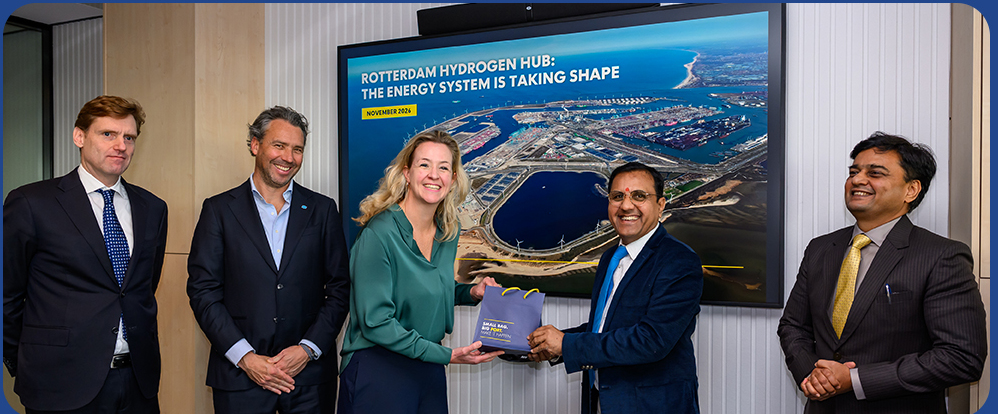
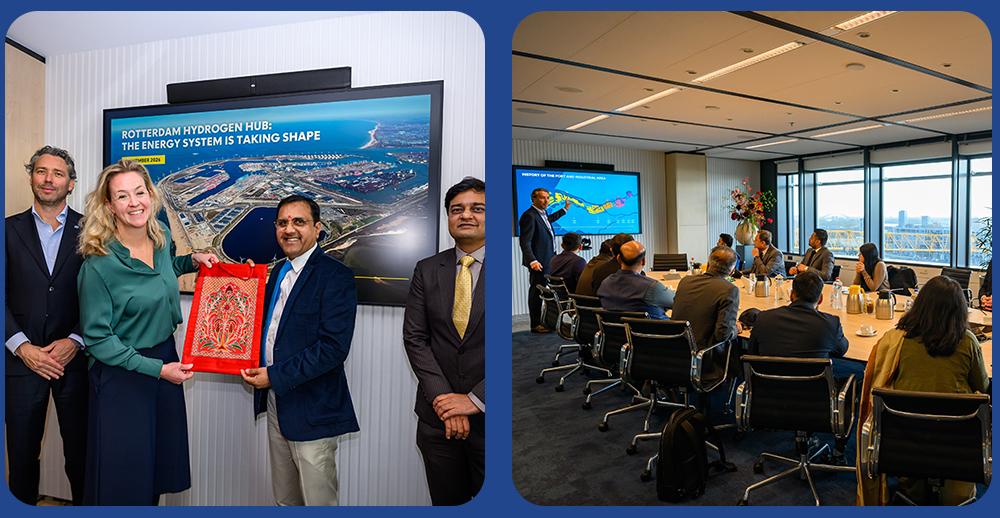
GANDHINAGAR: In a significant step towards strengthening Gujarat’s international maritime and trade partnerships, a high-level delegation of the Government of Gujarat, led by Dr. Pradyuman Vaja, recently held a productive meeting with representatives of the prestigious Port of Rotterdam in the Netherlands to explore new avenues of cooperation in port infrastructure, international trade, logistics and investment.

The engagement, undertaken as part of Gujarat’s international outreach ahead of the Vibrant Gujarat Global Summit (VGGS) 2027, reflects the state’s efforts to deepen economic engagement with the Netherlands and strengthen its position as a major maritime and logistics hub in India.

According to a post shared by Vibrant Gujarat on X, discussions centred on emerging opportunities for enhancing India–Netherlands economic and trade relations, particularly in the context of the proposed India–European Union Free Trade Agreement (FTA). The discussions also highlighted Gujarat’s strategic port infrastructure, expanding industrial ecosystem and potential for greater collaboration in trade, logistics and investment.

Gujarat Netherland Maritime Partnership 1 Gujarat–Netherlands Maritime Partnership gains momentum ahead of Vibrant Gujarat Global Summit 2027

Gujarat’s Maritime Strength: A Strategic Advantage

Gujarat’s established maritime infrastructure provides a strong foundation for such international partnerships. The state has an extensive coastline, a network of commercial ports and well-developed industrial and logistics clusters connecting domestic production centres with international markets.

According to the Gujarat Maritime Board, the state’s non-major ports handled 484 million metric tonnes (MMT) of cargo during FY 2025–26, accounting for approximately 64% of India’s non-major port cargo traffic. This underlines Gujarat’s importance in India’s maritime trade and port-led economic development

The proposed engagement with the Port of Rotterdam could open opportunities for knowledge exchange and cooperation in several important areas, including:

  • Modern port management and operational efficiency.
  • Multimodal logistics and international supply-chain connectivity.
  • Port digitalisation and smart maritime technologies.
  • Green ports, energy transition and sustainable shipping.
  • Industrial development, investment and maritime infrastructure.
  • Trade facilitation and stronger India–Europe cargo connectivity.

Port of Rotterdam: A Global Maritime Gateway

The Port of Rotterdam, recognised as Europe’s largest port, is a major international maritime gateway connecting European markets with global trade routes. It handled approximately 428.4 million tonnes of cargo and 14.2 million TEUs of container traffic in 2025, according to its annual performance figures.

Its experience in port operations, industrial development, logistics integration and sustainable maritime infrastructure makes it a potentially valuable partner for knowledge-sharing and cooperation with Gujarat’s port ecosystem.

VGGS 2027: Strengthening Gujarat’s Global Investment Connect

The Netherlands engagement forms part of Gujarat’s broader international outreach programme ahead of the 11th edition of the Vibrant Gujarat Global Summit 2027, scheduled to be held from January 10 to 12, 2027, at Mahatma Mandir, Gandhinagar. The Netherlands is among the partner countries for the upcoming summit.

Through these international engagements, the Government of Gujarat is seeking to attract investments, encourage technology partnerships and expand business collaborations across key sectors, including maritime, logistics, manufacturing, infrastructure and innovation.

The meeting with the Port of Rotterdam is therefore an important step in exploring the potential for stronger Gujarat–Netherlands maritime cooperation. Closer engagement between the two sides could facilitate the exchange of global best practices, strengthen international supply-chain linkages and create new avenues for investment and business partnerships.

As Gujarat prepares to host Vibrant Gujarat Global Summit 2027, its growing engagement with leading international maritime and logistics institutions reinforces the state’s ambition to further strengthen its position as a preferred destination for global trade, investment and port-led industrial development.

DGMA-MACN sign MoU to strengthen transparency, integrity and public-private collaboration in India’s Maritime sector

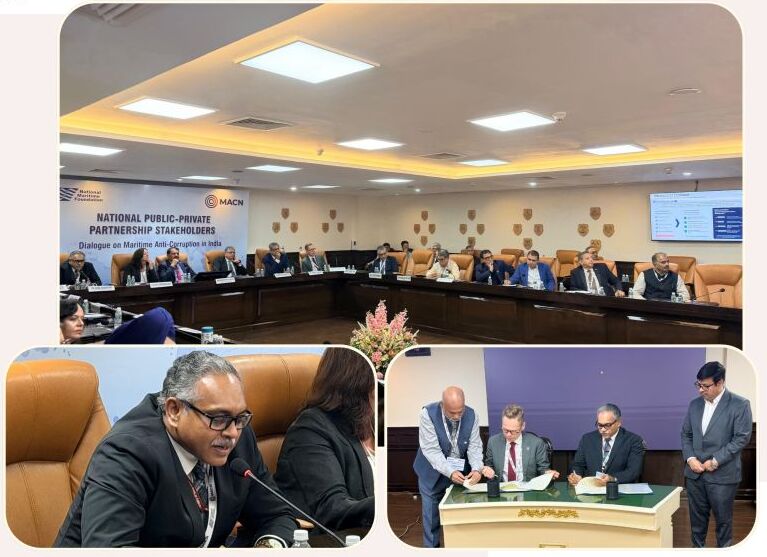
NEW DELHI: The National Public-Private Partnership Stakeholders Dialogue on Maritime Anti-Corruption in India, jointly organised by the National Maritime Foundation (NMF) and the Maritime Anti-Corruption Network (MACN–India), was held on 19 November 2026 at the Manekshaw Centre, New Delhi, bringing together key stakeholders to strengthen transparency, integrity and public-private collaboration in India’s maritime sector.

The Directorate General of Maritime Administration (DGMA) participated in the dialogue, led by Shri Shyam Jagannathan, IAS, Director General of Maritime Administration and Additional Secretary, Ministry of Ports, Shipping and Waterways, who delivered a keynote address highlighting DGMA’s commitment to transparent, accountable and trust-based maritime governance.

The address focused on regulatory reforms, Ease of Doing Business, digital transformation through platforms such as e-Samudra and e-Navik, and strengthening institutional mechanisms to promote transparency, reduce discretionary interfaces and prevent fraudulent practices across the maritime ecosystem.

A key highlight of the event was the signing of a Memorandum of Understanding (MoU) between DGMA and MACN to strengthen cooperation in capacity building, addressing systemic corruption risks, port-level initiatives, stakeholder engagement and exchange of international best practices to promote transparency and integrity in maritime operations.

DGMA was also represented by Shri Sudhir Kohakade, IRS, Deputy Director General; Shri Sankalp Abhishek, SEEED PMC; and Shri Devarshi Datta, SEEED – Engineering.

The participation and signing of the MoU reaffirmed DGMA’s commitment to fostering a transparent, efficient and corruption-free maritime ecosystem through collaborative governance, digital innovation and sustained stakeholder engagement.

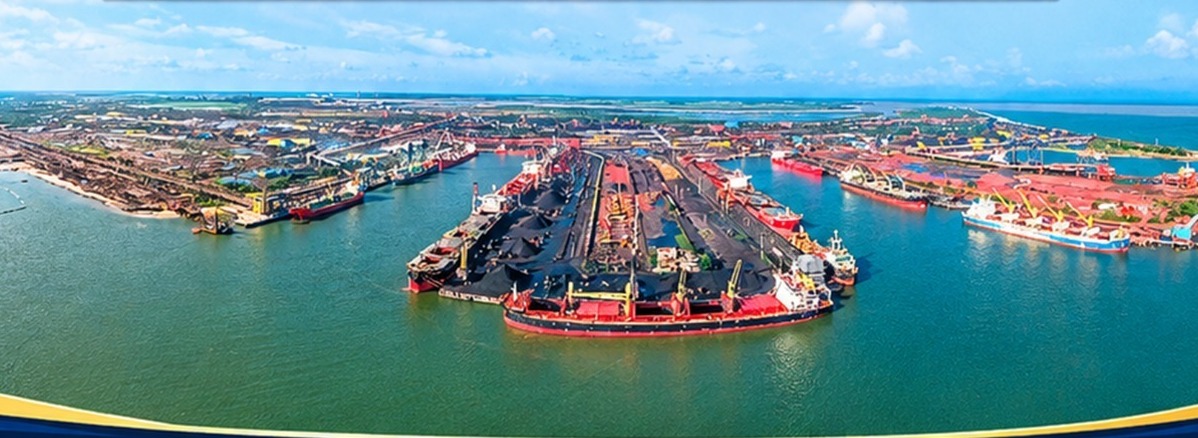
Paradip Port strengthens Coastal Shipping momentum with 39.981 MMT Cargo Handling in Seven Months

Strong performance underscores the port’s growing role in strengthening coastal logistics, promoting sustainable transportation and enhancing India’s maritime trade connectivity

PARADIP: Paradip Port Authority (PPA) has registered an impressive growth of 8.62% in coastal cargo handling during the April–October period of FY 2026–27, reflecting its continued commitment to strengthening India’s coastal shipping ecosystem and promoting efficient, sustainable maritime transportation.

According to the latest performance figures released by Paradip Port Authority, the port handled 39.981 million metric tonnes (MMT) of coastal cargo between April and October 2026, compared to 36.806 MMT during the corresponding period of the previous financial year. This represents a year-on-year growth of 8.62%, highlighting the increasing importance of Paradip Port in facilitating coastal cargo movement along India’s eastern coastline.

The encouraging growth in coastal cargo traffic reinforces Paradip Port’s position as a key maritime gateway for domestic trade and an important facilitator of cost-effective transportation of bulk commodities across the country.

Coastal shipping plays a significant role in reducing the pressure on road and rail infrastructure, lowering transportation costs and improving the overall efficiency of the logistics supply chain. It also offers environmental advantages through comparatively lower fuel consumption and carbon emissions per tonne of cargo transported.

Paradip Port’s sustained performance in this segment aligns with the Government of India’s broader vision of promoting coastal shipping, enhancing multimodal connectivity and increasing the share of waterways in the country’s transportation mix.

The growth also reflects the port’s continuing efforts to strengthen operational efficiency, improve cargo-handling capabilities and provide reliable maritime logistics infrastructure to support the evolving requirements of domestic industries and trade.

With coastal cargo volumes continuing to gain momentum, Paradip Port Authority is further reinforcing its role in advancing India’s maritime logistics capabilities and contributing to the development of a more integrated, economical and environmentally sustainable transportation network.

The latest performance figures mark another encouraging milestone for Paradip Port as India continues to pursue its ambition of becoming a global maritime and logistics powerhouse.

JNPA Awards 8-Year Contract to Gateway Distriparks to Operate DFC-Compliant Common Rail Yard at Nhava Sheva

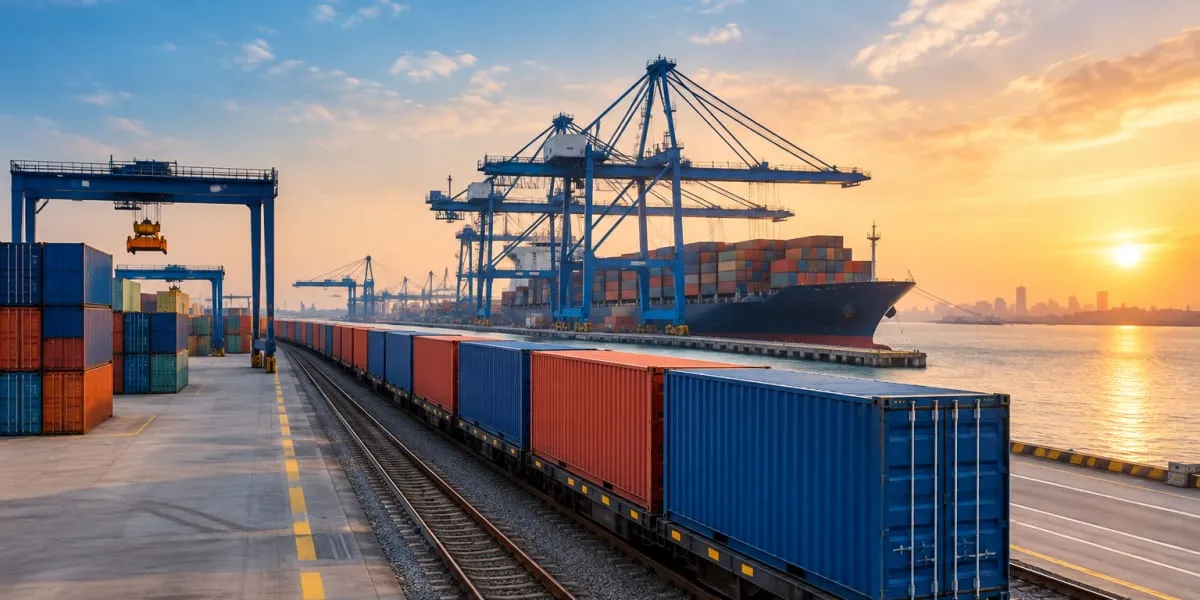
NAVI MUMBAI: Jawaharlal Nehru Port Authority (JNPA), India’s largest container port, has awarded an eight-year contract (extendable by two years) to Gateway Distriparks Limited (GDL) for the operation, maintenance and management of its Dedicated Freight Corridor (DFC)-compliant Common Rail Yard terminal (Rail Lines T1 & T2) at Nhava Sheva.

Constructed at an estimated cost of ₹225 Crore, the DFC Rail Yard spans a total operating area of 15.9 hectares (1,59,735 sq. m.) container storage yard. Equipped with two 1,500-metre-long DFC-compliant railway lines and an engine escape line, the facility is engineered to accommodate long-haul, double-stack container trains capable of carrying up to 720 TEUs per rake.

Addressing this recent development, Gaurav Dayal, IAS, Chairperson, JNPA, stated, “The award of the common rail yard terminal operations is another step in making JNPA’s rail connectivity faster and more dependable. As the first port with a DFC-compliant common rail yard, we are focused on moving containers seamlessly between the Dedicated Freight Corridor and our terminals. It supports our larger goal of shifting more cargo to rail and strengthening JNPA’s role as a gateway for India’s international trade.”

Currently, approximately 96% of container trains arriving at JNPA carry mixed volumes destined for multiple terminals leading to logistical challenges.

The Common Rail Yard addresses this challenge by acting as a centralized, non-discriminatory hub serving all five container terminals at JNPA (NSFT, NSICT, APMT, NSIGT, and BMCT). Under the agreement, Gateway Distriparks will manage end-to-end rail yard operations including train placement, unloading/loading, lashing/unlashing of single and double-stack rakes, segregation of mixed container trains, yard stacking, and inter-terminal container transfers.

Key Operational & Trade Benefits

  • Accelerated Turnaround Times (TAT): Strict operational benchmark will significantly reduce dwell times.
  • Digital Visibility & Fleet Deployment: GDL will deploy a modern fleet of Reach Stackers and GPS-enabled Internal Transfer Vehicles (ITVs) integrated with a web-based Terminal Operating System (TOS) to provide real-time cargo visibility to terminals, railways and trade stakeholders.
  • Reclaiming Northern Hinterland Cargo: With full DFC integration, JNPA aims to leverage faster transit speeds and lower per-TEU logistics costs to expand its container market share from the Northern hinterland (NCR, Punjab, Rajasthan, Haryana, and Western UP) back toward its historical 30% benchmark.

The O&M operator is scheduled to mobilize equipment and commence operations at the facility within one month of the Work Order issuance.

CBIC Chairman visits Pipavav Port

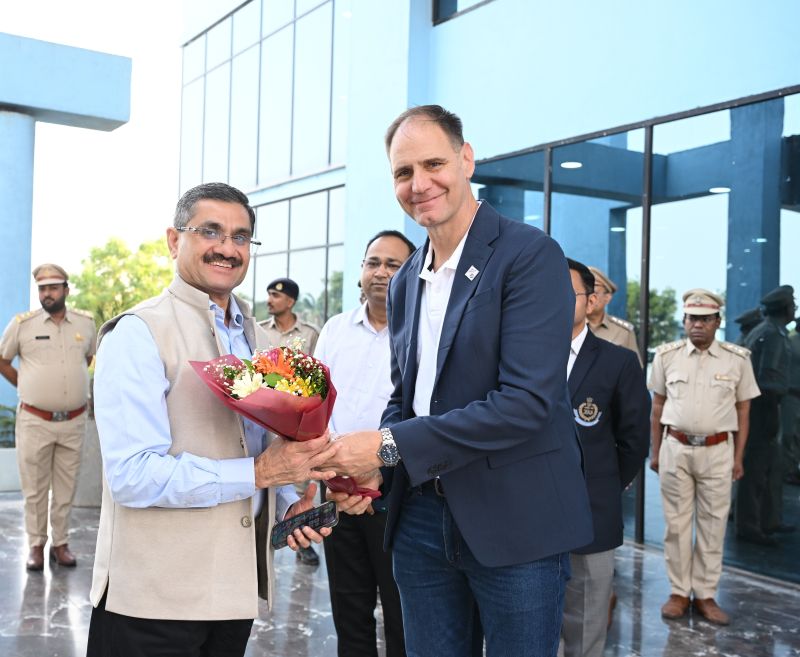
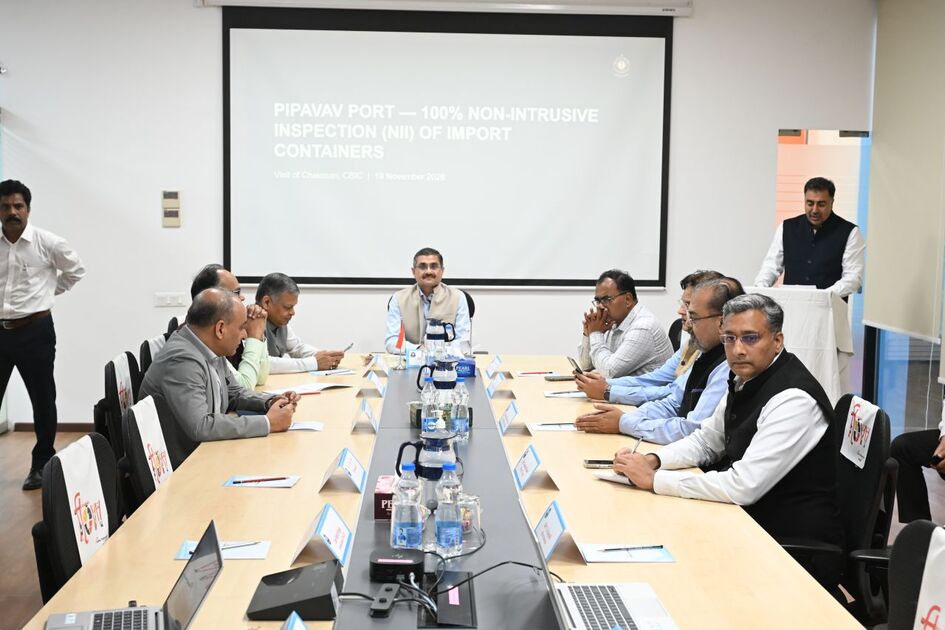
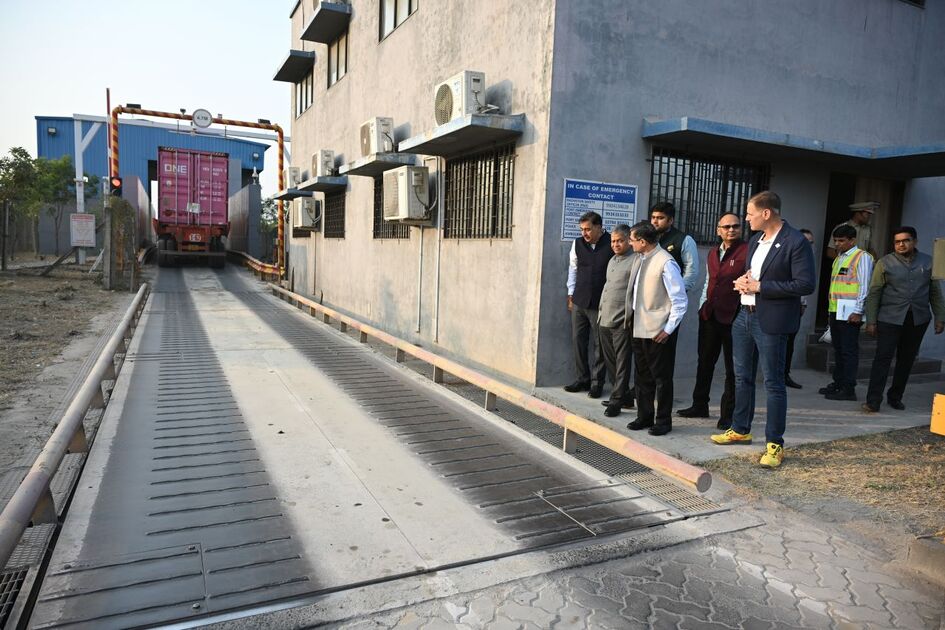
PIPAVAV: APM Terminals Pipavav Port welcomed Shri Vivek Chaturvedi, Chairman, Central Board of Indirect Taxes and Customs (CBIC), to the port.

The visit comes as India continues to modernise Customs processes through technology, strengthen cargo security and make trade easier.

Pipavav Port is one of the three pilot ports selected for the phased implementation of 100% Non-Intrusive Inspection (NII) of import containers. As a pilot location, the port will work closely with CBIC and Customs authorities to support implementation and help refine the processes ahead of a wider rollout.

The initiative is expected to enable faster and more predictable cargo clearance, reduce physical examinations and container dwell time, while strengthening security and transparency.

The visit also provided an opportunity to discuss the changing nature of Customs operations, the growing use of technology and the future of cargo inspection in India.

Pipavav Port is pleased to support this national initiative and contribute its operational experience as the NII programme develops.

DFCCIL recognised for Excellence in Green Freight & Sustainable Transportation

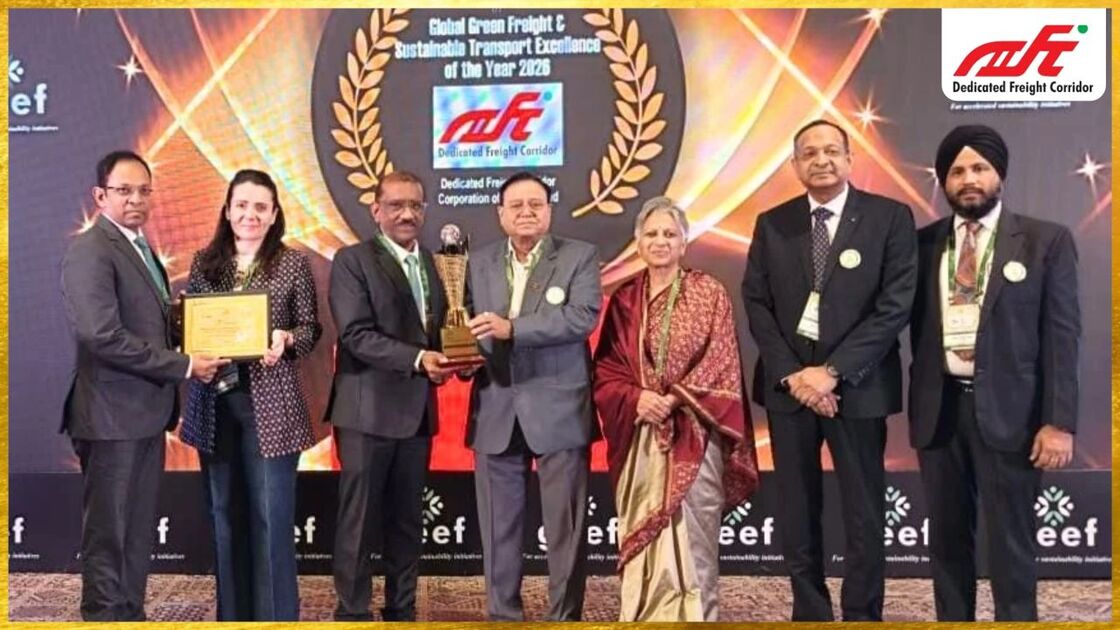
NEW DELHI: Marking a significant achievement in its sustainability journey, Dedicated Freight Corridor Corporation of India Ltd. (DFCCIL) has been conferred the “Global Green Freight & Sustainable Transport Excellence of the Year 2026” at the GEEF Global Sustainability Awards 2026, organised by the Global Energy & Environment Foundation.

The award recognises DFCCIL’s contribution towards promoting sustainable freight transportation, strengthening environmentally responsible logistics infrastructure and advancing green initiatives. Through its 100% electrified rail freight network, green belt plantation program, Miyawaki plantations and eco-friendly business innovations, DFCCIL continues to integrate environmental sustainability into infrastructure development.

Sh. Manish Awasthy, ED/Infrastructure/DFCCIL, Shri Sandeep Kumar Ravivanshi, GGM/LA&SEMU, and Shri Ajay Gupta, Expert/Environment/NKC, received the award.

This recognition reflects the collective commitment of DFCCIL towards building an efficient, greener and more sustainable transportation ecosystem.