Home Blog Page 405

DP World launches Carbon Inset Trial in Belgium Portugal and Sweden

LONDON: DP World is launching Insetify, a dedicated carbon inset trial for ocean freight forwarding customers in Belgium, Portugal and Sweden, to deliver immediate, measurable reductions in customers’ Scope 3 emissions across key European trade lanes.

Starting 1 April, credits will be applied automatically to customers booking ocean freight forwarding services with DP World in Belgium, Portugal and Sweden, meaning qualifying importers and exporters will receive carbon credits directly every quarter.

Qualifying customers will receive Carbon Inset Credits at 100 kg carbon dioxide equivalent (CO2e) of containerised ocean freight per TEU shipped per quarter, at no additional cost. The offer applies once a threshold of 25 TEUs per quarter is reached.

For example, a customer shipping 50 TEUs in a quarter will receive credits equal to 5,000 kg (5t CO2e) that quarter.

This new trial builds on DP World’s ongoing Carbon Inset Programme in the UK ports of Southampton and London Gateway. Launched in January 2025, the UK programme registered more than 250,000 TEUs and issued more than 9,000 tCO2e of Carbon Inset Credits.

Unlike traditional offsets which fund projects like tree planting, carbon insets reduce emissions within the value chain by using lower-carbon fuels or more efficient transport, helping customers tackle their Scope 3 emissions. Both programmes use carbon credits generated by deploying incrementally lower carbon fuel in DP World’s subsidiary, DP World Shipping Solutions.

The Insetify trial is supported by sustainability training, which will help customers learn more about the trial and how to better address supply chain emissions.

John Trenchard, VP – Sustainable International Supply Chains, Europe said:“Providing customers with multiple solutions to enable the decarbonisation of supply chains is important to DP World. As part of our proactive approach to working alongside clients, we are recognising an immediate focus on inland activity and a high level of residual emissions within ocean legs. The Insetify trial allows for a pragmatic approach to managing these residual emissions as part of a longer‑term, holistic plan. I would encourage organisations to explore how carbon insets can be used as part of intentional progress.”

Bojan Knightly, Country Manager Sweden, Freight Forwarding said: “The launch of the Insetify trial will coincide with the opening of DP World’s new Stockholm and Gothenburg offices, which were recently announced as part of DP World’s landmark freight forwarding expansion into Scandinavia. Supporting DP World’s global net zero by 2050 ambition, DP World Sweden is also aiming to offer up to 25% of shipments via rail and sea in the first operational year to reduce road emissions and 100% e-documentation and online invoicing to eliminate paper processes.”

MIT CTL and Mecalux develop an AI-based simulator to optimise inventory across warehouses

CAMBRIDGE: The Massachusetts Institute of Technology (MIT) Center for Transportation & Logistics and Mecalux have developed an artificial intelligence-based simulator capable of optimising inventory distribution across different warehouses within the same logistics network. The platform, called Genetic Evaluation & Simulation for Inventory Strategy (GENESIS), uses advanced machine learning models to analyse thousands of possible scenarios and determine the optimal stock level at each warehouse and when replenishment should occur.

The AI-based simulator takes into account variables such as forecast demand in each region, transport costs and the operational capacity of each warehouse to test various inventory replenishment policies without affecting real-world operations. “The genetic algorithm enables multiple simulations to be run using different parameters until the most efficient logistics strategy is identified. Companies can compare scenarios and select the one that best fits their operations,” says Dr. Matthias Winkenbach, Director of Research at the MIT Center for Transportation & Logistics and the Intelligent Logistics Systems Lab.

Once data and variables are entered into the system, GENESIS generates the optimal solution along with advanced statistical dashboards. Users can analyse indicators such as consumption patterns, regions with high demand variability, SKUs with a greater risk of stockouts or warehouses experiencing supply issues.

Redistribute before purchasing
One of the system’s key features is its ability to rebalance inventory across warehouses. Instead of automatically placing new orders with suppliers, the tool analyses whether it is more efficient to transfer products from another facility within the network where excess inventory is available. In this way, companies can reduce costs and make better use of existing stock.

The system also recommends how to organise transport. For example, it suggests whether shipments should be consolidated to optimise truckloads or whether specific orders should be fulfilled from a particular location to reduce delivery times and costs.
“The real challenge wasn’t finding the right algorithm — it was making it fast enough to be practical. We developed GENESIS from the ground up to evaluate thousands of scenarios simultaneously rather than sequentially. What used to take days now takes minutes, which means companies can use it for real tactical planning, not just theoretical analysis,” says Rodrigo Hermosilla, Research Engineer at the MIT Intelligent Logistics Systems Lab.

Unlike analytical solutions reserved for specialised users, GENESIS is designed for both technical teams and business decision-makers. “The goal is to help companies minimise the total cost of their logistics network while ensuring the highest service level,” says Javier Carrillo, CEO of Mecalux.

Upcoming AI applications
The AI-powered simulator is one of the first tangible results of the joint initiative between Mecalux and MIT CTL. The collaboration is now entering a new phase focused on expanding the application of AI to other logistics processes, such as internal replenishment, digital twins in high-density automated storage systems, and slotting optimisation.

About MIT CTL
The MIT Center for Transportation & Logistics (MIT CTL) is a world leader in supply chain management research and education, with over 50 years of expertise. The centre’s work spans industry partnerships, cutting-edge research and driving supply chain innovation into practice through three pillars: research, outreach and education

Orange Marine selects ABB’s integrated power, propulsion and automation system for two new cable repair vessels

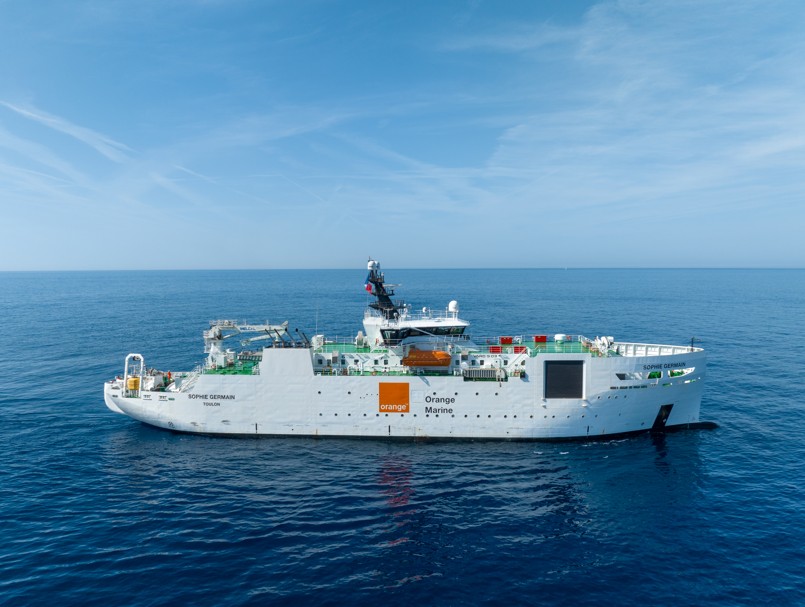
SINGAPORE: ABB has secured a contract with Sri Lankan shipbuilder Colombo Dockyard PLC to supply a fully integrated electrical power, propulsion and automation system for two newbuild cable repair vessels for shipowner Orange Marine, a wholly owned subsidiary of the Orange Group specializing in submarine cable work1. Scheduled for delivery in 2028 and 2029, the hybrid-electric ships will be responsible for maintaining cables in the Atlantic and Indian oceans as well as the Mediterranean, Black and Red seas. This order follows the previous successful collaboration with both Orange Marine and Colombo Dockyard PLC2.

ABB’s integrated propulsion solution features Azipod® DO propulsion unit with Compact RCS (Remote Control System) to optimize maneuverability and thrust performance, enabling the vessels to carry out complex cable repair operations with a high degree of precision. In addition to its proven reliability and propulsive efficiency, the gearless design of the Azipod® units helps to minimize the need for lubrication oil. This reduces the need for maintenance and thereby lowers operating costs. The technology’s compact footprint provides flexibility and facilitates efficient installation.

Orange Marine’s forthcoming ships will also feature the ABB Ability™ 800xA Integrated Automation System, which allows the crew to operate all systems and equipment from a single user environment, as well as a fully integrated energy storage system (ESS) for reduced fuel consumption and greenhouse gas emissions. ABB’s PEMS™ power and energy management system ensures optimal use of total onboard power resources, and ABB Ability™ Remote Diagnostic System provides fast and accurate technical assistance around the clock for increased uptime, cost efficiency and operational safety. ABB’s comprehensive scope of supply covers also generators, low-voltage switchboards, propulsion and thruster drives, thruster motors and transformers.

With increase of subsea cables, there is increased demand for cable repair vessels. A recent report by TeleGeography and Infra-Analytics projects a 48 percent net increase in total cable kilometers to be deployed in the world’s oceans by 2040, driven by rising bandwidth demands and the need for network redundancy and resilience. But by the same year, approximately two-thirds of cable maintenance ships will have reached the end of their service life, with about half of the global fleet of cable ships also approaching this milestone.3

“Cable repair operations demand exceptional maneuverability, reliability and energy efficiency,” said Didier Dillard, Chief Executive Officer, Orange Marine. “The integration of ABB’s Azipod® propulsion, energy management and automation solutions will enhance our vessels’ ability to perform complex subsea interventions safely and efficiently, while supporting our objectives to reduce fuel consumption and emissions across our fleet.”

“ABB’s proven expertise in marine electrical and propulsion systems made them a natural choice as partner for this project,” commented Thimira S. Godakumbura, Managing Director and Chief Executive Officer, Colombo Dockyard PLC. “Their technology supports our vision of delivering highly efficient, future-ready vessels for critical subsea cable operations.” 

“Subsea cable systems are the backbone of the global digital economy, and ABB’s selection to provide the integrated power, propulsion and automation systems for these new ships underscores our commitment to supporting resilient, future-ready digital infrastructure worldwide,” said Saara Kuusisto, Global Business Line Manager, Marine Systems, ABB’s Marine & Ports division. “ABB shares a strong relationship with Orange Marine and Colombo Dockyard PLC, based on a legacy of successfully executed projects. We are proud to continue our collaboration with them on this landmark project that combines strong shipbuilding expertise with advanced electrical and propulsion technologies to set new benchmarks for cable ship performance.”

ABB and OCEANCO cooperation secures superyacht efficiency and comfort

HELSINKI: ABB has signed a contract with Netherlands-based yacht builder OCEANCO to supply an integrated electric power and propulsion system for two superyachts under construction for deliveries in 2031 and 2032. The collaboration marks the latest step in the two companies’ collaboration on advanced marine technology.

Amid growing demand for vessels that combine luxury with environmental responsibility, yacht owners are increasingly specifying electric propulsion for its abilities to reduce noise and vibration, enhance maneuverability, and lower emissions, while utilizing alternative energy sources.

ABB’s solution integrates Azipod® electric propulsion with Onboard DC Grid™, PEMS™ power and energy management system, along with battery energy storage to optimize the energy flow between all vessel systems based on operating conditions for optimal performance and energy efficiency. Onboard DC Grid™ will ensure efficient power distribution, prepare the vessel for alternative fuels and hybrid configurations and enable its energy storage system to offer different functionalities, such as peak shaving and load optimization to optimize generator running hours, fuel consumption, and associated emissions.

Each vessel will feature dual 4.2-megawatt Azipod® propulsors with Ice Class 1C for smooth, stable operations in various conditions, including light ice. With its electric motor housed inside the pod eliminating mechanical transmission losses, the gearless Azipod® propulsion ensures smoother and quieter operations while also improving fuel efficiency over conventional shaft line propulsion.

“At OCEANCO, we are committed to providing yacht owners with ultimate efficiency, comfort, and sustainability. We recognize that the power plant principle based on DC integration and electric propulsion, as well-established technologies, is critical to this objective,” said Marcel Onkenhout, CEO, OCEANCO. “ABB’s integrated power and propulsion solutions are proven to deliver exceptional performance across the board, while the company’s collaborative approach and technical expertise make it an excellent project partner. We look forward to working with ABB to deliver these highly sophisticated vessels to our discerning clients.”

The ABB package will also include the ABB Ability™ Remote Diagnostic System for Marine (RDS), which offers owners real-time monitoring, proactive troubleshooting, and predictive maintenance capabilities. Through RDS and its round-the-clock global support network, ABB will minimize repair time for improved availability and operational safety.

“This collaboration further strengthens our long-standing relationship with our trusted partner OCEANCO”, said Rune Braastad, President, ABB’s Marine & Ports division. “It also reaffirms our commitment to supporting the yacht industry’s journey toward leaner and cleaner operations. The two forthcoming vessels perfectly demonstrate the close interplay between luxury and environmental responsibility, and we are looking forward to seeing them in operation.”

ABB has previously supplied two 2.5-MW Azipod® units, together with propulsion drives and controls, to a superyacht that OCEANCO recently delivered to its owner1. In 2025, the two companies also jointly tested the pioneering ABB Dynafin™ cycloidal propulsion concept at the Marine Research Institute Netherlands (MARIN), confirming its efficiency and sustainability benefits for superyachts2.

CLCircular becomes a B Corp

BASQUE (SPAIN): CLCircular, a European company specializing in supply chain monitoring through connected reusable IoT sensors, has obtained B Corp certification after demonstrating compliance with high standards of social and environmental performance, transparency, and corporate accountability.

With this recognition, CLCircular becomes the first company in the logistics monitoring industry using IoT systems to achieve B Corp certification, thereby consolidating a business model fully based on circular economy principles.

Reusable sensors

Since its inception in 2020, the company has developed a rental model for reusable sensors that includes their recovery, refurbishment, and reuse after each shipment, supported by its own technological platform and a team dedicated exclusively to the reverse logistics of its IoT devices. This system currently operates across an international network covering more than 400 destinations worldwide for clients such as Del Monte, Freskbana or Axionlog.

This circular approach significantly reduces the generation of electronic waste (e-waste) while making advanced monitoring technology accessible to companies transporting both high-value and lower-margin goods, such as fresh produce, demonstrating that sustainability and profitability can go hand in hand.

Transport security and CO2 reduction

Currently, CLCircular recovers more than 85% of its sensors, which has enabled the company to avoid a total of 191,557 kg of CO₂-eq emissions during 2025 solely through device reuse. This impact is complemented by the indirect benefits of real-time monitoring, which helps reduce cargo losses, improve logistics efficiency, and increase transport security through the control of variables such as temperature, light, and location.

Iñigo Alonso Echevarría, CEO of CLCircular, states: “We are very proud to become part of the B Corp community. At CLCircular, we strongly believe that technology must be a driver of positive change, and that an IoT device company can also generate real sustainability impact by redefining its business model. Our goal is to help companies modernize their supply chains, make them safer and more efficient, and demonstrate that technological innovation and environmental responsibility can advance together.”

Redefining the meaning of business success

The B Corp standard measures company-wide management performance across five key impact areas: Governance, Workers, Community, Environment, and Customers. Certification is granted by B Lab to organizations that pass a rigorous assessment process, providing verifiable evidence of responsible practices and incorporating their social purpose into their legal structure.

With this certification, CLCircular joins a global community of more than 10,000 B Corp companies working to redefine the meaning of business success by promoting economic models that generate both financial and social value.

Lucas Hunter, Interim Executive Director of B Lab Spain, states: “We are delighted to welcome CLCircular to the B Corp community. This community works to reduce inequality, protect and regenerate the environment, strengthen communities, and create high-quality jobs with dignity and purpose. CLCircular is a new member demonstrating how business innovation can achieve these outcomes.”

About CLCircular

CLCircular is a Spanish family-owned company (Bilbao) specialized in digitizing and optimizing supply chains through connected, reusable IoT sensors that provide real-time data on transport conditions. Its circular business model, which includes the active recovery of devices after each shipment, reduces electronic waste, improves logistics security, and provides advanced monitoring technology at an accessible cost for transport, export, and import companies worldwide. CLCircular’s team is also present in The Netherlands, Mexico, Ecuador, Peru, Colombia and Guatemala.

About the B Corp Movement

B Corp is a global movement of companies that use business as a force for good. Certified B Corporations meet high verified standards of social and environmental performance, public transparency, and legal accountability, contributing to the transformation of the economy toward more inclusive and sustainable models. Today, there are more than 10,000 B Corp companies worldwide.

About B Lab Spain

B Lab Spain is a non-profit organization promoting an inclusive, equitable, and regenerative economic system through the development of standards, company certification, and tools for measuring social and environmental impact.

Linking Healthcare Sector with Exports and Skill Development a Key Priority: Piyush Goyal

NEW DELHI : Union Minister of Commerce & Industry Shri Piyush Goyal today said that India’s Free Trade Agreements (FTAs) are opening new opportunities for the pharmaceutical, healthcare and medical technology sectors, while enabling the country to strengthen its position in global trade.

Addressing the Post Budget Webinar 2026 on Sabka Sath Sabka Vikas: Fulfilling Aspiration of People in New Delhi, Shri Goyal said that under the leadership of Prime Minister Shri Narendra Modi, India has signed a total of nine Free Trade Agreements in the last three to three-and-a-half years, of which five have been concluded in the past 12 months. As a result, nearly two-thirds of global trade is now open to India. He noted that these agreements provide India with preferential access compared to many other countries, with lower duties and expanded market opportunities, thereby opening new avenues to enhance trade. According to him, the scale of India’s trade with the world in the pharmaceutical and healthcare sectors is now greater than ever before.

Shri Goyal said that Free Trade Agreements are linked not only to large industries but also to farmers, fishermen, MSMEs, small industries and traders. He added that these agreements benefit sectors such as pharmaceuticals and the med-tech sector that manufactures medical equipment, and also open new global opportunities for those working in innovation and emerging technologies. Highlighting India’s strong presence in the pharmaceutical sector, he said the country is widely recognised as the “Pharmacy of the World”. He expressed confidence that the strong foundation laid under the leadership of Prime Minister Narendra Modi will help India move forward and unlock new opportunities in global markets.

The Minister also outlined five priority areas which, he said, could guide India’s journey during the Amrit Kaal towards achieving the vision of Viksit Bharat by 2047.

He said that the benefits of Free Trade Agreements will be realised only when businesses and institutions actively utilise them. While the government can open pathways and create opportunities, trade and business must ultimately be driven by industry. Shri Goyal said that India must build a comprehensive healthcare ecosystem that brings together manufacturing, innovation, startups and hospitals. Such an integrated ecosystem will enable the country to fully utilise the opportunities created through FTAs. He added that MSMEs will play a significant role in this process, particularly in quality upgradation. According to him, strengthening quality standards and testing facilities will ensure that products exported from India enhance the Brand India image and showcase the country’s capabilities globally.

Shri Goyal further noted that India is expanding its trade engagement with multiple regions of the world. He said that India already has agreements or ongoing negotiations with major economies and regions including the United States, European Union, United Kingdom, Australia and New Zealand, as well as with the four European Free Trade Association countries — Switzerland, Norway, Liechtenstein and Iceland. Agreements have also been concluded with United Arab Emirates and Oman in the Gulf region, while all six countries of the Gulf Cooperation Council have expressed interest in entering into agreements with India. He added that discussions with Canada are progressing rapidly, while talks are also advancing with Mercosur countries in Latin America and with the Eurasian Economic Union.

Shri Goyal said that the growing global interest in strengthening trade relations with India reflects the recognition of India’s economic potential. He noted that the Indian economy, currently valued at around four trillion dollars, could grow to nearly thirty trillion dollars in the next two to two-and-a-half decades, presenting a historic opportunity for global economic engagement.

The Minister emphasised the need to connect the healthcare sector more strongly with exports. He said that India should focus on training skilled professionals such as caregivers and nurses, for whom there is significant demand both in India and internationally. By strengthening skill development, India can build a workforce that supports exports, increases remittances and facilitates the global presence of Indian products and services.

Shri Goyal also highlighted the importance of digital health and emerging technologies, noting that Artificial Intelligence and digital health integration are receiving increasing global attention. He said that Artificial Intelligence should not be viewed with apprehension but should instead be adopted as an enabling technology. India, he noted, possesses the talent to develop advanced applied technologies and AI-driven solutions. These technologies can be used to promote telemedicine and improve diagnostics, helping to deliver better healthcare services to India’s population of 1.4 billion people.

He further emphasised the need to develop a comprehensive and holistic integrated healthcare ecosystem. According to the Minister, progress will be limited if different stakeholders operate in isolation. Instead, coordinated efforts among government, industry, healthcare institutions and innovators will ensure greater benefits for the country.

Shri Goyal also underscored the growing global interest in traditional medicine. He said that systems such as Ayurveda and Yoga are increasingly being recognised worldwide. He stressed the need to expand research, standardise these systems internationally and promote them globally through collaborations with other countries.

The Minister said that a healthy India will form the foundation of a developed India. He expressed confidence that collective efforts in these areas will help India emerge as a global leader and realise the vision of becoming a Viksit Bharat.

JNPA strengthens Trade Support through Coordinated Stakeholder Efforts amid Middle East Disruptions

MUMBAI: Ministry of Ports, Shipping and Waterways (MoPSW) has issued the SOP for all the Major Ports to mitigate the impact of geopolitical disturbance in the Middle East. Accordingly JNPort has constituted a task force comprising of following members:

  • Joint DGFT
  • Addl Commissioner Customs
  • CGM (Traffic) JNPA
  • Dy Director General (DG Shipping)

Shri Girish Thomas, CGM (Traffic), JNPA (Mob:9526062433, Email-cmt@jnport.gov.in), has been appointed as the Single Point of Contact for all coordination and communications related to trade disruptions arising from the evolving geopolitical situation in the Middle East.

The disruption has impacted on vessel schedules and export cargo movement to Middle East, prompting coordinated efforts between port authorities and trade stakeholders. Shri Gaurav Dayal, IAS, Chairman, JNPA  and Shri Ravish Kumar Singh, IRTS, Deputy Chairman, JNPA are holding regular consultations with shipping lines, exporters, terminal operators, Customs and maritime authorities, BCBA, APEDA, CSLA, MANSA, FFFAI, and Transporters Association to closely monitor the situation and address operational concerns.

To support the EXIM community and ease congestion at the port, JNPA has implemented several facilitation measures.

Key initiatives undertaken include:

  • Temporary transshipment storage for Middle East-bound cargo
  • Allocation of additional storage areas at terminals where required
  • Facilitation of ad-hoc vessel calls for moving Middle East cargo to Middle East ports which are on eastern side of the strait Hormuz mainly Fujairah and Khor Fakkan in the UAE and Sohar, Muscat, and Salalah in Oman.
  • Priority handling for perishable cargo and export cargo returning from the Middle East
  • Expedited ‘Back to Town’ (BTT) movement of export containers

An important facilitation measure has been taken by Customs authorities at JNCH enabling BTT movement of export cargo even in cases where the Export General Manifest (EGM) has not been filed. Where container seals are intact, permission will be granted after basic verification. Containers at CPP require only e-seal verification, while those at Container Freight Stations undergo limited inspection linked to the shipping bill. The usual detailed physical examination has been waived, and any BTT-related fees or penalties have also been waived.

Following consultations with the Reefer Transporters Association, it has also been confirmed that adequate trailers are available for the movement of reefer as well as other containers requiring BTT evacuation, ensuring smooth evacuation of containers from the port without logistical constraints, especially for banana, grapes and other perishable cargo which have lesser shelf life.

Speaking on the situation, Shri Gaurav Dayal, IAS, Chairperson, JNPA, said: “JNPA is closely monitoring the evolving situation and remains fully committed to supporting the EXIM community. We are in constant consultation with the Ministry, Customs authorities, terminal operators and trade stakeholders to explore relief measures that can ease cargo movement and minimize disruption. Our endeavor is to identify practical solutions that support exporters and ensure seamless port operations.

As a result of these coordinated efforts, the situation at the port has shown steady improvement. The number of stranded containers at JNPA has reduced from around 5,000 TEUs on 1 March to nearly 3,200 TEUs on 8 March, while stranded perishable containers have reduced from around 2,000 to about 1,000. Efforts are ongoing to further reduce the number of stranded containers at the earliest possible time. JNPA remains in close coordination with the Ministry, terminal operators, shipping lines and the trade community to ensure smooth cargo movement and sustained support to the EXIM sector, while actively exploring additional facilitation measures to further ease trade operations.

About Jawaharlal Nehru Port Authority (JNPA)

Jawaharlal Nehru Port Authority (JNPA), commissioned in 1989, is India’s largest container port and a key gateway for the country’s international trade. The port operates five container terminals and handles a significant share of India’s containerised EXIM cargo. JNPA also manages a multi-product Special Economic Zone (SEZ) aimed at boosting export-led industrial growth. In addition, JNPA is developing the Vadhvan Port in Maharashtra, envisioned to be among the largest deep-draft ports in the world and India’s first green port of its scale.

PSA Mumbai handles 12 Million TEUs, Reinforcing Role in India’s Maritime Trade

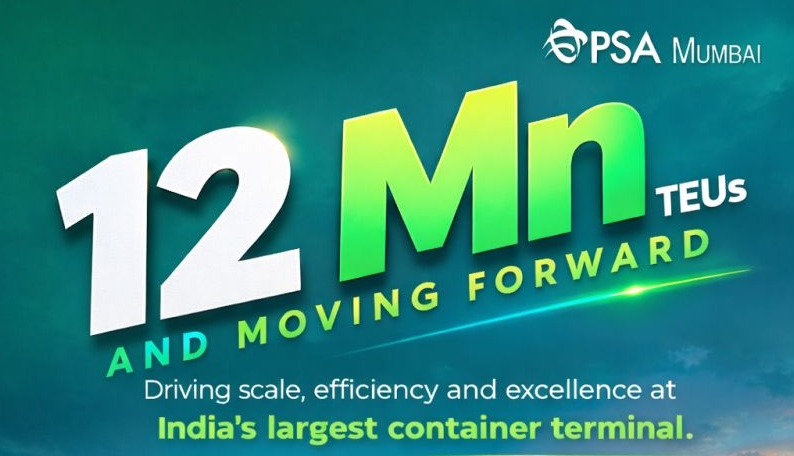
MUMBAI: PSA Mumbai has achieved a significant milestone by handling 12 million Twenty-foot Equivalent Units (TEUs), underscoring the terminal’s growing importance in India’s container trade and supply chain network.

Sharing the milestone on LinkedIn, PSA India highlighted that the achievement reflects operational excellence, strong partnerships with stakeholders, and the unwavering dedication of its workforce, all of which continue to support the growth of India’s maritime sector.

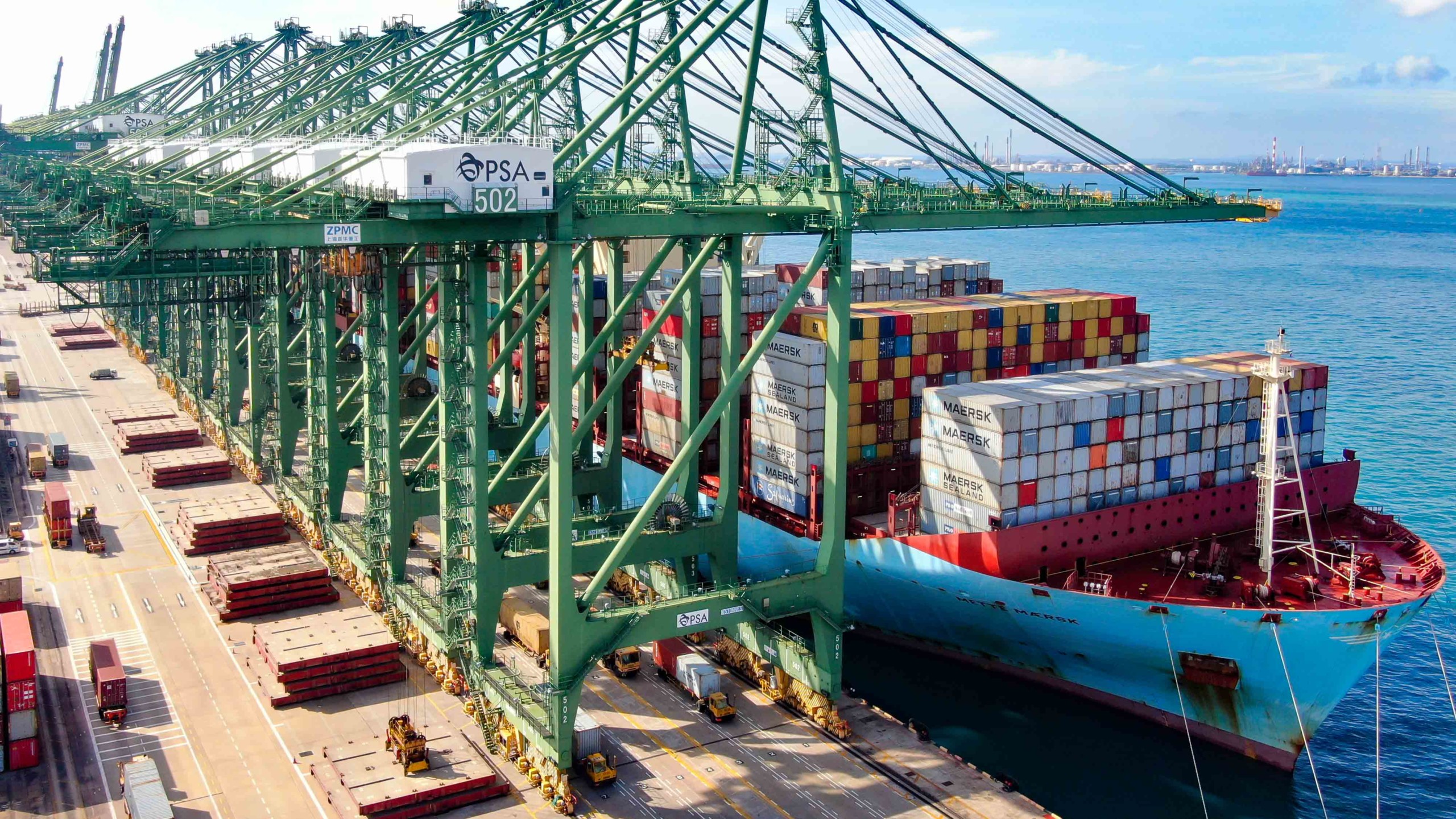
Located at Jawaharlal Nehru Port, PSA Mumbai operates the Bharat Mumbai Container Terminals (BMCT), one of India’s most advanced container terminals. The facility plays a crucial role in handling containerised cargo for the country’s western gateway and connecting Indian trade to major global shipping routes.

Over the years, the terminal has strengthened its operational capabilities through modern infrastructure, deep-draft berths, advanced quay cranes, and digitalised terminal operations, enabling it to efficiently handle growing container volumes and larger vessels.

The milestone also highlights PSA’s continued commitment to supporting India’s logistics and port-led development initiatives, while fostering collaboration with shipping lines, logistics providers, and trade stakeholders.

Industry observers note that with container volumes at Jawaharlal Nehru Port continuing to grow, terminals such as PSA Mumbai will play an increasingly important role in enhancing capacity, improving efficiency, and strengthening India’s position in global maritime trade.

The 12-million-TEU achievement marks another step in PSA Mumbai’s journey toward building resilient and future-ready port infrastructure to support India’s expanding international trade.

PSA International Reports Record 105 Million TEU Throughput in 2025; Revenue Rises 7%

SINGAPORE: PSA International has reported a strong operational performance for the financial year ended December 31, 2025, achieving record container throughput and solid revenue growth despite a challenging global trade environment.

According to the company’s latest financial results, PSA handled 105 million Twenty-foot Equivalent Units (TEUs) across its global terminals in 2025, representing a 5% increase compared to 2024. The milestone highlights the port operator’s continued resilience and operational efficiency amid geopolitical uncertainties and evolving supply chain dynamics.

Strong Throughput Growth Across Global Terminals

PSA’s flagship operations in Singapore contributed 44.5 million TEUs, marking an 8.7% increase year-on-year, while the group’s terminals outside Singapore handled 60.4 million TEUs, registering a 2% growth over the previous year.

The improved cargo volumes helped boost the Group’s revenue to SGD 8.26 billion, up 7% from SGD 7.72 billion in 2024, while operating profit surged 19% to SGD 1.42 billion, reflecting stronger operational performance and higher port activity.

Despite the significant operational gains, net profit for the year remained largely stable at SGD 1.1 billion, reflecting only a 0.5% increase compared to 2024. The modest growth was primarily attributed to higher tax expenses and a non-cash impairment charge on intangible assets, influenced by weaker economic and industry outlook assumptions.

Leadership Perspective on Global Trade Environment

Commenting on the results, Peter Voser, Group Chairman of PSA International, noted that the company’s record throughput performance was achieved against a backdrop of global trade complexities shaped by geopolitical tensions, emerging technologies, and climate-related challenges.

He emphasized that the milestone underscores the organization’s commitment to operational excellence and the collective efforts of its workforce, management, and partners.

Echoing this sentiment, Ong Kim Pong, Group CEO of PSA International, highlighted that the company’s global network of ports and terminals achieved a new annual throughput benchmark in 2025. He added that PSA will continue strengthening connectivity and coordination across port ecosystems to ensure resilient and efficient supply chains.

Financial Position Remains Robust

PSA’s balance sheet continues to remain strong, with the Group reporting a gross debt-to-equity ratio of 0.53 times at the end of 2025, reflecting sound financial discipline and stability. PSA

The company’s consolidated financial statements show total assets of SGD 32.13 billion, supported by investments in port infrastructure, logistics assets, and global terminal operations. PSA

Expanding Global Port Ecosystem

PSA International currently operates over 70 deep-sea, rail, and inland terminals across more than 180 locations in 45 countries, with major flagship operations in Singapore and Belgium. The Group continues to collaborate with customers and stakeholders to develop integrated port ecosystems and innovative supply chain solutions aimed at supporting sustainable global trade. PSA

Looking ahead to 2026, PSA indicated that it will continue working closely with industry partners to build more resilient, sustainable, and interconnected supply chains, ensuring that global trade flows efficiently despite evolving market challenges.

DP World Powers ICC Men’s T20 World Cup 2026 Logistics across India & Sri Lanka

MUMBAI: DP World, a leading global provider of integrated end-to-end supply chain solutions and Global Logistics Partner of the International Cricket Council (ICC), has successfully executed a complex, multi-country logistics operation to power the ICC Men’s T20 World Cup 2026 across India and Sri Lanka.

Logistics press release – image 1 DP World Powers ICC Men’s T20 World Cup 2026 Logistics across India & Sri Lanka

Between December 2025 and January 2026, DP World executed an integrated cross-border logistics programme, coordinating air and sea freight from Singapore, Australia, the UK, the US and the UAE, transporting more than 55,000 kg of critical broadcast and match infrastructure to ensure venues and production teams were ready on schedule.

In India, nine international shipments arrived in Delhi, comprising over 620 packages weighing more than 25,000 kg, including essential broadcast systems and match operations equipment.

In Sri Lanka, DP World handled 10 air shipments (combining charter and commercial), plus six sea freight containers from Singapore. This covered more than 465 packages weighing over 30,000 kg.

Rizwan Soomar, CEO & MD, Subcontinent, Central Asia & Levant, DP World, said: “Delivering logistics for a global tournament of this scale demands seamless coordination, precision planning and speed. Managing multi-origin shipments within compressed timelines demonstrates the strength of DP World’s integrated global network and our ability to perform under pressure. We are proud to support the ICC in delivering operational excellence across host nations.”

Close coordination with customs authorities and ICC operations teams, alongside DP World’s integrated air-and-sea capabilities, enabled the safe and timely arrival of all mission-critical assets.

DP World’s recent end-to-end air and sea freight management for the ICC U19 Men’s Cricket World Cup in Namibia further demonstrates the agility of its global network in delivering complex, time-sensitive sporting events.