Home Blog Page 460

DPA Kandla plans a JV route for shipbuilding with GRSE

GANDHIDHAM : The Deendayal Port Authority (DPA) is gearing up for its first decisive venture into shipbuilding — opting for a faster, more viable ₹4,500-crore shipyard at Kandla, in Kutch, Gujarat, instead of the mega project it earlier envisioned.

Though it is keeping alive dreams of developing a sprawling ₹27,000-crore shipbuilding cluster near Kandla, the DPA is now close to forging a joint venture with the Kolkata-based Garden Reach Shipbuilders & Engineers (GRSE).

It had floated an expression of interest (EoI) to develop a smart, automated and environmentally compliant shipyard for building very large crude carriers (VLCCs), very large gas carriers (VLGCs) and Handymax, among other classes of merchant vessels under a JV. It drew interest from GRSE, JM Baxi and Accurate Industrial Controls in partnership with Korea’s Komac Consultants, Sushil Kumar Singh, Chairman of DPA, told businessline. “We are close to finalising a joint venture with GRSE,” he added.

The DPA will hold an equity stake in the venture through contribution of land while the technology and operating partner will bring shipbuilding expertise and capital. Once completed, it will be Gujarat’s 11th shipyard, raising the State’s cumulative shipbuilding capacity to 5.4 lakh dead weight tonnage (DWT).

Among the six shipyards that shut down in Gujarat during the last decade, Pipavav was acquired by Swan Energy and resumed operations in December 2024. ABG’s shipyard units at Magdalla and Dahej and the two State-owned Alcock Ashdown yards at Bhavnagar and Chanch continue to idle.

The proposed shipyard at Kandla will be developed on nearly 120 acres of reclaimed waterfront land within Kandla creek between the existing cargo and oil jetties. “Land reclamation has begun. There were encroachments earlier, which have now been cleared,” Singh said.

According to the EoI, the facility should be able to build and deliver at least two VLCCs or VLGCs, or up to six Handymax vessels annually, with scope for scaling up to accommodate more vessels or offshore structures in the future.

A VLCC-compliant dry dock is a key element of the project and the single-largest cost component. VLCCs are among the world’s biggest ships, often exceeding 300 m in length and 3,00,000 DWT, requiring deep, long and heavily reinforced dry docks. “The shipyard will be able to build about three vessels a year. With GRSE, we also plan to partially manufacture our electric tugs, which we currently source from other companies,” the DPA Chairman said.

Work plan
DPA’s scope of work will include land acquisition, land development and grading, providing the waterfront with the desired depth and creating core civil infrastructure, such as internal and peripheral roads, stormwater drainage, boundary walls and a project office building.

The technology partner’s scope will include the design, construction, execution and operation of the shipyard, including shipbuilding workshops, technical buildings, manufacturing equipment, utilities, launching infrastructure, manpower planning and operational readiness. It will also be responsible for short-, medium- and long-term business planning, as well as laying out a technology roadmap for future scalability. The project will be executed in three phases, with the most capital-intensive component — the VLCC-compliant dry dock — requiring an investment of about ₹1,500 crore, according to an L&T study, Singh said.

After Union Minister of Ports, Shipping and Waterways Sarbananda Sonowal announced in Kandla in January 2025 the proposal for a ₹30,000-crore mega shipbuilding facility, the DPA has been working to transform over 2,000 acres of coastal land at Veera village, near Tuna Tekra in Kutch district, into a world-class shipbuilding cluster. Conceived initially to build up to 50 VLCCs a year, the project went into limbo after the DPA’s tender received a tepid response from global shipbuilders.

Now, officials see the Kandla shipyard project as a pragmatic, fast-track pathway. It is expected to help the DPA build execution capability, develop skilled manpower and de-risk investments, while keeping the larger Veera plan alive for a later stage when market conditions and investor appetites improve.

The Kandla yard is expected to transition to repair and maintenance work once the shipbuilding cluster at Veera becomes a reality, the DPA Chairman said.

Costly capital
According to ICRA, with a market share of 0.06 per cent, India does not feature among the top 15 shipbuilding countries. China, South Korea and Japan are the top three, accounting for 95 per cent of the global shipbuilding industry.

“Shipbuilding demands high working capital… In India, interest rates for these loans are 9-10 per cent, significantly higher than the 4-8 per cent in major shipbuilding nations,” ICRA’s 2025 report stated.

Unlike China, South Korea and Japan, India lacks a well-integrated maritime cluster made up of shipyards, component suppliers and advanced R&D facilities. India’s shipyards are smaller and less automated compared to global leaders, leading to higher production costs and longer construction times.
DPA Kandla proudly celebrated the 77th Republic Day of India with great patriotic fervour

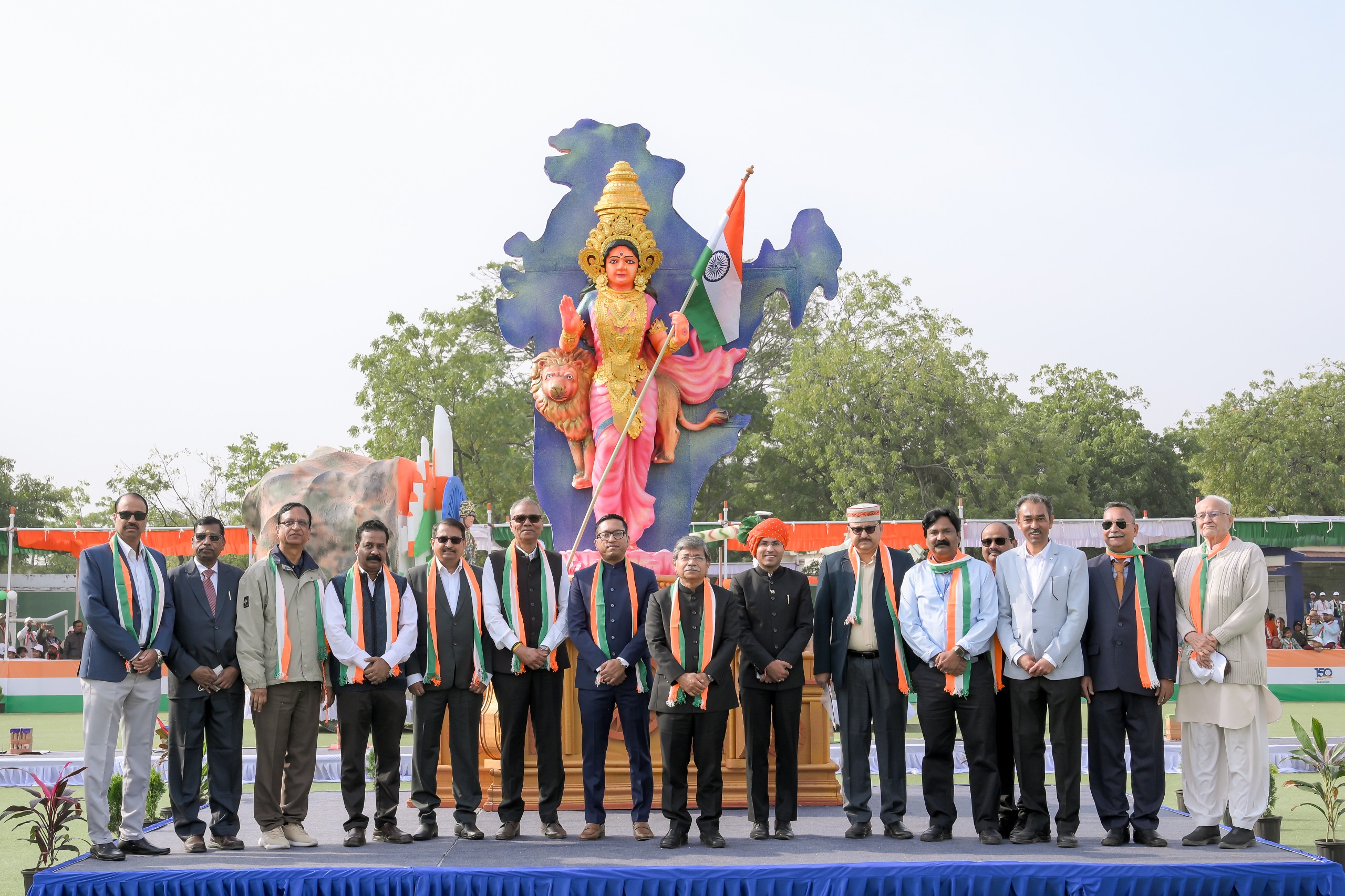
GANDHIDHAM : Deendayal Port Authority, Kandla proudly celebrated the 77th Republic Day of India with great patriotic fervour. On the occasion, Sushil Kumar Singh, IRSME, Chairman, Deendayal Port Authority, unfurled the National Flag at the Sports Complex, DPA Township, Gopalpuri, Gandhidham, symbolising the nation’s unity, integrity, and democratic spirit.

Deendayal Port Authority celebrated Republic Day at grand scale. The Port exhibited 15 Tableaux of different states of India and Viksit Bharat. These Tableaux will remain open for whole day in the Sports Complex, Gopalpuri. All are requested to visit these Tableaux.

The programme was witnessed by a large gathering comprising port officials, employees, their families, trade unions, stakeholders and general public at large, creating an atmosphere of pride and national unity.

The occasion was graced by the presence of Shri Nilabhra Dasgupta, IRS, Dy. Chairman; Shri J. K. Rathod, CPES, CVO DPA; Shri Manish Gurwani, IAS, Municipal Commissioner, Gandhidham Municipal Corporation, along with other senior officers and dignitaries.

A spectacular Grand Tableau parade marked the Republic Day 2026 celebrations at DPA Kandla, showcasing the vibrant culture of Indian states. This National-themed display captivated all, reflecting the unity in diversity of Bharat.

The celebration reflected Deendayal Port Authority’s steadfast commitment to national values, public service and the vision of a strong, progressive and self-reliant India.

JNPA celebrates Republic Day with Cultural and Acrobatics shows along with highlighting Security Excellence and National Commitment

MUMBAI : Jawaharlal Nehru Port Authority (JNPA)– India’s largest container port, celebrated the 77th Republic Day of India with enthusiasm and patriotic spirit at its premises, marking the occasion with a series of ceremonial and cultural events.

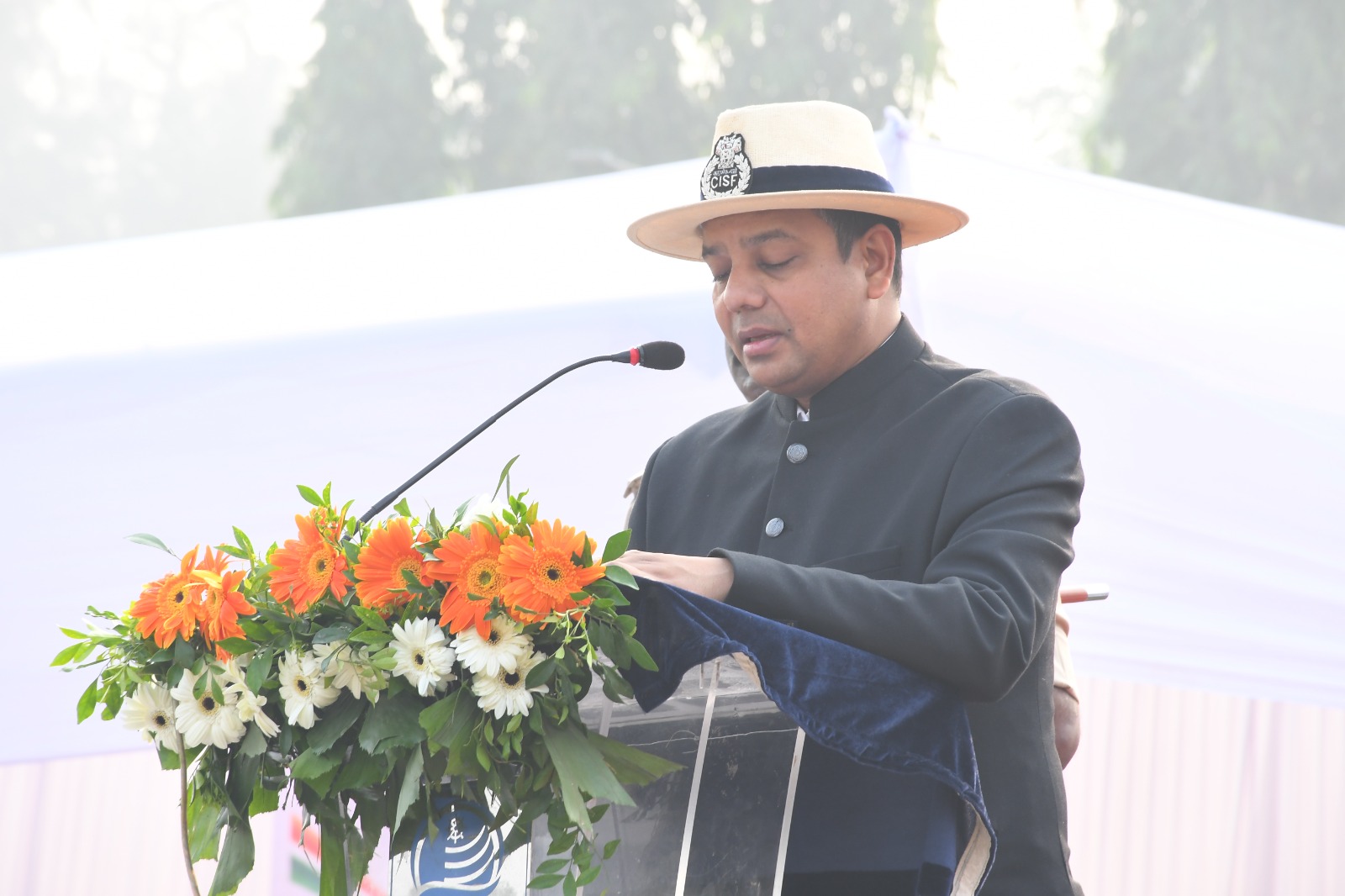
The celebrations commenced with the Chief Guest, Shri Gaurav Dayal, IAS, Chairperson, JNPA, receiving a Guard of Honour by the Central Industrial Security Force (Central Industrial Security Force – CISF), in the presence of Shri Ravish Kumar Singh, IRTS, Deputy Chairperson, JNPA, followed by flag hoisting by the Chairperson and the recitation of the National Anthem. The Chairperson thereafter inspected the ceremonial parade, symbolising discipline, unity, and commitment to national service.

Addressing the gathering, the Chairperson, JNPA, said, “The spirit of Republic Day lies in disciplined service to the nation. As a premier maritime gateway, JNPA continues to align its operations with the constitutional mandate of efficiency, transparency, and public service, ensuring that national infrastructure serves as a pillar of India’s progress. Through initiatives like Vadhvan Port, JNPA is committed
to creating enduring national assets while respecting local livelihoods and
encouraging harmonious community participation.”

As part of the celebrations, the CISF showcased a Dog Squad demonstration and a Counter-Terrorism demonstration, highlighting preparedness, vigilance, and the highest standards of security maintained at the port. These displays drew keen interest from the audience and underscored the vital role played by security forces in safeguarding critical infrastructure.

The event also featured vibrant cultural performances by students of the JNPA School, an impressive acrobatic display, and a visually striking Tricolour Show by the JNPA Fire Tender, which became a major highlight of the celebrations.

The Republic Day function was attended by JNPA Board Members, Heads of Departments, senior officials, employees, and citizens from the surrounding areas, reflecting strong community participation and collective national pride.

About JNPA:
The Jawaharlal Nehru Port Authority (JNPA) is one of the premier container-handling ports in
India. Since its inception on May 26, 1989, JNPA has transformed from a bulk cargo terminal into
the premier container port in the country.
Currently, JNPA operates five container terminals – NSFT, NSICT, NSIGT, BMCT and APMT.
The Port also has a Shallow Water Berth for general cargo. A Liquid Cargo Terminal present at
the JNPA Port is managed by the BPCL-IOCL consortium and the additional liquid cargo terminal
developed by JNPA will be operated by M/s JSW – JNPT Liquid Terminal Pvt. Ltd. Additionally,
the newly constructed coastal berth links other Indian ports and facilitates enhancing the traffic of
coastal containers.
Nestled across 277 hectares of land, JNPA also operates a meticulously designed multi-product
SEZ, with state-of-the-art infrastructure, to boost export-oriented industries in India.
JNPA is also developing an all-weather, deep-draft, greenfield port at Vadhvan, the 13th Major
Port of India in Maharashtra. It is poised to be among the top 10 ports globally and will be a 100%
green port since its inception.

Vizhinjam Port accelerates development work to tap global maritime potential: MD Divya S Iyer

THIRUVANANTHPURAM: Recognising the immense potential of Vizhinjam International Seaport in global maritime trade, it was decided to fast-track the development process. As a result, capacity augmentation under Phase 2 is now expected to be completed within three years, said Ms. Divya S. Iyer, Managing Director of Vizhinjam International Seaport.

Work on Phase 2 of the Vizhinjam Port in Kerala has been kicked off last Saturday, with an additional investment of about Rs 16,000 crore.

“Initially, as per the agreement, we had envisaged that Phase two, three, four progress of the port would be completed by 2045. But last year, in 2024, the government entered into a supplementary agreement with the concessionaire, sensing the immense potential of the services that Vizhinjam International Seaport can offer to the world and also the opportunities in Maritime time trade right now,” Iyer told ANI.

“We decided to fast track the development process and now we have an on block complete capacity augmentation that’s envisaged for three years,” she said.

By 2028 December, the Phase 2 is expected to be completed and the port’s functional capacity would be enhanced by over five times, she said.

In the months, since its inauguration last year, the port has “welcomed every large ship in the world into our own port and offered services which have been highly satisfactory,” she said.

“So, we decided that we should take the plunge and aim higher and aim farther. So from 1 million TEUs per year, now we are aiming at over 5.5 million TEUs by the end of 2028,” she added.

These investments are “definitely going to be a game changer for the economic investment climate in the state of Kerala,” she further said. “We hope to attract many more investors in the industrialisation process in port-led industrialisation in Vizhinjam.”

Source: ANI

CWC showcases end-to-end integrated logistics solutions at launch on Konkan Railway network in Mangaluru

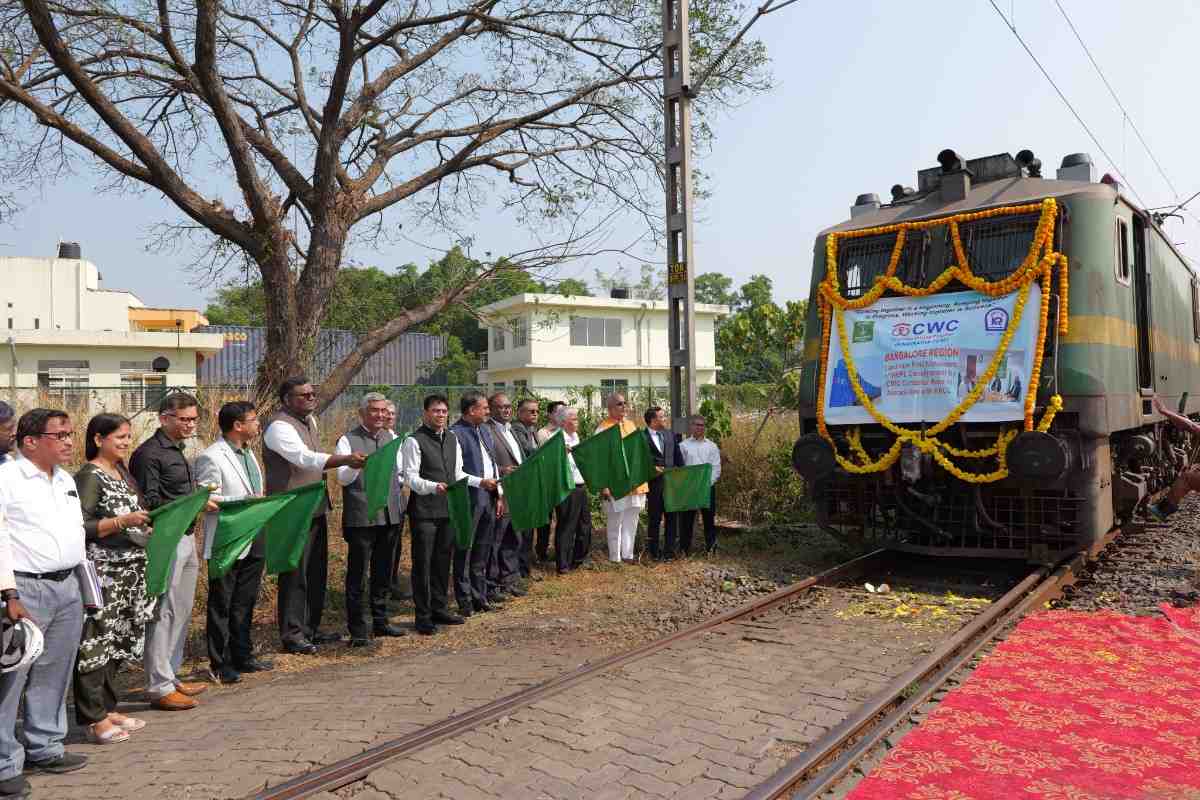
MANGALURU : With its own warehouses and presence in the rail transportation sector, the Central Warehousing Corporation (CWC) will offer end-to-end logistics solutions, from stuffing of consignment into containers to unpacking and delivering to customers, according to CWC Managing Director Santosh Sinha.

Talking to The Hindu on the sidelines of CWC launching its container freight train from Mangaluru to Morbi in Gujarat transporting polypropylene produced by Mangalore Refinery and Petrochemicals Limited (MRPL) on January 22, Mr. Sinha said CWC has the advantage of owning warehouses, unlike other container freight train operators. The corporation would leverage the advantage of having 741 warehouses across India to offer end-to-end integrated logistics solutions.

The launch of the freight train in Mangaluru marks a significant step in CWC’s expansion into integrated logistics services, demonstrating its capability in handling end-to-end multimodal transportation along with inventory management as a one-stop total supply chain solution provider, Mr. Sinha said.

To enhance capacity, CWC also would use containers as temporary warehouses, thereby eliminating costs on unloading, transporting to conventional warehouses, and re-loading the consignment. “This works cheaper as compared to conventional warehouses,” he said.

CWC Director (Marketing and Corporate Planning) Samuel Praveen Kumar said the pan-India Container Train Operator licence possessed by the corporation enables it to operate container freight trains anywhere in India. He said the corporation was acquiring rakes as a part of its expansion plan. The CWC has its own fleet of 10 BLSS rakes (Spine Cars) while another three were in the pipeline. While it was operating another 10 rakes on lease, four more were expected to be obtained on lease soon. It would thus have 27 BLSS rakes, each capable of transporting 98 TEU (20-foot-equivalent unit) containers.

Mr. Kumar said the departure of MRPL’s consignment to Morbi was the first penetration of CWC in Konkan Railway Corporation Limited network, and in this part of Karnataka. The corporation has rail-side warehouses at Thokur, Udupi and Verna (Goa), while one more would come up in Ratnagiri (Maharashtra). This infrastructure would add strength to the operations, he added.

Digitising warehouses
Director (Finance) Niraj Priyadarshi said the corporation was aggressively digitising its warehouses and has already covered nearly 217 foodgrain warehouses. Digitisation was underway for the remaining 500-odd warehouses, he added.

Milestone movement in sustainable Logistics at Adani ICD Malur, Bengaluru

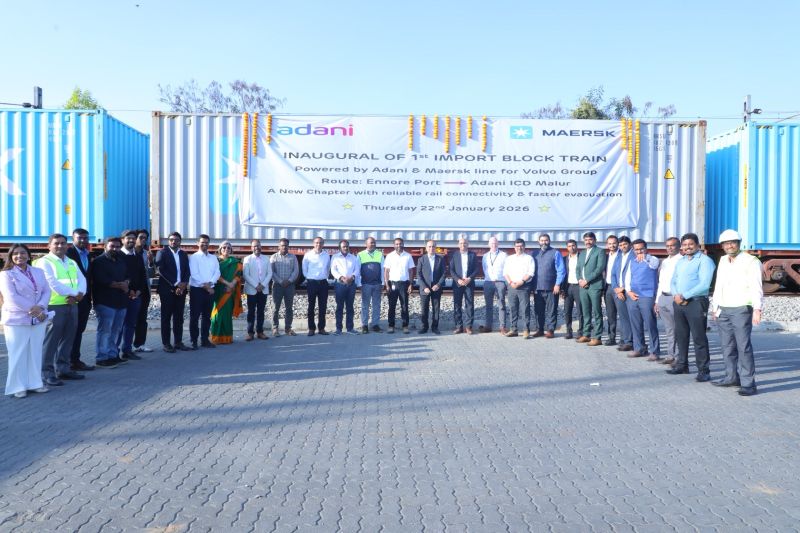
BENGALURU : Adani Logistics marked a significant milestone in sustainable multimodal logistics with the successful movement of the inaugural import block train for auto parts, operated in collaboration with Maersk Line for the Volvo Group, connecting Ennore Port to Adani ICD Malur.

This landmark movement represents a major step forward in strengthening a reliable, faster, and cost-effective supply chain across Karnataka, Andhra Pradesh, and Tamil Nadu, while reinforcing the shared commitment of Adani, Maersk, and Volvo Group towards greener logistics solutions.

Adani ICD Malur, the newest Inland Container Depot serving the Bengaluru region, is rapidly emerging as a key multimodal logistics hub in South India. With seamless rail connectivity and proximity to major industrial clusters, the ICD is redefining cargo movement efficiency while significantly reducing transit time and logistics costs.

The use of rail-based transportation for this movement has also resulted in lower carbon emissions, directly supporting sustainability goals and advancing environmentally responsible trade practices. This initiative aligns with the broader vision of promoting green logistics through enhanced rail infrastructure and multimodal integration.

The successful execution of this milestone shipment was supported by DSV – Global Transport and Logistics, acting as the first import Customs House Agent (CHA) for this movement, and Vibrant Service for transport operations.

This inaugural block train underscores the potential of collaborative logistics solutions in driving operational excellence, sustainability, and innovation. With many more such movements planned, Adani ICD Malur is firmly on track to play a pivotal role in shaping the future of sustainable logistics in India.

Customs Brokers Licensing Examination, 2025, is scheduled to be held on 17.03.2026

NEW DELHI: Please refer to advertisement dated 25.08.2025 regarding the online written examination for Customs Brokers Licensing Examination, 2026. The aforementioned examination is scheduled to be held on 17.03.2026. The pattern of the written and oral examinations will be as follows:

The written examination will be a Computer Based Examination with Multiple Choice Questions. Questions will be bilingual i.e. in English and Hindi. Candidates have the option to answer either in English or Hindi. Other details are as follows:

No. of questions:150
Time duration:Two and half hours (10:30 hrs to 13:00 hrs)
Marking scheme:+3 for each correct answer
-1 for each incorrect answer
Maximum marks:450
Qualifying marks:270 (60%)

Those qualifying in the written examination will have to appear in oral examination in terms of Regulation 6 of the Customs Brokers Licensing Regulations, 2018, as amended. The pass percentage marks for qualifying in the oral examination will be 60%.

For any query, please visit the websites (www.cbic.gov.in and www.nacin.gov.in) or contact the nearest Customs Commissionerate/ NACIN, Palasamudram @ e-mail ID- cblr-nacinpsm[at]gov[dot]in.

India-EU FTA to boost textiles industry, generate more jobs: Raymond Group MD Gautam Singhania

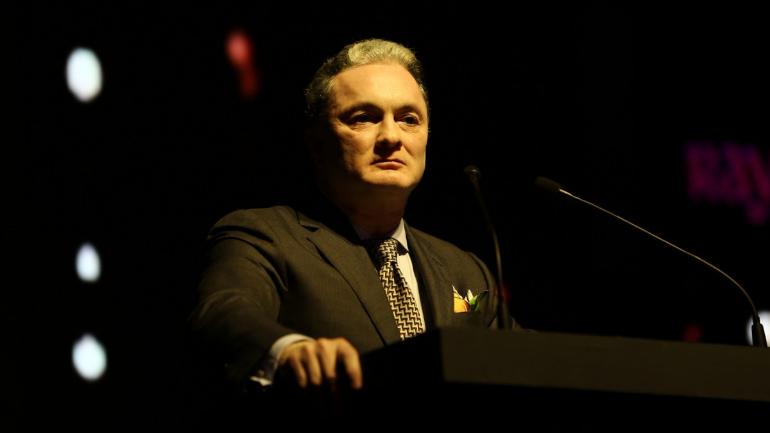
NEW DELHI: The proposed India-European Union (EU) Free Trade Agreement (FTA), particularly negotiations around zero duty on textiles, could deliver a significant boost to employment and industrial growth, Raymond Group Managing Director Shri Gautam Singhania said on Monday.

“Textiles remain among the largest employers in the country and a duty-free access to the EU market would be beneficial not only for the sector but also for the broader economy,” Singhania said.

He added that a favourable agreement with the EU could also strengthen India’s position in future trade negotiations with the United States.

“Zero duty on textiles will be very good for the industry and from an employment point of view as well. A strong deal with the EU could be a significant step,” Singhania said.

EU President Ursula von der Leyen is in New Delhi, where she attended the Republic Day celebrations as a Chief Guest.

In a social media post on X, von der Leyen said, “It is the honor of a lifetime to be Chief Guests at the Republic Day celebrations. A successful India makes the world more stable, prosperous and secure. And we all benefit.

New Delhi and Brussels are likely to announce the conclusion of negotiations on the much-awaited free trade agreement at the India-EU summit on January 27.

Leaders from both the sides are expected to adopt a joint EU-India comprehensive strategic agenda to reinforce the strategic partnership and deepen cooperation, which delivers stability and prosperity at home and beyond.

Commenting on the investment agreements signed at the World Economic Forum (WEF) in Davos, Singhania said the Chief Minister’s efforts had yielded strong outcomes for the state. He described the number of Memoranda of Understanding (MoUs) signed as “phenomenal” and said these commitments would support long-term growth.

“What the Chief Minister has done at Davos is very good. There have been many agreements for the state, and India has also signed several important agreements. This will go a long way in the progress of India,” he said.

On the upcoming Union Budget, Singhania refrained from offering detailed expectations, stating that he was not the appropriate person to comment on budgetary matters. However, he expressed optimism that recent trade deals and investment commitments would provide a strong foundation for India’s economic momentum.

Source: ANI

India to present Diverse Agri-Food Ecosystem through 161 Exhibitors at Gulfood 2026

NEW DELHI: The Agricultural and Processed Food Products Export Development Authority (APEDA), under the Ministry of Commerce and Industry, Government of India, is participating in Gulfood 2026 with a strong, expanded and high-impact presence, reinforcing India’s growing stature in the global agri-food trade. India is the Partner Country at Gulfood 2026, underscoring its strategic importance as a reliable sourcing destination and a key contributor to global food security and resilient supply chains.

India’s participation at Gulfood 2026 marks a significant scale-up compared to previous editions. The Indian Pavilion has doubled in size compared to last year, reflecting the expanding footprint of Indian agri-food exports, increasing global demand for Indian products and enhanced participation from exporters, institutions and startups.

India’s participation spans a total exhibition area of 1,434 square metres, featuring 161 exhibitors across a wide range of categories, including processed foods, fresh and frozen products, pulses, grains and cereals, beverages, value-added food products and agri-export startups. The Indian Pavilion brings together exporters, Farmer Producer Organisations (FPOs), cooperatives, startups, State Government agencies and national institutions, presenting a comprehensive view of India’s agri-food ecosystem and export readiness.

Exhibitors from 25 States and regions are participating, reflecting India’s vast agricultural and regional diversity. These include Assam, Bihar, Chhattisgarh, Delhi, Gujarat, Haryana, Himachal Pradesh, Jammu & Kashmir, Karnataka, Kerala, West Bengal (including Kolkata and Siliguri), Madhya Pradesh, Maharashtra (including Mumbai), Meghalaya, Punjab, Rajasthan, Sikkim, Tamil Nadu, Telangana, Uttar Pradesh and Uttarakhand. The participation highlights region-specific agri-products, GI-tagged items, organic produce and value-added food products, demonstrating India’s expanding engagement in international agri-trade.

India’s presence at Gulfood 2026 is further strengthened by participation from key national institutions and government bodies, including NAFED, National Cooperative Exports Limited, National Horticulture Board, Uttarakhand Horticulture Board, Spices Board India, Tea Board of India, National Turmeric Board, Indian Rice Exporters Federation (IREF), All India Rice Exporters Association, IOPEPC, The Rice Exporters Association Chhattisgarh (TREACG), COMFED – Bihar State Milk Cooperative Federation Ltd., Punjab State Cooperative Supply & Marketing Federation Ltd., Directorate of Horticulture, Government of Bihar, Sikkim Organic Farming Development Agency, and The Central Arecanut and Cocoa Marketing and Processing Cooperative Limited (CAMPCO), among others.

A key highlight of India’s participation is the BHARATI Pavilion, APEDA’s flagship initiative to promote export-ready agri-food and agri-tech startups. Located in the Startup Zone at the Dubai World Trade Centre, the BHARATI Pavilion features eight high-potential Indian startups, selected through a national-level process from over 100 applicants. These startups are showcasing innovative products, technology-driven solutions and export-enabling offerings aligned with APEDA’s Farm to Foreign vision.

The Indian Pavilion also features a dedicated Culinary Area, where a renowned chef will conduct live demonstrations of Indian cuisines. This experiential zone highlights India’s rich culinary heritage, diverse regional flavours and the versatility of Indian ingredients, enhancing buyer engagement and global appreciation of Indian food products.

The product showcase includes a comprehensive Pulses, Grains and Cereals section, displaying a wide range of Indian varieties and reinforcing India’s position as one of the world’s leading producers and exporters of staple food commodities. The displays emphasise quality, sustainability, traceability and compliance with international standards to meet global market requirements.

Gulfood 2026 is being organised across two major venues, with India having a strong and visible presence at both locations. Dubai Expo City hosts the World Food Hall, Pulses, Grains and Cereals Hall and Gulfood Green, focusing on sustainability, innovation and future food systems. The Dubai World Trade Centre (DWTC) hosts the Beverage Hall and the Startup Hall, including the BHARATI Pavilion.

India’s participation at Gulfood 2026 is aligned with the opportunities emerging from the India–UAE Comprehensive Economic Partnership Agreement (CEPA), which has strengthened bilateral trade ties and enhanced market access for Indian agri and food products in the Gulf region.

In addition to the exhibition presence, APEDA is undertaking extensive exclusive branding and high-impact promotional activities across prominent locations in Dubai as part of India’s Partner Country status at Gulfood 2026. These include branding at metro stations, bus wraps, gas stations, panel branding and other high-visibility outdoor formats, significantly enhancing India’s visibility and brand recall.

Through this comprehensive and expanded participation, APEDA aims to strengthen buyer–seller linkages, promote Indian brands globally, support startups and exporters, showcase India’s agri-food diversity, and further consolidate India’s role as a reliable, innovation-driven and sustainable player in the global agri-food value chain.

FIATA highlights Critical Role of Customs Authorities on World Customs Day

GENEVA: On the occasion of World Customs Day, the International Federation of Freight Forwarders Associations (FIATA) has underscored the pivotal role played by customs authorities in enabling safe, secure and efficient global trade.

FIATA highlighted its long-standing engagement with the World Customs Organization (WCO), noting that close cooperation with customs administrations is essential to strengthening public–private sector collaboration in international trade. The organisation actively participates in the WCO’s Private Sector Consultative Group, contributing industry expertise to policy discussions and operational improvements.

Emphasising the role of freight forwarders at the interface between regulators and the trading community, FIATA noted that forwarders support regulatory compliance, facilitate legitimate trade flows and help maintain resilient supply chains amid evolving global challenges.

FIATA reaffirmed its commitment to continued collaboration with the WCO and customs authorities worldwide, aimed at advancing secure, transparent and seamless cross-border trade, while supporting the efficient movement of goods across international borders.