Home Blog Page 77

Mintra’s Mentor AI named finalist in Crew Connect Innovation and Technology Award

LONDON: Mintra’s Mentor AI has been named a finalist in the Innovation and Technology category of the Crew Connect Global Awards 2026, recognising its use of governed AI to give seafarers trusted operational information at the point of need.

Launched in December 2025, Mentor AI addresses a longstanding gap between completing formal training and applying that knowledge in real operational situations.

Seafarers may need to recall critical knowledge weeks, months or even years after completing a course. In those moments, they may rely on memory, manuals, colleagues, internet searches, or public artificial intelligence tools, where information may be difficult to verify or inconsistent with approved company procedures.

Mentor AI provides an alternative. The AI-powered operational assistant gives seafarers immediate access to information drawn from Mintra’s library of more than 400 verified maritime safety and compliance courses. Maritime organisations can also incorporate their own approved courses, procedures and documentation, creating a controlled knowledge source aligned with their operations.

Unlike general-purpose AI tools, Mentor AI operates within a governed environment. Responses are based on approved content and supported by dynamic citations linking users back to relevant learning material and course videos, allowing information to be checked and explored in greater detail.

Multi-language support helps mixed-nationality crews access the same approved information more consistently, while self-testing knowledge checks can help seafarers identify gaps in their understanding.

Mentor AI moved from initial concept to a trial customer-ready solution in approximately three months and is currently being piloted by two maritime organisations, supporting just over 100 users. Early trials indicate seafarers can find relevant guidance faster and make decisions with greater confidence.

Kevin Short, CEO of Mintra (Pic above), said: “AI has enormous potential in maritime, but in a safety-critical environment, speed of access is only valuable if people can trust the information they receive. That principle has shaped Mentor AI from the outset.

“Seafarers may need to apply knowledge months after completing their training, often immediately before carrying out a task. Mentor AI gives them direct access to relevant, traceable information drawn from approved sources, while supporting rather than replacing professional judgement and experience.

“Being named a Crew Connect finalist is welcome recognition of a practical use of AI: taking the knowledge already available to the industry and making it easier for seafarers to find and apply when it matters.”

Mentor AI was developed through multidisciplinary collaboration across maritime expertise, learning design, technology, data, quality assurance and customer implementation. This approach enabled content governance, technical development and testing to progress together, with trust and traceability built into the solution from the outset.

Mentor AI does not replace structured learning, professional judgement or experience. It supports all three by delivering trusted operational knowledge when it is needed, helping seafarers make safer, more informed decisions in safety-critical environments.
GEODIS Strengthens Contract Logistics Business in France with Planned Acquisition of Part of the Transport and Logistics activities of Deret

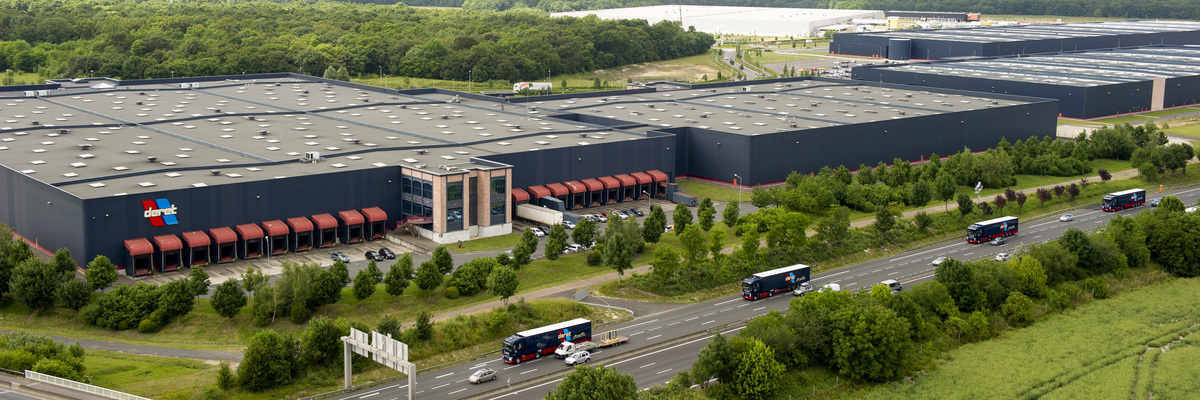
LEVALLOIS-PERRET: GEODIS has reached an agreement with Deret SAS to acquire part of the transport and logistic activities of Deret’s Group, a historic and well-respected logistics provider in France. This strategic move will enable the Group to reinforce its position in the contract logistics market and accelerate its development in the luxury and cosmetics sectors.

GEODIS, a world leader in transport and logistics, takes a new step in its growth strategy with the planned acquisition of part of the transport and logistics activities of the Deret Group, a leading player in contract logistics in France. This acquisition is part of GEODIS’s commitment to strengthening its presence in the French logistics market, capitalizing on the complementary geographic and operational footprints of the two groups.

The acquisition includes Deret Logistique and Deret Transporteur, as well as their subsidiaries Sogipac, Logtex, and Deret Services Numériques. It also includes part of the logistics real estate assets of  Deret SAS.

These companies comprise 13 transport agencies and 28 logistics sites. In total, 2,400 employees work for Deret SAS.

This acquisition will allow GEODIS to expand its warehouse network in France and strengthen its position in strategic sectors, notably luxury, cosmetics and pharmaceutical. The transaction will also consolidate GEODIS’s footprint in the Orléans region, a major logistics hub, through the creation of an attractive real estate cluster. This acquisition will further enhance the complementarity with GEODIS’s existing activities, both geographically and in terms of its client portfolio.

Founded in 1947, Deret supports businesses in the comprehensive management of their supply chains, relying on solid expertise and a culture of performance. The company provides logistics and transport solutions for major French and international brands. The transaction is subject to consultation with employee representative bodies of both Groups and to the customary suspensive conditions, including clearance under merger control regulations.

Maritime is using AI every day. Now comes the harder part: trusting it to act

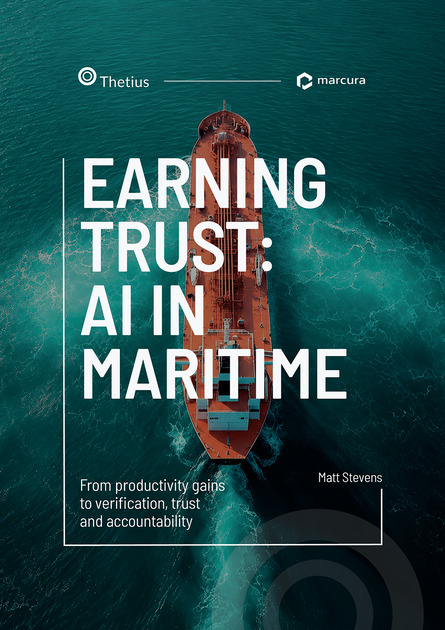
DUBAI: New Thetius and Marcura research finds AI is already embedded in maritime workflows, but organisations are still working out how to assess the full human-AI process, from verification and accountability to governance, and where human judgement adds most value.

Almost two-thirds (63%) of maritime professionals now use AI every day, according to new research from Thetius and Marcura. Yet only 8% describe their organisation as mature and governed in how it uses AI.

More than half (55%) spend at least an hour each week checking or correcting what AI produces, with almost one in five spending five hours or more. Even so, 85% say AI saves them time overall once that checking is taken into account.

The verification tax

The report calls the time and attention spent checking AI-generated work the “verification tax”. The question now is how much of that verification is necessary.

Trust remains qualified. When asked how much they trust AI-generated outputs, 57% placed themselves at the midpoint of a five-point scale. AI may have become part of everyday work, but confidence in its outputs is still catching up.

Some checking is unlikely to disappear, nor should it. Seven in ten say they would always check an AI recommendation before acting on an important business decision, while 80% believe a named person should always remain accountable for a commercial decision, however capable AI becomes.

Not all verification is necessary

But other checking is driven by uncertainty. Most respondents encounter errors at least sometimes when checking AI output, and fewer than one in ten say their organisation’s data is fully ready for AI to rely on. If experience had shown an AI output to be reliable, 47% said they would spend much less time checking it.

The opportunity, the report argues, is not to eliminate human oversight, but to make it proportionate: keep it where the consequences of getting something wrong demand it, and reduce unnecessary checking as confidence grows.

Janani Yagnamurthy, Senior Vice President, Product, Strategic Growth at Marcura, said:

“Maritime doesn’t have a shortage of data. The problem is that the context needed to make a good decision is often scattered across contracts, emails, documents, systems and the experience of the people doing the work. Putting AI on top of that fragmentation doesn’t make the problem disappear.

“The opportunity is to bring that context together at the point where a decision is being made, and then learn from what actually happens. When the system can show what it is basing an answer on, be tested against real outcomes and improve from human corrections, there is less reason to check everything from scratch. That is how AI starts to earn trust rather than simply asking for it.”

From recommendation to action

The stakes rise as AI moves from producing answers to taking action.

Almost three quarters (72%) say their organisations are already using, piloting or planning agentic AI systems capable of taking action rather than simply making recommendations. Yet only 15% say their governance is ready for agentic AI.

The gap raises a practical question: what can AI do independently, what still requires human review, and who remains accountable for the outcome?

A “collective brain”

The report notes that AI is also changing how experience is shared. Three quarters (75%) say it is helping less-experienced colleagues become effective faster.

One example is CP Optimiser, an AI-driven charter party review tool co-developed by Marcura and Tomini Chartering. It analyses charter parties against the company’s accumulated knowledge, surfacing clauses and risks that might otherwise depend on an experienced colleague recognising them.

Thomas Stjernholm, Managing Director, Commercial, at Tomini Chartering, who describes the system as a “collective brain” for the organisation, said: “It’s a human-to-AI-to-human process: the human puts in the knowledge, the AI curates and connects it to the clause in front of you, and the human makes the final decision.”

Earning Trust: AI in Maritime concludes that companies should measure the complete human-AI process,  differentiate necessary verification from checking driven by uncertainty, use human corrections to improve future performance, and establish clear ownership and governance.

Please see the attached infographic highlighting the survey results. To download the full report, click here.

The Duke of Edinburgh Opens Brookes Bell’s New Liverpool Office

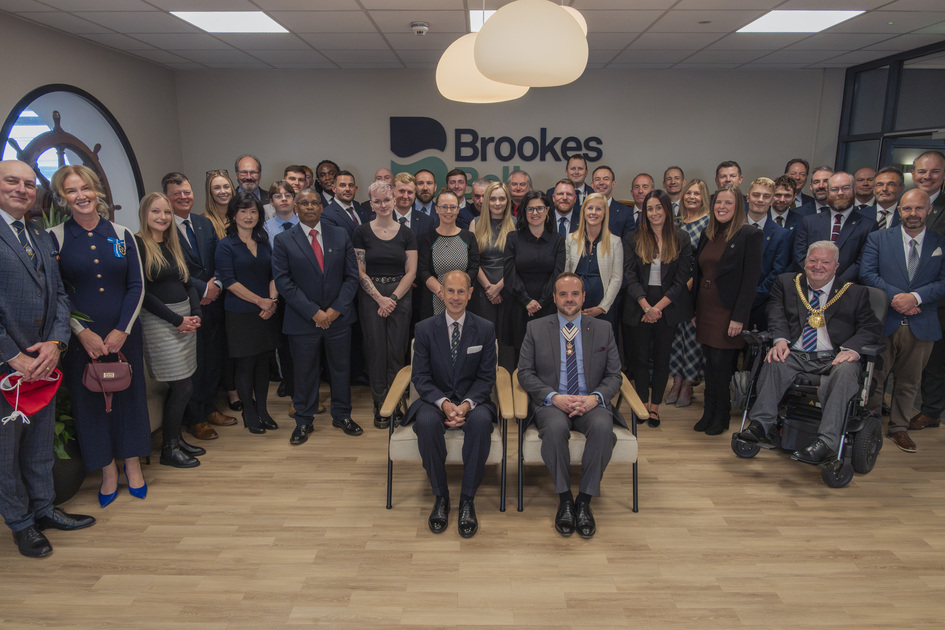
LIVERPOOL: His Royal Highness The Duke of Edinburgh, opened international maritime consultancy Brookes Bell’s new Liverpool office on Thursday 24th September 2026.

Accompanied by His Majesty’s Lord-Lieutenant of Merseyside, Peter Oliver OBE, the High Sheriff of Merseyside Hazel Snell DL, and Cllr William Shorthall, Lord Mayor of Liverpool, His Royal Highness unveiled a plaque at No 10. Princes Dock, Princes Parade, Liverpool, commemorating the event. 

During the visit, The Duke met a selection of Brookes Bell’s specialists, including the consulting firm’s Master Mariners, Scientists, Engineers, Materials Testing and Non-Destructive Testing experts, and their support teams.

Brookes Bell’s experts discussed their work including the handling of maritime casualties, providing expert witness testimony, assisting with cargo claims and disputes, and failure and forensic investigations.

Commenting on His Royal Highness’ visit, Brookes Bell’s Chief Operating Officer, Anthony York, said:

“It was a tremendous honour to welcome His Royal Highness to Liverpool to mark this important occasion in Brookes Bell’s long history. 

Liverpool has been our home for more than 120 years, and as we open our new office at Liverpool Waters, it is exciting to consider the next stage in Brookes Bell’s journey as we continue to support the global maritime industry with technical and scientific consultancy support”.

Adrian Scales, Director of Europe and Master Mariner at Brookes Bell, said: “It was a privilege to share our story with His Royal Highness. It was a proud moment for everyone here. We have been part of Liverpool’s maritime community since 1903, and opening this office is a clear statement of our commitment to the city.

His Royal Highness took a genuine interest in our people and their work, from our Master Mariners to our engineers and scientists. Their expertise supports the maritime industry around the world, and it meant a great deal to be able to share it with him”.

Andrew Yarwood, Business Director at Brookes Bell, added: “The location of our new office places us right at the heart of the Mersey maritime community, so it was especially appropriate that His Royal Highness visited as part of his wider tour of the region. I was pleased that he was able to meet our specialists, hear about their work and see first-hand the depth of maritime expertise we have within the business.”

The Duke of Edinburgh’s visit to Brookes Bell formed part of two days of engagements visiting maritime establishments across Merseyside.

Insurwave relaunches platform to make dynamic risk measurable 24/7

LONDON: Insurwave on Wednesday announced a powerful update and relaunch of its dynamic risk platform, bringing insurers, brokers and fleet owners onto one platform designed to make dynamic risk measurable as it moves, alongside a new brand identity.

The relaunch introduces four modules covering Aviation and Marine. Track & Cover gives fleet owners a single, live view of every asset and its cover, with additional premiums quoted directly through the platform. Risk Intelligence turns a submission into a defensible risk score, drawing on real-time data analysis and historical data from specialist providers. Both modules are available today.

Portfolio Impact Analysis and Continuous Intelligence will follow later this year, enabling users to model how an individual risk affects aggregate exposure and continuously re-score bound business as events and risk conditions evolve.

By combining AI, live risk data and specialist third-party intelligence, Insurwave gives users an unparalleled view of risk that is as current as the risk itself. It turns a submission into a clear, defensible score, then continuously monitors exposure 24/7 as risks change.

Users will soon be able to ask questions in natural language to understand what has changed, why risk has moved and what it means for their business. Responses are generated within each customer’s isolated, ISO 27001-certified cloud environment, using only their data and our licensed data feeds. Customer data remains under their control: it never leaves their environment, is never pooled with other customers’ data and is never used to train third-party AI models.

Insurwave is trusted by over 70 leading organisations across the insurance, marine and aviation markets. Its intelligence is strengthened by specialist data from Lloyd’s List Intelligence, Osprey Flight Solutions and Flightradar24.

Adrian Morgan, CEO of Insurwave, said: “Risk does not stand still. Assets move, airspace closes, conflict zones shift, and sanctions change, yet much of the insurance market still relies on point-in-time models, reports and spreadsheets. Dynamic risk needs a dynamic layered view, and the information used to price, place and manage it has to keep pace.

With the powerfully updated and relaunched Insurwave platform, we are bringing every side of the risk together around a clearer dynamic view. By combining AI with live and specialist risk data, users can see what has changed, understand why it matters and interrogate that intelligence in natural language. The aim is to move from information to decision faster, supporting markets where expert judgement is backed by live evidence, and no exposure goes unwatched.

For insurers, that means underwriting with greater foresight and understanding portfolio impact before capital is committed. For brokers, it means faster placement, less time chasing exposure data and a shared live view that strengthens client relationships. For fleet owners, it means understanding where risk sits across individual assets and what changes in the world mean for their exposure. The aim is simple: make dynamic risk measurable, as it moves. One platform. Every side of the risk.”

MoPSW completes preparatory phase for Special Campaign 6

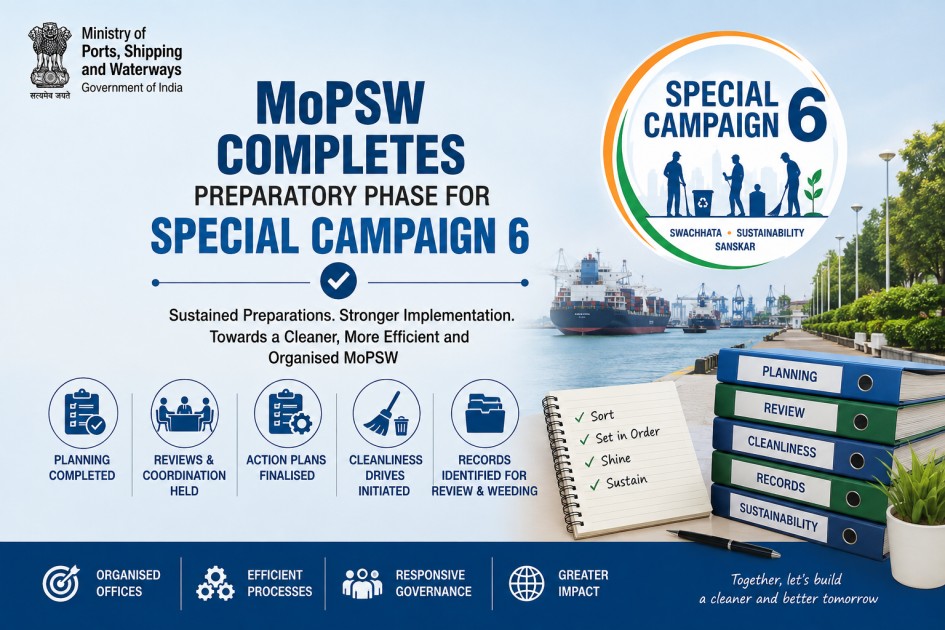
NEW DELHI: The Ministry of Ports, Shipping and Waterways (MoPSW) and its organisations have undertaken extensive preparations for “Special Campaign 6,” the sixth edition of the Government of India’s nationwide drive to clean government offices, clear pending work, organise old files and improve institutional efficiency. The preparatory phase of the campaign has run from 15 to 30 September 2026, ahead of the Implementation Phase, which will be carried out from 2 to 31 October, 2026.

Secretary, MoPSW, chaired a review meeting with the Heads of all organisations and Nodal Officers of the Ministry and its organisations to assess preparedness for the campaign. The Secretary emphasised timely action, cleanliness, disposal of pending matters, effective management of e-waste, and proper documentation of activities throughout the campaign.

As part of preparations, MoPSW and its organisations have identified several MP References, References from State Governments, Inter-Ministerial Communications, Parliamentary Assurances, PMO References, Public Grievances and PG Appeals, and Rules/Processes for simplification, along with 185 Cleanliness Campaigns, 6,605 physical files and 4,548 e-files for review and disposal during the campaign. In addition, 5,624 e-waste items have been identified for collection, segregation and disposal in accordance with the E-Waste (Management) Rules, 2022.

MoPSW is coordinating with its organisations through designated Nodal Officers, with progress being reviewed regularly during the Preparatory Phase. The identified activities will now be taken forward in a time-bound manner during the Implementation Phase, from 2 to 31 October 2026, with proper monitoring and documentation of outcomes. An Evaluation Phase, assessing results and best practices from the campaign, is scheduled for 16 to 30 November 2026 under the national framework for Special Campaign 6.

Through Special Campaign 6, MoPSW and all its organisations will undertake concerted efforts towards cleanliness, environmental responsibility, efficient record management, reduction of pendency and responsive governance, with particular focus on the effective collection, segregation and disposal of e-waste.

MoPSW and its organisations are also observing ‘Swachhata Pakhwada’ from 16 to 30 September, 2026, coinciding with the Preparatory Phase of Special Campaign 6 and reinforcing its cleanliness and public participation objectives. Key activities under ‘Swachhata Pakhwada’ include ‘Shramdaan’ and cleanliness drives, cleaning of public places and community institutions, repair and renovation of toilets, awareness and IEC activities, Waste-to-Wealth exhibitions, ‘Swachhata Raths’ and rallies, cleaning of ponds, rivers and beaches, plantation drives, and elimination of single-use plastic.

Shipping Secretary reviews on-ground progress of Vadhvan Port development; interacts with stakeholders

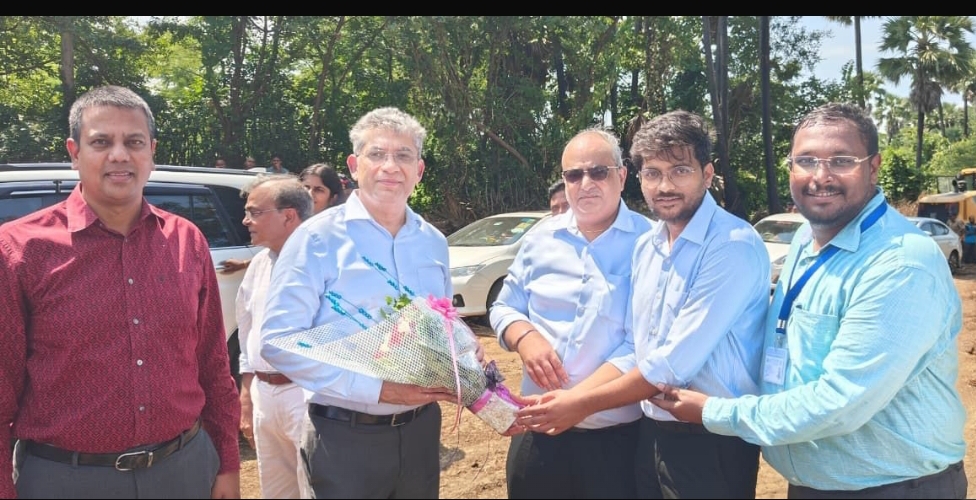
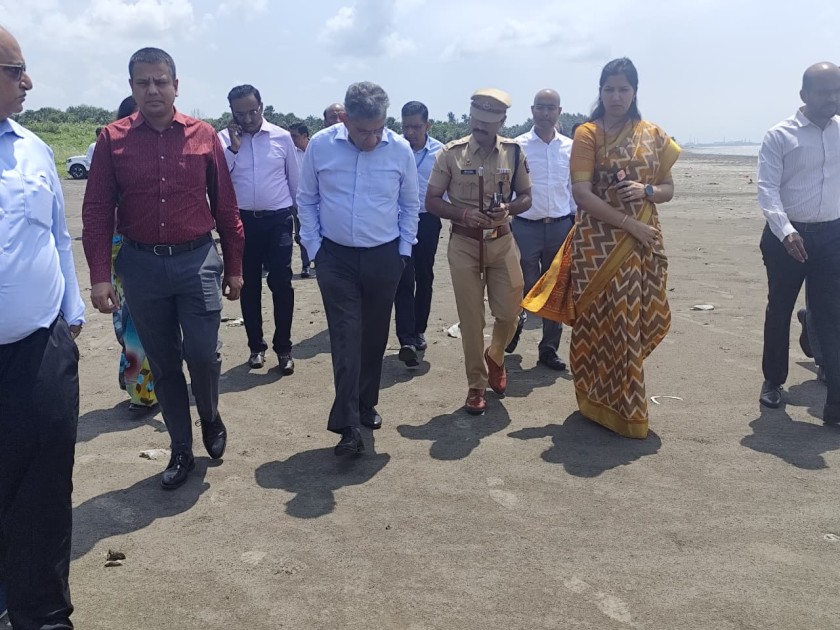
MUMBAI: Shri Vijay Kumar, IAS, Secretary, Ministry of Ports, Shipping and Waterways (MoPSW), Government of India, visited the Vadhvan Port project site in Palghar district to review the progress of the ambitious greenfield deepdraft major port being developed by Vadhvan Port Project Limited (VPPL). Shri Gaurav Dayal, IAS, Chairman, Jawaharlal Nehru Port Authority (JNPA) and CMD, VPPL, along with the Collector of Palghar district, Dr. Indurani Jakhar, IAS, Yatish Deshmukh, IPS, SP, Palghar District, Ravish Kumar Singh, IRTS, CEO, VPPL, senior officials from VPPL, JNPA and other concerned agencies, accompanied the Secretary during the site visit and provided updates on the project’s progress.

vppl jnpa 1 Shipping Secretary reviews on-ground progress of Vadhvan Port development; interacts with stakeholders

During the visit, the Secretary reviewed the progress of key components of the project and took stock of the ongoing activities at the project site. The review covered various workstreams associated with port development, including near-shore reclamation, breakwater construction, external connectivity, land acquisition, and utility infrastructure.

He was briefed by the VPPL team on the progress achieved across different components of the project and the activities planned for the coming phases. He also interacted with the stakeholders.

The Secretary emphasised the importance of close coordination among all stakeholders and maintaining momentum across the different work fronts to ensure timely execution of the project. He also reviewed the preparedness for scaling up construction activities as various enabling works and critical project requirements progress in parallel.

Providing further details, Shri Gaurav Dayal, IAS, CMD, VPPL, said, “The Secretary, MoPSW’s visit and detailed review of the project provided valuable guidance on accelerating progress across the various work fronts. The project is advancing in a structured and time-bound manner, while maintaining the highest standards of quality, sustainability and operationalpreparedness.”

VPPL continues to advance as a project of national significance, poised to strengthen India’s maritime capacity, enhance trade competitiveness and contribute to the nation’s long-term economic growth.

About VPPL:

Vadhvan Port Private Limited (VPPL) is the 13th major port of India, a special purpose vehicle (SPV) formed between Jawaharlal Nehru Port Authority (JNPA) and the Maharashtra Maritime Board (MMB). Strategically located in Palghar district, near Dahanu, Maharashtra, VPPL is poised to be among the top 10 ports globally. The foundation stone for the port was laid on August 30th, 2024, by the Hon’ble Prime Minister of India, Shri Narendra Modi.

Committed to sustainability, VPPL will be 100% green from inception, ensuring minimal environmental impact. The port is set to enhance trade efficiency with the capacity to handle 24 million TEUs, stimulate economic growth, and contribute to regional development. Through initiatives like the Vadhvan Port Skilling Program, VPPL focuses on empowering local communities.

Paradip Port Authority holds strategic stakeholders meeting to drive cargo growth and operational efficiency

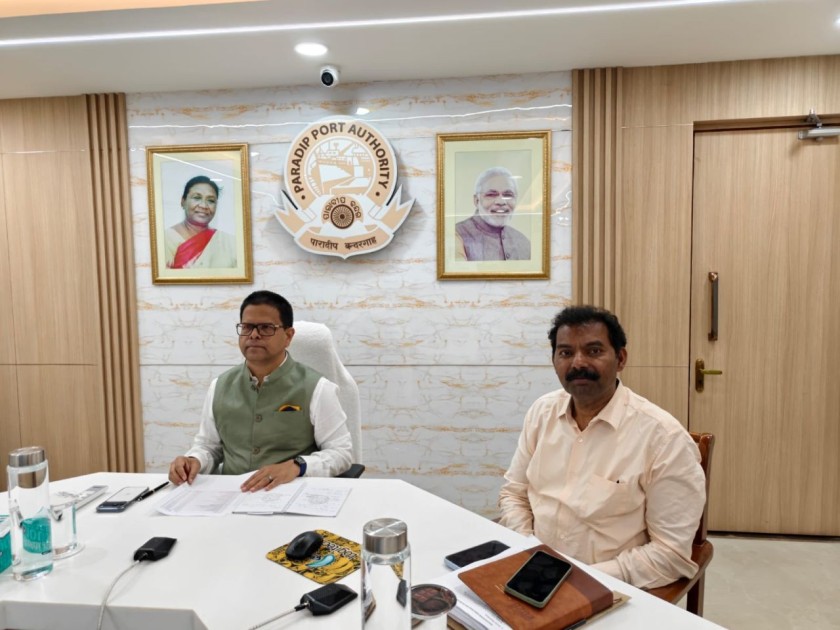
PARADIP: Paradip Port Authority (PPA) convened a strategic stakeholders meeting at its new Boardroom, focusing on strengthening cargo growth, enhancing operational efficiency and deepening coordination among key stakeholders to support the port’s continued development.

The meeting was led by Shri Susanta Kumar Purohit, Chairperson, Paradip Port Authority, and Shri T. Venu Gopal, Deputy Chairperson, Paradip Port Authority, along with the Heads of Departments (HODs) of PPA.

The discussions centred on identifying measures to further improve cargo handling and port operations, strengthen coordination across various departments and stakeholders, and create new opportunities for expanding cargo volumes and port-led industrial activities.

The meeting also reviewed the importance of efficient operational processes and coordinated planning to support the growing requirements of trade and industry. Particular emphasis was placed on enhancing the port’s service capabilities, improving stakeholder engagement and exploring emerging opportunities that can contribute to sustained cargo growth.

With Paradip Port continuing to play a significant role in India’s maritime trade and eastern region’s industrial development, such stakeholder engagements are aimed at ensuring greater operational efficiency, faster coordination and improved support for cargo and logistics activities.

The strategic discussions reaffirmed PPA’s focus on building a more efficient, responsive and growth-oriented port ecosystem, while strengthening its role as a key gateway for cargo movement and port-led industrial development.

Stronger Coordination • Higher Efficiency • Greater Cargo Growth

Mundra Empty Container dispute nears Resolution as APSEZ reinstates Depot Codes

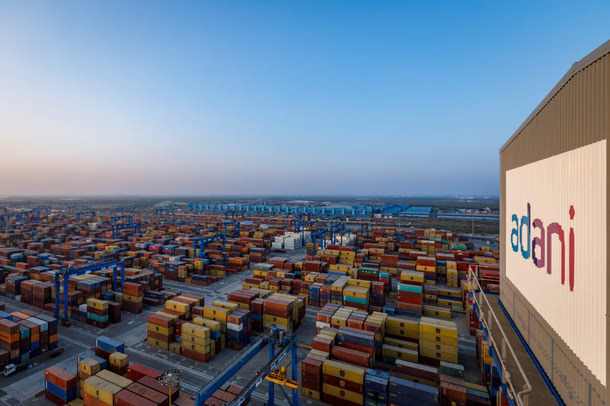
MUNDRA: A significant development has emerged in the ongoing dispute over empty-container handling at Mundra Port, with Adani Ports and Special Economic Zone Ltd (APSEZ) restoring the empty depot codes of yard operators that had been frozen earlier this month.

The development is expected to bring an end to the prolonged disruption involving empty-container depots and transport operators at Mundra and facilitate a gradual return to normal operations.

The breakthrough follows discussions between the Mundra Empty Container Yards & Allied Services Provider Association (MECYASA) and senior APSEZ representatives, resulting in an understanding aimed at resolving the differences over the handling and movement of empty containers.

New Charge Mechanism Agreed

Under the arrangement reportedly reached between the stakeholders, APSEZ will levy a charge of ₹2,500 for a 20-foot container and ₹3,500 for a 40-foot container on shipping lines for empty containers delivered to or collected from Mundra Port.

The shipping lines are expected to recover the applicable charges from their customers.

APSEZ is also expected to formally withdraw its earlier decision concerning the freezing of depot codes of empty-container yards operating outside the port premises, thereby enabling these facilities to resume their role in the container logistics chain.

Dispute Triggered by Change in Empty-Container Routing

The dispute originated following APSEZ’s decision to introduce a revised system for handling empty containers at Mundra.

Under the earlier arrangement, shipping lines could nominate empty containers to depots located outside the port area. The revised mechanism sought to direct such containers towards designated yards within the Mundra Special Economic Zone (SEZ).

APSEZ had maintained that the new system was intended to improve operational efficiency by reducing unnecessary movement of empty containers, easing road congestion, improving truck turnaround times and reducing transportation-related costs and emissions.

The port operator had also cited stronger controls over container inspection, safety and security as among the objectives behind the proposed system.

However, the change met with resistance from operators of empty-container yards outside the port area, eventually resulting in a wider disruption involving container transporters serving Mundra.

Wider Impact on Mundra’s Container Ecosystem

The dispute assumed significance because of Mundra Port’s critical role in India’s containerised trade. The port handles a substantial share of the country’s container traffic, while empty-container movements form an important link in the smooth functioning of import-export supply chains.

The disruption involving empty-container yards and transporters had therefore raised concerns across the shipping, logistics and freight-forwarding community, particularly over potential delays in container availability and increased operational costs.

The latest understanding between APSEZ and MECYASA is expected to provide greater clarity to shipping lines, depot operators, transporters and cargo stakeholders while restoring predictability to empty-container movements around Mundra.

Focus Shifts to Smooth Implementation

With the depot codes being restored and a new commercial mechanism emerging from the discussions, industry stakeholders are now expected to focus on implementing the agreed arrangement and ensuring that empty-container operations return to normal.

The resolution also highlights the importance of coordination among port operators, shipping lines, container depots and transporters in maintaining an efficient container logistics ecosystem.

For Mundra, one of India’s key gateways for containerised cargo, a stable and predictable empty-container network will remain crucial to supporting uninterrupted EXIM trade and maintaining supply-chain efficiency.

CONCOR achieves milestone with first own-container export movement from ICD Khodiyar to Singapore

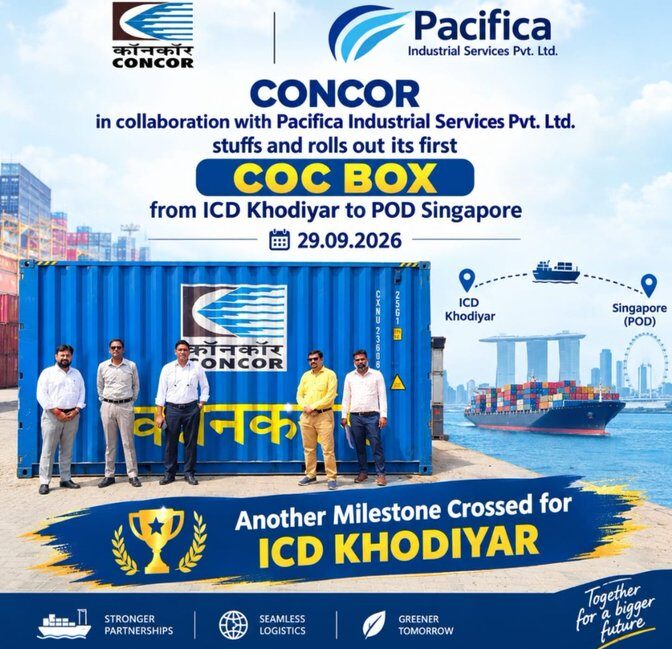
AHMEDABAD: The Container Corporation of India Limited (CONCOR) has achieved another operational milestone with the successful handling of its first export consignment using CONCOR’s own containers at ICD Khodiyar, Ahmedabad, for onward movement to Singapore.

The consignment, comprising machinery for export, marks an important step in CONCOR’s efforts to strengthen its own-container deployment in EXIM trade and provide customers with integrated logistics solutions.

In collaboration with Pacifica Industrial Services Pvt. Ltd., CONCOR has managed the logistics movement on an end-to-end basis—from pickup at the customer’s premises, stuffing and handling at ICD Khodiyar, rail transportation to the gateway port, and onward movement to Singapore.

The milestone demonstrates CONCOR’s ability to integrate multiple stages of the supply chain through its own container fleet and extensive multimodal logistics network, offering customers a seamless and reliable cargo movement solution.

The successful movement from ICD Khodiyar to Singapore (POD) also highlights the growing role of CONCOR’s inland container depots in facilitating India’s international trade and connecting cargo from inland production and business centres with global markets.

With this achievement, CONCOR continues to strengthen its vision of delivering seamless, efficient and integrated logistics solutions, supporting exporters through a single, coordinated logistics chain.

“Connecting India to the World, seamlessly.”