KOLKATA : Garden Reach Shipbuilders and Engineers Ltd. said the Indian Navy’s planned P17 Bravo warship project carries an Acceptance of Necessity valued at around Rs 70,000 crore, and will be executed by two shipyards.
While the request for proposal has not yet been issued, the company expects it to come during the calendar year, The shipbuilder’s Chairman and Managing Director PR Hari said during the company’s March quarter earnings call.
“P17 Bravo project… two shipyards would be involved… with the total AON value to the tune of around Rs 70,000 crores,” Hari said.
The Kolkata-based Garden Reach Shipbuilders is a public sector company that builds and repairs commercial and naval vessels. It primary client includes the Indian Navy and Indian Coast Guard.
The company said it is preparing to bid for the project and expects to submit a competitive proposal, supported by its current execution of the three P17 Alpha frigates.
Hari added that Garden Reach also plans to bid for several other projects where AoNs have been granted.
KOCHI : Lloyds Engineering wins new order worth ₹20.67 Crores from Cochin Shipyard Ltd to provide naval grade Fin Stabilizers for the Next Generation Missile Vessels of India. These stabilizers are essential equipment used to reduce ship roll and improve stability during navigation of warships and helicopters in rough seas.
The contract is a milestone in the collaboration between Cochin Shipyard and the Indian Navy which is a part of the Defence Ministry’s initiative of ‘Make in India.’ Six of the NMGVs are currently being built together. The entire project was estimated to cost around ₹9,804 crore on the date of its inauguration in 2023.
Lloyds Engineering has now secured more than ₹130 crore in defence orders in the last 14 months, a drastic increase from its role as a vendor of defence equipment.
The firm is also looking at further growing its footprint in the defence manufacturing business, given the expanding defence pie with India’s defence spend rising. As per Whole-Time Director Shreekrishna Gupta, these contracts not just add very constructive financial value, but also new customers and potential for long-term business arrangements and repeat orders.
Lloyds Engineering has made a mark in the Fin Stabilizer systems and has supplied these systems for the vital Indian defence platforms thereby Lloyds Engineering carries an established name. They have also been fitted on the Indian Naval warship INS Brahmaputra, in addition to Indian Cost Guard ships including the ICGS Varad and ICGS Vigraha.
Fin Stabilizer is the key equipment to keep the balance and work efficiently when the boat is on the sea. The systems are common on military vessels, freight ships, and civilian marine fleets and are designed to help optimize sailing performance and platform usability, particularly during helicopter operations.
Q4 Result Updates:
On the financial side, the company announced that it has posted a total income of ₹231.96 crore in Q4 FY25 – a robust 23% YoY growth in revenue for the quarter ended March 2025. But the net profit for the quarter was ₹18.26 crore, a drop of 13% on a year-on-year basis, possibly on account of higher input or operating expense. Despite fall in net profit, the company posted a good show at the operating level with its margins improving 0.5% at 13.65% in Q4 FY25.
OSLO : “Fear and uncertainty is a powerful force in global supply chains and we are seeing this clearly as shippers fight to get their goods moving after the temporary lowering of US-China tariffs – and they are willing to pay higher rates to do so.
“Carriers are pushing for big spot rates increases on trades from China to US on 1 June and shippers are once again being offered ‘Diamond Tier’ services to guarantee space on ships. How successful carriers are in getting these rates will be determined by how much shippers are willing to push back.
“There is little doubt there is a squeeze on capacity after carriers ripped it out in the face of falling demand during the period of 145% tariffs, but shippers should question the severity when negotiating rates.
“Are these rate increases being driven by a squeeze in capacity or fear in the market? Likely a combination of both.
“In the defence of carriers, it does take time to shift capacity back to the China-US trades, so spot rates will peak in the first half of June before softening later in the month.” says Peter Sand, Xeneta Chief Analyst.
Data highlights
Market average spot rates – 23 May 2025:
Far East to US West Coast: USD 3000 per FEU (40ft container)
Far East to US East Coast: USD 4069 per FEU
Far East to North Europe: USD 1949 per FEU
Far East to Mediterranean: USD 3128 per FEU
North Europe to US East Coast: USD 2101 per FEU
Market mid-high spot rates – 23 May 2025:
Far East to US West Coast: USD 3200 per FEU
Far East to US East Coast: USD 4250 per FEU
Far East to North Europe: USD 2147 per FEU
Far East to Mediterranean: USD 3372 per FEU
North Europe to US East Coast: USD 2322 per FEU
Note: The Xeneta mid-high is the spot rates paid by shippers in the 75th percentile of the market.
Delta between market average and mid-high shows the different rates being paid by shippers, ie, those shippers negotiating rates on Transpacific trades post the US-China announcement of a 90-day lowering in tariffs are paying higher rates towards the market mid-high.
Mid-high spot rates increased USD 533 per FEU from Far East to US East Coast on 15 May and a smaller uptick of USD 17 per FEU on 23 May.
Mid-high spot rates increased USD 536 per FEU from Far East to US West Coast on 15 May and a smaller uptick of USD 50 per FEU on 23 May.
Average spot rates expected to increase significantly on 1 June, with carriers pushing for all-in rates of USD 7000 per FEU from Far East to US East Coast and ‘Diamond Tier’ services now being offered to shippers.
How close average spot rates get to the levels being pushed by carriers depends on how desperate/willing shippers are to pay higher and higher costs to move goods after the temporary lowering of US-China tariffs.
Since 1 May, average spot rates from Far East to North Europe have been lower than North Europe to US East Coast for the first time since pre-Red Sea Crisis in November 2023. This is driven by falling rates from Far East to North Europe rather than increases on the Transatlantic trade.
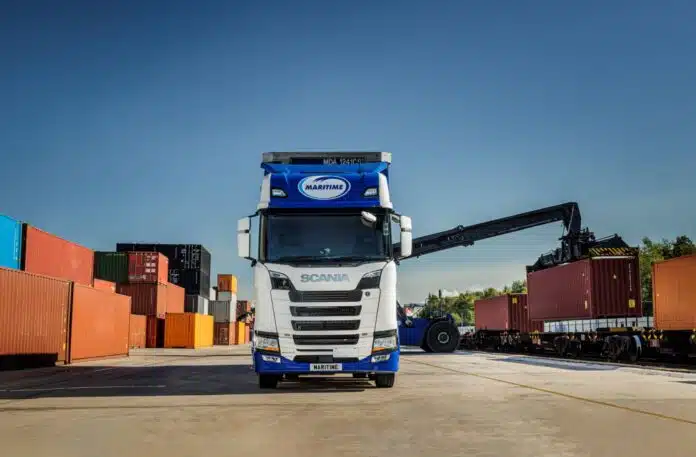
LONDON : Maritime Transporthas launched two new intermodal rail services connectingDP World London Gatewaywith its inland terminals at Hams Hall and iPort Doncaster.
Running Monday to Saturday, the new services commenced last week and are operated in partnership with GB Railfreight. Both services have been introduced in response to growing volumes at DP World London Gateway – where a £1bn expansion is set to begin this month to increase capacity at the Port – and reflect Maritime’s continued investment in expanding its rail network and infrastructure, improving inland connectivity, and driving modal shift across key UK routes.
John Bailey, Managing Director – Intermodal, Maritime Transport, said: “London Gateway is seeing strong growth in container volumes, supported by its role in the Gemini Cooperation’s Asia–Europe network and a major expansion project that will further strengthen its position as one of the UK’s leading deep-sea ports.
“As throughput increases, so too does the need for reliable inland connections. These new rail services provide the additional capacity needed to support that growth, enhance our national network, and enable a more meaningful shift from road to rail as part of a lower-carbon, more efficient UK supply chain.”
Maritime plans to introduce additional services in the coming weeks, expanding connectivity between major UK ports and its network of nine strategic rail freight terminals. New routes currently in development include Felixstowe to Manchester, DP World London Gateway to the East Midlands, and Southampton to Maritime’s SRFI at SEGRO Logistics Park Northampton – the latest addition to the company’s growing rail terminal portfolio which is now fully integrated into the national rail network.
Julie Garn, Intermodal Director, GB Railfreight: “Rail plays a hugely important role in our national supply chains. In addition to driving our economy, moving goods by rail reduces emissions and supports the UK’s transition to more sustainable transport.
“Using rail freight reduces carbon emissions by c.76 per cent compared to road. These new services are a great example of what long-term collaboration can achieve, delivering practical, lower-carbon alternatives to road that benefit the wider supply chain.”
OSLO : 10 days ago on 11 May, businesses were caught in a tariff limbo amid dramatic decreases in container shipping demand on the major trade from China to the US.
The fact there is now talk of a spike in freight rates following the announcement of a temporary lowering of tariffs between the US and China demonstrates how quickly situations can come full circle and why it is so difficult for shippers to manage supply chains against such uncertainty.
There will no doubt be further twists and turns, but shippers can use data to gain insight on how freight rates are likely to develop in the coming weeks, along with tactical strategies to manage supply chain risk.
Implications of 90-day window of opportunity
The announcement of a 90-day lowering of US tariffs on Chinese imports from 145% to 30% acted as the starting gun for businesses to ship as many goods as possible during this window of opportunity.
Carriers do not need a second invitation to introduce surcharges in response to situations that cause a squeeze on capacity and this puts shippers in a difficult position.
Everyone is aware of the 90-day window of opportunity as well as the financial implications of missing the deadline for imports. Even if spot rates increase to levels seen during the peak of the Red Sea disruption last year, it would still pale in comparison to the financial impact of tariffs increasing back towards the 145%.
Shippers know this and – perhaps more importantly – so do the carriers as we are already seeing GRIs that push all-in rates to USD 7000 per FEU into the US East Coast for 1 June.
These GRIs may not stick but it gives a clear indication of carrier intentions.
How high will rates go?
There is no doubt shippers are willing to pay higher prices if it ensures their goods arrive in the US during the 90-day window.
We saw this in the immediate aftermath of the ‘Liberation Day’ announcement when some shippers turned to air freight to beat the tariffs. Even the more expensive air mode was financially palatable in comparison to waiting for the tariffs to hit.
The question is therefore what freight rate increase carriers will be able to reasonably demand in the coming weeks.
The answer to this question is not found in the reasonableness of carriers, or even the balance between available shipping capacity and demand. Freight rates will increase to whatever level shippers are willing to pay to ensure their goods are moved.
If some shippers were willing to pay air freight rates to protect supply chains last month, would they not be willing to pay a massive premium for ocean freight this time around?
Data insight
The behavior of shippers can be viewed in the development of freight rates, if we look deeper than average spot rates.
For example, on the trade from China to US West Coast, average spot rates have increased 8% since 14 May, rising from USD 2600 per FEU (40ft container) to USD 2805 per FEU.
It should be noted that average spot rates will climb much higher than 8%. The sudden nature of the US-China tariff announcement meant the immediate priority for shippers has been to get cargo moving – the average spot rate will therefore increase as more shippers renegotiate with carriers at higher prices in the coming days.
What is perhaps more interesting is data in the Xeneta platform that shows spot rates in the mid-high level of the market increased 18% in the same period, from USD 2620 per FEU to USD 3100 per FEU.
The Xeneta mid-high represents rates paid in the 75th percentile of the market. These are highly-likely to be the shippers who reacted quickest to the lowering of the US-China tariffs and were willing to pay higher prices to get their goods moving again.
However, shippers do not need to sacrifice financial prudence to achieve supply chain resilience if they understand the factors that are driving freight rates and the level of the market they should target.
Longer term impact
Uncertainty and fear can have a major impact on freight rates, even in the absence of more tangible factors such as a squeeze on available capacity or port congestion.
We saw freight rates spiral during the Covid-19 pandemic and then again following the escalation of conflict in the Red Sea. Unlike these previous global supply chain shocks, the spike in spot rates resulting from the lowering of tariffs will have a shorter expiration date.
Following a drop in demand during the early months of the pandemic there was an explosion in consumer demand. This time around, the increase in demand is to allow shippers to build up inventories in case tariffs increase again when the 90-day window closes. They may not return to 145%, but would you risk it?
There will not be a major increase in consumer demand in 2025 either. While tariffs are lower, they are still higher than they were previously, so there is every likelihood this will subdue consumer demand.
Once shippers have built up inventories, they will not continue to frontload imports. Demand will therefore ease and carriers will once again be struggling to fill their ships.
This means the traditional Q3 peak season will arrive earlier in 2025, but it should not take too long for spot rates to soften and continue the downward trend seen during Q1.
Carriers may start removing capacity in response – just as they did while the 145% tariffs were in place – but it will probably not be enough to stop rates falling to levels not seen since Q4 2023.
Time to market is key
Understanding these market dynamics is important for shippers who have recently agreed new long term contracts that came into force in May. If they are now looking to frontload imports and this exceeds Minimum Quantity Commitments (MQC) they could be pushed onto the escalating spot market.
Spot market developments in the coming weeks are also hugely significant in determining the best time to market for any shippers who delayed negotiations over new long term contracts.
Clearly, a shipper negotiating during the current spot rate upturn will be in a very different position to one that waits until the decline once the frontloading of imports subsides or carriers flood the market with shipping capacity.
Understanding these market forces allows shippers to use the Xeneta platform to monitor the delta between the short and long term rates and ensure financial efficiency and supply chain assurance.
JURI, ESTONIA : SRC Group’s Methanol Superstorage solution has won The Royal Institution of Naval Architects Maritime Innovation Award 2025, recognising its contribution the adoption of methanol as a mainstream marine fuel.
Every year, a panel of RINA judges considers initiatives from academia as well as industry before giving the prestigious award to the innovation considered the most significant in terms of advancing maritime vessel design, construction, and operations.
Aligning with International Maritime Organization targets to reduce greenhouse gas emissions over the coming decades and achieve Net Zero by or around 2050, a ship fuelled by green methanol could reduce carbon emissions by up to 95%. However, methanol has significantly lower volumetric energy content than HFO. Owners working with the fuel either need to bunker more frequently or factor in around 2.5 times the fuel storage capacity to produce equivalent energy.
Methanol Superstorage is a unique, space-efficient methanol storage solution that will allow existing ships and newbuilds to play a full role in energy transition.
Conventionally, the tanks used to store low flash-point fuels on ships feature internal and external walls that are separated by cofferdams spanning a minimum of 600mm. Methanol Superstorage meets the storage challenge by replacing this with Sandwich Plate System (SPS) technology, where 25mm thick tank walls are comprised of internal and external steel surfaces connected by an elastomer core.
Already approved in principle by Lloyd’s Register and RINA (Registro Italiano Navale), Methanol Superstorage boosts tank capacity on average by around 85% with minimal impact on the GA.
Speaking at RINA ’s Annual Dinner, at the De Vere Grand Connaught Rooms, Covent Garden, London on 22 May, Hannes Lilp, CEO and Chair, SRC Group, said: “The SRC team is truly honoured to accept RINA’s Maritime Innovation Award, which considers developments in hydrodynamics and propulsion, structures and materials from across academia and industry.“
“Given that our focus in growing SRC over the last 25 years has been on the complex ship project work we do day to day, it is especially rewarding to be recognised for the engineering innovation that has gone into developing Methanol Superstorage.”
DNV’s latest Alternative Fuels Insight (AFI) figures show that ships using methanol accounted for 24 of the 49 orders placed for alternative fuel solution in April 2025. In March, DNV said that 60 methanol-fuelled ships were already in operation, with a further 340 on order.
SRC has already undertaken detailed studies covering the use of the Methanol Superstorage solution on board cruise ships, container ships, ferries, tugs, offshore support vessels and yachts.
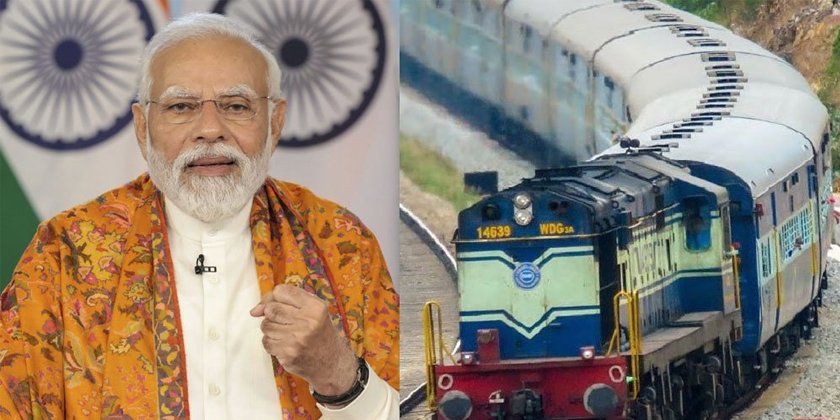
NEW DELHI : Prime Minister Shri Narendra Modi is set to dedicate 9,000 horsepower (HP) electric locomotive engine at the Dahod railway manufacturing unit in Gujarat.
Modi will visit Dahod, Kachchh, and Gandhinagar on 26 and 27 May, where he is scheduled to participate in a series of events across the three districts. According to ANI, it will be his first visit to his home state following the Operation Sindoor.
The factory is part of a public-private partnership (PPP) model and aims to produce 1,200 locomotive engines over the next 10 years. These engines are expected to serve both domestic and international markets, aligning with India’s export goals.
At Dahod, Siemens India is the technological partner for the manufacturing and maintenance of 9000 HP electric freight locomotives. PM Modi laid the Foundation Stone of the project on 20 April 2022.
The total estimated value of the project stands at Rs 26,000 crore (approximately USD 3.2 billion), excluding taxes and price adjustments, according to a statement from the Ministry of Railways.
According to Zee News, the powerful 9000 HP, 6-axle electric locomotive will run at an average speed of 75 km per hour. Its maintenance will be handled at specially designated depots located in Kharagpur (West Bengal), Visakhapatnam (Andhra Pradesh), Raipur (Chhattisgarh), and Pune (Maharashtra).
This project is expected to create jobs for nearly 10,000 people in Dahod and surrounding areas, directly and indirectly.
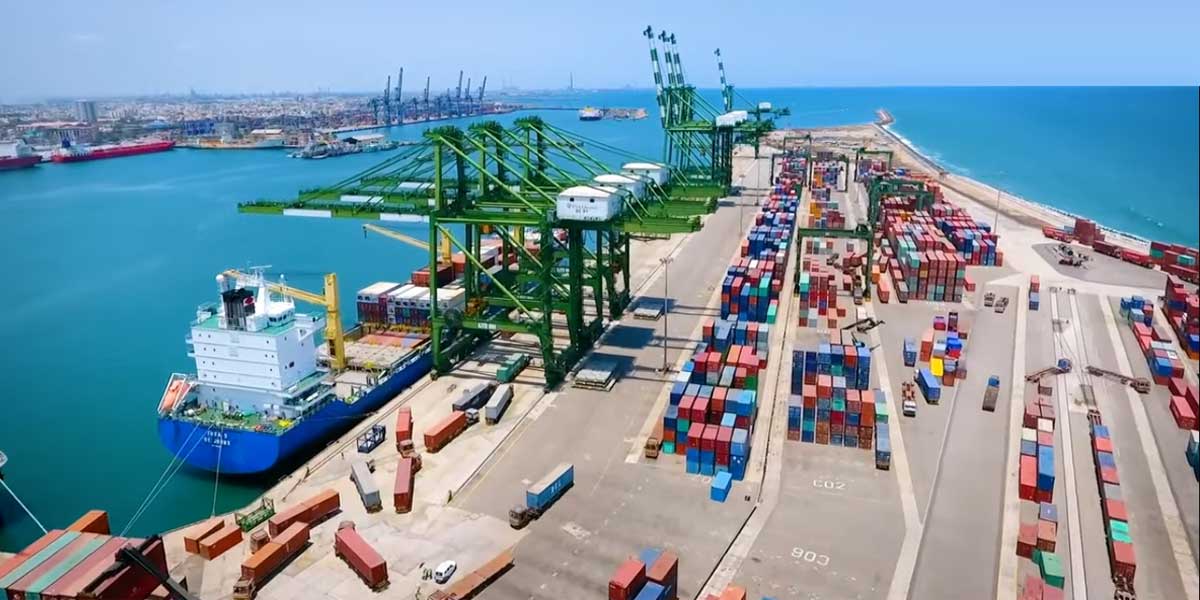
MUMBAI : The upcoming Vadhavan Port in Palghar will be three times bigger than the Jawaharlal Nehru Port in Nhava Sheva in Raigad, which is the premier container-handling port in India, accounting for around 50 per cent of the total containerised cargo volume across the major ports of India.
Vadhavan (also spelled Wadhawan) — in Palghar district — is located some 140 km away from downtown Mumbai, along the Maharashtra-Gujarat boundary.
The Wadhawan Port — a greenfield, all-weather port — is coming up in Vadhavan, for which Prime Minister Narendra Modi performed the groundbreaking ceremony last year. The total project cost, including the land acquisition component, is Rs 76,220 crore.
The project will be constructed by Vadhavan Port Project Ltd (VPPL), an SPV formed by the Jawaharlal Nehru Port Authority (JNPA) and the Maharashtra Maritime Board (MMB), with a shareholding of 74 per cent and 26 per cent, respectively, official sources said. This will include the development of core infrastructure, terminals, and other commercial infrastructure in public-private partnership (PPP) mode.
On the other hand, the state government-run Maharashtra Airport Development Company (MADC) has commenced a pre-feasibility study for the development of a greenfield airport around the Vadhavan area of Palghar.
There would also be road connectivity between the Vadhavan Port and national highways of the Ministry of Road Transport and Highways, and rail linkage to the existing rail network and the upcoming Dedicated Rail Freight Corridor by the Ministry of Railways. The port will comprise nine container terminals, each 1,000 metres long; four multipurpose berths, including the coastal berth; four liquid cargo berths; a Ro-Ro berth; and a Coast Guard berth.
“The upcoming Vadhavan Port will be three times larger than JNPA and is expected to rank among the world’s top 10 ports. This port is set to give rise to a new economy over the next 20 years, with Mumbai alone having the potential to be a 1.5 trillion-dollar economy,” Maharashtra Chief Minister Devendra Fadnavis said on Wednesday during an interaction with IFS officers in a Career Training Programme session at Sahyadri Guest House in Mumbai.
The discussion with the IFS officers also covered Maharashtra’s role in foreign policy, international investment opportunities, various global projects in the state, and its contribution towards a developed India.
During the chat, Fadnavis spoke in detail about the transformation of the Mumbai Metropolitan Region.
Fadnavis talked about infrastructure projects for Mumbai’s overall development, including the Coastal Road, Atal Setu, and the Third Mumbai.
He also announced that an Edu City would be built on 200 acres, hosting 12 leading international universities and accommodating around 1 lakh students.
“Additionally, an Innovation City on 300 acres and a Knowledge City on 1,000 acres are planned, which will make Mumbai a leader in the technology sector and transform the city’s landscape within 5 years,” he said.
AHMEDABAD : Adani Ports & Special Economic Zone raised about US$150 million through a bilateral loan agreement with DBS Group Holdings, according to people familiar with the matter, as the Indian conglomerate continues to restore lender confidence.
The proceeds of the four-year dollar loan will be used for capital expenditure, the people said, asking not be identified because the information is private. The facility has been priced at about 200 basis points above the benchmark Secured Overnight Financing Rate, they said.
The all-in-price, including the hedging cost, is about 5.5 per cent, one of the person said. DBS declined to comment. An Adani Group representative did not offer any immediate comments on the transaction.
Billionaire Gautam Adani-owned conglomerate, with interests stretching from ports to green energy, is steadily regaining creditor confidence following a US Department of Justice indicted Adani over an alleged bribery plot in November. The bilateral loan is the group’s first from a global bank since the indictment, one of the person said.
Last month, the group raised about US$750 million through an offshore private placement bond to fund an acquisition of a construction firm. BlackRock subscribed to about a third of the issuance. Separately, the conglomerate is in talks with foreign banks including Barclays, First Abu Dhabi Bank and Standard Chartered Bank for a US$750 million loan for its airport unit.
Representatives for Adani and his companies recently met US administration officials to discuss potentially dismissing criminal charges levied against him in the bribery probe, Bloomberg reported earlier this month
KOLKATA : In a development that speaks volumes about the company’s shipbuilding expertise, business acumen and proficiency in design, production & financial management, Garden Reach Shipbuilders and Engineers (GRSE) Ltd has emerged as the lowest bidder (L1) for the construction of Next Generation Corvettes (NGC) for the Indian Navy.
GRSE is the only Indian shipyard to have delivered 111 warships to the country’s maritime forces & friendly foreign nations, including 06 Missile Corvettes ( Khukri & Kora Class) and 04 ASW Corvettes (Kamorta Class). The shipyard participated in the competitive bidding process and has emerged as lowest bidder. GRSE will thus be awarded the contract to build five (05) Next Generation Corvettes at an estimated cost of approx. Rs 25,000 Crore.
These Next-Generation Corvettes shall be capable of fulfilling the roles of Offensive SSM attack, Anti-Missile Defence, Surface Action Groups for Maritime Strikes, ASW and many other Maritime Operations. The warship will also incorporate Green Warship design features, energy efficient & environment friendly technologies.
GRSE is already building four Next Generation Offshore Patrol Vessels (NGOPV) for the Navy, apart from three Advanced Guided Missile Frigates, eight Anti-Submarine Warfare Shallow Water Crafts of which one has already been delivered to Indian Navy and four Survey Vessels (Large) of which two have been delivered.
Meanwhile, on anticipated lines, the order for an Ocean-Going Tug for Bangladesh stands cancelled based on mutual discussions between GRSE and the Customer. This order though would not have impact on GRSE’s finances as the order is worth only US$ 21 million (approximately Rs 179.75 crore) and would have contributed a mere 0.8% to GRSE’s existing order book of Rs 22,680.75 crore as on March 31, 2025.