Home Blog Page 97

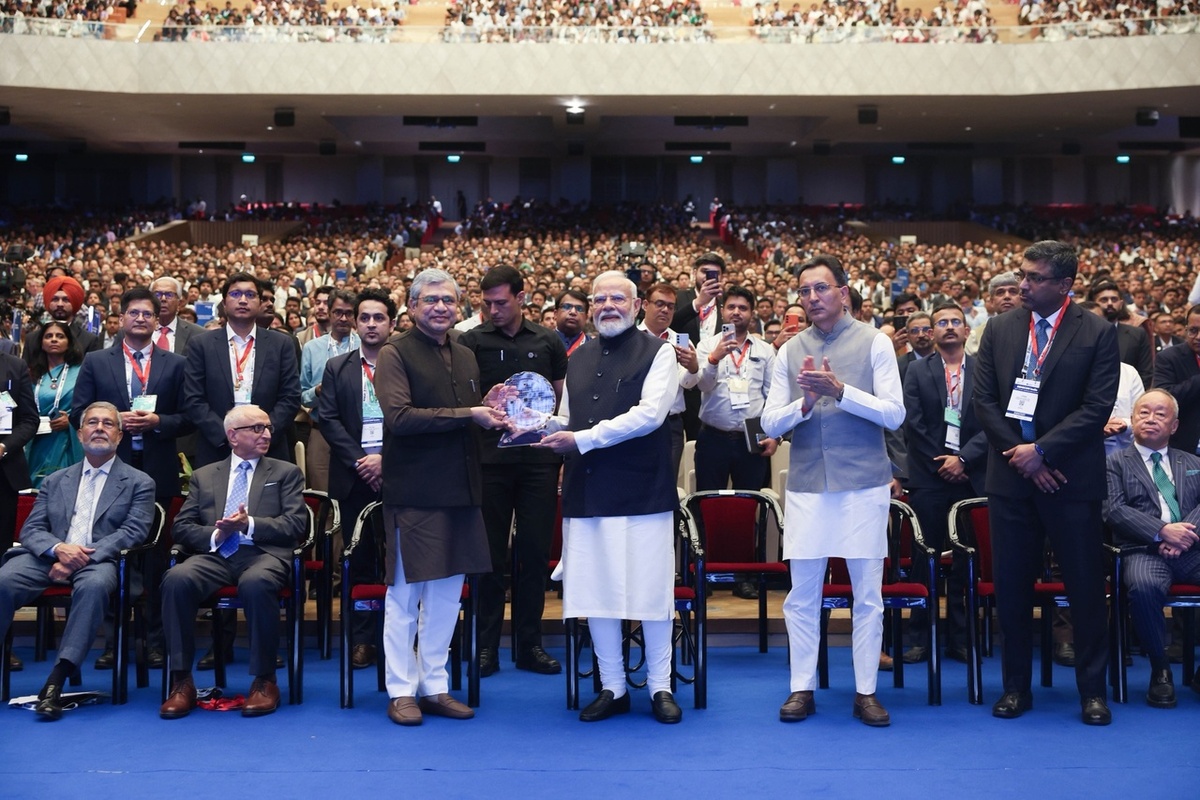
PM Narendra Modi inaugurates SEMICON India 2026

NEW DELHI: Prime Minister Shri Narendra Modi on Thursday inaugurated SEMICON India 2026 in New Delhi. Addressing the occasion and highlighting the significance of the event’s fifth edition, the Prime Minister extended warm greetings to all participants. He expressed particular gratitude to the international attendees who had traveled to India to partake in the summit. “I extend a special welcome to the guests who have come to India from abroad,” remarked Shri Modi. 
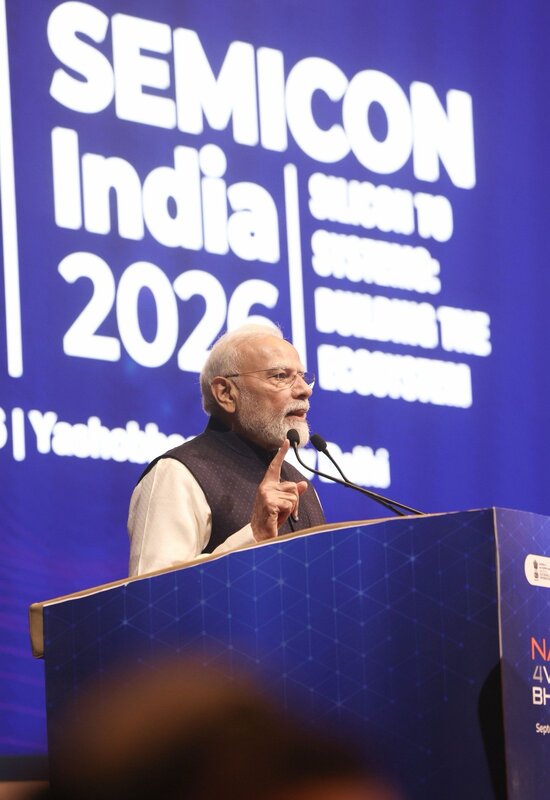
PM Modi addressing Semicon India 2026 PM Narendra Modi inaugurates SEMICON India 2026

Drawing a powerful parallel between the launch of Semicon India and Vishwakarma Diwas, the Prime Minister honored the nation’s centuries-old heritage of construction and creation. He pointed out the beautiful coincidence of merging traditional creative power with 21st-century technology and vision. “This is our inspiration for a self-reliant India, a Viksit Bharat,” asserted Shri Modi.

Emphasizing the nation’s rapid progress over the past 15 days, the Prime Minister listed major milestones, including discussions on inclusive finance at the Global Fintech Fest, the operationalization of a 3,000-kilometer Dedicated Freight Corridor, and a robust 7.8 percent quarterly GDP growth. He also highlighted the recent sovereign rating upgrade by a Japanese Credit Rating Agency as a testament to the nation’s soaring economic credibility. “Meaning, on one hand, India’s economy is growing, and on the other hand, the world’s trust in India is also increasing,” observed Shri Modi.

Recalling the diplomatic triumph of the recently concluded BRICS Summit hosted by India, the Prime Minister pointed to the unanimous adoption of the New Delhi Declaration as a reflection of international consensus. He underscored that this historic diplomatic achievement validates the global community’s unwavering faith in the nation. “This is another major proof of the world’s trust in India,” noted Shri Modi.

Tracing the evolutionary journey of Semicon India since its inception in 2022, the Prime Minister mapped the progression from initial policy discussions to project planning, pilot lines, and finally, the commencement of commercial production. He celebrated the realization of these efforts with chips now reaching global customers, alongside the launch of commercial production in two new plants in Mohali and Surat. “Now our chips, coming out of India’s plants, have started reaching customers in the country and the world,” noted Shri Modi.

Acknowledging the immense complexity of building a semiconductor ecosystem, the Prime Minister praised the collaborative effort required to master chip design, equipment manufacturing, and testing capabilities in record time. He credited the present industry leaders as foundational pillars whose partnership made this rapid technological leap possible. “You are the pillars of this success of India, you are partners,” affirmed Shri Modi.

Outlining the relentless momentum of the sector, the Prime Minister explained the concept of ‘tape out’ and how the government continuously pushes for the next technological version without pause. He announced the massive 13.5 billion dollar second phase of the Semiconductor Mission and highlighted new regulatory reforms that facilitate collaborations between international companies, startups, and design firms. “The Government of India is taking every step needed for the success of your projects,” affirmed Shri Modi.

Detailing the vision for a robust domestic supply chain, the Prime Minister stressed the importance of nurturing fabless companies, creating intellectual property, and integrating silicon photonics for AI-enabling infrastructure. He urged leaders in equipment, chemicals, gases, and materials to capitalize on the golden opportunities presented by the twelve approved projects and an expanding demand pipeline. “We want the entire ecosystem to grow together,” asserted Shri Modi.

Highlighting the strategic advantage of India’s demographic dividend, the Prime Minister spoke of the vast pool of engineering talent and the extensive skilling initiatives specifically tailored for chip designing. He proudly mentioned receiving custom-designed chips from students and reiterated the government’s ambitious target to train one lakh engineering students, with 70,000 already trained. “Such a large talent pool is, in a way, nothing less than a gold mine for all of you,” remarked Shri Modi.

Calling upon the brilliant minds engaged in domestic and international research, the Prime Minister urged young talents to actively participate in developing advanced technologies within the country. He challenged industry leaders to spearhead local research and development, ensuring mutual growth for both businesses and the nation’s youth. “There is benefit for the industry in this, and the youth power of India will also get strength from this,” asserted Shri Modi.

Addressing the evolving complexities of the semiconductor market, the Prime Minister discussed how the explosive demand for Artificial Intelligence is shifting the focus from mere transistor size to holistic system integration, including memory placement and heat management. He positioned the nation as a reliable and continuously prepared destination to meet these new global manufacturing challenges. “India is constantly preparing itself for this,” affirmed Shri Modi.

Tackling the critical issue of energy security for high-performance computing, the Prime Minister outlined the massive power requirements generated by AI data centers and the necessity of uninterrupted electricity for manufacturing plants. He detailed the nation’s aggressive expansion in the power sector, including a leap to over 160 GW in solar capacity, the opening of nuclear energy to private players, and the development of small modular reactors. “Therefore, India today is making huge investments in the power sector as well,” noted Shri Modi.

Connecting the rapid expansion of power infrastructure to industrial readiness, the Prime Minister declared that this energy security acts as a fundamental strength for the semiconductor ecosystem. He reassured stakeholders that the administration is deeply committed to optimizing conditions for industrial growth. “India is taking every step that makes us a preferred destination for the semiconductor industry,” affirmed Shri Modi.
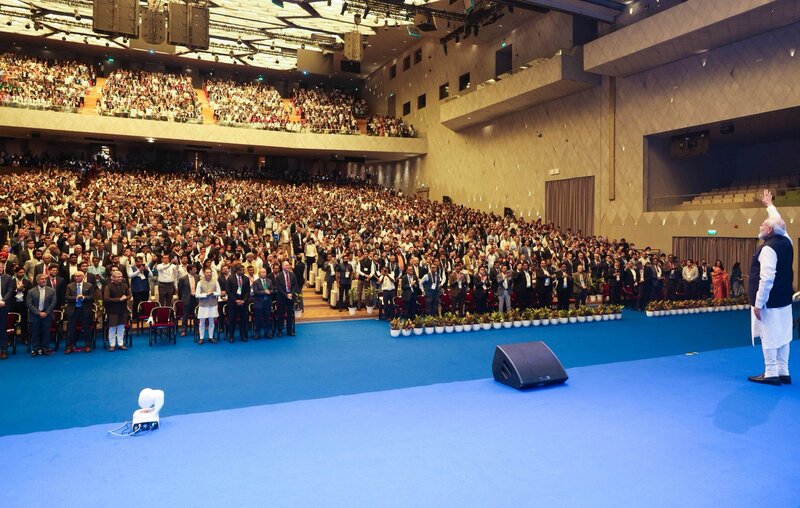
PM Modi at Semicon India 2026 PM Narendra Modi inaugurates SEMICON India 2026

Concluding his address by contextualizing the nation’s technological strides within its democratic ethos, the Prime Minister reminded the audience of the 75-year legacy of the Indian Constitution. He expressed that a successful critical industry in the ‘Mother of Democracy’ intrinsically fortifies the entire global supply chain, extending a warm invitation to explore the boundless opportunities ahead. “India’s aspirations are before you, and the new opportunities being created in India are ready to welcome you,” affirmed Shri Modi.’
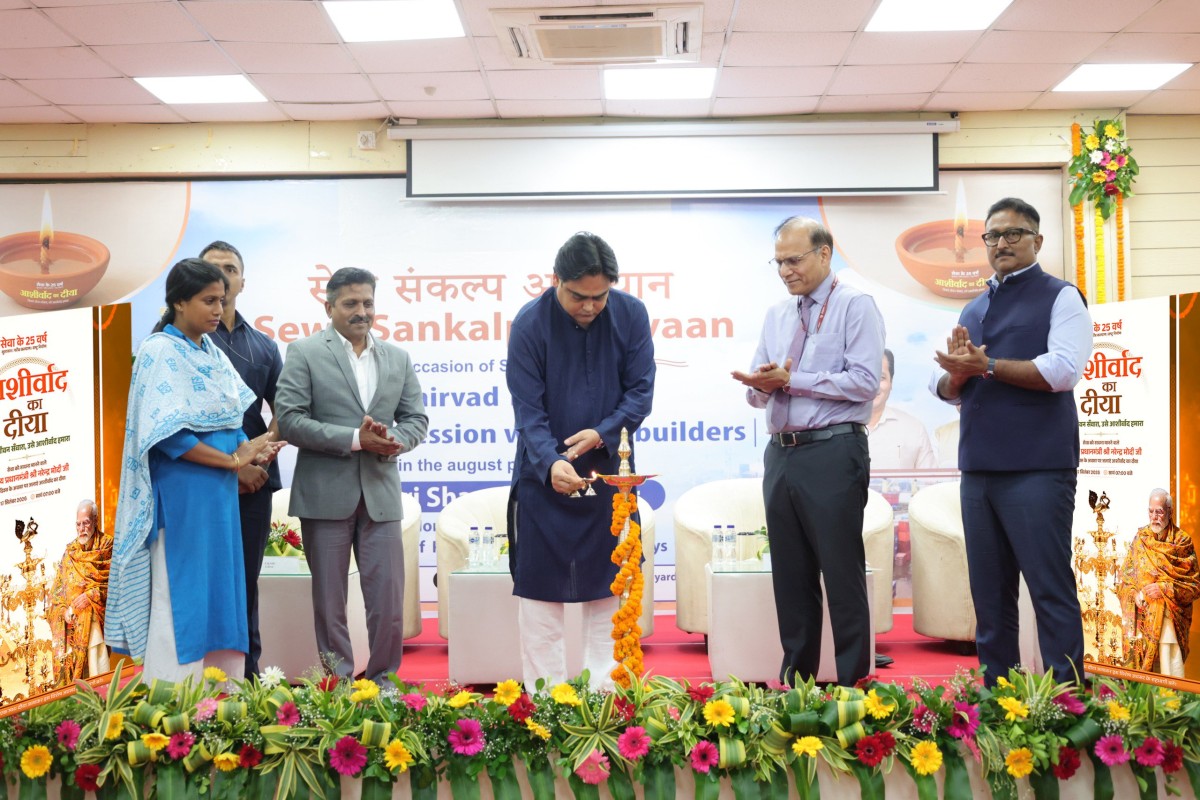
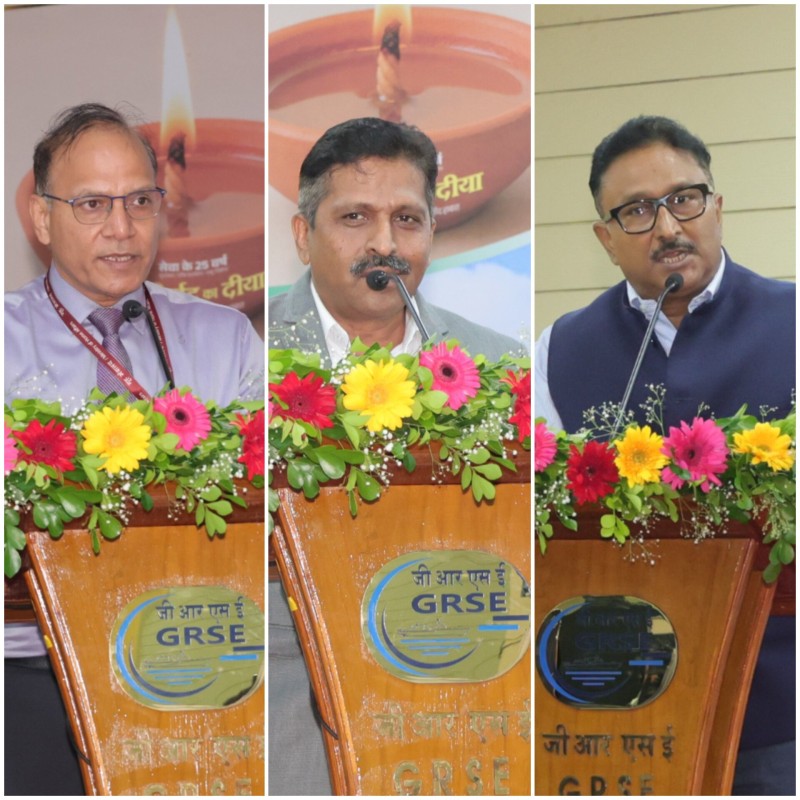
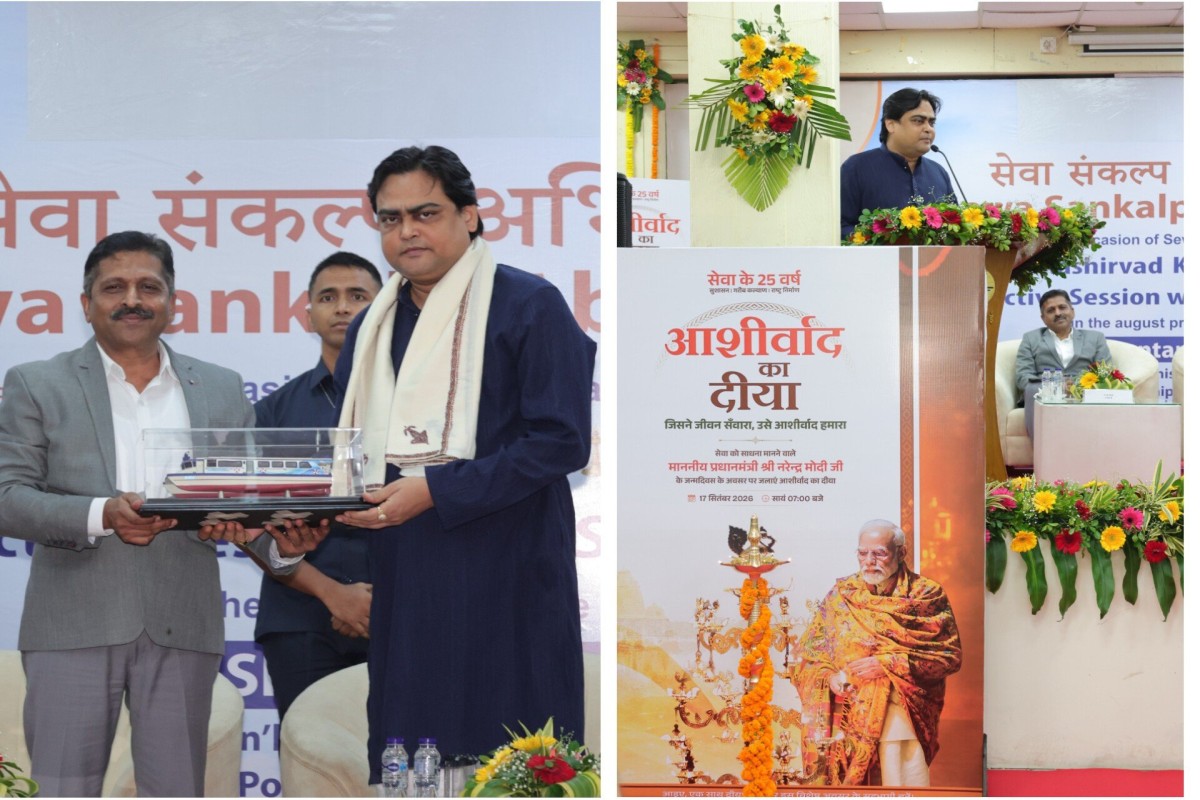
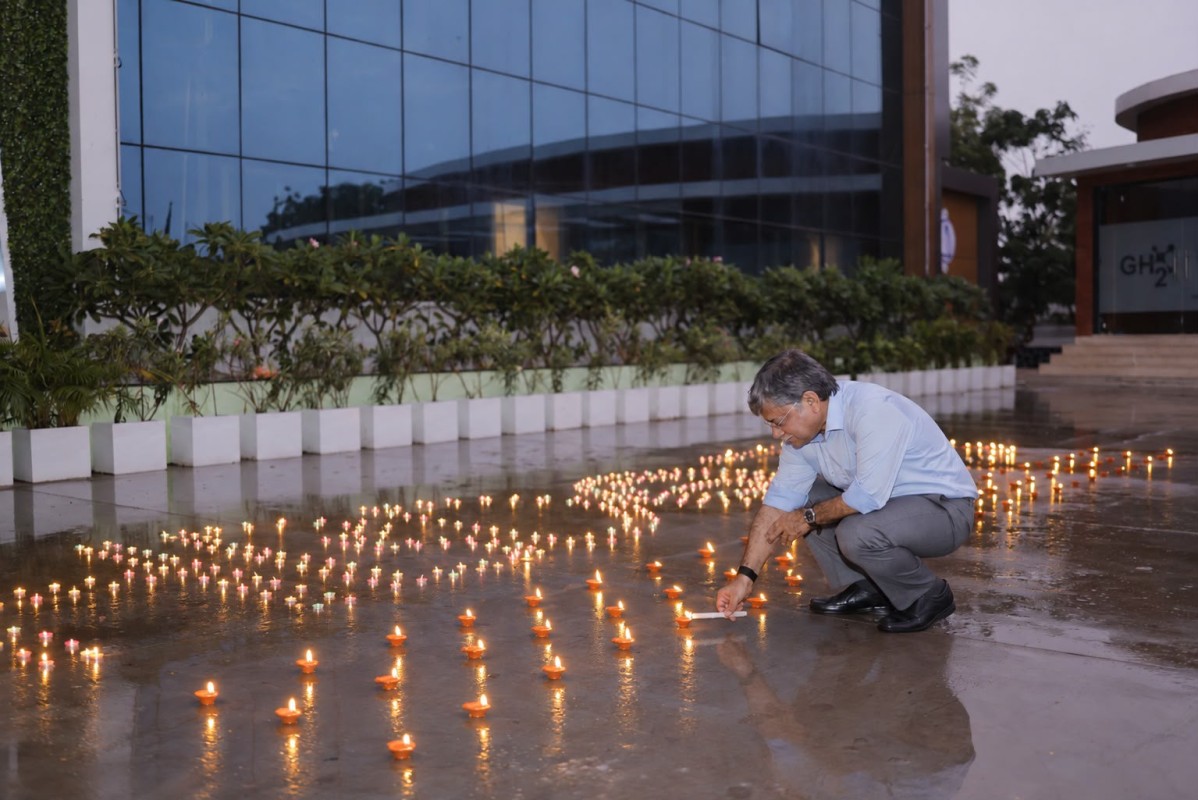
‘Sewa Sankalp Abhiyaan’ celebrated at GRSE ; Lights ‘Ashirvad Ka Diya’ on 76th Birthday of PM Modi

KOLKATA : Garden Reach Shipbuilders and Engineers (GRSE) Ltd, a Navratna Defence Public Sector Undertaking under the Ministry of Defence, Government of India, hosted the ‘Sewa Sankalp Abhiyaan’ on the occasion of ‘Sewa Diwas’ on Thursday, 17 Sep 26 at GRSE’s Rabindranath Tagore Shipyard in Kolkata.

Shri Shantanu Thakur, Hon’ble Minister of State for the Ministry of Ports, Shipping and Waterways was the Chief Guest at the event. As part of the ‘Sewa Sankalp Abhiyaan’, the Hon’ble MoS lit the “Aashirvad Ka Diya“, in the presence of Cmde PR Hari, IN(Retd), Chairman & Managing Director, GRSE, Shri Rathendra Raman, Chairman, Syama Prasad Mookerjee Port, Kolkata, Shri Mukesh Mangal, Additional Secretary, MoPSW and senior officials from GRSE, SMPK, Directorate General of Maritime Administration, Sagarmala Finance Corporation Ltd. and other participating shipyards from the eastern region.

During the event, MoPSW officials presented the Initiatives of GOI to revitalise our Nation’s Shipbuilding Industry. Their schemes, pegged at a total cost of nearly Rs 70000 Cr, aligning with MAKV 2047.

The Hon’ble Minister of State, MoPSW, Shri Shantanu Thakur stated that this day is a very important day as it marks the 76th birthday of our Hon’ble Prime Minister, Shri Narendra Modi. The mission of the Sewa Sankalp Abhiyan is to take the 25 years of the Hon’ble Prime Minister’s journey as a Chief Minister and Prime Minister, forward. The Hon’ble Minister also mentioned that the target of the Indian Shipbuilding Industry is to rank among top 10 by 2030 and top 5 by 2047.

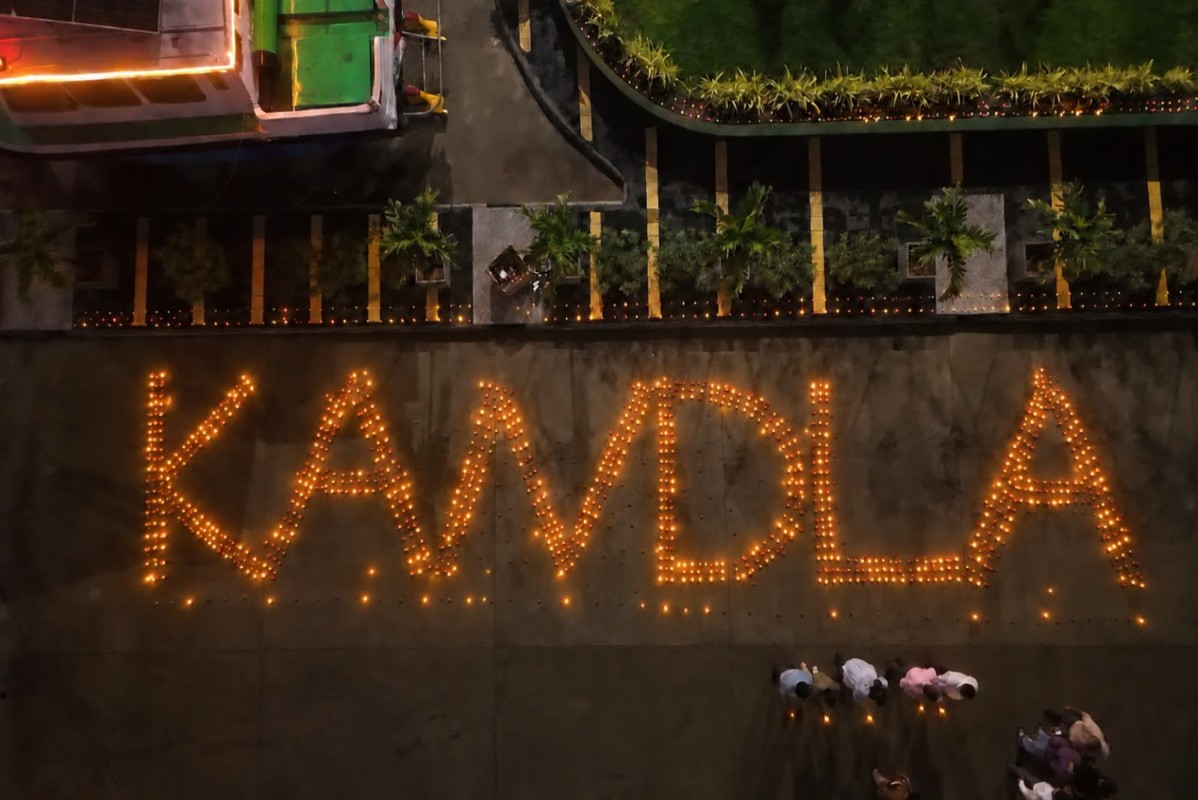
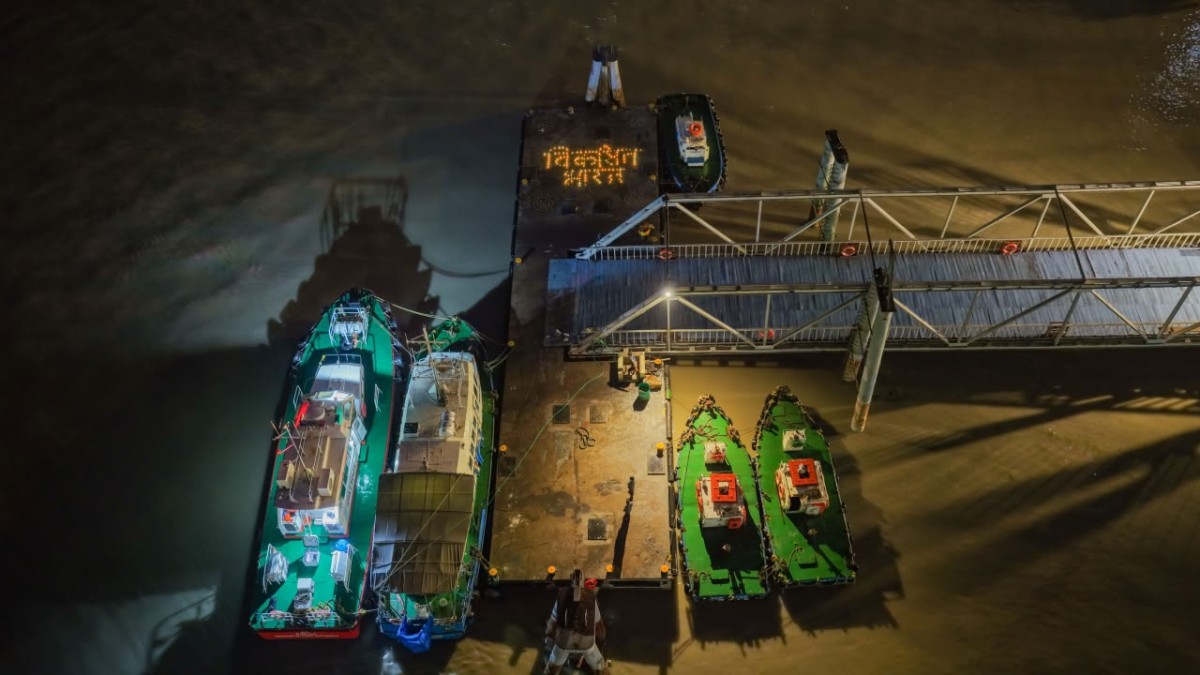
DPA Kandla celebrates PM Modi’s 76th Birthday by lighting up ‘Ashirwad Ka Diya’

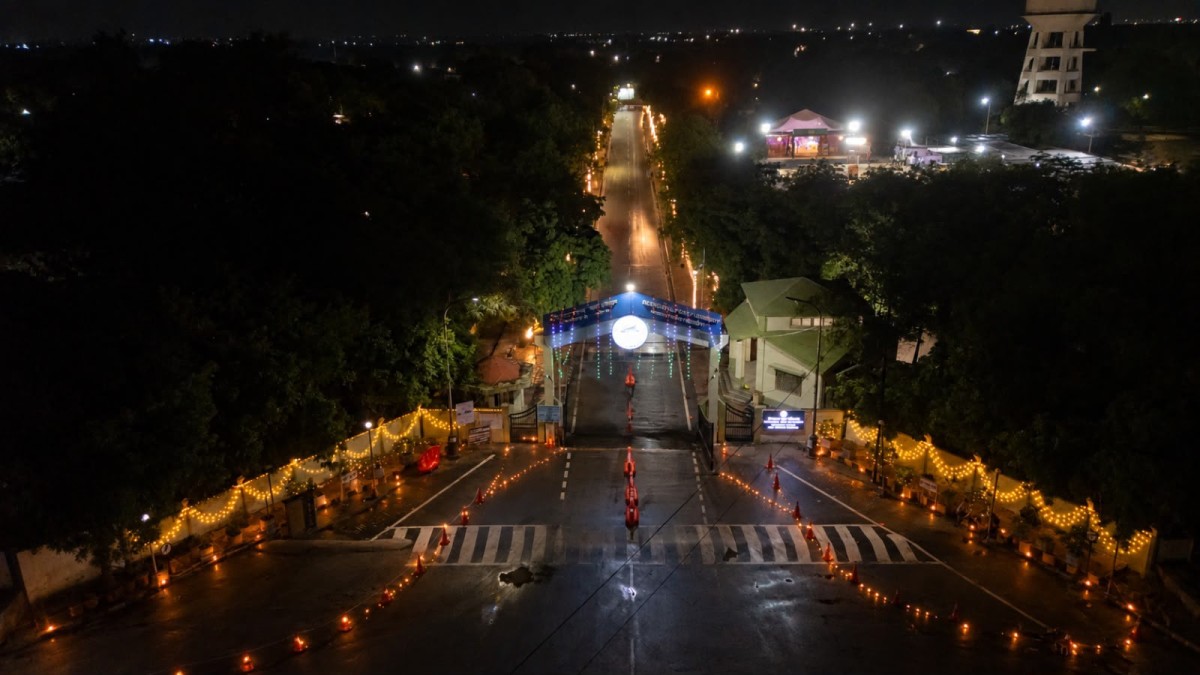
GANDHIDHAM: Deendayal Port Authority Kandla celebrates the birthday of our Hon’ble Prime Minister Shri Narendra Modi by lighting up ‘Ashirwad Ka Diya’ across various locations at Kandla Port and Office building.

Symbolizing the light of hope, service and collective resolve, every diya conveys our shared aspiration for a stronger, greener and more prosperous Bharat under the visionary leadership of our Hon’ble Prime Minister.

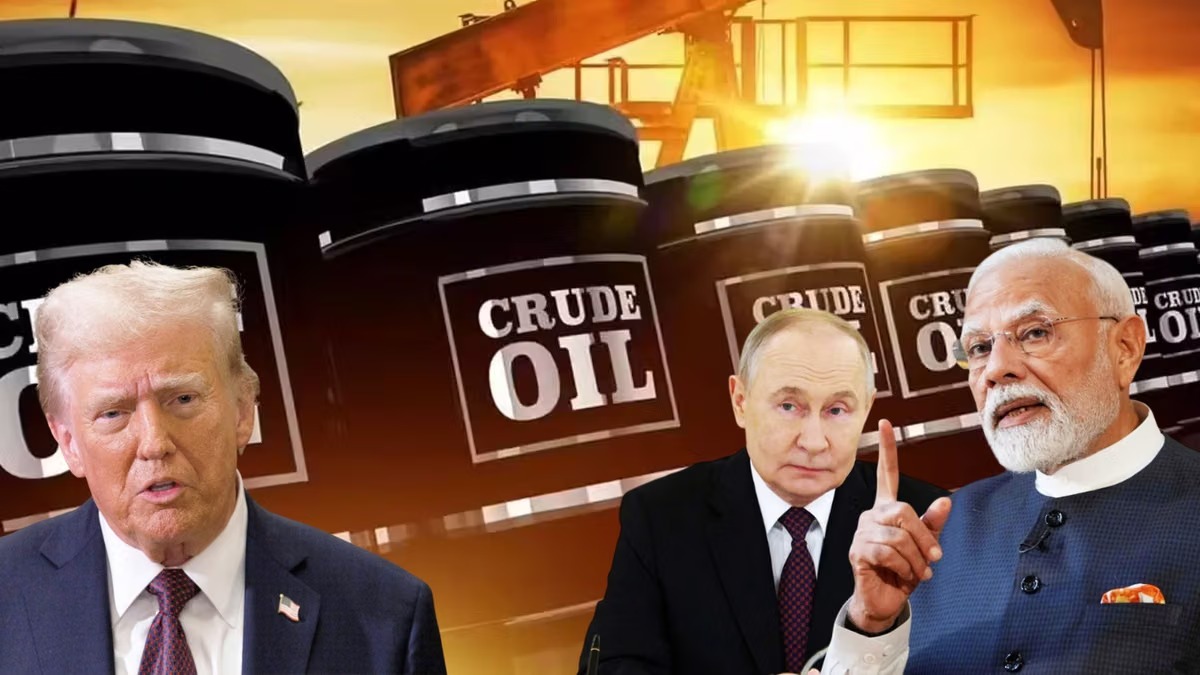
India says new US tariffs over Russian oil could hit ties, vows to protect energy security

NEW DELHI: India has told Washington that ​new measures to levy tariffs over the purchase of Russian oil could impact bilateral ties, the South Asian nation’s foreign ministry said on Thursday, hours ‌after the U.S. made a new move to punish such buyers. The United States is India’s top export destination with goods shipments rising to $42.79 billion in April-August from $40.39 billion a year earlier, according to the latest official data.

Earlier in the day, the U.S. House of Representatives passed a sweeping sanctions and tariff bill intended to increase economic pressure on Russia over its invasion of Ukraine. The bill, now sent to President Donald ​Trump to sign into law, authorizes him to impose stiff tariffs of up to 100% on China, India and other countries to reduce their dependence on Russian ​energy.

The Indian foreign ministry said that it had noted the passage of the bill, adding that New Delhi had raised the issue ⁠with the U.S. in recent months, and had “very clearly articulated” the potential implications for the bilateral relationship and the international energy market.

New Delhi remains “firmly committed” to ensuring energy security for ​its people and would continue to source supplies from diverse sellers based on market dynamics, the ministry said in a statement.

“The Indian side has also made clear its determination to ​take all necessary measures to protect its trade and economic interests,” said the ministry, adding that the government would work closely with trade and industry bodies to deal with the implications of the legislation.

India, the world’s third-biggest oil importer, is among the biggest buyers of Russian oil, which is seen as helping Moscow replenish its budget since it launched its full-scale invasion of Ukraine in 2022 and was hit with sweeping ​Western sanctions.

New Delhi has repeatedly sought to resist pressure to scale back its oil trade with Russia, saying its large population and economy need secure, affordable and reliable energy ​supplies. Indian refiners have arranged oil for September and October which includes Russian oil, according to sources aware of the matter.

Two refining sources said they wanted the government to take up the issue with ‌U.S. authorities ⁠as oil prices would rise sharply if Trump decided to impose new tariffs.

Oil supplies have reduced substantially due to the war in the Middle East and cutting Russian supplies would have a big impact on the profits of refiners as they were already selling fuels at below-market costs, the sources said.

Refiners want the government to seek some relaxation, instead of imposing a 100% tariff, to allow them to wind down the existing transactions and fix a quota for India to buy Russian oil, they added.

India’s oil, trade and foreign affairs ministries ​did not immediately respond to emailed requests for ​comments.

COMPLICATING TRADE TALKS

Indian analysts say the ⁠possibility of new U.S. tariffs on Indian exports could complicate ongoing India-U.S. trade negotiations and potentially delay or make an agreement on a trade pact more difficult. “Washington may use the tariff threat to pressure India to reduce Russian oil purchases and accept a deeply unequal ​trade agreement,” said Ajay Srivastava, founder of New Delhi-based think-tank Global Trade Research Initiative and a former trade official.

After months of ​talking, India and the U.S. ⁠are yet to reach a consensus on a trade agreement, with New Delhi holding out for a better deal. Indian Trade Minister Shri Piyush Goyal will travel to the U.S. for the G20 trade ministers’ meeting later this month and is expected to meet U.S. Trade Representative Jamieson Greer to discuss the path forward for the deal.

New Delhi had initially expected to sign an interim deal in ⁠March, followed by ​a full deal later. This was after Trump agreed in early February to cut his previous punitive tariffs of ​50% on Indian goods in return for commitments from New Delhi, including halting Russian oil imports, lowering duties on U.S. goods and pledging to buy $500 billion worth of American products. Shipments from India to the U.S. held steady during ​Trump’s previous round of high tariffs on India, and have grown since.

Source: Reuters

U.S. House passes Russia sanctions Bill seeking to impose up to 100% tariffs on India, others

WASHINGTON D.C.: The U.S. House of Representatives on Wednesday (September 16, 2026) passed legislation targeting Russia’s energy sector, individuals and the “shadow fleet” of tankers, including authorising the U.S. President to impose tariffs of up to 100% on India and other countries for buying oil and gas from Russia. The House voted ​262-159 ⁠in favour ⁠of the Bill.

The Bill, an amendment to the Senate’s “Lindsey O. Graham Sanctioning Russia and Iran Act of 2026”, will now head to President Trump’s desk for his signature. Mr. Trump plans to sign the bill, a White House official told The Hindu on Thursday. The President will have the authority, under the legislation, to waive sanctions in the national interest.

This Bill comes as New Delhi and Washington have been negotiating a preliminary trade deal. The Trump administration had announced an additional 25% tariff, on top of an existing 25% tariff on India in July 2025, for the purchase of Russian oil. The share of Russian crude oil in Indian oil imports fell to its lowest level in two years in December 2025, but energy markets have been under additional pressure owing to the U.S.-Iran conflict and New Delhi’s import of Russian oil hit an 11-month high in April this year. However, the U.S. Treasury paused sanctions for oil shipments that were in transit before March 11, 2026, as supplies were hit following the start of the conflict in West Asia on February 28.

“To China and India: You better clean up your act. Buy your oil and gas somewhere else,” said Senator Richard Blumenthal, a Connecticut Democrat, shortly after the Bill was passed.

In a statement reacting to the move, the Ministry of External Affairs said, “India remains firmly committed to ensuring energy security for its 1.4 billion people” via diversified sourcing of energy inputs, determined according to evolving market forces. India would also “protect its trade and economic interests”, the Ministry said.

The issue had been discussed with various U.S. interlocutors at high levels, the Ministry statement said, adding that the government made it clear to the U.S. that the sanctions would have implications for the bilateral relationship and energy markets.

What the Bill says on potential target countries
Countries that would be potential targets for the tariff are the top five “largest importers, by total volume” of Russian-origin crude oil or natural gas in the 12 months preceding the date of enactment of the law, and have knowingly made new purchases of Russian crude oil on or after30 days from the date the Bill becomes law.

A country that is among the top five countries “facilitating Russian oil sanctions evasion” would also be eligible for the tariffs of up to 100%.

Countries that have taken significant steps to reduce their Russian natural gas imports or whose gas imports were less than 15% of Russia’s total gas export, would be exempt from the sanctions.

A House amendment proposed by Democrat Steny Hoyer that sought to name the top 10 importers — China, India, Turkiye, Azerbaijan, Hungary, Slovakia, the UAE and the Kyrgyz Republic — had not passed into the final version considered on Wednesday.

Concerns over sweeping powers to the President
The Bill, named after Senator Lindsey Graham , a prominent voice supporter of Ukraine, who died suddenly on July 11 this year, had passed the Senate 86-11 on August 7. Several prominent Democrats, like Elizabeth Warren and those caucusing with Democrats like Bernie Sanders, as well as some Republicans, such as Rand Paul, had opposed the Bill, concerned over the sweeping powers it would give the President or the cost it would impose, via tariffs, on Americans.

Several lawmakers have been concerned that the ability of Mr. Trump to impose tariffs on U.S. allies — such as Canada and the European Union in its entirety — would be bolstered by the Act.

The Ranking Member (i.e., from the chamber’s minority or Democratic party) of the House Foreign Affairs Committee (HFAC), Gregory Meeks, criticised the Bill. “We cannot grant the President more tariff power that, we know, he will abuse,” Mr. Meeks said, adding that it would cost at least $3000 per American family, assuming Mr. Trump restricted tariffs on the top five importers of Russian oil.

In remarks on Tuesday (September 15), Mr. Meeks had emphasised that he supported sanctions on Russia, arguing that the President already had powers to sanction Russia but was not using them.

Chennai Port sets new record in pig iron export handling

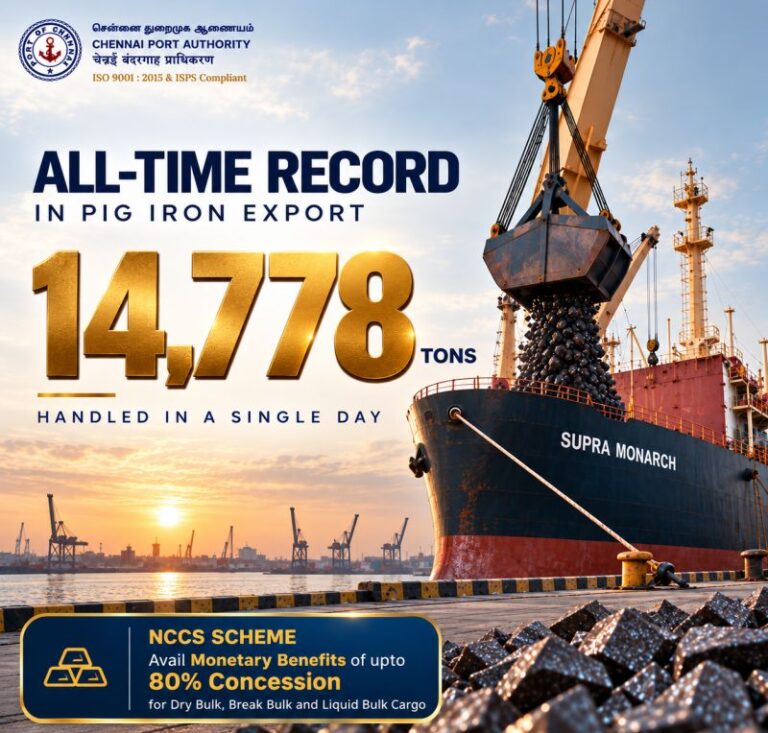
CHENNAI : Chennai Port has achieved a new all-time record in pig iron export handling, handling 14,778 tonnes in a single day on September 14, 2026, surpassing its previous record of 13,208 tonnes recorded on July 30, 2026.

The latest achievement highlights the growing operational efficiency and coordinated efforts of various stakeholders across the maritime and logistics ecosystem in facilitating non-containerised cargo movement through the port.

Chennai Port Authority appreciated the dedicated efforts of M/s James Mackintosh & Co. Pvt. Ltd., M/s Shipscoargo and M/s SLR Metaliks Ltd., whose coordinated efforts contributed to the successful handling of the record cargo volume.

Shri Sachin S. Kurve, IAS, Chairperson, Chennai Port Authority, congratulated the teams and stakeholders for achieving the new milestone and commended their contribution towards improving cargo-handling efficiency at the port.

The record also underscores the importance of efficient trade facilitation for non-containerised cargo, particularly Dry Bulk, Break Bulk and Liquid Bulk commodities. Chennai Port’s initiatives in this area are aimed at improving operational efficiency and enhancing the overall value proposition for cargo stakeholders.

Under the NCCS Scheme, eligible Dry Bulk, Break Bulk and Liquid Bulk cargo can avail monetary benefits of up to 80% concession, providing greater cost efficiency to eligible cargo stakeholders routing their shipments through Chennai Port.

The latest record in pig iron handling demonstrates Chennai Port’s continued focus on operational efficiency, trade facilitation and customer-oriented cargo handling, reinforcing its role as an important gateway for India’s maritime trade.

Greater efficiency. Stronger trade. More value through Chennai Port.

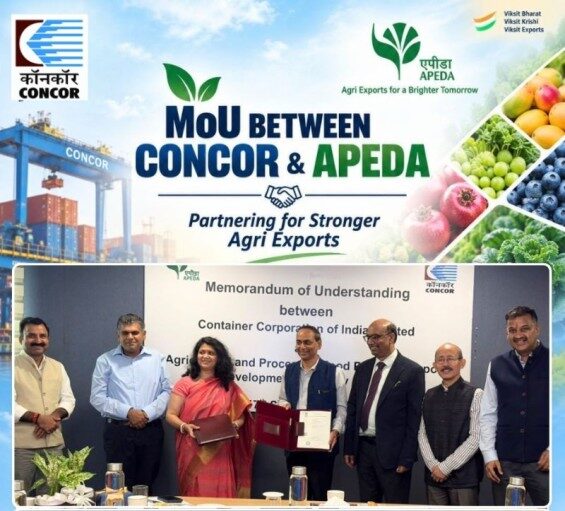
CONCOR signs MoU with APEDA to strengthen export cold chain and logistics ecosystem

NEW DELHI: The Container Corporation of India Limited (CONCOR) has signed a Memorandum of Understanding (MoU) with the Agricultural and Processed Food Products Export Development Authority (APEDA) to establish a collaborative framework aimed at strengthening India’s export cold chain ecosystem and promoting efficient logistics solutions for agricultural and processed food exports.

The MoU was signed on September 17, 2026, in New Delhi, marking an important step towards enhancing cooperation between CONCOR and APEDA for developing more efficient, reliable and integrated logistics solutions to support India’s agricultural and processed food export sector.

APEDA is a statutory authority established under the Agricultural and Processed Food Products Export Development Authority Act, 1985 (Act No. 2 of 1986), under the Ministry of Commerce & Industry, Government of India.

The collaboration is expected to provide a stronger institutional framework for leveraging cold chain logistics and transportation capabilities, facilitating efficient movement of temperature-sensitive agricultural and processed food products and supporting their access to domestic and international markets.

The signing ceremony was attended by Shri Abhishek Dev, IAS, Chairman, APEDA, and Shri A.K. Panda, CMD, CONCOR, along with Shri Vijoy Kumar Singh, Director – International Marketing & Operations, CONCOR, Shri Vivek Gupta, Director – Finance, CONCOR, and senior officers from both organisations.

The partnership reflects the shared focus of CONCOR and APEDA on strengthening logistics infrastructure and improving supply-chain efficiency for India’s agri-food exports. Enhanced cold chain solutions can contribute to maintaining product quality, reducing supply-chain losses and facilitating smoother movement of export-oriented agricultural and processed food products.

CONCOR expressed its appreciation to APEDA for reposing its trust in CONCOR’s cold chain logistics services, reaffirming its commitment to supporting India’s growing export requirements through integrated and efficient logistics solutions.

The MoU marks another step towards closer institutional cooperation for building a robust, efficient and export-oriented cold chain ecosystem, supporting India’s agricultural and processed food products in global markets.

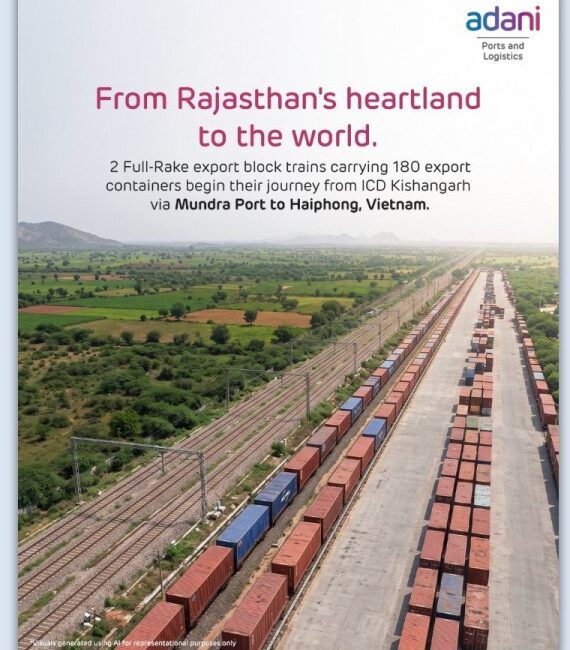
Adani Logistics strengthens Rajasthan’s export connectivity with rail movement to Vietnam

AHMEDABAD : Adani Logistics has successfully facilitated the movement of 180 export containers across two full-rake export block trains from ICD Kishangarh in Rajasthan to Mundra Port, connecting the state’s manufacturing clusters with international markets.

The export cargo, routed through Mundra Port, is destined for Haiphong, Vietnam, marking another step towards strengthening rail-based logistics connectivity between Rajasthan’s industrial and manufacturing centres and global trade destinations.

The movement demonstrates the role of integrated rail-port connectivity in enabling efficient and reliable transportation of export cargo. The use of dedicated block-train services provides an effective logistics link for exporters, connecting inland cargo origins with gateway ports for onward international shipment.

Rajasthan is home to a diverse manufacturing and industrial base, and improved logistics connectivity can play an important role in facilitating access to international markets. The Kishangarh–Mundra movement further highlights how seamless integration between inland container depots, rail networks and ports can support more efficient export supply chains.

The successful movement of the two full-rake trains reflects the growing importance of multimodal logistics solutions in strengthening India’s export infrastructure and connecting regional production centres with global markets.

With improved logistics connectivity, exporters can benefit from smoother cargo movement and stronger links to international trade routes, supporting the broader objective of enhancing India’s competitiveness in global trade.

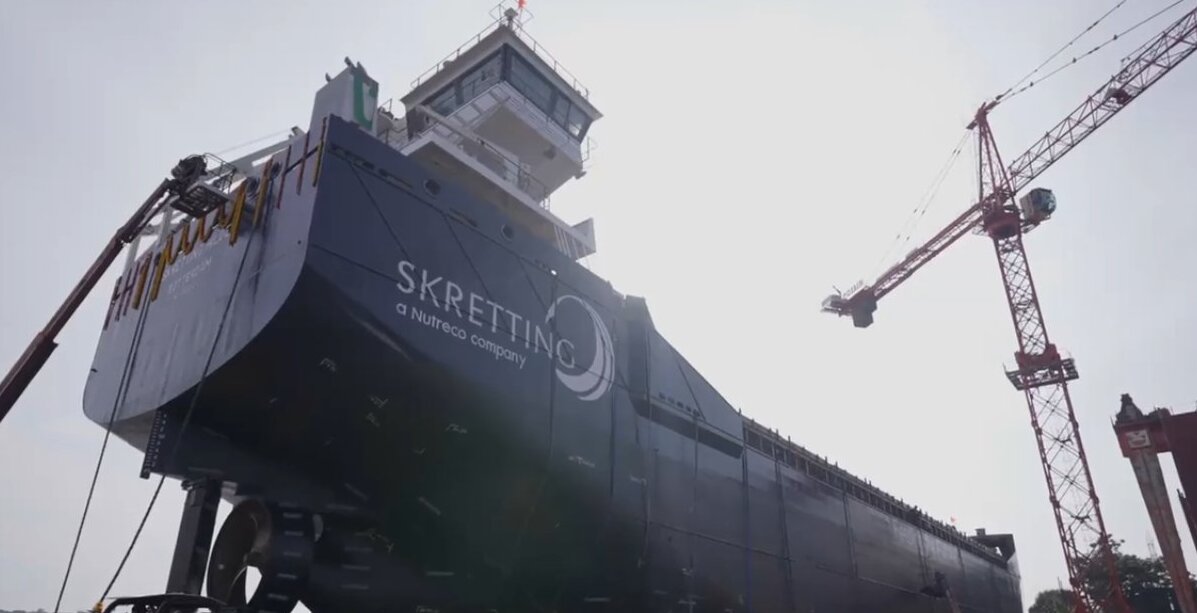
Chowgule & Company successfully launches Fifth 6,000 DWT Multi-Purpose Vessel ‘SKRETTING HILDE’ at Goa Shipyard

GOA: Chowgule & Company’s Shipbuilding Division has successfully launched SKRETTING HILDE (Vessel C-297), the fifth vessel in a series of 6,000 DWT multi-purpose dry cargo vessels equipped with diesel-electric propulsion, being built for VERTOM at its Rassaim Shipyard in Goa.

The successful launch marks another significant milestone in the company’s ongoing shipbuilding programme and underscores its continued focus on engineering excellence, innovation and the development of India’s maritime capabilities.

Fifth Vessel in 6,000 DWT Shipbuilding Series

According to a post shared by Chowgule and Company Shipbuilding Division on LinkedIn, SKRETTING HILDE is the fifth vessel in the series of 6,000 DWT multi-purpose dry cargo vessels being constructed for VERTOM.

The vessel features diesel-electric propulsion, reflecting the technical capabilities being incorporated into the shipbuilding programme.

The successful launch represents an important stage in the construction process, bringing together extensive planning, engineering expertise and coordinated efforts across the shipyard’s teams and associated stakeholders.

Reinforcing India’s Shipbuilding Capabilities

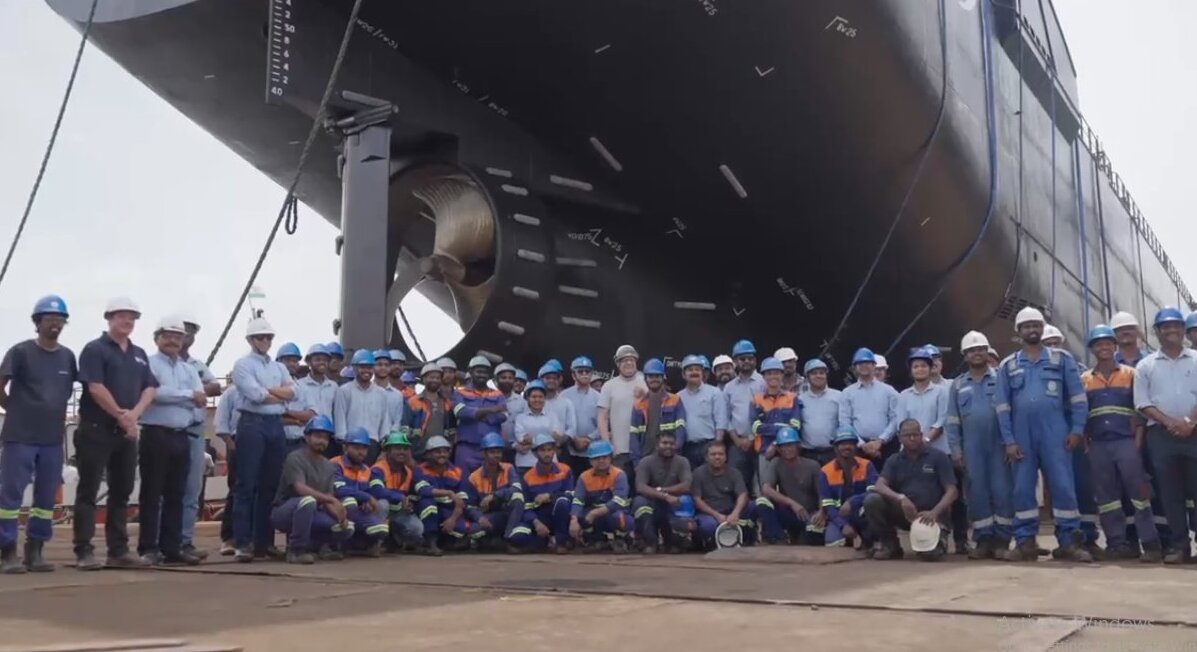
Highlighting the significance of the achievement, Chowgule and Company stated that every vessel launch represents much more than a project milestone, describing it as the culmination of meticulous planning, engineering excellence, seamless teamwork and the unwavering dedication of everyone involved.

The company further noted that the launch of SKRETTING HILDE marks another important step in its journey towards excellence and innovation in shipbuilding.

Each successful launch, the company stated, reinforces its commitment to delivering world-class vessels while contributing to the strengthening of India’s maritime capabilities.

image 1 1 Chowgule & Company successfully launches Fifth 6,000 DWT Multi-Purpose Vessel ‘SKRETTING HILDE’ at Goa Shipyard

Acknowledging Teamwork and Collaboration

Chowgule and Company Shipbuiding Division also extended its heartfelt appreciation to its teams, partners and stakeholders whose collective efforts contributed to the successful launch.

With SKRETTING HILDE now successfully launched, the company looks forward to achieving further milestones in the construction of the remaining vessels in the series.

The latest achievement highlights the continued progress of the shipbuilding programme at Rassaim Shipyard, Goa, and the role of domestic shipbuilding expertise in supporting the evolving requirements of the global maritime industry.

Berg Propulsion opens dedicated office in Mumbai in strategic commitment to growing Indian market

Propulsion systems provider announces plan to serve Indian market from new office in Mumbai from 2027 as nation’s shipbuilding surge continues

HONO (SWDEN): Berg Propulsion is set to open its own office in Mumbai, in an expansion of its global network which reflects its growing participation in shipbuilding projects across India.
 
Scheduled to open on 1 January 2027, the new office will offer a contact hub for Berg’s activities in India as it builds on its relationships with leading yards such as Garden Reach Shipbuilders & Engineers (GRSE), Mazagon Dock Shipbuilders Limited (MDL) and Chowgule Shipyard.
 
The new office will be led by Ms. Amrita Singh, (Pic above) Berg Propulsion Account Manager for New Sales, who will take up the post of General Manager. Singh will be supported by Mr. Prasenjit Roy, (Pic above) formerly a Commander in the Indian Navy and Programme Manager for Commercial Shipbuilding at GRSE. Roy’s equipment commissioning experience will also benefit quality assurance services.
 
Singh and Roy have already worked successfully together in the supply of Berg Propulsion packages for two 33.55m electric tugs under construction at KMEW Group’s Mumbai facility.
 
“Our focus will be on identifying and supporting projects where Berg solutions add value, enhance efficiency and reduce emissions,” Singh commented. “Working closely with customers and our yard partners, we look forward to matching our systems, service and support with the opportunities available in this growing market.”  
 
“India’s propulsion sector is genuinely exciting right now,” said Roy. “Both the Navy and Coast Guard have significant expansion programmes, with opportunities for the type of controllable-pitch propeller [CPP] systems Berg offers at the heart of almost every platform.”  
 
India’s shipyards are also focusing on green propulsion opportunities, with particular interest shown in hybrid configurations, variable speed drives and CPP systems, added Roy. “Proximity is critical in this market, where the next five years will see optimized efficiency transition from the market differentiator it is today into a minimum requirement.”
 
With private sector investment strong and government support available for projects prioritising sustainability, Berg would seek to increase its business footprint in India across the tug, dredger and OSV newbuild segments, said Singh. It will also create a network of trained service agents in Mumbai, Kochi and Visakhapatnam, where most of its customers’ vessels operate, she said.
 
“We will recruit skilled local talent and put training programmes in place, building long-term expertise to better serve customers throughout India.”
Scope also existed for the new Mumbai office to support customers in other South Asian countries, such as Sri Lanka, added Singh.