Home Blog Page 186

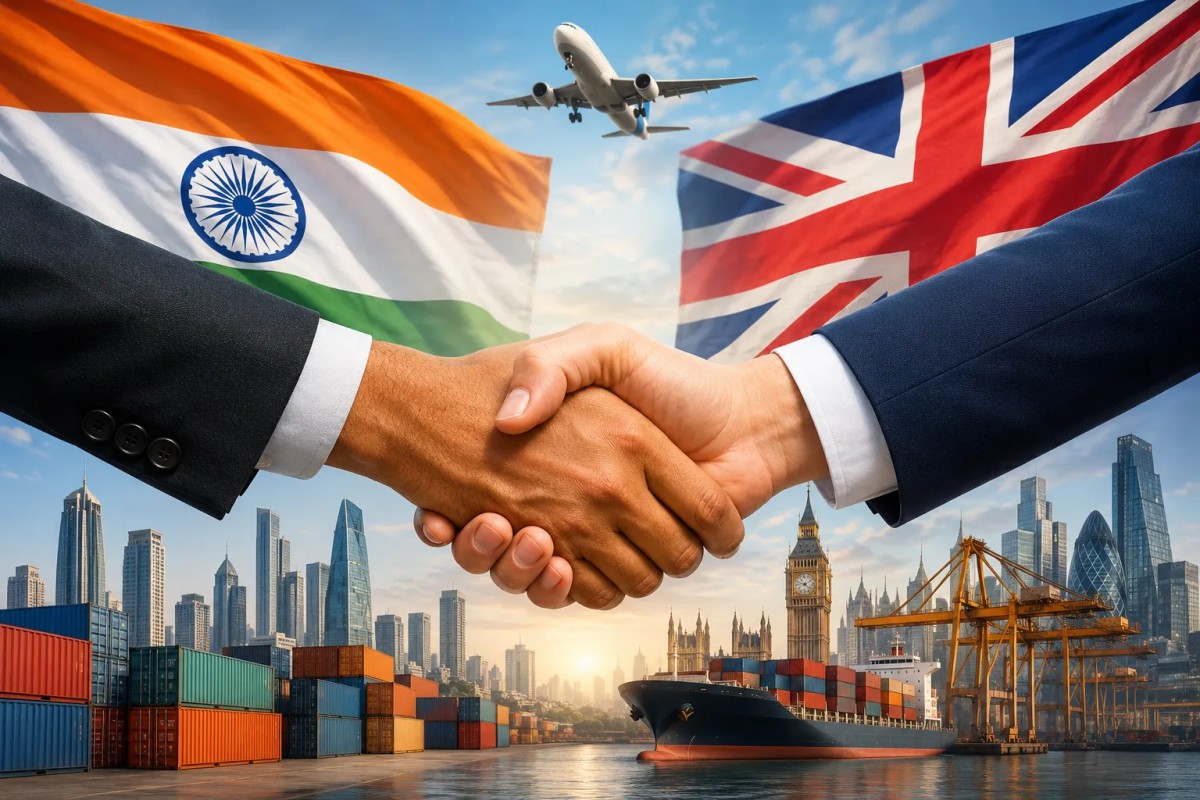
India’s exports to UK may reach $115 billion by 2030 due to trade pact: Assocham

NEW DELHI : The implementation of the India-UK Free Trade Agreement is expected to boost India’s exports to Britain to $115 billion by 2030, industry body Assocham said in a study on Friday.

The agreement came into force on July 15 this year.

“The total trade trajectory is expected to expand from $58 billion in 2025-26 to $115 billion by 2030, along with the possible creation of 7-10 lakh new employment opportunities,” it said.

However, the chamber said that for India to realise this massive potential, sustained competitiveness is crucial as Indian businesses will need to meet product quality, certification requirements, Rules of Origin compliance and international sustainability standards.

Ease of doing business reforms and continued investments in infrastructure and supply chain will hold the key to meeting these criteria, Assocham President Nirmal K Minda said.

Minda said that the engineering goods sector is expected to benefit from the agreement, thus providing an impetus for MSME growth and ultimately job creation.

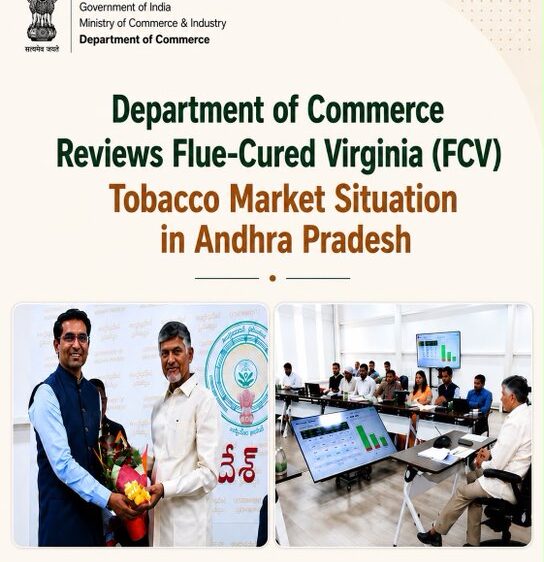
Department of Commerce reviews Flue-Cured Virginia (FCV) tobacco market situation in AP

NEW DELHI : A team from the Department of Commerce, Government of India, led by Additional Secretary Shri Nitin Kumar Yadav, visited Andhra Pradesh on 25 July 2026 to review the prevailing market situation of Flue-Cured Virginia (FCV) Tobacco. During the visit, the delegation participated in a meeting chaired by the Chief Minister of Andhra Pradesh, Shri N. Chandrababu Naidu, in the presence of the Chairman and Executive Director of the Tobacco Board. The discussions focused on safeguarding the interests of FCV tobacco growers and exploring long-term measures to ensure stability in the FCV tobacco sector.

The delegation also visited the Tobacco Board Auction Platform at Vellampalli, where it observed the ongoing auction operations and reviewed the auction process. The officers interacted extensively with FCV tobacco growers to obtain first-hand feedback on the prevailing market conditions. The delegation appreciated the transparent and orderly conduct of the auctions by the Tobacco Board.

Additional Secretary Shri Nitin Kumar Yadav assured the growers that the Government of India is closely monitoring the evolving market situation. He said that, in coordination with the Government of Andhra Pradesh, the Tobacco Board and other stakeholders, the Government is actively examining appropriate measures to safeguard the interests of FCV tobacco farmers.

Iran says IRGC fired warning shots at four ships in Strait of Hormuz

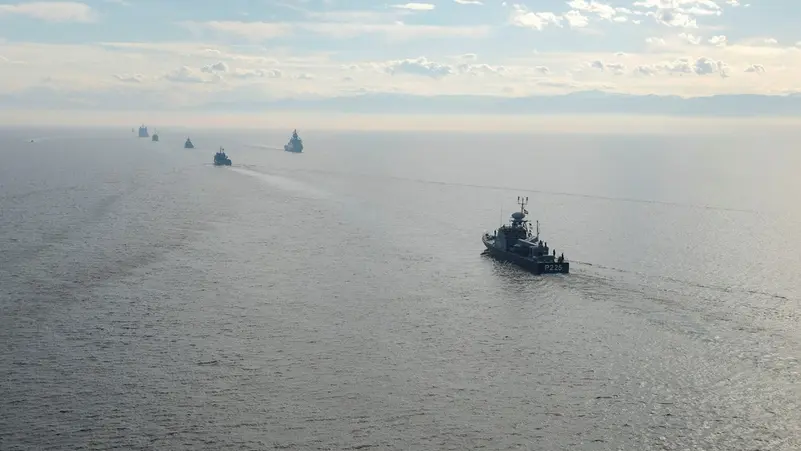
TEHRAN: Iran’s Islamic Revolutionary Guard Corps (IRGC) said its naval forces fired warning shots at four vessels attempting to transit the Strait of Hormuz over the past 24 hours and claimed the ships subsequently altered course, according to Iranian state media.

In a statement carried by state broadcaster IRIB on Saturday, the IRGC said the vessels had attempted to pass through the southern part of the strategic waterway using what it described as an “illegal and unsafe route”.

“Four vessels that had intended to transit through the southern area of the Strait of Hormuz via an illegal and unsafe route were stopped over the past 24 hours after warning shots were fired by the IRGC Navy,” the statement said. The IRGC added that the vessels subsequently altered course.

Iranian authorities did not identify the vessels, disclose their nationalities or specify whether they were commercial tankers or other types of ships. There were no immediate reports of damage or injuries, and the claims could not be independently verified.

Iran did not explain why it considered the route “illegal and unsafe”.

Strategic shipping lane under renewed scrutiny

The Strait of Hormuz is one of the world’s most strategically important maritime chokepoints, through which roughly one-fifth of global oil consumption passes. The narrow shipping lane connects the Persian Gulf with the Gulf of Oman and serves as the primary export route for crude oil and liquefied natural gas from several Gulf producers.

According to the IRGC, the vessels were attempting to use a route south of the strait that Iran considers “illegal and unsafe”. The incident comes amid heightened tensions between Iran and the United States and follows a series of recent maritime security incidents in the Gulf.

Incident follows attack on tanker carrying Indian crew

The latest incident came a day after the Mozambique-flagged LPG tanker DISHA was attacked in Iranian territorial waters while carrying 28 Indian crew members.

The Indian Embassy in Tehran confirmed the incident and said all crew members were safe.

“The Embassy of India in Tehran is aware that the Mozambique-flagged LPG tanker DISHA came under attack in Iranian territorial waters earlier today,” the mission said in a statement.

It added that it remained in close contact with Iranian authorities and had confirmed the safety of all 28 Indian crew members aboard the vessel.

Iranian authorities have not disclosed the extent of any damage to the tanker, while responsibility for the attack has not been established. Officials have also not linked the tanker attack to the latest Strait of Hormuz incident, and it remains unclear whether the two events are connected.

Shipping concerns mount

The back-to-back maritime events have raised more concerns among shipping firms working in the Gulf region, where the ships were subjected to increased security threats amid regional tensions.

Any disruption in the Strait of Hormuz could affect the global energy market, logistics charges, and marine insurance, owing to the large amount of oil and gas that pass through the region.

Oil Tanker explodes in Strait of Hormuz after hitting naval mine amid the battle for control of vital energy passage

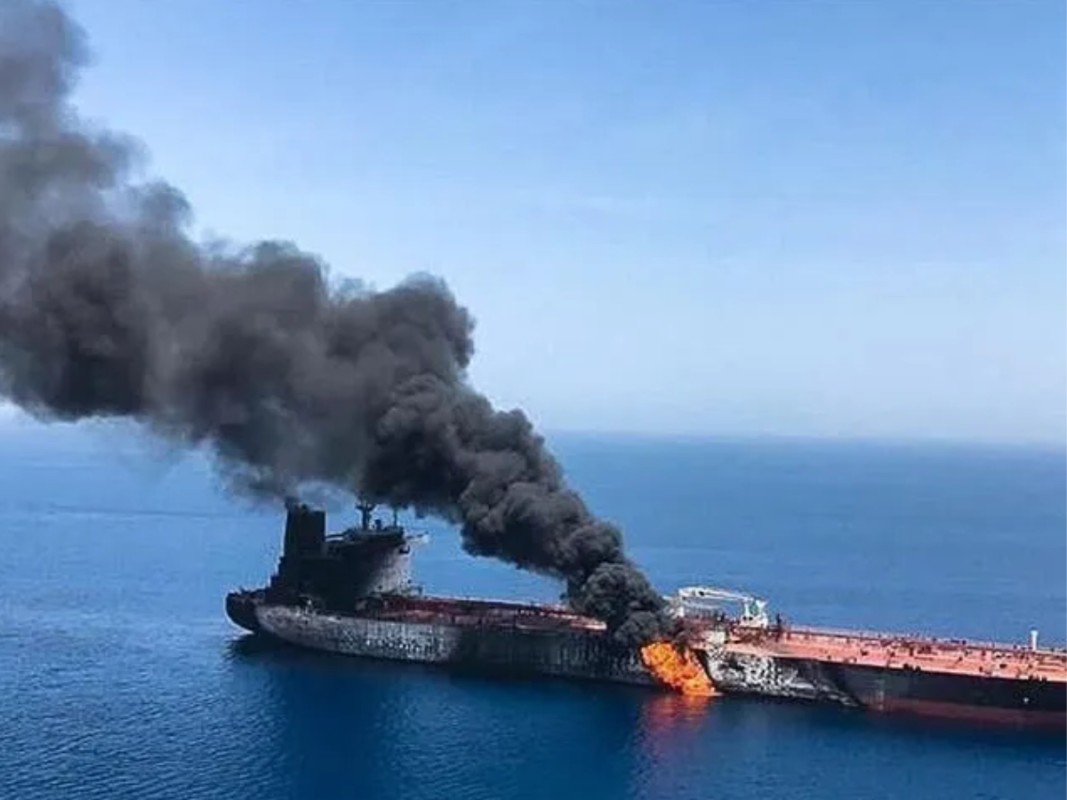
OMAN : An oil tanker exploded in the Strait of Hormuz after striking a naval mine on July 26, 2026. According to reports, the explosion occurred after the vessel allegedly deviated from the strict navigation corridor designated by Iranian authorities.

Iranian media reports state the vessel operated as a “rogue” tanker outside the approved maritime safe zones, leading to its collision with a submerged sea mine. However, no immediate independent information has been made public regarding the identity of the ship, its flag, ownership, destination, or potential casualties.

Iranian forces previously warned that any vessel transiting the strategic waterway without direct coordination or departing from Tehran-approved channels would “bear the consequences”.

Despite the severe blast, Iranian officials stated that maritime traffic through the heavily monitored energy corridor remained unaffected.

US-Israel-Iran War Latest News: Regional Escalation

The explosion follows months of intense military exchanges between the United States and Iran. Iran had heavily restricted traffic through the vital economic chokepoint, through which roughly 20% of the world’s petroleum and LNG passes.

The incident took place during a fragile, two-day pause in airstrikes between the U.S. and Iran. While military spokesmen from Iran indicated they had temporarily suspended retaliatory operations to match the U.S. lull, the mine explosion highlights the persistent and lethal dangers lingering in the water.

Simultaneously, regional diplomatic talks between Iran and Oman have reportedly seen progress regarding future navigation and management mechanisms for the strait.

US-Israel-Iran War Latest News: Dispute Over ‘Approved Routes’

Iran’s Mandate: On June 26, Iran’s military declared that shipping through the Strait is “only allowed” via corridors designated by Tehran. Iran insists all vessels must use a channel hugging its coastline under a state-run management system.

The Western Stance: The United States and international maritime bodies reject this, calling for unrestricted transit through the international waterway.

The “Rogue” Narrative: Iranian media, specifically Mehr News Agency and Tasnim News Agency, emphasized that the vessel drifted into a minefield because it failed to coordinate with Iranian authorities and ignored prior warnings.

US-Israel-Iran War Latest News: Underlying Tensions

The explosion did not happen in a vacuum. It follows a multi-month conflict that erupted in February 2026 with massive U.S.-led operations.

Failed Peace Efforts: Tensions flared again on July 8, when U.S. President Donald Trump declared a recently signed memorandum of understanding with Iran “over”. This deal originally tasked Iran with demining operations. Without it, both sides blame each other for the unmapped explosives floating in the waters.

Preceding Clashes: Just days before this explosion, the Islamic Revolutionary Guard Corps (IRGC) claimed that three other tankers attempted to cross an unauthorized southern route. The IRGC stated that one struck an explosive device, forcing the remaining two to turn back.

The Caspian Sea Flashpoint: Adding to Tehran’s agitation, Ukraine recently conducted long-range strikes against Iranian cargo vessels in the Caspian Sea. Iran has fiercely protested, summoning Ukrainian diplomats just as the Hormuz mine blast occurred.

US-Israel-Iran War Latest News: Strategic Play or Accident?

Iran may be allowing or leveraging these mine explosions to prove that the U.S.-backed southern shipping channels are dangerously unsafe, thereby forcing commercial traffic to obey Iranian coastal lanes.

Since conventional naval skirmishes have degraded much of Iran’s standard fleet, the state may no longer possess the capability to safely clear loose sea mines, turning the entire Strait into a literal minefield.

Source : The Sunday Guardian

Ukraine strikes Iranian vessels in Caspian Sea, Tehran accuses Kyiv of ‘hostile and criminal act’

TEHRAN : Iran summoned a Ukrainian diplomat in Tehran on Sunday to protest an attack on an Iranian commercial vessel in the Caspian Sea, as the war in the Middle East threatened to overlap with the Ukraine conflict.

Iran said the attack left one sailor dead and injured several others. The country’s foreign ministry complained to Ukraine’s chargé d’affaires in Tehran early on Sunday and “conveyed Iran’s strong protest over the ‘hostile and criminal act.'” Iran’s Islamic Republic News Agency reported.

In a post on X highlighting Ukraine’s attacks on distant Russian targets, Ukrainian President Volodymyr Zelenskyy said Saturday that his country’s forces “also achieved very strong results with long‑range strikes in the Caspian Sea – including vessels used in military cargo shipments involving Iran, as well as a warship.”

Russia has long used Iranian-designed Shahed drones in its war on Ukraine, a weapon that analysts sometimes refer to as “the poor man’s cruise missile.”

But the latest attacks by Ukraine, combined with Saudi military strikes on Iran-backed Houthi targets in Yemen following the rebel group’s attacks on Red Sea shipping in recent days, represent a widening of the Middle East conflict.

Iranian Foreign Minister Abbas Araghchi said he had spoken with his Russian counterpart and the European Union about a response in a post to X.

“In calls with EU High Rep Kallas and FM Lavrov, made clear that what the freeloader in Kyiv did CANNOT GO UNANSWERED,” Araghchi said.

Air defenses in Saudi Arabia reportedly intercepted two ballistic missiles from Yemen on Saturday.

The fighting in the Red Sea and Caspian Sea took place during a pause in U.S. strikes on Iran after 13 straight nights of attacks.

U.S. President Donald Trump has halted attacks on Iran for now to allow more room for diplomacy, U.S. ambassador to the United Nations Mike Waltz told Fox News on Sunday.

“He’s giving talks some space, he’s giving it a little bit of room,” Waltz said.

The New York Times cited administration officials as saying that Trump has set aside, at least for now, plans to sharply escalate U.S. military assaults against Iran, amid concerns over falling stockpiles of Patriot anti-missile interceptors and other air defense munitions.

The U.S. military said on Saturday that ​its naval blockade against Iran “remains in full effect” ​but did not explain why it halted its attacks. There were also no ⁠reports of attacks from Iran on neighboring countries.

Israeli Prime Minister Benjamin Netanyahu on Sunday laid out what he believes it will take to end the war with Iran during an appearance on Fox News’ “Sunday Morning Futures.” Netanyahu said the war will end either “when this regime is either toppled or it’s sufficiently weakened that it knows it has to end its nuclear program and has to change its course.”

The U.S. launched the first set of strikes on Iran with Israel, and Jerusalem’s attacks on targets in Lebanon were previously a hurdle in U.S. peace talks with Tehran.

Naval blockade
U.S. Central Command said late Saturday its naval blockade against Iran remains in full effect.

“As of July 25, CENTCOM has redirected 12 commercial vessels trying to run the blockade, disabled 2 that didn’t comply, and boarded 2 to ensure total compliance,” it said in a post on X late Saturday.

Meanwhile, Iran’s Islamic Revolutionary Guard Corps Navy said it has “established complete authority over the Strait of Hormuz.” In a post early Sunday on the Telegram social media platform, it said it forced six ships to anchor following warnings over the last 24 hours.

While formal high-level negotiations between the U.S. and Iran have stalled, Iranian Foreign Ministry spokesman Esmail Baghaei said technical talks with Oman on the Strait of Hormuz continued over the weekend.

Oil prices dropped Friday on a report that Pakistan is looking for a way to restart talks between the U.S. and Iran.

Brent crude futures, the international benchmark, fell nearly 4% to close at $96.78 a barrel. U.S. West Texas Intermediate crude futures lost 3% to settle at $89.31 per barrel.

Source : CNBC

EU moves to include Two Indian Ship Recycling Yards on Approved List

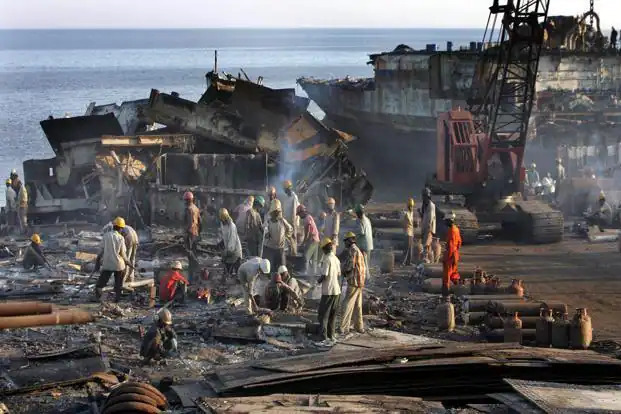
LONDON: In a significant development for India’s ship recycling industry, the European Commission has proposed adding two Indian ship recycling facilities to the European List of approved ship recycling yards, marking a potential breakthrough after years of exclusion of South Asian recycling facilities from the EU framework. If approved, the decision would represent the first time Indian ship recycling yards are formally included on the European List.

The proposal is being viewed as an important step toward recognising the substantial investments made by Indian recyclers to meet international environmental and safety standards.

The move has been welcomed by European shipowners, who have long argued that several Indian recycling yards comply with high environmental and worker safety standards comparable to those required under the EU Ship Recycling Regulation. The European Community Shipowners’ Associations (ECSA) described the proposal as a positive and long-awaited development, saying it would provide shipowners with more sustainable recycling options while supporting global efforts to improve responsible ship recycling.

For years, the exclusion of Indian yards from the EU-approved list has remained a contentious issue despite many facilities obtaining Statements of Compliance with the Hong Kong International Convention (HKC). Industry stakeholders have argued that the omission limited recycling choices for EU-flagged vessels and failed to recognise the extensive upgrades undertaken by Indian recyclers in areas such as hazardous waste management, impermeable working floors, worker safety and emergency response systems.

India has consistently sought greater recognition from the European Union, with more than 30 ship recycling yards reportedly applying for EU approval. According to recent government statements, several facilities have completed the required compliance procedures and are eligible for inclusion under the EU Ship Recycling Regulation framework.

The proposed inclusion is expected to strengthen confidence in India’s ship recycling sector, particularly at Alang, where significant investments have been made to align operations with international standards following the entry into force of the Hong Kong International Convention in June 2025. Industry observers believe the decision could pave the way for additional Indian facilities to gain EU recognition in the future, boosting India’s position as a leading destination for safe and environmentally sound ship recycling.

Hanwha Ocean advances Korea-U.S. Shipbuilding Cooperation through naval vessel development and broader industry collaboration

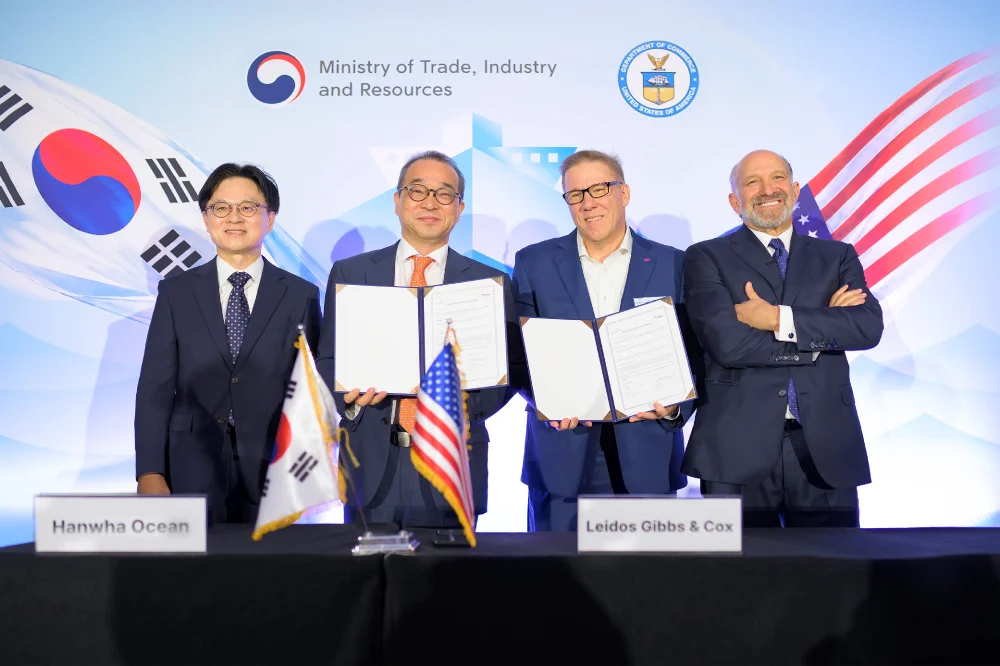
SEOUL: Hanwha Ocean signed one agreement and two Memoranda of Understanding (MOUs) with U.S. partners covering naval ship design, workforce development, and supply chain cooperation at the opening ceremony of the Korea-U.S. Shipbuilding Partnership Center in Washington, D.C., U.S., further strengthening shipbuilding collaboration between Korea and the U.S.

Hanwha Ocean signed a Professional Services Agreement for the design of the Global Fast Sealift (GFS) with Leidos, advancing the partnership beyond the MOU signed in April under which the two companies agreed to collaborate on next-generation naval ship design, strengthen U.S. shipbuilding capacity, and pursue opportunities across global defense markets. Gibbs & Cox, a wholly owned subsidiary of Leidos, has designed more than 70% of U.S. Navy surface combatants since World War II.

Under the agreement, the two companies will begin the joint design of the GFS. They will also pursue collaborative technology development and establish a framework to ensure design quality throughout the design process. By combining Hanwha Ocean’s naval shipbuilding capabilities with Leidos’ ship design and engineering expertise, the companies aim to deliver a reliable and proven platform to the U.S. and global markets.

The GFS is designed to support commercial shipping during peacetime while providing rapid military sealift during wartime. As a dual-use platform, it delivers both economic and strategic value, offering a solution capable of meeting diverse requirements across the U.S. and global naval vessel markets.

Hanwha Ocean also signed an MOU for Shipbuilding Technology Training & Development Cooperation with Hanwha Philly Shipyard (HPSI) and Delaware County Community College (DCCC). The parties plan to help address workforce needs across the U.S. shipbuilding industry through workforce development efforts, including instructor training programs and other efforts to cultivate highly skilled shipbuilding professionals.

DCCC, located in eastern Pennsylvania, is an accredited, public, two-year college that provides high-quality education, workforce development, and technical training. DCCC serves as the Related Technical Instruction (RTI) provider for HPSI’s four U.S. Department of Labor Registered Apprenticeship programs, delivering the technical education that complements on-the-job training and supports the development of the shipyard’s highly skilled workforce.

Hanwha Ocean also signed an MOU for Supply Chain Cooperation with HPSI, the Greater Philadelphia Chamber of Commerce, and the Greater Philadelphia Growth Partnership. Through the agreement, the parties will work together to identify local suppliers and promote collaboration across the regional industrial ecosystem, supporting the development of a stronger U.S. shipbuilding supply chain and the expansion of HPSI’s production capabilities.

“Hanwha Ocean is fully prepared to contribute to the revitalization of the U.S. shipbuilding industry and the continued advancement of Korea’s shipbuilding sector,” said Insub Jung, President and Head of Management Support Office at Hanwha Ocean. “Building on our local production footprint, we will expand cooperation in areas most critical to the U.S.”

About Hanwha Ocean

Hanwha Ocean is a leading global company with extensive expertise and experience in the shipbuilding and offshore industry. Boasting the world’s most competitive LNG carriers built with eco-friendly and highly efficient technology, the company has continuously pioneered new businesses since 1973, producing a vast range of vessels, including commercial ships, drillships, and specialty ships. Hanwha Ocean will be at the forefront of pioneering advanced marine solutions for decarbonization and further expand Hanwha’s green energy ecosystem to create positive, sustainable change throughout the world.

About Leidos

Leidos is an industry and technology leader serving government and commercial customers with smarter, more efficient digital and mission innovations. Headquartered in Reston, Virginia, with 50,000 global employees, Leidos reported annual revenues of approximately $17.2 billion for the fiscal year ended January 2, 2026.

About Hanwha Philly Shipyard, Inc.

Hanwha Philly Shipyard is a leading U.S. shipbuilder that has earned a reputation as a preferred provider of ocean-going merchant vessels with a track record of delivering quality ships, having delivered around 50% of all large ocean-going U.S. Jones Act commercial ships since 2000. The shipyard is part of Hanwha Group, a multinational company with a robust network of affiliates in the energy, shipbuilding, defense, aerospace, finance, and retail & services industries.

About Delaware County Community College

Delaware County Community College (DCCC), located in eastern Pennsylvania, is an accredited, public, two-year college that provides high-quality education, workforce development, and technical training. As a member of the Collegiate Consortium for Workforce and Economic Development (CCWED), DCCC delivers workforce training regionally and nationally for employers and industry partners. DCCC has been designated by the U.S. Maritime Administration (MARAD) as a Center of Excellence for Domestic Maritime Workforce Training and Education since 2021. DCCC is a national leader in preparing the skilled workforce that supports the growth and competitiveness of the U.S. shipbuilding industry.

About the Greater Philadelphia Chamber of Commerce

The Chamber of Commerce for Greater Philadelphia works together with members, investors, and stakeholders, to realize our bold vision: Greater Philadelphia is a top global destination for business and a leader in inclusive growth. As the metro-regional chamber of commerce serving the 11-county, tri-state Greater Philadelphia region, we are the premier organization to convene and connect business, government and civic leaders to drive economic growth and prosperity for all.

Source : HANWHA

Hyundai Glovis wins Chinese EV logistics deals, expands non-affiliate revenue

SEOUL : Hyundai Glovis has been signing transportation contracts in succession with Chinese manufacturing corporations, expanding non-affiliate (outside the group) revenue.

Hyundai Glovis said on the 27th that it recently signed a transportation contract with a leading Chinese battery corporation. Under the deal, Hyundai Glovis will transport electric-vehicle batteries produced by this corporation by sea from the South China coast, or Huanan , to countries such as Hungary, Spain, and Italy where global automaker factories are located.

Hyundai Glovis had earlier signed transportation contracts for knockdown (KD) auto parts and press plant equipment bound for the Eastern European factories of major Chinese electric-vehicle manufacturing corporations. Under the contracts, starting in the first half of this year, Hyundai Glovis has been transporting finished auto parts and press plant equipment by sea from shipping points in the East China region, or Huadong, to Slovenia and Croatia, and then hauling them overland by trucks to the factories.

A Hyundai Glovis official said, “We are providing shippers with a highly efficient logistics supply chain through ‘end-to-end’ services that are responsible for transportation from factories in China to factories in Eastern Europe.”

Hyundai Glovis also won a contract for vehicle disassembly and packaging work from a Chinese automaker. Accordingly, after taking delivery of finished vehicles produced in China, it inspects quality in a warehouse, disassembles and packages them, loads them into containers, and transports them via the Trans-China Railway (TCR) to Kazakhstan and Uzbekistan.

Hyundai Glovis’s battery transport and the transportation of knockdown parts and finished vehicles are carried out through a container forwarding system that uses its global logistics infrastructure and network. Forwarding refers to a specialized freight company taking responsibility for and handling the entire transportation process from departure to arrival.

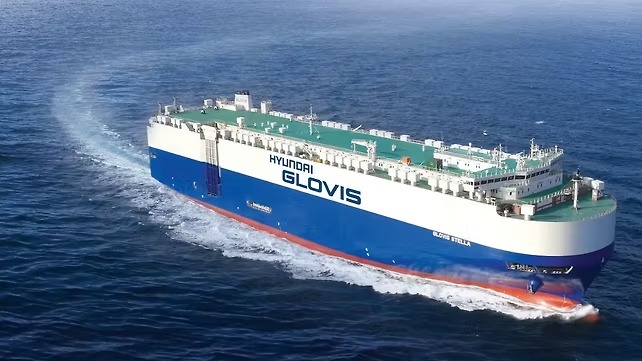
In addition, Hyundai Glovis is transporting shipments for multiple Chinese automakers by sea using pure car and truck carriers (PCTCs). The volume of finished vehicles shipped by sea from China by PCTC over the past three years increased about 93%, from about 260,000 units in 2023 to about 510,000 units last year.

Hyundai Glovis recently created a dedicated high and heavy cargo unit and is working to strengthen its large-scale logistics capabilities. China is the world’s largest producer of construction equipment and industrial machinery, and the company plans to actively communicate with shippers in the region to showcase its transport competitiveness.

Through this, it plans to actively expand non-affiliate customers. In June 2024, Hyundai Glovis said, “While prioritizing transport of affiliate volumes, we will increase non-affiliate customers and achieve 40 trillion won in revenue by 2030.” A Hyundai Glovis official said, “We will continue to expand logistics cooperation with mobility-related corporations around the world.”

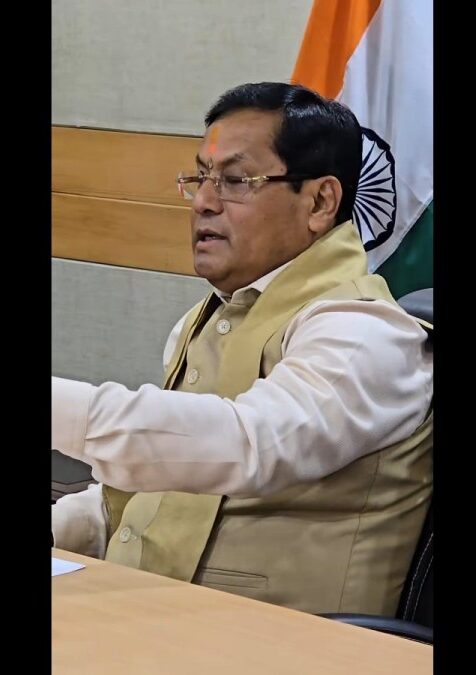
Govt strengthens maritime employment opportunities to boost India’s Blue Economy: Sonowal

NEW DELHI : The Government is implementing a comprehensive strategy to enhance employment opportunities in the maritime sector while accelerating the development of inland waterways to support economic growth and multimodal logistics, Union Minister of Ports, Shipping and Waterways Shri Sarbananda Sonowal informed the Lok Sabha in a written reply.

The Minister said the Government has adopted a multi-pronged approach to capacity building by expanding training infrastructure, strengthening industry participation, and creating additional onboard training opportunities for maritime professionals. These initiatives are aimed at improving the employability of Indian seafarers and building a skilled workforce to meet the growing demands of the maritime industry.

Recognising that onboard sea-time training is essential for certification and career progression, the Ministry has collaborated with the Shipping Corporation of India (SCI) and the Andaman & Nicobar Administration to create 96 onboard training berths on the passenger vessel MV Swaraj Dweep. The initiative benefits trainees pursuing General Purpose (GP) Rating and Certificate Course in Maritime Catering (CCMC) programmes, providing them with valuable sea-time experience required for certification and employment.

Highlighting the rapid growth of Inland Water Transport (IWT), Shri Sonowal said the Government declared 111 National Waterways—comprising five existing and 106 new waterways—under the National Waterways Act, 2016. Development plans for these waterways have been prepared under Maritime India Vision 2030 and the Maritime Amrit Kaal Vision 2047, with a focus on improving infrastructure, enhancing connectivity, and increasing cargo movement through sustainable transport.

The Minister informed the House that cargo traffic on National Waterways has witnessed remarkable growth, increasing from 18 million tonnes in 2013-14 to 218 million tonnes in 2025-26, reflecting the success of sustained investments in inland water transport infrastructure and policy reforms.

To support this growth, the Government has undertaken extensive infrastructure development across key waterways. These include fairway maintenance through dredging, river training, hydrographic surveys, and channel marking to ensure safe and efficient navigation. Significant terminal infrastructure has also been developed, including 66 community jetties, 20 floating terminals, three Multi-Modal Terminals (MMTs), one Inter-Modal Terminal (IMT), and four Ro-Pax terminals on National Waterway-1 (River Ganga).

Additional infrastructure has been created on National Waterway-2 (River Brahmaputra), including floating terminals, Multi-Modal Terminals at Pandu and Jogighopa, dedicated cruise jetties, and passenger terminals across Assam. Similar upgrades have been carried out on National Waterways 3, 4, 16, 37, 68, 73 and 110, strengthening regional connectivity and promoting passenger and cargo transportation.

The Government has also implemented several policy initiatives to encourage greater adoption of inland waterways. These include a 35% incentive scheme to promote cargo movement on National Waterways, an extension of the tonnage tax regime to inland vessels registered under the Indian Vessels Act, 2021, and the notification of the National Waterways (Construction of Jetties/Terminals) Regulations, 2025, providing a transparent framework for private sector participation in inland waterway infrastructure.

To improve ease of doing business, the Ministry has introduced the Jalyan and Navic digital platforms for online registration of inland vessels and crew, creating a unified national database to streamline regulatory processes and enhance operational efficiency.

The Government is also promoting multimodal logistics through the development of cargo aggregation hubs, including a Multi-Modal Logistics Park (MMLP) at Varanasi and an Integrated Cluster-cum-Logistics Park at Sahibganj. Rail connectivity to major inland terminals is also being strengthened to facilitate seamless cargo movement.

Further, the recently operationalised Indo-Bangladesh Protocol Route 5 and 6 between Maia and Sultanganj is expected to boost cross-border inland water transport once regular services commence following bilateral approvals.

To encourage a modal shift towards waterways, more than 140 Public Sector Undertakings (PSUs) have been requested to identify cargo suitable for transportation through inland waterways and prepare plans to increase the use of this cost-effective and environmentally friendly mode of transport.

Shri Sonowal reiterated that these initiatives form part of the Government’s broader vision to modernise India’s maritime sector, generate employment, reduce logistics costs, promote sustainable transportation, and strengthen the country’s Blue Economy under Maritime India Vision 2030 and Maritime Amrit Kaal Vision 2047.

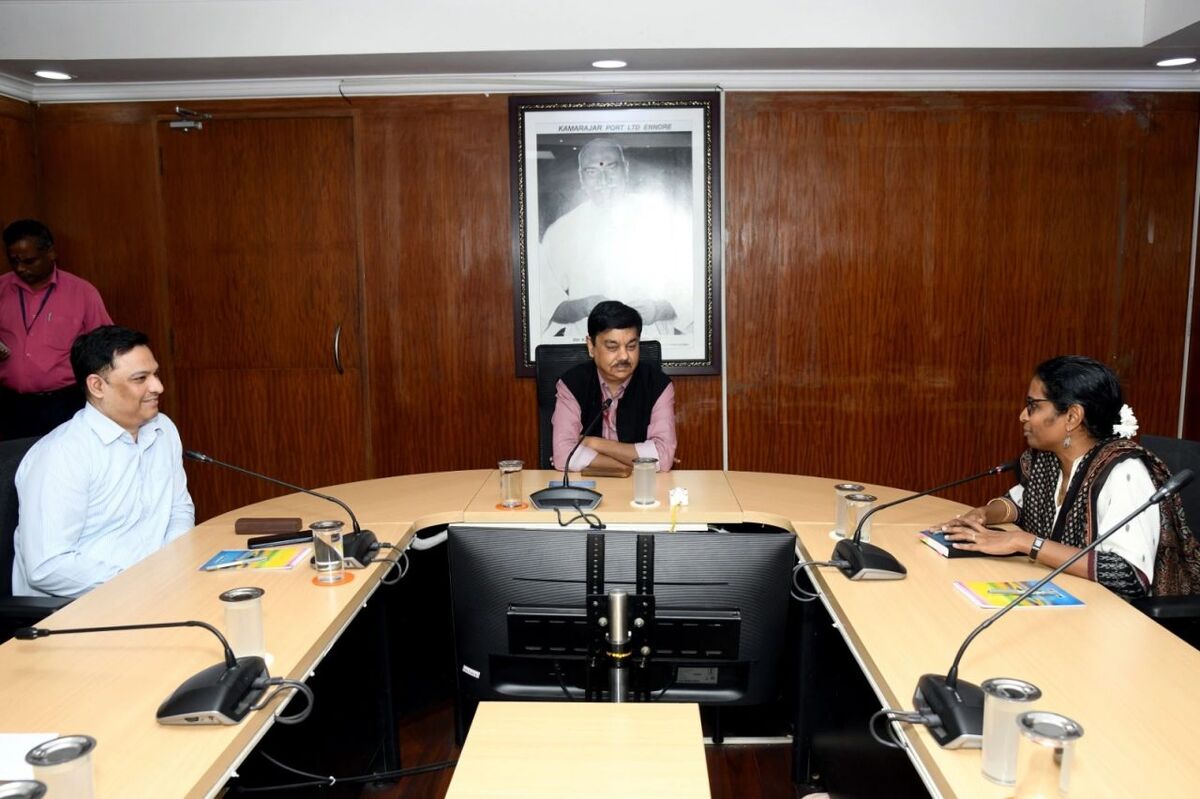
National Shipping Board Chairman reviews Infrastructure and Growth Plans during visit to Kamarajar Port

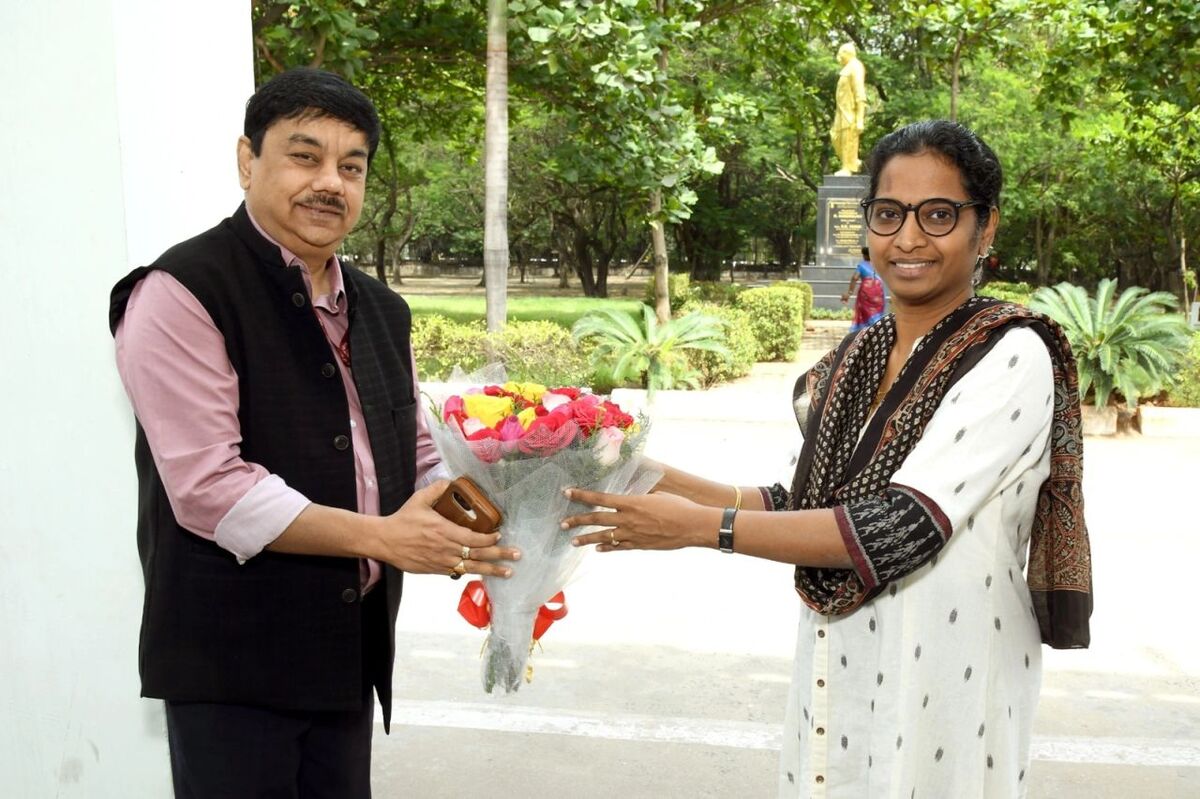
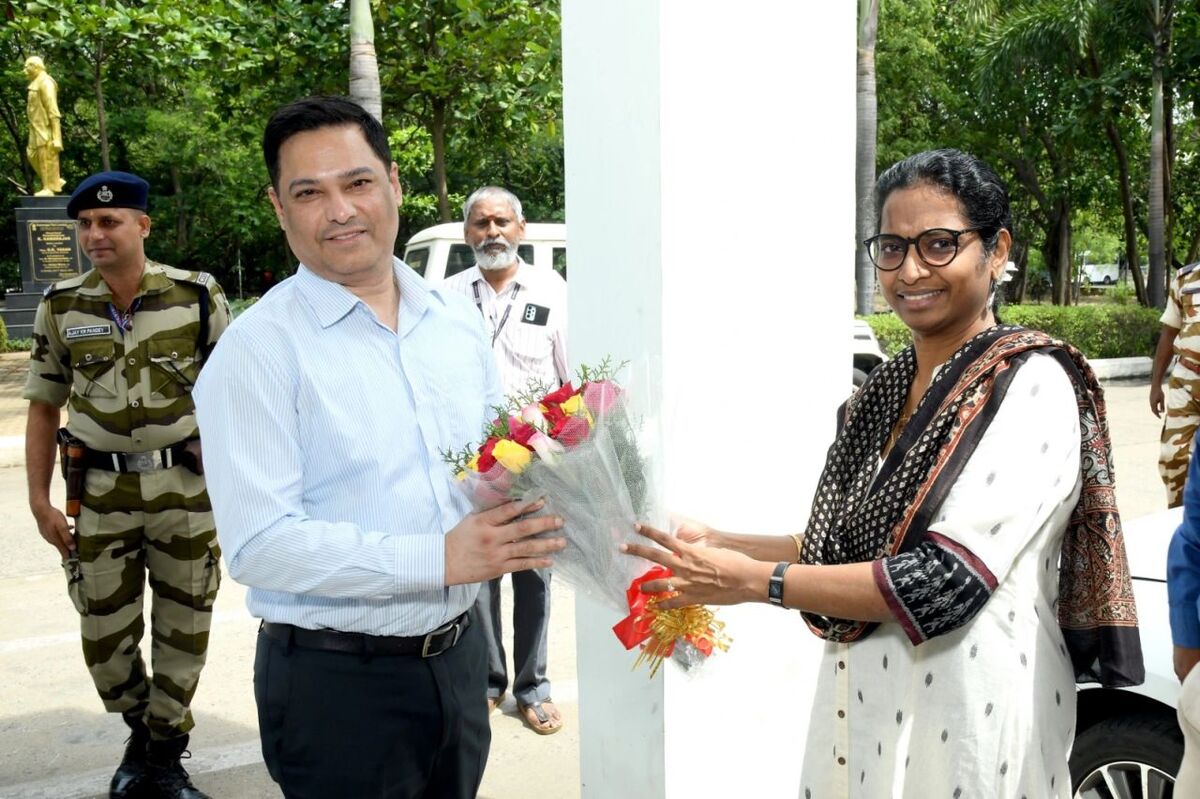
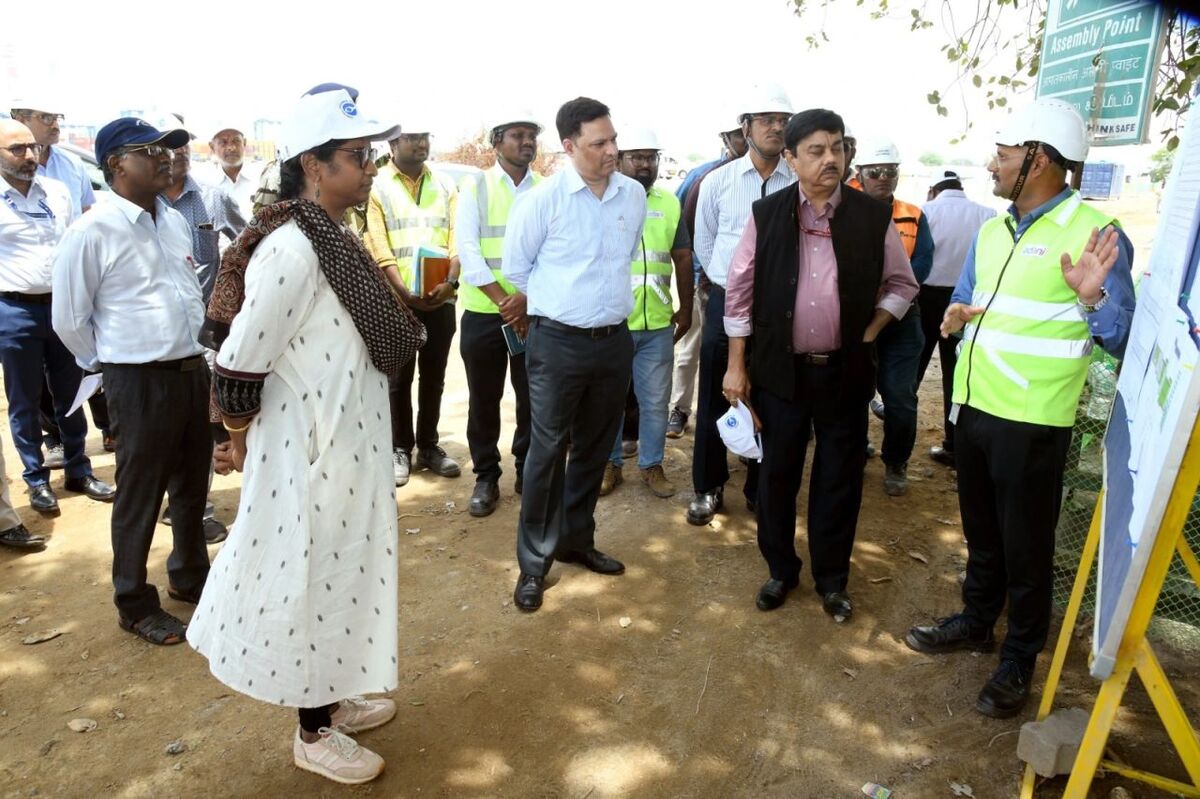
CHENNAI: Kamarajar Port Limited (KPL) welcomed Shri Sameer Kumar Khare, IAS (Retd.), Hon’ble Chairman of the National Shipping Board, for an official visit that underscored the Port’s strategic role in advancing India’s maritime sector and strengthening the nation’s vision of port-led economic growth.

The distinguished visitor was received by Shri Sachin Sharad Chandra Kurve, IAS, Chairman, Chennai Port Authority and Chairperson, Kamarajar Port Limited, along with Smt. J.P. Irene Cynthia, IAS, Managing Director, Kamarajar Port Limited. The visit commenced with a detailed presentation highlighting KPL’s operational excellence, modern infrastructure, key performance milestones, ongoing development projects, and future expansion roadmap. The discussions focused on the Port’s continued efforts to enhance efficiency, sustainability, and capacity to meet the evolving needs of global trade.

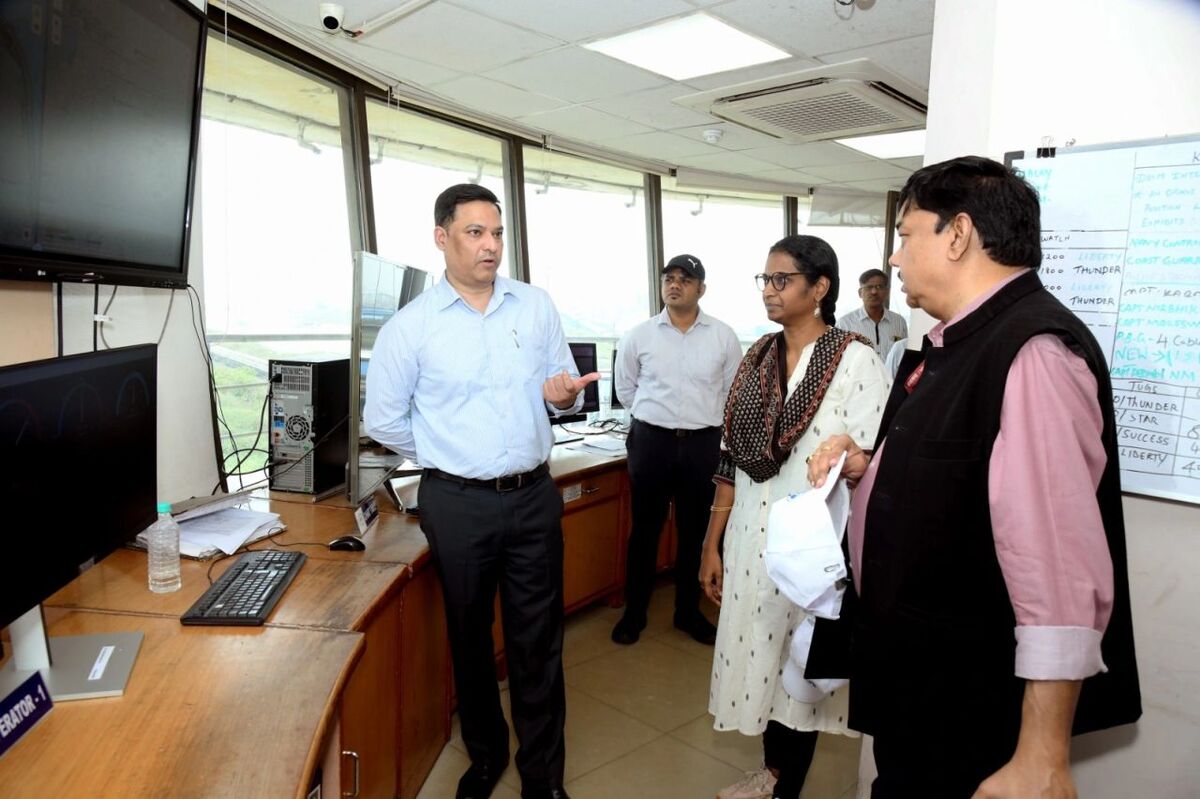
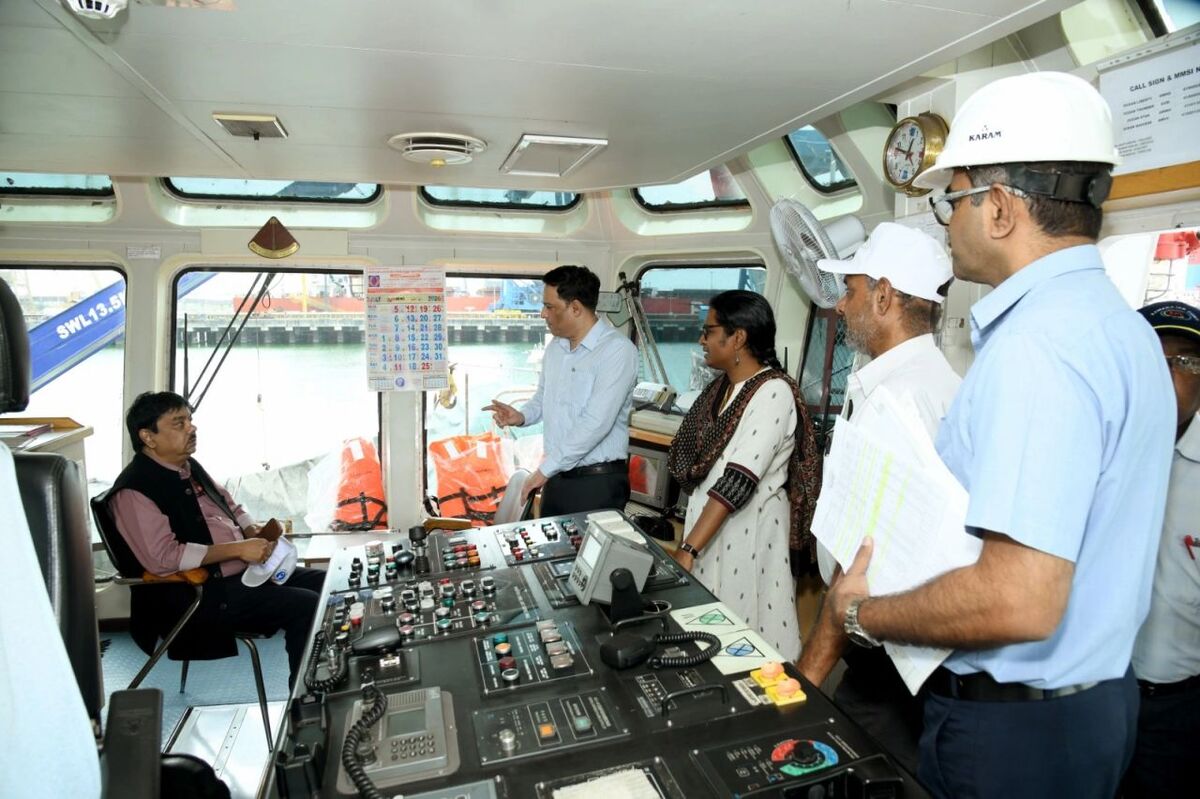
As part of the visit, Shri Khare toured KPL’s major operational facilities, including the Container Terminal, General Cargo Berths (GCBs), and the Signal Station, gaining firsthand insight into the Port’s advanced infrastructure and seamless cargo-handling capabilities. A tug ride further showcased the Port’s marine operations, emphasizing its strong commitment to navigational safety, operational excellence, and the adoption of modern technologies that support efficient vessel movements and maritime services.

The visit reaffirmed Kamarajar Port Limited’s unwavering commitment to building a future-ready, sustainable, and globally competitive port ecosystem. With continuous investments in infrastructure, innovation, and operational efficiency, KPL remains focused on supporting India’s growing maritime ambitions, enhancing trade competitiveness, and contributing significantly to the country’s economic development through world-class port services.